宏观快评:鲍威尔继续放鹰,比特币依然看涨

PanewsPublished on 2023-09-25Last updated on 2023-09-26

Abstract

尽管鹰派信息满天飞,我依然看好市场。市场从「震惊」中恢复后,投资者肯定会弹回来,将注意力集中在积极的经济数据上。

作者:PSE Trading Trader @Christine
市场反应:震惊😲😲😲
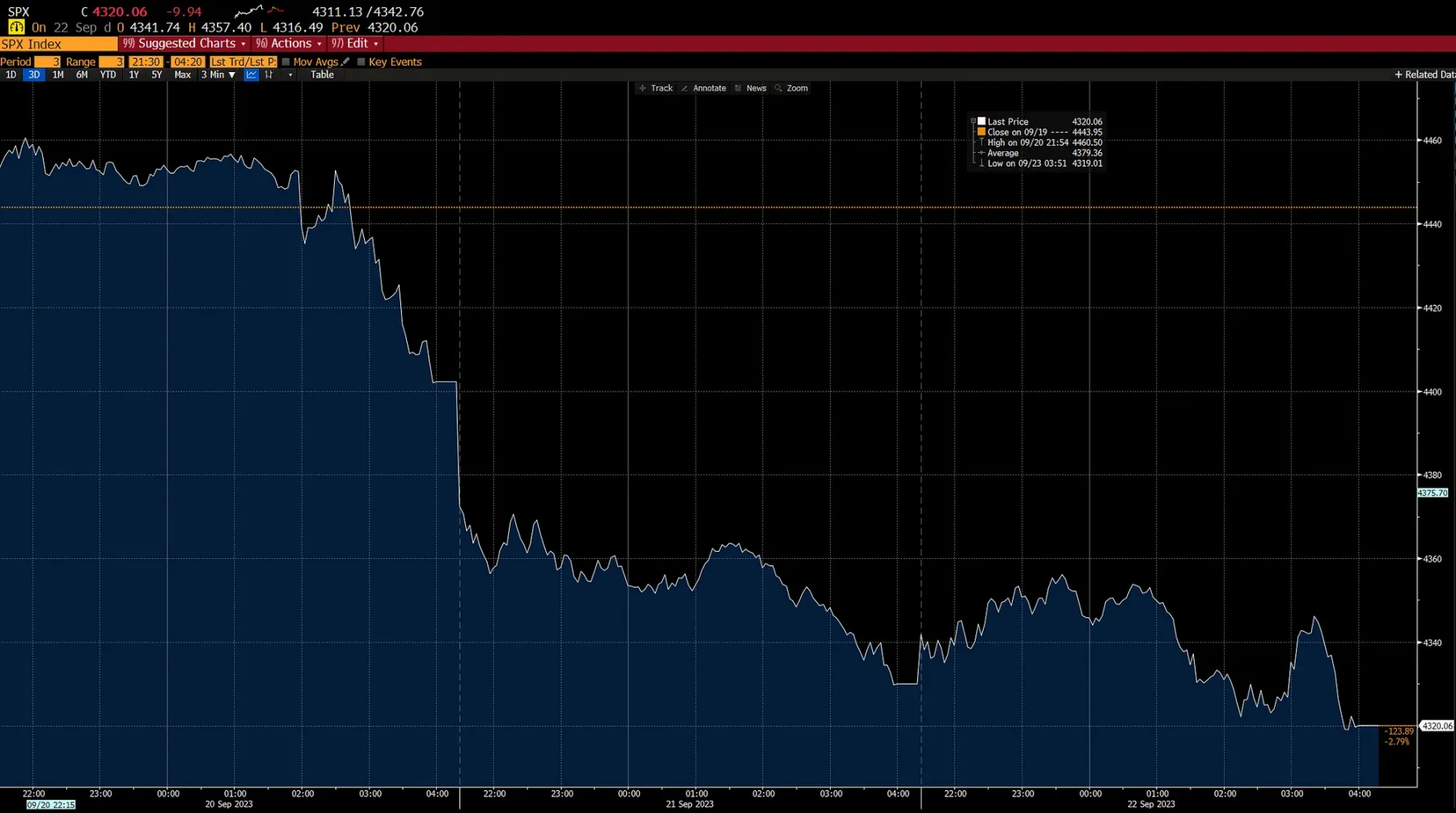
上周,市场在听到鲍威尔的鹰派台词后,如同被重锤击中,瞬间下跌了 2%。这个剧情走向,其实早在预期之中。鲍威尔在舞台上大谈降低通胀、强劲增长,以及他对保持高利率以控制通胀风险的坚定承诺。当然,短期内,高利率的台词可能会让股票这个角色感到恐慌,但经济预测摘要(SEP)的剧本调整,可能会在中期为股市带来惊喜的转折。市场的第一反应,就像是观众的惊叹声,利率上升,股票下跌。
鲍威尔的观点:「soft landing」不应作为基准预期
宏观快评:鲍威尔继续放鹰,比特币依然看涨


鲍威尔:「我一直认为软着陆是一个可能的结果……最终,这可能会由我们无法控制的因素决定,但我认为这是可能的。」

点阵图走向和经济预测
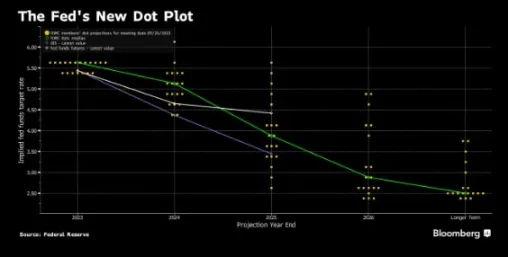
联邦公开市场委员会(FOMC)将其 2024 年核心 PCE 预测维持在 2.6%,将 2023 年修正为 3.78%,并将其实际 GDP 预期从 1.1% 提升至 1.5%。这种「软着陆」的组合基本符合投资者的预期,并被视为对股票的中期利好。FOMC 为 2023 年余下的时间保留了一次加息的可能,并将 2024 年的中位点提升至 5.1%,同时长期点保持在 2.5%。点阵的上移对于积极的增长修订形成了轻微的平衡。
宏观快评:鲍威尔继续放鹰,比特币依然看涨


鲍威尔的新闻发布会和联邦基金
联邦基金利率稳如泰山,不过,11 月加息的赌注却从会议前的 25% 跃升至 35%。市场的心情就像在过山车上,对长期利的前景忧心忡忡。在新闻发布会上,鲍威尔主席像是在玩高难度的平衡术,一方面强调数据的重要性,另一方面又保留了政策选择的灵活性,这无疑给点阵图带来的鹰派信息泼了一盆冷水。尽管如此,基本预期仍然保持适度乐观,以增长 / 科技为首选的长期投资依然是市场的宠儿。
关门大吉:风险与市场的较量
如果国会不振作精神,美国政府可能会在 9 月 30 日遭遇一场「关门大吉」的危机。近期的一些动态,比如众议院未能对持续决议(CR)投票,以及国防开支法案的推进动议遭到否决,都让这个危机的阴影愈发浓重。虽然从宏观角度看,政府关闭在短期内对整体经济的风险可能有限,但那些高度依赖政府支出的股票可能会感到一阵寒意。
BTC:尽管熊市肆虐,依然看涨🚀

宏观快评:鲍威尔继续放鹰,比特币依然看涨


尽管鹰派信息满天飞,我依然看好市场。市场从「震惊」中恢复后,投资者肯定会弹回来,将注意力集中在积极的经济数据上:
美国失业申请数降至 201K,自 1 月以来的最低水平
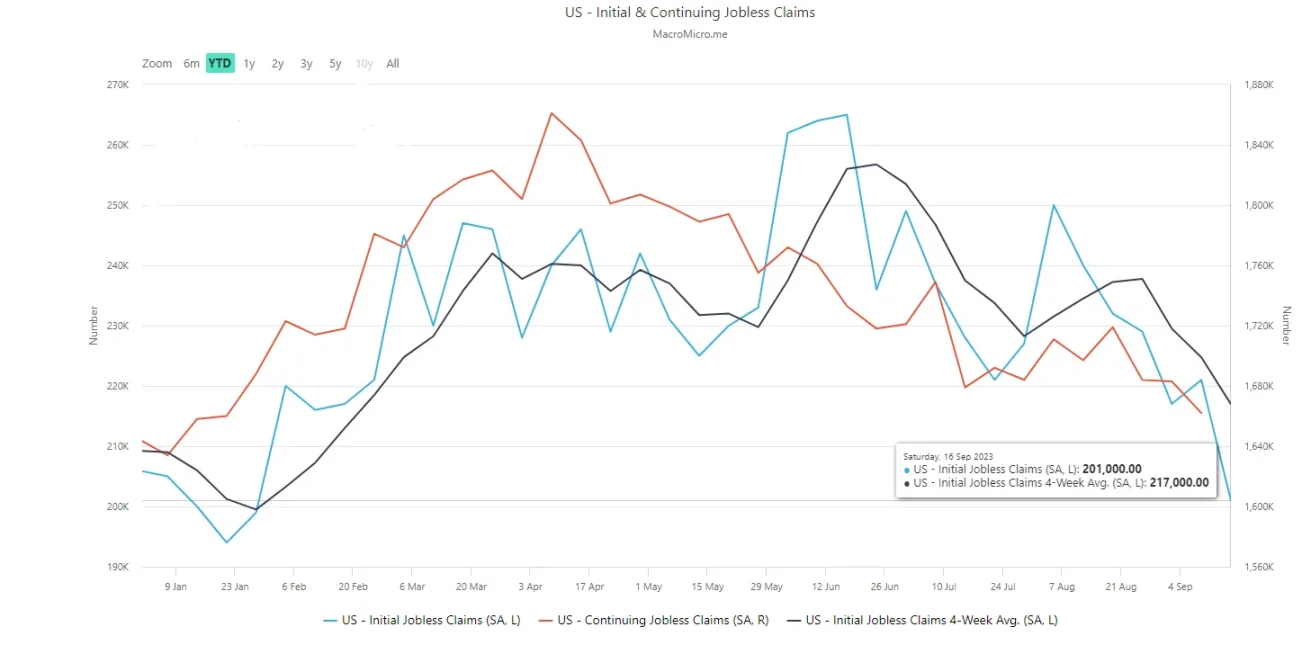
惊喜的是,9 月 16 日那周的美国失业申请数实际上是下降的,而不是大家预期的微幅增长。它们从 221k 下降到了 201k。过去四周的平均数也有所下降。更令人振奋的是,继续申请失业救济的人数在 9 月 9 日那周从 1683k 下降到了 1662k。当查看每个州的数据时,会发现只有 14 个州的季节性调整后的初次申请数有所增加。这种初次申请数的下降,是我们自年初以来看到的最低水平,这真正突显出当前就业市场的强劲和紧张。这表明我们可能会看到稳健的就业增长,这可能会进一步推低失业率。
宏观快评:鲍威尔继续放鹰,比特币依然看涨


经济活动:依然强劲
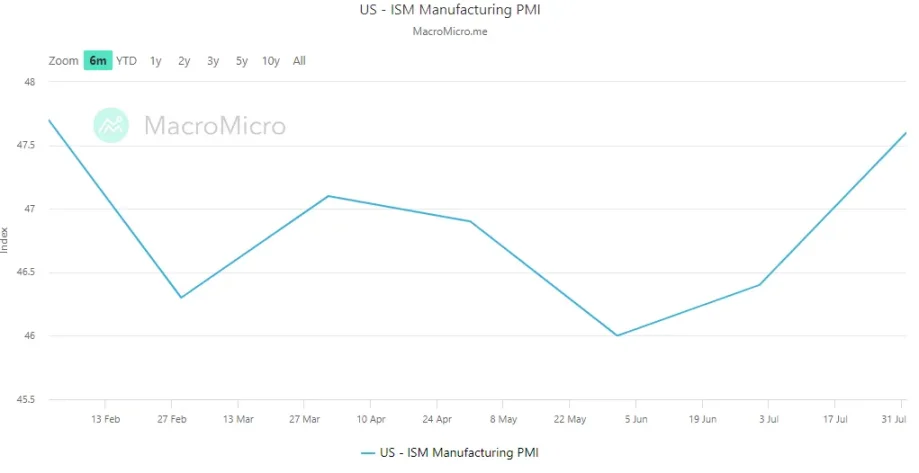
上周的经济数据显示,实际经济活动依然强劲。零售销售数据超出预期,采购经理人指数(PMI)报告稳健,每周的失业申请数保持低位,显示出经济健康,且没有裁员的增长。在通胀方面,没有经济疲软的迹象,虽然通胀略高于预期,但并未高到足以推动联邦储备系统在最近的联邦公开市场委员会(FOMC)会议上提高利率。
宏观快评:鲍威尔继续放鹰,比特币依然看涨


油价与通胀:对经济的影响
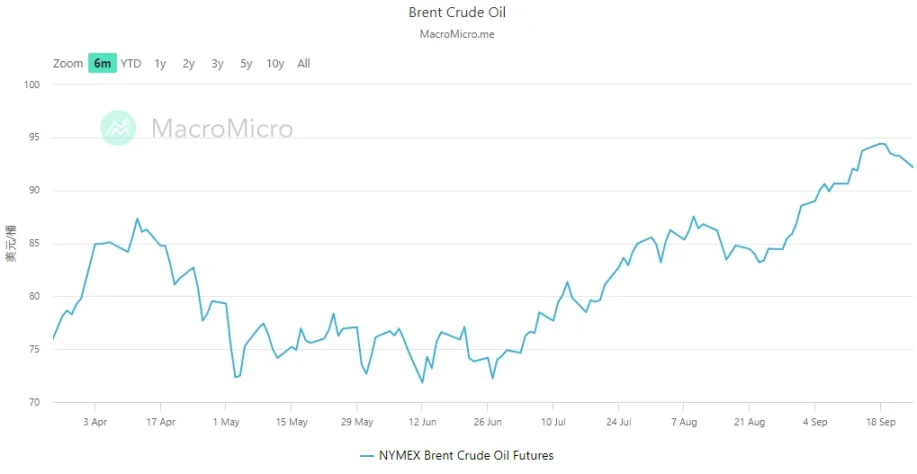
油价的飙升正在导致汽油价格上涨,这无疑会打击消费。但是,由于美国现在是大规模的石油生产国,并且在能源上基本独立,因此有赢家来平衡输家。经济熊派正在关注这些价格上涨,并看到更高的油价推动 8 月份的总通胀率达到 +0.6%,而核心通胀率仅为 +0.2%。尽管对联储和通胀有所担忧,但市场的方向和叙述更多地关注未来六个月的经济和企业利润的强劲。
宏观快评:鲍威尔继续放鹰,比特币依然看涨


一些风险:罢工,停摆,和市场波动
美国汽车工人联合会的罢工可能会比预期持续更长时间,而 10 月份即将到来的政府停摆可能会对经济造成适度的打击。
但是,市场正在忽视来自华盛顿的混乱和政治姿态,并保持其积极的动能,可能会在年底前倾向于上升。科技股的表现仍然强劲,直到他们的收益令人失望,而 Arm Holdings 上周成功的首次公开募股显示了 IPO 市场的健康重启和对风险的持续需求。

宏观快评:鲍威尔继续放鹰,比特币依然看涨

Related Reads

UBS: The Crowdedness of A-Share Tech Stocks Is Far From Reaching Historical Peaks

UBS: A-share tech stocks still far from peak crowding levels A-shares' technology sector has seen a strong rebound, with trading activity hitting record highs, raising concerns about market crowding. However, UBS Securities argues that a key indicator of institutional positioning suggests the current crowding level remains well below historical peaks. While the large-cap tech sector's share of total A-share trading volume and market capitalization have reached historical highs, the overweight ratio of domestic mutual funds in this sector stood at 9.9% in Q1 2026. This is down from 11.6% in Q3 2025 and significantly lower than the historical peak of 14.1% in Q4 2015. It also pales in comparison to the historical peak overweight of 18.7% for the consumer sector. UBS notes that typical cycles from a low to a peak in fund overweighting last about three years, and the current outperformance of the tech/growth style has lasted less than two years since the policy pivot in September 2024. UBS expects A-share earnings recovery to accelerate, providing fundamental support. It forecasts 2026 A-share profit growth to rise to 11% from 3.9% in 2025. Non-financial A-share profits grew 11.8% YoY in Q1 2026, with gross and net profit margins at their highest since 2023. Persistent fund inflows, the expansion of thematic ETFs, and a recovery in private fund issuance are supporting market liquidity. In tactical allocation, UBS favors growth and cyclical styles under its "slow bull" base case, with overweight ratings on six sectors: Electronics (benefiting from semiconductor inventory recovery and AI innovation), Communications (driven by AI computing demand), Machinery (aided by domestic capex recovery), Non-ferrous Metals (due to rising copper/aluminum prices), Chemicals (supported by anti-involution policies), and Electrical Equipment (driven by policy support and AI data center power demand).

marsbit8m ago

UBS: The Crowdedness of A-Share Tech Stocks Is Far From Reaching Historical Peaks

marsbit8m ago

Should You Buy SpaceX Stock at $1.7 Trillion? Here's What the Market Is Worried About

SpaceX is preparing for a massive IPO aiming to raise around $75 billion at a valuation of approximately $1.75 trillion. While its achievements in reusable rockets and the profitable Starlink satellite internet service are clear, the market is concerned about the aggressive valuation. Key issues include: the current $1.75 trillion valuation, which is about 94 times 2025 revenue, seems to price in not just existing businesses but also unproven future ventures like AI infrastructure and orbital data centers. Financially, while Starlink is profitable, the AI division, bolstered by the acquisition of xAI, is incurring massive losses and consuming the majority of capital expenditures. This acquisition also introduced complex related-party financing arrangements and debt onto SpaceX's balance sheet. Furthermore, corporate governance poses a challenge. SpaceX's dual-class share structure ensures founder Elon Musk retains absolute control, limiting ordinary shareholders' influence over high-risk, long-term strategic decisions. The future success of ambitious projects like the Starship rocket—critical for lowering costs and enabling new services—remains a significant variable for the valuation. In summary, the market's apprehension (FUD) centers not on doubting SpaceX's past technological triumphs but on questioning how much premium public investors should pay for a future that combines proven profits with highly speculative and capital-intensive new ventures, all under a governance structure that offers limited shareholder oversight.

marsbit1h ago

Should You Buy SpaceX Stock at $1.7 Trillion? Here's What the Market Is Worried About

marsbit1h ago

Breaking the DeFi Cascading Liquidation Curse: Vitalik Proposes a New Solution

Vitalik Buterin has proposed a new DeFi design to eliminate the automatic liquidation mechanism that causes market instability during sharp downturns. The current system, used by protocols like Aave, triggers forced sales when collateral value falls below a threshold, often exacerbating price drops and creating systemic selling pressure. Buterin's alternative model is based on splitting an asset like ETH into two synthetic option-like tokens, P and N, pegged to a price index. Their combined value always equals one ETH. Instead of sudden liquidation, a position's value gradually drifts from its target peg if the market moves. Users must proactively rebalance their holdings to maintain their desired exposure, transferring the management burden from the protocol to the user or automated tools. A key advantage is the reduced reliance on real-time oracles. Pricing decisions are deferred until contract expiry, allowing for more robust, fault-tolerant oracle designs. This removes a clear liquidation threshold that speculators can target for manipulation or MEV extraction. However, significant challenges remain. Frequent rebalancing could incur high slippage and transaction costs, necessitating new liquidity provider models. The design is better suited for hedging instruments than for stablecoins requiring a rigid 1:1 peg. While not an immediate replacement for existing systems, the proposal challenges the foundational assumption that instantaneous forced liquidation is an unavoidable necessity in DeFi, opening the door for fundamentally different risk management architectures.

marsbit1h ago

Breaking the DeFi Cascading Liquidation Curse: Vitalik Proposes a New Solution

marsbit1h ago

Trading

Spot
Futures

Hot Articles

What is $BITCOIN

DIGITAL GOLD ($BITCOIN): A Comprehensive Analysis Introduction to DIGITAL GOLD ($BITCOIN) DIGITAL GOLD ($BITCOIN) is a blockchain-based project operating on the Solana network, which aims to combine the characteristics of traditional precious metals with the innovation of decentralized technologies. While it shares a name with Bitcoin, often referred to as “digital gold” due to its perception as a store of value, DIGITAL GOLD is a separate token designed to create a unique ecosystem within the Web3 landscape. Its goal is to position itself as a viable alternative digital asset, although specifics regarding its applications and functionalities are still developing. What is DIGITAL GOLD ($BITCOIN)? DIGITAL GOLD ($BITCOIN) is a cryptocurrency token explicitly designed for use on the Solana blockchain. In contrast to Bitcoin, which provides a widely recognized value storage role, this token appears to focus on broader applications and characteristics. Notable aspects include: Blockchain Infrastructure: The token is built on the Solana blockchain, known for its capacity to handle high-speed and low-cost transactions. Supply Dynamics: DIGITAL GOLD has a maximum supply capped at 100 quadrillion tokens (100P $BITCOIN), although details regarding its circulating supply are currently undisclosed. Utility: While precise functionalities are not explicitly outlined, there are indications that the token could be utilized for various applications, potentially involving decentralized applications (dApps) or asset tokenization strategies. Who is the Creator of DIGITAL GOLD ($BITCOIN)? At present, the identity of the creators and development team behind DIGITAL GOLD ($BITCOIN) remains unknown. This situation is typical among many innovative projects within the blockchain space, particularly those aligning with decentralized finance and meme coin phenomena. While such anonymity may foster a community-driven culture, it intensifies concerns about governance and accountability. Who are the Investors of DIGITAL GOLD ($BITCOIN)? The available information indicates that DIGITAL GOLD ($BITCOIN) does not have any known institutional backers or prominent venture capital investments. The project seems to operate on a peer-to-peer model focused on community support and adoption rather than traditional funding routes. Its activity and liquidity are primarily situated on decentralized exchanges (DEXs), such as PumpSwap, rather than established centralized trading platforms, further highlighting its grassroots approach. How DIGITAL GOLD ($BITCOIN) Works The operational mechanics of DIGITAL GOLD ($BITCOIN) can be elaborated on based on its blockchain design and network attributes: Consensus Mechanism: By leveraging Solana’s unique proof-of-history (PoH) combined with a proof-of-stake (PoS) model, the project ensures efficient transaction validation contributing to the network's high performance. Tokenomics: While specific deflationary mechanisms have not been extensively detailed, the vast maximum token supply implies that it may cater to microtransactions or niche use cases that are still to be defined. Interoperability: There exists the potential for integration with Solana’s broader ecosystem, including various decentralized finance (DeFi) platforms. However, the details regarding specific integrations remain unspecified. Timeline of Key Events Here is a timeline that highlights significant milestones concerning DIGITAL GOLD ($BITCOIN): 2023: The initial deployment of the token occurs on the Solana blockchain, marked by its contract address. 2024: DIGITAL GOLD gains visibility as it becomes available for trading on decentralized exchanges like PumpSwap, allowing users to trade it against SOL. 2025: The project witnesses sporadic trading activity and potential interest in community-led engagements, although no noteworthy partnerships or technical advancements have been documented as of yet. Critical Analysis Strengths Scalability: The underlying Solana infrastructure supports high transaction volumes, which could enhance the utility of $BITCOIN in various transaction scenarios. Accessibility: The potential low trading price per token could attract retail investors, facilitating wider participation due to fractional ownership opportunities. Risks Lack of Transparency: The absence of publicly known backers, developers, or an audit process may yield skepticism regarding the project's sustainability and trustworthiness. Market Volatility: The trading activity is heavily reliant on speculative behavior, which can result in significant price volatility and uncertainty for investors. Conclusion DIGITAL GOLD ($BITCOIN) emerges as an intriguing yet ambiguous project within the rapidly evolving Solana ecosystem. While it attempts to leverage the “digital gold” narrative, its departure from Bitcoin's established role as a store of value underscores the need for a clearer differentiation of its intended utility and governance structure. Future acceptance and adoption will likely depend on addressing the current opacity and defining its operational and economic strategies more explicitly. Note: This report encompasses synthesised information available as of October 2023, and developments may have transpired beyond the research period.

363 Total ViewsPublished 2025.05.13Updated 2025.05.13

What is $BITCOIN

Discussions

Welcome to the HTX Community. Here, you can stay informed about the latest platform developments and gain access to professional market insights. Users' opinions on the price of BTC (BTC) are presented below.

活动图片