Rising Inflows Into Bitcoin Structured Products

KAIKOPublished on 2022-04-07Last updated on 2022-04-07

Abstract

Korean exchange volume is down 140% since November following stricter regulations.

Rising Inflows Into Bitcoin Structured Products

Kaiko Research: March 28, 2022

Subscribe to Kaiko’s weekly research newsletter here.

Price Movements: The stablecoin Tether has enabled artificial FX markets for the Ukrainian currency.

Trade Volume: Korean exchange volume is down 140% since November following stricter regulations.

Order Book Liquidity: BTC-USD spreads have recovered after a volatile month.

Derivatives: Options volumes remained stable despite billion dollar expiries.

Macro Trends: The BITO ETF’s AUM is up 11% year-to-date.

Price Movements

Bitcoin closes the week up 13%.
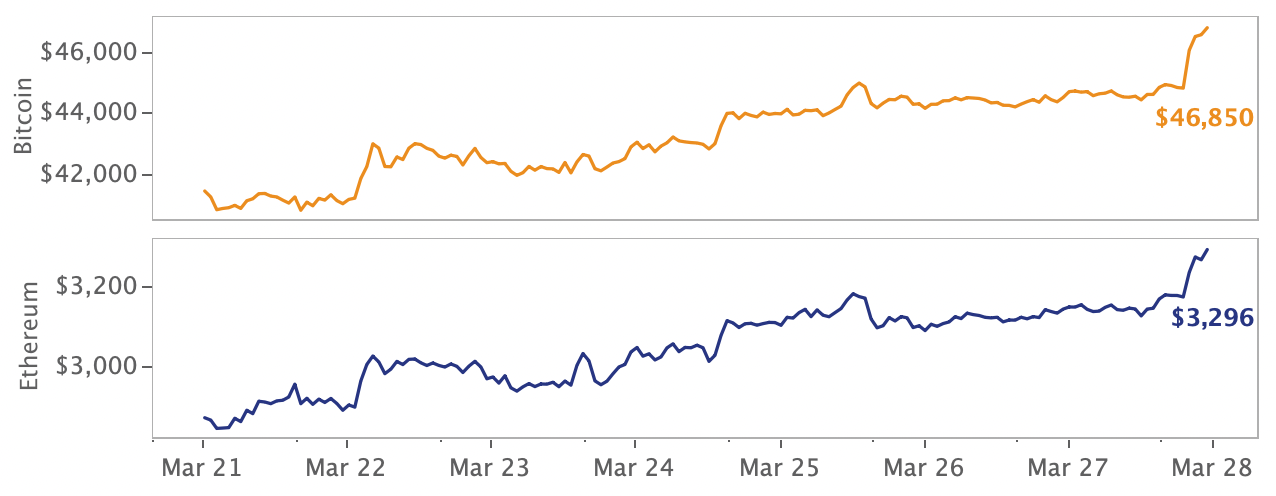
Crypto markets ended the week on a high note despite money markets, once again, ramping up monetary tightening expectations following hawkish comments by the Fed chair. Bitcoin and Ethereum closed Sunday up 13% and 14.7 %, respectively, and altcoins earned their fair share of gains. Layer 1 tokens in particular performed well, with Cardano’s ADA up 33% and Solana’s SOL up 21%.

In other industry news, Goldman Sachs completed its first over-the-counter crypto transaction, Bridgewater Associates — the world’s largest hedge fund — reportedly is planning to invest in a crypto fund, and micro-investing app Acorns added Bitcoin exposure as an option for long-term investment.

Fiat and crypto Ukrainian currency markets diverge.
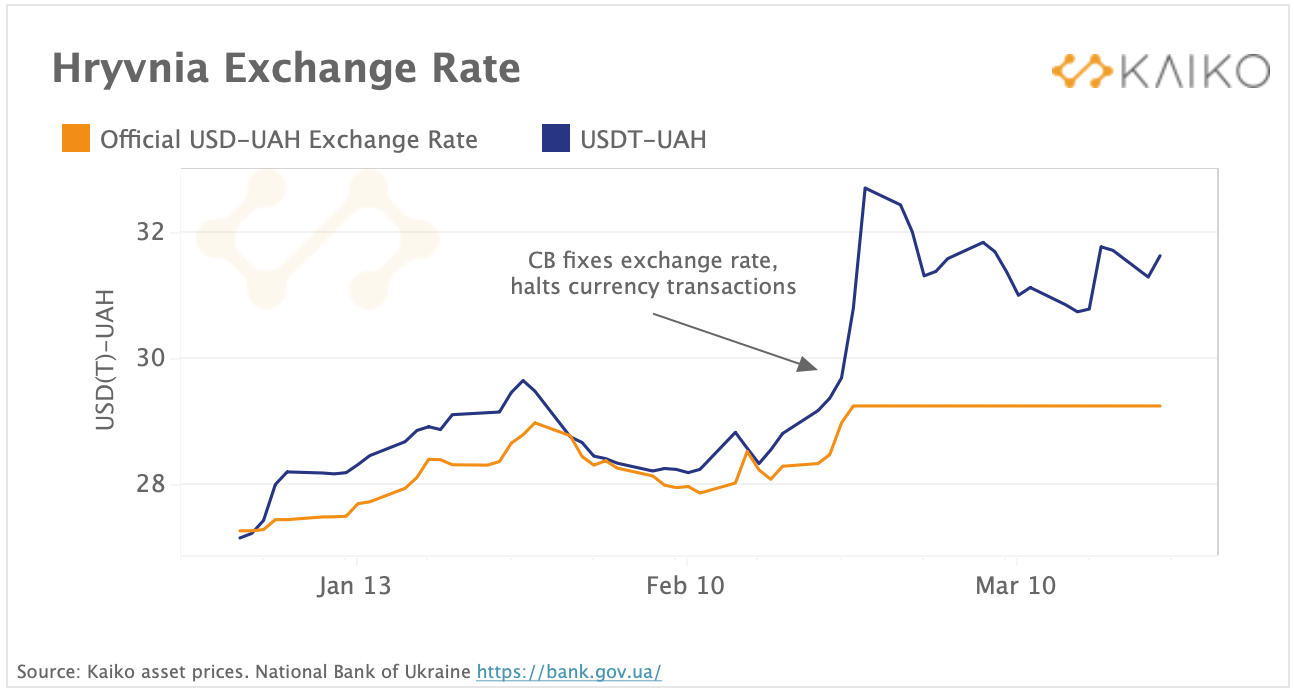
Ukrainian currency markets have experienced strong disruptions since the start of the war, with UAH plummeting to all time lows versus the USD. The Ukrainian central bank has since halted currency transactions, limited cross-border transfers and fixed the exchange rate at around 29 UAH for one USD in an attempt to defend its currency and limit bank runs. By contrast, crypto markets continue to operate 24/7 and have emerged as a source of liquidity, enabling a form of artificial market for USD through the stablecoin Tether. Since the onset of the central bank’s currency restrictions, we have observed a strong divergence between the exchange rate for UAH to USDT and actual UAH-USD forex markets, which remain fixed. Today, 1 USDT is trading around 32UAH on Binance.

On March 19th, the largest commercial bank in Ukraine suspended UAH deposits to cryptocurrency exchanges in an attempt to reduce currency outflows. The divergence in exchange rates on Binance suggests that free forex markets would cause the currency to depreciate even further, and is an interesting example of crypto’s ability to foster parallel markets.

Bitcoin discount emerges on Korean markets.
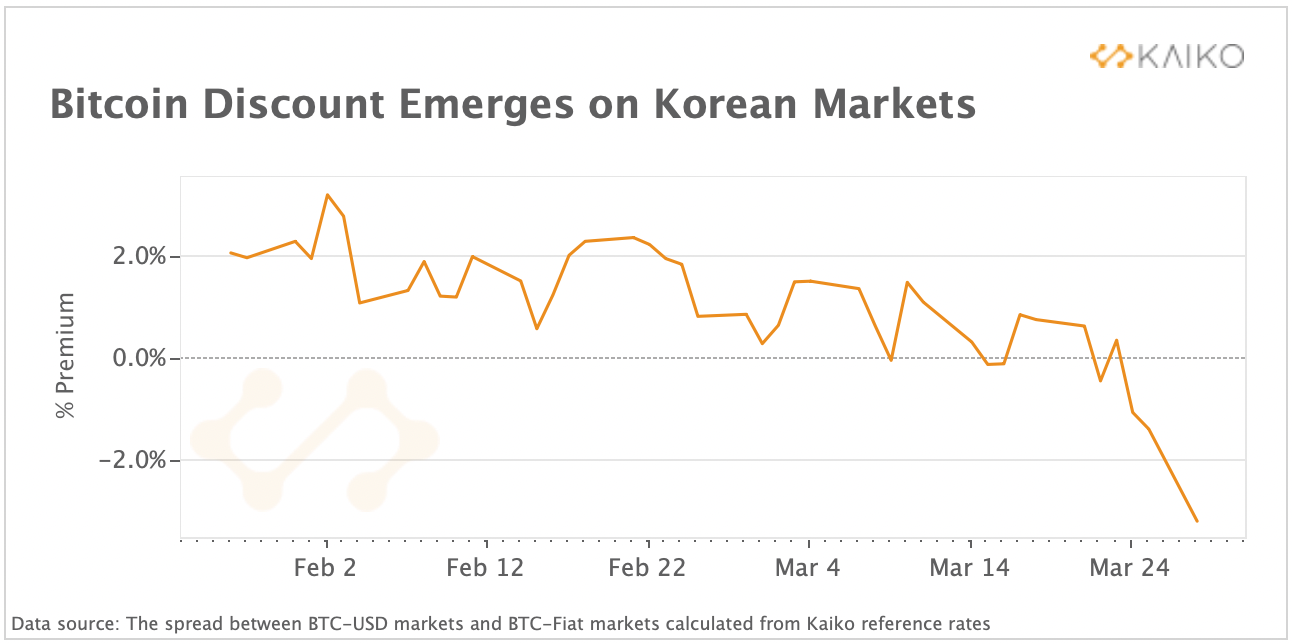
Bitcoin traded at a discount of 3.2 % relative to the U.S. Dollar on Korean markets last week after the entry into force of new crypto regulation on March 25th. South Korea’s unique regulatory framework, restricting cross-border capital transfers for foreigners, resulted in the so-called “Kimchi Premium’’ since 2016 — a gap between Bitcoin prices on Korean markets and on other global exchanges. At times, Bitcoin has traded at a premium of as much as 20% on Korean markets relative to U.S. markets.

However, for the first time in years, this premium has turned into a discount as traders anticipated the adoption of the Financial Action Task Force (FATF) travel rule, which requires virtual assets service providers to collect and disclose customer information for all transactions above a threshold, in this case about ~$820.

Trade Volume

Korean exchange volume plummets amid stricter regulatory environment.
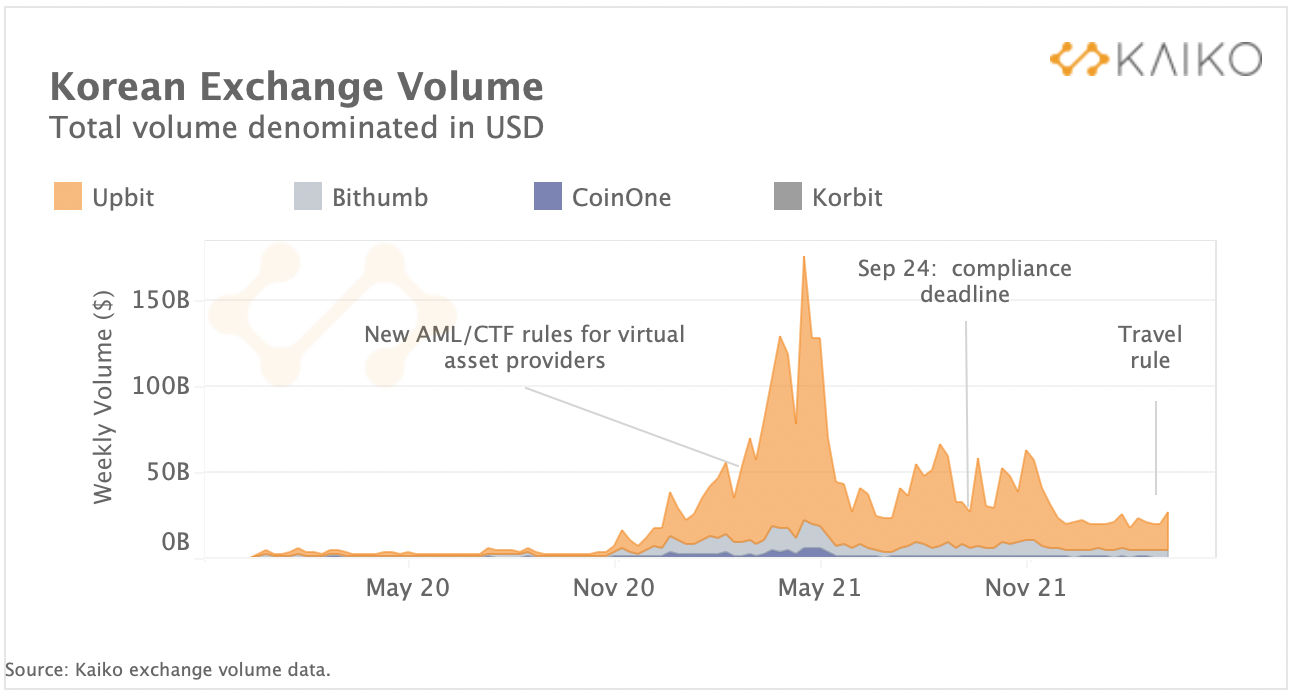
The growing cost of compliance with crypto regulations and stringent reporting requirements has led to a consolidation of the Korean crypto market and the withdrawal of major exchanges such as Binance and Okex from the region. Stricter regulations could also be impacting trade volume over the past few months. We can observe that weekly trade volume on the “Big four” exchanges dominating the Korean market — Upbit, Bithumb, Coinone and Korbit — are down more than 140% relative to the November average. For context, BTC-USD trade volumes aggregated across the ten largest global exchanges, have dropped just 25% over the same period. Upbit, which remains the market leader with around 80% of total trade volume, has seen the strongest drop in volumes.

ETH market structure has evolved since 2021.
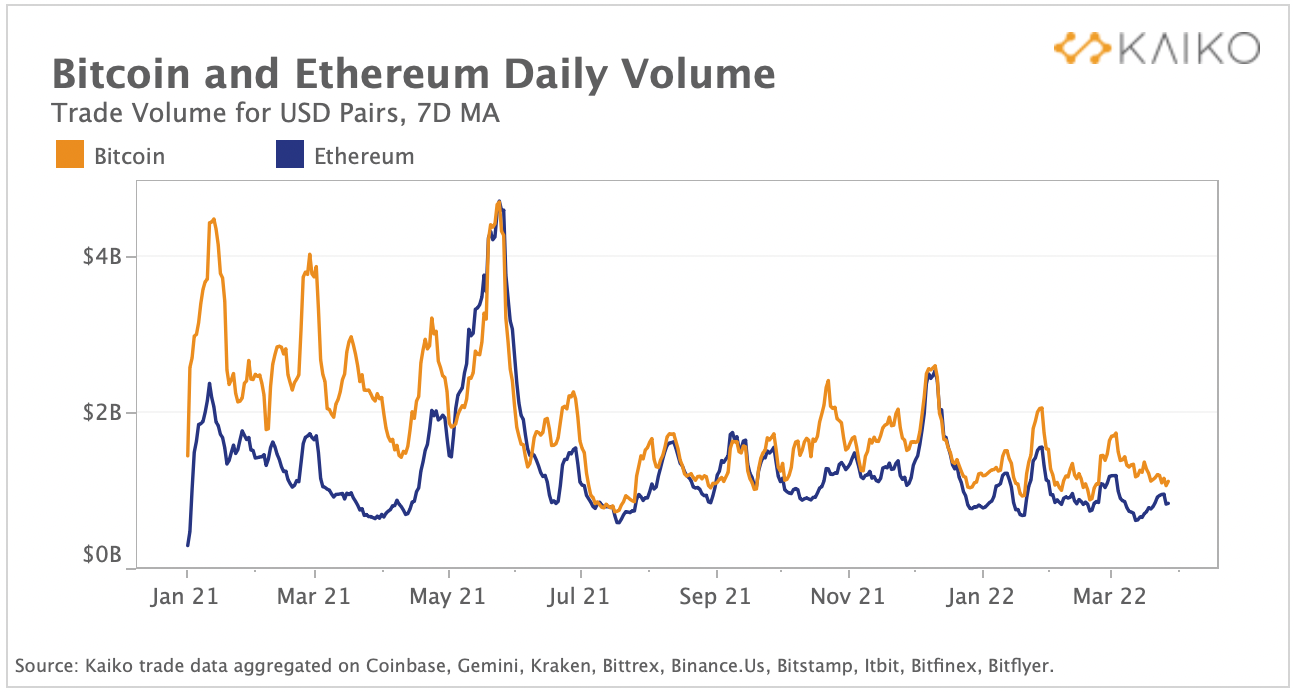
Crypto market structure has evolved significantly over the past year with Ethereum gaining interest as an investment asset. We can understand this shift in market structure by looking at daily average volume for BTC and ETH. While daily volumes diverged strongly during the 2021 crypto bull market, with Bitcoin trade volumes on average 50% higher than Ethereum’s, the gap between the two has declined ever since May 2021 and currently hovers around 30%. The gap widens and falls as markets enter periods of bearishness — when traders rotate funds out of altcoins — and bullishness — when traders invest more into Ethereum.

We further chart Bitcoin and Ethereum average trade size, and can observe a slightly different trend.
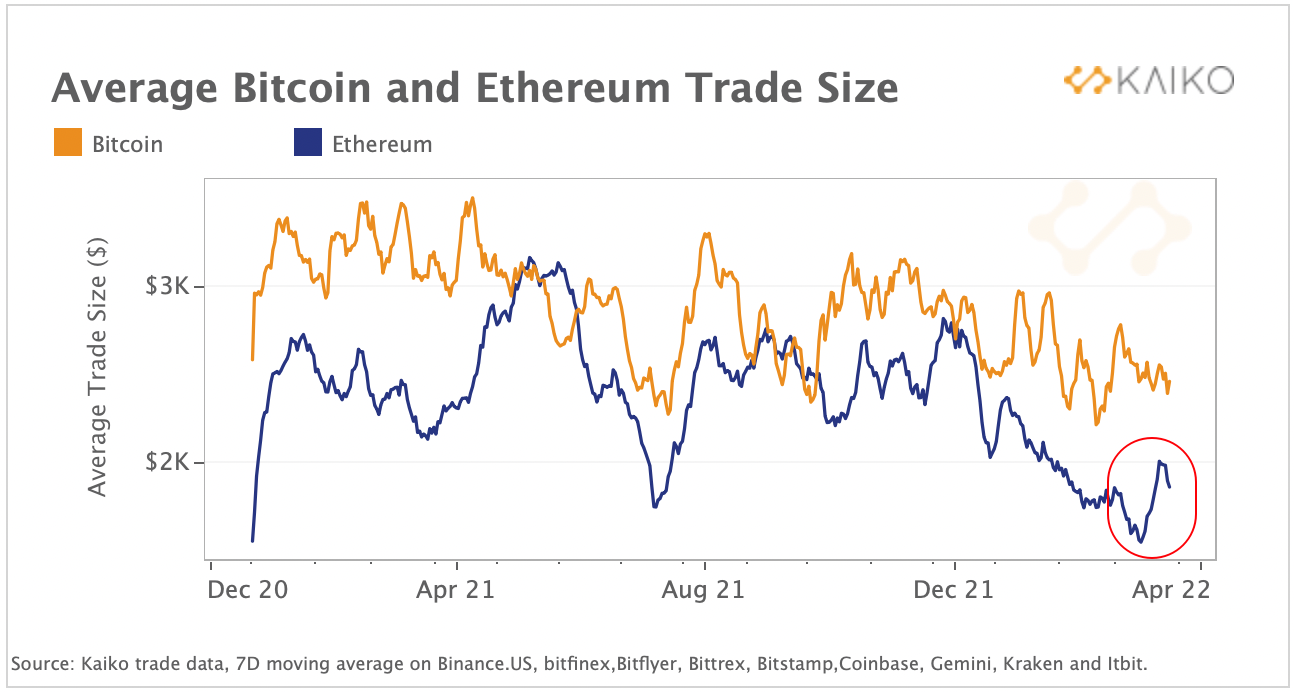
Bitcoin’s average trade size has mostly exceeded Ethereum’s over the past year even as total trade volumes converge. The divergence in trends is possible due to an increase in Ethereum’s overall trade count. Ethereum’s average trade size recently spiked in March, boosted by a bullish turn ahead of the network’s upcoming upgrade, but still remains about $500 lower than Bitcoin’s. Overall, both Bitcoin and Ethereum average trade sizes have fallen since 2021.

Order Book Liquidity

BTC and ETH market depth also converge.
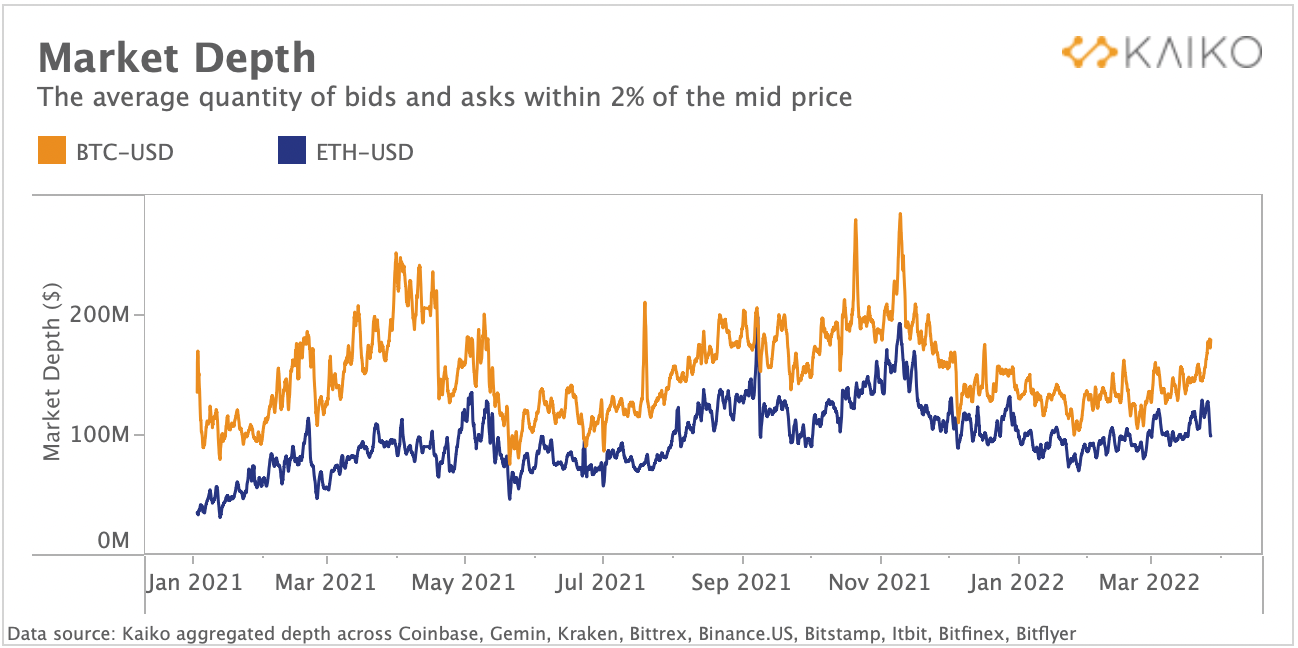
Much like trade volume, market depth for BTC and ETH has also converged since early 2021. Kaiko’s measure for market depth takes the quantity of bids and asks within 2% of the mid price, derived directly from our order book snapshots. Market depth is typically measured using the crypto asset’s native units, but in order to compare different assets we multiply depth by the mid price to get an approximate USD value for the total quantity of assets live on a pair’s order book. Today, there is about $150 million worth of BTC and $100 million worth of ETH within 2% of the mid price aggregated across the most liquid USD pairs.

Overall, BTC-USD order books are still more liquid than ETH-USD order books, but less so than early 2021, when we first observed a shift in market structure towards Ethereum. Today, ETH has about 40% less depth than BTC, while the gap in volume on the same exchanges is about 30%. This suggests market making activity is still catching up.

Spreads recover after volatile February.
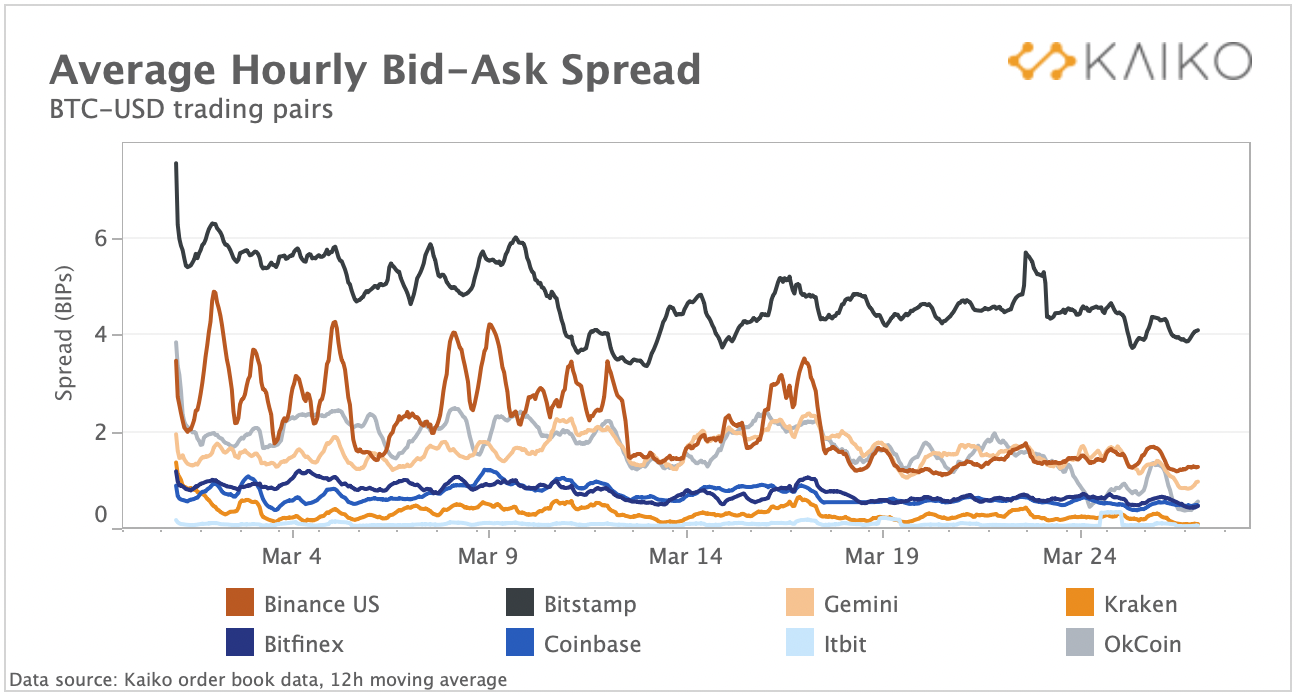
The bid-ask spread for BTC-USD pairs has recovered after a volatile February and early March. For nearly all exchanges, average hourly spreads have dropped. Bitstamp and Binance.US have seen the most improvement, with spreads falling from 6 basis points to 4 and 4 to 2, respectively. Other exchanges are experiencing more stable liquidity as markets recover and continue making gains.

Derivatives

Weekly options volume remain subdued despite big expiry.
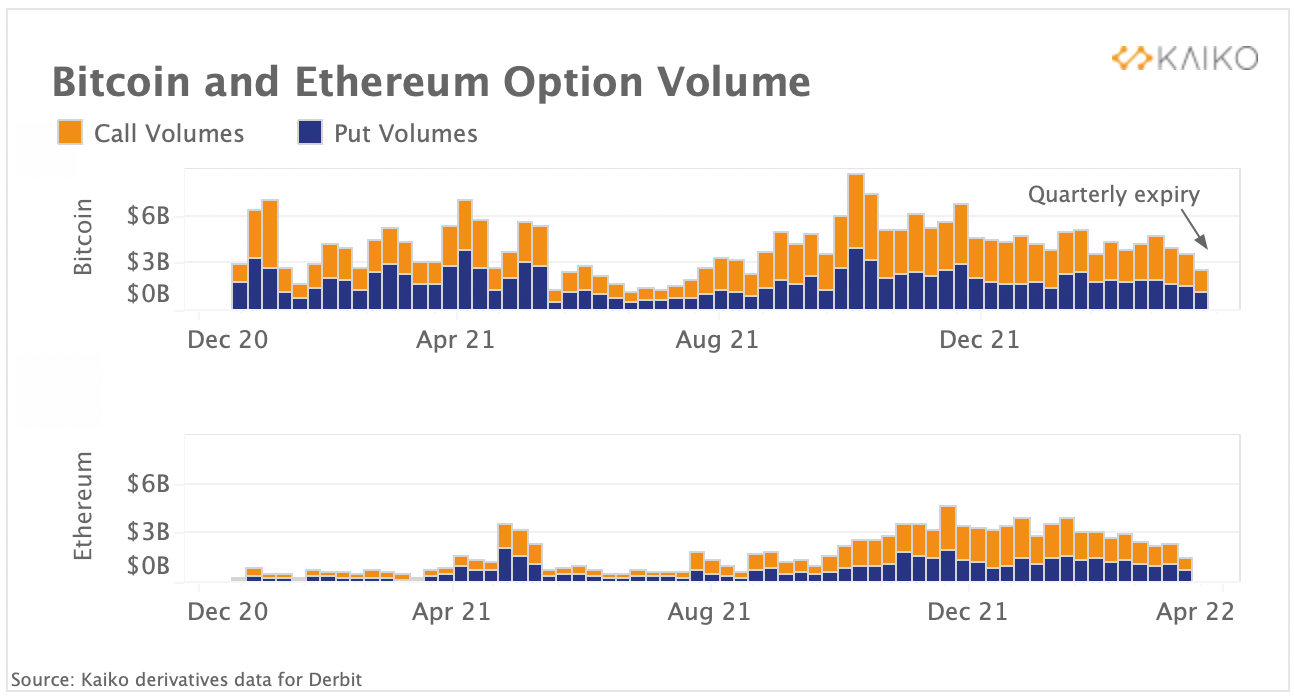
Last week marked one of the biggest quarterly options expiry for Bitcoin and Ethereum, with $5B of options contracts expiring on March 25. Despite traders rolling their positions post- expiration, overall option volumes remained subdued. We can observe that Ethereum and Bitcoin weekly trade volumes totalled around $3B and $1B respectively which is below February’s weekly average. Bitcoin spot prices spiked 13% last week despite a large chunk of BTC call options expiring at a strike price between $45–50K. Typically, this is expected to provide upside resistance to spot prices. However, despite options markets gaining traction over the past year, the market is still small and its impact on spot prices remains limited.

Macro Trends

BTC-ETH correlation at highest level since July 2021.
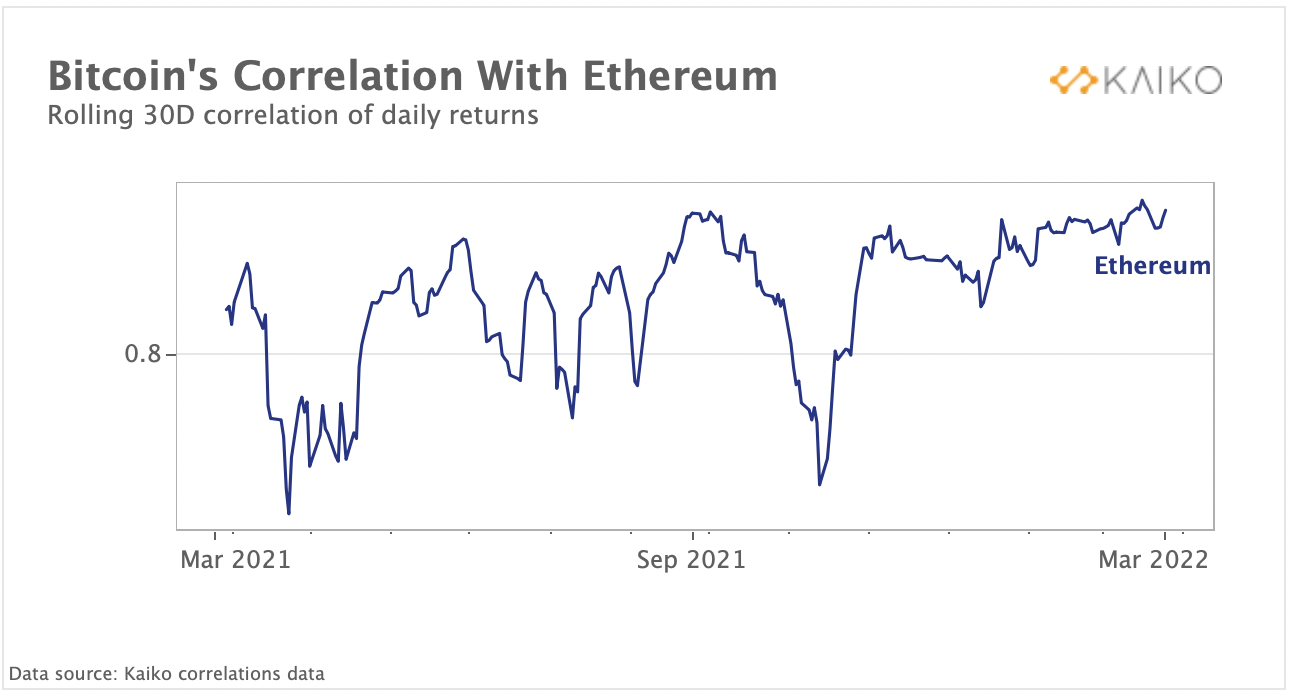
Correlations between assets notoriously converge in times of market volatility. We observe a similar trend in crypto with the 30 day correlation between Ethereum and Bitcoin hitting its highest level since July 2020. The two assets typically tend to move closely together and their correlation has been mostly rising over the past year despite briefly plummeting in April and November.

BITO AUM climbs 11% since start of 2021.
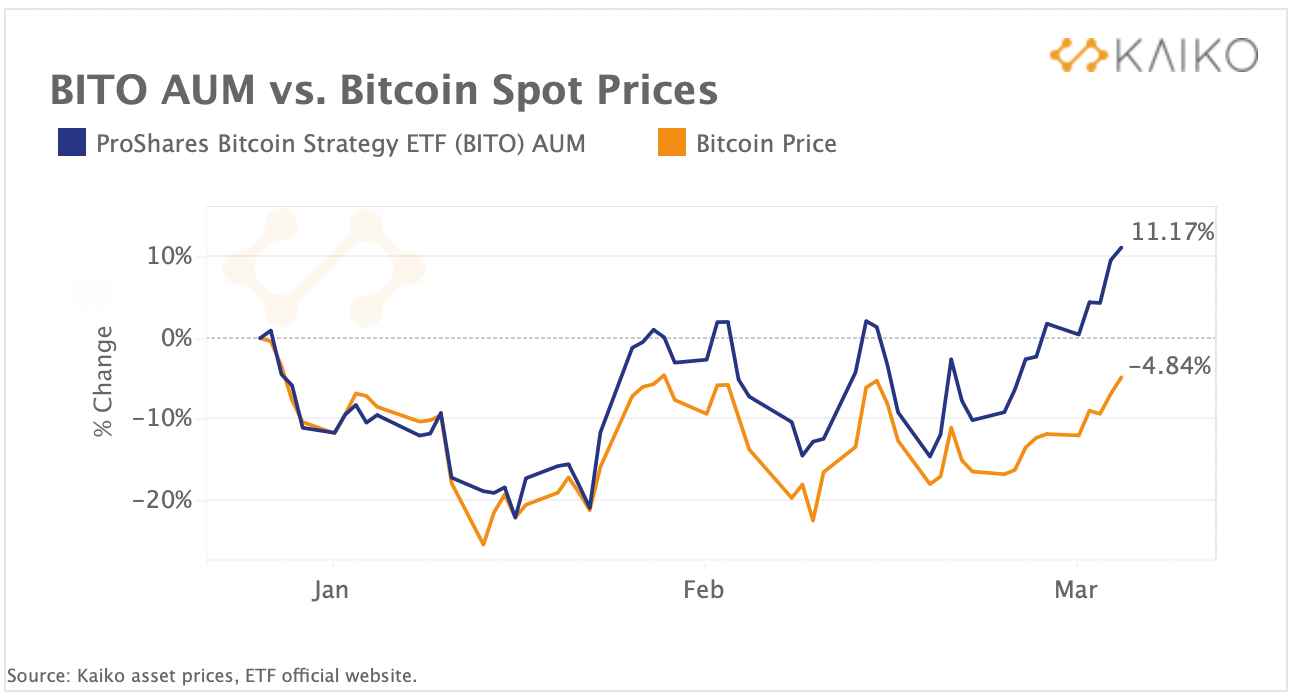
Inflows into Bitcoin-linked investment vehicles have gained traction in March alongside a more moderate crypto market uptick. Above, we chart the percentage change in futures ETF BITO’s assets under management (AUM) alongside the BTC spot price since the start of the year. Although Bitcoin’s price is still down 5% YTD, BITO’s AUM is up 11%. Inflows accelerated in March suggesting improving investment appetite for this type of instrument after investors de-risked their portfolio aggressively in early 2022. Overall, risk assets are off to one of the best rallies on record at the start of a monetary policy tightening cycle. However, stagflation fears are still rampant with the U.S. yield curve — a leading indicator of recession — still close to inversion and the Fed signaling last week that it will deliberately push growth below trend to fight inflation.


Related Reads

Should You Buy SpaceX Stock at $1.7 Trillion? Here's What the Market Is Worried About

SpaceX is preparing for a massive IPO aiming to raise around $75 billion at a valuation of approximately $1.75 trillion. While its achievements in reusable rockets and the profitable Starlink satellite internet service are clear, the market is concerned about the aggressive valuation. Key issues include: the current $1.75 trillion valuation, which is about 94 times 2025 revenue, seems to price in not just existing businesses but also unproven future ventures like AI infrastructure and orbital data centers. Financially, while Starlink is profitable, the AI division, bolstered by the acquisition of xAI, is incurring massive losses and consuming the majority of capital expenditures. This acquisition also introduced complex related-party financing arrangements and debt onto SpaceX's balance sheet. Furthermore, corporate governance poses a challenge. SpaceX's dual-class share structure ensures founder Elon Musk retains absolute control, limiting ordinary shareholders' influence over high-risk, long-term strategic decisions. The future success of ambitious projects like the Starship rocket—critical for lowering costs and enabling new services—remains a significant variable for the valuation. In summary, the market's apprehension (FUD) centers not on doubting SpaceX's past technological triumphs but on questioning how much premium public investors should pay for a future that combines proven profits with highly speculative and capital-intensive new ventures, all under a governance structure that offers limited shareholder oversight.

marsbit30m ago

Should You Buy SpaceX Stock at $1.7 Trillion? Here's What the Market Is Worried About

marsbit30m ago

Breaking the DeFi Cascading Liquidation Curse: Vitalik Proposes a New Solution

Vitalik Buterin has proposed a new DeFi design to eliminate the automatic liquidation mechanism that causes market instability during sharp downturns. The current system, used by protocols like Aave, triggers forced sales when collateral value falls below a threshold, often exacerbating price drops and creating systemic selling pressure. Buterin's alternative model is based on splitting an asset like ETH into two synthetic option-like tokens, P and N, pegged to a price index. Their combined value always equals one ETH. Instead of sudden liquidation, a position's value gradually drifts from its target peg if the market moves. Users must proactively rebalance their holdings to maintain their desired exposure, transferring the management burden from the protocol to the user or automated tools. A key advantage is the reduced reliance on real-time oracles. Pricing decisions are deferred until contract expiry, allowing for more robust, fault-tolerant oracle designs. This removes a clear liquidation threshold that speculators can target for manipulation or MEV extraction. However, significant challenges remain. Frequent rebalancing could incur high slippage and transaction costs, necessitating new liquidity provider models. The design is better suited for hedging instruments than for stablecoins requiring a rigid 1:1 peg. While not an immediate replacement for existing systems, the proposal challenges the foundational assumption that instantaneous forced liquidation is an unavoidable necessity in DeFi, opening the door for fundamentally different risk management architectures.

marsbit34m ago

Breaking the DeFi Cascading Liquidation Curse: Vitalik Proposes a New Solution

marsbit34m ago

The End of Single-Factor Cryptography

The article "The End of Single-Factor Crypto" posits a fundamental shift in the cryptocurrency ecosystem. It argues the era where crypto asset valuations were predominantly driven by, and correlated with, Bitcoin's price is ending. The space is bifurcating into two distinct economies: endogenous and exogenous. The endogenous economy represents traditional crypto, where token and project values are directly tied to crypto market prices. The emerging exogenous economy comprises projects and businesses that may utilize blockchain technology or tokens but derive their fundamental value from external, non-crypto factors like consumer demand, subscription revenue, or real-world utility. Examples include AI inference platforms like Venice, fintech lenders using blockchain for efficiency, and stablecoin/payment infrastructure companies acquired by giants like Mastercard and Stripe. This shift means investment analysis must change. For exogenous assets, evaluating traditional business fundamentals—such as revenue streams, unit economics, and competitive moats—becomes more critical than tracking Bitcoin charts. While endogenous assets like Bitcoin remain relevant, the growth of the exogenous category is driven by measurable demand independent of crypto price cycles, paving the way for a new, more diversified market phase. Consequently, crypto is evolving from a single-factor, reflexive asset class into a multifaceted ecosystem with varied drivers and investment theses.

marsbit35m ago

The End of Single-Factor Cryptography

marsbit35m ago

Morning Post | Bitmine Plans to Raise $300 Million Through Preferred Stock Issuance; Polymarket Accuses Kalshi of Commercial Espionage

ChainCatcher's Daily Crypto Brief: Key developments from the past 24 hours include significant funding moves, regulatory actions, and market predictions. Bitmine announced a $300 million preferred stock fundraising. Polymarket accused rival prediction platform Kalshi of corporate espionage, citing numerous suspicious coincidences in product launches, a claim Kalshi strongly denied. The U.S. Department of Justice, in a joint "Disruption Week" anti-fraud operation with companies like Coinbase and Meta, froze over $3.8 million in cryptocurrency linked to scams. In infrastructure news, Macau completed its integration with the multi-central bank digital currency bridge, mBridge, aiming to build efficient cross-border payment channels. Cosmos Labs acquired the block explorer Mintscan. Market-wise, Geoffrey Kendrick, Standard Chartered's Head of Digital Assets Research, stated Bitcoin is nearing a bottom around $63,000, maintaining a year-end target of $100,000. He noted stability in U.S. spot Bitcoin ETF holdings. Ahead of SpaceX's anticipated IPO, internal insiders at Rocket Lab (RKLB) sold over $18.41 million in stock. In tokenization, Goldman Sachs partnered with Apex and Archax to launch a tokenized real estate fund. The meme token tracker GMGN reported the top trending tokens: on Ethereum, HEX, SHIB, LINK, PEPE, mUSD; on Solana, TROLL, swarms, WORLDCUP, neet, Buttcoin; and on Base, PEPE, toby, ODDS, ELSA, SKI.

链捕手49m ago

Morning Post | Bitmine Plans to Raise $300 Million Through Preferred Stock Issuance; Polymarket Accuses Kalshi of Commercial Espionage

链捕手49m ago

Trading

Spot
Futures

Hot Articles

What is $BITCOIN

DIGITAL GOLD ($BITCOIN): A Comprehensive Analysis Introduction to DIGITAL GOLD ($BITCOIN) DIGITAL GOLD ($BITCOIN) is a blockchain-based project operating on the Solana network, which aims to combine the characteristics of traditional precious metals with the innovation of decentralized technologies. While it shares a name with Bitcoin, often referred to as “digital gold” due to its perception as a store of value, DIGITAL GOLD is a separate token designed to create a unique ecosystem within the Web3 landscape. Its goal is to position itself as a viable alternative digital asset, although specifics regarding its applications and functionalities are still developing. What is DIGITAL GOLD ($BITCOIN)? DIGITAL GOLD ($BITCOIN) is a cryptocurrency token explicitly designed for use on the Solana blockchain. In contrast to Bitcoin, which provides a widely recognized value storage role, this token appears to focus on broader applications and characteristics. Notable aspects include: Blockchain Infrastructure: The token is built on the Solana blockchain, known for its capacity to handle high-speed and low-cost transactions. Supply Dynamics: DIGITAL GOLD has a maximum supply capped at 100 quadrillion tokens (100P $BITCOIN), although details regarding its circulating supply are currently undisclosed. Utility: While precise functionalities are not explicitly outlined, there are indications that the token could be utilized for various applications, potentially involving decentralized applications (dApps) or asset tokenization strategies. Who is the Creator of DIGITAL GOLD ($BITCOIN)? At present, the identity of the creators and development team behind DIGITAL GOLD ($BITCOIN) remains unknown. This situation is typical among many innovative projects within the blockchain space, particularly those aligning with decentralized finance and meme coin phenomena. While such anonymity may foster a community-driven culture, it intensifies concerns about governance and accountability. Who are the Investors of DIGITAL GOLD ($BITCOIN)? The available information indicates that DIGITAL GOLD ($BITCOIN) does not have any known institutional backers or prominent venture capital investments. The project seems to operate on a peer-to-peer model focused on community support and adoption rather than traditional funding routes. Its activity and liquidity are primarily situated on decentralized exchanges (DEXs), such as PumpSwap, rather than established centralized trading platforms, further highlighting its grassroots approach. How DIGITAL GOLD ($BITCOIN) Works The operational mechanics of DIGITAL GOLD ($BITCOIN) can be elaborated on based on its blockchain design and network attributes: Consensus Mechanism: By leveraging Solana’s unique proof-of-history (PoH) combined with a proof-of-stake (PoS) model, the project ensures efficient transaction validation contributing to the network's high performance. Tokenomics: While specific deflationary mechanisms have not been extensively detailed, the vast maximum token supply implies that it may cater to microtransactions or niche use cases that are still to be defined. Interoperability: There exists the potential for integration with Solana’s broader ecosystem, including various decentralized finance (DeFi) platforms. However, the details regarding specific integrations remain unspecified. Timeline of Key Events Here is a timeline that highlights significant milestones concerning DIGITAL GOLD ($BITCOIN): 2023: The initial deployment of the token occurs on the Solana blockchain, marked by its contract address. 2024: DIGITAL GOLD gains visibility as it becomes available for trading on decentralized exchanges like PumpSwap, allowing users to trade it against SOL. 2025: The project witnesses sporadic trading activity and potential interest in community-led engagements, although no noteworthy partnerships or technical advancements have been documented as of yet. Critical Analysis Strengths Scalability: The underlying Solana infrastructure supports high transaction volumes, which could enhance the utility of $BITCOIN in various transaction scenarios. Accessibility: The potential low trading price per token could attract retail investors, facilitating wider participation due to fractional ownership opportunities. Risks Lack of Transparency: The absence of publicly known backers, developers, or an audit process may yield skepticism regarding the project's sustainability and trustworthiness. Market Volatility: The trading activity is heavily reliant on speculative behavior, which can result in significant price volatility and uncertainty for investors. Conclusion DIGITAL GOLD ($BITCOIN) emerges as an intriguing yet ambiguous project within the rapidly evolving Solana ecosystem. While it attempts to leverage the “digital gold” narrative, its departure from Bitcoin's established role as a store of value underscores the need for a clearer differentiation of its intended utility and governance structure. Future acceptance and adoption will likely depend on addressing the current opacity and defining its operational and economic strategies more explicitly. Note: This report encompasses synthesised information available as of October 2023, and developments may have transpired beyond the research period.

363 Total ViewsPublished 2025.05.13Updated 2025.05.13

What is $BITCOIN

Discussions

Welcome to the HTX Community. Here, you can stay informed about the latest platform developments and gain access to professional market insights. Users' opinions on the price of BTC (BTC) are presented below.

活动图片