解读比特矿业Q4财报:减持512个比特币,终止哈萨克斯坦数据中心建设

区块链日报Published on 2022-02-20Last updated on 2022-02-20

Abstract

财报显示,比特矿业2021年第四季度营业收入约为4.958亿美元,2020年第四季度营业收入约为80万美元,同比大幅上升4.950亿美元。

近日,比特矿业(BIT Mining Limited),公布了2021年第四季度财报。数据显示该季度公司收入约为4.958亿美元,收购的矿池业务收入约为4.729亿美元,占比超过95.38%。

值得注意的是,2021年5月份国内对于比特币交易和挖矿进行清理整顿后,比特矿业将国内的矿场转移自海外。

财报显示,截至2021年12月31日,比特矿业拥有5510万美元的加密货币资产。其中450个比特币、5931个以太坊、5180万个狗狗币以及各种其他加密货币资产。

减持500多个比特币

财报显示,比特矿业2021年第四季度营业收入约为4.958亿美元,2021年第三季度营业收入约为3.931亿美元,环比增长26.13%;2020年第四季度营业收入约为80万美元,同比大幅上升4.950亿美元。2021年第四季度营业收入主要来自于2021年4月收购的矿池业务收入,约为4.729亿美元。

2021年9月24日,央行联合公安部、最高检察院、最高法院等十部委发布《关于进一步防范和处置虚拟货币交易炒作风险的通知》。不久后的10月14日,比特矿业宣布其矿池子公司BTC.com将退出中国大陆市场,停止中国大陆新用户注册,并有序停用中国大陆现有用户的账户。

财报提到,公司与中国大陆的现有用户一起研究解决方案,例如将这些用户的矿机迁移到海外市场,使他们能够以合规的方式使用矿池服务。
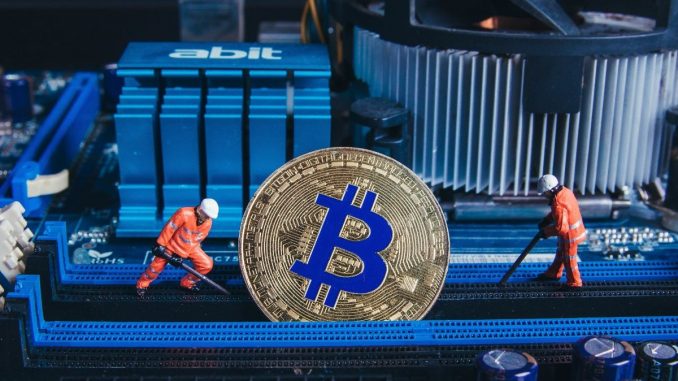
“已经完成了所有比特币矿机向美国和哈萨克斯坦的迁移。”比特矿业方面表示。

财报显示,截至目前比特矿业的理论最大比特币总哈希率容量约为825.4 PH/s。其中美国总哈希率为532.7 PH/s ,378.5 PH/s已经部署在数据中心,其余的已经进行了微调,正在等待部署。

在哈萨克斯坦,比特矿业拥有总哈希率为292.7 PH/s的比特币矿机,其中135.3 PH/s已经部署在数据中心,其余的已经进行了微调,正在等待部署。

截至2021年12月31日的三个月中,比特矿业从加密货币开采业务中生产了102个比特币,并确认了大约560万美元的收入。截至目前,比特矿业总共生产了488枚比特币。

在以太坊矿机方面,比特矿业的以太坊矿机理论最大总哈希率容量约为4800.0 GH/s,其中已部署4737.6 GH/s。在截至2021年12月31日的三个月中,比特矿业通过以太坊矿机业务生产了3957以太,确认收入约为1650万美元。

此外财报显示,截至2021年12月31日,比特矿业拥有5510万美元的加密货币资产。其中450个比特币、5931个以太坊、5180万个狗狗币以及各种其他加密货币资产。

据此前比特矿业公布的2021年三季度财报显示,截至2021年9月30日,该公司拥有加密数字货币资产约为5680万美元,其中860个比特币、2024个以太坊和其他多种加密数字货币资产。

很明显,比特矿业在2021年第四季度减持了512个比特币。

“预计以太坊潜力将在推动互联网技术创新的去中心化和标记化方面发挥关键作用。”对于减持比特币,比特矿业CEO杨险峰在财报中如此解释。

在此前的三季报财报中,杨险峰曾表示,较早预见到了以太坊作为基础货币的潜在价值,包括在非同质化通证(NFTs)、去中心化金融(DeFi)和元宇宙的价值。

终止哈萨克斯坦数据中心建设计划

在数据中心业务方面,2021年6月21日,比特矿业根据国网四川甘孜州电力有限责任公司的书面通知,宣布四川两个大数据中心已停止营运。

2021年9月,比特矿业与Viking Data Centers, LLC签署合作协议,收购在美国俄亥俄州在建运营容量为85MW的加密数字货币矿场51%的股权。

2021年10月,公司追加投资,将矿场容量从原计划的85MW提高至150MW,公司持股比例提高至55%。比特矿业预计在2022年上半年完成矿场建设。截至目前,该矿场已建设约50MW,已运行约43MW。
财报显示,香港的数据中心最大容量约为1.4兆瓦,自2021年10月以来一直在运营和开采ETH。

比特矿业内部相关人员表示,中国香港数据中心相对美国矿场来说体量相对要小一些,定位是服务于poc和pos之类的挖矿。

值得注意的是,2021年5月24日,比特矿业发布公告,称已与一家哈萨克斯坦公司签署了一份有法律约束力的投资条款,双方将在哈萨克斯坦共同投资建设大数据中心(“哈萨克斯坦矿场”)。根据条款,比特矿业计划投入总金额6000万人民币(约合933万美金),与合作方共同建设和运营负荷为100兆瓦的矿场。矿场建成后,公司将持有哈萨克斯坦矿场的80%股权,合作方持有20%股权。

“由于当地能源供应不稳定,公司终止了于2021年5月宣布的哈萨克斯坦数据中心建设计划。”比特矿业在财报中表示,比特币矿机部署在哈萨克斯坦的第三方数据中心,目前仍在运行,未受影响。

值得注意的是,财报显示美国及香港部署矿机算力提升,挖矿业务收入上升约1630万美元。但并没有提到哈萨克斯坦挖矿业务的营收情况。

比特矿业副总裁郑丹妮表示,现在的挖矿营收是包含了哈萨克斯坦的,只是没有继续在哈萨克增加矿机,矿场的重心主要还是在美国。

Trending Cryptos

Related Reads

The Verdict in Choi Tae-won's Divorce Case: Revealing the Inheritance Undercurrent Behind SK Hynix's Trillion-Won Empire

SK Group Chairman Chey Tae-won's high-profile divorce case, involving a record 1.38 trillion won settlement, has drawn attention to the succession plans for Korea's second-largest conglomerate, especially its crown jewel, SK hynix. Unlike traditional chaebol scripts centered on the eldest son, Chey's three children from his marriage to former President Roh Tae-woo's daughter, Roh Soh-yeong, are carving distinct, non-traditional paths. Eldest daughter Chey Yun-jung (b. 1989) is seen as the most evident successor. With a scientific and consulting background, she holds executive roles at SK bioscience and SK Inc.'s growth support department, focusing on future strategy and biopharma. Her marriage is to an AI infrastructure entrepreneur, not a traditional business alliance. Second daughter Chey Min-jung (b. 1991) took a unique route, voluntarily serving as a South Korean naval officer, including an anti-piracy deployment. She later worked on policy and strategy for SK hynix in Washington D.C. before co-founding an AI-driven healthcare startup. She married a former U.S. Marine Corps officer, connecting her to U.S. defense and policy circles—networks crucial for a global semiconductor giant. The only son, Chey In-geun (b. 1995), who studied physics like his father, worked briefly at SK E&S before joining McKinsey. Despite fitting the traditional "heir" profile as the eldest son, he remains silent and holds no public position or shares in SK, suggesting the old succession playbook is obsolete. As SK hynix's valuation soars, becoming a geopolitical asset in the AI era, the heirs' legitimacy is no longer automatic. They must prove themselves in fields like AI biotech, global policy, and strategic consulting. Their marriages also reflect new elite networks in tech and defense, not old political alliances. Their inheritance is the complex challenge of navigating a globalized, tech-driven world, not just a corporate throne.

marsbit2 days ago 09:06

The Verdict in Choi Tae-won's Divorce Case: Revealing the Inheritance Undercurrent Behind SK Hynix's Trillion-Won Empire

marsbit2 days ago 09:06

From OpenSea to OpenRouter: Is Alex Atallah Repeating His 'Exit at the Peak' Playbook?

From OpenSea to OpenRouter: Is Alex Atallah Repeating His "Exit at the Peak" Playbook? According to the Wall Street Journal, payments giant Stripe is in talks to acquire the AI model aggregation platform OpenRouter in a potential deal valuing the company near $100 billion. This would mark founder Alex Atallah's second creation of a company reaching a $100 billion valuation, following his co-founding of NFT marketplace OpenSea. OpenRouter, founded just over three years ago, has grown rapidly by acting as a unified gateway for developers to access over 400 AI models. It currently has about 10 million users and processes over 200 trillion tokens monthly. While the platform's annualized revenue is around $50 million, its valuation has skyrocketed from $1.3 billion in March 2026. The potential acquisition by Stripe, a company OpenRouter's founder once likened it to, represents a major expansion into AI infrastructure for the payments leader. This move echoes Atallah's previous timing with OpenSea, where he departed before the NFT market's significant downturn. For OpenRouter, selling now may be strategic. Despite its scale, its business model—charging a 5-5.5% fee on AI inference calls—faces pressure from competition, open-source models, and potential price wars among model providers, limiting its profitability narrative for an IPO. A key asset for potential acquirers like Stripe is OpenRouter's vast repository of real-world AI usage data, which offers unique insights into model performance and developer preferences that are difficult to replicate. Whether this potential deal signifies a new valuation benchmark for AI infrastructure or another market peak signal remains to be seen.

链捕手2 days ago 08:42

From OpenSea to OpenRouter: Is Alex Atallah Repeating His 'Exit at the Peak' Playbook?

链捕手2 days ago 08:42

Trading

Spot

Hot Articles

What is $BITCOIN

DIGITAL GOLD ($BITCOIN): A Comprehensive Analysis Introduction to DIGITAL GOLD ($BITCOIN) DIGITAL GOLD ($BITCOIN) is a blockchain-based project operating on the Solana network, which aims to combine the characteristics of traditional precious metals with the innovation of decentralized technologies. While it shares a name with Bitcoin, often referred to as “digital gold” due to its perception as a store of value, DIGITAL GOLD is a separate token designed to create a unique ecosystem within the Web3 landscape. Its goal is to position itself as a viable alternative digital asset, although specifics regarding its applications and functionalities are still developing. What is DIGITAL GOLD ($BITCOIN)? DIGITAL GOLD ($BITCOIN) is a cryptocurrency token explicitly designed for use on the Solana blockchain. In contrast to Bitcoin, which provides a widely recognized value storage role, this token appears to focus on broader applications and characteristics. Notable aspects include: Blockchain Infrastructure: The token is built on the Solana blockchain, known for its capacity to handle high-speed and low-cost transactions. Supply Dynamics: DIGITAL GOLD has a maximum supply capped at 100 quadrillion tokens (100P $BITCOIN), although details regarding its circulating supply are currently undisclosed. Utility: While precise functionalities are not explicitly outlined, there are indications that the token could be utilized for various applications, potentially involving decentralized applications (dApps) or asset tokenization strategies. Who is the Creator of DIGITAL GOLD ($BITCOIN)? At present, the identity of the creators and development team behind DIGITAL GOLD ($BITCOIN) remains unknown. This situation is typical among many innovative projects within the blockchain space, particularly those aligning with decentralized finance and meme coin phenomena. While such anonymity may foster a community-driven culture, it intensifies concerns about governance and accountability. Who are the Investors of DIGITAL GOLD ($BITCOIN)? The available information indicates that DIGITAL GOLD ($BITCOIN) does not have any known institutional backers or prominent venture capital investments. The project seems to operate on a peer-to-peer model focused on community support and adoption rather than traditional funding routes. Its activity and liquidity are primarily situated on decentralized exchanges (DEXs), such as PumpSwap, rather than established centralized trading platforms, further highlighting its grassroots approach. How DIGITAL GOLD ($BITCOIN) Works The operational mechanics of DIGITAL GOLD ($BITCOIN) can be elaborated on based on its blockchain design and network attributes: Consensus Mechanism: By leveraging Solana’s unique proof-of-history (PoH) combined with a proof-of-stake (PoS) model, the project ensures efficient transaction validation contributing to the network's high performance. Tokenomics: While specific deflationary mechanisms have not been extensively detailed, the vast maximum token supply implies that it may cater to microtransactions or niche use cases that are still to be defined. Interoperability: There exists the potential for integration with Solana’s broader ecosystem, including various decentralized finance (DeFi) platforms. However, the details regarding specific integrations remain unspecified. Timeline of Key Events Here is a timeline that highlights significant milestones concerning DIGITAL GOLD ($BITCOIN): 2023: The initial deployment of the token occurs on the Solana blockchain, marked by its contract address. 2024: DIGITAL GOLD gains visibility as it becomes available for trading on decentralized exchanges like PumpSwap, allowing users to trade it against SOL. 2025: The project witnesses sporadic trading activity and potential interest in community-led engagements, although no noteworthy partnerships or technical advancements have been documented as of yet. Critical Analysis Strengths Scalability: The underlying Solana infrastructure supports high transaction volumes, which could enhance the utility of $BITCOIN in various transaction scenarios. Accessibility: The potential low trading price per token could attract retail investors, facilitating wider participation due to fractional ownership opportunities. Risks Lack of Transparency: The absence of publicly known backers, developers, or an audit process may yield skepticism regarding the project's sustainability and trustworthiness. Market Volatility: The trading activity is heavily reliant on speculative behavior, which can result in significant price volatility and uncertainty for investors. Conclusion DIGITAL GOLD ($BITCOIN) emerges as an intriguing yet ambiguous project within the rapidly evolving Solana ecosystem. While it attempts to leverage the “digital gold” narrative, its departure from Bitcoin's established role as a store of value underscores the need for a clearer differentiation of its intended utility and governance structure. Future acceptance and adoption will likely depend on addressing the current opacity and defining its operational and economic strategies more explicitly. Note: This report encompasses synthesised information available as of October 2023, and developments may have transpired beyond the research period.

1.1k Total ViewsPublished 2025.05.13Updated 2025.05.13

What is $BITCOIN

Discussions

Welcome to the HTX Community. Here, you can stay informed about the latest platform developments and gain access to professional market insights. Users' opinions on the price of BTC (BTC) are presented below.

活动图片