SEC is treating Ripple like a Ponzi scheme, law professor says

FinboldPublished on 2023-02-03Last updated on 2023-02-03

Abstract

As the widely publicized case in which the United States Securities and Exchange Commission (SEC) is accusing Ripple of illegally selling the XRP token is awaiting its conclusion, one particular law professor has said that the regulator is treating the blockchain company as a Ponzi schemer.
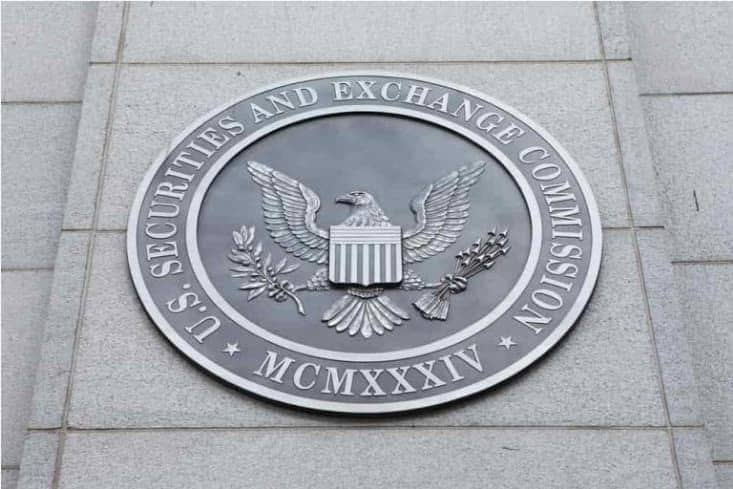
As the widely publicized case in which the United States Securities and Exchange Commission (SEC) is accusing Ripple of illegally selling the XRP token is awaiting its conclusion, one particular law professor has said that the regulator is treating the blockchain company as a Ponzi schemer.

Indeed, in the SEC v. Ripple case, the securities watchdog has asserted that “one test for a security required to register with the SEC, contained in the 1946 Supreme Court case ‘SEC v Howey,’ applies to the XRP token that is used by Ripple,” according to an article written by law professor J.W. Verret from October 2022.

As the associate professor teaching corporate and securities law and financial accounting at George Mason Law School and practicing lawyer explained:

“The test used in SEC v. Howey is typically used by the SEC to sue hucksters, Ponzi schemers, and other con men who sell fake securities. The Howey test is a way to stop them, not a means to facilitate registration with the SEC.”

In Verret’s view, “asking Ripple to list the XRP token and file financial information about the XRP network, much like asking the same for a party working on another crypto network like Ethereum, doesn’t make sense from a securities law or accounting perspective.”

To drive his point home, Verret went on to argue that such a thing “would be the functional equivalent of telling Google they must list ‘the internet’ as an asset on its balance sheet because Google’s value is closely connected to the internet.”

Furthermore, his argument, which was also shared by the pro-XRP defense attorney and the founder of the crypto-related legal and regulatory news portal Crypto Law John E. Deaton on February 3, states that:

“Securities laws and generally accepted accounting principles wouldn’t allow Google to make such a misleading balance sheet counting the internet as a Google-owned asset, and they similarly won’t allow an entity to register XRP or ETH either.”

Instead of fighting crypto companies, Verret asserts, the SEC should instead focus on ending its regulation by enforcement and engaging with crypto reform proposals to update its approach to the regulation of the cryptocurrency industry, similar to how it updated its rules to evolve with the rise of internet communications.

Awaiting judgment

After both sides filed their summary briefings, Deaton referred to the SEC’s argument as “schizophrenic” regarding what constitutes the common enterprise in the Ripple case and argued that there is a possibility that the presiding judge could deny summary judgment.

Meanwhile, the outcome of the legal battle between the SEC and Ripple is projected to impact the broader crypto market, along with the XRP token price performance, as illustrated recently by the lawyer and crypto sector commentator Bill Morgan.


Trending Cryptos

Related Reads

The Full Story of How Crypto Unicorn Blockstream Is Mired in Serious Fraud Allegations

This article details serious allegations of fraud against Bitcoin infrastructure company Blockstream, founded by Bitcoin pioneer Adam Back. In June 2024, investigative account NatInfoSec published a report accusing Blockstream's mining note (BMN) program of potentially operating a multi-billion dollar scheme with Ponzi-like characteristics. The core allegations focus on Blockstream Mining Notes (BMNs), which offer investors fixed annual yields up to approximately 20% from Bitcoin mining. NatInfoSec's investigation raises several key issues: 1. **Suspicious Hashrate & Payout Capacity**: The analysis suggests Blockstream would need 20-45 EH/s of mining power to cover its BMN obligations, but its public dashboard shows only around 15 EH/s. Furthermore, no verifiable public evidence (e.g., grid connection records, import data) was found to support the massive mining operation required. 2. **Questionable Payout Source**: The BMN contract allows Blockstream to use Bitcoin from *any source* (Substitute Performance BTC) to fulfill investor payouts, raising concerns that payouts may not come from actual mining revenue. 3. **High-Risk, Fixed Returns**: Offering ~20% fixed yields in the volatile, cyclical Bitcoin mining industry is viewed as highly unusual and requires clear explanation. 4. **Undisclosed Criminal Record of Key Figure**: Christopher William Cook, a key figure in Blockstream's mining operations and CEO of spin-off Exacore, was found to have a federal felony conviction for mail fraud in 2008, a fact not disclosed in BMN offering documents. His background was also allegedly embellished. 5. **Potential Contagion to BSTR SPAC**: Questions were raised about whether these liabilities and Cook's record should have been disclosed in the SEC filings for Bitcoin Standard Treasury Company (BSTR), a separate Adam Back-associated firm planning a SPAC merger. The crypto community is divided. BitMEX Research validated Cook's criminal record and expressed concern over the high yields but found other evidence lacking or misleading, noting the legal separation between BMN, Blockstream, and BSTR. Blockstream defenders, like Samson Mow, argue the mining is real. Critics, however, emphasize the lack of independent, verifiable proof of the mining operation's scale and the true source of investor payouts. The article concludes that BMN remains shrouded in key unanswered questions regarding its actual size, the verifiability of its underlying mining assets and payouts, the source of its high yields, and the full role and disclosure concerning Chris Cook. Blockstream had not issued a comprehensive response at the time of writing.

marsbit4h ago

The Full Story of How Crypto Unicorn Blockstream Is Mired in Serious Fraud Allegations

marsbit4h ago

Trading

Spot
Futures

Hot Articles

What is XRP 2.0

XRP 2.0: A New Frontier in the Cryptocurrency Landscape Introduction to XRP 2.0 In the ever-evolving realm of cryptocurrency, new projects continuously emerge, vying for attention and adoption. One such promising initiative is XRP 2.0, a novel cryptocurrency project designed to leverage advanced blockchain technology and robust encryption methodologies. While the name draws parallels with Ripple’s XRP, it’s crucial to note that XRP 2.0 operates independently, focusing on enhancing transaction security, privacy, and scalability. As the digital financial landscape increasingly embraces decentralized solutions, XRP 2.0 aims to contribute meaningfully to web3 and the overall expansion of crypto projects. What is XRP 2.0? At its core, XRP 2.0 is a cryptocurrency project that aims to create a secure and decentralized digital currency ecosystem. Its foundational technology integrates sophisticated blockchain principles with cutting-edge encryption techniques. The overarching goal of XRP 2.0 is to establish itself as a reliable and efficient platform enabling swift transaction execution while prioritizing enhanced privacy protections for its users. The project is promoted as a solution to many limitations faced by existing cryptocurrencies, proposing a system that can handle a higher volume of transactions with improved speed and privacy. This versatility positions XRP 2.0 as a significant contender in a marketplace riddled with various digital currencies. Who is the Creator of XRP 2.0? The identity of the creator behind XRP 2.0 has been flagged as ‘Wilbur.’ However, comprehensive details regarding Wilbur or their associated entity remain elusive. The anonymity of many cryptocurrency creators is not an uncommon phenomenon in the industry, often designed to maintain a degree of privacy and security. Who are the Investors of XRP 2.0? As of now, specific information related to the investment foundations or organizations supporting XRP 2.0 is not publicly available. In the cryptocurrency sector, the backing by reputed investors can significantly influence a project's credibility and success, yet the transparency regarding the financial supporters of XRP 2.0 has not been established. How Does XRP 2.0 Work? XRP 2.0 stands out by employing a combination of blockchain technology and advanced encryption algorithms that ensures secure and decentralized transactions. Its innovative structure includes unique features designed to foster user engagement and broaden functionalities beyond conventional cryptocurrency transactions. Among these features, XRP 2.0 incorporates AI-powered capabilities, such as text-to-image and text-to-speech functionalities. These additions are designed to enhance the interactive experience for users, promoting broader applicability across various sectors. By bridging technological advancements with user-centered design, XRP 2.0 aims to capture the attention of a diverse range of individuals and enterprises looking to integrate cryptocurrency solutions into their operational frameworks. Timeline of XRP 2.0 Understanding XRP 2.0 requires examining the milestones that have defined its journey thus far: July 23, 2023: XRP 2.0 is introduced as a novel cryptocurrency project, aiming to revolutionize secure and decentralized transaction capabilities in the blockchain domain. September 8, 2023: The launching of another project, XRP20, occurs, marking the emergence of an ERC-20 token on the Ethereum blockchain that remains unrelated to XRP 2.0. November 13, 2023: The XRP Ledger undergoes a significant update with the release of rippled server software version 2.0.0. It is essential to note that this development is disconnected from the XRP 2.0 cryptocurrency project. Key Points About XRP 2.0 To distill the essence of XRP 2.0, several critical factors emerge: Unique Features: The inclusion of features like AI-powered text-to-image and text-to-speech further diversifies the potential applications of XRP 2.0. Blockchain Technology: The framework utilizes advanced blockchain mechanisms and encryption protocols, ensuring a secure and decentralized environment for transactions. Scalability and Privacy: XRP 2.0 prioritizes enhanced privacy protections in transaction processes and the scalability necessary to accommodate a growing user base. No Affiliation with Ripple: Importantly, despite its name, XRP 2.0 does not have any allegiance or collaboration with Ripple’s XRP, distinguishing its operational framework and objectives within the cryptocurrency ecosystem. Conclusion XRP 2.0 represents an ambitious venture into the cryptocurrency sphere, aiming to offer a combination of security, privacy, and efficiency in digital transactions. By integrating sophisticated technologies and user-friendly features, the project sets out to broaden the horizons of what cryptocurrency can achieve in today's digital economy. While the anonymity of its creator and lack of disclosed investors might raise questions for some, XRP 2.0's focus on advanced functionalities and decentralisation enhances its appeal amidst an increasingly crowded crypto market. As the cryptocurrency landscape continues to evolve, XRP 2.0 may yet emerge as a pivotal player in the expansion of secure and scalable blockchain solutions.

989 Total ViewsPublished 2024.04.01Updated 2024.12.03

What is XRP 2.0

Discussions

Welcome to the HTX Community. Here, you can stay informed about the latest platform developments and gain access to professional market insights. Users' opinions on the price of XRP (XRP) are presented below.

活动图片