研报:告别熊市?比特币表现强劲回归

达瓴智库Published on 2023-02-03Last updated on 2023-02-03

Abstract

此次反弹使比特币大部分市场恢复盈利。

在长期的现货需求和一系列轧空的推动下,比特币市场呈现出自 2021 年 10 月以来最强劲的月度价格表现。本文,我们将探讨衍生品市场和现货交易平台的动态。

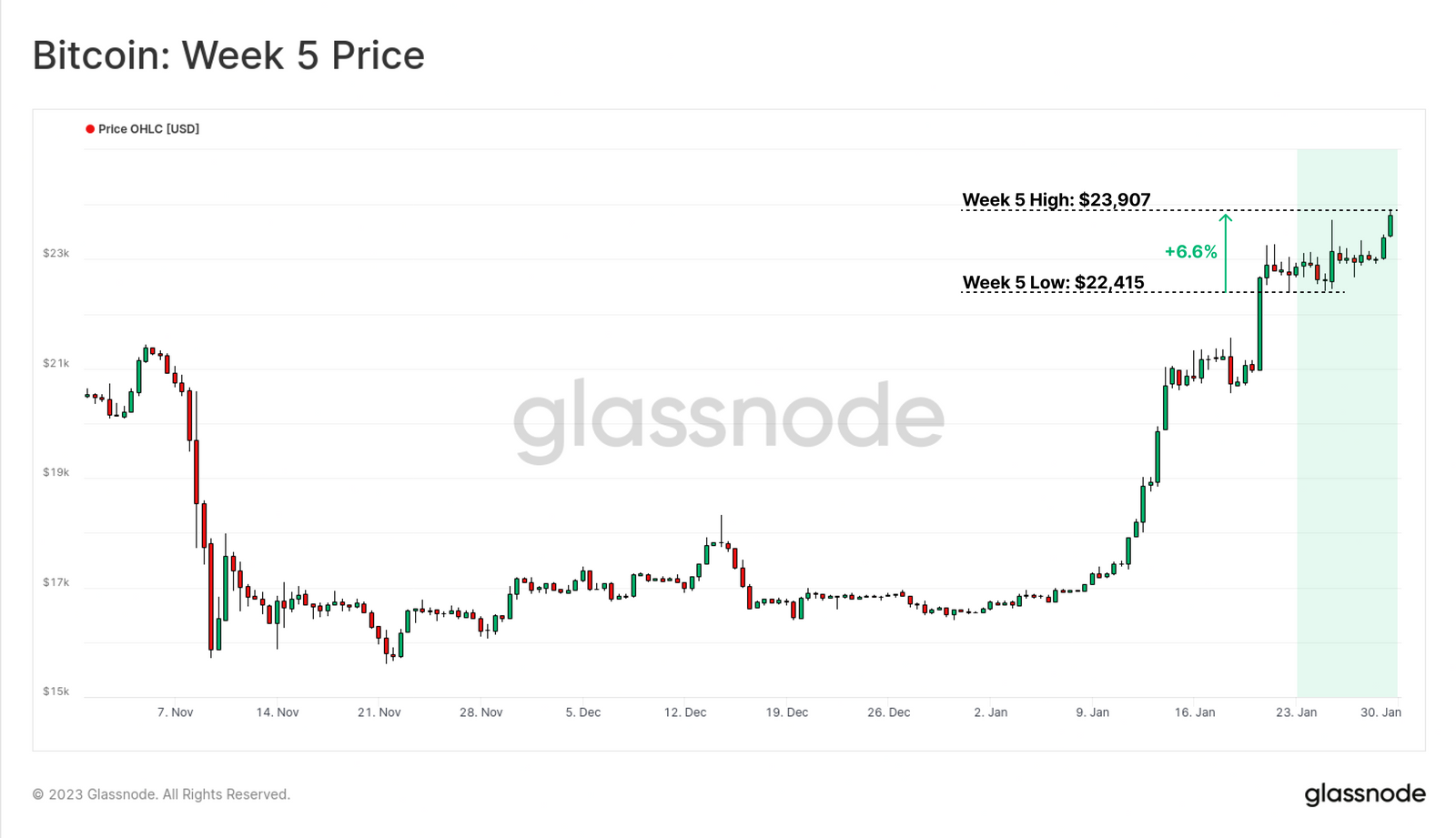
本周数字资产持续上涨,比特币价格在1月29日晚间达到 2.39 万美元的高位。2023年1 月创下自 2021 年 10 月以来的最佳月度价格表现,年初至今增长达到 43% 以上,处于 2022 年 8 月以来的最高水平,较每周低点 2.24 万美元上涨了 6.6%。

本文,我们将对衍生品市场和交易平台此次反弹进行研究与分析,内容涵盖:

尽管相对于市场规模,总杠杆率有所下降,但最近期货轧空,基差回归正值。

尽管与交易平台相关的链上交易活动占比下降,但交易平台余额普遍下降。

几个市场群体的平均收购价格被突破,包括 2019 年购买的比特币投资者、Binance 和 Coinbase 客户以及 2017 年购买的比特币巨鲸。

图1:1月24日-30日的比特币价格

空头期货市场受到挤压

在经历了漫长、痛苦和艰苦的 2022 年之后,2023年1月开始逆转这一下降趋势。通常情况下,此类反弹通常是由衍生品市场内某种程度的轧空推动的,这次反弹也不例外。

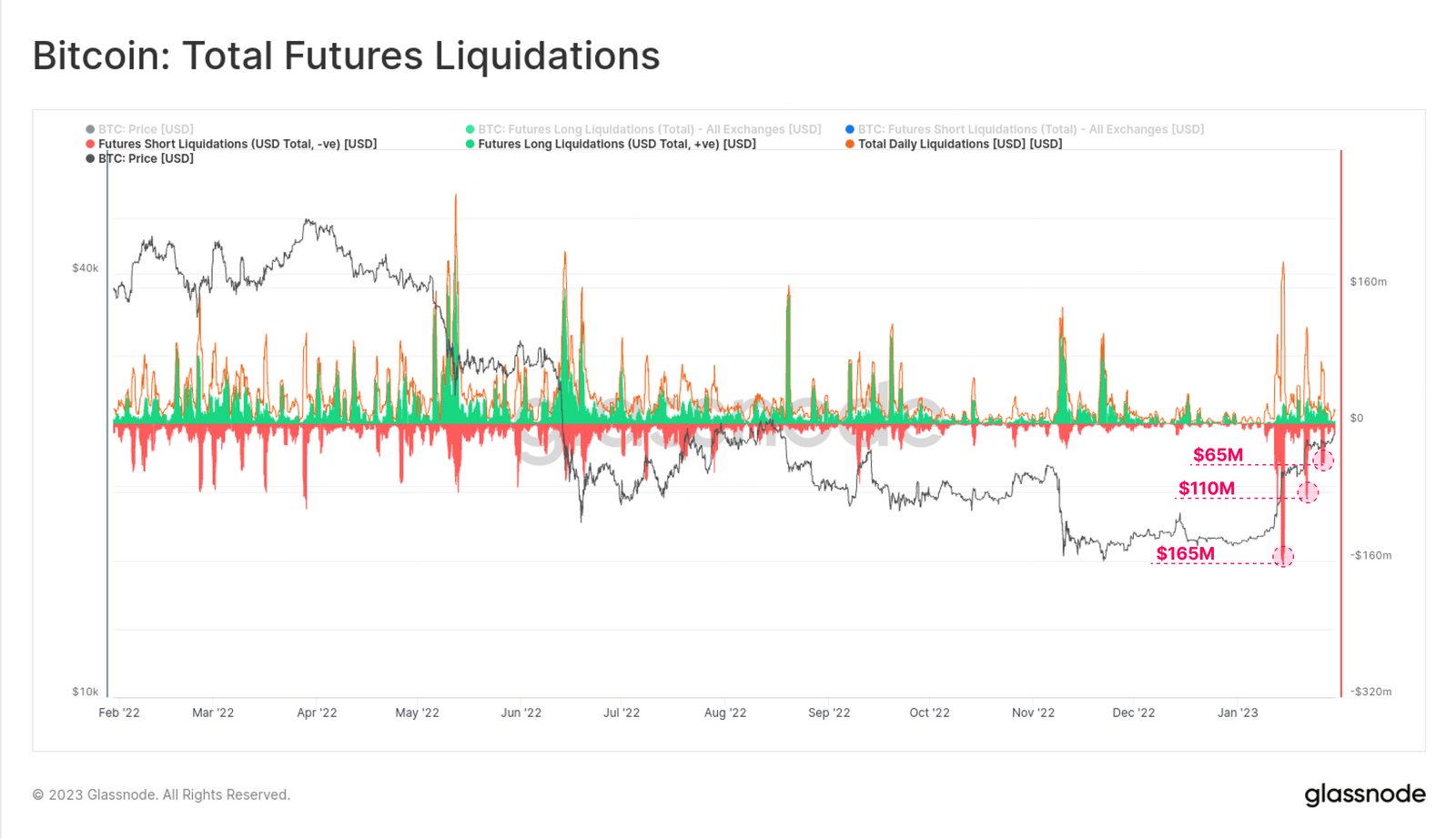
迄今为止,三波交易清算了超过 4.95 亿美元的空头期货合约,随着反弹结束,规模有所下降。

图2:比特币期货清算总额

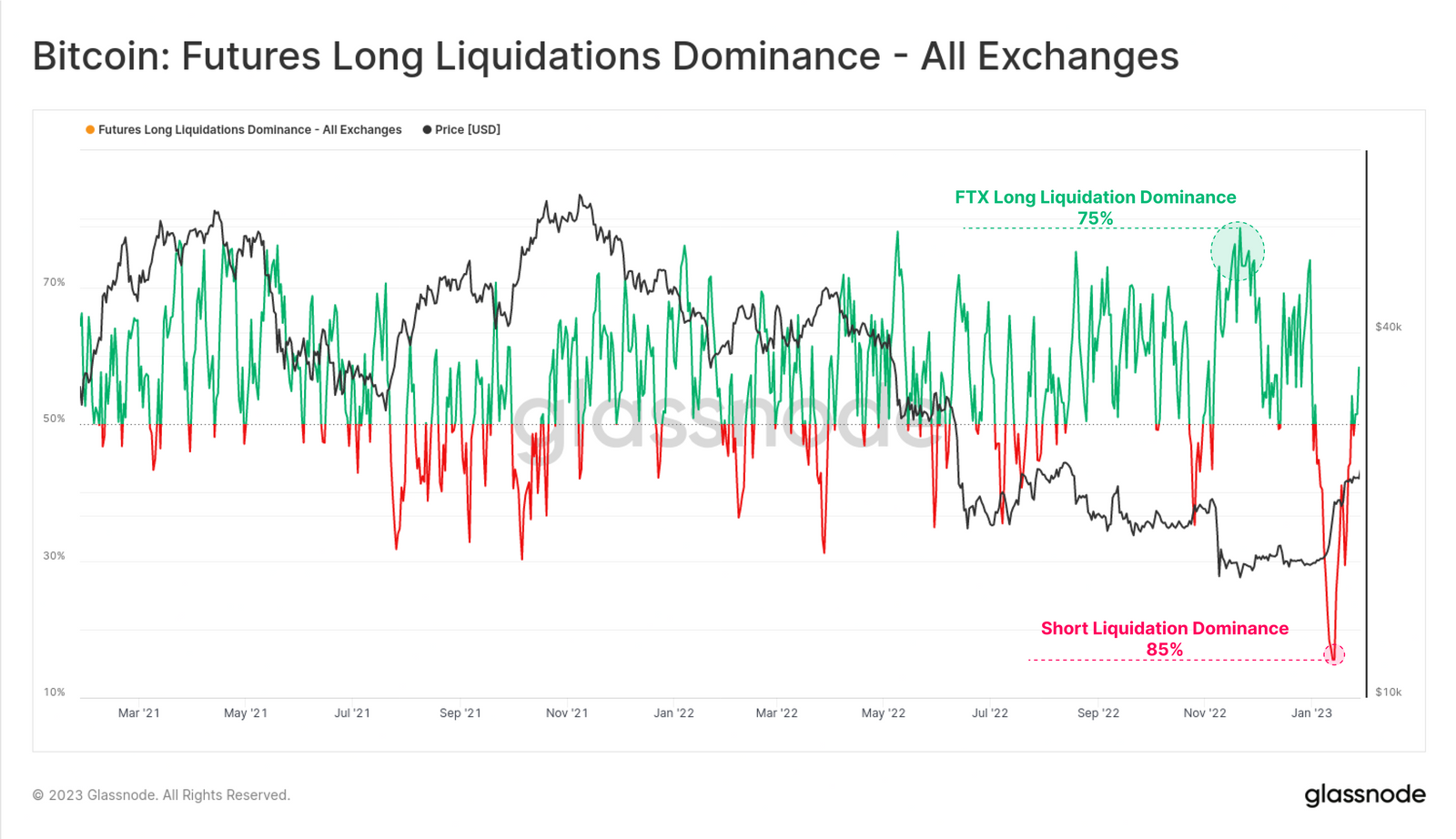
我们可以看到,1 月中旬最初的轧空令许多交易员感到意外,多头清算占比创下 15% 的历史新低。这意味着 85% 的清算是空头,比 FTX 暴雷期间占比75%的多头清算更高,由此我们可以看到投资者越位程度之高。

图3:所有交易平台的期货多头清算占比

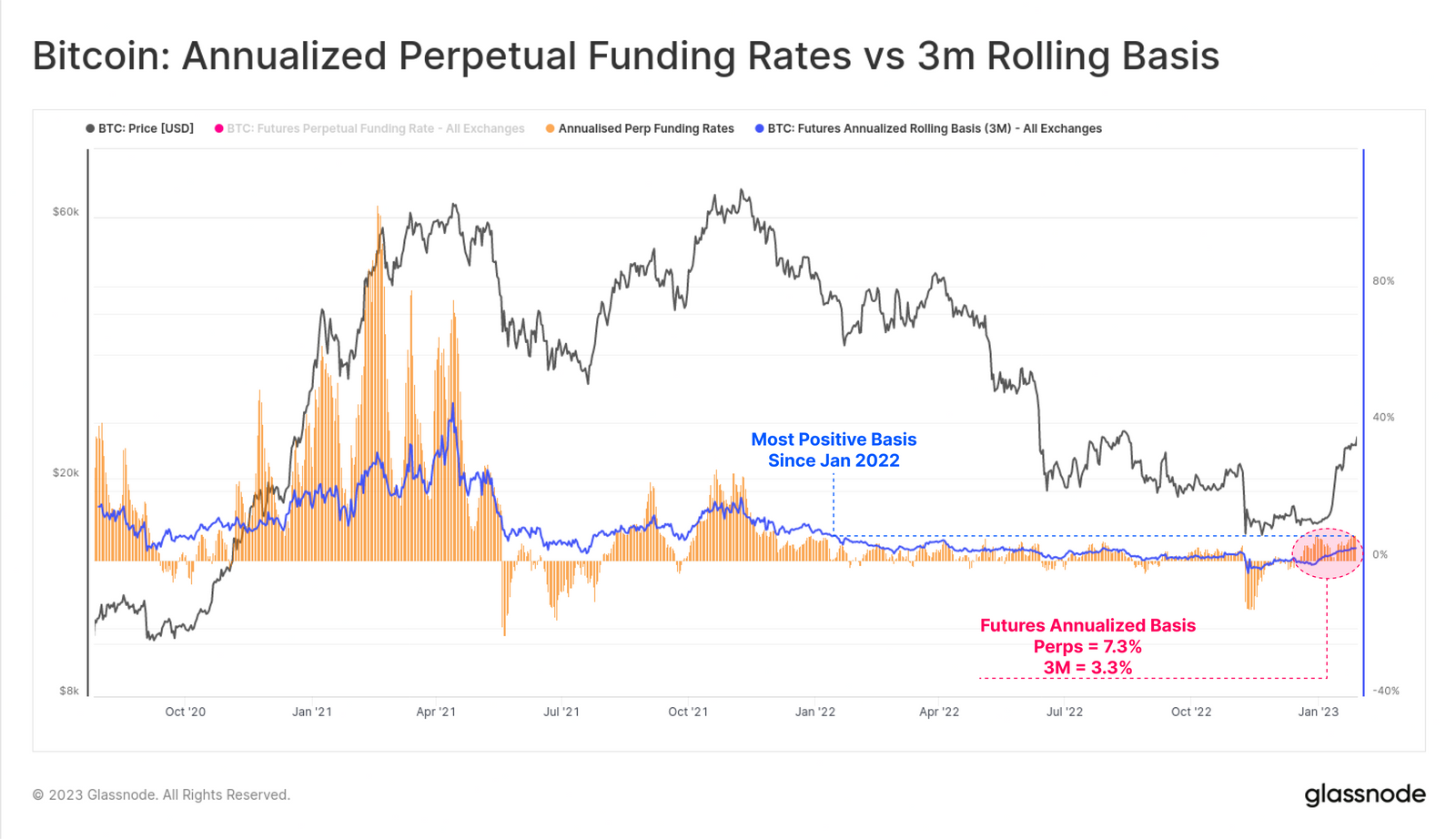
在永续掉期和日历期货中,现金和套利基差现已回到正值区域,年化收益率分别为 7.3% 和 3.3%。在 11 月和 12 月的大部分时间里,所有期货市场都出现现货溢价,这表明市场积极情绪回归,或许还带有部分投机情绪。

图4:永续期货年化与3个月收益率

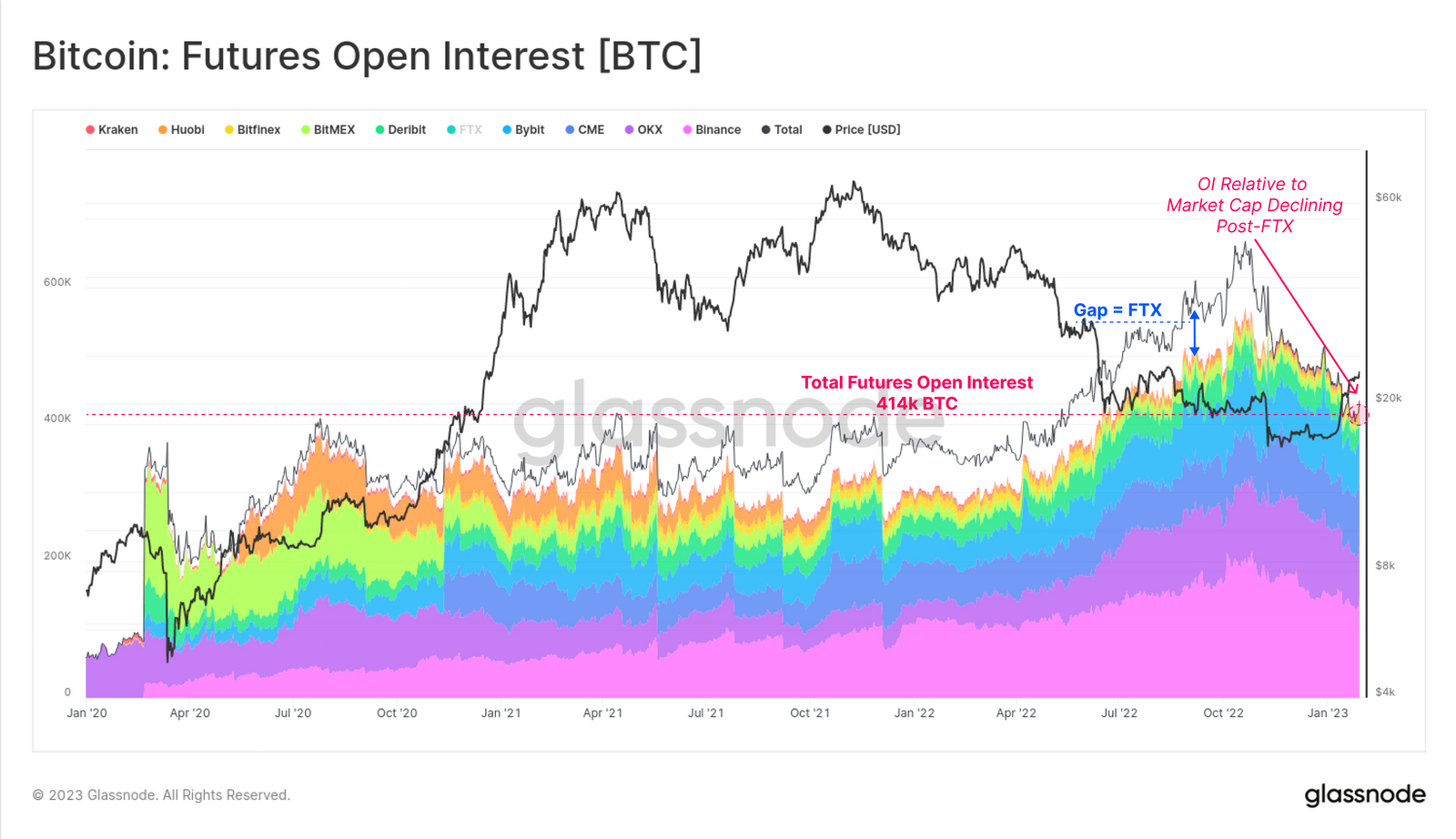
然而,尽管期货基差回归正值,但自 11 月中旬以来,相对于比特币市值来说,未平仓合约数量一直在下降。在此期间,以比特币计价的未平仓期货合约价值下降了 36%,从 11 月中旬的 65 万比特币跌至今天的 41.4 万比特币。

请注意,下降的 40% 可直接视为 FTX 交易平台持有的价值 95,000 BTC 的未平仓合约的损失。

图5:期货未平仓合约

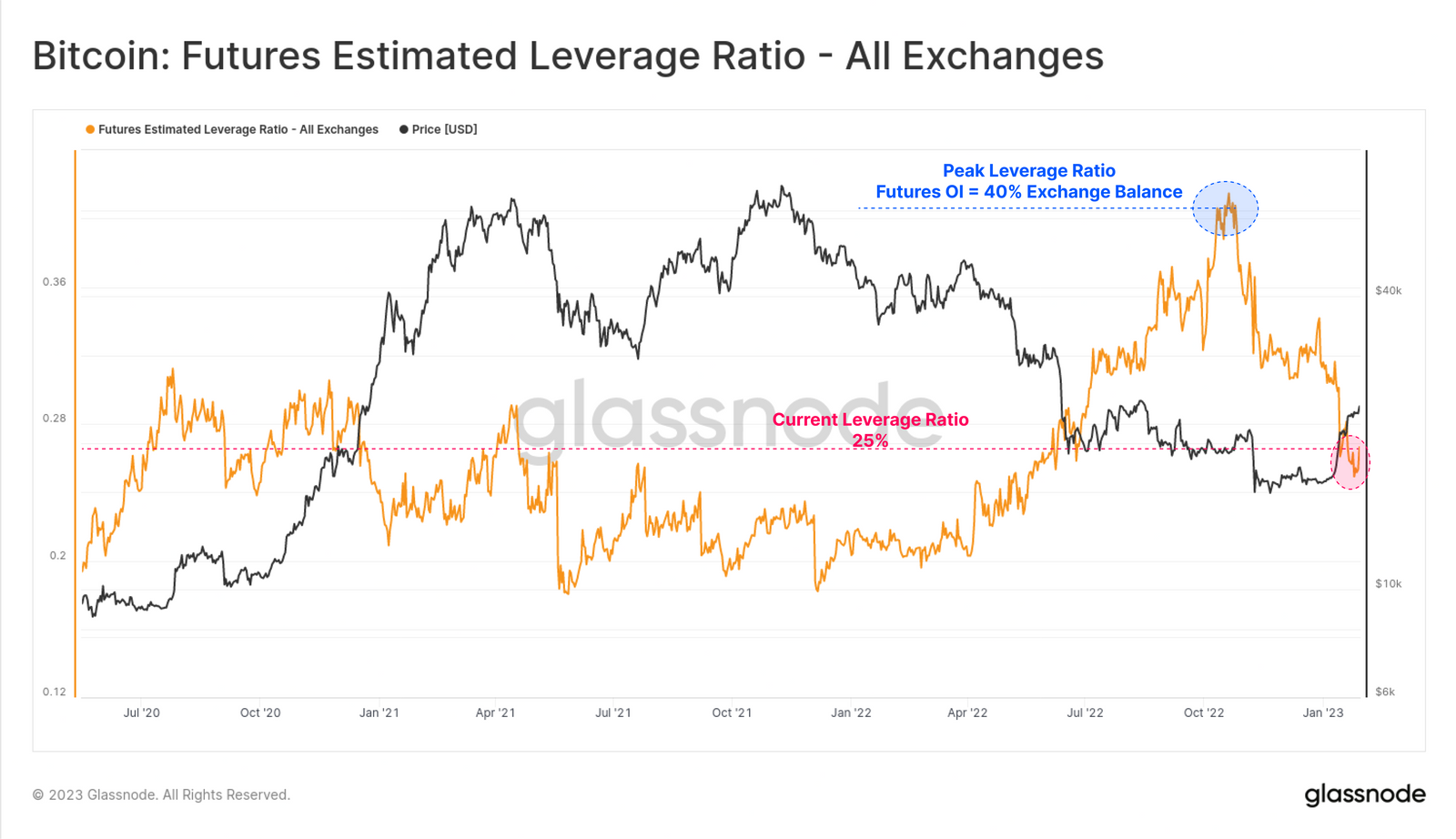
如果我们将未平仓期货合约的名义规模与相应交易平台的 BTC 余额进行比较,我们可以衡量市场内杠杆的相对规模。在过去 75 天里,该杠杆率已从未平仓合约占交易平台现货余额的 40% 下降到仅 25%。

总体而言,这反映了期货杠杆的显著减少,以及空头投机情绪的冷却。这也可能预示着短期下行对冲头寸的减少。相对而言,随着观察到链上自我托管行为增加,这也更加强调现货市场是当前市场结构的关键驱动力。

图6:期货杠杆率估值-所有交易平台

交易平台流量稳定

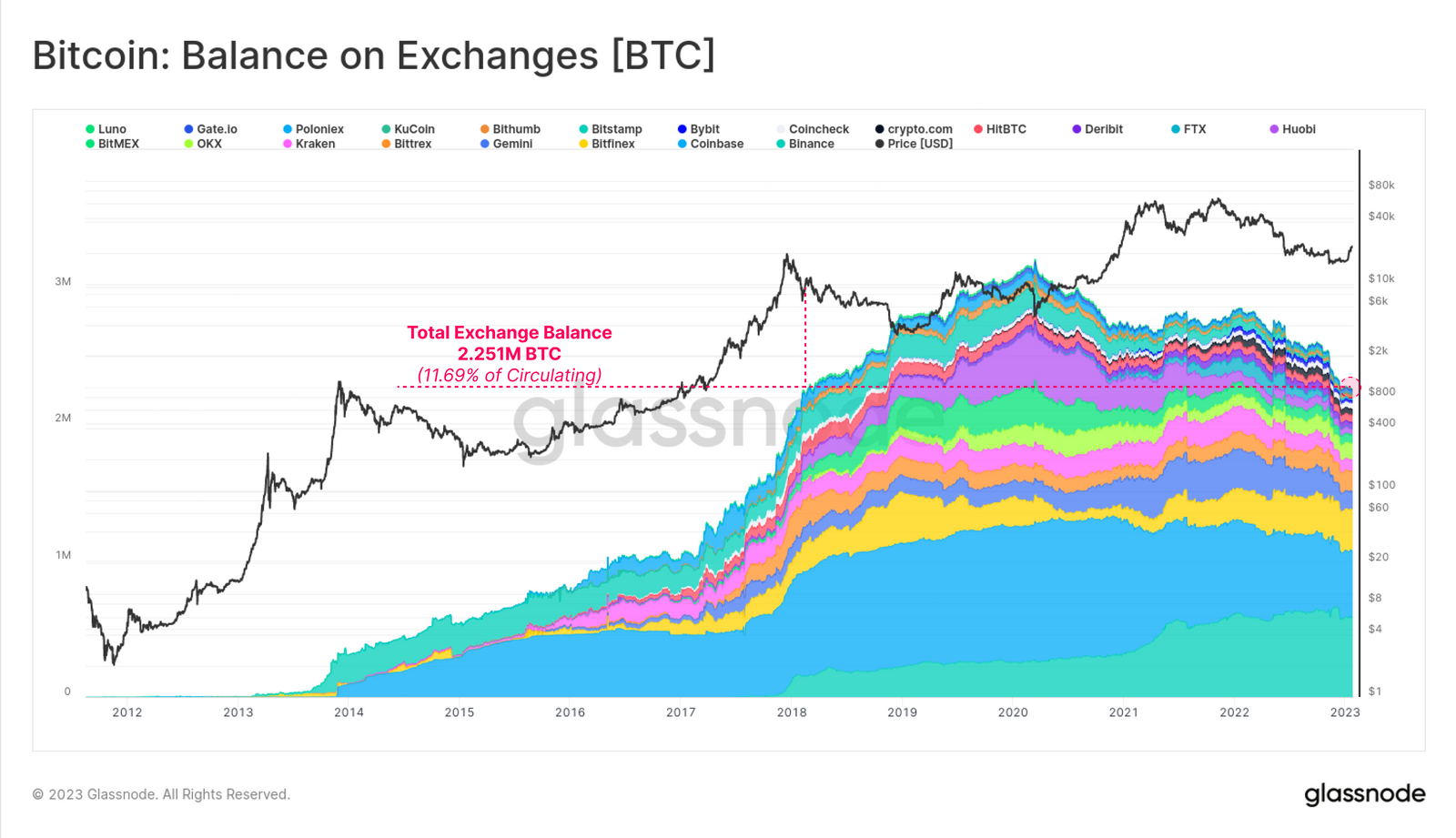
自2020年3月以来,交易平台现货流出趋势一直是被密切关注的一大主题,交易平台资产余额一直处于高位。目前,我们追踪的交易平台持有的比特币总额约为 225.1 万比特币,占流通供应量的 11.7%,创下2018 年 2 月以来的多年低点。

图7:交易平台余额

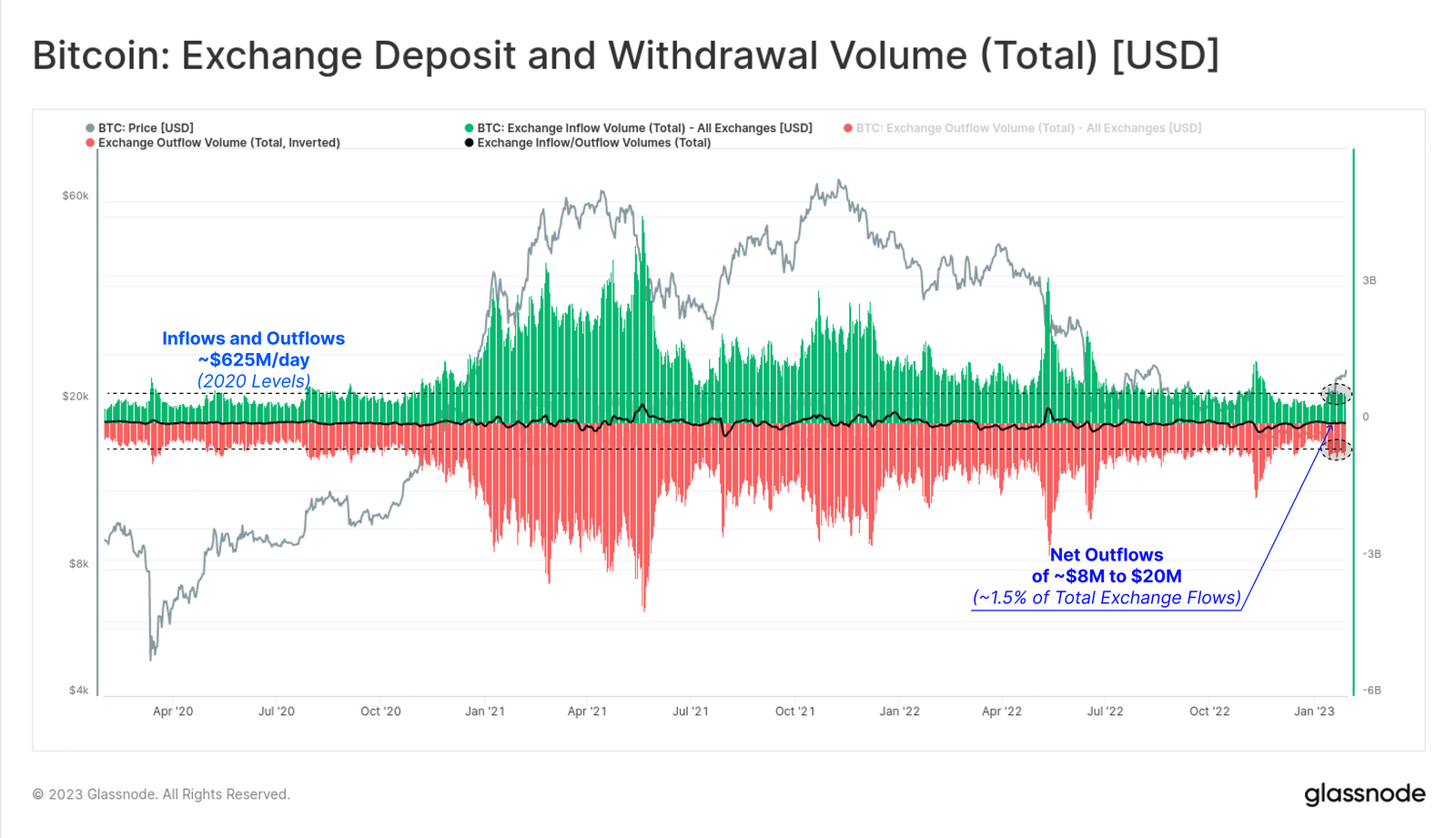
目前,交易平台的流入和流出量两项平均约为 6.25 亿美元/天(即总计 12.5亿美元/天)。从净值上看,每日净流出量约为 2000 万美元,仅占总流量的 1.5%,表明交易平台流量处于平衡状态。与11-12月不同,当时交易平台的净流出量约为每天 2 亿美元至 3 亿美元。

图8:交易平台存取量

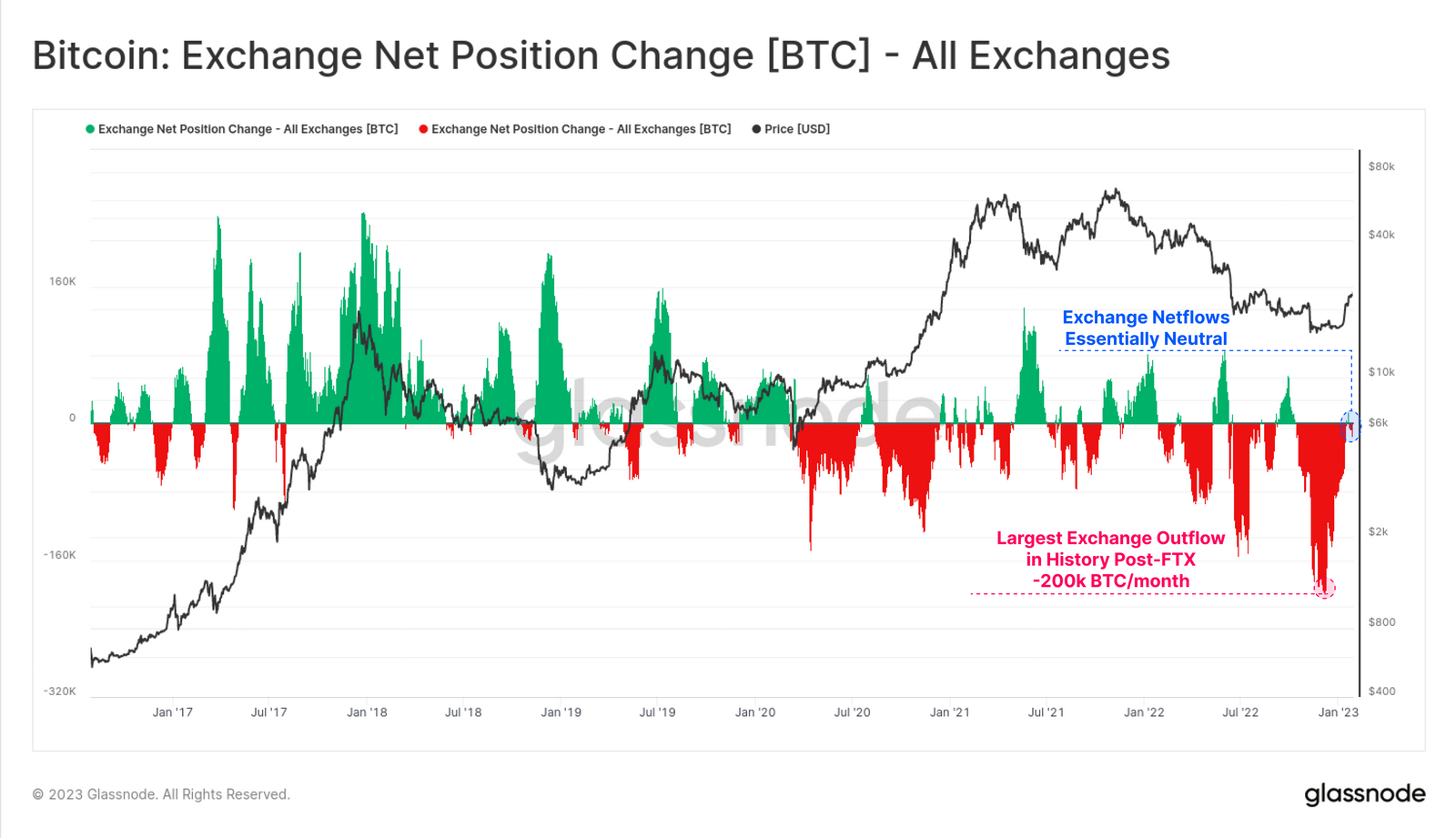
历史上最高的比特币月度流出发生在11月至12月期间,所有交易平台的流出量达到 20 万比特币/月。目前,交易平台净流量已恢复稳定,资金外流正在降温。这可能意味着市场需求有所放缓,因为今年迄今价格已反弹超过 43%。

图9:所有交易平台的比特币净头寸变动

比特币各项指标向好

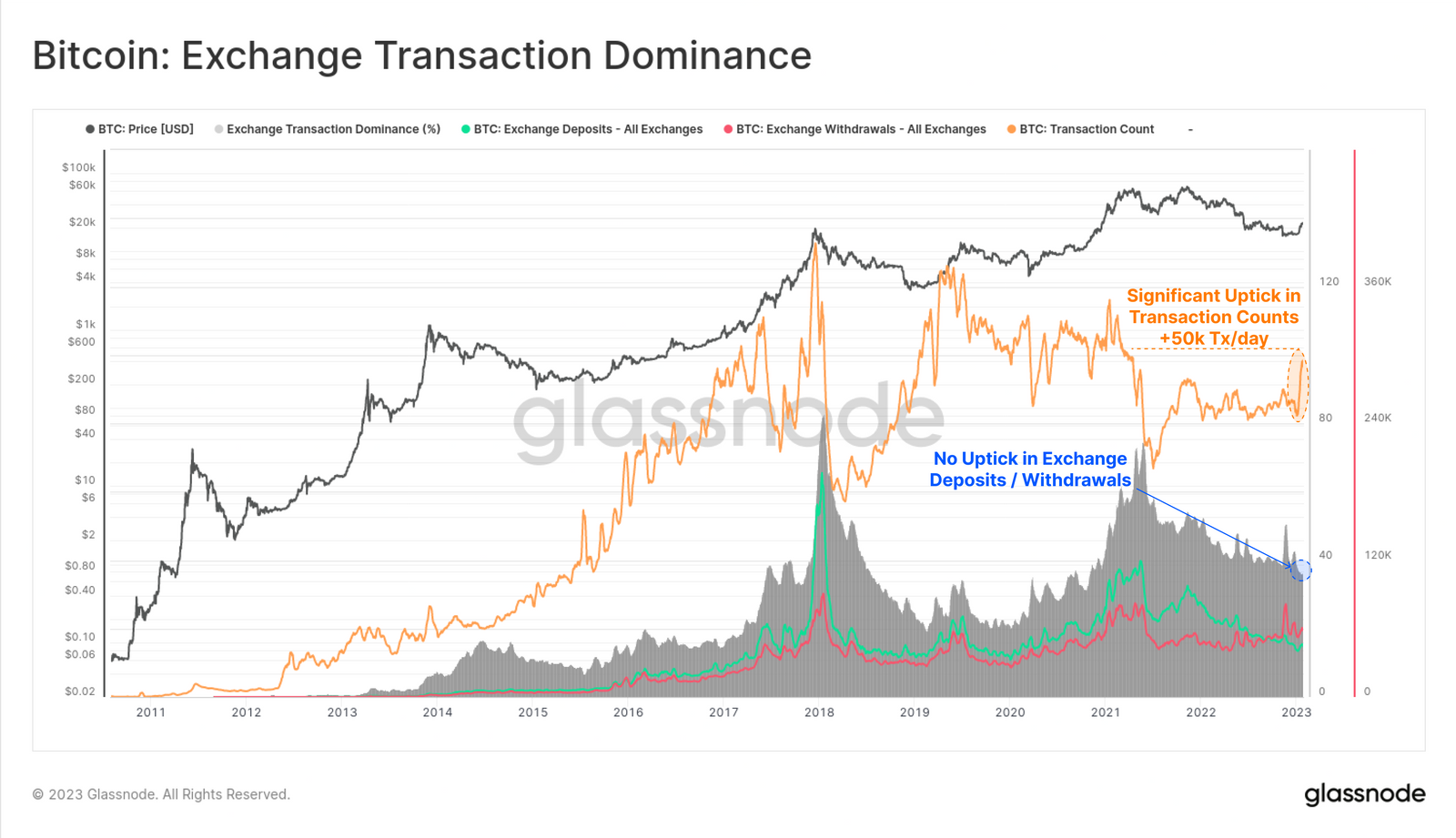
本周,比特币的链上交易每天激增超过 50,000 笔,但交易平台存款或取款数量并没有相应增加。目前,与交易平台相关的交易次数仅占总交易次数的 35%,自 2021 年 5 月市场高峰以来,这一占比在不断下降。

在实体调整后的数据中也可以看到这种交易数量的激增,这表明它与单个实体或内部钱包管理无关。可以看出,最近交易活动的增加发生在比特币经济的其他地方发生。

图10:交易平台交易次数占比

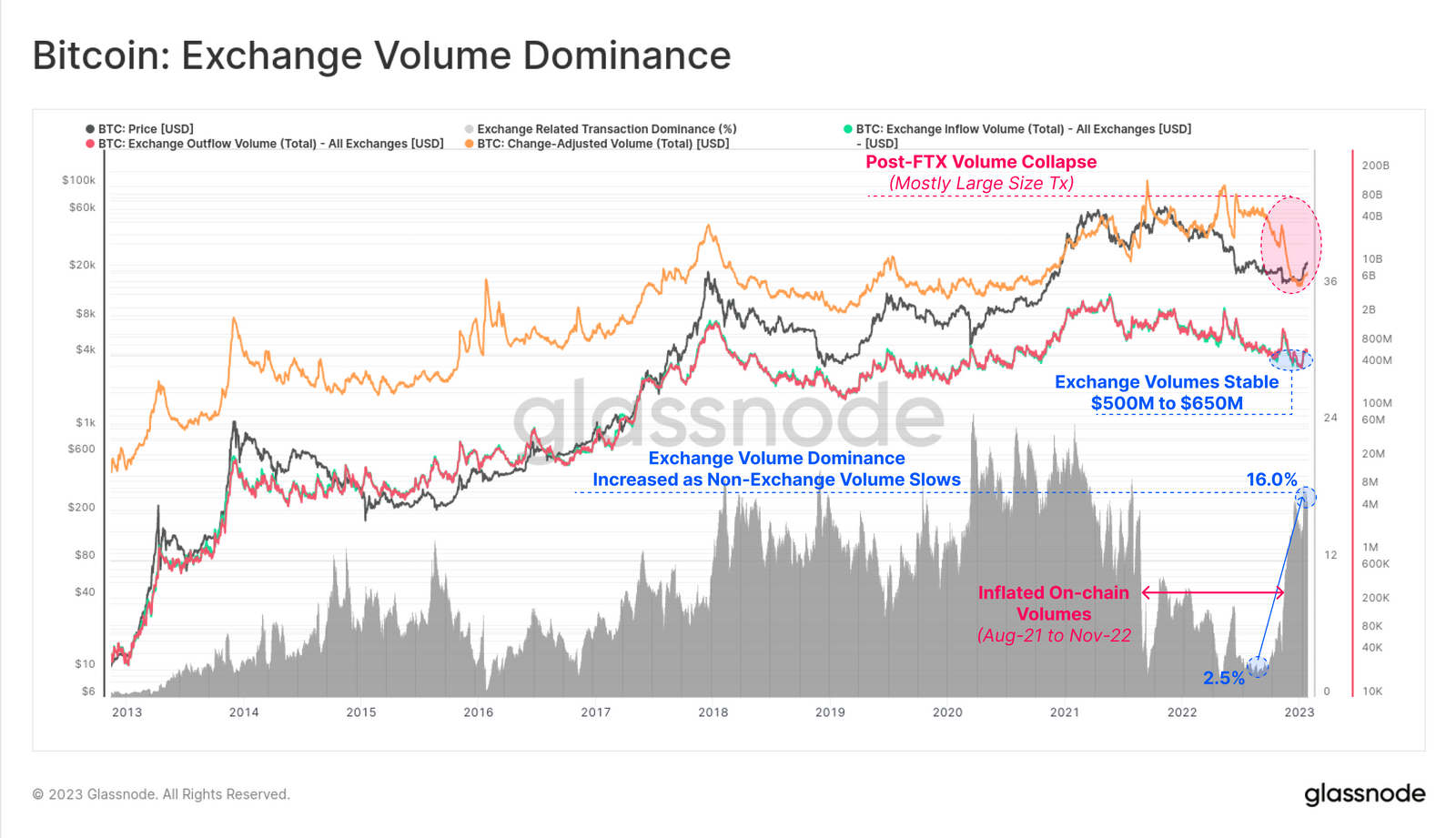
过去几周,流入和流出交易平台的交易额相对稳定,但尽管如此,与交易平台相关的链上交易额的占比已从 2.5% 增长到 16% 以上。

比特币的全球交易额自 11 月以来急剧下降。这可能是因为 2021 年 8 月至 2022 年 11 月期间,由于全行业的去杠杆化以及FTX/Alameda的资产管理不善。

图11:交易平台交易额占比

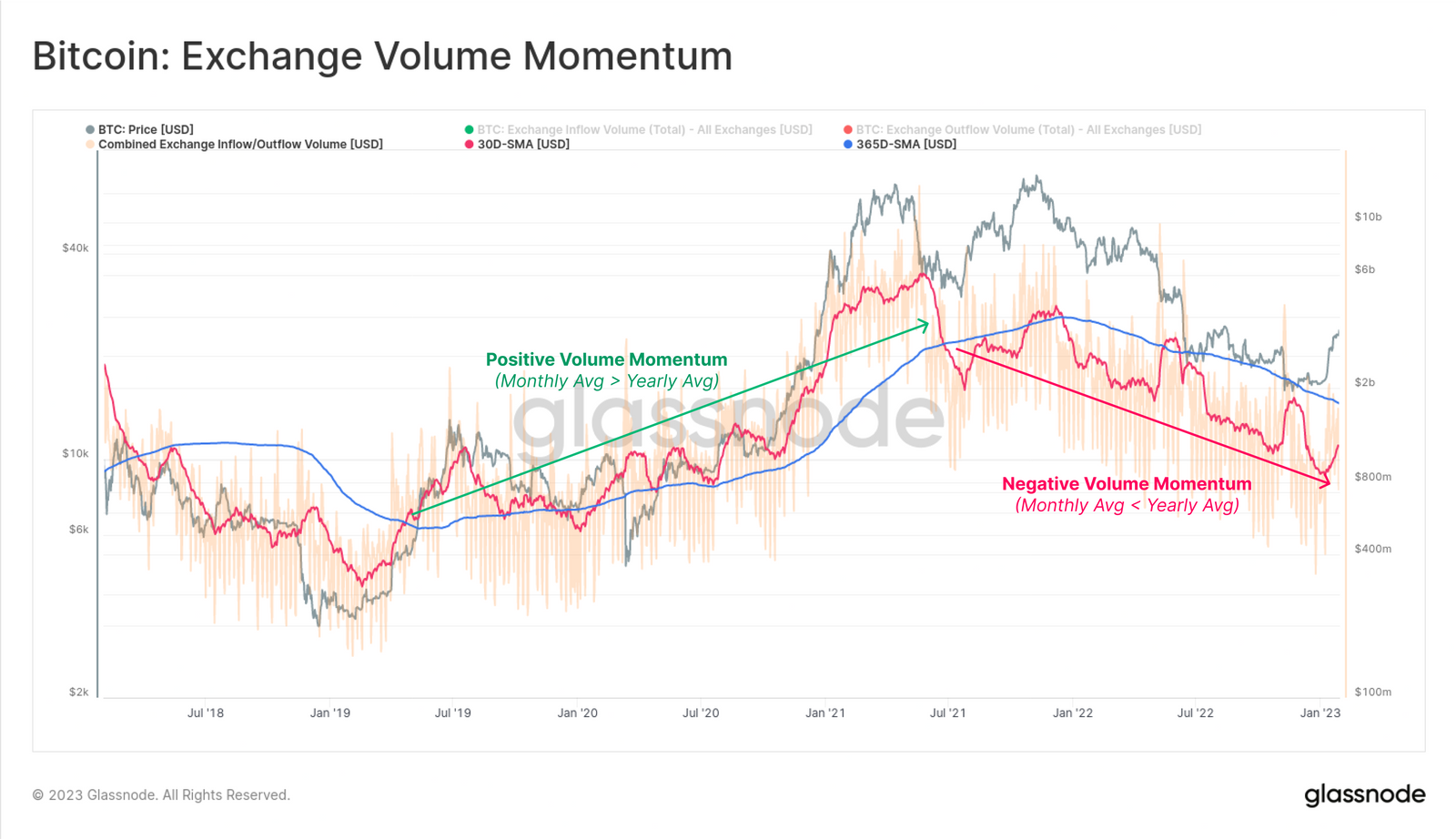
通常,随着投资者和交易者变得更加活跃,应当表现为市场走强并伴随着链上交易总量的增加。我们可以看到目前交易平台交易额仍呈弱势,虽然月平均交易额开始上升,但现阶段仍远低于年度基线。

PS:交易平台流入或流出量 [USD] (30D-SMA)突破8.75 亿美元将表明近期与交易平台相关的交易额回归年度基线。

图12:交易额变动趋势

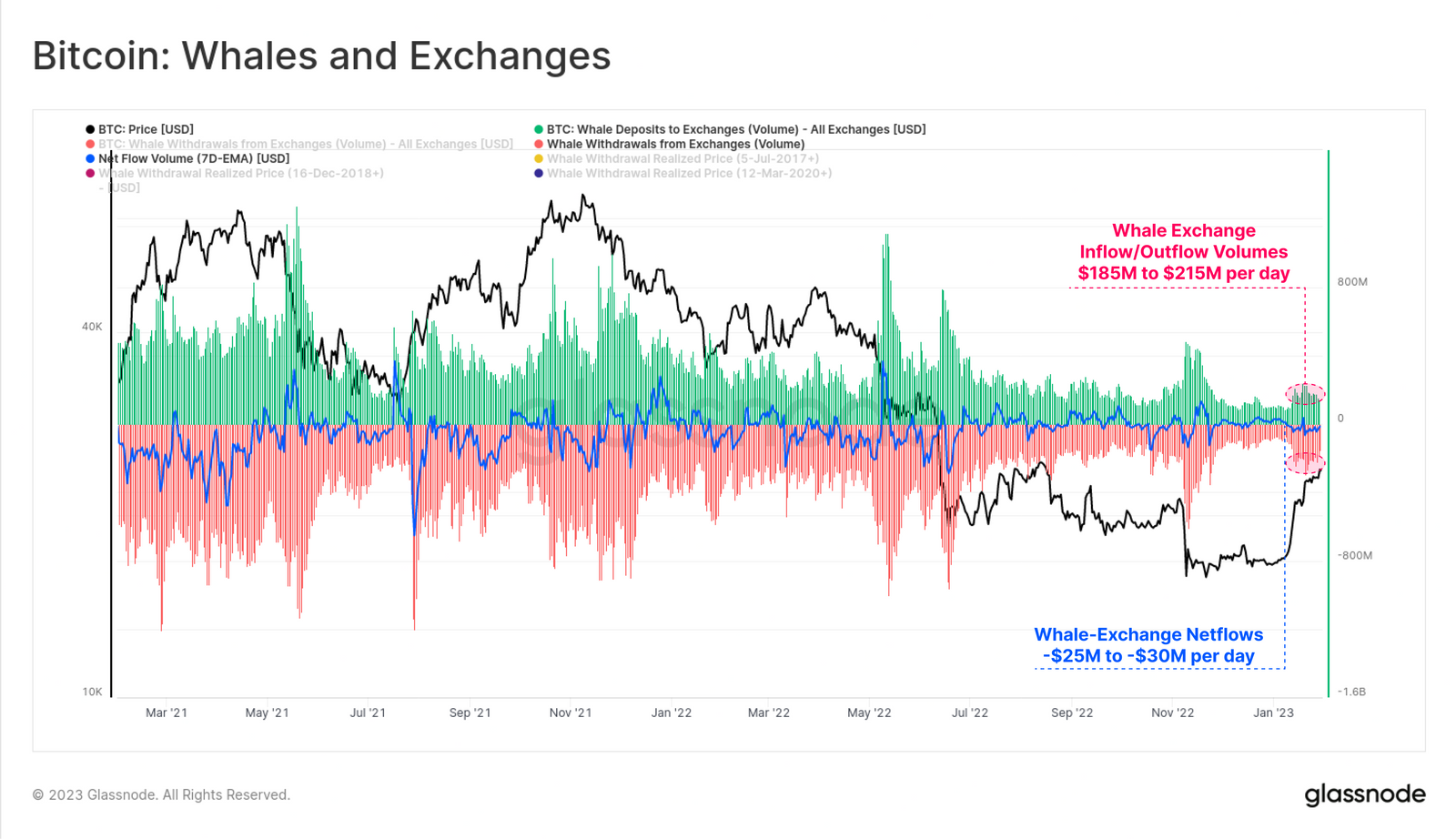
通过对持有超过 1000BTC 的巨鲸的研究,我们还可以看到它们在交易平台的存款和取款量都有所上升。整个 1 月,巨鲸为交易平台流入(和流出)贡献了 1.85 亿美元至 2.15 亿美元,净流出量的约为 2500 万美元。

图13:巨鲸在交易平台的流量

突破基础成本价格

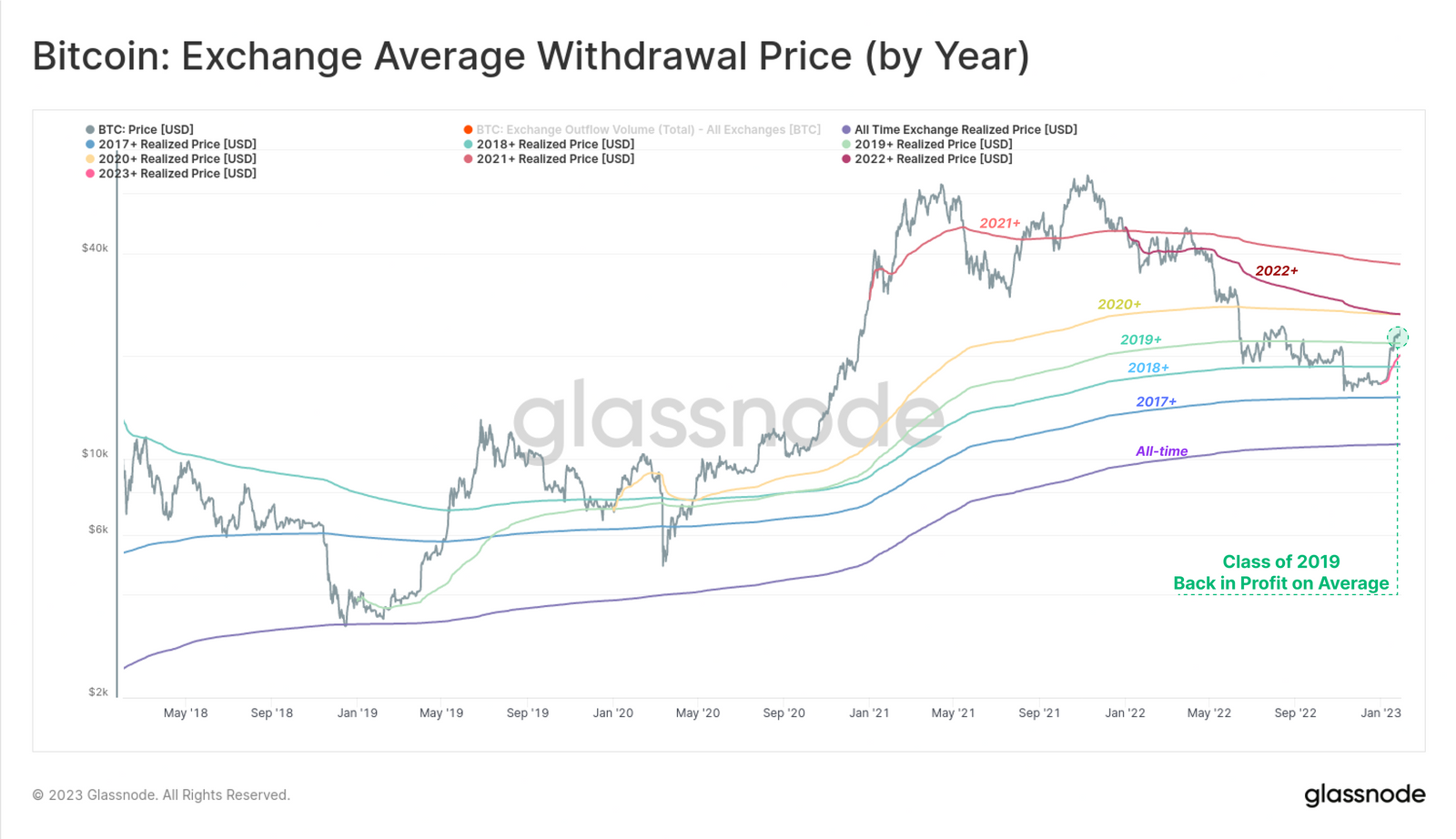
由于如此大量的比特币流入和流出交易平台,我们可以估算出比特币市场各个群体的平均收购价格。第一张图表按年对平均收购价格进行绘制,从每年 1 月 1 日开始计算,并建立了一种只做多头的 DCA(平均成本法)的基础成本。

在 2022 年的下跌趋势中,只有 2017 年及更早的购买者避免了未实现亏损,2018 年以后的投资者的基础成本被 FTX 红色蜡烛所取代。然而,当前的反弹已将 2019 年(2.18万美元)和早些时候的购买者推回到未实现盈利中。

图14:平均收购价格(每年)

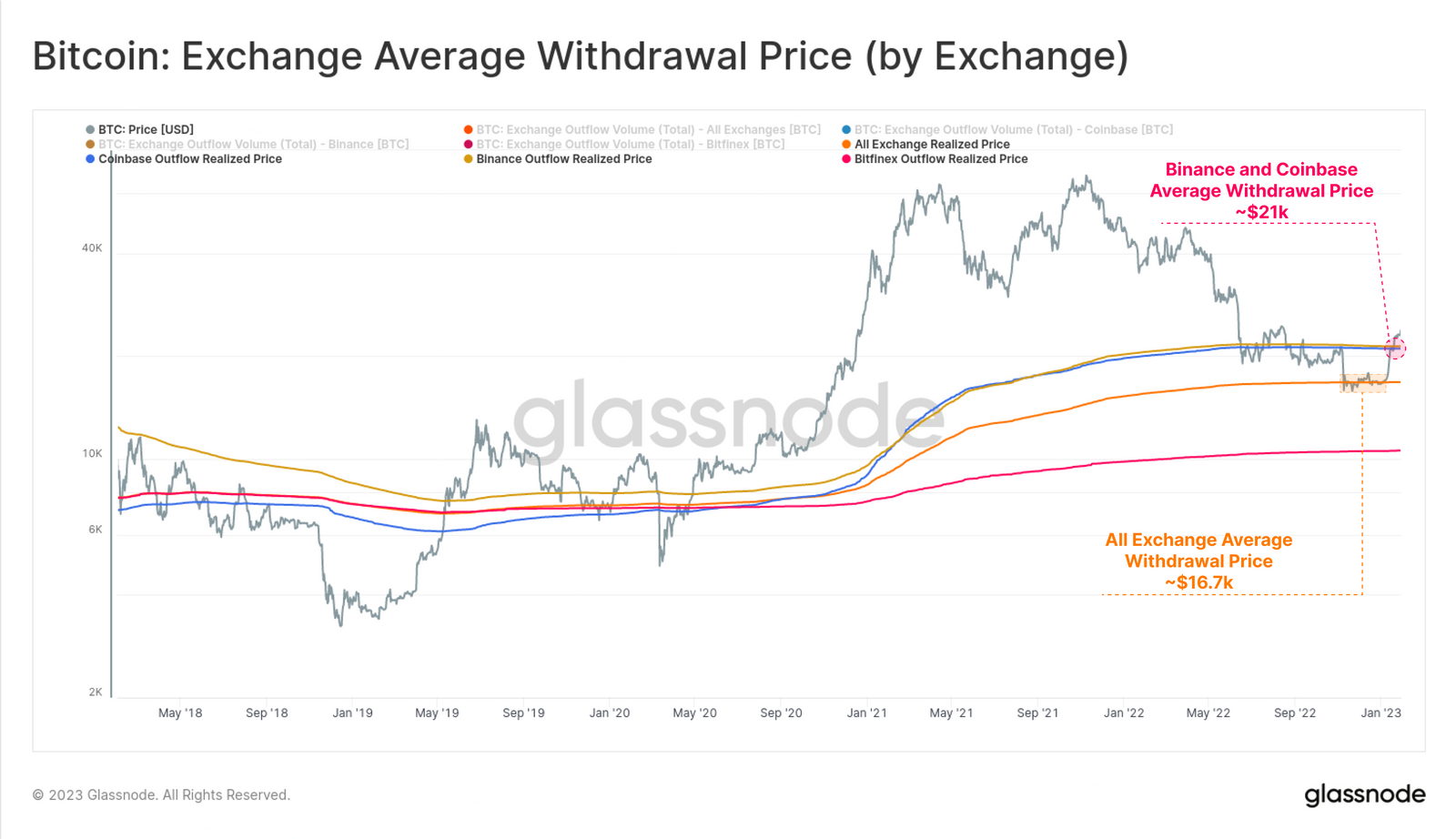
我们可以为每个交易平台创建一个类似的模型,下图显示最近的价格走势与三个关键成本基础水平相交:

(橙色)所有交易平台的历史采购价格交汇于 1.67 万美元处,并在年底整合范围内提供了一种形式的支持。

自 2017 年 7 月以来,两个最大的交易平台 Coinbase 和 Binance (黄色)+(蓝色)的平均采购价格刚刚突破 21,000 美元左右。

这也可以从盈利供应占比等指标中看出,随着价格上涨超过其链上收购价格,这些指标急剧上涨。

图15:平均收购价格(交易平台)

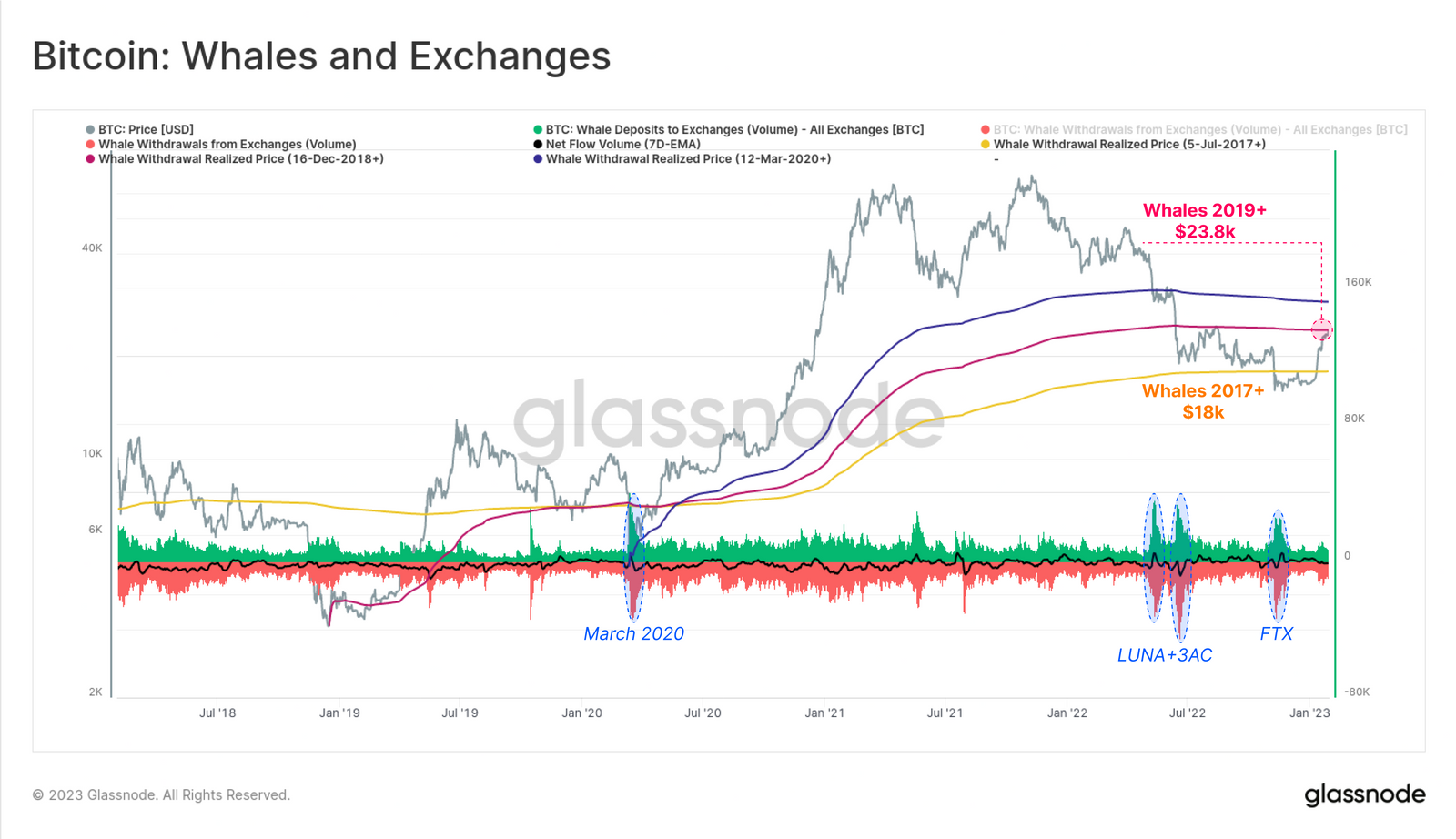
最后,我们回到之前讨论的巨鲸,但这次我们要回顾自市场触底以来的平均收购价格。通过在市场低点开始这些轨迹,我们可以预估出巨鲸的最有利价格。

我们看到的是,即使是自 2017 年以来一直活跃的鲸鱼(黄色),随着2022年价格跌破 18,000 美元,他们也进入了未实现的亏损。自 2020 年 3 月低点以来,巨鲸的收购价格为 2.38 万美元。

以上三种模型都证明了 2022-23 年的熊市是多么无情,甚至将站在最有利起点的群体推向了未实现损失。

图16:巨鲸和交易平台

总结

随着 1 月底的临近,在长期的现货需求和一系列轧空的推动下,比特币市场出现了自 2021 年 10 月以来最强劲的月度价格表现。这次反弹使大部分市场恢复盈利,期货市场以健康的正基差交易。另外,在 FTX 崩溃之后,最初的交易平台流出趋势已经恢复稳定。


Related Reads

Exclusive from Yingke | Tang Wenbin's 'Yuanli Lingji' Merges with Logistics Robotics Company, and Secures Investment from Zhipu, SenseTime, Jieyue, and Others

Exclusive report: Embodied AI company "Yuanli Lingji" recently completed a new round of financing from major AI model firms including Zhipu AI, Stepfun, and SenseTime, alongside continued investments from industrial backers like Huaqin and SAIC Hengxu. Founded in March 2025 by Tang Wenbin, former co-founder and CTO of Megvii, Yuanli Lingji is a general-purpose embodied AI model company. In a notable move, the company has merged with logistics robotics firm "Atomix" (formerly known as Yuanli Juhe) through a share acquisition. Atomix, which originated from Megvii's logistics robotics business led by Tang in 2016 and was spun off in July 2024, has grown to become the world's second-largest supplier of pallet shuttle robots, with annual revenue nearing 1 billion RMB and over 500 projects globally for clients like Uniqlo and CATL. This merger aims to break the industry's "data deadlock" by combining Atomix's extensive real-world operational data from more than 20 countries with Yuanli Lingji's model training capabilities. The company's embodied AI model "DM0" utilizes a cross-domain training approach, integrating internet semantics, autonomous driving rules, and robotics data to achieve hardware-agnostic, precise manipulation even with a compact 2.4B parameter size. The collective investment from key AI players and the strategic merger signal a shift in the competitive landscape, as major model companies pivot from language tokens to physical actions ("from Token to Action"). The industry is entering a consolidation phase where hardware, AI models, data, and application scenarios converge to scale embodied intelligence, a trend mirrored by recent moves from giants like ByteDance and Skild AI.

marsbit2m ago

Exclusive from Yingke | Tang Wenbin's 'Yuanli Lingji' Merges with Logistics Robotics Company, and Secures Investment from Zhipu, SenseTime, Jieyue, and Others

marsbit2m ago

U.S. Stock Market Trends: Dow Hits New High, Nasdaq Falls, Whom Did Broadcom's Slap Wake Up?

U.S. Stocks Split: Dow Hits Record High as Nasdaq Slips; Broadcom's Plunge Sparks Rotation On June 4, the U.S. stock market saw a sharp divergence. The Dow Jones surged 875 points (+1.73%) to a record high of 51,561.93, while the Nasdaq Composite edged down 0.09%. The S&P 500 rose 0.41%. The primary catalyst was a sharp sell-off in AI-related chip stocks, led by Broadcom (AVGO). Despite reporting a 143% year-over-year jump in AI semiconductor revenue to $10.8 billion, the company's shares plunged about 14%. This was triggered by its maintained long-term AI revenue target, which failed to meet heightened expectations for a stock that had gained 55% this quarter and traded at a high P/E ratio. The slide dragged down the broader semiconductor sector and the technology板块. Conversely, money rotated into sectors like Healthcare (+3.14%), Financials (+2.67%), and Real Estate (+1.87%). UnitedHealth and Goldman Sachs were major contributors to the Dow's gains. The rotation was attributed to a search for value outside overheated tech names and a slight dip in Treasury yields. In other major news, SpaceX confirmed its IPO for June 12, targeting a record $75 billion raise at a ~$1.75 trillion valuation. Additionally, initial jobless claims rose to a four-month high, adding nuance to the labor market narrative ahead of the key May non-farm payrolls report. The day's action signaled that while the AI growth story remains intact, excessive valuations are prompting a market reassessment. Funds are moving, at least temporarily, from high-flying tech to more defensive and value-oriented sectors. The sustainability of this rotation hinges on upcoming economic data, particularly the jobs report, and the market's absorption of the massive SpaceX IPO.

marsbit5m ago

U.S. Stock Market Trends: Dow Hits New High, Nasdaq Falls, Whom Did Broadcom's Slap Wake Up?

marsbit5m ago

From 'Old Dogs' to 'New Darlings': How AI is Revaluing Old Infrastructure, from Dell to Nokia

"Old Dogs" Become AI's New Darlings: Revaluing Legacy Infrastructure The AI investment narrative is shifting. Beyond the spotlight on core chipmakers like Nvidia, a new wave of interest is rising for legacy tech companies—Dell, HPE, Nokia, Cisco, Corning, Western Digital—once labeled as slow-growth, outdated stories. This resurgence stems from AI's evolution from model development to real-world deployment, creating massive demand for physical infrastructure. As AI moves into data center construction and enterprise adoption, the focus turns to who can actually build and deliver complex systems. These established players hold decades of experience in supply chains, integration, networking, and enterprise delivery—assets now critical for scaling AI. The revaluation can be grouped into three key infrastructure areas: 1. **Servers & Integration (e.g., Dell, HPE):** They are becoming essential system integrators, transforming GPUs into full-scale AI servers with networking, power, and cooling, then delivering them to clients. Strong recent earnings and AI-specific revenue/order growth for Dell and HPE underscore this shift. 2. **Networking & Connectivity (e.g., Corning, Nokia, Cisco):** As AI clusters grow, high-speed data transfer becomes paramount. Corning benefits from fiber demand for data center links, Nokia is exploring AI-integrated wireless networks (AI-RAN), and Cisco sees surging orders for data center switches—all critical for efficient AI operations. 3. **Storage (e.g., Western Digital, Seagate):** The AI data explosion requires vast capacity. Beyond high-speed memory (HBM), there's growing need for high-capacity HDDs to store training data, logs, video, and cold/archival data cost-effectively. This revaluation, however, is not a blanket endorsement. True reassessment requires concrete proof: AI-driven orders and revenue growth, upward revisions to company guidance, and sustainable improvements in profit quality, not just top-line sales. In essence, AI is not turning all old tech firms into high-growth stocks; it is selectively re-pricing the "old assets" of companies that are mission-critical for building the new AI infrastructure, transforming their legacy capabilities into renewed growth engines.

marsbit14m ago

From 'Old Dogs' to 'New Darlings': How AI is Revaluing Old Infrastructure, from Dell to Nokia

marsbit14m ago

Trading

Spot
Futures

Hot Articles

What is $BITCOIN

DIGITAL GOLD ($BITCOIN): A Comprehensive Analysis Introduction to DIGITAL GOLD ($BITCOIN) DIGITAL GOLD ($BITCOIN) is a blockchain-based project operating on the Solana network, which aims to combine the characteristics of traditional precious metals with the innovation of decentralized technologies. While it shares a name with Bitcoin, often referred to as “digital gold” due to its perception as a store of value, DIGITAL GOLD is a separate token designed to create a unique ecosystem within the Web3 landscape. Its goal is to position itself as a viable alternative digital asset, although specifics regarding its applications and functionalities are still developing. What is DIGITAL GOLD ($BITCOIN)? DIGITAL GOLD ($BITCOIN) is a cryptocurrency token explicitly designed for use on the Solana blockchain. In contrast to Bitcoin, which provides a widely recognized value storage role, this token appears to focus on broader applications and characteristics. Notable aspects include: Blockchain Infrastructure: The token is built on the Solana blockchain, known for its capacity to handle high-speed and low-cost transactions. Supply Dynamics: DIGITAL GOLD has a maximum supply capped at 100 quadrillion tokens (100P $BITCOIN), although details regarding its circulating supply are currently undisclosed. Utility: While precise functionalities are not explicitly outlined, there are indications that the token could be utilized for various applications, potentially involving decentralized applications (dApps) or asset tokenization strategies. Who is the Creator of DIGITAL GOLD ($BITCOIN)? At present, the identity of the creators and development team behind DIGITAL GOLD ($BITCOIN) remains unknown. This situation is typical among many innovative projects within the blockchain space, particularly those aligning with decentralized finance and meme coin phenomena. While such anonymity may foster a community-driven culture, it intensifies concerns about governance and accountability. Who are the Investors of DIGITAL GOLD ($BITCOIN)? The available information indicates that DIGITAL GOLD ($BITCOIN) does not have any known institutional backers or prominent venture capital investments. The project seems to operate on a peer-to-peer model focused on community support and adoption rather than traditional funding routes. Its activity and liquidity are primarily situated on decentralized exchanges (DEXs), such as PumpSwap, rather than established centralized trading platforms, further highlighting its grassroots approach. How DIGITAL GOLD ($BITCOIN) Works The operational mechanics of DIGITAL GOLD ($BITCOIN) can be elaborated on based on its blockchain design and network attributes: Consensus Mechanism: By leveraging Solana’s unique proof-of-history (PoH) combined with a proof-of-stake (PoS) model, the project ensures efficient transaction validation contributing to the network's high performance. Tokenomics: While specific deflationary mechanisms have not been extensively detailed, the vast maximum token supply implies that it may cater to microtransactions or niche use cases that are still to be defined. Interoperability: There exists the potential for integration with Solana’s broader ecosystem, including various decentralized finance (DeFi) platforms. However, the details regarding specific integrations remain unspecified. Timeline of Key Events Here is a timeline that highlights significant milestones concerning DIGITAL GOLD ($BITCOIN): 2023: The initial deployment of the token occurs on the Solana blockchain, marked by its contract address. 2024: DIGITAL GOLD gains visibility as it becomes available for trading on decentralized exchanges like PumpSwap, allowing users to trade it against SOL. 2025: The project witnesses sporadic trading activity and potential interest in community-led engagements, although no noteworthy partnerships or technical advancements have been documented as of yet. Critical Analysis Strengths Scalability: The underlying Solana infrastructure supports high transaction volumes, which could enhance the utility of $BITCOIN in various transaction scenarios. Accessibility: The potential low trading price per token could attract retail investors, facilitating wider participation due to fractional ownership opportunities. Risks Lack of Transparency: The absence of publicly known backers, developers, or an audit process may yield skepticism regarding the project's sustainability and trustworthiness. Market Volatility: The trading activity is heavily reliant on speculative behavior, which can result in significant price volatility and uncertainty for investors. Conclusion DIGITAL GOLD ($BITCOIN) emerges as an intriguing yet ambiguous project within the rapidly evolving Solana ecosystem. While it attempts to leverage the “digital gold” narrative, its departure from Bitcoin's established role as a store of value underscores the need for a clearer differentiation of its intended utility and governance structure. Future acceptance and adoption will likely depend on addressing the current opacity and defining its operational and economic strategies more explicitly. Note: This report encompasses synthesised information available as of October 2023, and developments may have transpired beyond the research period.

363 Total ViewsPublished 2025.05.13Updated 2025.05.13

What is $BITCOIN

Discussions

Welcome to the HTX Community. Here, you can stay informed about the latest platform developments and gain access to professional market insights. Users' opinions on the price of BTC (BTC) are presented below.

活动图片