The "one" behind civilization is not a cognitive revolution, but a leap in 'capacity to know'.
As AI updates weekly and past experience frequently fails, we must emphasize: return to first principles.
At Hundun, we pursue inquiries with first-principles thinking.
In the past, when we talked about cognition, we referred to the known—knowledge, content. We believed knowledge is power. But now cognition has been pierced by AI. We must lower the foundation of first principles to 'capacity to know'.
In the 2026 Shan You Grand Lecture, the professor said: For the first decade of Hundun, our core keyword was always "cognition"; starting from this lecture, I quietly upgrade this term to "capacity to know".
Knowledge itself has no power; the capacity to know has power. Capacity to know is not the content of cognition, but the capability that makes cognition possible. It is "what you can perceive and to what degree"—an a priori stipulation, this is called capacity to know.
Applying this framework to entrepreneurship makes the issue acute.
Mentioning entrepreneurship, the representative entrepreneurs a decade ago were Ma Yun and Ma Huateng; today it's Zhang Yiming.
"Zhang Yiming" has become synonymous with entrepreneurship today, especially in the internet field. Thus, we can't help but ask:
How will entrepreneurs evolve in the AI era?
Will this era produce a new "Zhang Yiming"?
Or will it continue to be led by today's already dominant entrepreneurs?
Zhang Yiming's Cognitive Leap: From Experience to Logical Modeling
To clarify the future, let's trace the past.
There are three keywords associated with Zhang Yiming:
In 2017, Wang Xing said he thought Yiming's characteristic was rationality.
In 2016, Zhang Yiming himself mentioned a keyword: cognition.
He said, "Actually, cognition about things is most critical. Theoretically, all other production factors can be built—how much money to raise, whose money to take, what kind of people to recruit, where these people are, how the right people should collaborate. Ultimately, the more profound your cognition about the matter, the more competitive you are."
Furthermore, Zhang Yiming's way of doing things is modeling.
I asked a founder of a company he acquired, "Why did you sell your company to Zhang Yiming?" He said, "I talked with him for two hours and realized I wasn't on his level. Beyond his existing world, he could see two layers further. Zhang Yiming insists that anything can be modeled. If you can't model it, it's actually because your computational power is insufficient."
So, why could Zhang Yiming emerge in the mobile internet era? Toutiao changed content distribution, Douyin e-commerce strongly impacted traditional e-commerce, TikTok became a globally influential short-video platform, and in the AI large model arena, ByteDance has produced Doubao...... My guess, or hypothesis, is: behind this lies a difference in the level of capacity to know.
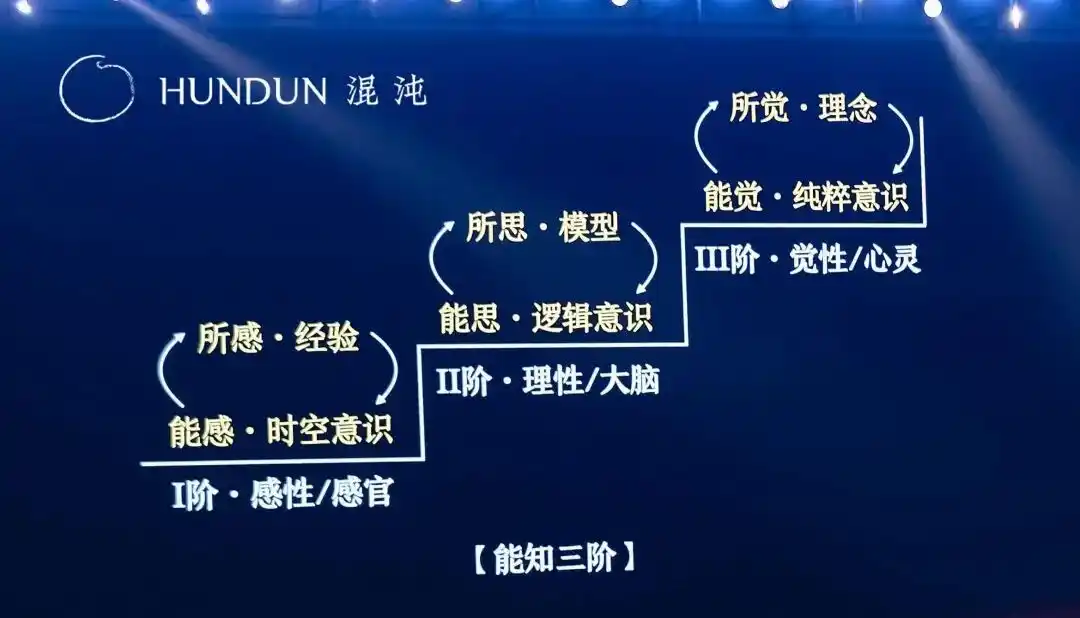
China's PC internet generation of entrepreneurs were heroes, but essentially most of them operated at the first-order capacity to know.
Because the keyword for this generation was "Copy to China," replicating successful experiences from one time and space to another. This is inductive reasoning, innovation living in experience—action innovation, execution innovation, not essential model innovation.
In contrast, the generation of entrepreneurs born in the 1980s, especially Huang Zheng and Zhang Yiming. You'll find this is a generation that completely believes in logic. Their success rests on the second-order capacity to know.
This can also explain why ByteDance and Pinduoduo could internationalize, achieving genuine overseas success. Because the mainstream of today's world is industrial civilization, at the second order. And ByteDance stands at the second order, so it can look the world in the eye and flow over.
Of course, you might say entrepreneurial success has many factors—resources, technology, opportunity, investment... But if we look for the core "one" factor, it's capacity to know. Ten years ago, Zhang Yiming made a leap in capacity to know, triumphing over the PC internet.
So Zhang Yiming's power is not just diligence, focus, correct strategy, nor merely seizing the mobile internet dividend. What he truly represents is the victory of second-order capacity to know: viewing the world with models, compressing information with logic, using modeling ability to form a dimensional reduction attack on experience-based entrepreneurs.
Zhang Yiming once said: "Anything that is logically possible will eventually happen." I think this aptly illustrates that he belongs to the second-order capacity to know.
But, what one succeeds by, one is also constrained by. ByteDance's boundary is rationality. If your capacity to know is built on rationality, you might not ascend further. For ByteDance as a whole, the concrete word embodying rationality is algorithm.
Zhang Yiming's belief in algorithms reached the point of training himself like an algorithm. But do you think this algorithm is pure and sincere?
So back to the initial question, will there be a new "Zhang Yiming" in the AI era? I think there definitely will be. Each era's discontinuity is not a single entrepreneur defeating a giant, but new entrepreneurs gathering within a new era's value network. The new value network grows, becoming the new giant.
DeepSeek's Liang Wenfeng: The Absolute Confidence of an Ideal-Driven Entrepreneur
If our footing remains on thinking capacity, on logic, we cannot surpass AI, nor can we surpass Zhang Yiming. Because AI lives directly in the rational world of logic, almost infinitely close to the peak of rationality.
Therefore, the very few who wish to become the new era's "Zhang Yiming" must leap, just as Zhang Yiming and Ma Yun did a decade ago, to the third-order capacity to know. Your way of viewing the world is no longer rational models, but a deep-seated idea within the heart. It is neither inductive nor deductive reasoning; it might be flow state, inspiration, the feeling of resonating with the great Way.
If I must give an example, I think it's DeepSeek's Liang Wenfeng. You'll find he is different from Zhang Yiming. I'm not saying he will definitely be the new era's "Zhang Yiming," but I think he carries some shadow, representing a certain zeitgeist we're discussing.
Liang Wenfeng said in a previous interview: "In the past 30 years, we've been more focused on making money than on innovation. But innovation isn't solely driven by business; it requires curiosity and creative ambition. We've been constrained by past habits, but this is just a phase." You can sense a kind of noble spirit, expressed in a humble yet powerful way. I believe he's not speaking just for himself, but representing a tide of the era. We truly need to sense a certain change.
He also said something I think is remarkable. "All established patterns are products of the previous generation; they may not hold in the future. Using the commercial logic of the internet era to discuss AI's future profit models is likely like marking the boat to find the sword."
Today we think OpenAI's ChatGPT is correct, but it might just be AI-enhanced innovation from the internet era. Perhaps DeepSeek's technical large model is a native innovation! How likely is that possibility? I think slightly more than zero, and that's the difference between innovation and entrepreneurship.
Entrepreneurship requires a high probability of success before you act, but innovation is doing something originally unlikely to succeed. I think this is the underlying color of Hundun; we are not cheering for entrepreneurial success, but for the courage to innovate.
Today's native AI-era entrepreneurs, if they can undergo a new leap in consciousness, might become the new figure of the AI era. This is also why the word "consciousness" isn't just philosophy; it has very concrete entrepreneurial significance. Musk and Jobs are references on this path.
Musk's business success is a byproduct of his pursuit of ideals. Many of SpaceX's decisions aren't based on commerce, but are inspired by the scene of "one day reaching Mars" to motivate all current decisions.
Jobs set enlightenment as his Y-axis, with tools, especially tools of thought, as the X-axis to achieve that enlightenment. He said he spent his life seeking self-enlightenment and hoped to enlighten more people through tools.
But this path is extremely difficult. I call it the path of ideals. It is glorious, but indeed it is a path only a few can walk, standing precisely on the point of the era's tide.
But what about the majority?
Crafting Your Work: The Ordinary Person's Path is to Do the Work at Hand Wholeheartedly
Not everyone has the chance to stand on the peak of the era's tide; many don't have such grand ideals or great vows. Now I want to talk about a second path, which is also the path I've chosen—the path of Quality, or the path of the Work.
I believe many students here feel this way: wanting to compete fiercely but unable to; wanting to give up but unable to rest easy, unwilling to settle. Does life lose meaning if you can't enter the tide? Many don't hold grand ideals; are personal small sentiments, small tastes, meaningless?
Not everyone can become a "Zhang Yiming." However, I can become a better version of myself.
I suspect that raising the frequency of consciousness doesn't necessarily require great endeavors; even in small matters, doing them with full attention can achieve incremental evolution of consciousness.
We often reify the things we do—for money, for a high salary. When you reify what you do, you are actually reifying your own heart. This reflects back; how you treat your work is how the world treats you. When you unify with what you do, the doing itself becomes the purpose; it is not a result or a means. At that point, what you do becomes a Work.
So the second path is not about comparison, not about competition, not about proving oneself, but turning inward. From the perspective of first principles, from the foundational color of consciousness, create a beautiful Work that belongs to me, express my heart through a Work. When person and work are unified, it's less about me polishing the work and more about me polishing my own heart.
This path originates from "Zen and the Art of Motorcycle Maintenance," which mentions a word called "Quality." I'll share my favorite passage: "One must listen to the guidance of Quality, follow it quietly, single-mindedly, so that the work in hand becomes an art."
I suspect Quality is also a word about essence. While it doesn't possess the extremely high consciousness frequency of "Ideas," it refers to finding the feeling of quality in whatever you do. The work in your hands having Quality gives those who use it a different feeling. Those who feel it might find it good and continue to spread it to others. Quality, like frequency, can ripple outward. I feel this is how the world becomes beautiful.
This path is backed by the faint light of ordinary people. You do the work at hand well, do it with heart, that's all. This era's frequency holders aren't necessarily the wealthy or famous. No matter how small your task, if your frequency is high enough, it will ripple outward, becoming a frequency holder of this era. So when the world gets more competitive and faster, perhaps we can make the opposite choice: be a little slower, go a little deeper, turn a little more inward.
Frankly, entrepreneurship is already difficult today. When the era lacks a great tide, we return to ourselves. People don't serve tasks; tasks serve people. People are the subject. Whether big or small, tasks are techniques, tools, carriers—all to cultivate my heart. This is returning to first principles.
This article is from WeChat public account "Hundun University" (ID: hundun-university), author: Hundun Academy