Justin Sun still frozen out of WLFI as locked token drops $60M in value since September

ambcryptoPublished on 2025-12-22Last updated on 2025-12-22

Abstract

Justin Sun remains blacklisted by World Liberty Financial (WLFI) three months after the project froze 272 wallets, citing security concerns including a phishing attack and suspected fund misappropriation. One wallet, linked to Sun by analysts, was flagged for misappropriation, though he denied wrongdoing. His locked WLFI tokens, estimated at 545 million, have dropped roughly $60 million in value since September as the token's price fell. WLFI maintains the freeze was necessary for user safety. The standoff raises questions about decentralization, transparency, and governance in tokenized finance, with no resolution in sight.

Justin Sun remains blacklisted by World Liberty Financial [WLFI], three months after the project froze hundreds of wallets during what it described as a broad security intervention.

New data from Bubblemaps and Arkham shows that the Sun’s locked WLFI tokens have plummeted in value by roughly $60 million since September, despite the project maintaining that the freeze was necessary to protect users.

WLFI confirms 272 wallets were frozen — including one linked to suspected misappropriation

The dispute dates back to early September, when WLFI disclosed it had blacklisted 272 wallets. The move followed reports of a major phishing incident and other suspicious activity.

According to the project’s public breakdown:

  • 215 wallets [≈79%] were tied to an active phishing attack.
  • 50 wallets [≈18.4%] belonged to users who reported compromise and requested protection.
  • 5 wallets [≈1.8%] were flagged for high-risk exposure.
  • 1 wallet [≈0.4%] was flagged for “suspected misappropriation of other holders’ funds.”

WLFI did not name the wallet in question. Still, subsequent reporting from Reuters and chain-analysis work by Bubblemaps linked the final category to Justin Sun.

Sun denied wrongdoing at the time and argued the freeze was “unreasonable.”

WLFI insisted the action was not targeted, stating:

“We do not seek to blacklist anyone. We respond when alerted to malicious or high-risk activity... User safety > everything.”

Bubblemaps shows Sun’s locked WLFI tokens have cratered

Bubblemaps’ latest analysis shows Sun is still unable to access his WLFI holdings. As the project’s token price fell sharply across the quarter, the value of his locked balance dropped by around $60 million, according to their estimates.

Arkham Intelligence data supports the trend. A review of Sun’s WLFI balance history shows a dramatic decline over the last three months, reflecting the project’s fall in market valuation.

WLFI currently trades near $0.14, with Sun holding about 545M, valued at roughly $74 million, according to market data.

Additionally, the Arkham data indicated that Sun held approximately 3 billion WLFI tokens; however, a significant decline was observed around August and September, resulting in the current number recorded.

What the standoff means going forward

While the project says the freeze protects community members, the incident continues to raise questions about transparency, enforcement standards, and the long-term decentralization claims of emerging tokenized funds.

There has been no update from WLFI about the locked funds.

For now, on-chain data confirms that Sun’s WLFI position has lost tens of millions in value while remaining inaccessible, and neither side appears close to resolving the stalemate.


Final Thoughts

  • The prolonged blacklist highlights the growing friction between security-driven controls and the expectations of decentralized token holders.
  • Justin Sun’s $60 million paper loss shows how quickly value can evaporate when access to assets is restricted, raising broader questions about governance and risk management in emerging tokenized finance ecosystems.


Trending Cryptos

Related Questions

QWhy was Justin Sun blacklisted by World Liberty Financial (WLFI)?

AWLFI blacklisted 272 wallets, including one linked to 'suspected misappropriation of other holders' funds,' which subsequent reporting from Reuters and Bubblemaps linked to Justin Sun.

QHow much has the value of Justin Sun's locked WLFI tokens decreased since September?

AThe value of Justin Sun's locked WLFI tokens has plummeted by roughly $60 million since September.

QWhat were the reasons WLFI provided for freezing the 272 wallets?

AWLFI stated that 215 wallets were tied to an active phishing attack, 50 wallets belonged to users who reported compromise, 5 wallets were flagged for high-risk exposure, and 1 wallet was flagged for suspected misappropriation of funds.

QWhat is the current estimated value of Justin Sun's WLFI holdings?

AJustin Sun holds about 545 million WLFI tokens, which are currently valued at roughly $74 million.

QWhat broader concerns does this incident raise according to the article?

AThe incident raises questions about transparency, enforcement standards, and the long-term decentralization claims of emerging tokenized funds, highlighting the friction between security controls and the expectations of decentralized token holders.

Related Reads

The Reality of Payments in Latin America Is Not What You Think

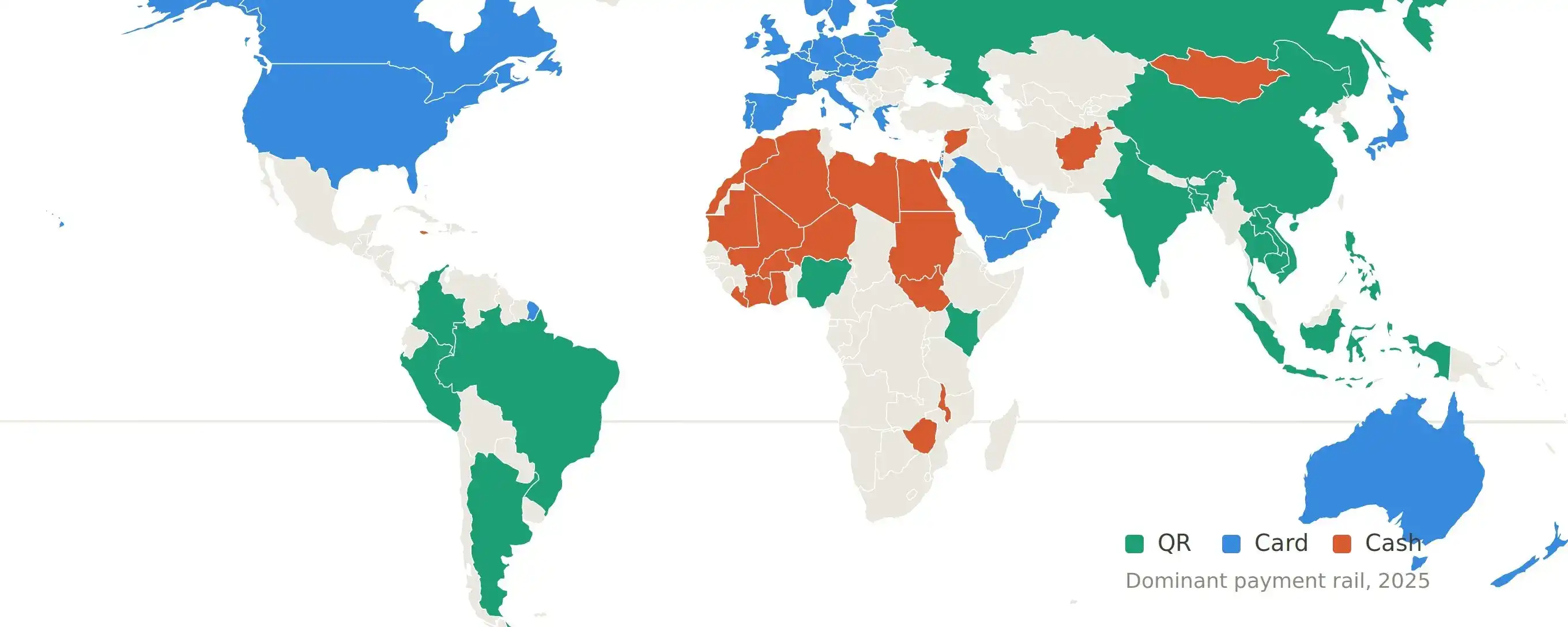
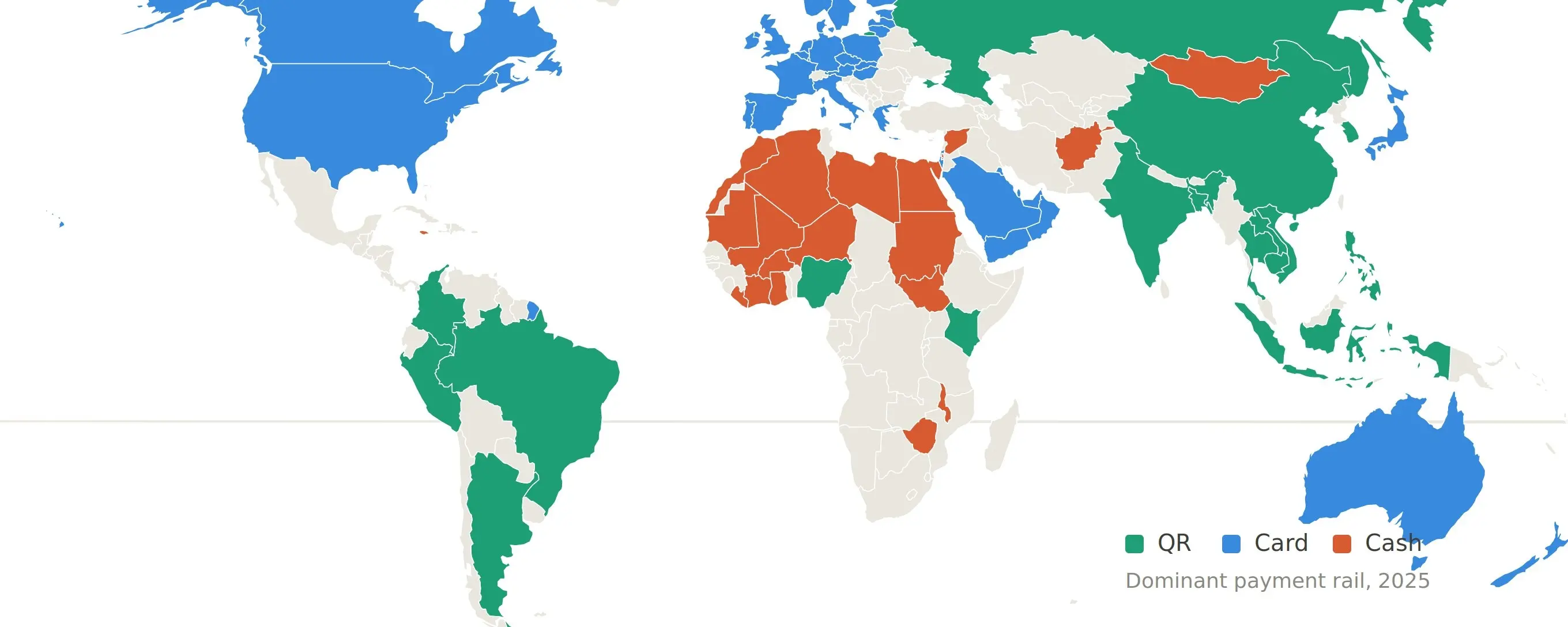
The payment landscape in Latin America is undergoing a fundamental shift, driven by on-the-ground realities that challenge common perceptions. Based on over 500 hours of field research across the region, key insights emerge. Firstly, QR code payments, like Brazil's Pix, are becoming the dominant payment method in most emerging markets, overtaking cards. However, these domestic instant payment systems lack international interoperability, creating a significant gap for cross-border users. Secondly, the narrative around crypto cards is often misunderstood; their primary volume comes from high-net-worth professionals using them for salary conversions (e.g., USDT to local currency via Pix), not retail micro-payments. Competition in payments is shifting from customer acquisition to controlling the settlement layer, leading fintechs to acquire banking licenses for efficiency. Thirdly, treating "Latin America" as a single market is a mistake. Countries like Argentina, Brazil, and Mexico have distinct economic realities, user segments, and regulatory approaches. Brazil alone has at least five distinct user segments with different financial flows. Overlooked markets like Guatemala, Honduras, and El Salvador (the "forgotten five") offer high remittance volumes with lower competitive density. Finally, regulation in Latin America is often ahead of the US, with clearer frameworks for digital assets and a pragmatic approach from regulators focused on safety rather than obstruction. The margin on stablecoin forex is rapidly compressing toward zero, meaning future winners will be those building value-added services on top of the infrastructure, not just the cheapest exchange.

marsbit8m ago

The Reality of Payments in Latin America Is Not What You Think

marsbit8m ago

Making Music in a Bear Market: The Survival Experiment of a Bitcoin Band

"Orange Pill Jam: A Bitcoin Band's Survival in the Bear Market" Orange Pill Jam is a musical group exploring themes of financial sovereignty and privacy, born from the Bitcoin community. Formed after singer Mermaid performed her song "Dollar Apocalypse" at a 2022 conference, the band creates music intended for both Bitcoin enthusiasts and general audiences. Their creative process involves Mermaid writing lyrics and melodies, which producer/multi-instrumentalist Michi then shapes with a precise, rhythm-focused approach, often demanding numerous retakes to achieve his unique standard of timing. Their songs, like "Cypherpunks' Manifesto" and "Fire of Freedom," tackle concepts of digital privacy, the pitfalls of "free" services, and personal sovereignty, influenced by experiences in places like El Salvador. Despite operating in a crypto bear market with a Copyleft model (offering music for free sharing/remixing and accepting optional Bitcoin donations), they face practical challenges. Their growth is slow on platforms like YouTube and Spotify, which aren't optimized for their niche content. The band also navigates the rise of AI-generated music. While acknowledging AI's efficiency for certain tasks, they believe human creativity occupies a unique space that algorithms cannot replicate—the ability to create new genres and capture intangible rhythmic feeling. For Orange Pill Jam, the core argument for both Bitcoin in a downturn and human artistry in the AI age lies in this irreplaceable, intentional, and imperfectly human creative process. Their project persists as an anti-algorithm experiment, valuing the unquantifiable impact of music over scalable metrics.

marsbit14m ago

Making Music in a Bear Market: The Survival Experiment of a Bitcoin Band

marsbit14m ago

Latin America's Payments Landscape Is Not What You Think It Is

This report challenges common misconceptions about Latin America's payment landscape, based on over 500 hours of firsthand research. Key findings include: 1) Crypto card transaction volume primarily comes from high-net-worth individuals receiving USDT salaries, not retail spending. 2) QR code payments (e.g., Brazil's Pix, Argentina's Mercado Pago) are the dominant payment method across most emerging markets, not cards. 3) A major untapped opportunity lies in enabling cross-border interoperability between domestic instant payment systems. 4) Payment competition is shifting from customer acquisition to owning the settlement layer (e.g., acquiring banks). 5) Latin America is not a single market; Brazil, Mexico, Argentina, and smaller "forgotten five" countries (e.g., Guatemala, Honduras) have vastly different dynamics. 6) Stablecoin-to-fiat conversion margins are collapsing toward zero, pushing companies to build value-added services on top. 7) Future payment winners will be multi-country brands, not single-corridor specialists. 8) Marketing must target specific user segments (e.g., digital nomads, unbanked immigrants) with tailored messaging, not a generic "Brazilian" audience. 9) Contrary to perception, Latin American regulators are often ahead of the US in creating frameworks for digital assets and instant payments, with clear licensing deadlines. The core takeaway is that the region's payment rules are being rewritten, moving beyond cards and stablecoin arbitrage towards integrated, cross-border QR-based solutions.

链捕手25m ago

Latin America's Payments Landscape Is Not What You Think It Is

链捕手25m ago

Trading

Spot
Futures

Hot Articles

How to Buy SUN

Welcome to HTX.com! We've made purchasing SUN (SUN) simple and convenient. Follow our step-by-step guide to embark on your crypto journey.Step 1: Create Your HTX AccountUse your email or phone number to sign up for a free account on HTX. Experience a hassle-free registration journey and unlock all features.Get My AccountStep 2: Go to Buy Crypto and Choose Your Payment MethodCredit/Debit Card: Use your Visa or Mastercard to buy SUN (SUN) instantly.Balance: Use funds from your HTX account balance to trade seamlessly.Third Parties: We've added popular payment methods such as Google Pay and Apple Pay to enhance convenience.P2P: Trade directly with other users on HTX.Over-the-Counter (OTC): We offer tailor-made services and competitive exchange rates for traders.Step 3: Store Your SUN (SUN)After purchasing your SUN (SUN), store it in your HTX account. Alternatively, you can send it elsewhere via blockchain transfer or use it to trade other cryptocurrencies.Step 4: Trade SUN (SUN)Easily trade SUN (SUN) on HTX's spot market. Simply access your account, select your trading pair, execute your trades, and monitor in real-time. We offer a user-friendly experience for both beginners and seasoned traders.

7.1k Total ViewsPublished 2024.03.29Updated 2026.06.02

How to Buy SUN

Discussions

Welcome to the HTX Community. Here, you can stay informed about the latest platform developments and gain access to professional market insights. Users' opinions on the price of SUN (SUN) are presented below.

活动图片