Aave drops 10%, but fundamentals refuse to break – Here’s why!

ambcryptoPublished on 2025-12-23Last updated on 2025-12-23

Abstract

Aave's price declined by over 10% amid a surge in trading volume, largely triggered by a $17 million whale sell-off that led to significant long position liquidations. Despite the bearish price action, the protocol demonstrated strong fundamentals with a notable $1.42 billion increase in Total Value Locked (TVL), reflecting sustained investor confidence. Aave also achieved record quarterly earnings of $22.56 million in Q4 2025, alongside healthy fee generation, indicating robust usage. While on-chain activity showed a temporary slowdown, the continued capital accumulation and high profitability suggest a positive long-term outlook, with the current dip potentially offering an accumulation opportunity for conviction-driven holders.

Aave has remained under pressure, with its price declining by over 10% while trading volume surged 226% to $577 million.

This bearish outlook followed a reported $17 million sell-off by a single whale, which triggered broader downside pressure among long perpetual traders. As a result, liquidations across long positions climbed to $1.59 million.

Despite the price decline, strong on-chain capital inflows suggest Aave retains a bullish undertone. AMBCrypto analyzed the protocol’s on-chain dynamics and assessed what they could mean for Aave’s [AAVE] price trajectory.

Capital inflows surge despite market fear

The leading lending and borrowing protocol has recorded a sharp rise in capital inflows despite persistent bearish price action.

Between the 18th of December and the time of writing, DeFiLlama data showed that inflows, measured through Total Value Locked (TVL), increased by $1.42 billion.

An inflow of this magnitude—especially as the broader crypto market enters a fear-driven phase—reflects strong conviction in AAVE’s long-term outlook.

Investors typically lock assets into protocols when they expect future returns, both from yield generation through APY and from anticipated price appreciation.

The fact that capital continues flowing into Aave rather than sitting in stablecoins or being sold outright suggests market participants remain confident in the protocol’s value proposition.

Over the past 24 hours alone, Aave generated $1.88 million in fees. Over the last seven days, fees totaled $11.58 million.

Elevated fee generation points to sustained and healthy user activity on the protocol.

Record profitability reinforces long-term thesis

The decision to hold AAVE over the long term despite weak price performance reflects confidence in the protocol’s fundamentals.

Aave generated $22.56 million in quarterly earnings for Q4 2025, calculated as gross profit minus incentives.

This figure marks the highest quarterly earnings in the protocol’s history—a milestone that signals robust protocol usage and reinforces investor conviction.

Strong profitability often creates a supply-tightening dynamic: as more investors choose to hold or accumulate AAVE rather than sell, circulating supply contracts, which typically support demand over time.

Token holder net income has also remained positive, with $7.11 million generated so far this quarter.

While this figure is lower compared to the previous two quarters, it still indicates sustained profitability for holders.

On-chain activity shows signs of slowdown

Despite strong capital inflows, on-chain activity has reduced.

Data from Artemis showed a daily decline in both Transaction Count and Active Users, confirming reduced network participation compared to previous days.

However, this decline in activity alongside rising TVL may not be entirely bearish. It could indicate that less committed traders have exited the market, leaving a more conviction-driven holder base in place.

If sidelined users return as sentiment improves, they could reintroduce fresh capital into the protocol, further improving AAVE’s broader outlook.

Aave presents a clear case of short-term price action diverging from underlying fundamentals.

While technical pressure persists—driven by whale selling and derivatives liquidations—the protocol’s record earnings, surging TVL, and sustained fee generation paint a picture of institutional-grade performance.


Final Thoughts

  • Aave has seen one of the largest on-chain capital inflows, reaching $1.4 billion.
  • Quarterly earnings hit an all-time high as the protocol becomes more profitable.

Trending Cryptos

Related Questions

QWhat caused Aave's price to drop by over 10% recently?

AA reported $17 million sell-off by a single whale triggered broader downside pressure among long perpetual traders, leading to liquidations across long positions climbing to $1.59 million.

QDespite the price decline, what on-chain metric showed a significant increase for Aave?

ATotal Value Locked (TVL) increased by $1.42 billion between December 18th and the time of writing, indicating a surge in capital inflows.

QWhat was Aave's quarterly earnings for Q4 2025 and why is it significant?

AAave generated $22.56 million in quarterly earnings for Q4 2025, which is the highest quarterly earnings in the protocol's history, signaling robust usage and reinforcing investor conviction.

QHow much in fees did Aave generate over the last 24 hours and 7 days?

AAave generated $1.88 million in fees over the past 24 hours and $11.58 million over the last seven days.

QWhat does the decline in on-chain activity alongside rising TVL potentially indicate for Aave?

AIt could indicate that less committed traders have exited the market, leaving a more conviction-driven holder base in place. If sidelined users return, they could reintroduce fresh capital and further improve Aave's outlook.

Related Reads

The Hunter Becomes the Hunted: The Most Profitable MEV Bot Gets Hacked

A well-known and highly profitable Ethereum MEV Bot, Jaredfromsubway.eth, suffered a sophisticated on-chain attack this Saturday, losing over $7.5 million. Analysis by Blockaid and others reveals this was not a conventional phishing or smart contract exploit, but a targeted "counter-MEV honeypot attack." The attacker meticulously laid a trap over several weeks, deploying 66 fake token contracts and liquidity pools disguised as major assets like WETH and USDC. These pools created the illusion of arbitrage opportunities. The MEV Bot's automated system detected these signals, executed trades, and in the process, granted approval permissions to attacker-controlled contracts. These approvals were not revoked, creating a persistent vulnerability. The attacker then exploited this in a single transaction, draining the bot's ETH, USDC, and USDT holdings. Jaredfromsubway.eth is notorious as one of Ethereum's most active and profitable MEV Bots, primarily known for executing "sandwich attacks" to profit from transaction slippage. Estimates suggest it has earned tens of millions in MEV revenue. The incident highlights escalating crypto security threats, demonstrating that even top-tier automated "predators" are vulnerable to novel, logic-based attacks designed to exploit their own operational rules. Following the hack, an unverified X account impersonating Jaredfromsubway.eth emerged, falsely offering a bounty for the return of funds, prompting developer warnings for users to stay vigilant.

marsbit1h ago

The Hunter Becomes the Hunted: The Most Profitable MEV Bot Gets Hacked

marsbit1h ago

The Reality of Payments in Latin America Is Not What You Think

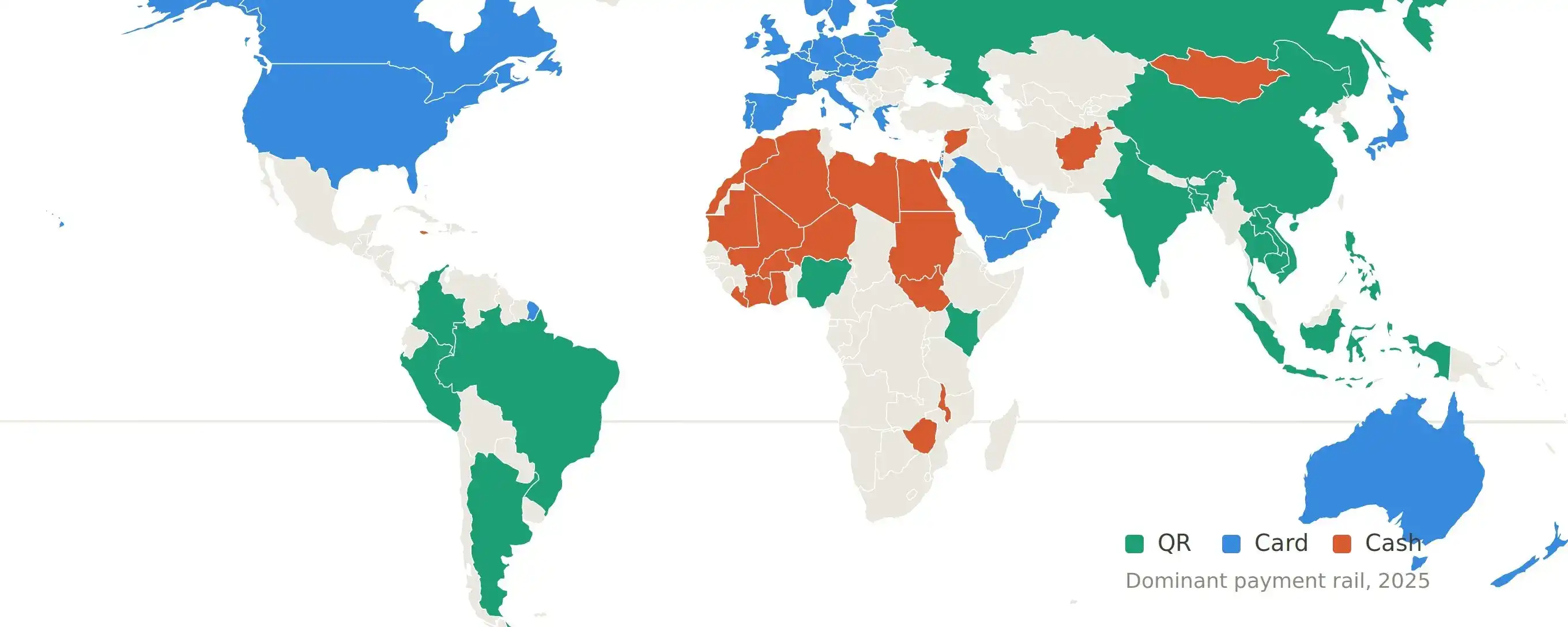
The payment landscape in Latin America is undergoing a fundamental shift, driven by on-the-ground realities that challenge common perceptions. Based on over 500 hours of field research across the region, key insights emerge. Firstly, QR code payments, like Brazil's Pix, are becoming the dominant payment method in most emerging markets, overtaking cards. However, these domestic instant payment systems lack international interoperability, creating a significant gap for cross-border users. Secondly, the narrative around crypto cards is often misunderstood; their primary volume comes from high-net-worth professionals using them for salary conversions (e.g., USDT to local currency via Pix), not retail micro-payments. Competition in payments is shifting from customer acquisition to controlling the settlement layer, leading fintechs to acquire banking licenses for efficiency. Thirdly, treating "Latin America" as a single market is a mistake. Countries like Argentina, Brazil, and Mexico have distinct economic realities, user segments, and regulatory approaches. Brazil alone has at least five distinct user segments with different financial flows. Overlooked markets like Guatemala, Honduras, and El Salvador (the "forgotten five") offer high remittance volumes with lower competitive density. Finally, regulation in Latin America is often ahead of the US, with clearer frameworks for digital assets and a pragmatic approach from regulators focused on safety rather than obstruction. The margin on stablecoin forex is rapidly compressing toward zero, meaning future winners will be those building value-added services on top of the infrastructure, not just the cheapest exchange.

marsbit1h ago

The Reality of Payments in Latin America Is Not What You Think

marsbit1h ago

Making Music in a Bear Market: The Survival Experiment of a Bitcoin Band

"Orange Pill Jam: A Bitcoin Band's Survival in the Bear Market" Orange Pill Jam is a musical group exploring themes of financial sovereignty and privacy, born from the Bitcoin community. Formed after singer Mermaid performed her song "Dollar Apocalypse" at a 2022 conference, the band creates music intended for both Bitcoin enthusiasts and general audiences. Their creative process involves Mermaid writing lyrics and melodies, which producer/multi-instrumentalist Michi then shapes with a precise, rhythm-focused approach, often demanding numerous retakes to achieve his unique standard of timing. Their songs, like "Cypherpunks' Manifesto" and "Fire of Freedom," tackle concepts of digital privacy, the pitfalls of "free" services, and personal sovereignty, influenced by experiences in places like El Salvador. Despite operating in a crypto bear market with a Copyleft model (offering music for free sharing/remixing and accepting optional Bitcoin donations), they face practical challenges. Their growth is slow on platforms like YouTube and Spotify, which aren't optimized for their niche content. The band also navigates the rise of AI-generated music. While acknowledging AI's efficiency for certain tasks, they believe human creativity occupies a unique space that algorithms cannot replicate—the ability to create new genres and capture intangible rhythmic feeling. For Orange Pill Jam, the core argument for both Bitcoin in a downturn and human artistry in the AI age lies in this irreplaceable, intentional, and imperfectly human creative process. Their project persists as an anti-algorithm experiment, valuing the unquantifiable impact of music over scalable metrics.

marsbit1h ago

Making Music in a Bear Market: The Survival Experiment of a Bitcoin Band

marsbit1h ago

Trading

Spot
Futures

Hot Articles

Discussions

Welcome to the HTX Community. Here, you can stay informed about the latest platform developments and gain access to professional market insights. Users' opinions on the price of S (S) are presented below.

活动图片