A Whale is Betting Big Against Crypto: Will BTC, ETH, and SOL Face Fresh Pressure?

TheNewsCryptoPublished on 2026-06-22Last updated on 2026-06-22

Abstract

A new crypto wallet has placed a large bearish bet against the market, opening 20x-leveraged short positions on Bitcoin (BTC), Ethereum (ETH), and Solana (SOL) worth nearly $48 million on Hyperliquid. This significant leveraged trade signals strong expectations of a near-term price decline but also carries high risk of liquidation if prices rise. Currently, Bitcoin trades around $63,888, with key support at ~$63,641 and resistance near $64,273. Ethereum hovers at $1,732, facing potential support near $1,619 and resistance around $1,811. Solana trades near $73.96, with immediate resistance at ~$74.52 and support at $72.04. The price action for all three assets is described in terms of potential bullish "golden cross" or bearish "death cross" technical patterns influencing their near-term direction.

A newly created wallet has caught the attention of the crypto traders after making a sizable bearish bet on the market through Hyperliquid. As per the data, wallet address 0xaeaa deposited 6.68 million USDC and used the capital to open multiple 20x-leveraged short positions in 3 of the largest tokens by market value.

The positions include 430.64 BTC worth $27.46 million, 4,280 ETH valued at around $7.37 million, and 181,245 SOL, roughly at $13.24 million. In total, the trader has gained exposure to nearly $48 million in short positions, signalling a strong expectation that prices could move lower in the near term.

Large leveraged trades attract market attention because they can reflect the outlook of well-capitalised traders or institutions. However, such positions carry significant risk. Moreover, with 20x leverage, even small price increases in Bitcoin, Ethereum, or Solana could trigger substantial losses or force liquidations.

Bitcoin Attempts to Move Higher

The dominant asset, Bitcoin (BTC), is currently trading at $63,888. Besides, the daily trading volume is settled at $18.9 billion after a 9.87% surge over the last 24 hours. The asset’s lowest and highest trading range is found at $63,221 and $64,712.

If the bears gained more traction, the nearest support could be at $63,641. Upon the death cross taking place, the Bitcoin price would fall below $63,420. On the flip side, when the bulls enter, the BTC price might immediately jump to the resistance at $64K. Assuming the market is moving up, with the emergence of the golden cross, the price could climb above $64,273.

Why is Ethereum Stalled?

After the recent price dip, the largest altcoin, Ethereum (ETH), is hovering at $1,732. Notably, a 23.29% increase is noted in the trading volume, reaching $9.85 billion. The lowest trading point is at $1,701, and the highest level is $1,756.

The asset’s trading pattern shows that the support is likely to be found at around $1,619. With the death cross popping out, the ETH price may fall even deeper toward the $1.5K range. Upon a reversal in the Ethereum market, the resistance levels would be at around $1,811 and above. If the potent golden cross shows up, the price would gradually move higher.

Where is Solana Heading?

At press time, Solana is trading within the $73.96 mark, with the trading volume at $2.16 billion, after a surge of over 14.95%. According to the price chart, the lowest and highest trading prices have been noted at $72.38 and $74.75, respectively.

With the 4-hour pricing pattern, the SOL momentum might climb to the resistance at around $74.52. If the bulls strengthen and initiate the golden cross to emerge, the price could go even higher. If a bearish reversal occurred, the Solana price would instantly slip to the support at $72.04. More losses could trigger the death cross and send the price below the $71 range.

Crypto Market Highlights

Battle Lines Drawn for Zcash (ZEC): Can Bulls Defend Against Growing Bearish Pressure?

TagsBTCCryptomarketETHSOL

Related Questions

QAccording to the article, what is the total exposure value of the bearish bets placed by the wallet address 0xaeaa, and which three cryptocurrencies are targeted?

AThe wallet address 0xaeaa has gained exposure to nearly $48 million in short positions. The bets target Bitcoin (BTC), Ethereum (ETH), and Solana (SOL).

QWhat leverage level did the trader use for the short positions mentioned in the article, and what is the primary risk associated with such leverage?

AThe trader used 20x leverage for the short positions. The primary risk is that even small price increases in the targeted cryptocurrencies could trigger substantial losses or force liquidations.

QWhat are the potential support and resistance levels discussed for Bitcoin (BTC) in the article?

AFor Bitcoin, the nearest potential support is at $63,641, with a deeper fall possible below $63,420 if a 'death cross' occurs. The immediate resistance is at $64,000, with a potential climb above $64,273 if a 'golden cross' emerges.

QWhat price levels does the article suggest as key support and resistance for Ethereum (ETH) in its current market condition?

AFor Ethereum, the article suggests support is likely around $1,619, with a potential deeper fall toward the $1.5K range. The resistance levels would be around $1,811 and above.

QBased on the 4-hour pricing pattern, what is the identified resistance level for Solana (SOL), and what could trigger a price drop to the $72.04 support?

ABased on the 4-hour pattern, the identified resistance level for Solana is around $74.52. A bearish reversal could trigger a price drop to the support at $72.04.

Related Reads

Research Report Analysis: Is Intel Making a Comeback with Apple? Bernstein's Calculations Show the Right Direction, but the Price Is Already Overvalued

Bernstein analyst Stacy A. Rasgon published a report on June 18 regarding Intel, assessing the potential impact of recent political support for a US-based PC chip design and manufacturing collaboration between Apple and Intel. The report views this as a significant signal for the foundry landscape shift but concludes the initial financial contribution would be minimal. Key conclusions: 1) An Apple deal is seen as a small-scale "proof of concept." Even if Intel wins 40% of Apple's premium notebook chip orders (~5 million units/year), Bernstein estimates it would generate only about $500M in annual revenue and ~$0.03 EPS, negligible against Intel's ~$55B revenue. 2) Political encouragement is not equivalent to enforceable mandates. Winning orders ultimately depends on Intel demonstrating competitive technology (like its 18A node), cost, and reliable supply. 3) The path from validation to large-scale production involves significant challenges, capital investment, and time. Due to these uncertainties, Bernstein maintains a Market-Perform (Hold) rating with a $100 price target, implying potential downside from the ~$121.10 price at the report date. The analysis highlights the tension between near-term validation value—serving as a crucial trust signal for Intel's foundry ambitions and US supply chain resilience—and the long-term opportunity to attract larger cloud and AI chip customers. The investment thesis hinges on successful 18A execution and sustained policy support, not on immediate financial gains from Apple.

marsbit4m ago

Research Report Analysis: Is Intel Making a Comeback with Apple? Bernstein's Calculations Show the Right Direction, but the Price Is Already Overvalued

marsbit4m ago

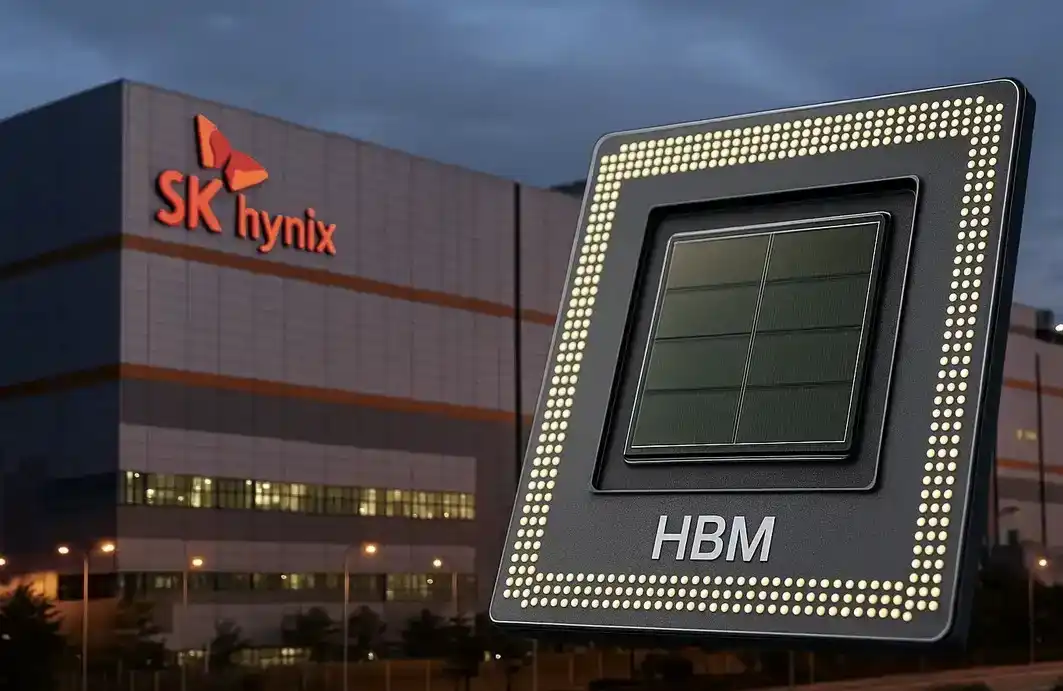
27-Year Reign Ends: SK Hynix Market Cap Surpasses Samsung for First Time, an AI-Driven Reshuffle of Korean Chip Power

On June 22, 2026, SK Hynix made history by surpassing Samsung Electronics in market capitalization, ending Samsung's 27-year reign as South Korea's most valuable company. This dramatic reversal is powered by the AI boom and SK Hynix's dominant position in High Bandwidth Memory (HBM), a critical component for AI model training. Once a heavily indebted firm on the brink of bankruptcy, SK Hynix bet early on HBM, which has evolved from a niche product to essential AI infrastructure. It now commands a 59% share of the global HBM market. Its financial performance is staggering, with Q1 2026 net profit soaring nearly fourfold year-over-year to KRW 40.35 trillion, translating to over 2 billion RMB in daily net profit. HBM now drives roughly 40% of its revenue with exceptionally high margins. In contrast, Samsung, with its broad portfolio spanning memory chips, smartphones, and foundry services, has lagged in the HBM race while facing headwinds in other divisions. This shift signifies a deeper restructuring of South Korea's economy, moving from consumer electronics to AI-driven growth. However, the future remains competitive. With major capacity expansions planned industry-wide by 2028 and Samsung aiming to catch up in HBM technology, the new market leader cannot afford complacency. This event marks a pivotal moment in the global semiconductor industry's ongoing power realignment.

marsbit15m ago

27-Year Reign Ends: SK Hynix Market Cap Surpasses Samsung for First Time, an AI-Driven Reshuffle of Korean Chip Power

marsbit15m ago

Why Does 'AGI Godfather' Ben Goertzel Believe the Future of AI Relies on Blockchain?

Ben Goertzel, known as the "AGI Godfather," argues that the future of Artificial General Intelligence (AGI) must be built on blockchain to prevent its control by a few corporations or venture capital firms. He believes the core AGI code should be free and open-source, but that this alone is insufficient without a decentralized infrastructure to run it affordably. His blockchain project, SingularityNET, and the broader Artificial Superintelligence Alliance aim to create a user-owned, decentralized network for hosting and deploying AGI, contrasting with the closed models of companies like OpenAI and Anthropic. Goertzel criticizes the shift of other labs from open to closed development. He argues that while a closed path is simpler, an open, decentralized model—akin to Linux and the internet—is both possible and ultimately better for humanity. He envisions an "Agent economy" where individuals orchestrate teams of AI agents to perform tasks, including transactions, on an open network rather than corporate clouds. While his current model relies on cryptocurrency, plans include offering paid AI services to businesses with the decentralized blockchain as the backend. Goertzel predicts human-level AGI could arrive by 2029 and warns that a gap in understanding and access to AGI could drastically worsen inequality. The first test of his decentralized approach will be the upcoming release of the Agent Omega Claw.

Foresight News45m ago

Why Does 'AGI Godfather' Ben Goertzel Believe the Future of AI Relies on Blockchain?

Foresight News45m ago

Trading

Spot
Futures
活动图片