European Parliament approves crypto tax policy and the use of blockchain for collecting tax

FXStreetPublished on 2022-10-05Last updated on 2022-10-05

Abstract

The members of parliament adopted a resolution calling on member states’ coordination for crypto assets’ taxation.

The members of parliament adopted a resolution calling on member states’ coordination for crypto assets’ taxation.

The resolution also suggested the adoption of blockchain technology for more transparent and efficient tax collection.

The crypto market noted the recovery of more than $47 billion in the last 24 hours after days of sideways movement.
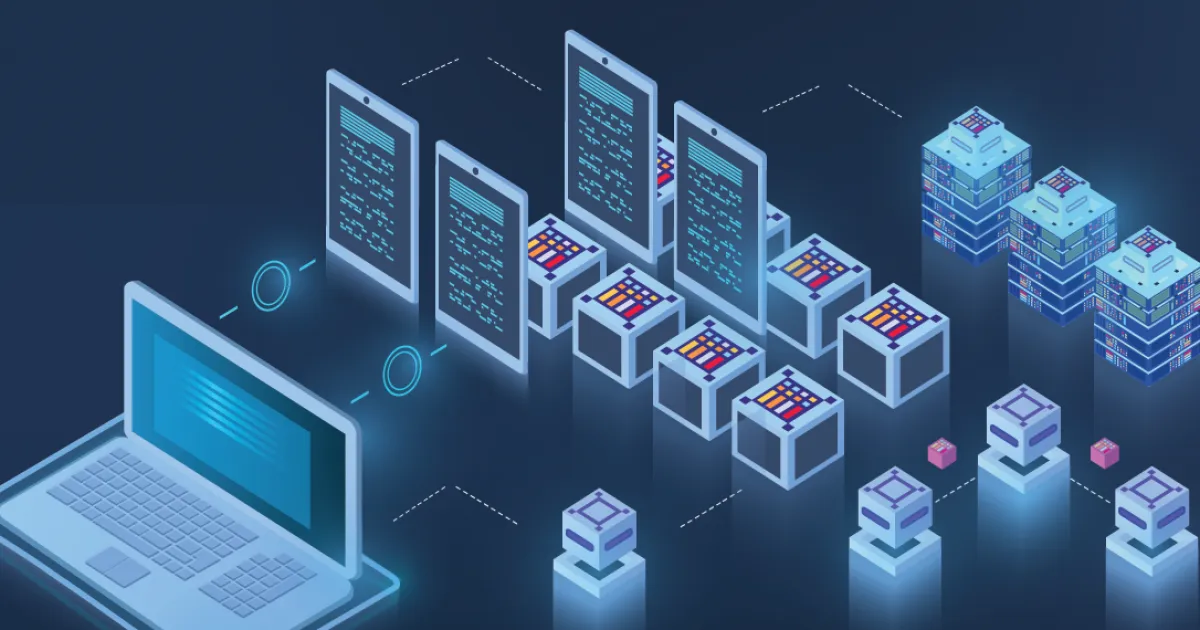
Crypto regulation is undoubtedly one of the bigger concerns for governments worldwide, with crypto taxation equally a grave concern. While many other countries have already implied taxes on crypto transactions, the European Parliament is finally taking its first step in that direction.

EP brings taxes to crypto

The European Parliament (EP) members voted on a non-binding resolution on October 4, which sets out a framework for the crypto market. Receiving over 91.3% votes in favor of its passing, the resolution observed only seven votes against it.

This resolution works two ways within the crypto market, first by targeting crypto assets for uniform taxation and secondly by employing blockchain technology for executing taxation services.

In the case of digital asset taxes, the resolution read,

“...crypto assets must be subject to fair, transparent and effective taxation. It also invites authorities however to consider a simplified tax treatment for occasional or small traders and small transactions.”

In order to make this happen, the resolution suggested the identification of policies regarding tax evasion in the field of crypto assets along with the development of a clear and broadly accepted definition of crypto assets.

Furthermore, the development of an intelligible definition of a taxable event was also suggested. According to the resolution,

“The conversion of a crypto asset into a fiat currency might be the more appropriate choice and it asks the Commission to specifically assess this option, along with a more general one concerning the identification of possible taxable events.”

In addition to taxing crypto assets, the resolution also identified blockchain as a key and efficient tool. The resolution suggested leveraging its technology in order to automate tax collection and increase transparency by limiting corruption.

The crypto market makes a move

Having barely moved since September 19, the crypto market has noted no major fluctuation until Tuesday. Rising by 5.36%, the total crypto market capitalization recovered by $47.41 billion to reach $928 billion.

Although the market cap is still far away from the $1 trillion mark, the psychological level has consistently proven to be a trend-flipping zone in the past.

However, the presence of Parabolic SAR’s black dots below the candlesticks does highlight an active uptrend which, if sustained, could push the market cap to $1 trillion.
Related Reads

27-Year Reign Ends: SK Hynix Market Cap Surpasses Samsung for First Time, an AI-Driven Reshuffle of Korean Chip Power

On June 22, 2026, SK Hynix made history by surpassing Samsung Electronics in market capitalization, ending Samsung's 27-year reign as South Korea's most valuable company. This dramatic reversal is powered by the AI boom and SK Hynix's dominant position in High Bandwidth Memory (HBM), a critical component for AI model training. Once a heavily indebted firm on the brink of bankruptcy, SK Hynix bet early on HBM, which has evolved from a niche product to essential AI infrastructure. It now commands a 59% share of the global HBM market. Its financial performance is staggering, with Q1 2026 net profit soaring nearly fourfold year-over-year to KRW 40.35 trillion, translating to over 2 billion RMB in daily net profit. HBM now drives roughly 40% of its revenue with exceptionally high margins. In contrast, Samsung, with its broad portfolio spanning memory chips, smartphones, and foundry services, has lagged in the HBM race while facing headwinds in other divisions. This shift signifies a deeper restructuring of South Korea's economy, moving from consumer electronics to AI-driven growth. However, the future remains competitive. With major capacity expansions planned industry-wide by 2028 and Samsung aiming to catch up in HBM technology, the new market leader cannot afford complacency. This event marks a pivotal moment in the global semiconductor industry's ongoing power realignment.

marsbit9m ago

27-Year Reign Ends: SK Hynix Market Cap Surpasses Samsung for First Time, an AI-Driven Reshuffle of Korean Chip Power

marsbit9m ago

Why Does 'AGI Godfather' Ben Goertzel Believe the Future of AI Relies on Blockchain?

Ben Goertzel, known as the "AGI Godfather," argues that the future of Artificial General Intelligence (AGI) must be built on blockchain to prevent its control by a few corporations or venture capital firms. He believes the core AGI code should be free and open-source, but that this alone is insufficient without a decentralized infrastructure to run it affordably. His blockchain project, SingularityNET, and the broader Artificial Superintelligence Alliance aim to create a user-owned, decentralized network for hosting and deploying AGI, contrasting with the closed models of companies like OpenAI and Anthropic. Goertzel criticizes the shift of other labs from open to closed development. He argues that while a closed path is simpler, an open, decentralized model—akin to Linux and the internet—is both possible and ultimately better for humanity. He envisions an "Agent economy" where individuals orchestrate teams of AI agents to perform tasks, including transactions, on an open network rather than corporate clouds. While his current model relies on cryptocurrency, plans include offering paid AI services to businesses with the decentralized blockchain as the backend. Goertzel predicts human-level AGI could arrive by 2029 and warns that a gap in understanding and access to AGI could drastically worsen inequality. The first test of his decentralized approach will be the upcoming release of the Agent Omega Claw.

Foresight News40m ago

Why Does 'AGI Godfather' Ben Goertzel Believe the Future of AI Relies on Blockchain?

Foresight News40m ago

Trading

Spot
Futures
活动图片