Dash Launches ZK-Based Privacy on Zcash

cryptonews.ruPublicado a 2026-07-30Actualizado a 2026-07-30

Resumen

Dash has integrated ZK-privacy based on Zcash's Orchard protocol into its Platform (v4.0.0), making shielded transactions part of the consensus. This built-in protocol feature offers an optional second layer of privacy alongside Dash's existing CoinJoin, better suited for fast mobile wallets. Shielded operations hide sender, receiver, balance, and amount within a pool, using zero-knowledge proofs to validate transactions without revealing details. Users can deposit credits into the pool from a transparent address, conduct private transfers, and withdraw funds. Key features include direct deposits from Dash Core and shielded withdrawals to Core addresses. The implementation adapts Zcash's Orchard protocol to Dash Platform, incorporating structures like SumTree to prevent hidden inflation. A recent critical vulnerability in Orchard was patched prior to Dash's release. Wallet synchronization, tested at around 21 seconds, is notably faster than similar Zcash wallets. While initially supporting only Platform Credits (pegged to Dash), Dash plans to add separate shielded pools for native Platform tokens and assets. This move aims to combine ZK-privacy with token and NFT issuance, linking user-created assets directly to the established Dash cryptocurrency and external markets. Mobile wallet releases with this functionality are expected soon.

In February, we wrote about Dash's plans to integrate Orchard. At that time, it concerned a future release and the prospect of private user tokens.

Now, the first part of the plan has been realized: in Dash Platform v4.0.0, shielded operations have become part of the consensus. This is not an external mixer, not a custodial service, and not an experimental smart contract — privacy is built directly into the protocol.

For Dash, historically associated with CoinJoin, this is not a replacement for the old mechanism, but a second privacy model. CoinJoin continues to work on the main network, while Platform uses ZK-proofs instead of mixing rounds with multiple participants. This approach is better suited for fast mobile wallets. At the same time, regular Dash transactions remain transparent: confidentiality is optional.

The shielded pool hides the balance, sender, recipient, and transfer amount within the pool. The network verifies that the funds exist, belong to the sender, and are not spent twice, but does so without revealing the operation's contents.

A user can deposit credits into the pool from a transparent Platform address, conduct a private transfer, and return the funds. For DASH holders, two other routes are more important: ShieldFromAssetLock sends funds to the shielded pool directly from Core, and ShieldedWithdrawal withdraws them to a specified Core address. To avoid linking the withdrawal to previous activity, the wallet must use a new address.
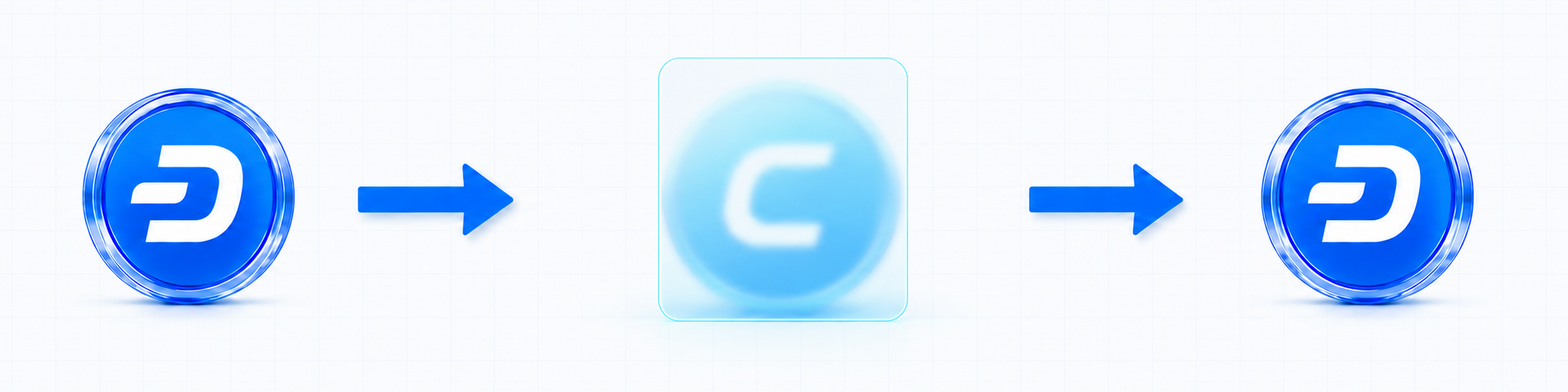
Platform Credits — the internal settlement unit of Dash Platform, tied to Dash at a fixed ratio: one Dash corresponds to 100 billion credits.

How the Privacy Works — Without the Complicated Math

Dash did not create a new ZK-scheme from scratch. The implementation is based on Orchard, Zcash's shielded protocol built on Halo 2 without a trusted setup. Dash's engineering work involved adapting it to Platform: custom state transitions, storage in GroveDB, fees, wallet synchronization, and the route back to Core.

Shortly before the release, a critical vulnerability was discovered in Orchard, potentially allowing double spending within the pool. The Zcash team fixed the proof scheme, and Dash Core Group transitioned its implementation to the updated libraries even before the release of Platform 4.0. An additional layer of control in Dash is provided by SumTree: this structure stores and cross-references the pool's state, preventing hidden inflation from going unnoticed.

One of the main problems with shielded systems is wallet synchronization. To detect incoming funds, the application receives encrypted notes and locally checks which ones its key can decrypt. The server does not learn which transfers belong to the user.

In the test version of the application, we created a new wallet and started synchronization: it took about 21 seconds, which is significantly faster than synchronizing the Zodl wallet for ZCash.

The release of mobile wallets with support for the new technology is expected soon.

Currently, the pool only works with Platform Credits. However, Dash has already announced plans to add separate shielded pools for native Platform tokens.

Private user assets are not a new concept. Dash's strength lies in the specific combination of capabilities: ZK-privacy, token and NFT issuance, and the ability to exchange created assets for Dash and back. Thanks to this, each asset gains a direct connection to an already established coin, and through it — to the external market.

Criptos en tendencia

Preguntas relacionadas

QWhat is the main innovation introduced in Dash Platform v4.0.0 regarding privacy?

ADash Platform v4.0.0 integrated shielded operations directly into the consensus protocol, based on Zcash's Orchard protocol. This is not an external mixer or a custodial service but a native, protocol-level privacy feature using zero-knowledge proofs.

QHow does the new shielded privacy model in Dash differ from its previous CoinJoin mechanism?

AThe new shielded privacy model using ZK-proofs is a second model of privacy that operates within the Platform, designed to be better suited for fast mobile wallets. The original CoinJoin mechanism, which operates in the main network for mixing transactions, continues to function. Regular Dash transactions remain transparent, making privacy optional.

QWhat critical issue was discovered in the Orchard protocol shortly before the Dash Platform v4.0 release, and how was it addressed?

AA critical vulnerability was discovered in the Orchard protocol that could potentially allow double-spending within the shielded pool. The Zcash team fixed the proof scheme, and the Dash Core Group updated their implementation to the patched libraries before the release. Dash adds an additional layer of control with SumTree, which monitors the pool's state to prevent hidden inflation.

QHow does Dash Platform ensure wallet synchronization privacy when detecting incoming shielded funds?

ATo maintain privacy during synchronization, the application receives encrypted notes from the server and locally checks which ones can be decrypted with its own key. This process allows the user to detect incoming funds without revealing to the server which specific transactions belong to them.

QWhat are Dash's future plans regarding shielded pools and assets on its platform?

ADash has announced plans to add separate shielded pools for native tokens on the Platform. This will extend ZK-privacy to user-issued assets and NFTs, allowing for private trading of these assets and their direct exchange for Dash, linking them to an established coin and the external market.

Lecturas Relacionadas

Los inversores comienzan a 'cambiar de mesa'

Los inversores están cambiando de "mesa de juego". Mientras los sectores de tecnología avanzada (hard tech) como la IA y la robótica experimentan una efervescencia de financiación, con rondas de inversión rápidas y millonarias, muchos profesionales de capital riesgo están reconsiderando sus opciones profesionales. En lugar de competir en mercados saturados, un número creciente de inversores, incluidos socios y directores de fondos, está pasando activamente al lado empresarial. Buscan roles en empresas emergentes, a menudo en puestos de liderazgo como vicepresidentes, directores generales o incluso cofundadores, particularmente en sectores punteros como IA, robótica o aeroespacial. Este movimiento es una elección deliberada, facilitada por una reactivación del mercado: los inversores institucionales (LP) están desembolsando más capital y las empresas tecnológicas líderes tienen una necesidad urgente de talento con experiencia en capital riesgo para gestionar sus intensos procesos de financiación. Empresas destacadas están reforzando activamente sus equipos financieros. Para los inversores, el cambio ofrece una vía para aplicar su experiencia en un entorno donde la saturación de fondos en ciertos sectores, la presión regulatoria y la incertidumbre en la rentabilidad de las salidas a bolsa generan nuevas dudas sobre el modelo tradicional. No obstante, la transición conlleva retos, como adaptarse a la cultura operativa de una empresa. Este fenómeno refleja una ampliación de las fronteras profesionales en el ecosistema de inversión.

marsbitHace 8 min(s)

Los inversores comienzan a 'cambiar de mesa'

marsbitHace 8 min(s)

¡La comunidad de Ethereum está dividida! ¿A quién perjudica la EIP-8363?

La comunidad de Ethereum está profundamente dividida por la propuesta EIP-8363, que busca modificar los incentivos de staking. Presentada por investigadores como Jérôme de Tychey y Justin Drake, su objetivo es instalar una "pendiente de rendimiento decreciente" para la emisión en la capa de consenso. **¿Qué propone?** La EIP-8363 introduciría un mecanismo de "quema de emisión gradual". No establece un límite máximo de ETH en staking, pero sí haría que las recompensas netas de emisión por consenso para los validadores disminuyan gradualmente a medida que el total apostado se acerca al 50% del suministro total de ETH (fijado en 60.25 millones). Al alcanzar o superar ese umbral, estas recompensas se reducirían a cero. Los ingresos por fees prioritarios y MEV en la capa de ejecución no se verían afectados. Se propone un período de transición de 18 meses para suavizar el impacto. **Argumentos a favor:** Los proponentes argumentan que el protocolo actual incentiva eternamente más staking, lo que podría centralizar los validadores en grandes custodios y servicios. También señalan que los holders que no hacen staking sufren una dilución continua por la nueva emisión, debilitando al ETH nativo como activo neutral frente a los LST (Liquid Staking Tokens). **Reacciones y críticas:** La respuesta comunitaria ha sido mayoritariamente crítica: - Se cuestiona la predictibilidad de los flujos de caja para instituciones. - Hay preocupación de que unos rendimientos muy bajos expulsen a los validadores individuales (solo stakers), aumentando la centralización en manos de grandes actores con menores costes. - Se critica el momento de la presentación, poco antes del corte para la futura actualización Hegotá. - Se advierte sobre el impacto negativo en estrategias DeFi basadas en LST, préstamos y apalancamiento, que dependen del rendimiento del staking. **Posibles consecuencias:** - **Validadores individuales:** Serían los más afectados por costes fijos y mayor tiempo para recuperar penalizaciones. - **Tokens de LST (como stETH):** Su ventaja de rendimiento sobre el ETH nativo se reduciría, desafiando su modelo de valor. - **Ecosistema DeFi:** Podría contraerse la demanda de préstamos en ETH y estrategias de apalancamiento basadas en rendimientos. - **Holders de ETH:** Se beneficiarían colectivamente de una menor dilución, aunque el efecto neto en el precio dependería también de la demanda y la quema de tarifas EIP-1559. En resumen, la EIP-8363 busca fortalecer la neutralidad del ETH y controlar la centralización, pero genera temores sobre la seguridad descentralizada, la salud del ecosistema DeFi y la estabilidad de los incentivos económicos de Ethereum.

marsbitHace 40 min(s)

¡La comunidad de Ethereum está dividida! ¿A quién perjudica la EIP-8363?

marsbitHace 40 min(s)

Trading

Spot

Artículos destacados

Cómo comprar DASH

¡Bienvenido a HTX.com! Hemos hecho que comprar DASH (DASH) sea simple y conveniente. Sigue nuestra guía paso a paso para iniciar tu viaje de criptos.Paso 1: crea tu cuenta HTXUtiliza tu correo electrónico o número de teléfono para registrarte y obtener una cuenta gratuita en HTX. Experimenta un proceso de registro sin complicaciones y desbloquea todas las funciones.Obtener mi cuentaPaso 2: ve a Comprar cripto y elige tu método de pagoTarjeta de crédito/débito: usa tu Visa o Mastercard para comprar DASH (DASH) al instante.Saldo: utiliza fondos del saldo de tu cuenta HTX para tradear sin problemas.Terceros: hemos agregado métodos de pago populares como Google Pay y Apple Pay para mejorar la comodidad.P2P: tradear directamente con otros usuarios en HTX.Over-the-Counter (OTC): ofrecemos servicios personalizados y tipos de cambio competitivos para los traders.Paso 3: guarda tu DASH (DASH)Después de comprar tu DASH (DASH), guárdalo en tu cuenta HTX. Alternativamente, puedes enviarlo a otro lugar mediante transferencia blockchain o utilizarlo para tradear otras criptomonedas.Paso 4: tradear DASH (DASH)Tradear fácilmente con DASH (DASH) en HTX's mercado spot. Simplemente accede a tu cuenta, selecciona tu par de trading, ejecuta tus trades y monitorea en tiempo real. Ofrecemos una experiencia fácil de usar tanto para principiantes como para traders experimentados.

351 Vistas totalesPublicado en 2024.12.13Actualizado en 2026.06.02

Cómo comprar DASH

Discusiones

Bienvenido a la comunidad de HTX. Aquí puedes mantenerte informado sobre los últimos desarrollos de la plataforma y acceder a análisis profesionales del mercado. A continuación se presentan las opiniones de los usuarios sobre el precio de DASH (DASH).

活动图片