Treasury’s GENIUS Act Report Backs Mixers, But Wants a New ‘Hold Law’ For Crypto

bitcoinist發佈於 2026-03-09更新於 2026-03-09

文章摘要

The U.S. Treasury's GENIUS Act report acknowledges the legitimate privacy benefits of cryptocurrency mixers for lawful users, such as protecting personal or business transactions. However, it highlights the misuse of these tools by illicit actors like North Korean cyber units and ransomware groups to launder funds. To address this, the report proposes a new "digital-asset-specific hold law" that would allow regulated platforms to temporarily freeze suspicious transactions, giving law enforcement time to act without disrupting legitimate privacy-focused usage. The report is part of a broader effort to balance financial innovation and security under the GENIUS Act framework.

Treasury sent Congress its GENIUS‐Act‐mandated report on “innovative tools” to fight crypto‐enabled illicit finance.

A Crypto’s “Hold Law” And A Privacy Paradox

In a 32-page report submitted to the US Congress this March, the U.S. Treasury Department has endorsed lawful uses of crypto mixers (a service that takes in cryptocurrency from many different users, mixes all those coins together, and then sends each user back an equivalent amount from the pool, but from different addresses than the ones they used to deposit) in favor of privacy.

However, it has also urged lawmakers to create a new “digital‐asset‐specific hold law” so platforms can freeze suspicious funds.

Mixers, Privacy And DPRK

The report notes favorably that mixing and similar tools “can be used by lawful users seeking to enhance financial privacy on public blockchains,” including for “protecting sensitive information about personal wealth, business transactions, or charitable donations from public view. It adds that Treasury “recognizes that privacy‐enhancing technologies, including mixers and other obfuscation tools, may serve legitimate purposes when used by compliant actors in line with applicable AML/CFT requirements.”

On the other side, the same report also stresses that North Korea’s cyber units and major ransomware crews rely on mixers, cross‐chain bridges, and rapid swaps as core infrastructure to launder massive hauls from hacks and fraud. The report cites billions of dollars in stolen digital assets tied to DPRK actors and details how those funds are pushed through mixers and into stablecoins before being bridged and cashed out, using the same tools that ordinary users might pick for privacy.

What The “Hold Law” Would Do

Therefore, to tackle this paradox, the report proposes a “hold law” that would ensure that legitimate, clean, users keep their privacy while unlawful or suspicious activity can be addressed. Under the proposal, crypto exchanges and other regulated platforms would gain a clear and legal “pause button” for suspicious funds. The report recommends that “Congress establish a digital‐asset‐specific statutory ‘hold’ authority” that would allow platforms “to temporarily retain or delay the movement of digital assets associated with suspected illicit activity while appropriate legal process is pursued.” Firms could temporarily hold or delay those assets when strong red flags appear, with statutory cover for doing so.

The idea would be to give law enforcement time to act against ransomware crews, large fraud schemes, or state‐sponsored hackers, while limiting the tool to narrowly defined, high‐risk cases so routine customer flows are not frozen by default.

TradFi and Legacy media have often linked mixers to money laundering, with Tornado Cash as the obvious cautionary tale. Ethereum co‐founder Vitalik Buterin has repeatedly argued that mixers are neutral tools, even saying he used Tornado Cash to make a private donation to Ukraine, and is now backing ‘compliant’ designs like Privacy Pools that aim to protect on‐chain privacy without commingling with known dirty funds.

Another Piece On The GENIUS Act Puzzle

The report is part of the broader GENIUS Act framework, the law Trump signed to create a federal regime for payment stablecoins and push “innovative” tools against illicit finance. It fulfills a mandate for Treasury to spell out how AI, digital identity, and blockchain analytics should be used under a risk‐based AML approach.

The report also proposes a preferred tech stack (AI, digital ID, blockchain analytics, APIs) that regulated platforms should deploy under a risk‐based AML approach.
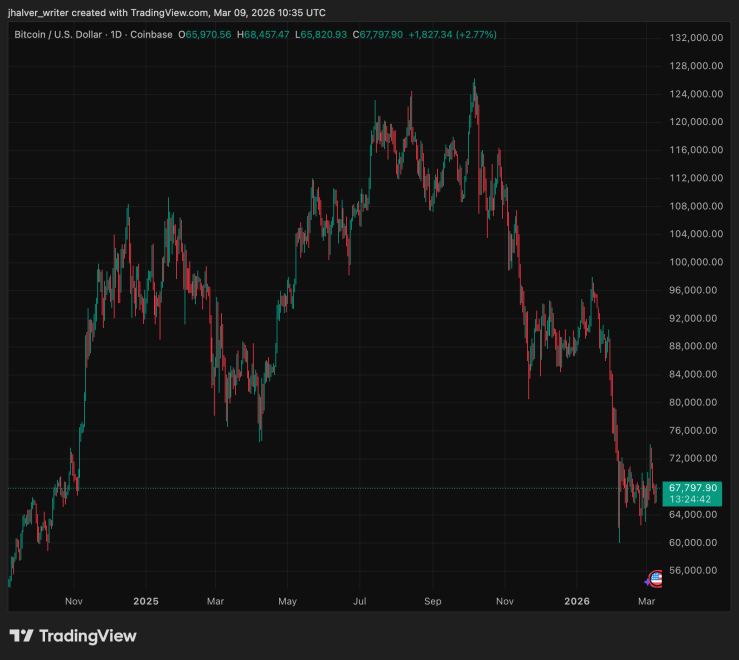
BTC's price trends to the downside on the daily chart. Source: BTCUSD on Tradingview

Cover image from ChatGPT, BTCUSD chart from Tradingview

相關問答

QWhat is the main purpose of the GENIUS Act report submitted by the U.S. Treasury Department?

AThe GENIUS Act report outlines 'innovative tools' to fight crypto-enabled illicit finance, endorsing lawful uses of crypto mixers for privacy while proposing a new 'hold law' to freeze suspicious funds.

QHow does the report view the use of crypto mixers by lawful users?

AThe report recognizes that mixers and other privacy-enhancing technologies can serve legitimate purposes for lawful users seeking financial privacy, such as protecting sensitive information about personal wealth or business transactions, when used in compliance with AML/CFT requirements.

QWhat specific legislative measure does the Treasury Department recommend to address suspicious crypto transactions?

AThe Treasury Department recommends that Congress establish a digital-asset-specific statutory 'hold' authority, allowing platforms to temporarily retain or delay the movement of digital assets associated with suspected illicit activity while legal process is pursued.

QAccording to the report, how do malicious actors like North Korea's cyber units utilize crypto mixers?

ANorth Korea's cyber units and ransomware crews use mixers, cross-chain bridges, and rapid swaps as core infrastructure to launder massive amounts of stolen digital assets, often pushing funds through mixers into stablecoins before cashing out.

QWhat broader framework is this report a part of, and what additional tools does it propose for regulated platforms?

AThe report is part of the GENIUS Act framework, which aims to create a federal regime for payment stablecoins and combat illicit finance. It proposes a tech stack including AI, digital identity, blockchain analytics, and APIs for regulated platforms under a risk-based AML approach.

你可能也喜歡

帕克·刘易斯解释为何比特币仍是最佳货币

知名比特币分析师帕克·刘易斯在访谈中批评了某些上市公司以“数字信贷”形式销售永续优先股的营销策略,认为这从根本上扭曲了比特币的本质。他指出,比特币在算法层面不具备法币收益性,承诺定期分红主要依赖牛市吸引新投资者来维持,风险极高。 刘易斯引用数据说明此类衍生品的巨大风险:全球信贷市场规模达300万亿美元,而永续优先股市场仅约1万亿美元,这表明机构有意规避这种无还款期限的资产,将风险转嫁给信息不足的散户。 针对“比特币波动性太大”的常见观点,他认为波动性是这一供应量严格受限的新资产被大规模采用过程中的自然数学结果。新人入场需出更高价从早期持有者手中购买,导致价格剧烈波动。他建议投资者直接持有比特币,这比投资MicroStrategy等公司发行的衍生品更安全。 投资者将焦点从直接持有加密货币转向公司衍生品,会忽视法币急速贬值的真正威胁。刘易斯以自创的“肋眼牛排指数”为例,指出其本地超市一款牛排价格从2020年的19.99美元涨至37.99美元,反映年化约12-13%的真实通胀,远超官方平滑后的CPI数据。 在全球通胀环境下,最明智、保守且安全的策略仍是直接持有比特币并完全掌控私钥。追逐加密货币国库股等公司工具的收益只会叠加隐性系统风险,而理解去中心化货币的本质才能有效保护财富免受宏观经济动荡影响。

cryptonews.ru58 分鐘前

帕克·刘易斯解释为何比特币仍是最佳货币

cryptonews.ru58 分鐘前

比特币为何在美联储强硬暂停后守住 64,000 美元关口

比特币在美联储暂停加息后维持在64,000美元附近,结束了7月的交易。市场对美联储维持利率不变的决定反应剧烈,但并未获得政策即将转向的明确信号。在此背景下,资金重新流入比特币现货ETF,加密货币总市值保持在2.29万亿美元左右,主要山寨币走势分化。 投资者目前处于观望状态。一方面,高利率和美联储的强硬立场抑制了风险偏好;另一方面,市场未出现恐慌性抛售、比特币ETF恢复资金净流入以及关键价位的韧性表明,数字资产市场尚未准备好大幅下跌。 **关键信息:** - 美联储维持利率在3.50%-3.75%,投票结果为9:3,三位委员支持加息。 - 比特币现货ETF净流入3210万美元,结束了连续流出;以太坊ETF则净流出约1865万美元。 - 比特币在63,000-66,000美元区间内盘整,63,000-63,500美元构成支撑,66,000美元是近期阻力。 - 以太坊价格在1,900美元附近承压,但其网络基本面(如质押意愿)保持稳定。 - 资金在主要加密货币间轮动,比特币重获机构青睐,Solana相关产品也有资金流入。 - 美国CLARITY Act法案审议被推迟至秋季,降低了其在2026年内通过的可能性。 技术层面,比特币能否在63,000美元上方保持稳固、以太坊能否守住1,860美元以及机构资金流入能否持续,被视为市场能否在2026年下半年构筑复苏基础的关键信号。

cryptonews.ru59 分鐘前

比特币为何在美联储强硬暂停后守住 64,000 美元关口

cryptonews.ru59 分鐘前

交易

現貨
活动图片





