Treasury’s GENIUS Act Report Backs Mixers, But Wants a New ‘Hold Law’ For Crypto

bitcoinist發佈於 2026-03-09更新於 2026-03-09

文章摘要

The U.S. Treasury's GENIUS Act report acknowledges the legitimate privacy benefits of cryptocurrency mixers for lawful users, such as protecting personal or business transactions. However, it highlights the misuse of these tools by illicit actors like North Korean cyber units and ransomware groups to launder funds. To address this, the report proposes a new "digital-asset-specific hold law" that would allow regulated platforms to temporarily freeze suspicious transactions, giving law enforcement time to act without disrupting legitimate privacy-focused usage. The report is part of a broader effort to balance financial innovation and security under the GENIUS Act framework.

Treasury sent Congress its GENIUS‐Act‐mandated report on “innovative tools” to fight crypto‐enabled illicit finance.

A Crypto’s “Hold Law” And A Privacy Paradox

In a 32-page report submitted to the US Congress this March, the U.S. Treasury Department has endorsed lawful uses of crypto mixers (a service that takes in cryptocurrency from many different users, mixes all those coins together, and then sends each user back an equivalent amount from the pool, but from different addresses than the ones they used to deposit) in favor of privacy.

However, it has also urged lawmakers to create a new “digital‐asset‐specific hold law” so platforms can freeze suspicious funds.

Mixers, Privacy And DPRK

The report notes favorably that mixing and similar tools “can be used by lawful users seeking to enhance financial privacy on public blockchains,” including for “protecting sensitive information about personal wealth, business transactions, or charitable donations from public view. It adds that Treasury “recognizes that privacy‐enhancing technologies, including mixers and other obfuscation tools, may serve legitimate purposes when used by compliant actors in line with applicable AML/CFT requirements.”

On the other side, the same report also stresses that North Korea’s cyber units and major ransomware crews rely on mixers, cross‐chain bridges, and rapid swaps as core infrastructure to launder massive hauls from hacks and fraud. The report cites billions of dollars in stolen digital assets tied to DPRK actors and details how those funds are pushed through mixers and into stablecoins before being bridged and cashed out, using the same tools that ordinary users might pick for privacy.

What The “Hold Law” Would Do

Therefore, to tackle this paradox, the report proposes a “hold law” that would ensure that legitimate, clean, users keep their privacy while unlawful or suspicious activity can be addressed. Under the proposal, crypto exchanges and other regulated platforms would gain a clear and legal “pause button” for suspicious funds. The report recommends that “Congress establish a digital‐asset‐specific statutory ‘hold’ authority” that would allow platforms “to temporarily retain or delay the movement of digital assets associated with suspected illicit activity while appropriate legal process is pursued.” Firms could temporarily hold or delay those assets when strong red flags appear, with statutory cover for doing so.

The idea would be to give law enforcement time to act against ransomware crews, large fraud schemes, or state‐sponsored hackers, while limiting the tool to narrowly defined, high‐risk cases so routine customer flows are not frozen by default.

TradFi and Legacy media have often linked mixers to money laundering, with Tornado Cash as the obvious cautionary tale. Ethereum co‐founder Vitalik Buterin has repeatedly argued that mixers are neutral tools, even saying he used Tornado Cash to make a private donation to Ukraine, and is now backing ‘compliant’ designs like Privacy Pools that aim to protect on‐chain privacy without commingling with known dirty funds.

Another Piece On The GENIUS Act Puzzle

The report is part of the broader GENIUS Act framework, the law Trump signed to create a federal regime for payment stablecoins and push “innovative” tools against illicit finance. It fulfills a mandate for Treasury to spell out how AI, digital identity, and blockchain analytics should be used under a risk‐based AML approach.

The report also proposes a preferred tech stack (AI, digital ID, blockchain analytics, APIs) that regulated platforms should deploy under a risk‐based AML approach.
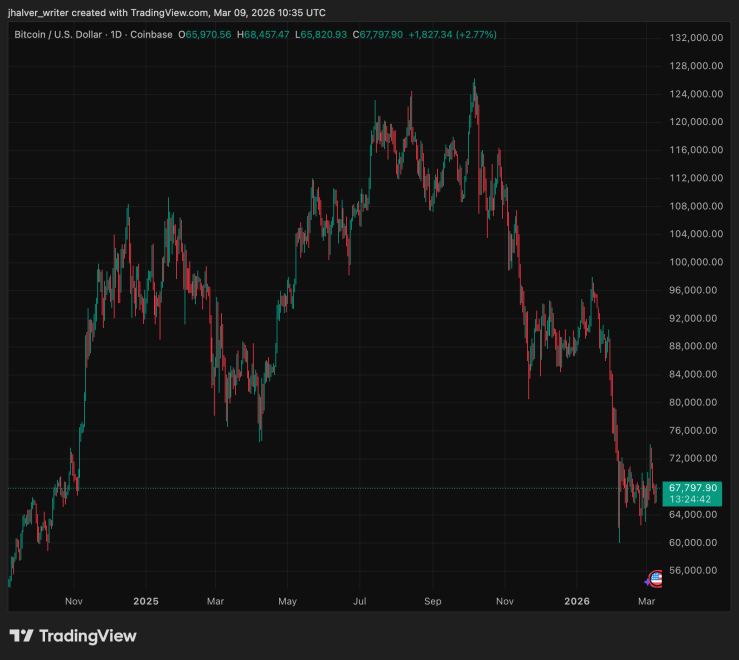
BTC's price trends to the downside on the daily chart. Source: BTCUSD on Tradingview

Cover image from ChatGPT, BTCUSD chart from Tradingview

相關問答

QWhat is the main purpose of the GENIUS Act report submitted by the U.S. Treasury Department?

AThe GENIUS Act report outlines 'innovative tools' to fight crypto-enabled illicit finance, endorsing lawful uses of crypto mixers for privacy while proposing a new 'hold law' to freeze suspicious funds.

QHow does the report view the use of crypto mixers by lawful users?

AThe report recognizes that mixers and other privacy-enhancing technologies can serve legitimate purposes for lawful users seeking financial privacy, such as protecting sensitive information about personal wealth or business transactions, when used in compliance with AML/CFT requirements.

QWhat specific legislative measure does the Treasury Department recommend to address suspicious crypto transactions?

AThe Treasury Department recommends that Congress establish a digital-asset-specific statutory 'hold' authority, allowing platforms to temporarily retain or delay the movement of digital assets associated with suspected illicit activity while legal process is pursued.

QAccording to the report, how do malicious actors like North Korea's cyber units utilize crypto mixers?

ANorth Korea's cyber units and ransomware crews use mixers, cross-chain bridges, and rapid swaps as core infrastructure to launder massive amounts of stolen digital assets, often pushing funds through mixers into stablecoins before cashing out.

QWhat broader framework is this report a part of, and what additional tools does it propose for regulated platforms?

AThe report is part of the GENIUS Act framework, which aims to create a federal regime for payment stablecoins and combat illicit finance. It proposes a tech stack including AI, digital identity, blockchain analytics, and APIs for regulated platforms under a risk-based AML approach.

你可能也喜歡

黄仁勋戏剧性“拯救”韩国股市

韩国股市在6月5日和8日遭遇大幅下跌,KOSPI指数暴跌并触发熔断。在此市场动荡之际,英伟达CEO黄仁勋访韩,其与SK集团的合作动向对市场产生了显著影响。 黄仁勋与SK集团会长崔泰源、SK海力士CEO郭鲁正举行晚餐会,并确认英伟达新款Vera CPU将采用SK海力士的DRAM内存,双方正为下半年及明年的“超大规模合作”做准备。随后,英伟达与SK海力士官宣了一份多年期技术合作协议,涉及AI超级计算机、机器人、数字孪生和半导体制造。黄仁勋更公开表示AI公司股价目前“非常低”。 合作核心内容包括:英伟达将首款数据中心CPU Vera的内存供应锁定SK海力士,双方将共同开发下一代内存以支持英伟达的AI基础设施路线图。此外,SK海力士将利用英伟达的CUDA-X库和AI技术来加速其半导体设计和制造流程,例如计算光刻和构建晶圆厂数字孪生,以实现更智能的工厂运营。 此次合作有前期铺垫,早在2025年10月,双方就宣布在韩国合作建设大型AI工厂。值得注意的是,在关键的HBM4内存供应上,英伟达采取了多元策略,同时认证了三星、SK海力士和美光三家供应商。黄仁勋判断,由于AI需求旺盛,从晶圆到封装的整个存储芯片短缺状况将持续数年。 黄仁勋此行还会见了现代、LG、三星等韩国企业,显示出英伟达正系统性地加深与韩国科技产业的联系。其访问及释放的积极合作信号,在韩国股市低迷时起到了提振市场信心的作用。

链捕手2 小時前

黄仁勋戏剧性“拯救”韩国股市

链捕手2 小時前

当推理成为稀缺资源,价值由谁捕获

当推理成为稀缺资源,价值由谁捕获?本文探讨了AI算力市场中,推理(inference)正取代训练成为核心瓶颈与价值捕获点的趋势。 2023年提出的“2000亿美元问题”指出GPU超前建设可能带来收入缺口,而2024年该问题已扩大为“6000亿美元问题”。市场近期开始意识到,缺口实际上正通过推理侧的需求来填补。推理是持续性的运营成本,伴随每次模型调用而增长,其市场规模可达训练的10至50倍。 英伟达最新财报将业务重组为“数据中心”与“边缘计算”两大平台,凸显推理已成为战略核心。边缘计算虽当前占比小,但代表了推理向终端设备的延伸。同时,Cerebras的IPO获得超额认购,也因市场看好其专注于推理加速的芯片架构。 Anthropic的案例进一步印证了推理资源的紧张:其因使用量远超产能而接管大型数据中心专用于推理,并对高频的agentic使用改为按量计费,说明推理已成为制约应用扩张的关键因素。 在AI算力栈中,价值沉淀点正在转移。大多数公司只占据从芯片制造到API服务中的某一层,而Hyperbolic作为一家不持有GPU的聚合平台,通过整合多来源的碎片化算力供给,提供统一、低成本的GPU租赁与路由服务,形成了“供给聚合-数据洞察-优化路由-吸引更多用户与供给”的飞轮。与之相比,Venice等应用层公司虽直接面向用户,但其利润受限于向底层购买的推理算力成本,凸显了聚合层在产业链中的潜在优势。 最终,随着agentic AI和物理AI推动推理需求爆发,价值可能不会流向持有最多硬件的公司,而是流向能高效聚合、路由并优化算力资源的那一层。Hyperbolic正试图成为这样的关键聚合层,在推理成为稀缺资源的时代捕获核心价值。

链捕手2 小時前

当推理成为稀缺资源,价值由谁捕获

链捕手2 小時前

交易

現貨
合約
活动图片





