"Water Scarcity": The Hidden Fatal Flaw of AI Infrastructure
“Water Scarcity: The Hidden Vulnerability of AI Infrastructure”
In June 2026, SpaceX revised its IPO prospectus to highlight a core resource constraint alongside power and processors: water. This move signals a pivotal shift where water scarcity has transformed from an operational cost to a major, uncontrollable investment risk, directly threatening AI data center expansion.
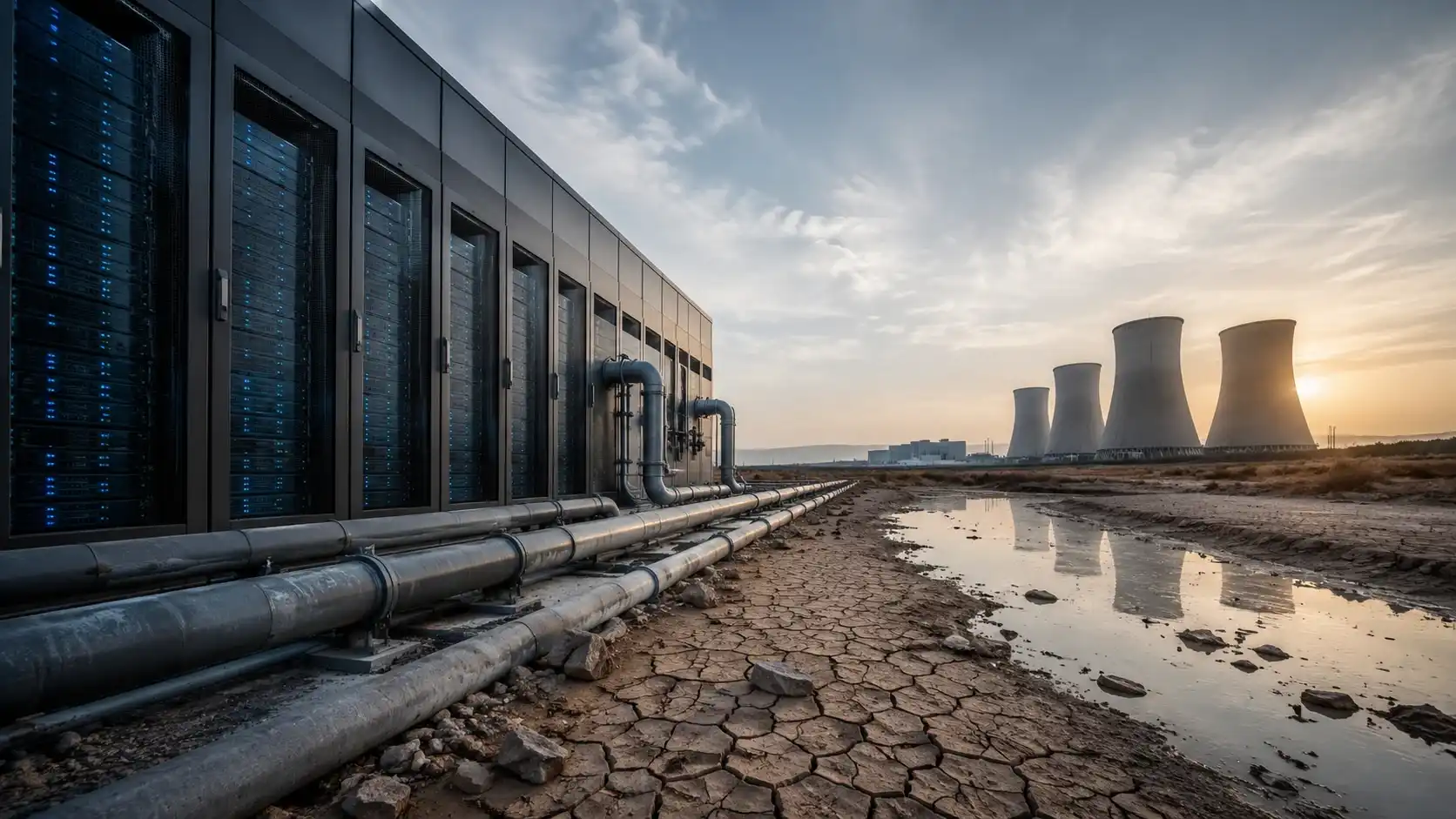
The scale of the problem is immense. U.S. data centers consumed an estimated 17 billion gallons of water for direct cooling in 2023, with indirect water use for power generation exceeding 211 billion gallons. Giants like Google alone use billions of gallons annually, with single sites consuming volumes equivalent to a medium-sized city. This water is largely “consumptive,” evaporated into the atmosphere and lost.
This massive demand is colliding with scarcity. Tech companies are building “water tigers” in arid regions, sparking community protests in places like Mexico and Arizona, where data centers can legally use millions of gallons daily—enough for tens of thousands of residents. These conflicts are not about illegality, but about a mismatch between historic water allocation frameworks and new, colossal demand.
The consequences are real. Community opposition, largely centered on water, has reportedly stalled or canceled $64 billion in U.S. data center projects over two years. Simultaneously, investors are pressuring companies for greater water footprint transparency, viewing it as a financial risk, not just an ESG metric.
Technological solutions like air or liquid cooling involve trade-offs between water and electricity use, with final choices dictated by local constraints. The irony is stark: while industry leaders envision AI as a utility “like water,” its physical infrastructure is straining real-world water supplies. The race for AI supremacy may ultimately be governed not by the fastest chip, but by the slowest water meter.
marsbit06/02 02:27