# Encryption的所有文章

在 HTX 新聞中心流覽與「Encryption」相關的最新資訊與深度分析。潘蓋市場趨勢、專案動態、技術進展及監管政策,提供權威的加密行業洞察。

Quantum Computing Approaches "Q-Day": How Encryption Policy, Investment Logic, and Risk Management Are Reshaping the Landscape

Quantum Computing Nears 'Q-Day': Shaping Encryption Policy, Investment Logic, and Risk Management Quantum technology is increasingly intersecting with cryptocurrency policy and cybersecurity discussions as the potential 'Q-Day'—when quantum computers could break current encryption—approaches. While summer brings fast-paced crypto market dynamics, new U.S. legislation, and AI debates, the emerging dimension is how quantum advancements will reshape the digital asset landscape. The next phase of crypto investment is being shaped by two converging forces: clearer regulatory frameworks and cryptographic evolution driven by quantum computing. Investors stand to benefit from reduced uncertainty, but must also recognize that quantum readiness is becoming a core risk factor. Public blockchains rely on cryptography for security, and sufficiently advanced quantum machines could undermine these foundations. This does not mean imminent network collapse, but investors can no longer dismiss the timeline as irrelevant. Key questions now include whether projects have identified their cryptographic dependencies, formulated migration plans to post-quantum cryptography, and established governance for upgrades. For policymakers, the link is clear. Effective crypto policy must look beyond token classification and disclosure to address the underlying infrastructure. As stablecoins, tokenized assets, and blockchain payments integrate deeper into finance, cryptographic resilience becomes a systemic issue. Failure to prepare could lead to investor losses, operational failures, and legal disputes. Policy should encourage risk disclosure, require major intermediaries to maintain upgrade and response plans, and foster coordination across the ecosystem—rather than impose a single technical fix. The sustainability of cryptocurrencies will increasingly depend on their security infrastructure's ability to adapt to these accelerating technological pressures.

Foresight News06/29 07:12

Quantum Computing Approaches "Q-Day": How Encryption Policy, Investment Logic, and Risk Management Are Reshaping the Landscape

Foresight News06/29 07:12

Quantum Computing "Manhattan Project" Unveiled: Is the Encryption Industry at a Critical Turning Point?

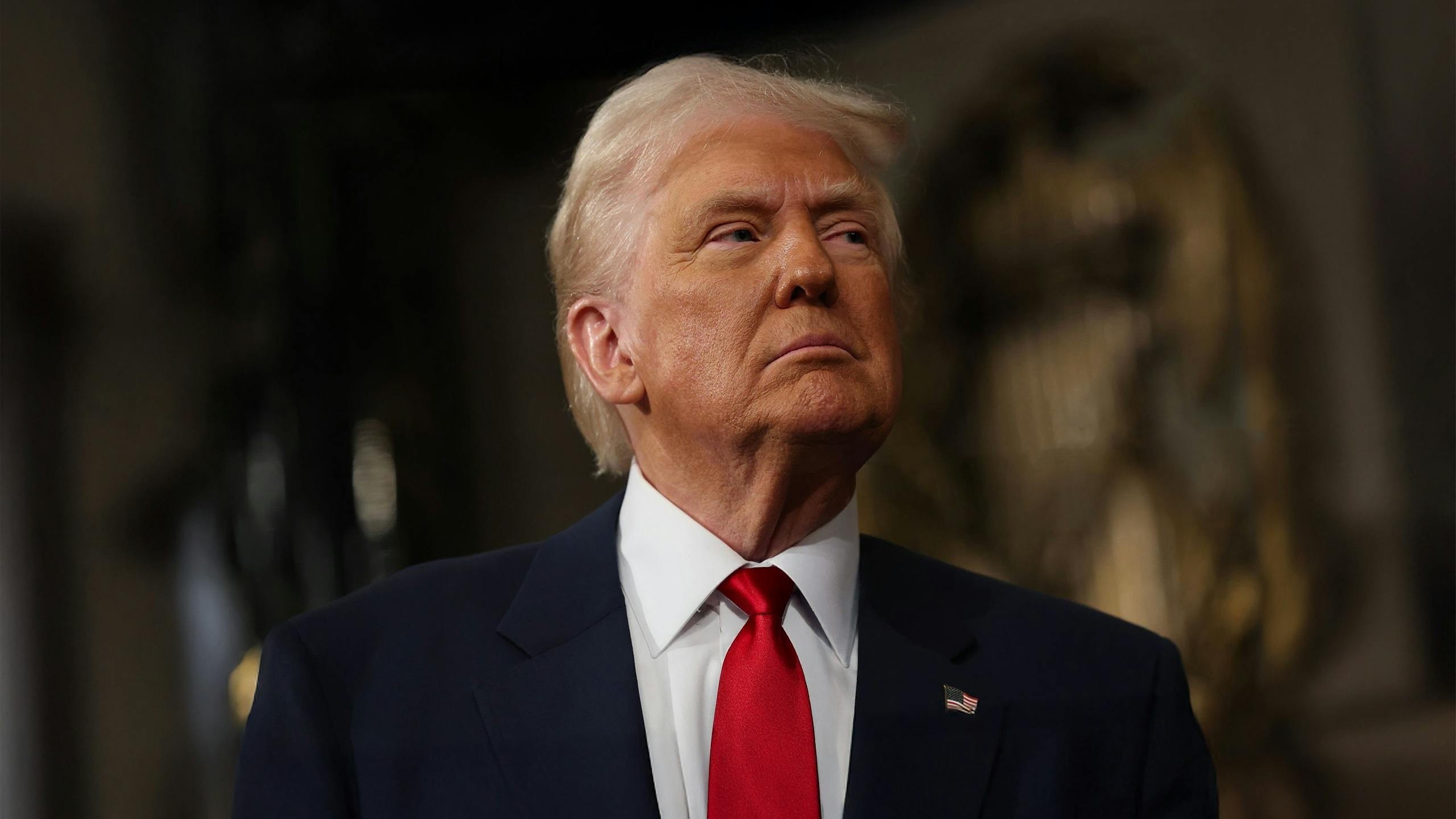
"Quantum Computing 'Manhattan Project' Launched: Is the Crypto Industry at a Critical Juncture?" On June 22, former U.S. President Donald Trump signed two executive orders. The first mandates all federal agencies upgrade their cryptographic systems to new, quantum-resistant standards by 2030. The second orders the Department of Energy to lead the development of a national quantum computer, signaling a shift from laboratory research to a state-enforced national agenda. This creates a hard deadline. A powerful quantum computer could break current encryption. The threat is compounded by "harvest now, decrypt later" attacks, where encrypted data is stored today for future decryption. Federal agencies must appoint migration officers and complete post-quantum cryptography (PQC) upgrades for key establishment by 2030 and digital signatures by 2031. Procurement rules will also be changed, forcing government contractors to comply. The crypto industry faces a direct threat. Bitcoin's ECDSA signatures are theoretically vulnerable. Research indicates millions of Bitcoin with exposed public keys are at risk if quantum computers advance. While projects like Bitcoin Quantum testnets and efforts by Ethereum, Solana, NEAR, and Zcash are exploring quantum-resistant solutions, achieving consensus in decentralized networks remains a major challenge. The centralized U.S. government has started a 5-year countdown. For decentralized crypto networks, the real test is whether they can complete this anti-quantum upgrade before the theoretical threat becomes a practical reality.

Foresight News06/23 07:54

Quantum Computing "Manhattan Project" Unveiled: Is the Encryption Industry at a Critical Turning Point?

Foresight News06/23 07:54

First Day Review of "Musk's WeChat" XChat: Even Worse Than Expected

Elon Musk's much-anticipated "WeChat-like" app, XChat, has officially launched after multiple delays. The initial review reveals a product that falls short of expectations, offering an experience largely similar to X Platform's (formerly Twitter) direct messages, despite being marketed as an encrypted communication tool. Key observations from the first-day test include: 1. The app's promoted "end-to-end encryption" and its claimed relation to Bitcoin's architecture were criticized by experts as a superficial attempt to capitalize on crypto buzz, with no real technical connection. 2. Musk's vision of an ad-free "secure communication system" is technically met, but only because the app is currently extremely basic, featuring only a single chat interface. 3. A promised anti-screenshot feature appears inconsistent; it works in X Platform group chats but fails within the XChat app itself, where screenshots still capture avatars. 4. The app supports 45 languages and has a 16+ age rating, indicating a broader tolerance for content compared to WeChat's 13+ rating. 5. A puzzling login process requires users to verify the email associated with their X account. 6. The touted encryption" feels minimal in practice, with its presence only indicated by a simple "Encrypted - Yes" label on messages. 7. Disappearing message timers for groups can be set from 5 minutes to 4 weeks, with the timer starting upon being read by a user. 8. Group invite links are shared with X Platform groups. 9. Group size limits are planned to be increased, aiming for 1000 members, a move that has drawn user criticism. 10. The app offers 8 different colored icons, and its chat bubbles are notably similar to WeChat's. Message deletion options mimic Telegram's. Crucially, many pre-announced features like importing X contacts, integrating Grok AI, X Money payments, and Cashtags are not yet available. The initial release is seen as a bare-bones and underwhelming first step.

Odaily星球日报04/25 02:13

First Day Review of "Musk's WeChat" XChat: Even Worse Than Expected

Odaily星球日报04/25 02:13

From Theory to Countdown: Google Sounds the Blockchain Quantum Resistance Alarm with Zero-Knowledge Proofs

An article discusses the significant threat quantum computing poses to blockchain and classical encryption systems, triggered by Google's recent research. By optimizing Shor's algorithm, Google reduced the logical qubits required to break 256-bit elliptic curve encryption from around 6,000 to just 1,200—slashing computational costs by 20 times. This advancement sets a potential countdown, with Google estimating 2029 as the deadline for upgrading to quantum-resistant cryptography. Both Bitcoin and Ethereum face severe risks. About 25-35% of Bitcoin addresses have exposed public keys, making them vulnerable to attacks, especially during transaction processing. Ethereum’s design exposes public keys upon first use, jeopardizing its entire network if signatures aren’t updated. Historical blockchain data remains permanently available for future quantum attacks. The solution lies in adopting post-quantum cryptography (PQC). Ethereum is already implementing account abstraction and PQC-based signatures, leveraging its upgradeable architecture. Bitcoin is considering BIP-360 to introduce quantum-resistant algorithms like FALCON or CRYSTALS-Dilithium, though consensus may delay action. Notably, Google used zero-knowledge proofs to disclose this threat responsibly, aiming to prevent panic. Collaboration with Ethereum Foundation researchers suggests抗量子 (quantum resistance) could become a major narrative, aligning with crypto’s cryptographic roots.

marsbit04/16 06:38

From Theory to Countdown: Google Sounds the Blockchain Quantum Resistance Alarm with Zero-Knowledge Proofs

marsbit04/16 06:38

XChat Is Here: Musk's Super App Plan Is Reshaping the Encrypted Social Landscape

Elon Musk’s X (formerly Twitter) is launching XChat, an encrypted communication tool supporting text, file sharing, and voice/video calls, on April 17. This move is part of a broader strategy to transform X into a global super-app similar to WeChat, integrating social, payment, and financial services. XChat aims to address Twitter’s historical weakness in private messaging and relationship-building, shifting from a public square to a closed-loop ecosystem. By retaining user relationships within X, the platform can enhance engagement and pave the way for commercial and financial activities. Encrypted messaging is not just a privacy feature but a foundational layer for trust, enabling future payment integrations. X may explore traditional payment systems, stablecoins, or even direct Bitcoin transactions. This could significantly impact the crypto industry by introducing mainstream users to encrypted payments and SocialFi concepts. While XChat may boost adoption and attract attention to crypto narratives, it also poses a threat to existing Web3 social projects that lack scale. Infrastructure projects like wallets and stablecoins may benefit, but consumer-facing decentralized social platforms could face intense competition from X’s vast user base. In summary, XChat represents a structural shift toward integrating social, informational, and financial flows, positioning X as a key player in the future of encrypted communications and digital payments.

marsbit04/14 12:46

XChat Is Here: Musk's Super App Plan Is Reshaping the Encrypted Social Landscape

marsbit04/14 12:46

活动图片