OpenAI, eager to go public before Company A, turns around only to find:
Ahhh, the house is on fire!!
On one hand, there is intense personnel turmoil at the top—the COO is moving to a special project, and several key executives are leaving or taking leave;
On the other hand, the CEO leading the IPO and the CFO controlling the purse strings are reported to be at odds over the timeline.
How should we put it? Compared to the recent billion-dollar funding round and the new progress on GPT-6, this reversal came way too fast.

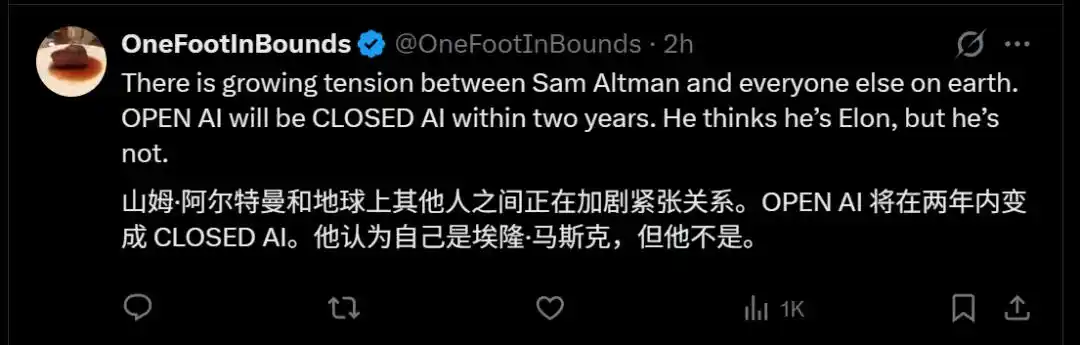
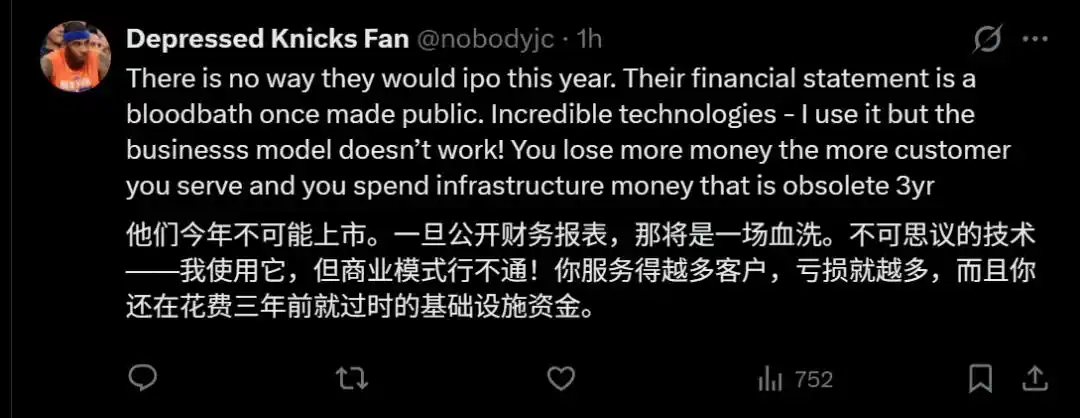
As the news broke, netizens also raised new doubts about whether OpenAI can successfully go public this year:
Sam's tensions with everyone else on Earth are intensifying.
They can't go public this year... After trying it, the business model doesn't seem viable.
So, what exactly is happening at OpenAI?
IPO Imminent, Leadership in Turmoil
The first thing happening at OpenAI is quite intriguing:
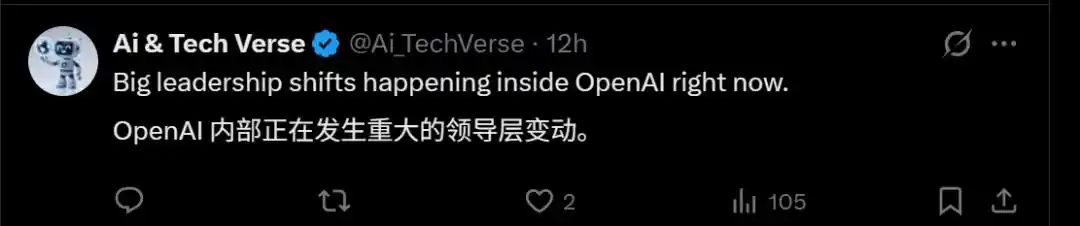
Right at the critical juncture of securing a record $122 billion in funding and sprinting towards an IPO, several key executives are either changing roles, taking leave, or leaving.
According to Bloomberg, its long-time Chief Operating Officer Brad Lightcap will transition to a new role, leading "special projects" and reporting directly to CEO Altman.
Although the "special projects" are not explicitly defined, one of the responsibilities is related to OpenAI's strategic shift towards the B2B market—
overseeing the formation of joint ventures with private equity firms to sell software to enterprises.
On the surface, Brad Lightcap seems to have been given a significant responsibility, but in terms of title, he has indeed lost his identity as "OpenAI's chief steward."
As a result, netizens unanimously think Brad Lightcap has been "kicked upstairs."
The person replacing Brad Lightcap as COO is Denise Dresser, who was appointed as Chief Revenue Officer at OpenAI just late last year.
Before joining OpenAI, Denise Dresser was the CEO of the globally renowned collaboration platform Slack, particularly skilled in commercial expansion.
But after only three months in the role, she was pushed into the COO position, so this adjustment doesn’t look like a "routine handover" at all.

Taking a step back, even if the changes involving the first two executives are explained as part of OpenAI's normal strategic adjustments—
after all, the overall direction is for commercial considerations.
But the fact that two other executives, one taking leave and the other leaving, and happening around the same time, seems to hint at something else?
One of them on leave is Fidji Simo, who joined OpenAI as Chief App Officer last May.
It's worth noting that she was a major hire for OpenAI—she spent 10 years at Facebook (now Meta), directly responsible for the entire Facebook App, later moved to Instacart as CEO, and took the company public during a overall downturn in tech stocks.
And now, she stated in an internal memo to employees that due to "particularly poor health over the past month," she has decided to take several weeks off for recovery.
During her leave, OpenAI President Greg Brockman will temporarily take over her role, overseeing the product department.
The one leaving is Chief Marketing Officer Kate Rouch, also citing health reasons—leaving to focus on cancer treatment.
She also specifically mentioned that if her condition allows, she might return in a limited capacity later.
OpenAI is currently looking for a new Chief Marketing Officer.
Seeing this, some might ask: Aren't health reasons normal?
Yes, they are. But precisely because it's so normal, so faultless, it makes people even more suspicious.
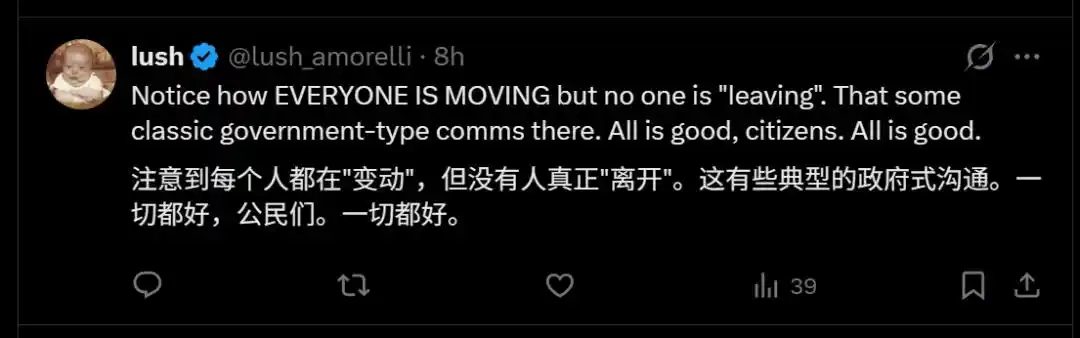
Not to mention, doesn't this seem like a scene from "The Return of the Empress"?
The specific events are familiar to everyone, so we won't elaborate here, just one point—at that time, many people (including the current president of OpenAI) also expressed their stance or temporarily laid low using leave as a reason.
So, on the surface, everything has a reasonable explanation—role change is strategic, leave is for health, and departure is understandable.
But when the timelines overlap, it's hard not to think one step further:
Why exactly at this critical juncture of the IPO sprint?
After all, for a company heading towards the capital market, the most important things are stability and predictability, especially the continuity of the core management team.
And now, OpenAI is collectively staging such a drama.
Altman and CFO Diverge on IPO Timeline
What's worse, there are signs that the relationship between the CEO and CFO, these two key roles, is also quite delicate.
They have major disagreements on the IPO timeline:
Altman seeks "speed", hoping to go public in Q4 of this year before Anthropic (Company A was rumored to be planning an IPO as early as October).
To go public faster, he also publicly承诺 (committed - note: the original Chinese word 承诺 (chéngnuò) means promise/commit) to invest $600 billion over the next five years (anyway, putting the word out first).
And it's important to know that OpenAI itself once estimated that it would burn through over $200 billion before generating positive cash flow.

CFO Sarah Friar seeks "stability", believing the amount of internal preparation work needed for the IPO is enormous, and targeting this year is somewhat aggressive.
As a financial expert who previously took Square public, she expressed her concerns privately to colleagues earlier this year.
Especially since the IPO is backed by Altman's "$600 billion" promise, she is uncertain whether such massive investments in AI servers will truly be needed in the coming years, and whether the slowing revenue growth can support these commitments.
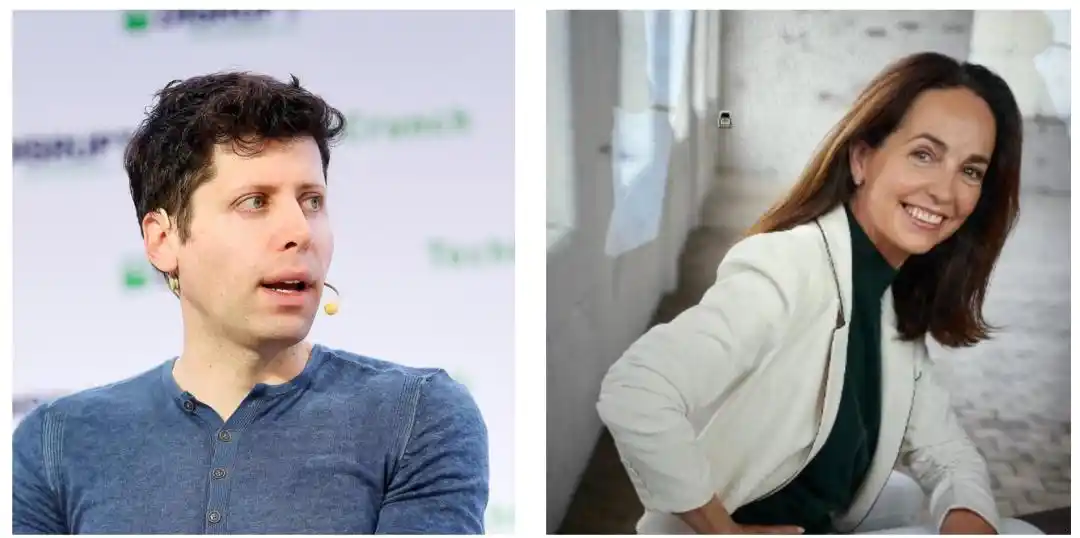
This strategic divergence has also cast a shadow over their working relationship.
It is reported that although the two appeared harmonious at a private dinner Altman hosted for investors earlier this year, those around them have vaguely sensed:
This is only superficial; their relationship has become strained.
A clear example is that in recent months, when Altman was discussing server expenses with senior executives of a top investment firm, Sarah Friar was not included.
If she had never participated before, it might be different, but the key is that Sarah Friar was present at previous events discussing the same topic.
So even other attendees felt that Altman might indeed have done it on purpose.
And even more unusually, since last August, Sarah Friar's reporting line was adjusted—
no longer reporting directly to CEO Altman, but to the head of the applications business.
In the eyes of outsiders, "this is a rare organizational arrangement in any large company."

At this point, the "discord" between the two has gradually come to light.
So the question is, is Sarah Friar's concern justified? Especially regarding Altman's承诺 (commitment) of $600 billion.
The answer is: It really is.
According to public information, this $600 billion is primarily for computing power expenditure—OpenAI has signed long-term server leasing agreements with Oracle, Microsoft, and Amazon totaling approximately $665 billion, valid until 2030.
The key is that this is not a "pay-as-you-go" contract; in some cases, OpenAI must commit billions of dollars years in advance to fund partners building custom data centers for it.
This dramatically increases the spending pressure on OpenAI.
But on the other end, OpenAI's revenue is not proportional to its burn rate—
Although it just secured $122 billion in new funding from NVIDIA, Amazon, etc., they privately warned investors in February that its cash consumption by 2030 would be more than double previous forecasts.
Moreover, due to increasingly fierce competition from Anthropic and Google Gemini, its gross profit margin on revenue already fell short of expectations last year.

Under multiple pressures, the CEO of old rival Company A also jumped in to subtly mock—
If one misjudges the speed of technology-driven revenue growth, locking in massive data center investments years in advance would be "disastrous," even leading to bankruptcy.
Although the OpenAI president later countered this comment in a podcast, the financial pressure on OpenAI has indeed reached a point that cannot be ignored.
One More Thing
It is worth mentioning that CEOs and CFOs "clashing" before an IPO is not uncommon.
A long time ago, Airbnb had a similar situation, but the outcome then was—
The CFO left, the leadership turmoil triggered a wave of executive departures, but the CEO still successfully took Airbnb public.
(P.S.: The Airbnb CEO is also an informal advisor to Altman, and the two have a good personal relationship).
It remains to be seen how this will end.
Reference links:[1]https://x.com/WesRoth/status/2040776475214012560[2]https://www.theinformation.com/articles/openai-ceo-cfo-diverge-ipo-timing[3]https://x.com/i/status/2040894109817393240
This article is from the WeChat public account "QbitAI", author: Focus on Frontier Technology







