Multicoin Co-founder: PropAMM is Changing the Perception That 'Decentralization is Slower'

比推發佈於 2026-03-13更新於 2026-03-13

文章摘要

Multicoin Capital co-founder Kyle Samani argues that PropAMM (Proactive Automated Market Maker) is one of the most significant innovations in market microstructure in decades, challenging the long-held belief that decentralized systems are inherently slower than centralized ones. In traditional centralized exchanges (CEXs), market makers co-locate servers and engage in constant bidirectional communication with the exchange, leading to latency due to data transmission delays. In contrast, PropAMM on Solana runs market-making algorithms directly on the blockchain, eliminating the need for inter-server communication. Price updates occur within the same physical silicon, drastically reducing latency. PropAMM already offers narrower spreads for SOL-USDC spot trading on Solana than major CEXs. Samani predicts it will dominate on-chain trading for spots, perpetuals, and prediction markets this year. Current challenges include ensuring best execution for takers due to private algorithms and non-deterministic routing across multiple PropAMMs, but solutions from aggregators like Jupiter, dFlow, and Phoenix are expected. Upcoming Solana upgrades—such as higher compute limits, reduced slot times, and improved network latency—will further enhance PropAMM performance, solidifying its advantage over traditional systems.

Author: Kyle Samani, Multicoin Co-founder

Compiled by: Azuma, Odaily Planet Daily

Original Title: Multicoin Co-founder: Is Decentralization Always Slower Than Centralization? PropAMM is Breaking This Bias


Editor's Note: The man who knows how to hype Solana best, Multicoin Capital's former co-founder Kyle Samani, who recently made a high-profile exit from the industry, is back!

Last night, Kyle Samani published a long Thread on his personal X account. In the post, Kyle Samani once again demonstrated his highly persuasive "hype" (not meant derogatorily) rhetoric, using "efficiency"—a shortcoming in the decentralized narrative—as a breakthrough point. He detailed how Solana ecosystem's currently promoted PropAMM will catch up to or even surpass traditional centralized models in efficiency, arguing that PropAMM is one of the most important innovations in market microstructure in recent years, or even decades.

Below is the original content:

PropAMM is one of the most important innovations in market microstructure in recent years, and perhaps even one of the most significant in decades.

To help everyone understand this conclusion, let's first look at how market makers (MMs) quote prices on traditional centralized exchanges (CEXs).

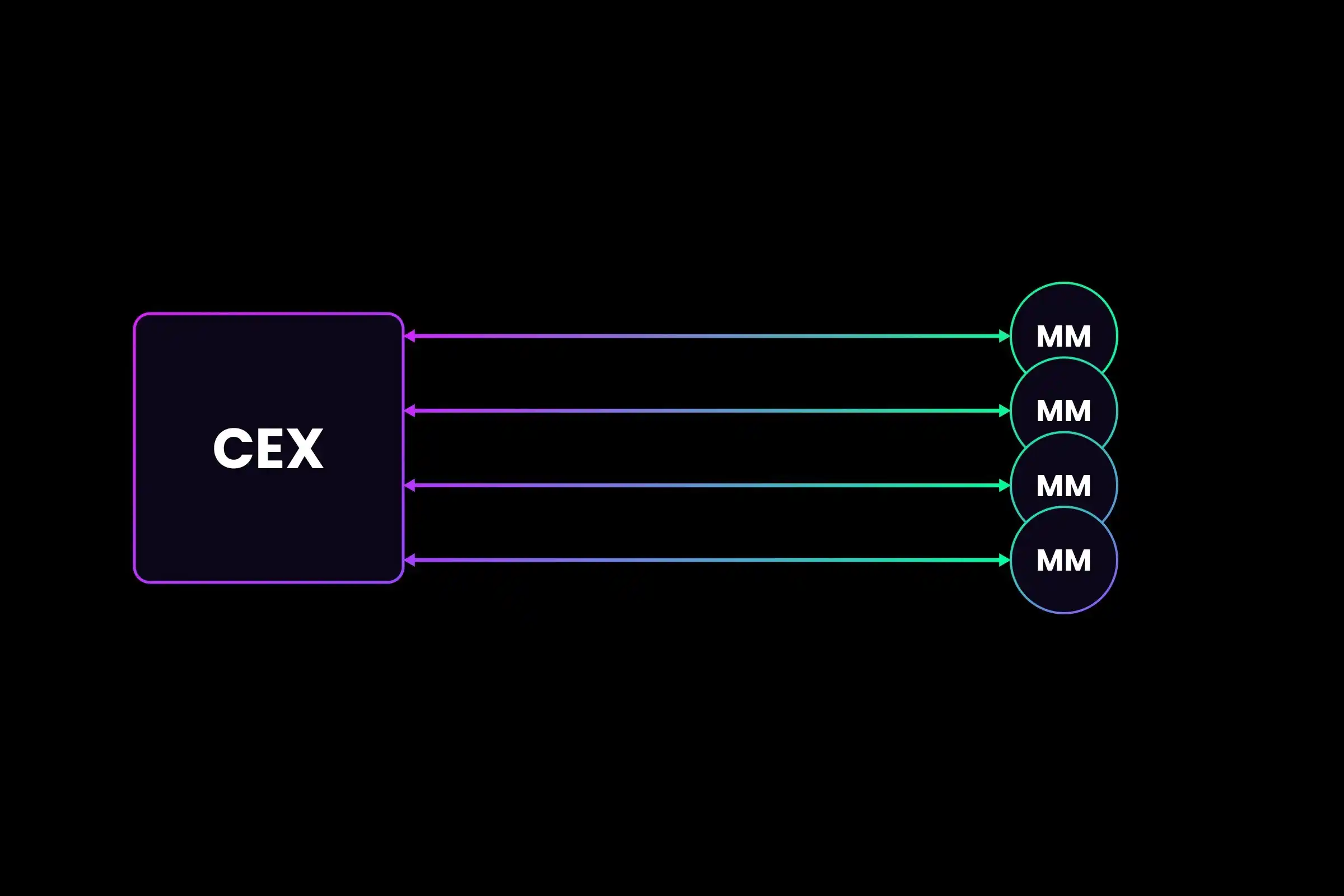
Market makers typically engage in physical co-location with the exchange. Each market maker runs an algorithm on a server and connects to another server running the exchange's system via network cables of uniform length (e.g., 50 meters).

Market makers and exchanges constantly send large data streams back and forth. Whenever a market maker sends an order to the exchange—whether it's a limit order, cancellation, or market order—the exchange needs to broadcast this information to all other market makers; then, other market makers resend their own orders based on the new information; this cycle repeats indefinitely.

Here is a simple diagram.
Now let's look at how PropAMM works on the Solana mainnet.

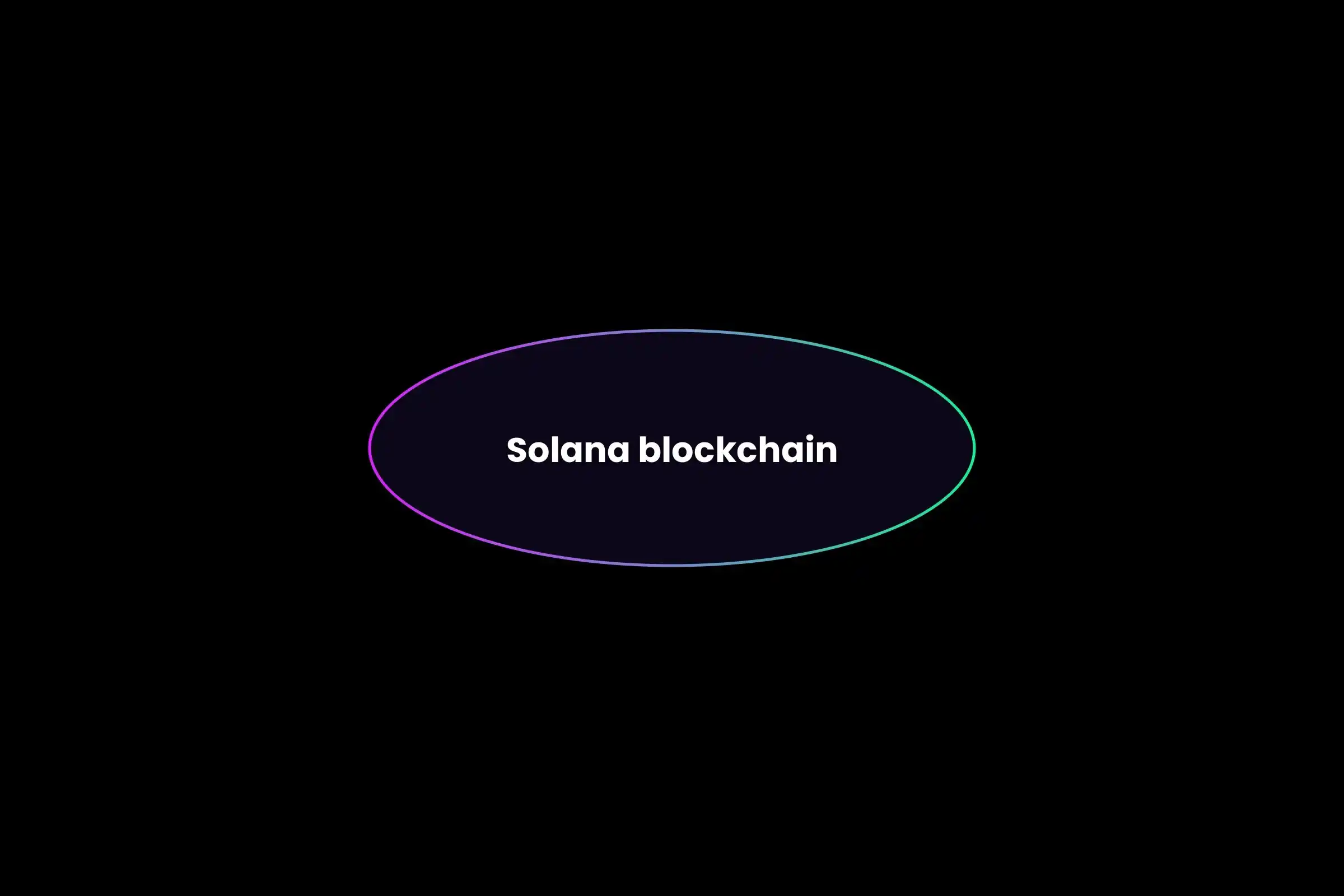
The beauty of PropAMM on Solana is that the blockchain itself directly "hosts" the market maker algorithm. This means the system no longer needs to send billions of messages back and forth between market makers and the exchange; the market-making algorithm will operate directly on the same physical machine as the exchange.

The new diagram is as follows. (That's right, only the Solana blockchain is needed!)
There has long been a common view in the cryptocurrency industry that decentralized systems must be slower (have higher latency) than centralized systems because they require communication between global nodes.

But if you reframe the issue, on-chain hosted algorithms may actually have lower latency than traditional centralized exchanges in finance.

Why is that? The reason is that the latency required for PropAMM to update prices only involves electrons moving within the same physical silicon chip. For example, if the last market order causes a change in the SOL-USD price, this information is immediately visible to all PropAMMs and used for pricing the next market order. Everything happens within the same silicon chip; there is no longer a need for two-way communication between servers.

It is worth noting that PropAMM does require frequent oracle updates, but this is not a problem and does not change the overall fact I mentioned above.

The most critical point remains that when the exchange—in this case, the Solana blockchain—directly hosts the PropAMM algorithm, the market maker's pricing changes in real-time within the same physical silicon chip.

PropAMM has already become the dominant mechanism for SOL-USDC spot quotes on Solana, with narrower spreads than all major CEXs. I expect this market structure to become the dominant model for on-chain trading this year, including spot, perpetual contracts (perps), and even prediction markets.

The biggest challenge for PropAMM is that there is currently no way to ensure that the taker always gets the best execution, because:

· The algorithms of all PropAMMs are not public (which is reasonable, as traditional market-making algorithms are also private);

· When routing trades between multiple PropAMMs, the result is non-deterministic.

However, this problem can be solved. I expect all relevant aggregator teams to launch solutions this year, such as Jupiter and dFlow for spot, and Phoenix for contracts.

Current PropAMM is still not fully optimized and is subject to various limitations of the Solana blockchain itself. This year, Solana will roll out a series of major upgrades that will significantly enhance PropAMM's performance, including:

1. Higher CU (Compute Unit) limits per transaction and larger transaction sizes;

2. Higher CU limits per block;

3. Alpenglow: Reducing slot time from 400ms to 100–150ms;

4. DoubleZero: Reducing global network latency;

5. Application-controlled execution;

6. Multiple concurrent leaders.

If PropAMM on the Solana mainnet can already offer narrower quotes than all CEXs without these upgrades, imagine how powerful their performance will become as these upgrades are gradually implemented.


Twitter:https://twitter.com/BitpushNewsCN

BitPush TG Discussion Group:https://t.me/BitPushCommunity

BitPush TG Subscription: https://t.me/bitpush

Original link:https://www.bitpush.news/articles/7619419

相關問答

QWhat is PropAMM and why is it considered a major innovation in market microstructure?

APropAMM is a mechanism on the Solana blockchain where the market maker algorithms are directly hosted on the blockchain itself. It is considered a major innovation, potentially one of the most significant in decades, because it eliminates the need for billions of messages to be sent between market makers and a centralized exchange. By running on the same physical machine as the 'exchange' (the blockchain), it can achieve lower latency and tighter spreads than traditional centralized systems.

QHow does PropAMM on Solana achieve lower latency compared to traditional centralized exchanges (CEXs)?

APropAMM achieves lower latency because the market maker algorithms are hosted directly on the Solana blockchain. This means that price updates and order changes happen within the same physical silicon, as electrons move internally on a chip. There is no need for bidirectional communication between separate servers for market makers and the exchange, which is a requirement in the traditional co-location model of CEXs.

QWhat is the current dominant application of PropAMM on Solana and what are its future expected use cases?

ACurrently, PropAMM is the dominant mechanism for SOL-USDC spot quotes on Solana, offering narrower spreads than major CEXs. It is expected to become the dominant model for on-chain trading this year, expanding into spots, perpetual contracts (perps), and even prediction markets.

QWhat is the main challenge currently facing PropAMM, and what are the proposed solutions?

AThe main challenge is ensuring that a taker (the party taking liquidity) gets the best possible trade execution. This is difficult because the PropAMM algorithms are not public (which is standard for proprietary trading algorithms) and because routing trades across multiple PropAMMs is non-deterministic. Solutions are expected from aggregation teams like Jupiter and dFlow for spot trading, and Phoenix for contracts.

QWhat upcoming Solana upgrades are expected to significantly improve PropAMM performance?

ASeveral major Solana upgrades are expected to boost PropAMM performance: 1. Higher CU (Compute Unit) limits per transaction and larger transaction sizes. 2. A higher CU limit per block. 3. Alpenglow, which will reduce slot time from 400ms to 100-150ms. 4. DoubleZero, which will reduce global network latency. 5. Application-controlled execution. 6. Multiple concurrent leaders.

你可能也喜歡

华为云不打Token价格战,周跃峰要给AI云换一个赢的方式

在2026华为云INSPISE创想者大会上,新任CEO周跃峰首次公开阐述华为云AI战略,明确表示不以Token调用量或收入规模为竞争核心,而是聚焦于“每个Token是否真正提升生产力”。 面对当前国内AI云市场普遍以Token价格战和规模增长为焦点的态势,华为云选择了差异化路径:其一,依托昇腾、鲲鹏等全国产化软硬件构建“第二算力平面”,不参与“万国牌”硬件的规模比拼;其二,将政企及国计民生行业作为主战场,通过混合云与机密计算等技术,在保障数据主权的同时输送公有云迭代能力;其三,坚持开源开放策略,并联合20余家头部模型厂商共建生态。 周跃峰提出,AI竞争焦点正从算力、模型转向智能体(Agent)的实际应用。为此,华为云发布“Agentic Infra”新范式及一系列新品,旨在解决企业部署智能体时的工程难题,如AICS灵衢集群降低时延、AMS解决长程记忆、ModelArts Next实现多模型智能调度以降低成本。 更关键的举措是推出智慧医疗、具身智能等“行业AI梦工厂”专区,深入具体场景。例如,智慧医疗专区与瑞金医院共建大模型,旨在向基层医院规模化输出顶级诊疗能力。华为云试图将竞争从“卖Token”转向“卖生产力”,衡量标准变为金融风控效果、医疗诊断可及性等实际价值。 周跃峰承认,这条依赖国产算力、深耕产业的路比追逐MaaS收入更慢、更难,但避开了当前的价格红海,押注于智能体深入产业后底层基础设施的机遇。华为云的目标是证明其国产算力体系能满足中国产业AI未来的真实需求。

marsbit1 小時前

华为云不打Token价格战,周跃峰要给AI云换一个赢的方式

marsbit1 小時前

70%民众反对AI,美国人希望美国输掉人工智能战争

这篇文章主要讲述了美国社会目前普遍存在的反AI情绪。一项民调显示,高达70%的美国人认为AI发展“太快”,需要加强监管。这种情绪已经从线上蔓延到线下,具体表现为: 1. **公开抵制**:谷歌前CEO埃里克·施密特在大学毕业典礼上鼓励学生拥抱AI时,遭到台下学生集体嘘声和社交媒体嘲讽。科技公司的AI广告被涂鸦破坏,硅谷等地爆发了多次反AI游行示威。 2. **阻碍基建**:各地居民强烈反对在当地建设AI数据中心,担心其推高水电费、消耗水资源、造成热污染及破坏环境。多个数据中心项目因居民抗议而推迟或取消,甚至有议员因支持项目而遭罢免或住所被枪击。 3. **走向极端**:出现了向OpenAI CEO奥特曼住宅投掷燃烧弹、枪击支持数据中心项目的议员等暴力事件。 民众反对AI的主要原因包括: * **担忧失业**:普遍认为AI会取代大量工作岗位,让财富更集中于科技巨头,而大众承担失业风险。 * **经济负担**:数据中心巨大的能耗和水耗,导致电网升级和水资源成本被分摊到居民账单上,推高生活成本。 * **环境影响**:数据中心运行加剧碳排放,阻碍碳中和目标,其废热排放也抬升局部气温,引发环保团体反对。 * **社会与政治忧虑**:担心AI存在偏见、制造虚假信息,影响公众舆论和选举公正;同时也忧虑当前AI投资热潮可能是泡沫,一旦破裂会引发经济衰退。 这一问题已演变为复杂的政治难题。特朗普上台后废除了拜登时期加强AI监管的行政令,转而推行以“创新与竞争力”为先的政策,以在AI竞赛中保持领先。但这引发了其支持者阵营(MAGA)内部“硅谷派”与“极右翼”的分歧,后者与民主党在限制AI发展上形成了临时同盟,共同反对数据中心建设。特朗普面临着在支持其的科技金主与反对AI的草根票仓之间做出艰难抉择的困境。

marsbit2 小時前

70%民众反对AI,美国人希望美国输掉人工智能战争

marsbit2 小時前

交易

現貨
合約
活动图片





