Kyle Samani Is Back: This Time, We're Outperforming CEX in Efficiency!

marsbit發佈於 2026-03-12更新於 2026-03-12

文章摘要

Kyle Samani, former co-founder of Multicoin Capital, has returned to advocate for PropAMM, a breakthrough in market microstructure innovation on Solana. He argues that PropAMM could surpass traditional centralized exchanges (CEXs) in efficiency by hosting market maker algorithms directly on the blockchain, eliminating latency from bidirectional communication between exchanges and market makers. In CEXs, market makers co-locate servers and constantly exchange data with the exchange, leading to delays. In contrast, PropAMM runs algorithms on the same physical hardware as the Solana blockchain, allowing price updates to occur almost instantaneously within the same silicon chip. This reduces latency significantly compared to traditional systems. Currently, PropAMM already offers narrower spreads for SOL-USDC spot trading than major CEXs. Samani expects it to dominate on-chain trading this year, including spots, perpetuals, and prediction markets. Challenges remain in ensuring best execution for takers due to private algorithms and non-deterministic routing, but solutions from aggregators like Jupiter and dFlow are anticipated. Upcoming Solana upgrades—such as higher compute limits, reduced slot times, and lower network latency—will further enhance PropAMM performance, solidifying its advantage over CEXs.

Source:Kyle Samani

Compiled | Odaily Planet Daily (@OdailyChina); Translator | Azuma (@azuma_eth)

Editor's Note: The man who knows best how to promote Solana, former co-founder of Multicoin Capital Kyle Samani, who had loudly exited the crypto world not long ago, is back!

Last night, Kyle Samani posted a long Thread on his personal X account. In the post, Kyle Samani once again demonstrated his highly persuasive "promotion" (not derogatory here) rhetoric, using "efficiency"—a weak point in the decentralized narrative—as a breakthrough. He detailed how the PropAMM currently being promoted in the Solana ecosystem will catch up with or even surpass traditional centralized models in efficiency, arguing that PropAMM is one of the most important innovations in market microstructure in recent years, or even decades.

  • Related articles: 《The Man Who Knows Best How to Promote SOL Exits the Crypto World》; 《Is There More to Kyle Samani's Exit?》.

Below is the original content by Kyle Samani, compiled by Odaily Planet Daily.

PropAMM is one of the most important innovations in market microstructure in recent years, and perhaps even one of the most significant in decades.

To help everyone understand this conclusion, let's first look at how market makers (MM) quote prices on traditional centralized exchanges (CEX).

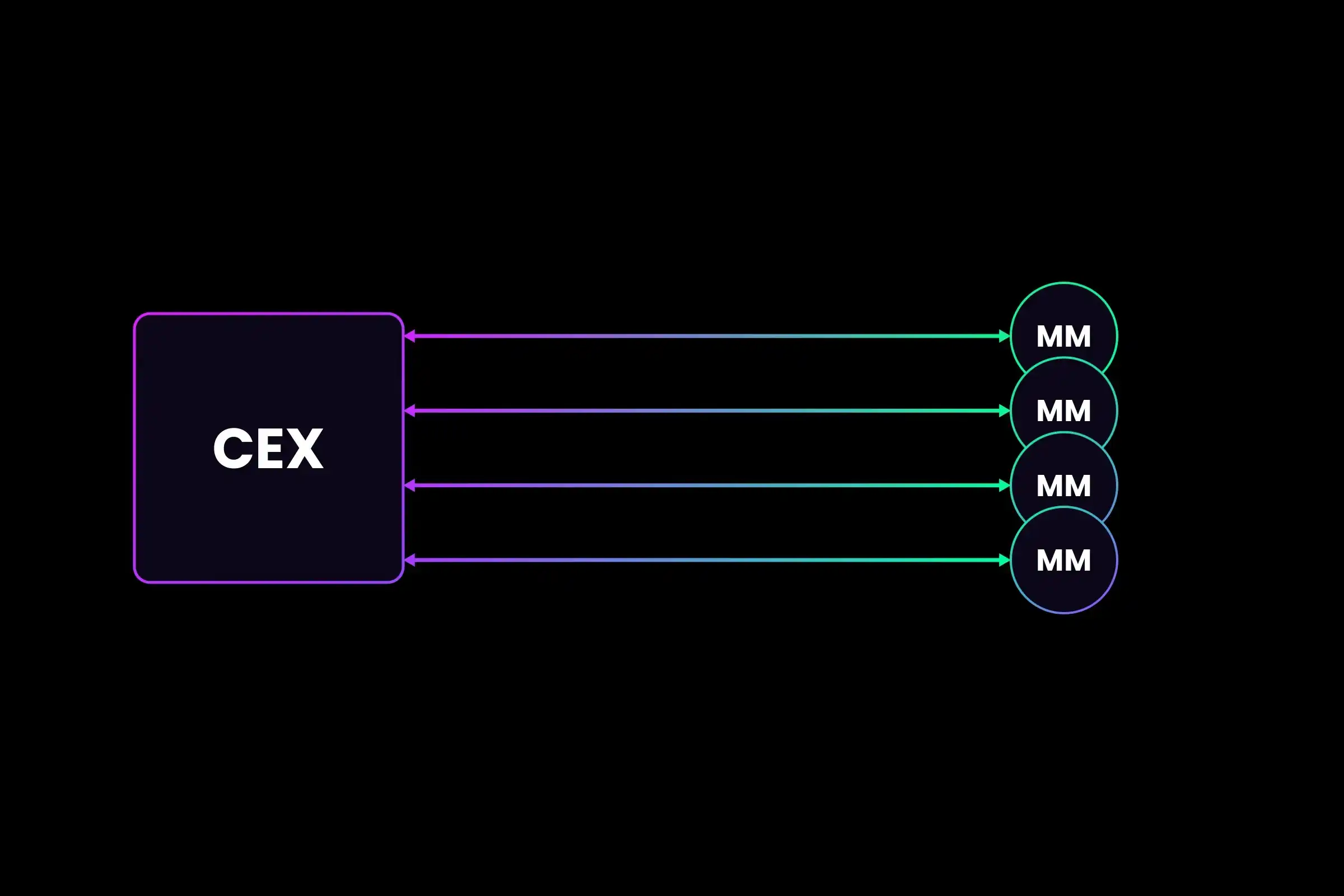
Market makers typically physically co-locate with the exchange. Each market maker runs an algorithm on a server and connects to another server running the exchange's system via a network cable of uniform length (e.g., 50 meters).

A massive stream of data is constantly sent back and forth between market makers and the exchange. Every time a market maker sends an order to the exchange—whether it's a limit order, cancellation, or market order—the exchange must broadcast this information to all other market makers; then, other market makers resend their own orders based on the new information; this cycle repeats indefinitely.

Here is a simple diagram.
Now let's look at how propAMM works on the Solana mainnet.

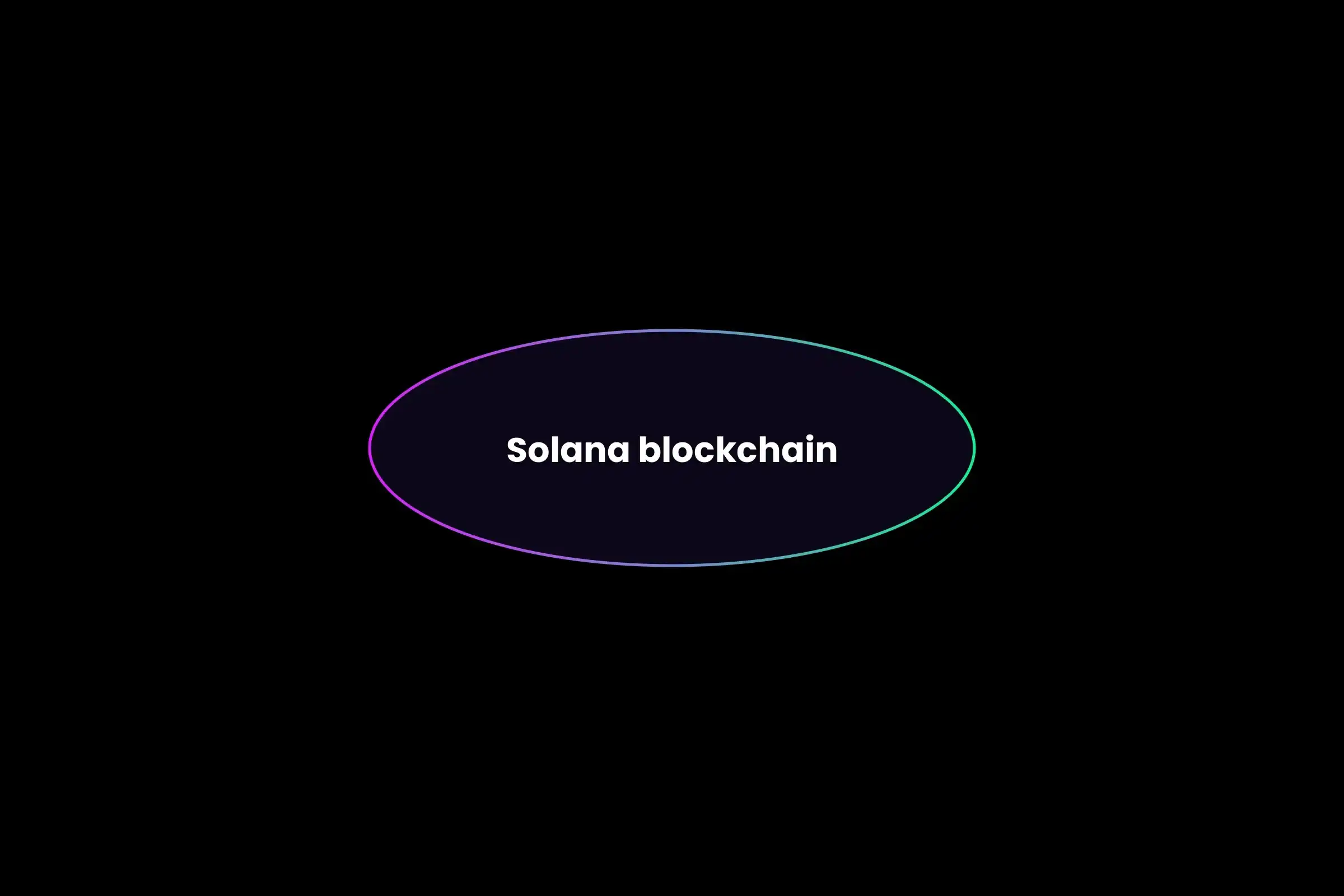
The beauty of propAMM on Solana is that the blockchain itself directly "hosts" the market maker algorithms. This means the system no longer needs to send billions of messages back and forth between market makers and the exchange; the market-making algorithms will run directly on the same physical machine as the exchange.

The new diagram is as follows. (Yes, only the Solana blockchain is needed!)
There has long been a common view in the cryptocurrency industry that decentralized systems must be slower (have higher latency) than centralized systems because they require communication between global nodes.

But if you think about it differently, on-chain hosted algorithms may actually have lower latency than traditional centralized exchanges in finance.

Why is that? The reason is that the latency required for propAMM to update prices only involves electrons moving within the same physical piece of silicon. For example, if the last market order causes a change in the SOL-USD price, this information is immediately visible to all propAMMs and used to price the next market order. Everything happens within the same piece of silicon; no bidirectional communication between servers is needed.

It's worth noting that propAMM does require frequent oracle updates, but this is not a problem and does not change the overall fact I described above.

The most critical point remains: when the exchange—in this case, the Solana blockchain—directly hosts the propAMM algorithms, the market makers' pricing changes in real-time within the same physical piece of silicon.

propAMM has already become the dominant mechanism for SOL-USDC spot quotes on Solana, with narrower spreads than all major CEXs. I expect this market structure to become the dominant model for on-chain trading this year, including spot, perpetual contracts (perps), and even prediction markets.

The biggest challenge for propAMM is that there is currently no way to ensure that the taker always gets the best execution, because:

  • All propAMM algorithms are not public (which is reasonable, as traditional market-making algorithms are also proprietary);
  • When routing trades between multiple propAMMs, the result is non-deterministic.

However, this problem can be solved. I expect all relevant aggregator teams to launch solutions this year, such as Jupiter and dFlow for spot, and Phoenix for contracts.

Current propAMM is still not fully optimized and is subject to various limitations of the Solana blockchain itself. This year, Solana will roll out a series of major upgrades that will significantly improve propAMM's performance, including:

  1. Higher CU (compute unit) limits per transaction and larger transaction sizes;
  2. Higher CU limits per block;
  3. Alpenglow: reducing slot time from 400ms to 100–150ms;
  4. DoubleZero: reducing global network latency;
  5. Application-controlled execution;
  6. Multiple concurrent leaders.

If propAMM on the Solana mainnet can already offer narrower quotes than all CEXs without these upgrades, imagine how powerful they will become as these upgrades are gradually implemented.


相關問答

QWhat is PropAMM and why does Kyle Samani consider it a major innovation in market microstructure?

APropAMM is a mechanism on Solana where market-making algorithms are hosted directly on the blockchain, eliminating the need for constant bidirectional communication between market makers and exchanges. Kyle Samani considers it one of the most important innovations in market microstructure in recent years, or even decades, because it significantly improves efficiency by running algorithms on the same physical hardware as the exchange, reducing latency and narrowing spreads compared to traditional CEXs.

QHow does PropAMM on Solana achieve lower latency compared to traditional centralized exchanges (CEXs)?

APropAMM achieves lower latency by hosting market-making algorithms directly on the Solana blockchain, which runs on the same physical hardware. This means price updates and order processing occur within the same silicon chip, eliminating the delay caused by network communication between separate servers in traditional CEX setups. Electronic movements within the chip are faster than inter-server data transfers.

QWhat current evidence does Kyle Samani provide to show PropAMM's effectiveness on Solana?

AKyle Samani points out that PropAMM has become the dominant mechanism for SOL-USDC spot quotes on Solana, with narrower spreads than all major centralized exchanges (CEXs). This demonstrates its superior performance in market efficiency and execution quality compared to traditional systems.

QWhat are the main challenges facing PropAMM, and how does Samani expect them to be addressed?

AThe main challenges are ensuring best execution for takers, as PropAMM algorithms are not public and routing between multiple PropAMMs is non-deterministic. Samani expects solutions to be developed by aggregator teams like Jupiter and dFlow for spot trading, and Phoenix for perpetual contracts, within the year to optimize routing and execution.

QWhat upcoming Solana upgrades does Samani mention that will further enhance PropAMM performance?

ASamani mentions several Solana upgrades: higher CU (Compute Unit) limits per transaction and larger transaction sizes, higher CU limits per block, Alpenglow (reducing slot time from 400ms to 100-150ms), DoubleZero (reducing global network latency), application-controlled execution, and multiple concurrent leaders. These will collectively boost PropAMM efficiency and performance.

你可能也喜歡

《夏季拉锯战》仍在继续:突破67000美元将是比特币上涨的起点

比特币价格在8月1日跌至62,217美元,延续了自6月5日开始的盘整格局。目前比特币被困在58,000至67,000美元的区间内,市场参与者对下一步走向存在分歧。 技术分析显示关键价位在60,000美元和67,000美元。交易员Crypto Candy认为,只要价格低于66,000美元,就可能跌向60,000美元或更低。投资者Jelle则将当前市场比作“夏季拉锯战”,坚持定期买入的平均成本策略。 上行突破的关键在于能否站稳67,000美元以上。交易员Daan Crypto Trades认为,若无法突破此位,市场可能继续盘整。交易员Roman则预测,若伴随足够交易量有效突破67,000美元,价格可能快速上涨至70,000-80,000美元区间。 宏观分析师Gert van Lagen从更长周期观察,认为比特币正在测试一个持续七年之久的“杯柄形态”的颈线位,市场恐惧情绪在盘整中逐渐消退。他强调,长期持有者仍未出现投降迹象,NUPL指标显示他们远未进入抛售区域。 总而言之,市场共识是比特币正处于积累阶段,60,000美元和67,000美元是关键水平,对任一水平的突破都将决定资产的下一个方向。当前围绕67,000美元的博弈,也反映出短期持有者盈亏平衡点附近的心理压力。近期价格在利好新闻后迅速回落,表明市场叙事尚未转化为持续的资本流入,能否构建更稳固的上涨基础仍有待观察。

cryptonews.ru1 小時前

《夏季拉锯战》仍在继续:突破67000美元将是比特币上涨的起点

cryptonews.ru1 小時前

股票跌得比加密货币还狠,钱去了哪?

7月底,韩国Kospi指数罕见连续两天触发熔断,全球半导体股集体暴跌。SK海力士业绩虽创纪录但不及预期,股价重挫,其两倍做多杠杆ETF市值更蒸发超万亿港元。与此同时,比特币却从低点反弹约15%,呈现“股票跌出币圈样,比特币装死躺赢”的反常局面。 此次暴跌并非全市场恐慌,而是对前期最拥挤交易(如AI半导体)的精准去杠杆。催化剂包括不及预期的财报、中国存储芯片扩产带来的竞争压力,以及日元套息交易平仓带来的流动性压力。分析认为,产业逻辑未死,死的是过高的杠杆。 那么,从股市流出的资金是否流入了比特币?答案是否定的。比特币的相对抗跌,是因为它在5月至6月已提前经历大幅调整,美国现货比特币ETF曾出现历史性资金外流。真正的避险资金流向了黄金。数据显示,比特币与黄金的相关性已降至极低水平,“数字黄金”叙事在此次危机中暂时失效。机构将两者视为不同资产:黄金用于避险,比特币用于博弈高波动回报。 资金未来的流向取决于三个条件:全球流动性压力缓解、美联储在不引发衰退的前提下降息,以及美国CLARITY加密法案的最终落地。当前,比特币与纳斯达克指数的走势正在脱钩,其价格更依赖全球流动性而非单一科技股盈利。这种低相关性可能使其在未来成为机构资产配置中分散风险的选择。尽管当前并非避风港,但比特币已提前出清,为未来资本重新配置占据了有利位置。

marsbit1 小時前

股票跌得比加密货币还狠,钱去了哪?

marsbit1 小時前

交易

現貨
活动图片




