Kea Neobanking Group Heads to Consensus 2026 To Bridge the East-West Gap With Its “Human-Touch” Banking Model

TheNewsCrypto發佈於 2026-02-09更新於 2026-02-09

文章摘要

Kea, a neobanking group, has announced a strategic expansion into the Asian market, debuting at Consensus 2026. The company aims to address the $2.5 trillion trade finance gap affecting SMEs in the region, which often face exclusion from traditional banking due to rigid, AI-only compliance systems. Kea’s “human-touch” model emphasizes Human Intelligence (HI) to review complex cases, reduce onboarding times to days instead of months, and facilitate seamless cross-border trade through multi-currency IBANs and stablecoin liquidity. CEO Mark Berkovich stated that the gap stems from an “empathy failure” in traditional and digital banking. Kea will showcase its hybrid banking solution at Consensus 2026.

Kea, the neobanking group redefining business finance through its “human-touch” model, today announced a major strategic expansion into the Asian market. Debuting at Consensus 2026, Kea aims to dismantle the barriers that have left a $2.5 trillion Trade Finance Gap in the region, leaving innovative SMEs underserved by traditional financial institutions.

As global banking becomes increasingly automated, a dangerous “compliance vacuum” has emerged. Innovative companies in Asia frequently face “algorithmic exclusion”—where rigid, AI-only compliance systems freeze legitimate cross-border transactions without context or recourse. Kea’s arrival marks a shift back to Human Intelligence (HI) as a premium service.

Solving the SME Crisis

Traditional banks often reject small and medium enterprises (SMEs) and tech scale-ups due to perceived high risks and low margins. This risk-aversion has created a multi-trillion dollar gap in trade finance. Kea solves this by providing:

  • Contextual Compliance: Unlike “Black Box” AI, Kea’s human experts review complex cases, ensuring that innovative business models aren’t blocked by outdated algorithms.
  • Fast-Track Onboarding: Reducing the months-long wait times at traditional banks to typically several days for corporate accounts.
  • The Asia-Global Corridor: Seamless integration of multi-currency IBANs and stablecoin liquidity to facilitate real-time trade between Asia and the rest of the world.

“The $2.5 trillion trade finance gap isn’t a tech failure; it’s an empathy failure,” says Mark Berkovich, CEO at Kea. “Traditional banks are too scared to touch SMEs, and digital banks are too automated to understand them. At Kea, we use tech to move money, but we use humans to build trust. We’re going to Consensus to show Asia’s founders that they finally have a partner who speaks their language.”

Kea will be showcasing its hybrid model at Consensus 2026, offering exclusive previews of its localized Asian payment rails for institutional partners and high-growth founders.

About Kea

Kea is a global neobanking group built for the modern economy. By blending a proprietary high-performance core with a dedicated “Human-Touch” service layer, Kea provides the infrastructure for businesses to scale across borders without the friction of legacy banking or the coldness of pure automation.

Media Contact

  • Olha Hryhorievska
  • CMO at Kea
  • olha.hryhorievska@keaworld.com
  • keaworld.com

Disclaimer: TheNewsCrypto does not endorse any content on this page. The content depicted in this Press Release does not represent any investment advice. TheNewsCrypto recommends our readers to make decisions based on their own research. TheNewsCrypto is not accountable for any damage or loss related to content, products, or services stated in this Press Release.

TagsKEAPress Release

相關問答

QWhat is the primary goal of Kea Neobanking Group's expansion into the Asian market, as announced at Consensus 2026?

AKea's primary goal is to dismantle the barriers that have created a $2.5 trillion Trade Finance Gap in the region, aiming to serve innovative SMEs that are underserved by traditional financial institutions.

QAccording to the article, what problem has emerged from the increasing automation in global banking, and how does Kea address it?

AThe problem is a 'compliance vacuum' and 'algorithmic exclusion,' where rigid, AI-only systems block legitimate transactions. Kea addresses this by using Human Intelligence (HI) as a premium service, with human reviewers providing contextual compliance for complex cases.

QWhat are the three key solutions that Kea provides to solve the SME crisis in trade finance?

AKea provides: 1) Contextual Compliance with human expert reviews, 2) Fast-Track Onboarding that reduces wait times to several days, and 3) The Asia-Global Corridor for seamless multi-currency and stablecoin integration to facilitate real-time trade.

QWhat does Kea's CEO, Mark Berkovich, identify as the root cause of the $2.5 trillion trade finance gap?

AMark Berkovich states that the gap 'isn’t a tech failure; it’s an empathy failure,' meaning traditional banks are too risk-averse to serve SMEs, and digital banks are too automated to understand them.

QWhat will Kea be showcasing at the Consensus 2026 event specifically for its institutional partners and founders?

AKea will be showcasing its hybrid banking model and offering exclusive previews of its localized Asian payment rails.

你可能也喜歡

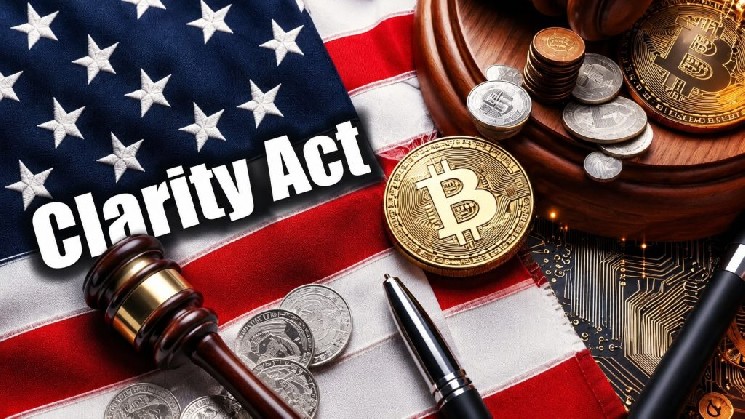
对通过有利于牛市的《清晰法案》(Clarity Act)加密货币法的希望正在破灭:该法案甚至未被列入议程!

关于《清晰法案》(CLARITY Act)——一项被寄予厚望、被认为有利于加密市场发展的美国加密货币全面监管法案——的立法前景正变得黯淡。该法案甚至未被列入参议院的议程日程。 目前,美国《清晰法案》(亦称《透明度法案》)的立法进程仍存不确定性。尽管业界期待其在参议院获得通过,但来自美国的消息显示,该法案未被列入8月3日公布的参议院投票日程。由于美国国会将于8月开始为期一个月的休会,而参议院计划在8月10日进入休会期,法案若未能在此之前进入投票程序,其通过希望将大大降低。 根据日程,参议院在8月3日安排的是针对政府拨款法案HR 6500的程序性投票,并未为《清晰法案》在全体会议上的辩论或投票预留时间。按照参议院规则,该法案在提交全体投票前还需完成冗长的程序性步骤。 法案通过的关键在于民主党的支持。在参议院通过需要60票,即使所有共和党议员都支持,也至少需要7名民主党参议员的支持。然而,部分民主党议员认为当前版本的《清晰法案》在消费者保护、道德规范和防止加密领域利益冲突方面存在不足,因此呼吁进一步协商。 专家分析指出,如果法案未能在8月获得通过,很可能被推迟至9月。但更有预测认为,由于11月将举行国会选举,议员们的注意力将集中在选战上,可能无暇推动立法,导致《清晰法案》的通过被推迟至2027年。 总之,《清晰法案》虽未完全从议程上撤下,但在8月10日参议院休会前进入最终全体投票的希望已非常渺茫。其命运最终取决于参议员们能否迅速完成必要程序并争取到足够的民主党支持。 *本文不构成投资建议。

cryptonews.ru18 分鐘前

对通过有利于牛市的《清晰法案》(Clarity Act)加密货币法的希望正在破灭:该法案甚至未被列入议程!

cryptonews.ru18 分鐘前

Dan Koe:反直觉真相,你根本不需要记住读过的一切

本文核心观点:你无需记住所有阅读内容,真正重要的知识会在需要时自然浮现。传统“记忆即学习”的观念是错误的,学习应是一个以目标为导向的反馈调节系统。 **核心问题**:多数人记不住阅读内容,是因为将“记住”当作终点,而非将知识应用于实际目标。 **有效学习路径(控制论四步闭环)**: 1. **设定清晰目标**:明确你想实现的具体状态(如“完成半马”),而非模糊愿望。 2. **诚实评估现状**:了解自己当前的真实水平。 3. **比较差距**:明确目标与现状的偏差。 4. **采取行动**:执行具体行动缩小差距。缺少明确目标,学习就会失去方向与动力。 **关键方法:从输出开始学习** 不要先系统学习,而是直接启动一个具体项目(如制作视频、弹奏一首歌)。在实践过程中遇到障碍时,再针对性学习所需知识。这种“按需抓取”的方式能让知识与真实场景深度绑定,不易遗忘。 **升级“第二大脑”,避免成为数字坟墓** 不要陷入“收藏即学会”的幻觉。知识管理的价值在于辅助产出,而非过度整理笔记。应将其建设为“第二潜意识”——一个能在你创作时主动关联并推送相关材料的动态系统,而非静态仓库。可使用工具(如Obsidian+Claude或Eden)实现自动分类与语义检索,降低管理负担。 **严格筛选输入内容** 只保存那些你愿意被其塑造、能与你的世界观融合的想法。专注于长期稳定的优质内容,并通过写作、分享等方式将外部知识内化为自身认知。让正在进行的项目作为知识的天然过滤器。 **合理利用AI** 让AI充当研究助手、编辑或灵感提供者,用于处理事实性内容、降低创作摩擦。但核心观点、价值判断与行文组织必须亲自完成,以形成不可替代的个人世界观。 **总结** 记住知识是深度应用的副产品。学习应始于具体目标与真实项目,让知识在解决问题的过程中自然沉淀。工具旨在优化流程,而非替代思考。当你为自身目标持续应用知识时,重要的内容早已融入你的能力体系。

marsbit1 小時前

Dan Koe:反直觉真相,你根本不需要记住读过的一切

marsbit1 小時前

这一届中国企业家,彻底变了

2026年夏天,中国商业史迎来标志性变化:长鑫科技登陆科创板,市值突破3万亿元;宇树科技创始人登上《时代》周刊封面;寒武纪成为科创板首家万亿市值公司;DeepSeek创始人跻身全球AI首富行列。这些事件共同揭示了中国企业家群体深刻的代际变迁。 财富版图正从互联网转向人工智能等硬科技领域。张一鸣、梁文锋、陈天石、王兴兴等70后、80后创业者成为新主角,其财富增长反映了市场对未来技术竞争力的预期。TMT行业占创富榜财富近27%,AI芯片、大模型、机器人等成为核心创富方向。 新一代企业家的创业起点从“商业模式”转向“技术突破”。陈天石从中科院走出,专注AI芯片研发,经历多年亏损终实现盈利;梁文锋以不足150人团队打造出具有全球影响力的DeepSeek大模型;朱一明立下“不盈利不领薪”军令状,带领长鑫科技在DRAM领域打破国际垄断,成为全球第四大厂商。 这种变化源于中国经济命题的转变:从“做大市场”到“做深产业”。上一代企业家奠定了城市化和互联网的基础设施,新一代则要在这些地基上实现技术原创和产业突破。他们正推动中国从技术追赶走向自主创新,在全球高端产业竞争中占据重要位置。 这不仅是财富的转移,更是国家竞争能力结构的代际交接,标志着中国进入以技术创新为核心驱动力的新发展阶段。

marsbit1 小時前

这一届中国企业家,彻底变了

marsbit1 小時前

交易

現貨
活动图片