Yesterday, on the eve of Consensus, HashKey Cloud and HashKey CaaS jointly held a launch event titled "Towards an On-Chain Future: Charting a New Strategic Blueprint for Institutions." The event focused on the needs of global institutional clients in digital transformation, showcasing a one-stop on-chain financial infrastructure solution designed to provide secure, efficient, and regulatory-compliant service support for institutions entering the crypto ecosystem.
Leo, CEO of HashKey's On-Chain Business Group; Shen Jun, Product Head of HashKey Cloud; and Yu Yi, Senior Business Development Manager of HashKey CaaS, along with other core business leaders, attended the event. During the launch, the leaders shared HashKey's practical experience and technical expertise in supporting institutional clients in deploying digital assets, based on real cases and industry insights, demonstrating HashKey's professional capabilities in risk management and infrastructure.
Additionally, expert representatives from institutions such as Quzhi Group, Victory Securities, Zodia Custody, WisdomTree, Ether.fi, Lido, Babylon, Quantum Solutions, Silver Age Limited, Eddid Financial, Black Horse Aurum Ltd, and JunHe Law Offices were invited to participate. They engaged in in-depth discussions around three key areas: the integration of traditional finance and on-chain yields, the new landscape of digital asset yields, and the tokenization of precious metal physical assets.
Leo, CEO of HashKey's On-Chain Business Group, delivered an opening speech.
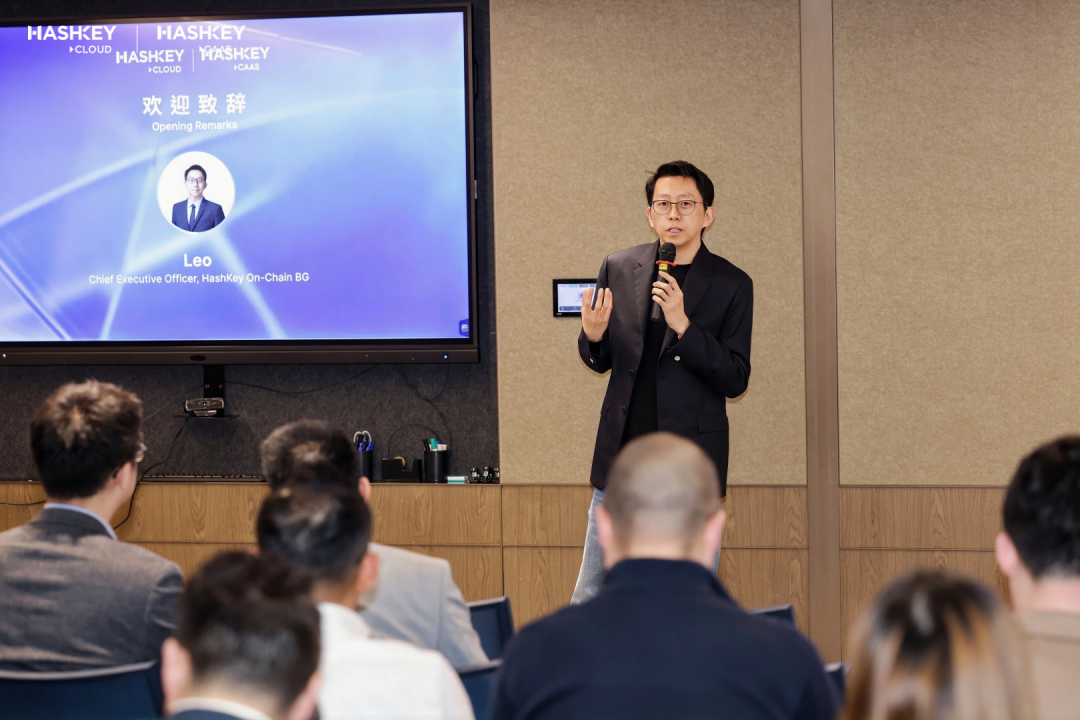
Leo stated that recent significant fluctuations in various assets are a normal cyclical phenomenon, not unique to the crypto industry. He expressed optimism about the future development of the industry, believing that it is accelerating towards compliance, with positive signals from Hong Kong's stablecoin regulations and RWA-related policies. Leo emphasized that Web3, with its transparent, timely, and secure features, can become a critical financial infrastructure, particularly in countries with weaker financial systems, where its value has already been validated through use cases like stablecoins.
Leo indicated that HashKey's future direction is to combine real-world application scenarios to help unlock the maximum value of on-chain assets and promote blockchain's role in serving inclusive finance.
HashKey Cloud: The Infrastructure for Institutional On-Chain Yields
Shen Jun, Product Head of HashKey Cloud, shared the mature practical experience of serving multiple global mainstream ETF companies and provided a detailed breakdown of the compliance framework and technical implementation path for institutional staking services.
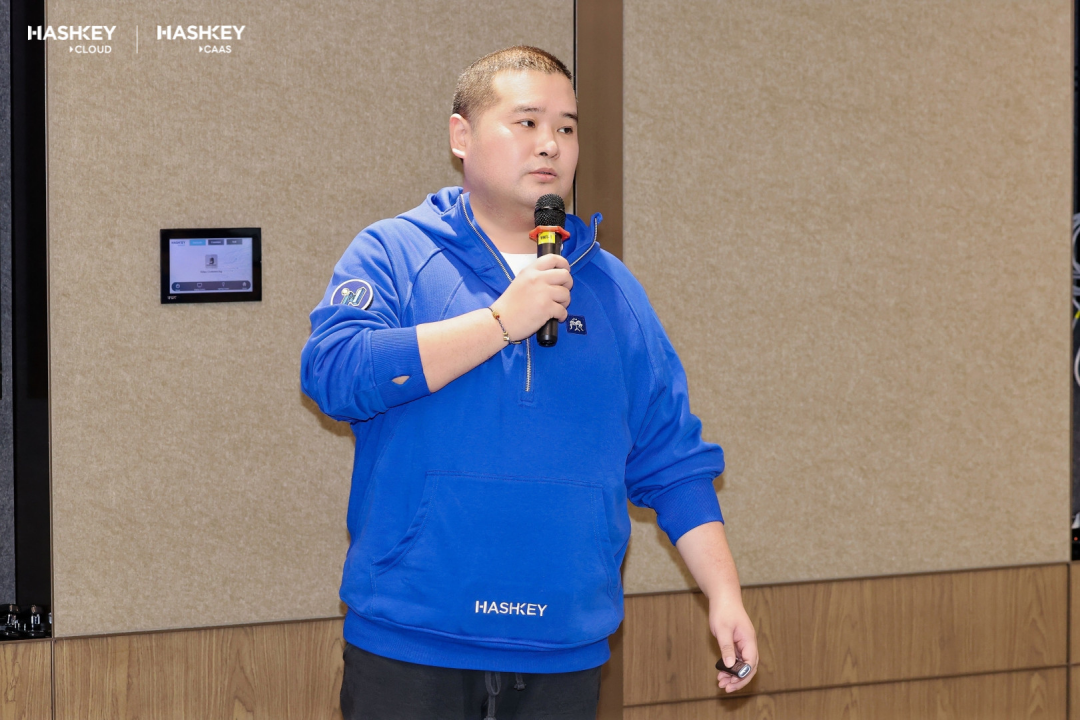
Shen Jun stated that HashKey Cloud, as a leading global institutional-grade, compliant digital asset staking and yield infrastructure, leverages the group's licensing advantages to provide secure and compliant multi-chain services for asset management institutions and other clients. HashKey Cloud adopts a non-custodial model, not directly handling user assets, and helps clients achieve tokenized appreciation and natural yield generation through APIs and online custody. Shen Jun further introduced HashKey Cloud's Staking service, which features non-custodial, on-chain verifiable, and insurance-covered core advantages, offering diversified solutions for different types of clients.
HashKey CaaS: The Core Engine for Institutional-Grade Web3 Ecosystems
Yu Yi, Senior Business Development Manager of HashKey CaaS, systematically presented HashKey CaaS's integrated institutional service system, detailing its complete layout and professional capabilities from underlying infrastructure to upper-layer yield management.
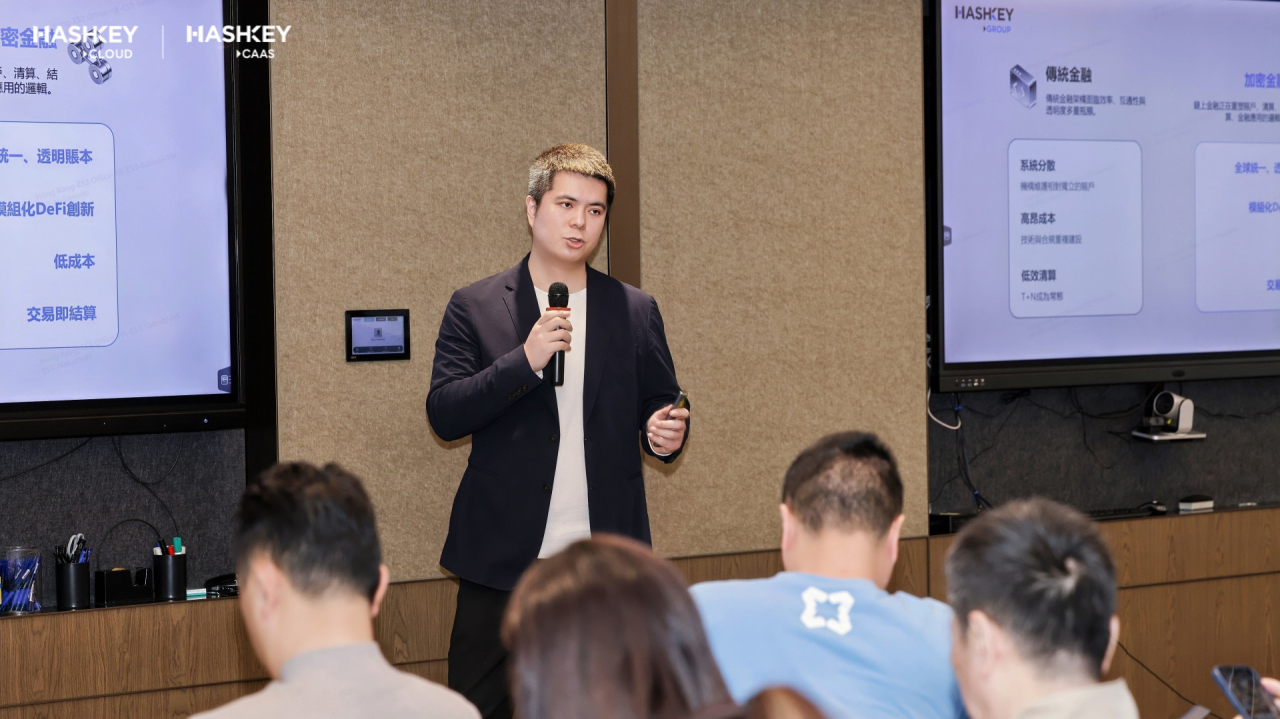
Yu Yi explained that HashKey CaaS primarily addresses traditional financial bottlenecks and helps institutions seamlessly connect to crypto finance through four core modules: asset tokenization, DAT/ETF staking, on-chain transactions and payments, and security and risk control. He noted that in asset tokenization, HashKey CaaS provides end-to-end services from design to distribution, covering products, technology, and distribution platforms. Additionally, Yu Yi stated that HashKey CaaS, with its global compliance layout and industry experience, accelerates product implementation and has gained widespread trust from leading global institutions.
The Integration Path of Traditional Finance and On-Chain Yields

In the roundtable discussion on "The Convergence of Traditional Finance and On-Chain Yields," guests from Quzhi Group, Victory Securities, and Zodia Custody focused on practical implementation experiences in real business scenarios, exploring the integration path of traditional finance and on-chain yields.
New Yield Landscape: The Fusion of ETH, BTC, and Institutional Capital
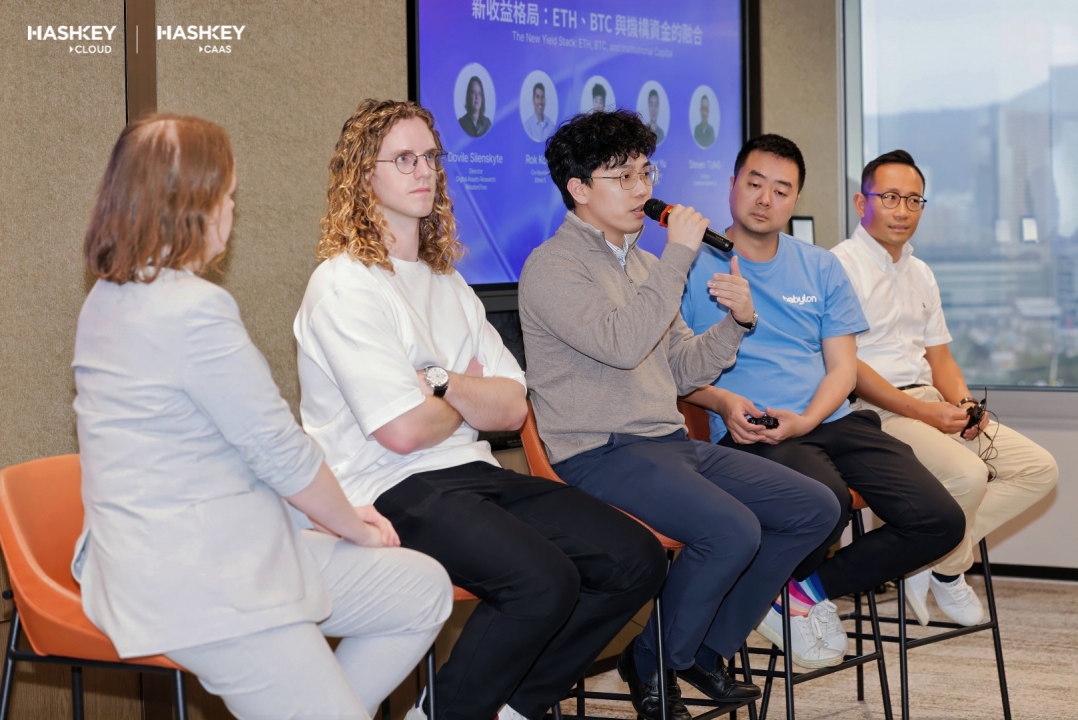
In the digital asset sector, during the roundtable on "New Yield Landscape: The Fusion of ETH, BTC, and Institutional Capital," ecosystem partners such as WisdomTree, Ether.fi, Lido, Babylon, and Quantum Solutions discussed the yield landscape of mainstream digital assets like ETH and BTC, as well as the participation models for institutional capital, exploring industry practices and development directions under the new yield landscape.
Future Prospects for Tokenizing Precious Metal Physical Assets
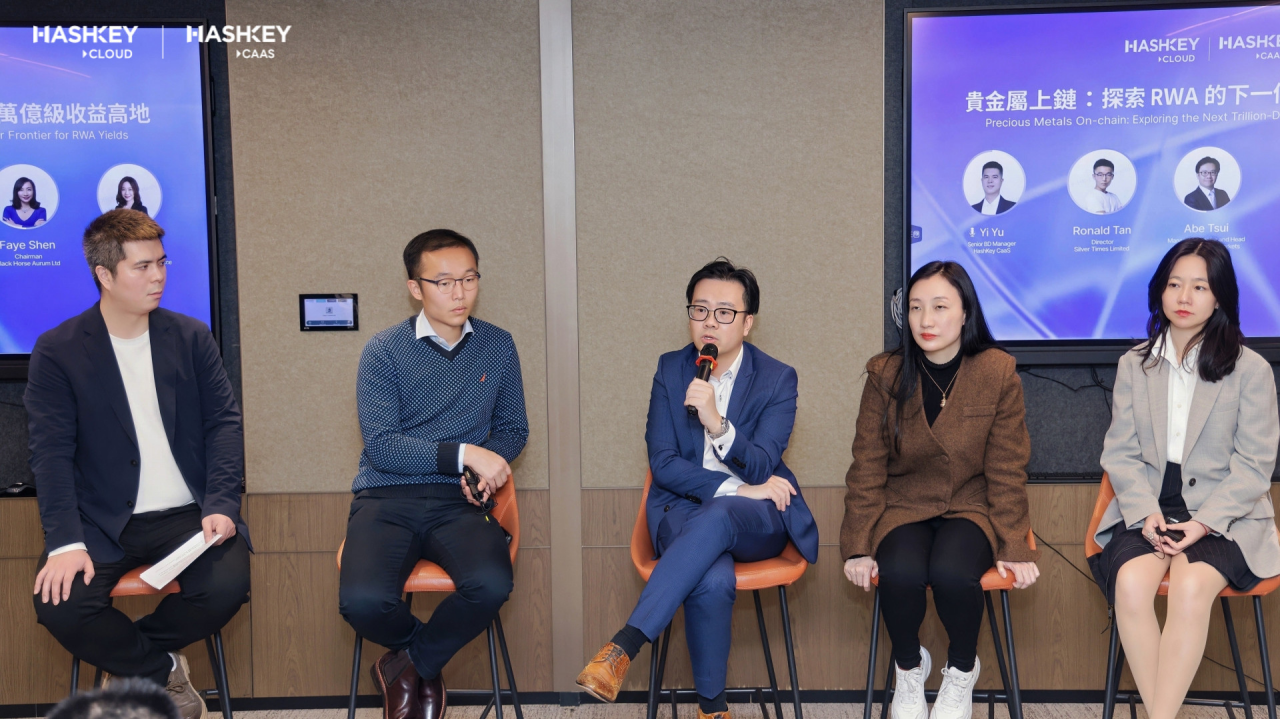
In the roundtable session titled "Precious Metals On-Chain: Exploring the Next Trillion-Dollar Yield Opportunity in RWA," guests from HashKey CaaS, Silver Age Limited, Eddid Financial, Black Horse Aurum Ltd, and JunHe Law Offices, in light of current hot topics, delved into the tokenization potential of precious metals like gold and silver, exploring the yield space and development prospects of RWA assets within the on-chain financial ecosystem.
At this launch event, HashKey Cloud and HashKey CaaS comprehensively demonstrated the core capabilities of their integrated institutional solutions, showcasing HashKey's strategic upgrade from a compliant trading platform to an institutional-grade on-chain financial infrastructure provider. This has fostered industry consensus for the accelerated implementation of institutional-grade on-chain finance in Hong Kong in 2026. With the gradual maturity of compliant products, the continuous deepening of CaaS construction, and the diversified layout of RWA on-chain development, HashKey will continue to promote the deep integration of traditional finance and on-chain assets, driving the development of institutional-grade on-chain finance in Hong Kong and globally.