Eric Trump Goes to War With Big Banks Over ‘Anti‑American’ Crypto Lobbying

bitcoinist發佈於 2026-03-05更新於 2026-03-05

文章摘要

Eric Trump has publicly criticized major U.S. banks, including JPMorgan Chase, Wells Fargo, and Bank of America, accusing them of pursuing an "anti-American" agenda by lobbying against crypto and stablecoins. He claims these institutions are trying to block Americans from earning higher yields on savings—often 4–5% in crypto platforms—to protect their low-interest monopoly and prevent deposit flight. According to Trump, banks are supporting bills like the Clarity Act to restrict yields and rewards on stablecoins, undermining competition and consumer freedom. He argues this contradicts American ideals and reflects the banking industry's panic over losing dominance in digital finance. The conflict centers on the GENIUS Act, which allowed stablecoins but banned interest payments, and the proposed Clarity Act, which aims to further limit yields.

Eric Trump lashed out against Big Banks for targeting Crypto and stablecoins, essentially not letting Americans make as much money as they could be.

An “Anti-American” Crypto Agenda

In a post on social network X on March 4, following his father Donald Trump’s message accusing banks of “undermining” the GENIUS Act, Eric Trump subsequently called out big banks like JPMorgan Chase, Wells Fargo and Bank of America.

He claims these banks are actively blocking Americans from “getting higher yields on their savings” and preventing “any rewards or perks from being given to customers,” arguing this is happening because they are “desperately targeting crypto/stablecoins, where platforms plan to offer 4–5% yields or rewards.” He goes as far as saying this stance betrays America’s freedom ideals:

The ABA and other lobbyists are spending millions trying to ban or restrict those yields via bills like the Clarity Act, crying “fairness” and using words like “stability”—when it’s really about protecting their low-rate monopoly and preventing deposit flight. his is anti-retail, anti-consumer, and straight-up anti-American.

The Greatest Hypocrites

In a different post from the same day, Eric Trump doubled down, accusing Big Banks of “doing everything they can to block the crypto industry” and branding them institutions that have “held a monopoly and screwed their customers for years.”

As Eric Trump sees it, this comes as a sort of tantrum, the last-ditch effort of a scared institution to keep control of Americans’ savings:

They are the greatest hypocrites and are in mass panic given they know they are losing the digital finance race!

The GENIUS Act vs. The Clarity Act

Both Donald and Eric Trump’s rants respond to a broader context: two flagship Trump-era bills are being weaponized against each other by the TradFi institutions.

The GENIUS Act, last year’s “big win” for payment stablecoins, legalized fully‐backed dollar tokens while explicitly banning issuers from paying interest on customer balances, a compromise that pushed yield into exchanges, fintech apps and DeFi protocols instead of killing it outright.

Now the banking lobby wants the CLARITY Act to finish the job: they are demanding a blanket prohibition on “yields, rewards or inducements” for stablecoin holders, closing the GENIUS loophole that still lets platforms compete with near‐zero bank accounts.

This is the fight the Trumps are now front running: an active opposition against those that are trying to make sure digital dollars can never pay ordinary savers more than the legacy system does.
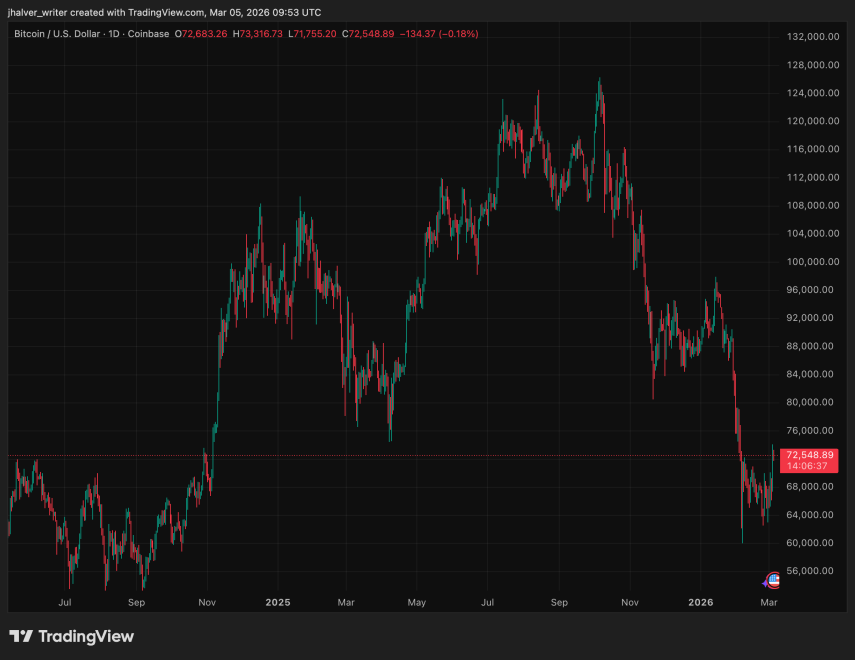
BTC’s price trends to the downside on the daily chart. Source: BTCUSD on Tradingview

Cover image from ChatGPT, BTCPUSD chart from Tradingview

相關問答

QWhat did Eric Trump accuse big banks like JPMorgan Chase, Wells Fargo, and Bank of America of doing?

AEric Trump accused big banks of actively blocking Americans from getting higher yields on their savings and preventing rewards or perks from being given to customers, claiming they are desperately targeting crypto and stablecoins to protect their low-rate monopoly.

QWhich two acts are central to the conflict between the Trump family and big banks regarding crypto and stablecoins?

AThe GENIUS Act and the Clarity Act are central to the conflict, with the GENIUS Act legalizing fully-backed dollar tokens but banning interest on customer balances, while the Clarity Act seeks to prohibit yields, rewards, or inducements for stablecoin holders.

QWhy does Eric Trump label the actions of big banks and their lobbyists as 'anti-American'?

AHe labels them as 'anti-American' because he believes they are undermining America's freedom ideals by protecting their monopoly, preventing deposit flight, and restricting consumers from earning higher yields through crypto and stablecoins.

QWhat does Eric Trump claim is the real motivation behind the banking lobby's support for bills like the Clarity Act?

AHe claims the real motivation is to protect their low-rate monopoly and prevent deposit flight, rather than genuine concerns about fairness or stability.

QHow does Eric Trump describe the big banks' response to the rise of digital finance?

AHe describes it as a mass panic and tantrum, accusing them of being hypocrites who are desperately trying to block the crypto industry because they are losing the digital finance race.

你可能也喜歡

Ethena 的转型与华尔街的焦虑

2026年6月9日,稳定币协议Ethena宣布与全球资管巨头Janus Henderson达成深度战略合作,标志着其从DeFi原生协议正式迈入传统金融核心。Ethena将使用Janus Henderson的AAA级CLO基金作为其稳定币USDe的储备资产,而Janus Henderson则通过旗下平台收购ENA代币、将USDe纳入自身财库管理,并计划开发相关的交易所交易产品(ETP)向机构客户分销。 Ethena最初以Delta中性策略稳定币USDe闻名,其收益率高度依赖衍生品市场资金费率,在牛市中迅速扩张,但在市场转熊时暴露出脆弱性。经历2025年危机后,Ethena积极转型,大幅降低衍生品头寸占比,将储备资产扩展至包括国债、企业信贷和CLO在内的多种传统资产,使USDe转变为一种混合RWA抵押的稳定币。 此次合作展现了传统金融机构的深层焦虑。随着美国《GENIUS法案》等监管框架的明确,稳定币竞争转向合规与分发网络建设。传统资管机构面临“代币化或被代币化”的战略压力、收益率压力以及对未来资金入口控制权的担忧。Janus Henderson通过合作嵌入稳定币生态,旨在确保其在下一代金融基础设施中的地位。 这一案例揭示了传统金融与去中心化金融边界正在消融的趋势,稳定币成为双方融合的核心战场。双方通过资产互通、战略投资、财库管理和产品分销的四重合作,共同探索新的金融范式。

Foresight News20 分鐘前

Ethena 的转型与华尔街的焦虑

Foresight News20 分鐘前

不是所有链都能接住机构,Canton 为什么可以

不是所有链都能承接机构的核心金融业务。Canton 网络的目标是成为机构金融工作流的底层协调层,让金融机构在保留各自系统和权限的同时,能在同一个网络中安全、同步地进行交易、抵押和结算。 其成功的关键在于深谙机构需求。Canton 采用分段架构和选择性披露机制,确保交易数据仅在授权范围内可见。其 Daml 智能合约将复杂的业务规则和权限控制内置于逻辑中。更重要的是,它提供了资产锁定、原子化结算和全局同步器等功能,有效解决了机构间交易中的信用风险、交收不同步等核心痛点,还原了金融业务的运行逻辑。 这一务实定位获得了罕见的多方认可。其开发主体 Digital Asset 近期完成了由众多传统金融巨头和加密资本共同参与的融资,累计融资额约 8.05 亿美元。这反映出金融核心玩家们对 Canton 作为未来金融协作底层的战略共识。 网络生态已初具规模,连接了近 300 家合作伙伴,包括顶尖银行、市场基础设施和资管公司,并已处理了数万亿美元的代币化资产和巨额回购交易。其原生代币 CC 是支撑网络同步与结算服务可持续运行的经济机制。 总体而言,Canton 并非直接与开放公链竞争流量,而是致力于为最严肃的机构金融活动构建一个安全、有序且可互操作的协调底座。这为机构资产大规模上链、进而间接影响更广阔的链上金融市场,奠定了关键的基础设施条件。

Foresight News43 分鐘前

不是所有链都能接住机构,Canton 为什么可以

Foresight News43 分鐘前

速汇金:我们为何推出自有稳定币?

全球跨境汇款巨头速汇金推出自有稳定币MGUSD,旨在服务其庞大的现有用户网络,解决无银行账户或银行服务不足人群的真实痛点。MGUSD并非意在争夺主流稳定币的市场份额,而是作为速汇金战略升级的一部分,为用户提供一个稳定持有美元余额的渠道,并与其全球汇款、现金支取、消费支付等成熟服务网络无缝对接。 文章指出,速汇金拥有超过八十年的历史和海量跨境汇款用户,无需从零教育市场。MGUSD基于Stellar区块链和自托管钱包架构,让用户能自主掌控资产,进行安全的价值储存和便捷流转,同时享受速汇金线上线下结合的网络优势,实现数字余额与现金、本地货币的灵活转换。该产品在设计之初即深度融合了KYC、反洗钱等全球合规要求。 此外,MGUSD的推出也推动了速汇金内部基础设施的现代化与运营模式革新。公司通过组织架构扁平化、组建跨职能团队,以初创企业的速度在约一年内完成了产品落地。稳定币技术已整合进公司财资管理体系,用于提升全球资金结算与流动性管理效率,年化外汇交易规模已达20亿美元。 速汇金强调,其商业模式坚持开放合作,在优化直接用户体验的同时,致力于成为合作伙伴更优质的结算与服务通道。MGUSD的核心目标是通过可信赖的成熟网络,为用户提供更完善、可控的金融资产存储与使用方案。

Foresight News1 小時前

速汇金:我们为何推出自有稳定币?

Foresight News1 小時前

交易

現貨
合約
活动图片





