Dogecoin at a crossroads: Will DOGE breakout to $0.1 or see another pullback?

ambcrypto發佈於 2026-03-31更新於 2026-03-31

文章摘要

Amid a broader memecoin recovery, Dogecoin (DOGE) successfully defended the $0.09 support level, rising 1.86% to trade at $0.092, backed by over $1 billion in trading volume. Spot market activity showed strength, as outflows exceeded inflows, reducing available supply and potentially supporting further gains. However, the futures market remained bearish, with significant long liquidations and reduced open interest, reflecting trader caution. Technical indicators like the Stochastic RSI show a bullish crossover but remain in oversold territory, indicating lingering selling pressure. DOGE faces a critical juncture: if spot demand prevails, it could target $0.106; otherwise, it may retest $0.086 or even $0.080.

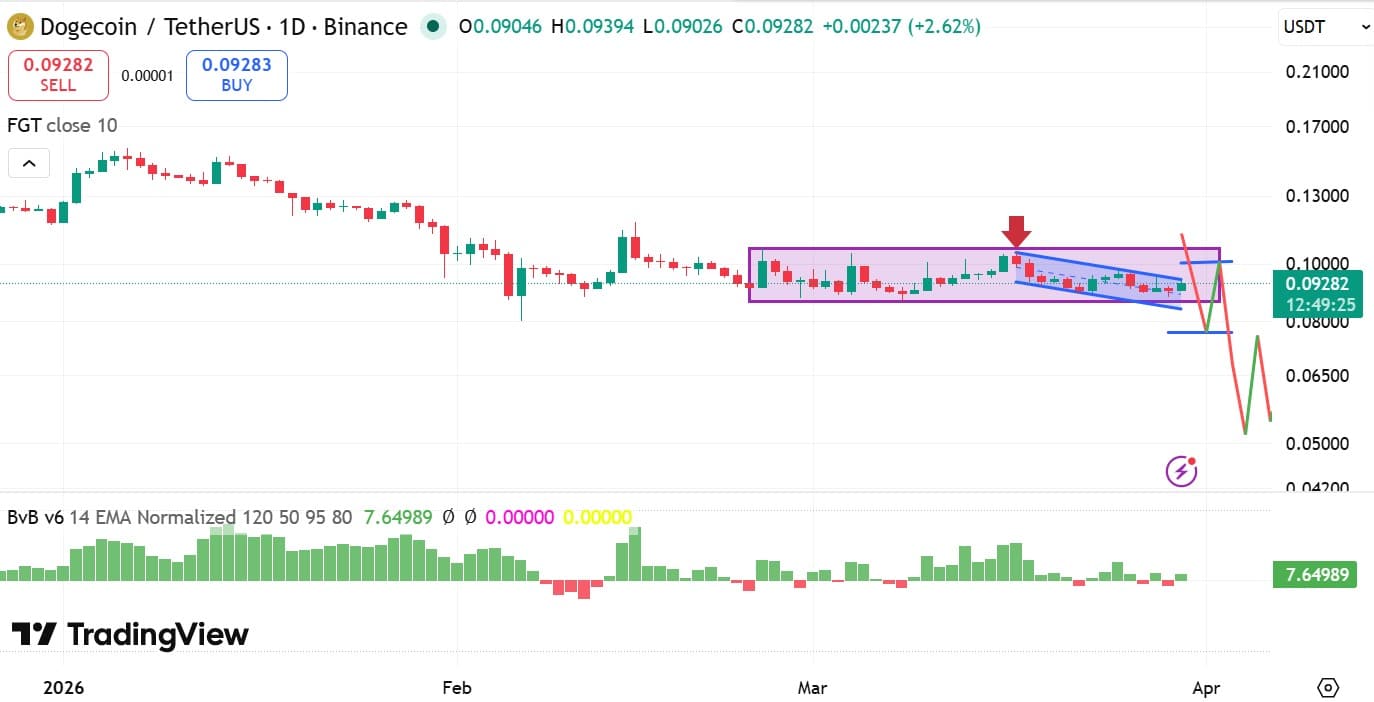
Amid extended market weakness, memecoin signaled market recovery, making slight gains across the board. With memecoins showing slight upside momentum, Dogecoin [DOGE] successfully defended $0.09 and then jumped to $0.093 before retracing slightly.

At press time, DOGE traded at $0.092, after slightly rising by 1.86% on the daily charts. This price uptick was backed by a 7% increase in trading volume, which exceeded $1 billion, reflecting market momentum.

Dogecoin: Spot buyers defend key levels

Dogecoin bulls have attempted to defend and flip $0.09 support over the past few days, with no success. As the market signaled a recovery, bulls jumped in with strength and successfully achieved their goal.
Source: TradingView

In fact, the Bulls vs. Bears indicator turned positive again, rising to 6.8 after falling into the negative zone. A rebound here suggested that buyers stepped in and displaced bears.

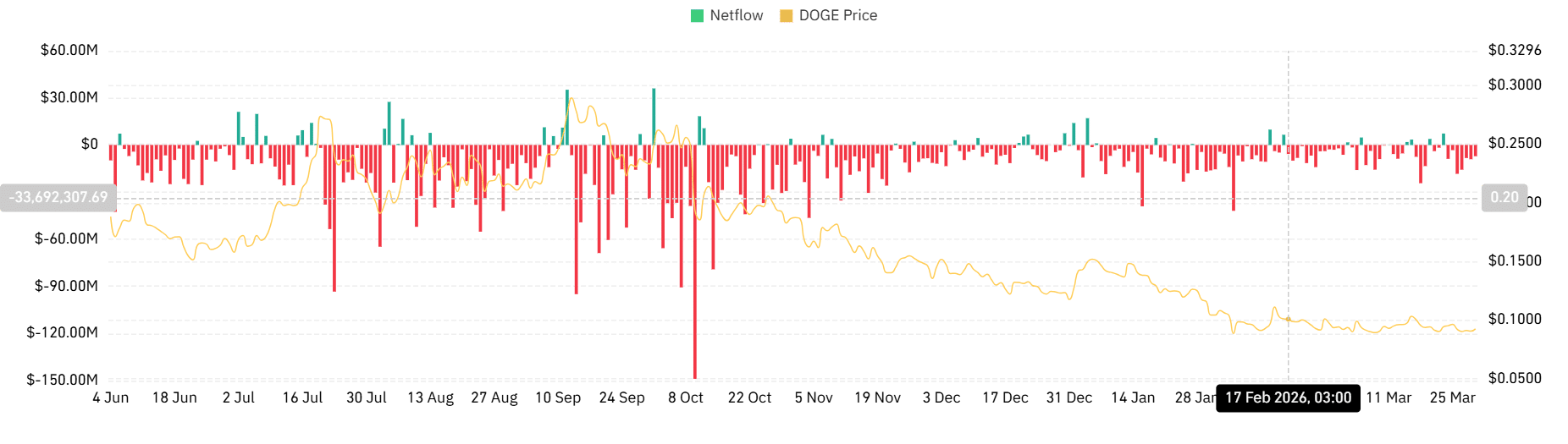
According to CoinGlass data, DOGE recorded $82.79 million in Spot outflows compared to $68.64 million in inflows. As a result, the memecoin’s Spot Netflow dropped 148% to -$14.25 million.
Source: CoinGlass

Notably, when outflows outpace inflows, it suggests that exchanges recorded more withdrawal orders than deposit orders.

Such a setup on exchanges reduces the supply available for immediate sale, effectively increasing scarcity and creating perfect conditions to accelerate upside momentum.

Futures remain overly bearish

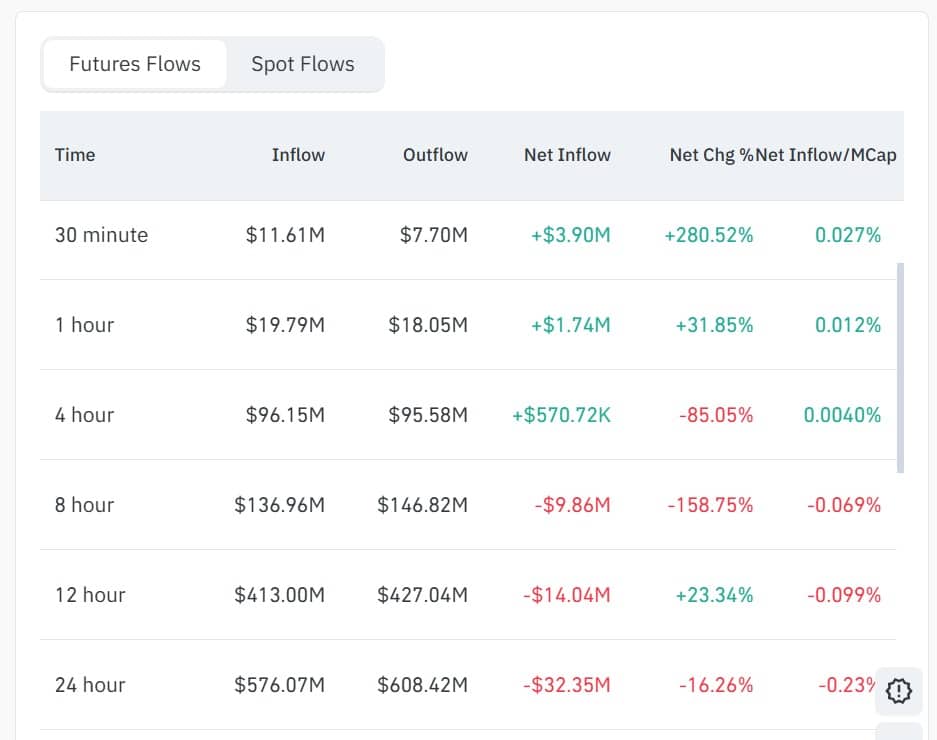
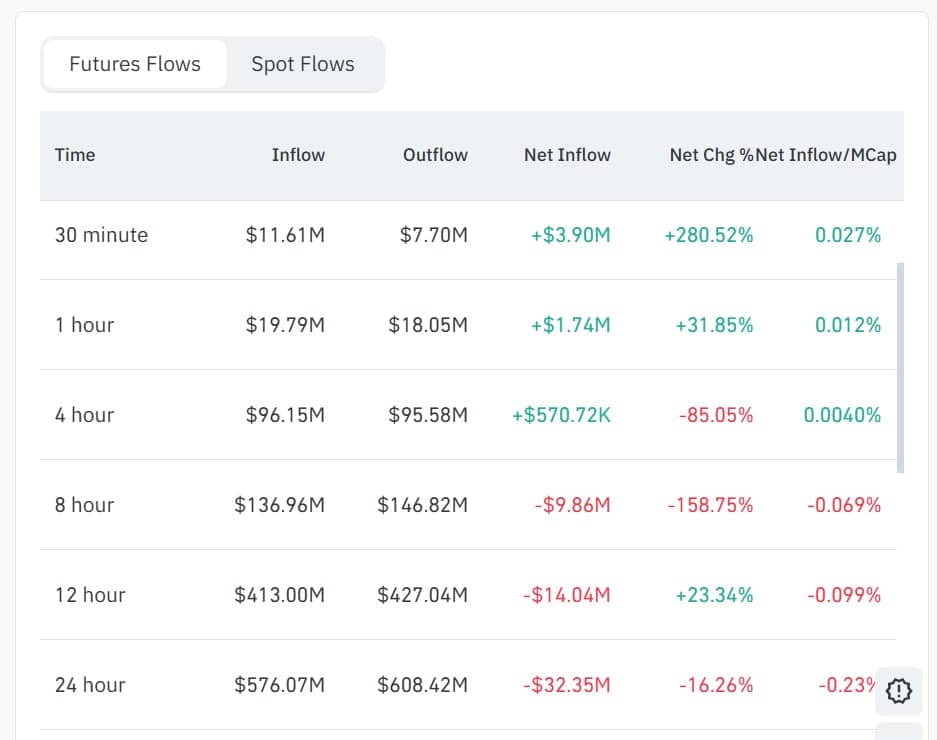
Although significant capital has flowed into the Spot market, derivatives market participants have continued to reduce their exposure.

While DOGE showed slight upside momentum, traders have avoided piling in, especially on the long side. This is due to increased long-position liquidations.

According to CoinGlass data, over $2.8 million in longs were liquidated. This liquidation rate amplified investors’ fear of taking more long positions.
Source: CoinGlass

As such, massive capital flowed into the Futures market, with over $608.4 million in outflows. This suggests that most participants closed their positions, indicating reduced risk appetite.

Such market conditions have left the Dogecoin market weakened and exposed to potentially more losses on its price charts.

What’s next for DOGE?

Dogecoin is currently at a crossroads, with the Spot market showing greater determination to pull the market out of a slump, while Futures remain bearish. These two conflicting forces expose DOGE to the fate of whichever side manages to overwhelm the other.

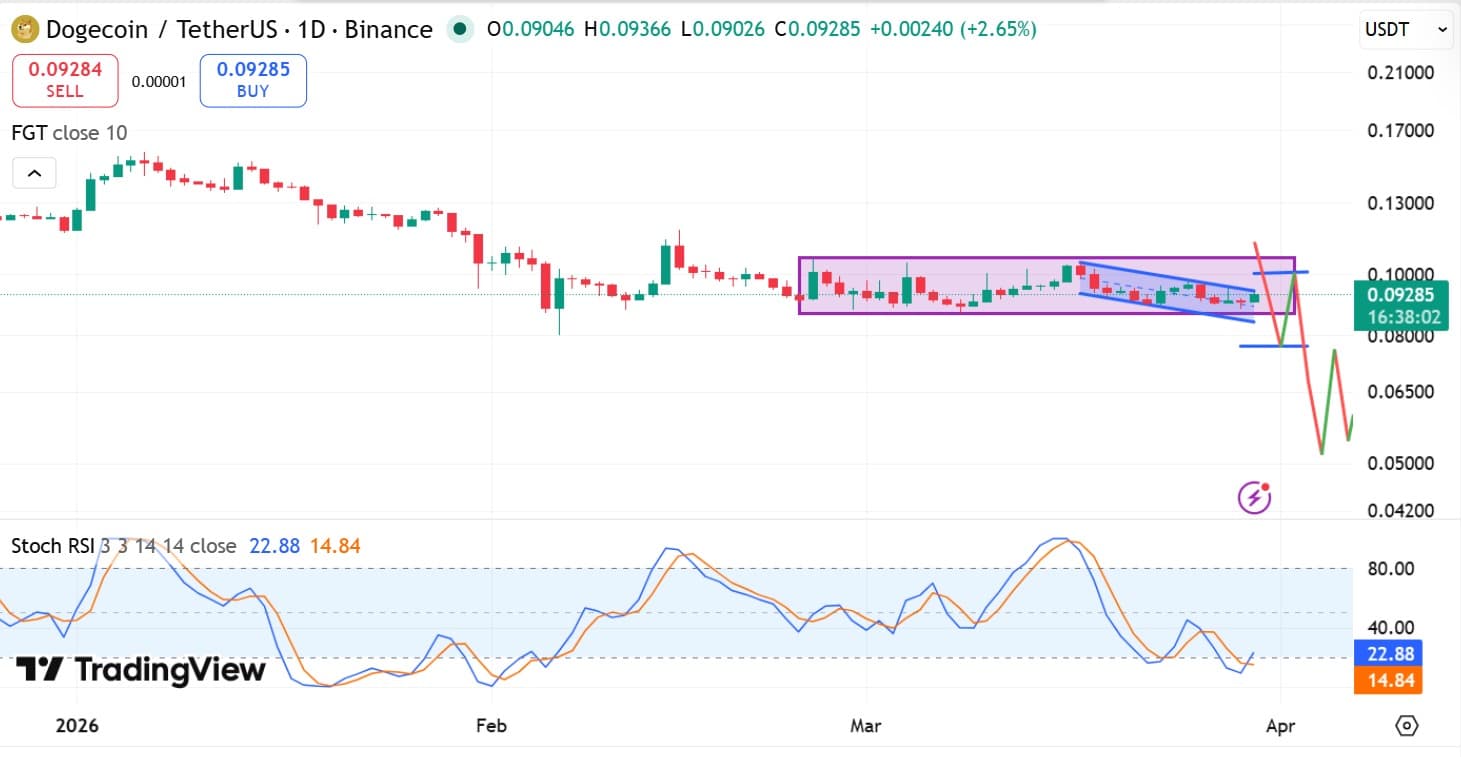
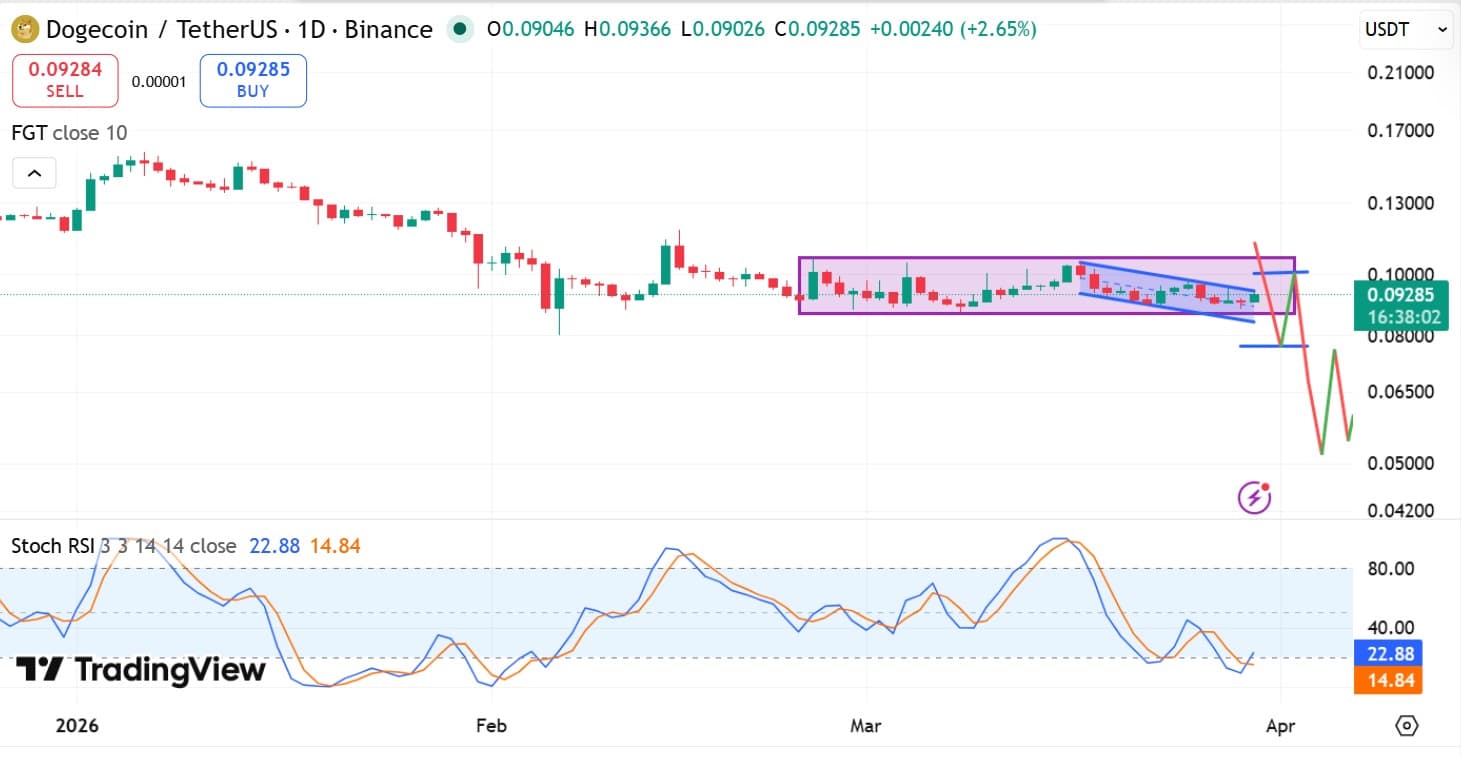
Looking at the Stochastic RSI, the momentum made a bullish crossover, rising from 7 to 23, reflecting increased buying pressure. Despite this crossover, the momentum index remains firmly stuck in oversold territory, signaling the presence of sellers.
Source: TradingView

Even more worrying for memecoin prospects, the future Grand Trend suggested another slip. Based on the future model, DOGE could drop below $0.09 again, falling to $0.086, with $0.080 as critical support.

However, if Spot demand outweighs Futures selling, Dogecoin could hold above $0.09 and target $0.106 resistance.


Final Summary

  • DOGE rose slightly, flipping $0.09, touching a high of $0.093, before retracing to $0.092.
  • Dogecoin saw fresh capital inflows into the Spot market, but Futures remained bearish, posing a risk of pullback.


相關問答

QWhat was Dogecoin's price and daily percentage change at the time the article was written?

AAt press time, DOGE traded at $0.092, after slightly rising by 1.86% on the daily charts.

QWhat key support level did Dogecoin bulls successfully defend and flip?

ADogecoin bulls successfully defended and flipped the $0.09 support level.

QAccording to the article, what does it suggest when exchange outflows outpace inflows for an asset like DOGE?

AWhen outflows outpace inflows, it suggests that exchanges recorded more withdrawal orders than deposit orders. This reduces the supply available for immediate sale, increasing scarcity and creating conditions for upside momentum.

QWhy are traders in the derivatives market hesitant to take long positions on DOGE?

ATraders have avoided piling into long positions due to increased long-position liquidations, with over $2.8 million in longs being liquidated, which amplified investors' fear.

QWhat are the two potential price targets for DOGE mentioned in the article, based on conflicting market forces?

AIf Futures selling pressure outweighs spot demand, DOGE could drop to $0.086, with $0.080 as critical support. However, if Spot demand outweighs Futures selling, Dogecoin could hold above $0.09 and target the $0.106 resistance level.

你可能也喜歡

纳斯达克一天交易 23 小时,抢的是谁的生意?

纳斯达克计划于2026年12月启动每日23小时的股票交易,新增夜盘覆盖亚洲主要市场的白天时段。此举核心是争夺全球订单与定价权,而非单纯延长交易时间。 短期看,纳斯达克旨在从现有的隔夜交易平台、券商内部系统及其他交易所手中夺回订单。中期目标是争夺ETF和大型科技股在夜间的价格发现权。长期则是抢占亚洲白天时段的全球资产定价入口。 数据显示,亚洲时段的隔夜交易高度集中于少数品种:前15大品种占隔夜总成交额约53%,其中12只是ETF(如标普500ETF),仅3只为个股(特斯拉、英伟达、阿里巴巴)。这表明夜盘交易主要是宏观风险管理行为,而非广泛的个股投资。 延长交易时间将增加全市场基础设施的运营成本,最终可能通过扩大买卖价差等方式由投资者承担。此外,夜盘流动性不足可能导致价格波动更大,其形成的价格仍需在主流交易时段接受检验。 这一变化也凸显了全球资产定价向美国市场集中的趋势。投资者通过美国ETF交易全球资产(如黄金、印度股票),使得美国市场在重大事件后能率先形成参考价格,影响其他市场的开盘定价。 对于港交所而言,直接复制23小时交易模式并不现实,主要受限于港股通机制。其优势在于提供独特的中国资产,更应专注于扩大优质资产供给、完善人民币交易结算等核心竞争力的提升。 总之,23小时交易是交易所争夺全球订单和定价权的工具。其成功与否,关键取决于市场是否有持续的全球性交易需求,而非营业时间的长短。交易所真正争夺的,是定义全球资产价格的能力。

marsbit1 小時前

纳斯达克一天交易 23 小时,抢的是谁的生意?

marsbit1 小時前

迈克尔·塞勒对比特币与黄金!

迈克尔·塞勒(Michael Saylor)将比特币比作数字黄金,认为其通过结合计算机、数字网络和密码学,创造了人类历史上首个数字货币网络。他强调比特币完全数字化了货币资产,通过公开协议控制供应,而非依赖个人或机构决策,从而将经济价值转化为可全球安全传输的信息。 与黄金相比,塞勒指出比特币的供应更难增加,但更易于与软件集成和转移。比特币的工作量证明机制将其与物理世界连接,消耗真实能源以确保账本安全,提升篡改交易记录的成本。矿工、能源公司和投资者共同构建了保护体系,因此塞勒认为“数字货币能源”比“数字黄金”更能准确描述比特币。 塞勒表示,比特币网络是自适应系统,由矿工、节点、开发者、资本和用户组成。其核心设计简单,旨在为稀缺数字资产提供安全可靠的账本,复杂功能则由上层应用实现,使比特币成为经济价值跨时空转移的基础,并支持支付、借贷和金融服务的创新。 他进一步指出,比特币的深层影响在于创造数字主权形式——私钥让个人无需许可即可掌控经济权力,所有权通过数学而非机构验证。企业、银行、信托和社交网络可基于比特币构建复杂经济体系,为数字环境引入真实成本和责任。 塞勒总结道:“黄金的物理稀缺性使其成为货币,比特币的数字稀缺性亦然。”他认为比特币不仅是支付工具,更是数字时代的“货币能量”。

cryptonews.ru1 小時前

迈克尔·塞勒对比特币与黄金!

cryptonews.ru1 小時前

交易

現貨
活动图片