All about why blockchain firms will now become part of U.S Treasury’s cybersecurity program

ambcrypto發佈於 2026-04-10更新於 2026-04-10

文章摘要

The U.S. Department of the Treasury has launched a new initiative through its Office of Cybersecurity and Critical Infrastructure Protection (OCCIP) to include blockchain and crypto firms in a cybersecurity program. This move aims to share timely cyber threat intelligence to help these firms prevent and respond to attacks. The announcement comes amid ongoing security challenges in the crypto industry, highlighted by incidents like the 2026 Drift Protocol attack, which resulted in approximately $285 million in losses and was linked to state-backed cyber operations. The article underscores that security vulnerabilities remain a critical systemic risk in crypto, capable of triggering prolonged market downturns, as seen during the 2022 crash following the collapse of FTX. By providing early warnings and fostering coordinated risk management, the Treasury’s program seeks to strengthen institutional confidence and reduce the likelihood of future large-scale market disruptions.

When we talk about “risk” in crypto, the real and often underestimated risk lies in security.

Over the years, the crypto industry has expanded rapidly, bringing institutional participation, new products, and large-scale adoption. And yet, the underlying investment risk has not fully disappeared. The reason is simple – Security vulnerabilities continue to exist across smart contracts, bridges, wallets, and exchanges.

Seen in this light, the latest move by the U.S Treasury becomes relevant. Notably, the U.S Department of the Treasury has launched a new cybersecurity initiative. Through its Office of Cybersecurity and Critical Infrastructure Protection (OCCIP), the program will share timely cyber threat information with eligible crypto and blockchain firms to help them prevent and respond to attacks.
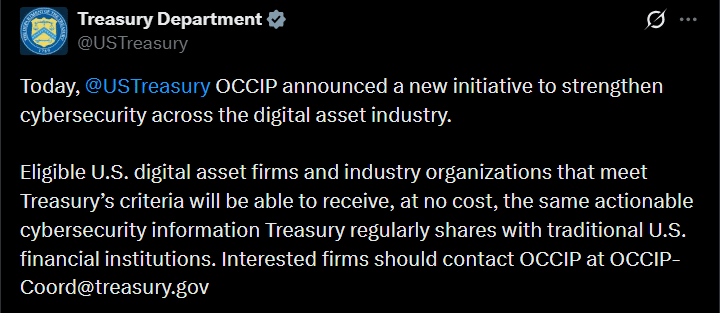
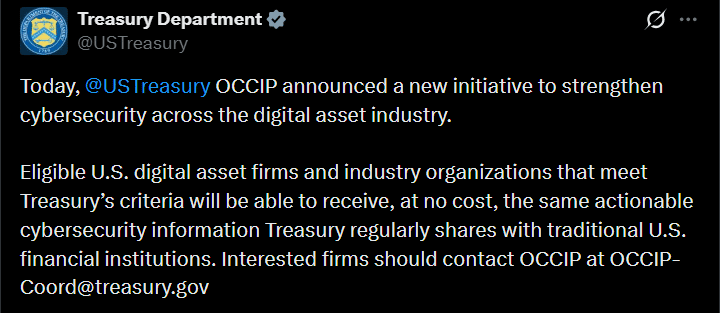
Source: X

Interestingly, the timing of this initiative feels almost deliberate.

Just four months into 2026, the crypto market has already faced another reminder of its security gaps. The recent Drift Protocol attack exposed vulnerabilities within the platform’s trading mechanisms, resulting in losses estimated at around $285 million. In fact, early investigations have linked the activity to DPRK-style operations, suggesting a level of planning typically associated with state-backed cyber groups.

Against this backdrop, the U.S Treasury’s decision to roll out a cybersecurity program for digital asset firms carries significant importance. The key question now is – Will stronger government-backed cybersecurity coordination help strengthen institutional confidence in crypto assets?

OCCIP’s significance viewed through crypto’s 2022 crash

The impact of security lapses goes far beyond a temporary wave of FUD in the market.

In some cases, the consequences are long-lasting. The collapse of FTX in 2022 serves as a clear example. What initially appeared to be a single exchange failure quickly evolved into a security crisis for the entire industry. Billions of dollars were lost, and major lending firms faced significant liquidity stress.

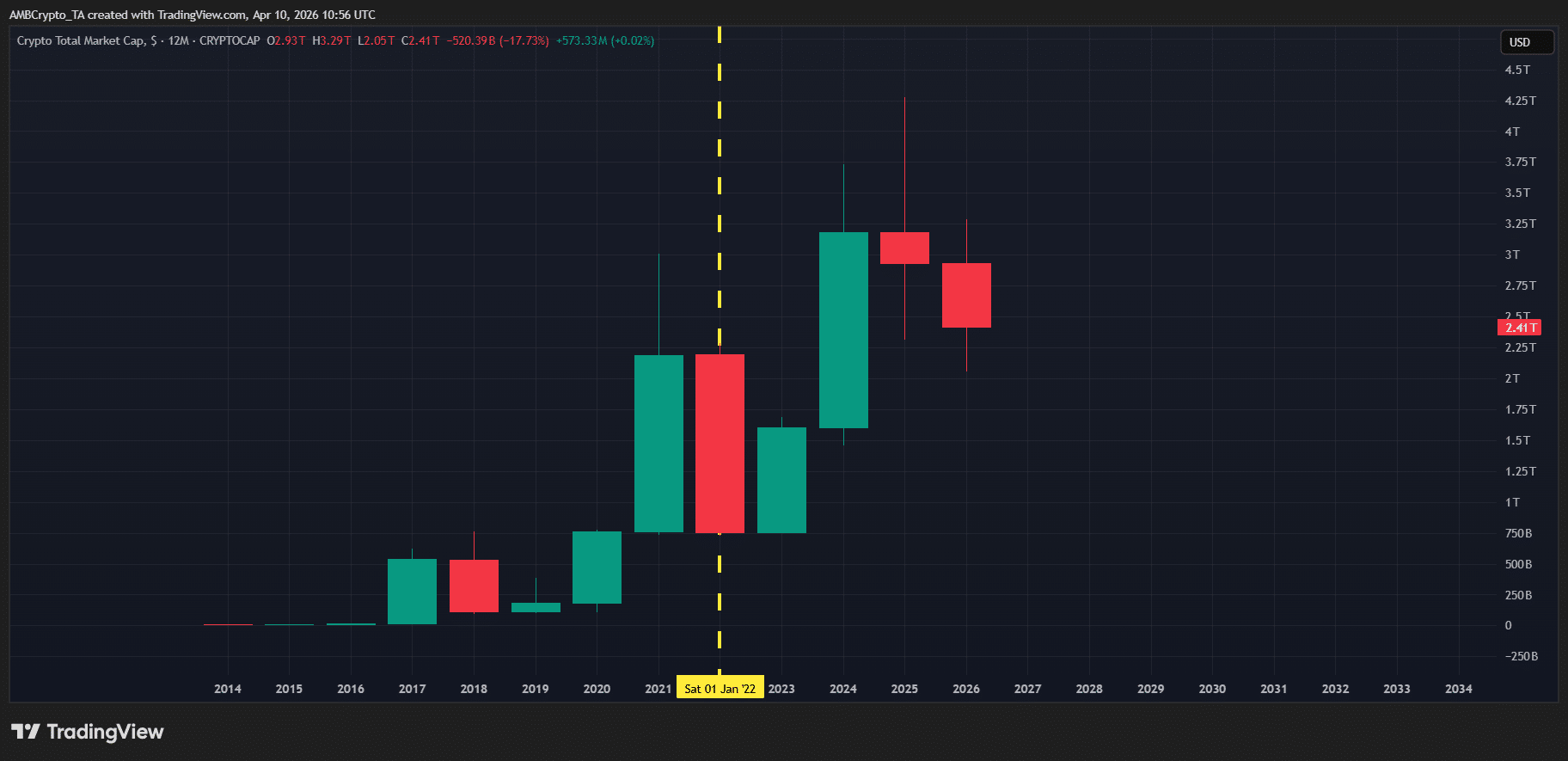
From a technical standpoint, the impact was equally severe. The crypto market ended 2022 down roughly 66%, a period still considered one of the harshest bear markets in crypto history. Recovery was slow rather than immediate.

Throughout 2023, the market managed to regain only 50% of the losses as investors remained cautious.

In fact, it wasn’t until the 2024 cycle that broader momentum returned.
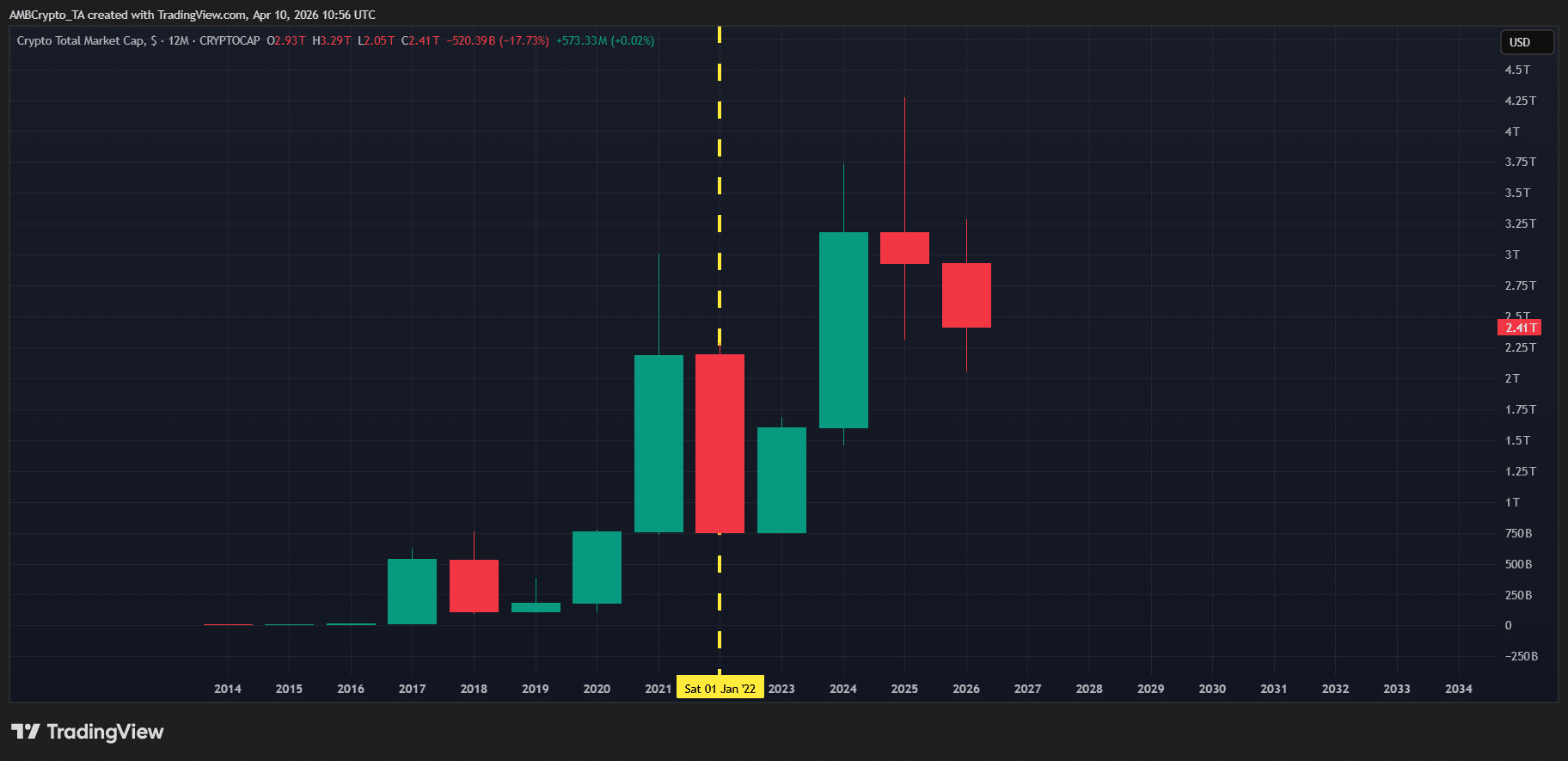
Source: TradingView (TOTAL/USDT)

In essence, the impact of major security failures in crypto extends well beyond price correction.

Instead, they reshape market cycles, delay institutional adoption, and reinforce the industry’s need for stronger security infrastructure and coordinated risk management. Fast forward to now, this is exactly where the U.S Treasury’s OCCIP program starts to become relevant.

From a broader perspective, risks around digital assets have not disappeared. Instead, they are evolving. Alongside protocol exploits and exchange breaches, newer concerns like quantum computing threats are beginning to enter the discussion, keeping long-term security risks on the radar and raising concerns about another 2022-style market shock.

However, the shift now seems to be towards prevention rather than reaction. With OCCIP, digital asset firms will gain access to early warning signals, allowing them to strengthen defenses before vulnerabilities escalate. In turn, this will help keep institutional confidence intact, lowering the chances of another market shock.


Final Summary

  • Security is crypto’s real systemic risk, with repeated exploits showing how security failures can trigger long-term market downturns.
  • By giving digital asset firms access to cyber intelligence, the U.S Treasury’s move could reduce the risk of another shock.


相關問答

QWhat is the main focus of the U.S. Treasury's new cybersecurity initiative for blockchain firms?

AThe U.S. Treasury's new cybersecurity initiative, through its Office of Cybersecurity and Critical Infrastructure Protection (OCCIP), aims to share timely cyber threat information with eligible crypto and blockchain firms to help them prevent and respond to attacks.

QHow did the 2022 FTX collapse demonstrate the long-lasting impact of security failures in crypto?

AThe FTX collapse in 2022 evolved from a single exchange failure into an industry-wide security crisis, resulting in billions of dollars lost, significant liquidity stress for major lending firms, and a prolonged market downturn with the crypto market ending the year down roughly 66%.

QWhat recent security incident in 2026 highlighted ongoing vulnerabilities, according to the article?

AThe recent Drift Protocol attack in early 2026 exposed vulnerabilities in the platform's trading mechanisms, resulting in estimated losses of around $285 million, with investigations linking the activity to DPRK-style operations.

QHow does the OCCIP program aim to change the approach to cybersecurity risks for digital asset firms?

AThe OCCIP program shifts the approach from reaction to prevention by providing digital asset firms with early warning signals and cyber intelligence, allowing them to strengthen defenses before vulnerabilities escalate and reduce the risk of market shocks.

QWhat broader risks beyond protocol exploits and exchange breaches are mentioned as emerging concerns?

ANewer concerns like quantum computing threats are beginning to enter the discussion, keeping long-term security risks on the radar and raising concerns about potential future market shocks.

你可能也喜歡

美股「版本之子」最新调仓分析:90亿做空NVIDIA,子弹打向电力与内存板块

被视为全球最激进AI投资人之一的Leopold Aschenbrenner近期调整仓位,以约90亿美元名义仓位做空英伟达、阿斯麦和甲骨文等热门AI基础设施公司,同时将资金转向电力、内存、数据中心网络以及Anthropic等更深层的AI基础设施与模型资产。 分析认为,这并非AI泡沫破裂的信号,而是资金在AI基础设施内部从过度拥挤的“芯片优先”交易,向“能源、网络、机房建设优先”轮动的迹象。英伟达近期完成250亿美元债券融资,虽账面现金充足,此举可能意味着AI行业的融资方式出现轻微转变,利用低成本资金进行扩张。 Leopold的核心逻辑在于,“卖铲子”交易已过于拥挤,真正的瓶颈已从GPU转向电力、内存、数据中心网络及实体建设能力。谁能解决这些物理限制并快速建成数据中心,谁就将获得下一轮红利。他重仓押注能源、新型云厂商(如CoreWeave)及光学/光纤公司,并私人持有大量Anthropic股权,直接投资AI“矿”本身。 此外,讨论指出铜在短距离高带宽传输中仍是关键材料,而光纤是下一步升级方向。能源公司因其全球刚性需求,被视为最稳妥的长期押注。整体来看,当前市场仍存在扎实需求,但资金正流向更底层、更“不性感”的基础设施环节。

marsbit23 分鐘前

美股「版本之子」最新调仓分析:90亿做空NVIDIA,子弹打向电力与内存板块

marsbit23 分鐘前

谁最会用Claude Code?答案可能不是程序员

这篇基于约40万次Claude Code会话的分析报告发现,AI编程工具正在重塑人与代码的协作关系。核心结论是:在智能体编程中,人类主要承担“做什么”的规划决策,而AI则负责“怎么做”的执行工作,包括编写、修改和调试代码。 研究显示,使用Claude Code的成功率并不取决于用户是否是程序员。在法律、金融、管理等非技术职业的用户中,完成编码任务的效率已接近软件工程师水平。真正影响结果的关键因素是用户对自己要解决问题的理解深度,即领域专业知识。领域专家能够用更精准的指令引导AI完成更大量、更复杂的工作。 数据表明,从2025年10月到2026年4月,Claude Code承担的任务价值平均增长约25%,且用于纯粹调试的会话占比下降近半,更多转向端到端的开发、部署、数据分析及文档撰写等工作。同时,当会话遇到问题时,新手用户放弃的比例远高于中高级用户,突显了领域知识在引导和纠正AI方面的重要性。 报告指出,AI编程降低的是实现门槛,而非判断门槛。未来,懂业务、能清晰定义问题和评估结果的人,可能比单纯会写代码的人更能发挥AI的价值。这意味着,智能体工具不会取代领域知识,反而会放大其作用,使各行业的从业者都能完成以往难以独立完成的技术工作。

marsbit1 小時前

谁最会用Claude Code?答案可能不是程序员

marsbit1 小時前

交易

現貨
合約
活动图片