After Laying Off 30,000 Employees, Oracle Hires a CFO Who Managed Power Plants

marsbit發佈於 2026-04-08更新於 2026-04-08

文章摘要

Oracle, the global enterprise database giant, laid off approximately 30,000 employees, sparking widespread discussion. Shortly after, the company appointed Hilary Maxson as its new CFO with a compensation package of $297 million. Maxson’s background is notable: she spent nearly a decade as group CFO at Schneider Electric, a major energy management firm, and previously worked for 12 years at AES Corporation, a U.S. power company. Her entire career has revolved around the energy sector—managing power plants, grids, and data center energy solutions. This appointment signals a strategic shift for Oracle. After 12 without a dedicated CFO, the company is pivoting from its traditional software business toward cloud and AI infrastructure. Oracle’s cloud infrastructure revenue surged 84% year-over-year, with a capital expenditure budget of around $50 billion this year—almost entirely allocated to AI data center construction. The company has secured massive contracts, including one with OpenAI exceeding $300 billion, contributing to a total backlog of $553 billion. Data centers, especially at the gigawatt scale, require enormous power—equivalent to a nuclear power plant’s output—making energy management critical. Oracle is no longer just a software company; it’s transforming into an energy-intensive infrastructure provider. While Wall Street remains optimistic, the stock has fallen about 24% this year, reflecting investor concerns over this high-cost, capital-intensive transitio...

Author: Curry, Deep Tide TechFlow

The most talked-about layoff news in the tech world recently involves Oracle, the world's largest enterprise database company; most banks and airlines worldwide run its software in their backend systems.

According to CNBC, the company laid off approximately 30,000 employees. A few days later, it appointed a new CFO with a total compensation package of $29.7 million.

30,000 people out, one person in.

Those leaving received severance pay equivalent to a few months' salary on average, while the newcomer's contract alone is worth a year's wages for a thousand people.

This sparked heated discussions on Reddit, with over 6,000 comments. Most are angry that one executive's salary equals that of many workers, feeling the new CFO is overpaid.

Executive pay being multiples or even tens of times higher than that of ordinary employees at major companies is not a new topic. But beyond the compensation itself, what caught my attention is the resume of this new CFO.
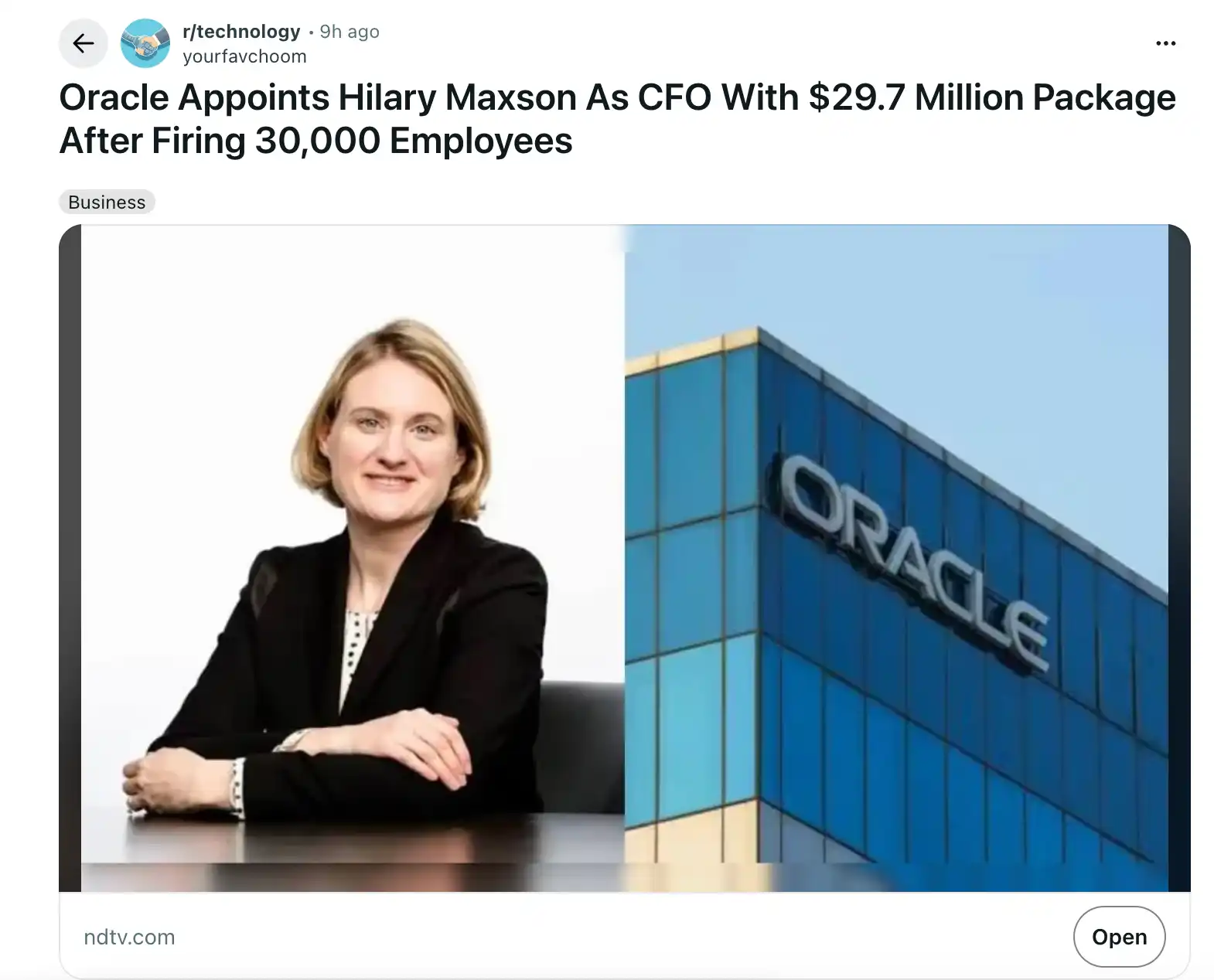
The new CFO is Hilary Maxson.

Before joining Oracle, she was the group CFO at Schneider Electric for nearly a decade. Schneider Electric is one of the world's largest energy management companies, with core businesses in power supply solutions for data centers and grids, generating over $45 billion in annual revenue.

Prior to that, she worked at AES Corporation for 12 years. AES is a longstanding U.S. power company focused on building and managing power plants and grids.

In other words, Oracle spent $29.7 million to hire someone whose entire career has revolved around electricity. She has managed power plants, grids, and companies that supply power to data centers... and now she's been hired as CFO by a company that has sold database software for 47 years?

There's another little-known fact about this choice.

Oracle has not had a dedicated CFO for the past 12 years; finances were managed concurrently by former CEO Safra Catz. According to CNBC, after Catz transitioned to executive vice chairman in late 2025, an interim financial officer temporarily filled the role for half a year.

The fact that the company is now specifically reinstating this position and recruiting from the energy industry is more significant than the salary figure itself.
Bloomberg Intelligence analysts interpret this appointment as a sign that Oracle's growth focus has shifted from databases and software to cloud infrastructure, hence hiring a CFO from an industrial company.

The numbers tell the same story.

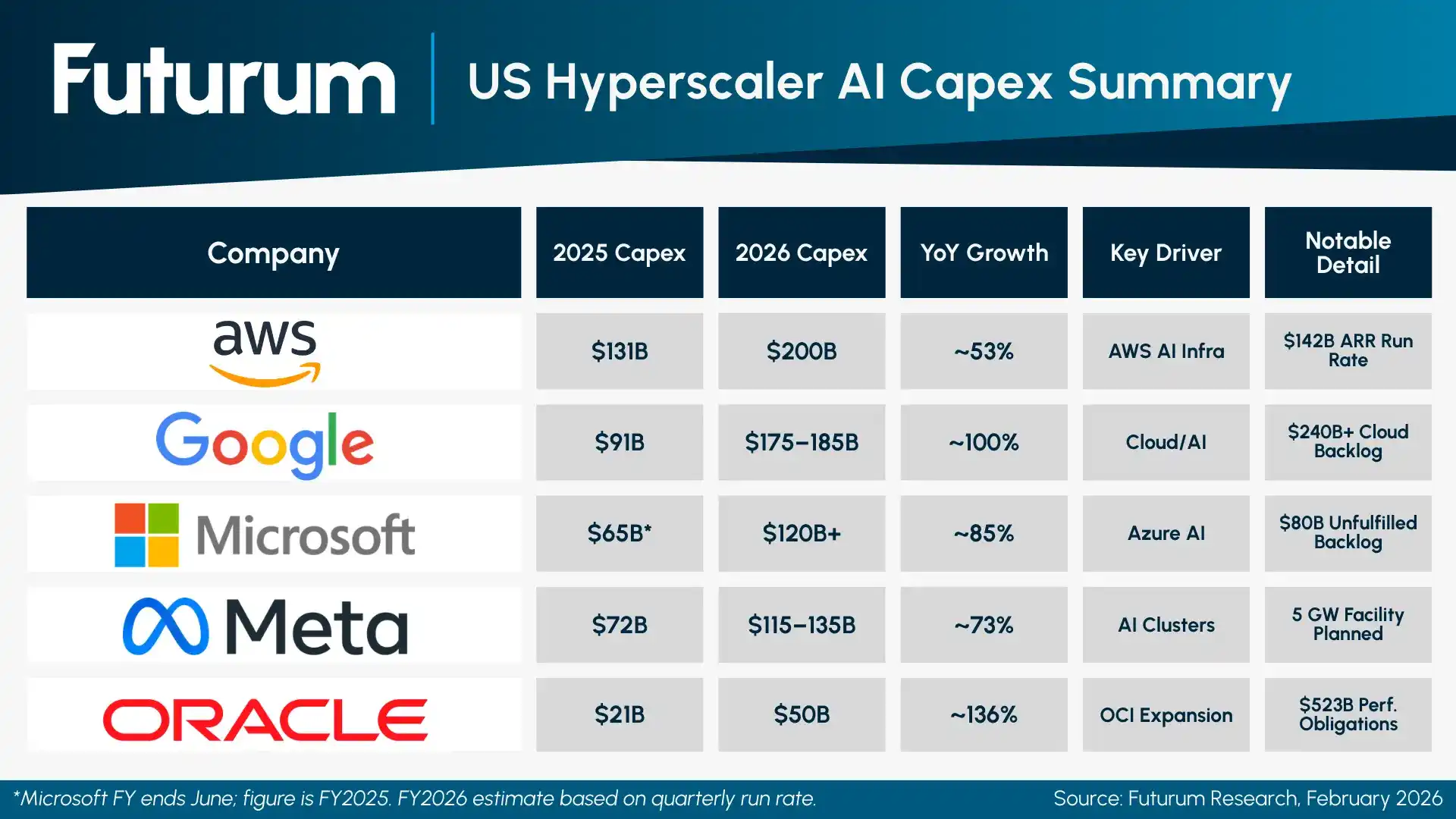
According to Oracle's latest earnings report, the company's cloud infrastructure revenue increased by 84% year-over-year. This year's capital expenditure budget is about $50 billion, almost entirely allocated to AI data center construction, more than double last year's amount. To raise funds, the company plans to secure $50 billion through debt and equity financing. The total value of pending contracts has surged to $553 billion, with one deal with OpenAI alone exceeding $300 billion, according to public information.

A company lays off 30,000 people maintaining old businesses and then entrusts money and authority to someone from the power industry. Reading this move, Oracle's management likely no longer sees itself as purely a software company.

But the capital market isn't buying it yet. Oracle's stock has fallen about 24% this year.

Investors' concerns are specific. Oracle historically made money by selling database software and enterprise applications, with high profit margins where people were the biggest cost. But AI is rewriting the business logic; large models can automatically write SQL and manage databases, gradually eroding the technological barrier Oracle has relied on for 47 years.

Oracle's response is to completely change tracks.

Instead of just selling software, it's turning to building data centers for AI companies. According to public information, Oracle previously signed an infrastructure contract with OpenAI exceeding $300 billion, part of the Stargate data center plan; similar agreements exist with Meta and xAI, pushing the total value of pending contracts to $553 billion.

This year's capital expenditure budget is about $50 billion, almost entirely poured into data center construction.
The two biggest expenses for data centers are chips and electricity. Cooling requires electricity, GPU operations require electricity; the annual electricity bill for a large AI data center can reach hundreds of millions of dollars.

Oracle is now building "gigawatt-scale" data center clusters. What is a gigawatt? Roughly equivalent to the output of a nuclear power plant.

This explains why they're hiring from the power industry.

The new CFO has managed power plants, grids, and companies that supply power to data centers. Oracle no longer needs a financial leader who understands software profit rates, but someone who knows how to spend tens of billions building power infrastructure and ultimately make these investments profitable.

Wall Street analysts are currently optimistic; 27 have given buy ratings, with an average target price of $245, implying about a 70% upside potential. But the gap between a 25% stock drop and analysts predicting a doubling hinges on the same question: whether Oracle can truly transform from a software company into an energy infrastructure company.

At least, they've taken a step in terms of personnel structure. Those leaving are people who wrote code for decades; those entering are people who managed electricity for twenty years.

Sometimes, to understand where a company is heading, you don't need to翻 its strategy PPT. Just see who it hires.

相關問答

QWhy did Oracle hire a CFO from the energy industry, specifically with a background in managing power plants and grids?

AOracle is shifting its focus from traditional software to cloud and AI infrastructure, which requires massive data centers with enormous power demands. The new CFO, Hilary Maxson, has expertise in managing large-scale energy infrastructure and costs, which aligns with Oracle's need to build and operate energy-intensive data centers efficiently.

QWhat is the significance of Oracle's new CFO having worked at companies like Schneider Electric and AES Corporation?

AHer experience at Schneider Electric (managing power supply for data centers and grids) and AES Corporation (building and managing power plants) provides her with critical skills in handling the high energy costs and infrastructure requirements of Oracle's new AI data center projects, which consume power at a scale comparable to nuclear plants.

QHow does Oracle's shift to AI data centers impact its financial strategy and capital expenditure?

AOracle plans to spend approximately $50 billion in capital expenditures, mostly on AI data center construction, doubling last year's budget. This shift requires massive funding through debt and equity financing, reflecting a move from high-margin software to capital-intensive infrastructure investments.

QWhat are the market and investor reactions to Oracle's strategic changes and new CFO appointment?

AOracle's stock has fallen about 24% this year, as investors are concerned about the transition from profitable software to lower-margin infrastructure. However, analysts are optimistic, with 27 giving a 'buy' rating and an average target price of $245, suggesting potential upside if Oracle succeeds in its transformation.

QHow does the appointment of Hilary Maxson reflect Oracle's broader business transformation?

AHiring a CFO from the energy sector, after laying off 30,000 employees mostly from traditional software roles, signals that Oracle is prioritizing infrastructure and energy management over its legacy database business. This aligns with its large contracts with AI companies like OpenAI and Meta, focusing on building power-hungry data centers.

你可能也喜歡

BTC“数字黄金”的叙事是不是失败了?

这篇文章从三个核心问题探讨了比特币的现状与未来,强调提供的是思考框架而非投资建议。 **如何看待比特币资产?** 作者认为比特币是一种全新的、更优秀的“黄金”资产。其优势在于总量恒定、转移便捷、交易可审计。尽管早期与灰色地带关联,但合规化是趋势。目前全球数字货币渗透率仅3%-4%,类比互联网和电商的早期阶段,意味着比特币仍处于发展初期,潜力巨大但波动性也极高。 **如何理解本轮下跌?** 比特币自2025年10月高点(近12.6万美元)持续下跌,2026年2月一度跌破6.1万美元,单日跌幅达15%,随后又快速反弹。这被解读为遵循四年减半周期的共识性获利了结。特别之处在于,美国比特币ETF的批准引入了机构资金,也促使早期低成本持有者(如矿工和信仰者)进行大规模“换手”,这是资产迈向主流化的必经过程。历史数据显示,比特币历次大跌的幅度在收窄(从93%到当前的约50%),表明资产正在成熟,波动率逐步下降,但高波动仍是其获取超额回报的固有特征。 **长期如何看待发展?** 长期价值可对标黄金。当前比特币市值仅为黄金市值的约7%,若“数字黄金”叙事实现一半,上行空间依然显著。但作者提醒,短期市场脆弱,换手可能未完,底部无法预测。真正的风险并非资产归零(概率较低),而在于错误的仓位管理(如All-in或加杠杆)以及对资产缺乏深刻理解。投资者必须计算并承受潜在的最大回撤(例如从已跌50%的位置再跌50%),才能存活至长期价值兑现。 文章最后以亚马逊在互联网泡沫后暴涨为例,指出关键不在于比特币未来是否上涨,而在于投资者能否通过理性的仓位管理和深度认知,扛过剧烈波动存活到那一天。文末提问引导读者反思:当前黄金涨、比特币跌的局面,究竟意味着“数字黄金”叙事失败,还是资产进化过程中的换手阵痛?这取决于每个人对比特币最底层的信仰。

marsbit6 小時前

BTC“数字黄金”的叙事是不是失败了?

marsbit6 小時前

BTC“数字黄金”的叙事是不是失败了?

标题:BTC“数字黄金”的叙事是不是失败了? 作者:@wuk_Bitcoin 本文从三个核心问题出发,探讨比特币的现状与未来。 **如何看待比特币?** 作者认为比特币是一种全新的、更优秀的“黄金”类资产。其优势在于:总量恒定(2100万枚);资产可转移性极强,在全球不确定性时代具备溢价;所有交易链上可审计,透明度高。反驳了比特币主要用于灰色地带的过时观点,指出其正走向合规。目前全球数字货币渗透率仅约3%-4%,类比互联网和电商早期,意味着该资产类别仍处早期,潜力与巨大波动并存。 **如何理解本轮下跌?** 比特币自2025年10月高点(近12.6万美元)持续下跌,2026年2月初曾单日暴跌15%,跌破6.1万美元。这被视为遵循其四年减半周期的规律性回调,是长期持有者在周期高点锁定利润的结果。本轮下跌的特殊性在于:美国比特币ETF的批准引入了大量机构新资金,但也促使成本极低的早期持有者(矿工、OG)进行历史性抛售,即从“早期信仰者”向“长期配置机构”的换手过程。历史数据显示,比特币历次大回撤的跌幅在逐步收窄(从93%到目前的约50%),表明资产在成熟,波动率在下降,但高波动仍是获取超额回报的代价。 **长期怎么看?** 若将比特币视为“数字黄金”,其当前总市值(约1.4万亿美元)仅为黄金总市值(约20万亿美元)的7%。即使该叙事仅部分实现,上行空间依然可观。但作者强调短期风险:换手可能未结束,市场脆弱,不排除进一步下跌。真正的风险不在于资产归零(概率极低),而在于错误的仓位管理(如All-in、加杠杆)和对资产缺乏深度理解,这可能导致投资者无法承受巨大波动而提前被迫出局。 **最后对比** 作者以亚马逊在互联网泡沫破裂后股价跌95%又最终上涨42倍为例,指出关键在于“活着等到那一天”。对于比特币,核心同样是能否通过理性仓位管理活到其价值兑现之时。文末提问:当黄金大涨而比特币大跌,这究竟是“数字黄金”叙事的失败,还是资产进化过程中的阵痛?答案取决于每个人对比特币最底层的信仰。

链捕手6 小時前

BTC“数字黄金”的叙事是不是失败了?

链捕手6 小時前

从代码到认知:机器人大脑进化的万字指南

本文概述了机器人大脑从传统代码控制到现代人工智能模型驱动的演进历程。文章首先回顾了前大型语言模型(LLM)时代,机器人依赖手工编码的模块化技术栈(感知、状态估计、规划、控制)和行为树,虽稳定但泛化能力差。随后,深度学习改进了感知,强化学习和模仿学习进入了控制层,但策略仍较为狭窄。 ChatGPT的出现带来了转折。LLM最初被用作自然语言编译器,将指令转化为机器人可执行的原子技能序列(如谷歌的SayCan)。但更重要的突破是视觉-语言-动作模型(VLA),例如谷歌的RT-2和开源的OpenVLA,它能将视觉、语言信息融合,直接输出动作指令,实现了推理与行动的耦合。 目前最先进的系统采用“双脑”架构(如Figure AI的Helix、NVIDIA GR00T):一个慢速、参数多的“系统2”负责高层次推理和规划;一个快速、小巧的“系统1”负责高频动作生成。其下还可能有一个“系统0”反射层处理平衡等底层控制。出于延迟和可靠性考虑,安全关键的控制回路通常在机器人本地(如NVIDIA Jetson模块)运行,而对话界面和集群学习等任务可交由云端。 开源模型(如OpenVLA、GR00T、π0)降低了行业门槛,让初创公司能在其基础上用自有数据微调。然而,当前VLA机器人仍存在任务中途恢复能力弱、样本效率低、缺乏物理常识和长期规划能力等局限。 这催生了下一代方向:世界模型。这类模型(如NVIDIA Cosmos、Meta V-JEPA)能根据当前状态和动作预测未来结果,让机器人在行动前进行模拟和评估,从而改善恢复能力、泛化能力和长期规划。架构上主要分为像素级视频扩散、联合嵌入预测架构(JEPA)和潜在动作世界模型等流派。 文章最后指出,数据采集(特别是远程操作数据)是核心竞争力,仿真训练至关重要,机器人成本正在迅速下降。当前物理AI的发展阶段大约相当于“GPT-2时代”,虽未完全自主,但正通过架构的持续演进(从代码到感知、规划、策略,最终到世界模型),朝着更通用、更强大的方向稳步前进。

marsbit7 小時前

从代码到认知:机器人大脑进化的万字指南

marsbit7 小時前

交易

現貨
合約
活动图片




