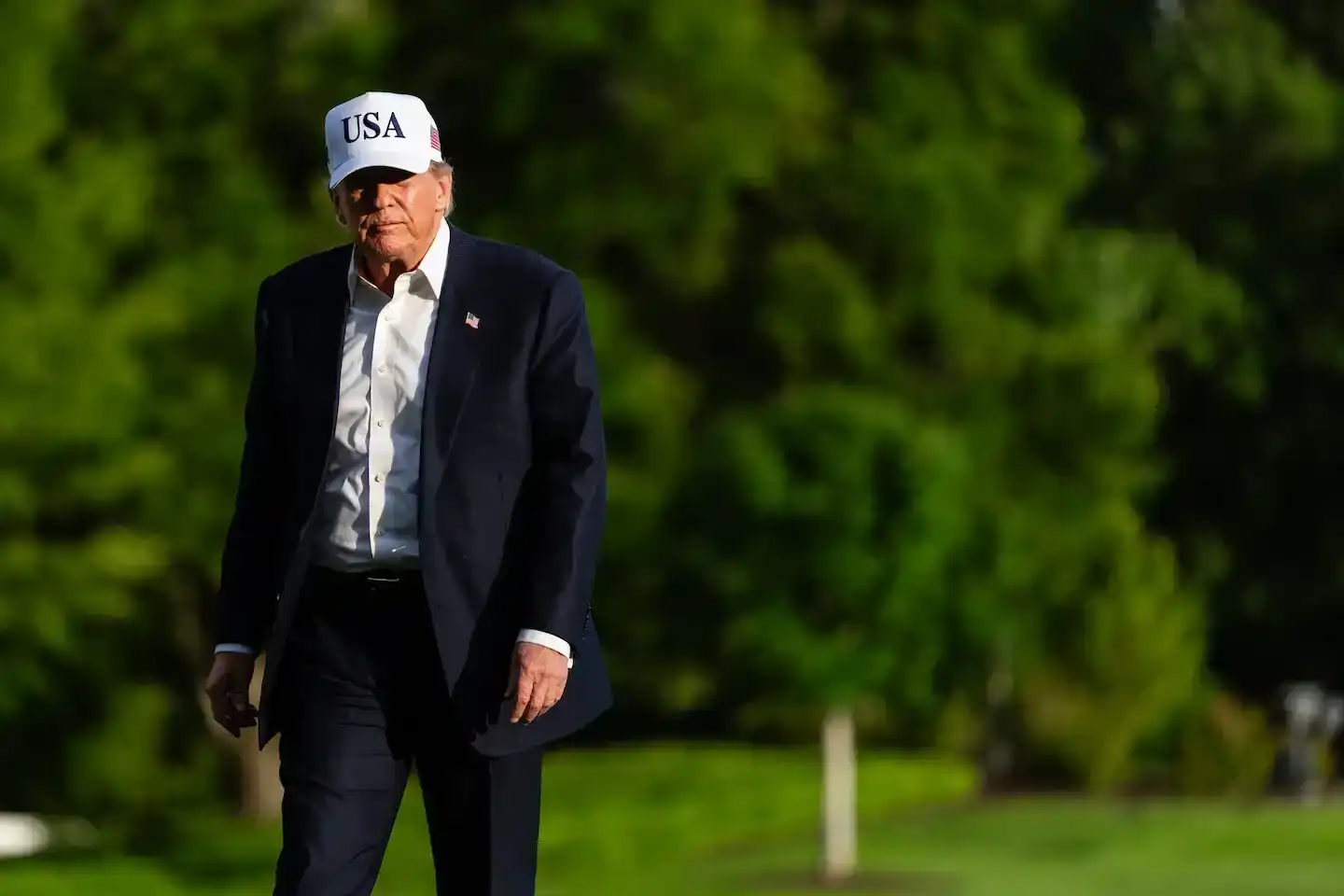
The Senate confirmed Kevin Warsh as the 17th Chair of the Federal Reserve today by a vote of 54-45, the closest vote in the institution's history.
That's the surface. The real story is what almost no one is reading. To see it, you must stop judging the vote by left-right scorecards and ask a different question: Who chose Warsh, what did they buy when they chose him, and what does it mean for markets over the next two years?
Why Warsh?
I want to start somewhere unusual because framing matters.
I've been working on a framework for the past few years called the Universal Code. Its First Law is simple: The universe is organized to maximize intelligent output per unit of energy expended. Life yields more intelligence than mere chemistry, civilization yields more intelligence than biology. AI yields more intelligence than civilization built around human cognition. Because this is the gradient the universe selects for, capital will follow it. Capital will flow to whichever configuration yields the most intelligence per unit of energy at any given moment.
That's the Universal Code's First Law. It applies in biology, civilization, markets, and AI training runs. On the trajectory the world is actually on, the configuration winning this gradient right now is the AI cycle stacked atop an accelerating semiconductor cycle, stacked atop accelerating energy buildout, all of it compounding within exponential phases.
Capital is being pulled toward this configuration by a force conventional macro models cannot explain because the First Law isn't in conventional models. So everything else follows. Political coalitions are reorganizing around who provides access to the underlying substrate. Geopolitical alignments are reshaping around who controls the chips, the energy, and the dollar plumbing that funds it all.
This week's Beijing summit, the compute build-out in the Gulf, the semiconductor reshoring in the West, the coalition of funders reshaping Washington politics—these are not separate stories.
They are expressions of the same gradient at different scales. Nations and coalitions that align with the gradient compound; those that fight it decay.
If you accept this frame, then the most important variable in the macro environment for the next decade is whether monetary policy obstructs or accommodates this routing. A Fed that fights the AI build with restrictive rates will choke the substrate transition the global economy now depends on. A Fed that accommodates it lets the productivity wave do its work.
Kevin Warsh is the candidate for Fed Chair with the deepest personal insight into this routing. For most of the past decade, he hasn't been a central banker. He's been a board member and tech investor. He served as a director. As a private investor, he allocated capital into the AI infrastructure stack.
He observed from inside the room where this build was being constructed, not from an FOMC briefing book. When he says he believes the productivity boom will carry the U.S. through the 21st century, he's not making an optimistic forecast. He's stating an investor's conviction based on what he has seen with his own eyes and invested in with his own capital.
That's the part the press coverage has missed. He is not a hawk who switched sides because Trump offered a job. He's an investor who has been long the productivity miracle for years and now controls the institution that decides whether that miracle compounds or gets choked by tight money.
The other major candidates Trump considered didn't have this background. One was an academic economist, another a community banker. Kevin Warsh is the only one of the three who actually deployed capital into the substrate of the next decade.
That makes him the First Law candidate. He is the operator whose public conviction and personal portfolio point toward keeping the channel for intelligence compounding open at its fastest rate.
What Warsh Has Been Saying
Over the past twelve months, Warsh has laid out an unusually specific monetary policy agenda on the public record. He explicitly called for what he termed a 'regime change' at the Fed. He explicitly called for a new Treasury-Fed Accord modeled on the 1951 Accord.
He proposed reforms to the inflation data the Fed uses. He proposed removing forward guidance from communications. He proposed encouraging more internal dissent on rate decisions. He proposed shrinking the Fed's balance sheet and coordinating that posture with Treasury debt management.
Read in isolation, these sound like the technical preferences of a thoughtful ex-Fed governor. Read together, they describe an operating model that merges two different historical contexts. One is the financial repression playbook of 1946-1955. The other is the productivity-led playbook of Greenspan in the late 1990s. The combination of the two is precisely what is needed now.
Greenspan's Playbook Is the Real Template
The 1951 framework is rhetorical cover. Greenspan's late-1990s playbook is the operational template.
Here is what Greenspan did in 1996-2000. The economy ran hot. Unemployment was below what conventional models called the natural rate. The headline CPI rose at times during the period, driven by oil and food price swings. But the important datapoint was that core inflation, excluding food and energy, did not accelerate as the Phillips curve predicted. Greenspan looked at the productivity data and concluded something structural was happening.
The IT investment cycle was driving productivity gains, suppressing unit labor costs without requiring labor market slack. Even as headline CPI gyrated, core CPI remained anchored. He concluded he could ignore the noisy headline data because the underlying core was being suppressed by productivity.
Conventional dogma said to hike rates aggressively to prevent coming inflation. Greenspan refused. He kept rates low. He let asset prices run. He let the expansion compound for four years longer than the conventional reaction function would have allowed. His coordinated relationship with then-Treasury Secretary Rubin and later Summers was called the 'Committee to Save the World.'
The Fed and Treasury effectively ran a strategy as a single institution. Greenspan's final hikes in 1999-2000 are now widely understood to have been a policy error; productivity could have absorbed more inflation.
What Bessent and Trump want is a 2026-2030 version of this operation. AI is the equivalent of the IT cycle but orders of magnitude larger. AI capex is running multiples of late-1990s tech capex. If the productivity wave is real, then the Fed can run a looser policy than conventional models suggest because productivity will suppress unit labor costs even as the economy runs hot. Cut a bit, don't do anything dramatic. Let the productivity absorb the slack. Let the economy transformation do the disinflationary work that rate hikes couldn't accomplish anyway.
This is why Warsh is essential. He is the candidate who genuinely believes the productivity miracle is real because he's been investing in it. He has the institutional credibility from his 2006-2011 GFC tenure to hold the line when media and the old Fed network demand he hike into the latest CPI print.
He has the rhetorical cover (the 1951 framework) to install the coordination architecture without seeming captured. And he has the personal conviction to 'do nothing' repeatedly in the face of inflation data that would force a less convinced operator to react.
The Greenspan playbook only works if the operator running it genuinely believes the productivity miracle is real. That's the test. Powell wasn't convinced deeply enough. Yellen might read it from the data but wouldn't have Warsh's investor conviction. Warsh is the only available candidate who has personally bet on it.
Why This Has to Happen
The U.S. federal debt is around $36 trillion. At current maturity profiles, roughly $9-$10 trillion rolls each year. The Fed has been hiking while running quantitative tightening, which means it's shrinking its own balance sheet while Treasury is issuing record debt to fund the deficit. The marginal buyer of long-dated Treasuries must be the private sector, much of it foreign.
That works in a world where foreign buyers are structurally over-allocated to dollars. It doesn't in our world, where China has been a net seller for years, Japan is managing its own currency weakness through a position it cannot expand meaningfully, and so on. Long-term yields drift upward. The term premium expands. The cost of refinancing debt rises faster than economic growth. It gets harder each year.
You can fix this two ways. You can implement fiscal austerity, which is politically impossible at the required scale. Or you can implement financial repression. There is no third option that is honest with the numbers.
The architecture being built is the financial repression option, wrapped in modern institutional language and merged with a Greenspan-esque productivity bet to make it socially survivable. Treasury issues short-term bills at the front end of the curve, where demand is structurally inelastic. Banks rebuild balance sheets under the new regulatory framework to absorb duration at the back end. The Fed runs a posture that does not fight this architecture with aggressive hikes. Stablecoin issuers absorb hundreds of billions in short-term bills as part of their reserve composition. The dollar depreciates enough to pull in foreign duration buyers.
To make this work, you need a Fed Chair who understands the setup correctly and doesn't fight it. It's not a coincidence Warsh has spent the past twelve months publicly describing the precise policy posture this architecture demands.
Bessent's International Operation
The other key operator in this architecture is Treasury's Bessent. Most coverage treats Bessent as a domestic figure with a fiscal portfolio. That's wrong. Bessent's most important work is at the international level.
The architecture needs foreign buyers to absorb a meaningful share of the long-dated Treasury issuance to make the rollover math clear at acceptable real yields. Foreign buyers only step in if three things are true. The dollar must be depreciating, not appreciating, or they take FX losses. They must have a strategic reason to hold Treasuries beyond just yield, because yield alone won't offset the FX risk. They need an institutional channel through which to recycle their dollar surplus back into U.S. Treasuries.
Bessent is running all three simultaneously. Yesterday's Beijing summit is the most visible part. The architecture being negotiated with China is not primarily a trade deal. It's a managed framework where China gets explicit access to U.S. substrate (chips, capital equipment, AI infrastructure) under specific licensing arrangements, in exchange for not dumping its dollar reserves, continuing to recycle its trade surplus into Treasuries through an intermediary chain, and accepting substrate access tariffs (the Nvidia 25% fee model is the verified example).
This isn't a free trade arrangement. It's an industrial agreement of the financial repression era wrapped in trade language.
Parallel models are being run with Japan and South Korea (the cleanest channels for recycling North Asian surpluses into U.S. Treasuries), with the UAE (being built as the new intermediary pole via Fed swap line extension), with Hong Kong (the traditional gateway to China, retained for continuity), with Singapore (the remaining pan-Asian clearing center). The architecture is multipolar by design, not bilateral. Bilateral arrangements have a single point of failure; multipolar arrangements have redundancy. Bessent is wiring redundant foreign duration buyers into the rollover architecture.
This is where Warsh and Bessent coordinate, and why the Treasury-Fed Accord Warsh keeps citing matters in substance. Bessent ensures foreign duration buyers via bilateral deals and FX management. Warsh ensures Fed policy doesn't break the buyers by being too restrictive.
If the Fed runs tight monetary policy, U.S. real yields rise, foreign holders take heavier currency losses, which makes foreign duration buying harder to clear. If the Fed runs easy monetary policy, U.S. real yields decline, the dollar depreciates, and foreign buyers can absorb Treasury issuance on acceptable terms. The Accord is the institutional paper that lets the Fed run the second posture rather than the first.
The 'Committee to Save the World' ran this coordination twenty-five years ago with Greenspan and Rubin. The LTCM rescue, the Asian crisis response, and the late-1990s productivity boom all sat within the same coordinated framework. Warsh and Bessent are the 2026 version of the Committee. The difference is the 2026 version faces a more contested international financial architecture than Greenspan and Rubin ever did.
The Funders' Coalition
Beneath the visible political layer is the coalition of principals that has been scale-determinative since 2024. Crypto founders. AI infrastructure operators. Energy capital allocators. These are the people funding the political operation to deliver this architecture. They aren't buying ideology. They are buying execution. They want stablecoin regulatory clarity, AI capex policy stability, energy permitting acceleration, and a monetary policy environment that doesn't choke the AI build with restrictive rates.
The Trump administration is the operator. Treasury's Bessent is the architect of the international leg. The Fed's Warsh is the institutional anchor domestically. The Republican Senate majority is the formal delivery mechanism. The funders' coalition is the deeper substrate underneath it all.
When you read Warsh's election through this frame, it stops looking like partisan theater and starts looking like a contract being executed. The funders' coalition wanted the Fed Chair seat. They got the Fed Chair seat. The vote tally is the formal document of delivery.
What This Means for Markets
If you accept this frame, then a few things follow.
Warsh's first FOMC meeting is June 16-17. He cannot cut rates with headline CPI above 4% and energy prices high without destroying his credibility instantly. So the meeting won't deliver a cut. What it will deliver is signaling, and that signaling will be more specific than the media expects. Warsh will begin shifting the institutional focus away from headline CPI toward core, describing the energy price spike driven by the U.S.-Iran war as transitory.
He will signal more room around the 2% target than markets are currently pricing, treating it as a long-term average rather than a hard monthly ceiling every print must obey. He will soften forward guidance, using a more discretionary reaction language.
He will almost certainly initiate a formal monetary policy framework review with a 2027 completion target. None of these are rate cuts. But all of them are institutional rewiring that lets cuts come later without being read by the bond market as political surrender.
By end-2026, the framework review will be public. By mid-2027, a visible Treasury-Fed Accord will be announced or formally negotiated. By end-2027, the Fed funds rate will be 250 to 325 basis points lower than current levels. The Fed will be visibly ignoring services inflation prints in the 3-4% range while nominal GDP runs at 5-6%.
Gold continues to rise because financial repression is the moment gold prices. The dollar depreciates enough to clear the foreign duration buying. Cryptocurrencies compound because the substrate transition runs independent of monetary policy, and the institutional guarantor of that architecture just got more solid at the Fed Chair seat. AI capex names compound because cost of capital is no longer a tail risk.
There is one variable that breaks the whole setup. It isn't Warsh's policy preferences. It's the bond market itself.
If long-dated Treasury yields sustain above 5.5%, or if the term premium sustains above 1.5%, or if the 10-year real yield sustains above 2.75%, then the architecture fails from the outside inward regardless of what Warsh does at the Fed. The bond market is the constraint. Warsh's appointment removes one institutional risk. It does not remove that one.
This is why the next six months matter so much. They are when the bond market either gives the new Fed Chair room to install the architecture, or it doesn't. If it gives room, the cycle extends at least into 2027, potentially into 2028. Risk assets compound. Crypto and AI capex names are the biggest beneficiaries. If the bond market revolts on hot inflation data over the next six months, the architecture risks failing before it ever becomes operational.
What to Remember
First, Warsh is not what the press suggests. He is not Trump's puppet. He is the structurally correct operator for what they are actually trying to do, which is to run Greenspan's late-1990s strategy overlaid on a 1946-1955 financial repression architecture, with AI substituting for the IT cycle as the productivity engine.
His tech investor background is the key credential, not his 2006-2011 Fed governor record. He's been long this miracle for years.
Second, Bessent's international architecture is the other half of the operation. The Treasury-Fed Accord Warsh keeps citing is the institutional paper.
The actual substance is Bessent ensuring foreign duration buyers via bilateral deals with China, Japan, South Korea, the Gulf, and a wider multipolar intermediary network, while Warsh runs Fed policy consistent with Treasury financing needs. Two operators are required, not one. This week's China deal and today's Warsh confirmation are two pieces of the same architecture, not two separate stories.
Third, the real test isn't Warsh's first FOMC; it's the behavior of the bond market over the next two quarters. Watch the 10-year yield, the term premium, and the real yield. Those are the variables that decide whether the architecture executes or breaks.
Markets are still pricing a conventional inflation fight. This frame views the conventional fight as structurally unlikely because the productivity wave will do the disinflationary work the Fed cannot, and foreign duration buyers will clear the rollover the bond market alone cannot.
The gap between those two pricings is the asymmetry. That asymmetry is where the returns will be over the next two years.