Editor's Note: This article is an eight-year retrospective from an early generative AI entrepreneur. In 2018, before GPT emerged, he founded Rosebud AI, aiming to "make creation as easy as playing a game," and successively launched multiple AI creative tools, including TokkingHeads. At a time when model capabilities were still immature, these products amplified the "good enough but usable" experience through process and interaction design, achieving early user growth and product validation.
This journey almost covers the complete evolution cycle of generative AI from "synthetic media" to a general-purpose infrastructure: from experimental explorations with CycleGAN and StyleGAN to GPT-4 pushing the boundaries of code generation and interactive creation. Technological progress continuously rewrites product logic and entrepreneurial pace. The author's path also reflects a clearer structural shift—when models become variables, the real watershed is no longer just the technology itself, but how to build products, distribution, and commercialization around it.
After stepping down as CEO and joining a16z, the author will shift focus to investing in frontier model stacks and related infrastructure. But more important than the individual path is that these eight years of experience point to an emerging trend: the first phase of generative AI (proving what it can do) is ending, and the next, longer cycle of competition will revolve around how capabilities are organized, productized, and ultimately integrated into the real world.
The original text follows:
I have joined a16z as a partner, focusing on investments in infrastructure and AI. At the same time, after eight years at the helm of Rosebud AI, I will be stepping down as CEO.
Below are some reflections on these eight years. I have immense respect for those still building on the front lines. A single model release can obliterate your product roadmap or accelerate it by years. The forms of design, product, and engineering have changed compared to three months ago, let alone eight years ago. The pace of technological advancement makes this era the most exciting time for entrepreneurship, yet also the most challenging.
At a16z, I will focus on the frontier model stack: including the models themselves, as well as the infrastructure and development tools built around them. I am excited by the rapid evolution of model capabilities—more and more progress is being driven by AI itself. I am also optimistic about the breakthroughs AI will bring in mathematics and science. Additionally, having spent the past eight years building AI creative tools, I retain a particular interest in this direction.
Prior to this, I have also participated in some seed-round investments as an angel investor, including @fal, @periodiclabs, @SakanaAILabs, and @ExaAILabs. Moving forward, I look forward to dedicating all my energy to supporting the founders building this technology stack.
2018: Betting on Generative AI Before GPT

Eight years is a very long time for a startup in the generative AI space.
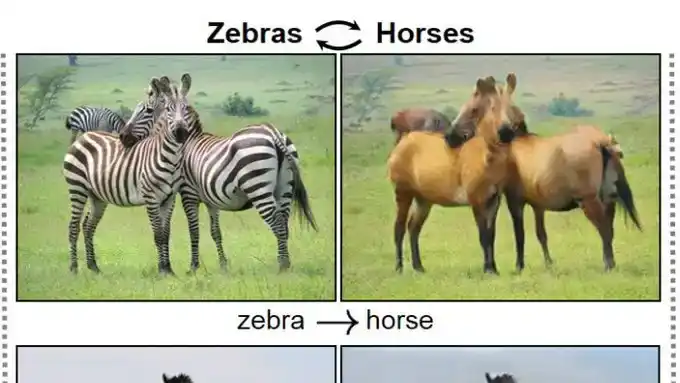
I started in late 2018, almost an "ancient era," when the field was still called "synthetic media." I was tinkering with CycleGAN and StyleGAN, whose generated content was both bizarre and fascinating, convincing me that one day, creation would be as light and free as playing in a game's build mode (the name "rosebud" itself comes from The Sims).
Creation, at its best, should be a form of play. The earliest glimmers of generative AI made me believe that this "play-like creation experience" could expand to more forms of creation. I began to imagine how generative AI would reshape video games (like that CycleGAN video I trained on footage from "Myst" in 2018).
Eight years later, we can now generate videos, games, and even music with a single prompt. That once-imagined future has finally arrived—and this is just the beginning.
Looking back, the reason I formed such a strong conviction so early might be that my life has always been at the intersection of technology and art: a background in mathematics and deep learning PhD on one side, and a passion for dance and music on the other. Generative AI entrepreneurship requires both: the technical background allowed me to see what was coming, and the artistic inclination made me eager to build it.
The entrepreneurial journey is always longer and harder than imagined. Finding something you almost irrationally believe in maximizes your chances of persevering.
2018—2023: Winning Users Over with "Good Enough"
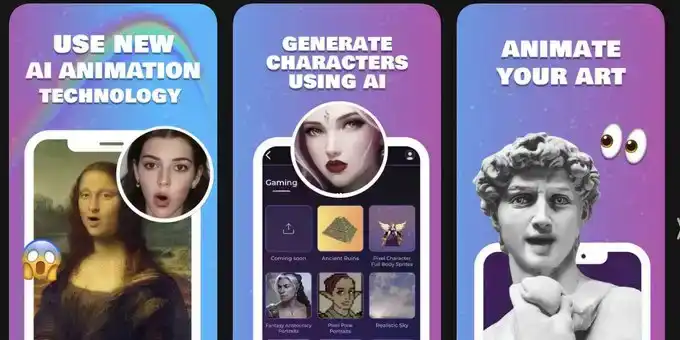
Screenshot of the third iOS app, Tokkingheads. The core of early generative AI was designing simple processes and actively embracing the product's roughness.
Along the way, we released numerous products to hone our intuition for cutting-edge model capabilities and learn to package them into magical experience that masked early flaws. The lesson from that stage: when model output is far from perfect, you can design consumer experiences that allow users to iterate and get feedback quickly. Users are discerning but not fragile—winning them over with "good enough" is sufficient.
By the third mobile app, we had accumulated enough insight for Tokkingheads to achieve viral organic growth, surpassing 2 million users in weeks. The next key lesson followed: as a founder, you must be clear about what product form keeps you motivated long-term. Tokkingheads could have gone the route of a viral smash hit, but I wasn't sure if that was the right soil to develop this creative magic into a more complete product—and that more complete product was what I truly wanted.
So we kept iterating. We worked on AI-generated stock photos, AI art for NFTs (yes... I naively thought artwork quality was key, only to find the real skill was hype and speculation), and AI game asset generation tools. Each product taught me something specific: what users are willing to pay for, and how fast models are improving. Sandwiched between these projects were a global pandemic and the Silicon Valley Bank and First Republic Bank runs—reminders to be grateful. The ability to keep building is itself a privilege.
2023: Code Generation Matures
Code generation finally became good enough, and the timing was ripe to build game tools for non-technical creators. After the release of GPT-4, that future became tangible. In March 2023, I shared a memo with the team and pieced together the initial version of Rosebud's text-to-game feature using the prototype below.
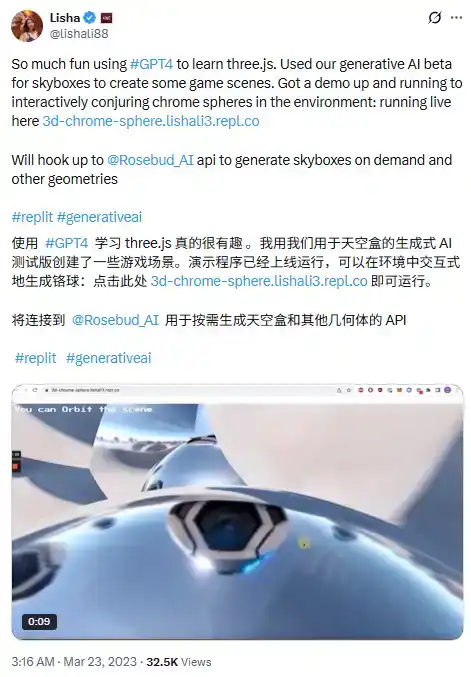
Screenshot of a tweet from March 23, 2023. I used GPT-4 to learn Three.js, combined with Rosebud's generative AI to generate a skybox, demonstrating an early prototype of summoning 3D scenes with text.
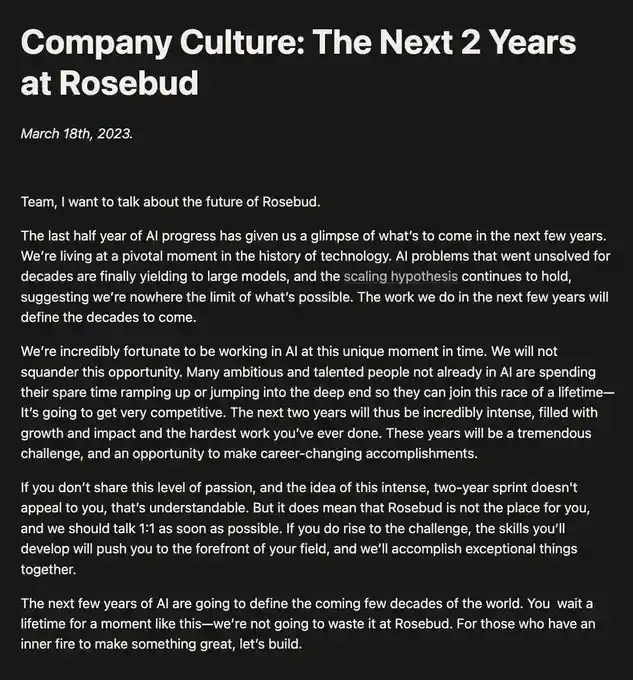
Internal memo from the author to the team in early 2023, documenting product judgments after the breakthrough in code generation capabilities. The core judgment of this internal letter was: AI is at a critical window that will define the next few decades, and the next two years will be a phase of highly intense competition—fast-paced, high-stakes, with clear elimination. The company would go all-in on this "sprint," suitable only for those with strong internal drive, willing to endure high pressure and make long-term commitments—because this is not just a job, but a historic opportunity that could change one's career trajectory.
2026 and Beyond: What Can You Build That Labs Won't?
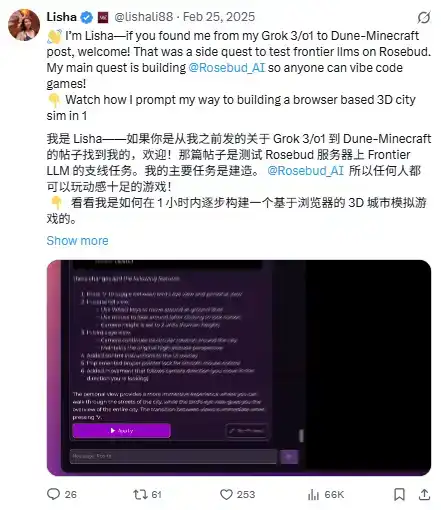
Figure: Demo video—the author builds a 3D city simulation game in the browser via prompts.
Making games requires mobilizing both creative intuition and technical ability. Generative AI is key to turning game creation itself into a form of play—any model progress in images, video, world models, or code is immediately absorbed and transformed. The business model of games is also most likely to remain outside the purview of frontier labs: the core monetization path is still player payments, and building a distribution system on the player side seems like an overly indirect side quest for labs sprinting full speed towards AGI. For founders, choosing what to build is always an ongoing game of finding space outside the lab's critical path.
Rosebud is thriving. We have organically accumulated a large, highly active community of creators. I will miss the casual chats with creators on Discord and the daily user support emails (a user willing to complain truly cares about your product). The next phase focuses on scaling distribution to the player side, making now a good time to hand the baton to the teammates who have been fighting alongside me.
Congratulations to @glazworks on becoming the new CEO of Rosebud! He possesses the rare combination of machine learning talent and product aesthetic.
Martin Casado and the a16z team have been with Rosebud throughout its growth. Martin and I had a key conversation about whether JavaScript was the right tech stack for Rosebud games—Unity or Roblox might be hotter, but JavaScript's code generation was improving much faster due to higher accessibility of training data. This team pursues the truth and is willing to bet on wagers that bring more builders. This is the path to the ideal future: we must build, we must innovate.
I look forward to working with you all from the other side of the table. DMs are always open.