Alex Thorn, Head of Research at Galaxy Digital, expressed a marked shift in his outlook regarding potential United States government purchases of Bitcoin in 2025. Writing on Sunday via X, Thorn underscored what he described as an evolving picture, stating, “It does seem increasingly likely that the USA is making progress on the logistics and mechanics of the strategic reserve. We had predicted in dec 2024 that in 2025 the US would formally hodl BTC but not purchase, but we now see the odds increasing that US govt will make at least one purchase in 2025.”
Thorn pointed to recent comments from the Trump administration as the reason for the change: “See Bessent’s comment to tucker carlson, drumbeat from sacks and hines,” as well as the upcoming deadline for the BTC audit: “Keep in mind monday is deadline from SBR EO for govt agencies to complete audit of their bitcoin / digital assets holdings. Not clear they will release anything publicly on this but likely progress being made.”
US Bitcoin Purchase In 2025?
Thorn’s reference to “Bessent’s comment” alludes to remarks made by US Treasury Secretary Scott Bessent in a recent interview with Tucker Carlson. When Carlson asked why gold is being shipped around the world right now, Bessent, after a brief reply about gold, abruptly pivoted to Bitcoin.
Steven Lubka, head of private wealth at Swan, recounted via X, “Bessent was asked ‘Why is Gold moving around the world right now?’ And after giving a one line answer, he immediately of his own accord started saying ‘there are a lot of different stores of value over time. Bitcoin is becoming a store of value. Gold has been a store of value over time.’ This is quite the signpost for those with eyes to see.”
These comments arrive on the heels of the executive order signed by President Trump on March 6, formally establishing the US Strategic Bitcoin Reserve (SBR). The order repurposes any BTC the government obtains through forfeitures and seizures, placing it under direct federal control as part of a long-term strategic asset.
Under the same directive, the Treasury and Commerce Departments are tasked with formulating strategies for acquiring additional Bitcoin “provided the methods remain budget neutral and do not impose incremental costs on United States taxpayers.”
According to Robert “Bo” Hines, Executive Director of the Presidential Council of Advisers for Digital Assets, one possibility under examination is using gold certificates, which the Federal Reserve Bank of St. Louis values at a statutory price of $42.22 per troy ounce—significantly lower than the spot price of over $3,000 per ounce.
Speaking at the Digital Assets Summit on March 18, Hines reiterated the Trump administration’s commitment to Bitcoin and offered further insight into how much BTC the government may ultimately seek to secure, invoking an analogy to gold reserves. “I’ve been asked all the time, it’s like, how much do you want? I said, well, that’s like asking a country, how much gold do you want? Right. I mean, as much as we can get.”
Hines’s remarks were echoed by David Sacks—also known as the “Crypto Czar”—who has publicly championed greater government involvement in digital assets.
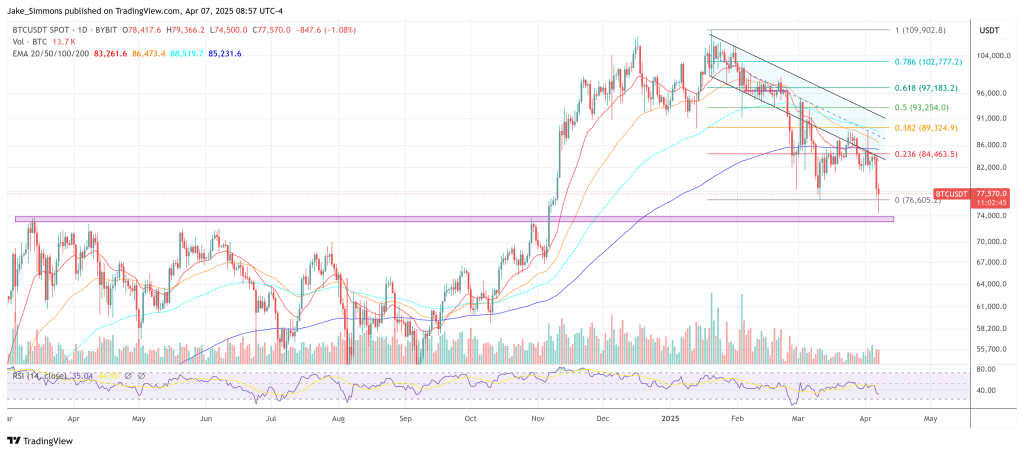
At press time, BTC traded at $77,570.

Related Posts