The correlation between Bitcoin (BTC) and gold, as well as the traditional market continues to be a burning issue.
According to IntoTheBlock, a shift is being witnessed because the connection between BTC and the traditional market continues to decline.
The market insight provider stated, “Bitcoin Correlation Shift: A month ago, BTC demonstrated an inverse correlation with the stock market and a minor positive link with Gold. Fast forward to today, it’s intriguing to see BTC showing no connection with traditional markets & a negative correlation with gold.”
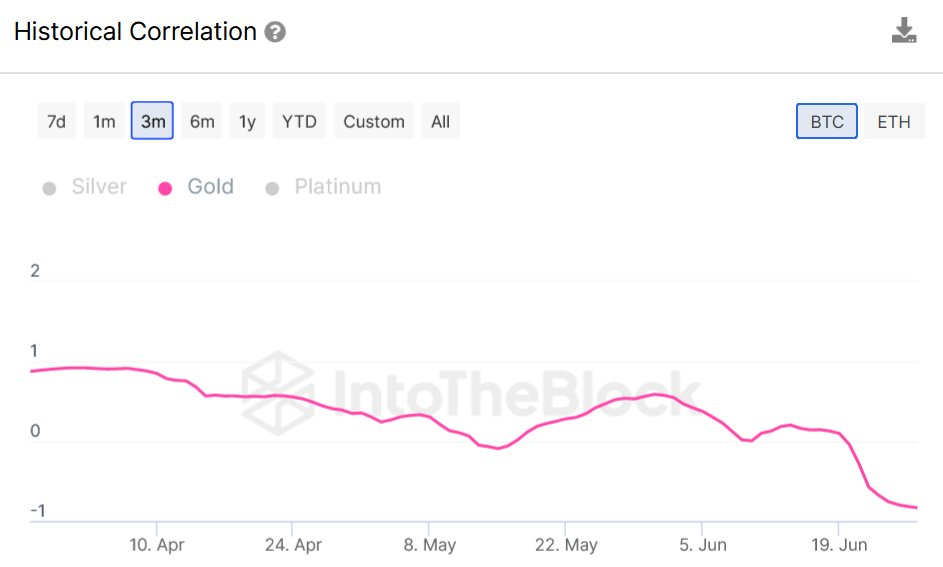
Source:IntoTheBlock
Glassnode, a leading on-chain metrics provider, shared similar sentiments and acknowledged that Bitcoin’s price action was decoupling from both gold and silver. This was because its 30-day correlation with gold stood at lows of -0.78, whereas that of silver hit -0.9.
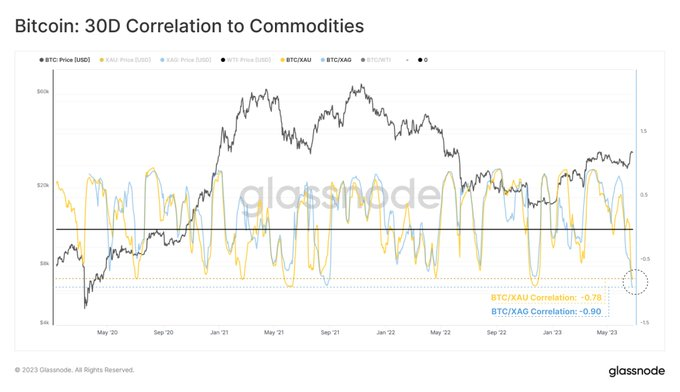
Source: Glassnode
What Does the Declining Correlation Mean?
The decoupling of BTC from the stock and traditional market, as well as its negative connection with gold is a welcome move because the leading cryptocurrency is showcasing itself as a different asset class. This might be the case as more big players continue penetrating the Bitcoin market.
Notably, correlation illustrates the tendency of two items to move in a similar or opposite direction after a given period of time.
The comparison between gold and BTC has gained steam over the years, especially when it comes to the issue of being a hedge against inflation or store of value. Bitcoin’s status as an alternative to gold continues to be tested based on its decentralized nature and finite supply.
Previously, Bitcoin showed a strong correlation with the stock market. This was because whenever the stock market experienced a sharp sell-off, BTC followed suit, especially during periods of economic uncertainty, as showcased during the peak of the pandemic in 2020.
Meanwhile, a research report by Bernstein acknowledged that BTC was a ‘faster horse’ than gold. This was after the top cryptocurrency breached the psychological price of $30K for the first time in April since June 2022.