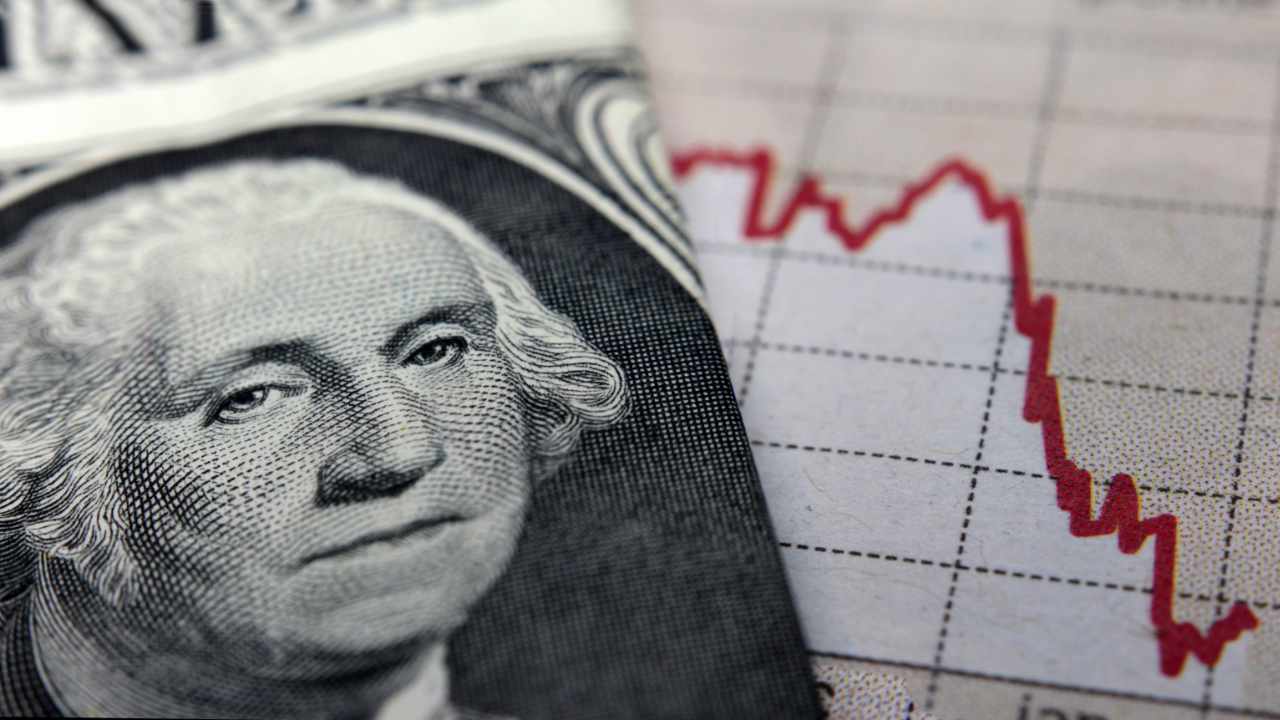
Economist Peter Schiff expects a lot more banks to fail, warning that “nobody’s money is safe in any bank.” He stressed: “When the Fed sets interest rates too low and prints a lot of money … it unleashes massive inflation, creates tremendous economic imbalances that result in financial crises and depressions when the bubbles burst.”
Peter Schiff on Inflation Tsunami, Financial Crises, Depressions, and Bank Failures
Economist and gold bug Peter Schiff discussed the U.S. banking crisis and where the U.S. economy is headed in an interview last week on One America News Network.
Citing “the mess that the Fed made by keeping interest rates so low for so long,” Schiff explained that it enabled banks to load up on “low yielding, overpriced long-term debt, treasuries, [and] mortgages.” Moreover, he stressed that the government and regulators push banks “into these securities with favorable accounting treatment for government securities or anything guaranteed by the U.S. government.” He warned:
A lot more banks are going to fail. This is just the reality.
Commenting on the Federal Deposit Insurance Corporation (FDIC) contemplating how they might tweak the coverage for regional banks after several major banks failed, Schiff suggested: “How about abolishing the FDIC and let the free market handle banking. We’d have a much more solid bank system if depositors knew that their deposits could be lost at a bank that was reckless and took a lot of risks, and then those banks would be under competitive pressure not to take those kinds of risks.”
Noting that the source of the U.S. banking crisis is that “We socialized the banking industry,” Schiff detailed: “We’ve also socialized interest rates because the Federal Reserve is like a Polit Bureau. They just pick an interest rate rather than allowing the market to discover the appropriate rate.” The economist opined:
When the Fed sets interest rates too low and prints a lot of money in order to make that possible, it unleashes massive inflation, creates tremendous economic imbalances that result in financial crises and depressions when the bubbles burst. That’s where we are right now.
Schiff added: “I think the Fed is going to have to unleash so much inflation to try to prop up all these banks, and the U.S. government, which is also insolvent. That is going to unleash runaway inflation. That is the real problem.” He cautioned:
Nobody’s money is safe in any bank, because even if your bank doesn’t fail, it’s going to be bailed out through inflation. So, you might not lose your money, but your money will definitely lose its purchasing power.
Regarding the Federal Reserve raising interest rates by 25 basis points at their latest Federal Open Market Committee (FOMC) meeting, Schiff stated that it is not enough to bring down inflation but “it is enough to create more problems for the banks and anybody else that has debt that they have to service.”
He explained that a lot of companies and people, particularly those who own commercial real estate, took out short-term loans at very low rates a few years ago. As those loans mature, they cannot afford higher payments. “They have less revenue, and now their interest expenses are rising,” Schiff described. In addition, many companies that borrowed in the junk bond market are not going to be able to afford to service their debt at the new rates once these bonds mature, he noted, emphasizing:
So, the bulk of this financial crisis, which just got started, is in our future. We’re just at the tip of a huge iceberg right now.
Regarding where people should put their money, Schiff advised: “Get out of the dollar. Get out of banks, and get into something real, whether it’s gold, silver, foreign stocks. You have to look for a port in the storm because this is an inflation tsunami.”