Solayer Launches Real-Time Stablecoin Payments on Live InfiniSVM Mainnet

TheNewsCrypto发布于2026-03-13更新于2026-03-13

文章摘要

Solayer Labs has launched the public mainnet of its InfiniSVM network, enabling wallets, explorers, and dApps to connect. This infrastructure supports over 330,000 TPS with ~400ms finality, providing high-speed, real-time execution. One of the first products leveraging this is Solayer Pay, a stablecoin payment layer designed for fast, low-fee transactions. It features an incentive model with referral rewards and cashback, redistributing a portion of the 0.5% deposit fee. The platform also announced a $35 million ecosystem fund to support projects in DeFi, payments, and AI-driven onchain systems built on InfiniSVM.

Solayer Labs has announced a major update: InfiniSVM RPC is now live, the public mainnet on-ramp is open for wallets, explorers, indexers, and dApps to plug in today. As explained by the team, this is not just another RPC drop; it is the green light for real-world applications to start running at true hardware-accelerated SVM speed (330k+ TPS, ~400ms finality).

One of the first products ready to take full advantage? Solayer Pay – the fast, incentive-driven stablecoin payment layer built on this exact infrastructure. With the network now publicly accessible, users and builders can finally experience instant, low-friction transfers powered by Solayer’s DAG-based topology and real-time write paths.
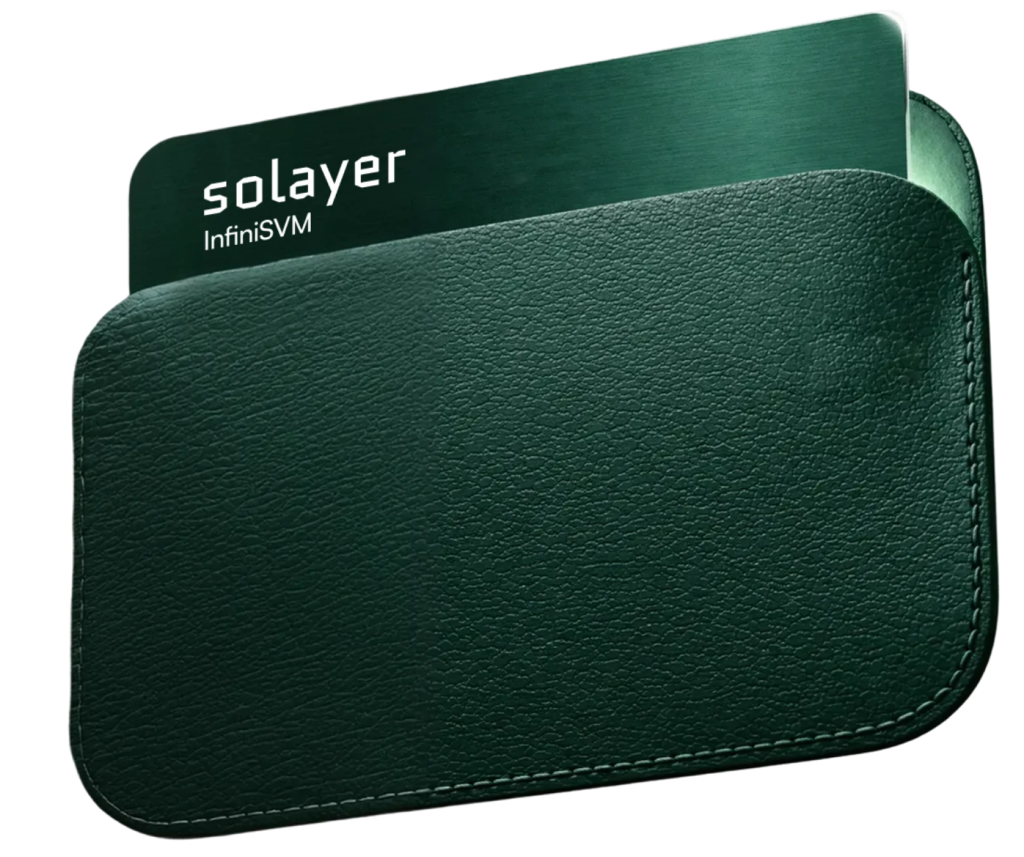
Built by the team behind infiniSVM, Solayer Pay is designed for real-time financial interactions, combining low fees, referral incentives, and fast transaction execution. Here’s a closer look at the platform’s key features and what makes it stand out in the competitive crypto payments landscape.

One of the defining aspects of Solayer Pay is the infrastructure it runs on. As already mentioned, the payment platform is designed to leverage infiniSVM, Solayer’s high-performance blockchain network engineered for real-time execution.

The network has demonstrated over 330,000 transactions per second (TPS) with approximately 400 milliseconds of finality. In practical terms, this means transactions can settle almost instantly, a critical requirement for payments, trading systems, and other financial applications where speed and reliability are essential.

For users, this translates into faster transfers, smoother payment experiences, and the ability to move stablecoins without the delays typically associated with older blockchain networks.

Solayer Pay emphasizes a straightforward and transparent fee structure designed to reduce friction for new users. The platform currently charges $20 annual registration fee and 0.5% deposit fee. Instead of keeping the entire transaction fee, Solayer redistributes a portion of it through referral rewards and cashback incentives. This model encourages organic platform growth while rewarding users who actively participate in the ecosystem.

The deposit fee is divided as follows: 0.125% goes to the referrer; 0.125% is returned to the user as cashback in USDC and 0.25% is retained by the platform. This structure creates a built-in incentive system where users can earn rewards simply by inviting others to the platform.

Solayer Pay is designed to function as a practical payment interface rather than just a wallet. The platform enables users to: transfer stablecoins quickly, manage balances within a unified interface, connect and manage their Solayer Pay Card. The upcoming Solayer Pay app is expected to further streamline the experience by providing a single hub for sending stablecoins and managing payment activity.

Backed by a Growing Ecosystem

Solayer’s ambitions extend beyond payments alone. The company recently announced a $35 million ecosystem fund aimed at supporting projects building on the infiniSVM network. The fund targets applications that benefit from real-time execution and high throughput, with a particular focus on: DeF, consumer applications, payments, AI-driven onchain systems.

By investing directly in developers and infrastructure, Solayer is working to expand the range of applications that can operate on its network, potentially increasing the utility of services like Solayer Pay.


TagsBlockchainCryptocurrencyMainnetSolayer

相关问答

QWhat is the key feature of Solayer's InfiniSVM mainnet that enables real-time applications?

AThe key feature is its hardware-accelerated SVM speed, achieving over 330,000 transactions per second (TPS) with approximately 400 milliseconds finality.

QWhat is the name of the payment product built to take advantage of the InfiniSVM infrastructure?

AThe payment product is called Solayer Pay, which is a fast, incentive-driven stablecoin payment layer.

QHow does Solayer Pay's fee structure work and what incentives does it offer?

ASolayer Pay charges a $20 annual registration fee and a 0.5% deposit fee. This fee is divided with 0.125% going to the referrer, 0.125% returned to the user as USDC cashback, and 0.25% retained by the platform.

QWhat type of network topology does Solayer use to achieve its high performance?

ASolayer uses a DAG-based topology and real-time write paths to achieve its high throughput and low latency.

QWhat is the purpose of the $35 million ecosystem fund announced by Solayer?

AThe $35 million ecosystem fund is aimed at supporting projects building on the infiniSVM network, particularly those in DeFi, consumer applications, payments, and AI-driven onchain systems that benefit from real-time execution and high throughput.

你可能也喜欢

万字解析:从10美元到290美元,MRVL靠「不做GPU」赢了整个AI时代

Marvell Technology(MRVL)股价从2016年不到10美元涨至2026年的290美元,涨幅达30倍,核心在于其独特定位:不做GPU,而是专注于AI时代的“连接”基础设施。 公司业务分为三块:一是光互连(光DSP),在400G以上数据中心光模块市场占约70%份额,技术护城河深;二是定制AI芯片,为Amazon等云巨头设计XPU,拥有18个项目、750亿美元潜在收入;三是以太网交换芯片与企业存储,提供稳定现金流。 CEO Matt Murphy上任后大幅改革,砍掉非核心业务,收购Inphi(光DSP)、Cavium、Celestial AI(光子织网)等公司,聚焦数据中心,并绑定大客户获得长期订单。 英伟达投资20亿美元战略入股,认可Marvell在AI互连生态的价值。市场常将Marvell视为“小Broadcom”,但两者本质不同:Marvell在光DSP是领导者,而定制芯片业务虽毛利率较低,但随规模扩大有望改善。 主要风险包括:丢失Amazon Trainium3订单、客户集中度高、毛利率天花板、英伟达既是伙伴也是潜在竞争者、内部人士减持及供应链产能压力。但公司光互连技术优势显著,结合PEG约0.6的估值,仍有增长空间。 本质上,Marvell抓住了AI基础设施从“堆算力”转向“建系统”的趋势。在AI集群规模不断扩大、数据流动需求激增的背景下,“连接”的价值日益凸显,而Marvell正处在这一核心位置。

marsbit16分钟前

万字解析:从10美元到290美元,MRVL靠「不做GPU」赢了整个AI时代

marsbit16分钟前

AI中转站引发知乎热议:便宜Token背后,用户真正担心什么?

知乎上关于“AI中转站与便宜Token”的讨论引发广泛关注,焦点从单纯的工具选择转向了深层的成本与信任问题。 用户首要担忧的是模型真实性。AI中转站被类比为“AI版黄牛”,技术门槛不高,但上游来源常不透明,存在“模型掉包”风险。由于大模型输出具有随机性,普通用户难以辨别自己是否真的在使用所付费的旗舰模型,这本质上是一种信息不对称交易。 其次,便宜Token的性价比需要理性看待。其“低价感”常源于与官方API按量价的对比,若与官方订阅套餐、国产模型或免费额度相比,未必总是最优。讨论强调用户应先明确自身需求——是偶尔使用还是高频调用,再选择合适渠道。 便宜Token的来源复杂,既可能有批量采购、缓存优化等合法路径,也可能涉及订阅拆分、地区价差套利甚至更灰色的渠道。这种混合供给导致服务稳定性和余额风险难以评估。真正的成本计算需涵盖模型真实性、服务稳定性和数据安全。 数据安全成为核心关切,尤其在AI编程、Agent和企业应用场景中。经过中转站的prompt、代码、业务文档和密钥可能面临泄露风险。对于企业,这还涉及商业秘密、数据合规与供应商审查等治理问题。 讨论形成的普遍共识是:AI中转站可用于低敏感、可替代的任务(如公开资料总结、简单测试),但不建议作为默认入口,尤其不能用于处理敏感数据或接入生产环境。实用建议包括:避免大额充值、分散风险、定期测试模型、做好数据脱敏。 这场讨论揭示,当AI能力按Token计价时,用户为节省调用费用,可能潜在地牺牲了信任与安全。随着AI更深度融入工作流,明晰请求路径、模型来源与数据流向变得至关重要。

marsbit46分钟前

AI中转站引发知乎热议:便宜Token背后,用户真正担心什么?

marsbit46分钟前

交易

现货
合约
活动图片




