Onchain activity declined sharply on several major networks, according to Nansen data, with 11 blockchains posting drops in active addresses in the past year.
Ronin fell the most at 70%, while Bitcoin registered a 7.2% decline. Several Ethereum layer-2 networks made the list.
Nansen data also showed drops in transaction activity across many of the same networks. ZKsync recorded one of the steepest declines, with transactions falling 90%.
Meanwhile, Ethereum’s base layer recorded a 25% increase in active addresses and more than a 20% rise in transactions, even as debate continued around Ethereum’s rollup-centric roadmap and concerns over liquidity fragmentation across layer-2 networks.
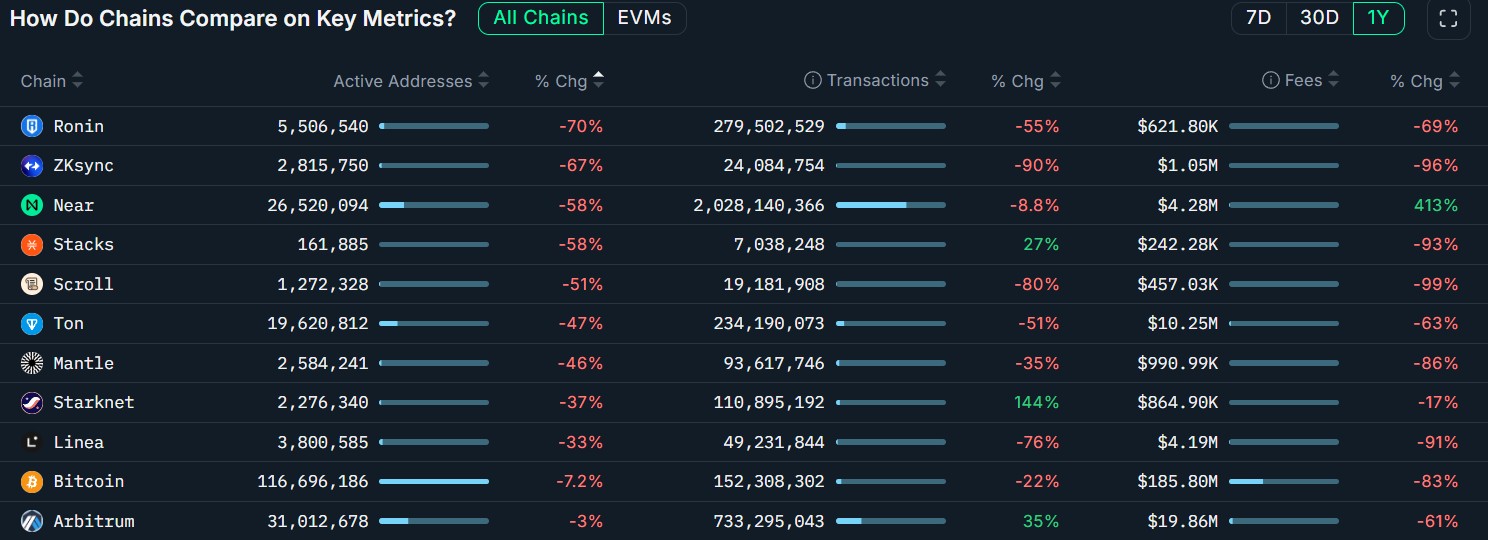
Networks with the biggest usage declines
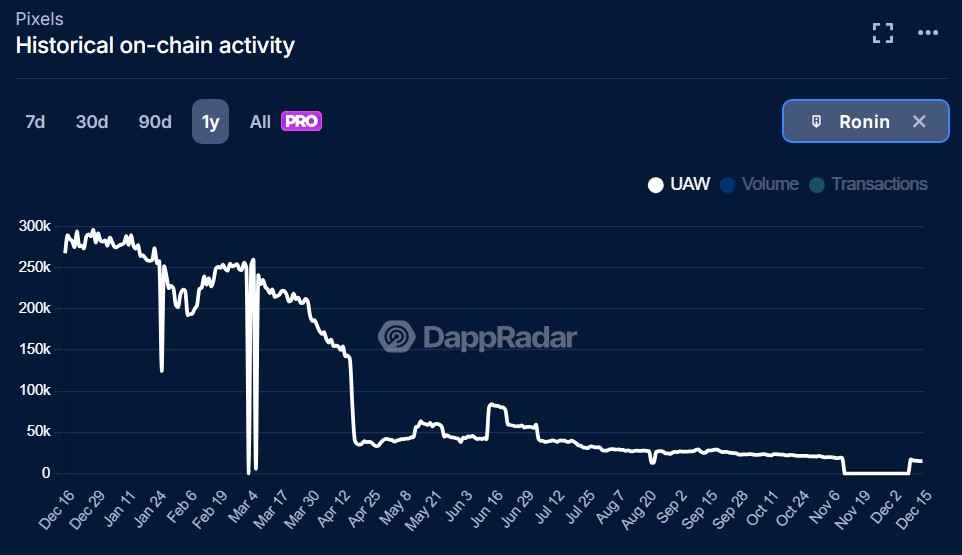
Pixels is a popular game that migrated to Ronin from Polygon in the second half of 2023. At the time, Ronin had roughly 20,000 daily active users before Pixels’ arrival drove a sharp increase in activity, briefly making Ronin the second-most active chain by daily users.
By December 2024, Pixels registered around 300,000 daily active users, according to DappRadar. The game’s popularity has since declined, and Ronin’s onchain activity has fallen alongside it, showing the network’s reliance on hit games.
Several Ethereum layer-2 networks also experienced a decline in usage as activity tied to airdrops cooled. ZKsync’s token airdrop claim opened in June 2024. The network said nearly 700,000 wallets were eligible while fending off criticism of its Sybil filtering. Nansen data showed that more than 40% of the top airdrop wallets immediately sold their allocations. Scroll also appeared on the list following its October 2024 airdrop, after which onchain activity slowed down.
Arbitrum saw active addresses fall by 3%, though its roughly 31 million users still ranked it among the top 10 networks by activity. The Ethereum rollup conducted its airdrop in 2023, and its transaction volume rose 36% over the past year to about 734.5 million, beating Ethereum’s 507 million transactions. Arbitrum drew activity from tokenized assets, including 500 US stocks stamped on the network by Robinhood.
Related: How crypto is used in 2025: YouTube, Pokémon cards and more
Base and Optimism stood out among Ethereum layer-2 networks. Both posted increases in active addresses and transaction volumes. Base does not have a native token and has never conducted an airdrop. Onchain activity rose alongside interest in areas such as memecoins, AI-related applications and decentralized exchanges.
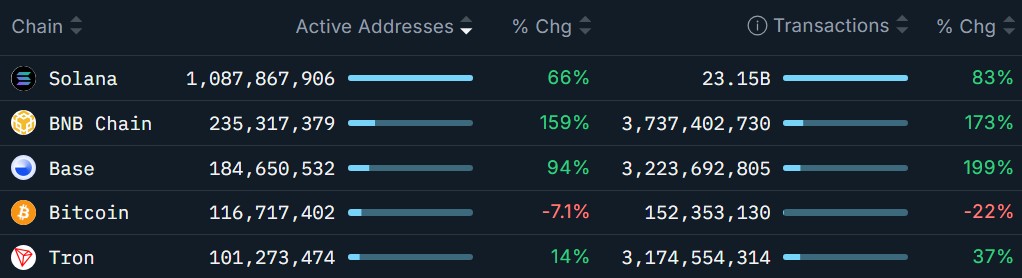
Solana recorded the most active addresses in the industry with more than 1 billion, followed by Tron and Ethereum. BNB Chain posted a 159% increase in active addresses, while Bitcoin was the only network in the top five to record a decline, alongside a 22% drop in transactions.
What the declines do and do not show
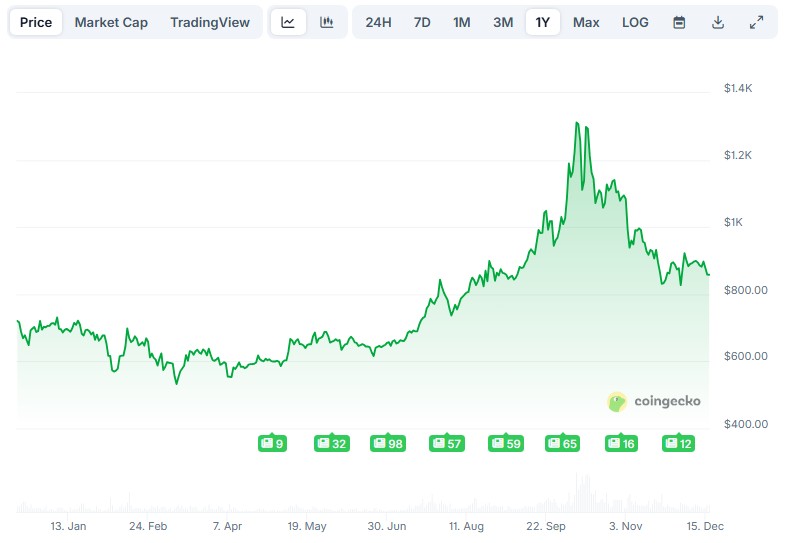
The data showed little consistent relationship between onchain usage and token prices. Solana’s price fell over the past year despite a 66% increase in active addresses, while BNB’s (BNB) token price rose alongside increased network activity.
The year-over-year declines do not necessarily point to terminal problems for the networks involved. Onchain activity can swing sharply as applications migrate, incentive programs wind down or users shift between chains, particularly among newer networks still establishing their core use cases.
Telegram-linked blockchain The Open Network (TON) also recorded a 47% drop in active addresses and a 51% decline in transactions, a reversal that followed outsized growth in 2024. Telegram-based mini-games drove much of that earlier activity, drawing in users beyond the platform’s typical crypto-native audience.
Related: Bitcoin decouples from stocks in second half of 2025
Hamster Kombat was among the most prominent examples. The tapping-based game lowered the barrier to entry through simple mechanics and drew heavy participation from users anticipating a future token airdrop. According to Telegram CEO Pavel Durov, the viral game attracted 239 million users within three months, with more than 130 million qualifying for its airdrop in late September.
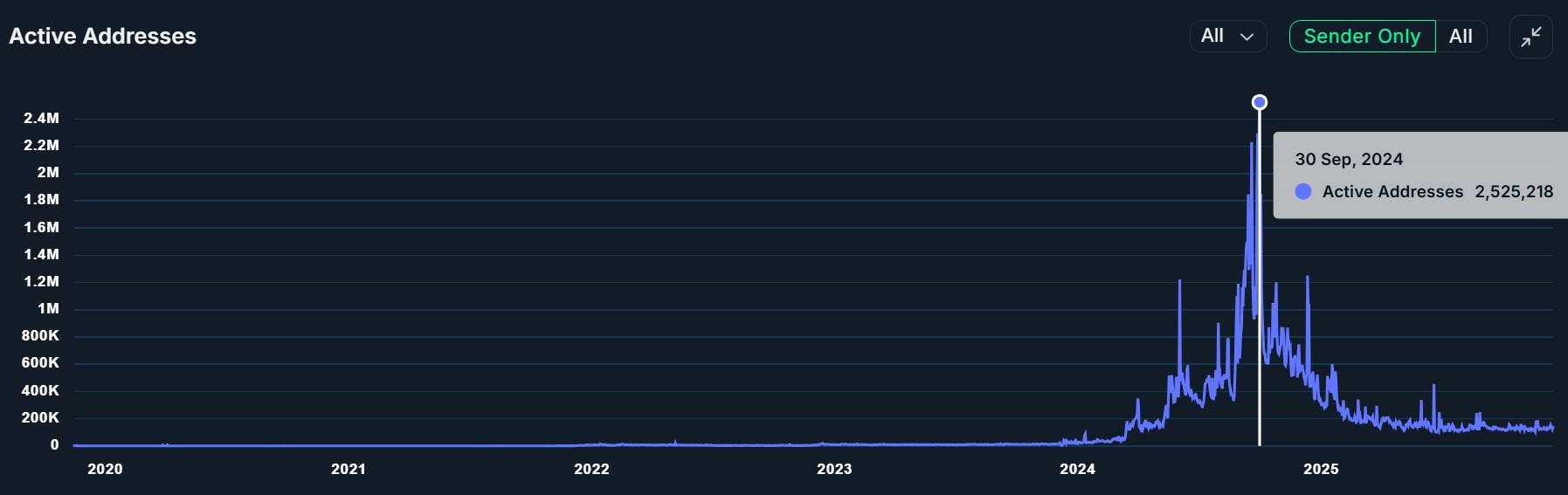
Nansen data shows that TON’s active addresses peaked at roughly 2.5 million per day on Sept. 30. Activity has since fallen back as engagement tied to Hamster Kombat cooled, underscoring how short-lived surges can distort year-over-year comparisons.
A few chains retained usage after hype
The past year’s blockchain data shows that onchain activity shifts quickly between networks rather than remaining anchored to any single chain. Usage fell most sharply on blockchains where activity had been concentrated around a small number of applications, incentive programs or viral moments.
At the same time, those declines do not automatically signal broader ecosystem failure. In several cases, activity cooled after periods of outsized growth, highlighting how year-over-year comparisons can be distorted by hype cycles, airdrops or short-lived applications.
Solana offers a useful contrast. While memecoin-driven activity boomed throughout 2024 and early 2025 before cooling toward the end of the year, the surge also brought in users, liquidity and applications that continued to support the network.
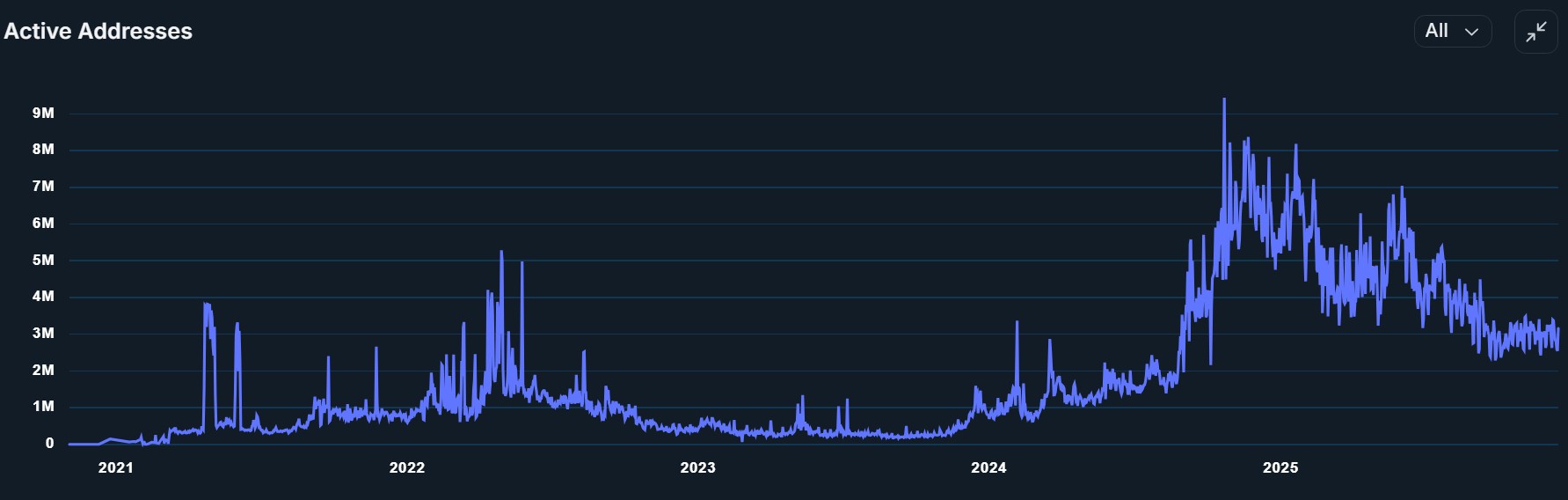
Solana’s daily active addresses peaked above 9 million on Oct. 22, 2024, during the height of memecoin trading. By December, daily users fluctuated between 2 million and 3 million. While that marked a sharp pullback from peak levels, activity remained consistently higher than before the boom.
Much of the past year’s onchain activity decline was driven by short-term profit-seeking, but networks such as Solana, BNB Chain and Base showed signs of retaining usage beyond viral surges, setting them apart from chains that saw sharper reversals.
Magazine: Big questions: Would Bitcoin survive a 10-year power outage?





















