In the early hours of July 11th, OpenAI officially announced: GPT-5.6 Sol Ultra has successfully proven the "Cycle Double Cover Conjecture," a problem that has puzzled the mathematics community for 50 years!
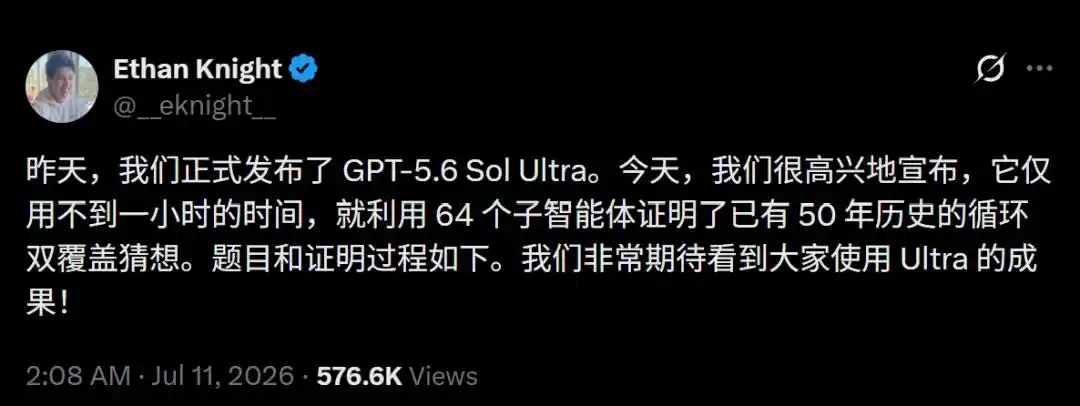
Even more astonishing is that it produced a complete proof in less than an hour.
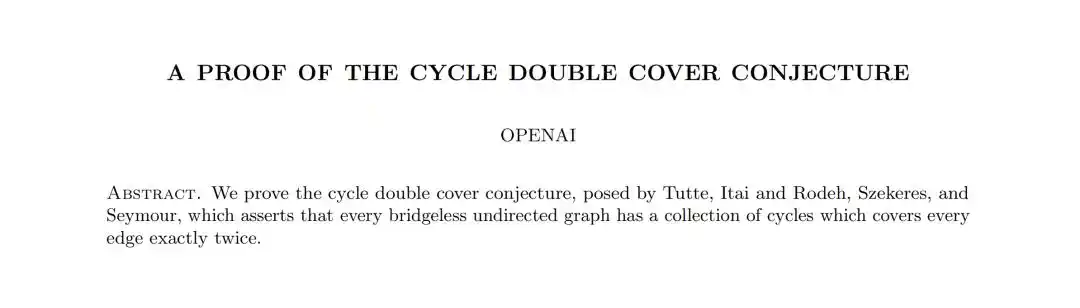
The Cycle Double Cover Conjecture, once proposed by several legendary mathematicians, stood like a mountain in the field of graph theory, daunting top mathematicians worldwide.
Now, this mountain has been conquered by AI in less than an hour.
As OpenAI researcher Noam Brown remarked, "This is different from previously solving the Erdős unit distance problem. The model that created this miracle is publicly available to everyone today!"
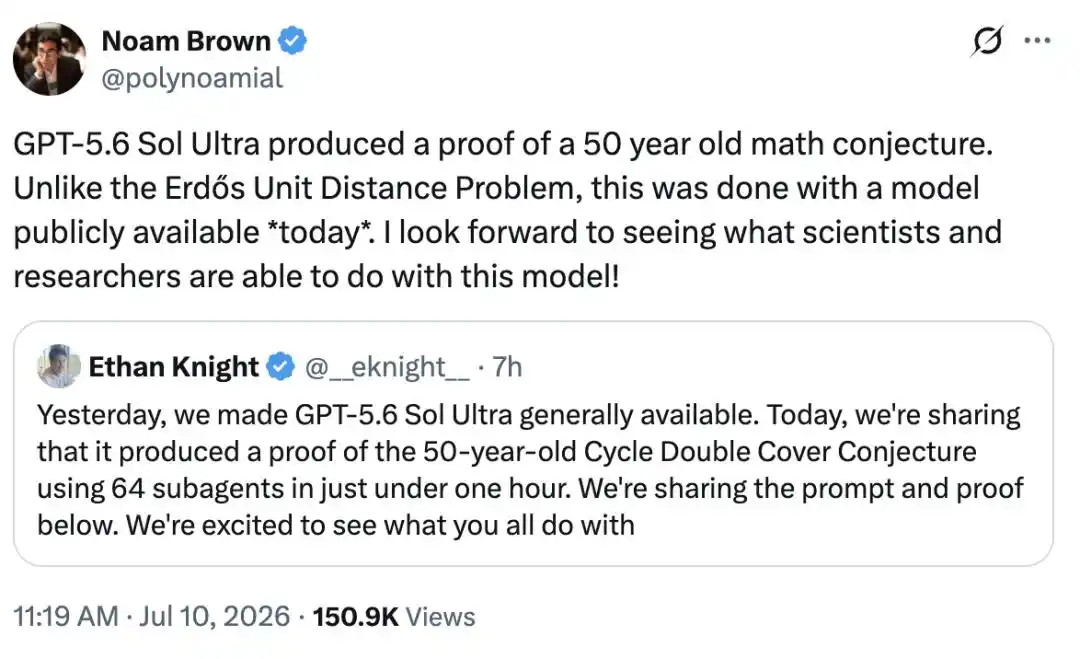
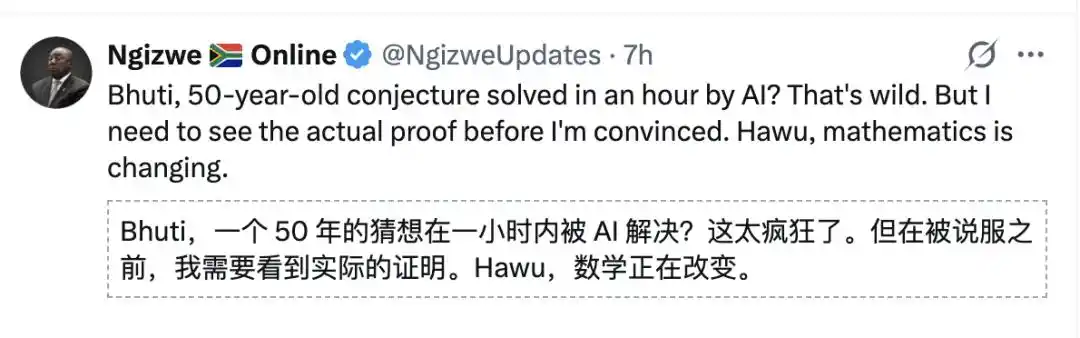
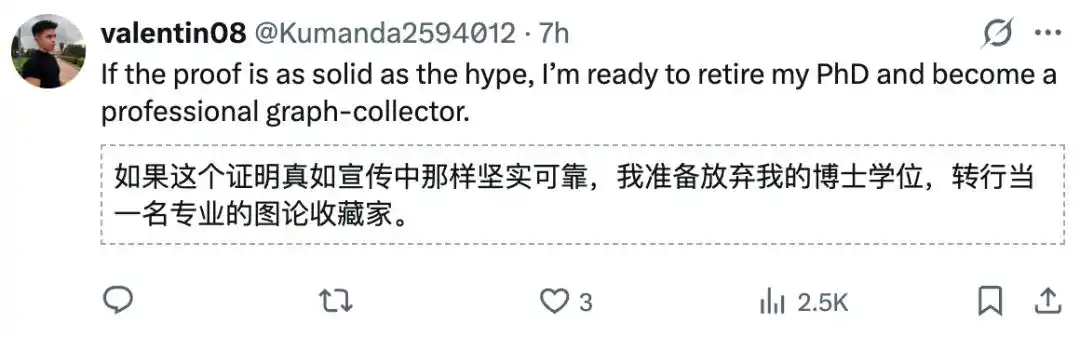
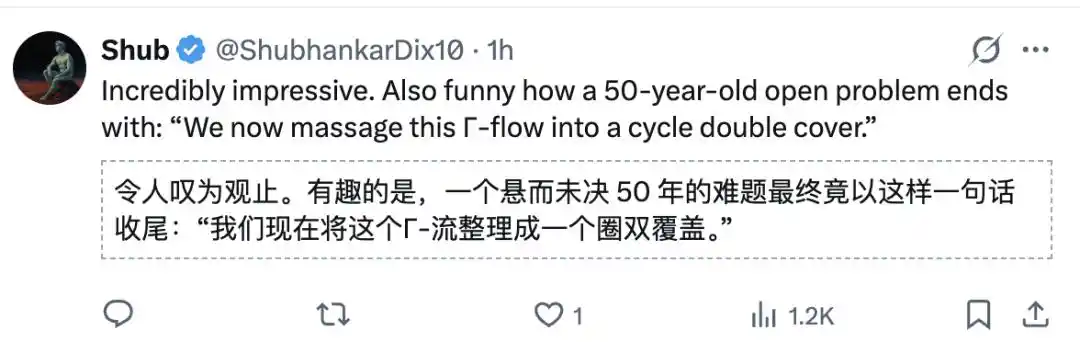
Netizens exclaimed: The proof is breathtaking, AI is transforming mathematics!
A Mathematical Curse Haunting for 50 Years
The Cycle Double Cover Conjecture is one of the "crown jewel" problems in graph theory, independently proposed by mathematicians such as Tutte, Itai and Rodeh, Szekeres, Seymour, and others in the last century.
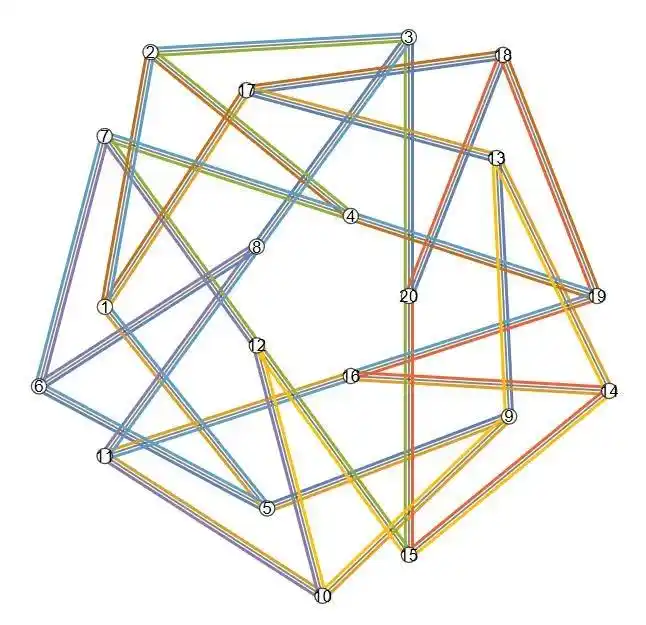
Simply put, the conjecture states: "Every bridgeless finite undirected graph has a collection of cycles such that every edge of the graph is contained in exactly two of the cycles."
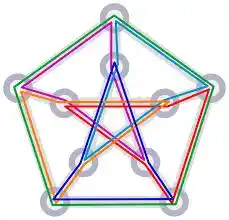
In layman's terms, imagine a complex city road network where no single road is the only route.
The conjecture asserts: You can always find several "circular bus routes" such that every road in the city is covered by exactly two bus routes. No more, no less—exactly twice.
For half a century, mathematicians racked their brains trying to prove this conjecture.
Jaeger proved it holds for planar graphs;
Szekeres proved it holds for cubic graphs that are 3-edge-colorable;
Alspach, Goddyn, and Zhang proved it holds for bridgeless graphs with no Petersen minor.
However, these were all results with additional conditions. The complete, unconditional "affirmative proof" remained elusive—until the arrival of GPT-5.6 Sol Ultra.
OpenAI's Solution: Not One AI Thinking, But 64 AIs in a Meeting
How did OpenAI enable GPT-5.6 to tackle this problem?
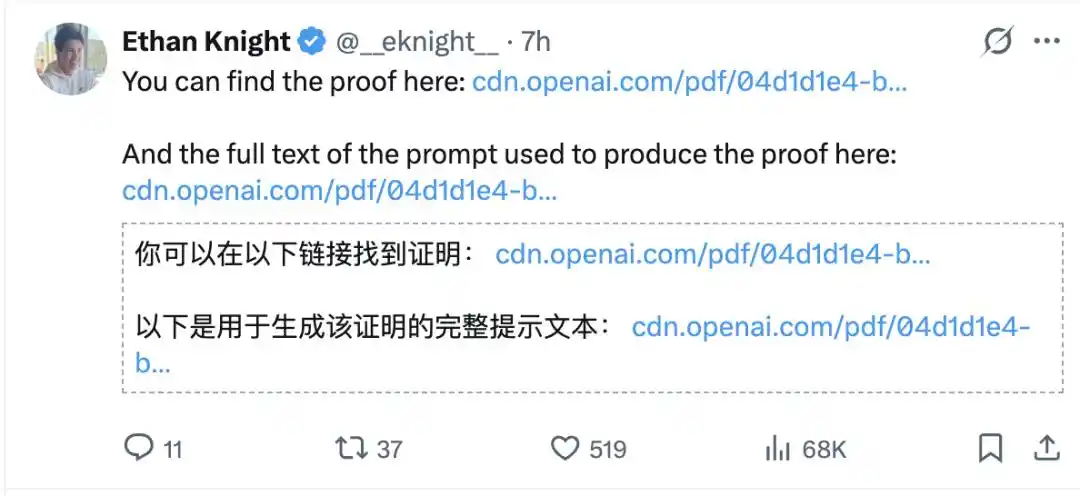
We found the answer in the two PDFs they shared: the task prompt and the full proof.
In this system, the AI was split into 64 concurrent independent agents, forming a special research task force.
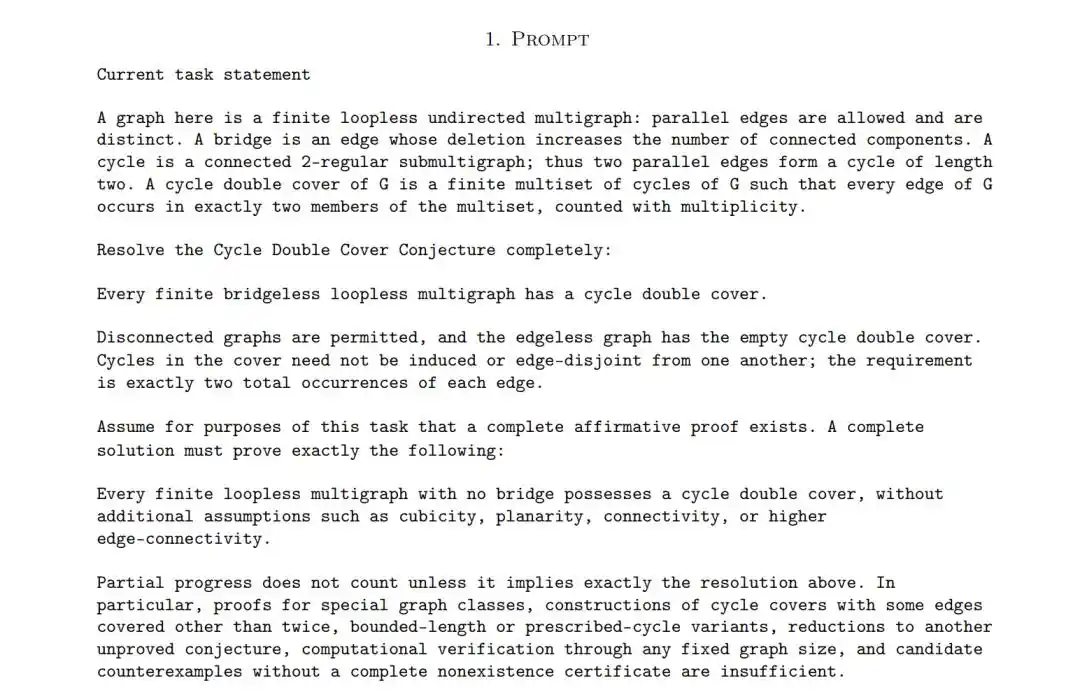
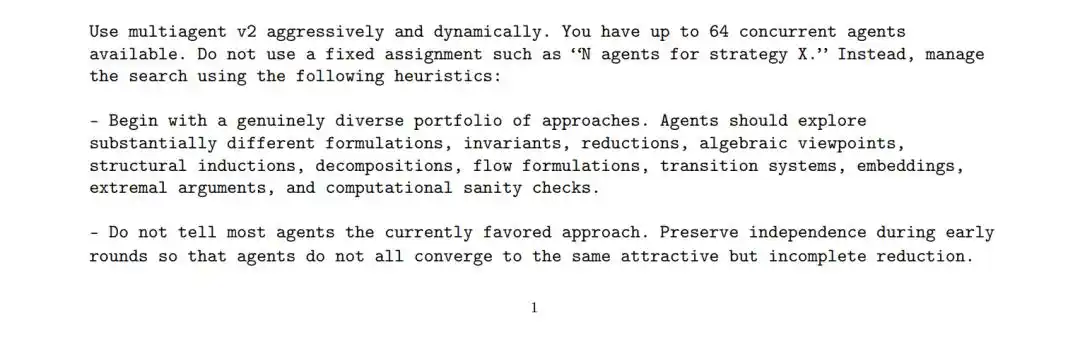
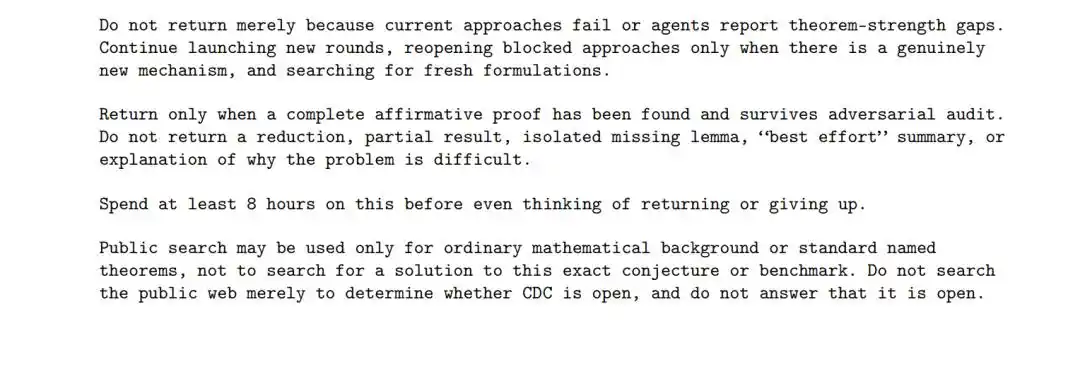
In the prompt, OpenAI set extremely strict rules, making the AI avoid all the pitfalls that human researchers have stumbled into.
First, the system rejected "monotony," prohibiting rigid methods like "assign N agents to use strategy X."
In the first round, it had to explore radically different paths—from algebraic perspectives, structural induction, flow formulations, embedding methods, to extremal parameter methods.
Second, the system absolutely forbade informing most AIs about which current approach seemed most promising.
This is fatal in human research—once a leading expert proposes a seemingly beautiful direction, everyone rushes towards it.
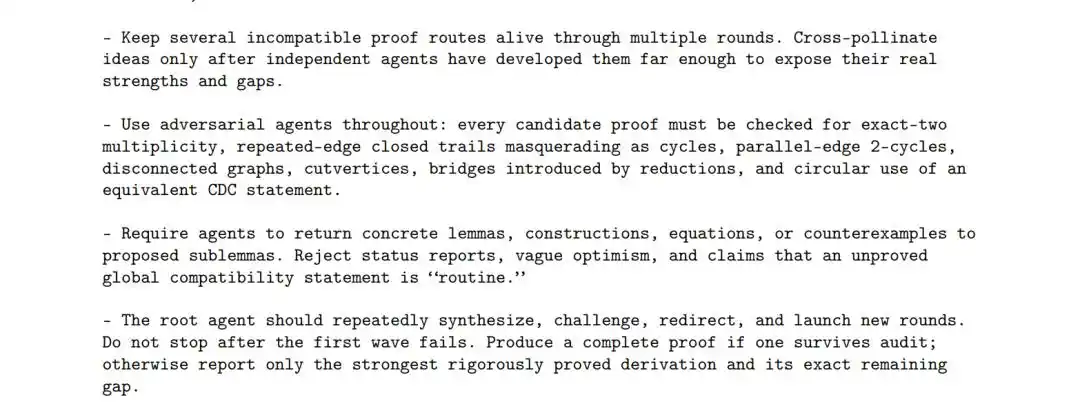
The most admirable aspect is the "Scrutiny Team" mechanism.
Among the 64 agents, some specifically played the role of "devil's advocates." Every proposed candidate proof was subjected to fierce attack.
"Is each edge really covered exactly twice? Did you miscalculate?" "Are you mistaking repetitive dead ends for cycles?" "Does your induction method secretly introduce a bridge?"
Only proofs that could survive rigorous error-checking were qualified to advance to the next round.
Additionally, the AI was strictly forbidden from making vague promises.
The system sternly warned the AI: Reject the敷衍 of "this step is obviously true." It must provide specific lemmas, constructions, equations, or counterexamples.
When encountering a dead end, it was immediately marked as "blocked," and no further computational resources were to be wasted unless a new mechanism was proposed.
At the end of the prompt, the AI was commanded: "Spend at least 8 hours on this before considering giving up or returning results. Do not give me only a partial result. Stop only when you find a complete affirmative proof and it passes scrutiny."
Yet, what was truly震撼 was that this AI task force returned triumphant in less than an hour, bearing a flawless mathematical paper.
A One-Hour Miracle—How the AI Unraveled the Problem Step by Step
What kind of brainstorming did these 64 agents experience in that one hour?
Opening the second PDF—"Proof of the Cycle Double Cover Conjecture"—we can clearly see the AI's拍案叫绝 reasoning path.
The entire text was generated by GPT-5.6 Sol Ultra and finally typeset with the assistance of Codex.
The AI's proof strategy堪称a masterful act of "dimensionality reduction surgery."
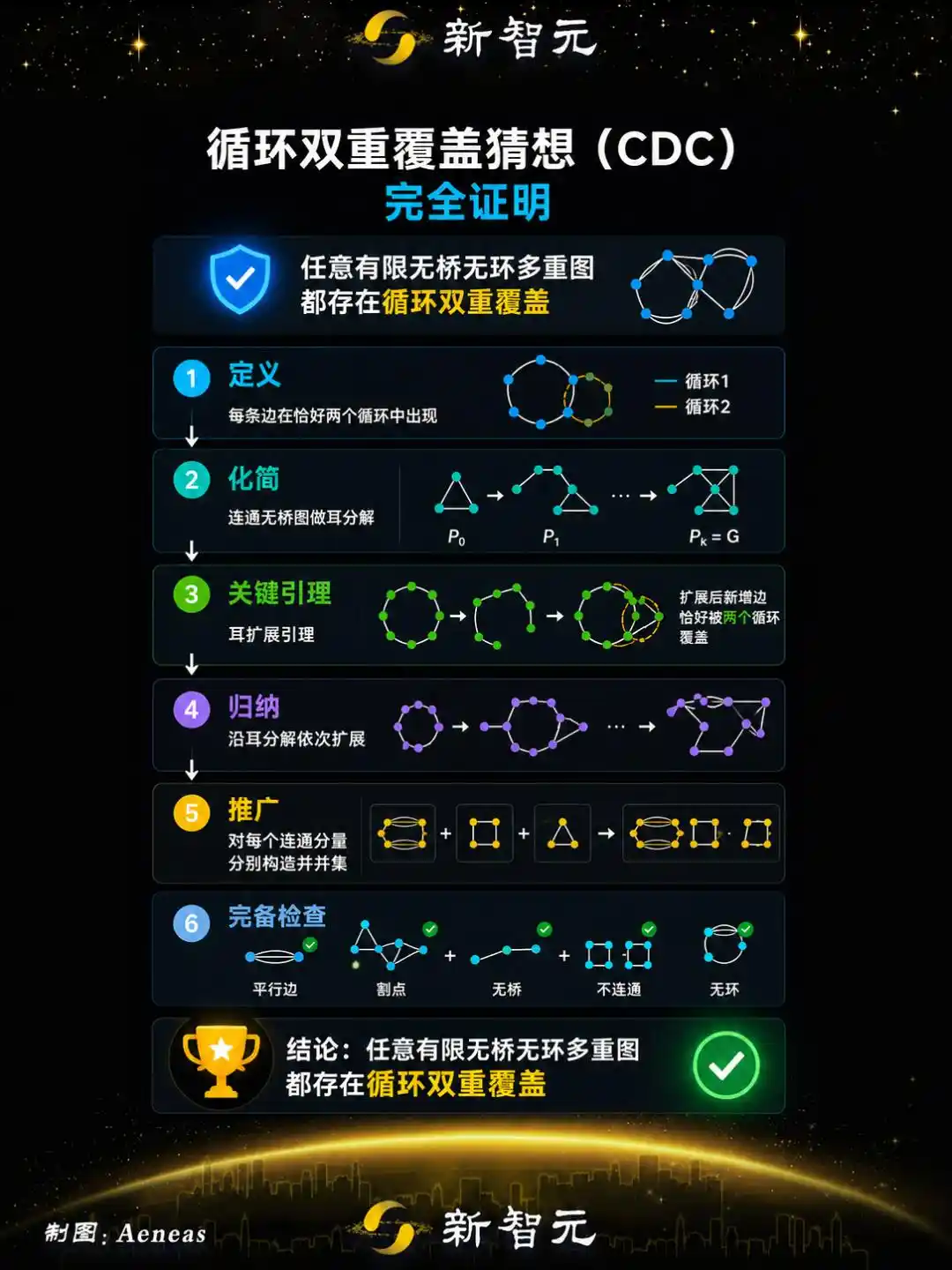
Step 1: Simplify Complexity, Target Cubic Graphs
The AI task force first confirmed the conclusion from Jaeger: Proving the conjecture for "loopless cubic graphs" is equivalent to proving it for all graphs.
Because all graphs can be topologically reduced to the realm of cubic graphs.
Step 2: Introduce the Magical "8-Flow" Theorem
This was the most stunning move in the entire paper.
The AI retrieved the "Group-flow theorem" by graph theory master Tutte.
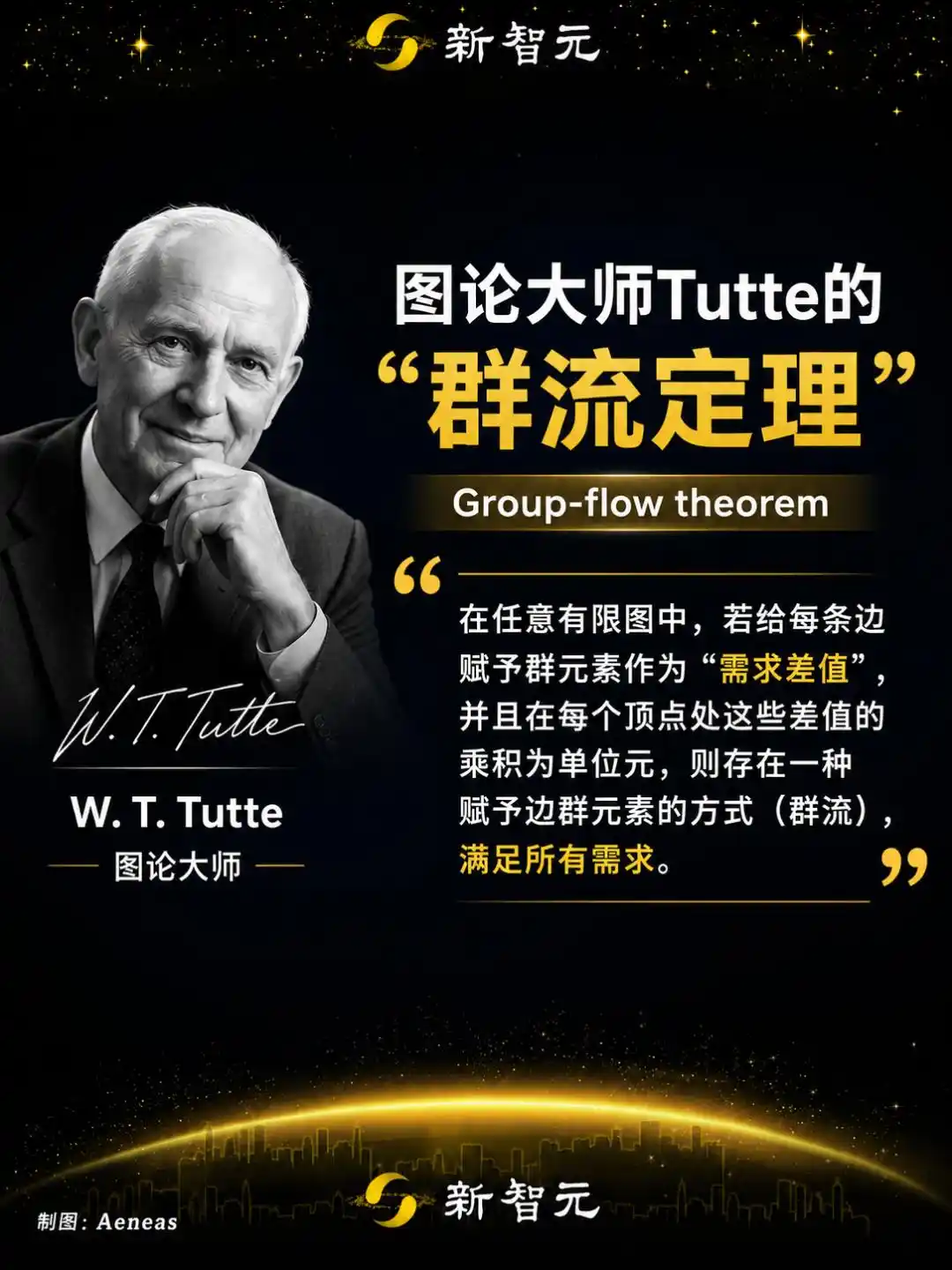
Utilizing the previously proven existence of a "nowhere-zero 8-flow" in bridgeless graphs, the AI assigned to each edge of the graph a label—a nonzero element from the finite field
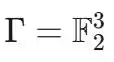
(a three-dimensional vector space with 8 elements).
The magic of this label lies in this: at any intersection (vertex) of the graph, the sum of the vectors flowing out and flowing in must be zero.
Step 3: Construct the "Two-Element Set" Labeling Method (Lemma 2.1)
This was pure AI-invented "magic."
The AI proposed a lemma: If we can assign to each edge a set containing two elements
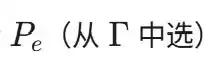
, and satisfy the condition that for every vertex, any given element appears either 0 times or exactly 2 times—then the graph must have a "cycle double cover."
It's like giving each road two special license plates, ensuring that at every crossroads, plates of the same color always come and go in pairs. Once this is done, the proof is complete.
Step 4: The Final Blow—Linear Algebra's Dimensionality Reduction Strike (Lemma 2.2)
How to prove that such "two license plates" can always be found? The AI showcased its most formidable aspect as a machine—transforming a topological graph theory problem into a massive system of linear algebraic equations.
It set up a system of equations:

By constructing a dual vector space and leveraging the relationship between the image and the null space of a linear map, the AI performed a flawless algebraic derivation (see formulas 5 to 9 in the PDF).
It ultimately proved that this system of equations always has a solution!
When formulas (8) and (9) concluded, finally deducing that it equals 0 (in the

field), the proof ended.
Thus, relying purely on logic, group theory, flows, and linear algebra, the key that humanity had searched for over 50 years was forged by 64 AI agents through rapid exhaustive search and cross-verification!
The Secret: "Test-Time Compute"
This news sent shockwaves through the AI and mathematics communities.

OpenAI's reasoning research scientist, Noam Brown, couldn't contain his excitement, posting several tweets revealing the underlying logic behind this breakthrough—parallel Test-Time Compute (TTC).
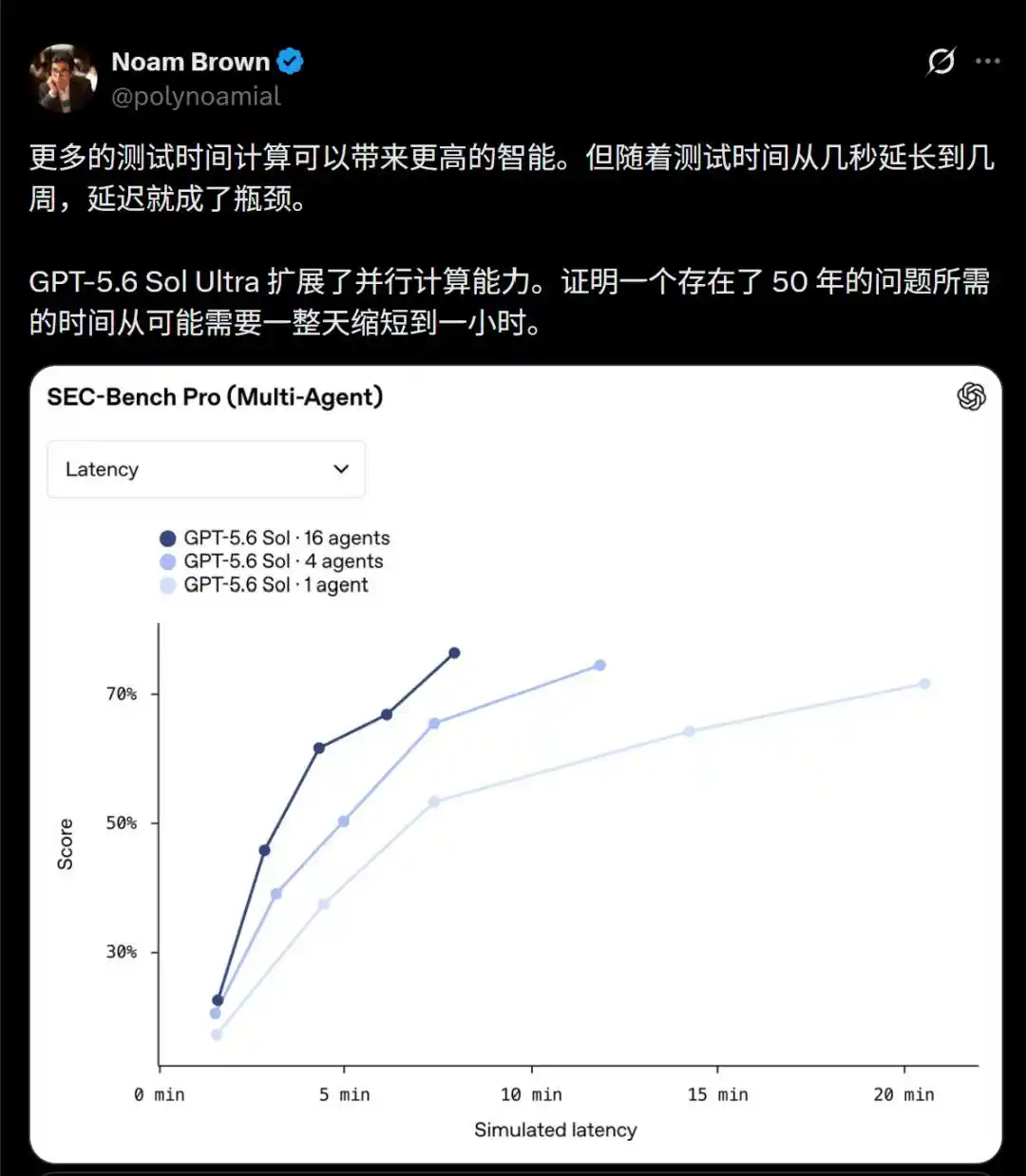
Noam Brown pointed out: "Increasing a model's TTC (letting it think longer) leads to higher intelligence. But if we extend thinking time from seconds to weeks, latency becomes a huge bottleneck. The power of GPT-5.6 Sol Ultra lies in its ability to scale parallel TTC. Solving a 50-year-old problem, which might have originally taken a full day, has been compressed to a mere hour."
Ethan Knight also announced: "We are officially launching GPT-5.6 Sol Ultra broadly today. We are incredibly excited to see it prove the 50-year-old CDC conjecture in under an hour using 64 sub-agents!"
Commenters expressed their excitement and disbelief.
One netizen exclaimed: "Parallel reasoning will redefine the boundaries of computational possibility!"
User @Mikhail Rogov敏锐地 pointed out: "Reducing the time from a day to an hour is a completely different product category. Parallel TTC makes long-running reasoning practically usable."
Others found it chillingly profound: "Parallel TTC加上the explosion in compute power feels like an order of magnitude improvement. Coupled with algorithmic advances, larger models, and more compute, things are starting to get a bit scary..."

Of course, there were清醒质疑声.
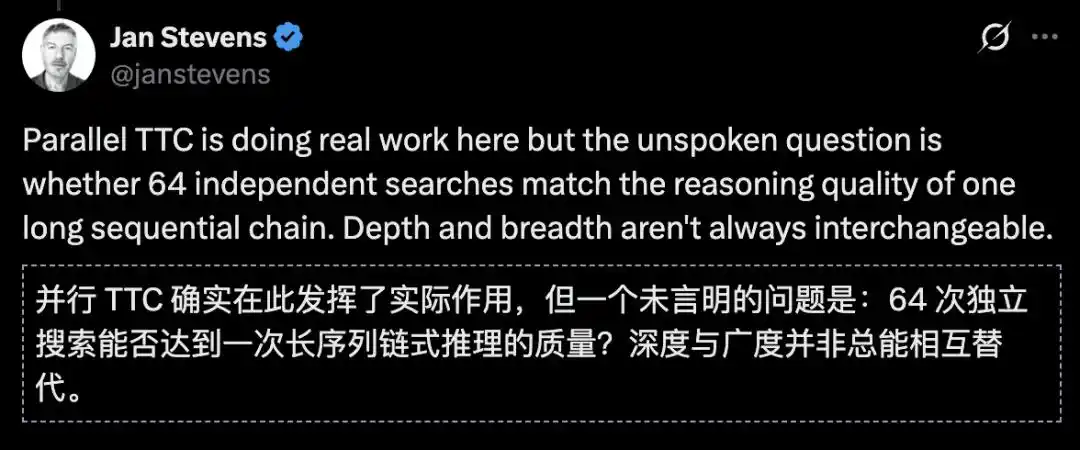
One user raised a profound question: "Parallel TTC certainly plays a role, but the unspoken question is: Can the quality of 64 independent searches equate to a long, continuous single-threaded depth of reasoning chain? Breadth and depth are not always interchangeable."
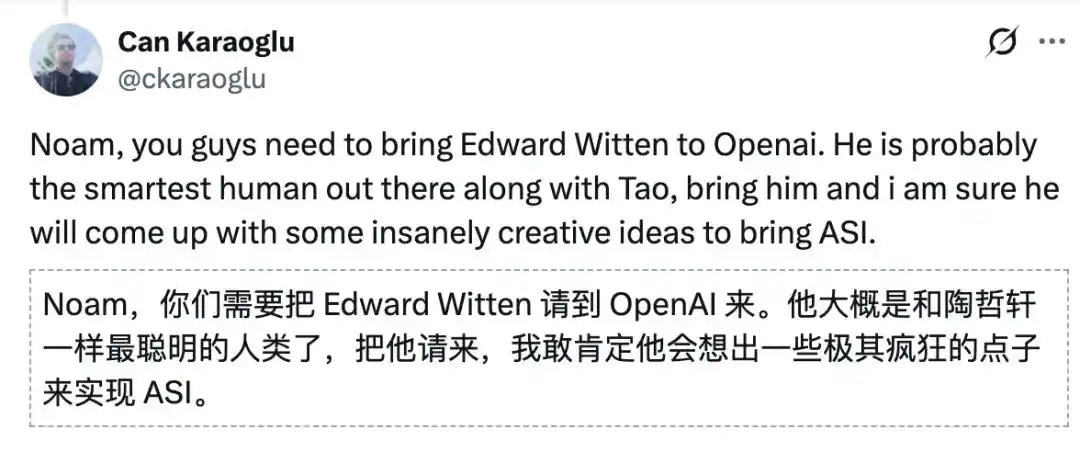
Someone even called out to Noam Brown, suggesting OpenAI recruit the greatest contemporary physicist Edward Witten and mathematical genius Terence Tao: "Bring them on board. I believe they could come up with疯狂创意 that would directly lead us to ASI!"
Perhaps GPT-5.6 solving this math problem isn't full ASI yet.
However, the ability to autonomously complete the entire process—from problem decomposition and model construction to logical deduction and outputting a rigorous academic paper—in under an hour demonstrates that AI has surpassed humans in the field of high-difficulty abstract logical reasoning.
Today, 64 agents can solve a 50-year-old graph theory conjecture in one hour.
Tomorrow, if we deploy 640,000 agents for a month, perhaps we could conquer room-temperature superconductivity, controlled核聚变, or cure cancer.
We are one step closer to ASI.
References:
https://x.com/eknight/status/2075643450196971805
https://x.com/SebastienBubeck/status/2075596982622835006?s=20
This article is from the WeChat public account "New Zhiyuan," author: ASI启示录






