Crypto hacks hit record high in H1 2026 – What’s fueling the surge?

ambcrypto发布于2026-07-02更新于2026-07-02

文章摘要

According to TRM Labs, crypto hacks reached a record high in the first half of 2026 with 207 incidents, more than double the 85 reported in H1 2025. While the number of breaches surged, the total value stolen fell to $972 million, less than half the $2.3 billion lost in the same period the previous year. Smart contract exploits were the most common attack type, constituting 125 cases. However, TRM Labs' Ari Redbord noted that three-quarters of the stolen value came from infrastructure failures like compromised keys and custody systems, highlighting a gap between improved code auditing and lagging operational security. Notably, North Korean-linked actors were responsible for 66% of the stolen funds. Major exploits, such as the $293 million attack on KelpDAO, triggered liquidity crises in protocols like Aave and contributed to a broader loss of confidence in DeFi, leading to significant capital outflows and a drop in Total Value Locked to a two-year low of $70 billion.

TRM Labs, a blockchain security firm, reported 207 crypto hacks in the first half of 2026, the most in any six-month period. The bulk of the crypto hack cases happened in Q2 (126 incidents), led by KelpDAO, Humanity, and Rhea Lend exploits.
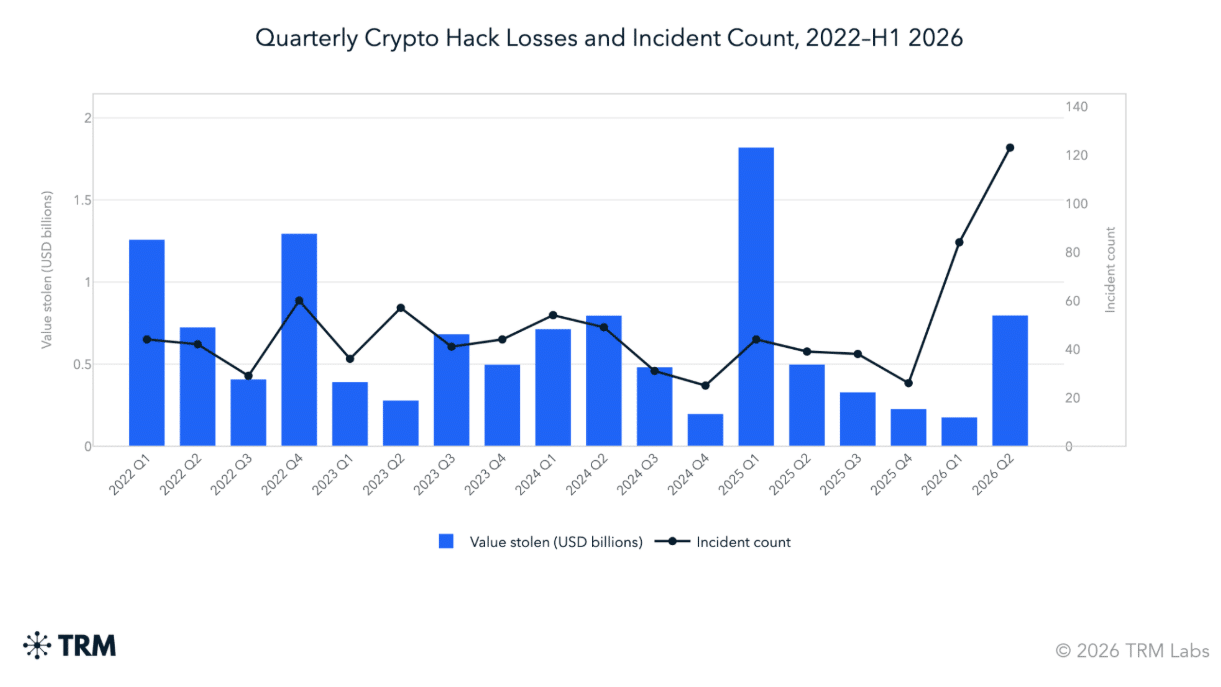
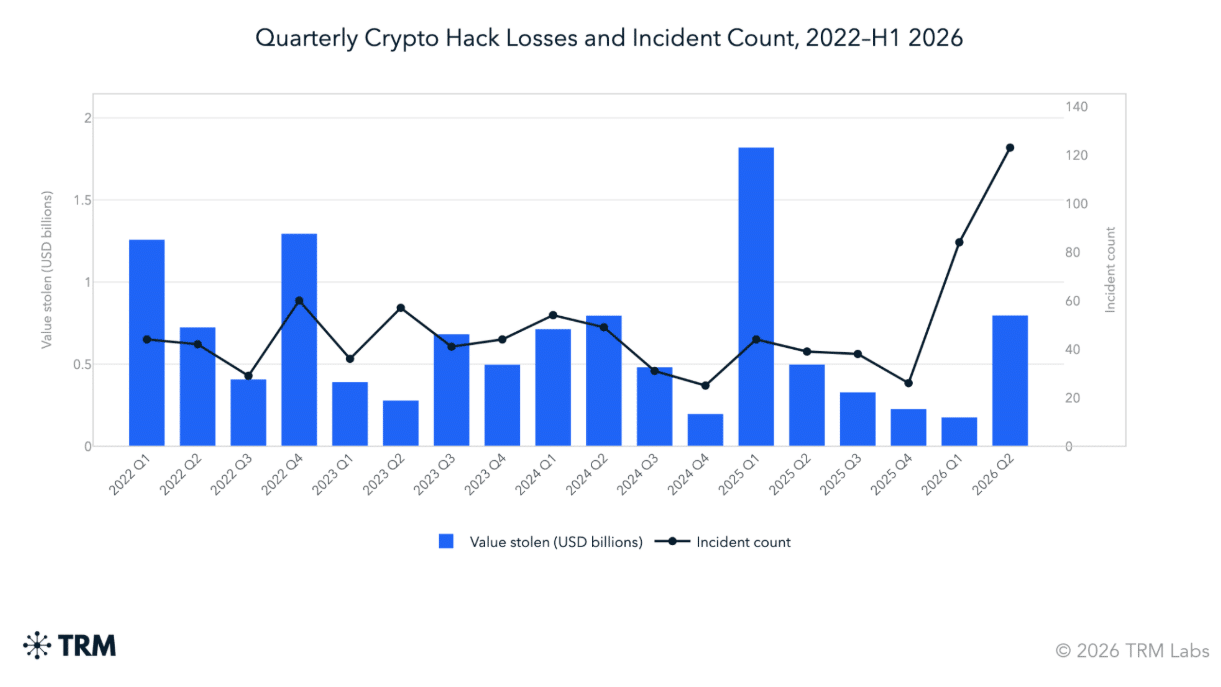
Source: TRM Labs

In the first half of 2025, 85 crypto hacks were reported. In other words, H1 2026 saw more than double the number of crypto hack cases over the same period. According to the report, most of the attacks were smart contract exploits, which accounted for 125 of the 207 incidents: a 60% dominance share in breaches.

Commenting on the same, Ari Redbord, global head of policy at TRM Labs, told AMBCrypto,

What I find most concerning is how concentrated these losses are in infrastructure failures. Three-quarters of all stolen value came from compromises of keys, custody systems, and signing infrastructure, not from smart contract bugs.

He concluded that,

The industry has improved at auditing code, but our operational security has not kept pace with our on-chain complexity.
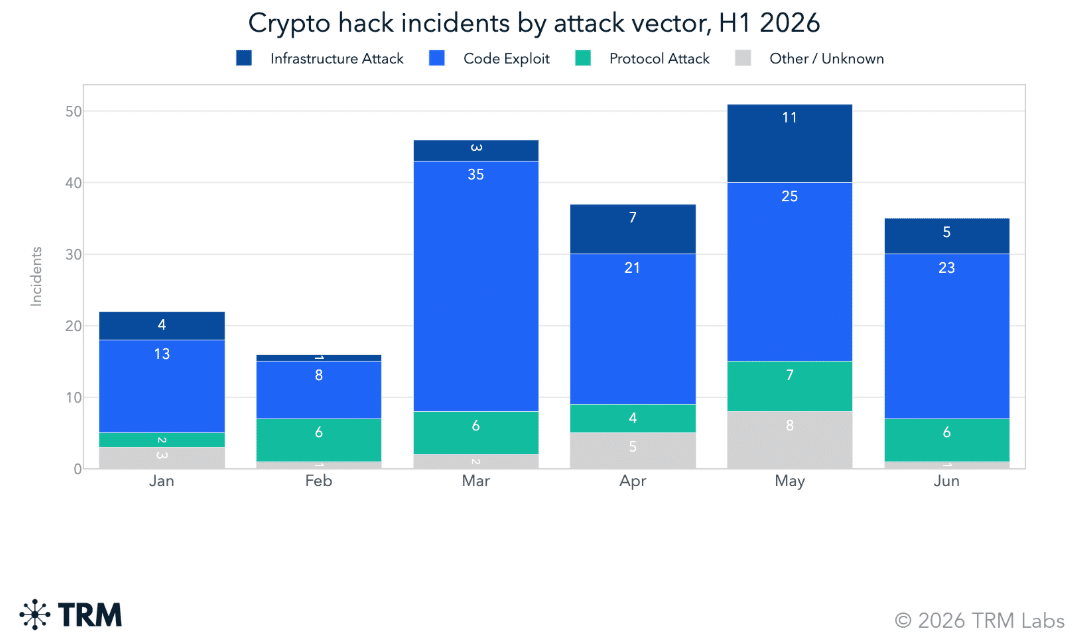
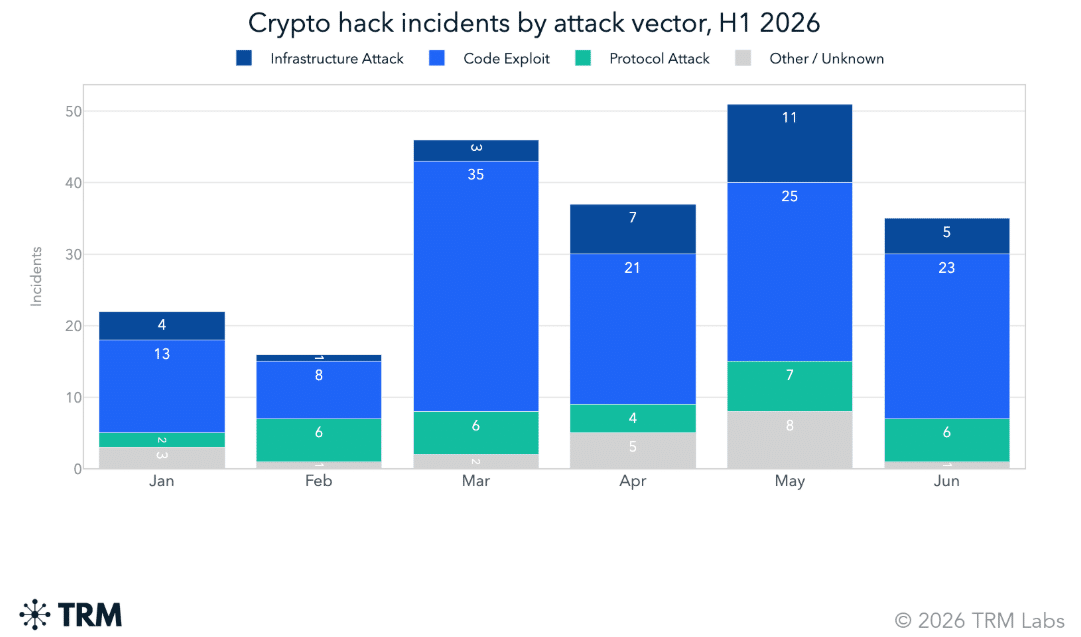
Source: TRM Labs

North Korea-linked actors drive 66% of crypto hacks

Despite the record number of breaches, the overall value stolen in 2026 was relatively small compared to 2025.

The report noted that $972 million was lost as of June, which was below half of about $2.3 billion lost over the same period in 2025. Still, 66% of the stolen funds were driven by North Korean-linked entities.

By the end of Q2 2026, North Korea-linked attackers’ share of stolen crypto funds was over 75%. However, intensified activity from other entities during the quarter reduced their dominance to 66% at press time. The impact of the hacks has been more devastating for the DeFi sector. Amid the broader bearish sentiment, the intensified crypto hacks further drove investors from the DeFi sector.

In fact, in the KelpDAO’s $293 million hack, the attacker used fake tokens and deposited them in the Aave lending protocol and borrowed $190M in legitimate assets (wETH). There was a sudden liquidity crunch and subsequent bank run in Aave as investors feared the worthless collateral deposited by the attacker. As a result, Aave pools reached full utilization, preventing some late depositors from withdrawing their funds.

This added to broader DeFi security risk, which has triggered $55 billion in capital outflows in H1 2026. At the time of writing, the total DeFi TVL (total locked value) has hit a two-year low of $70 billion, up from $120B seen earlier in 2026.
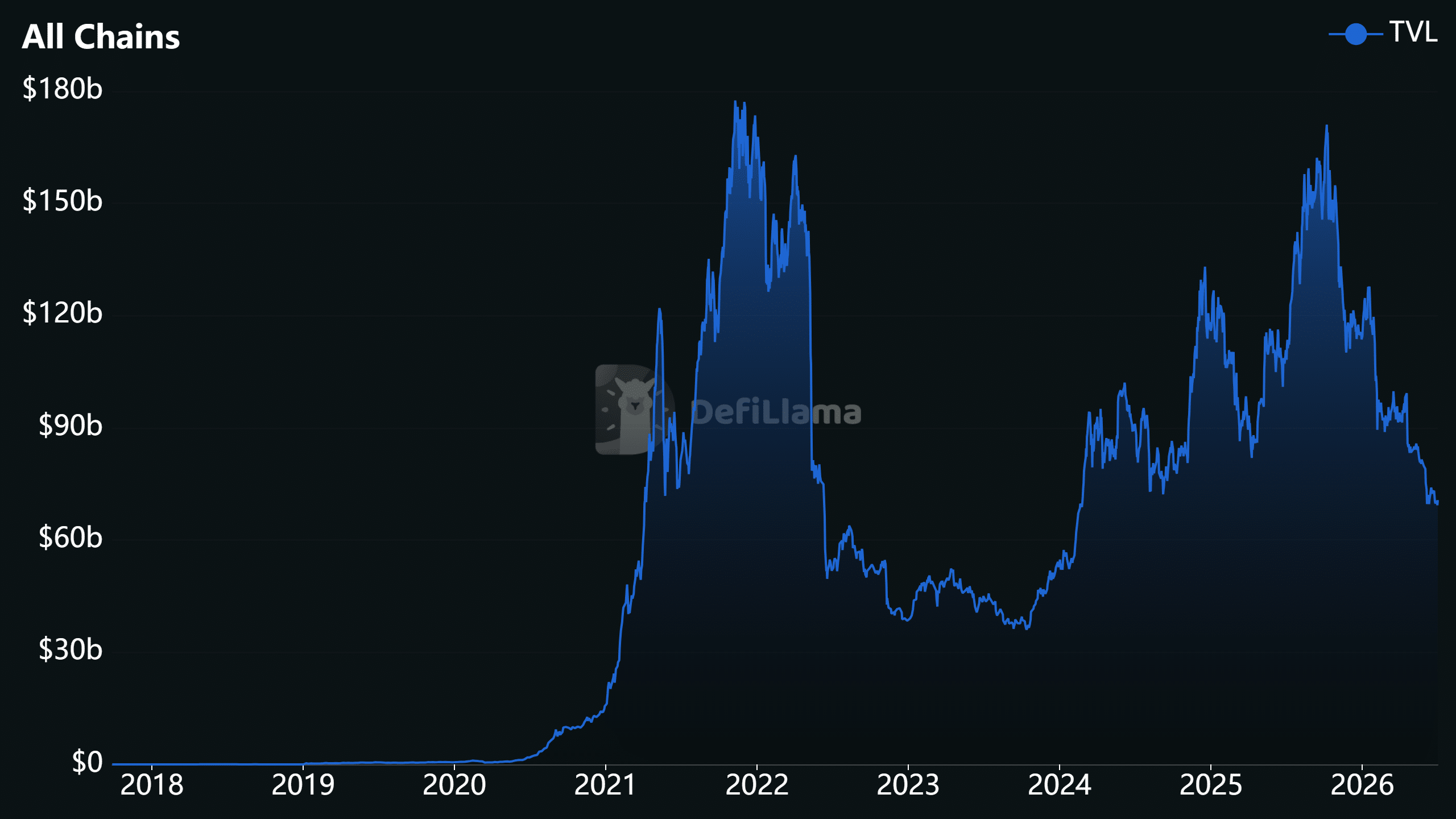
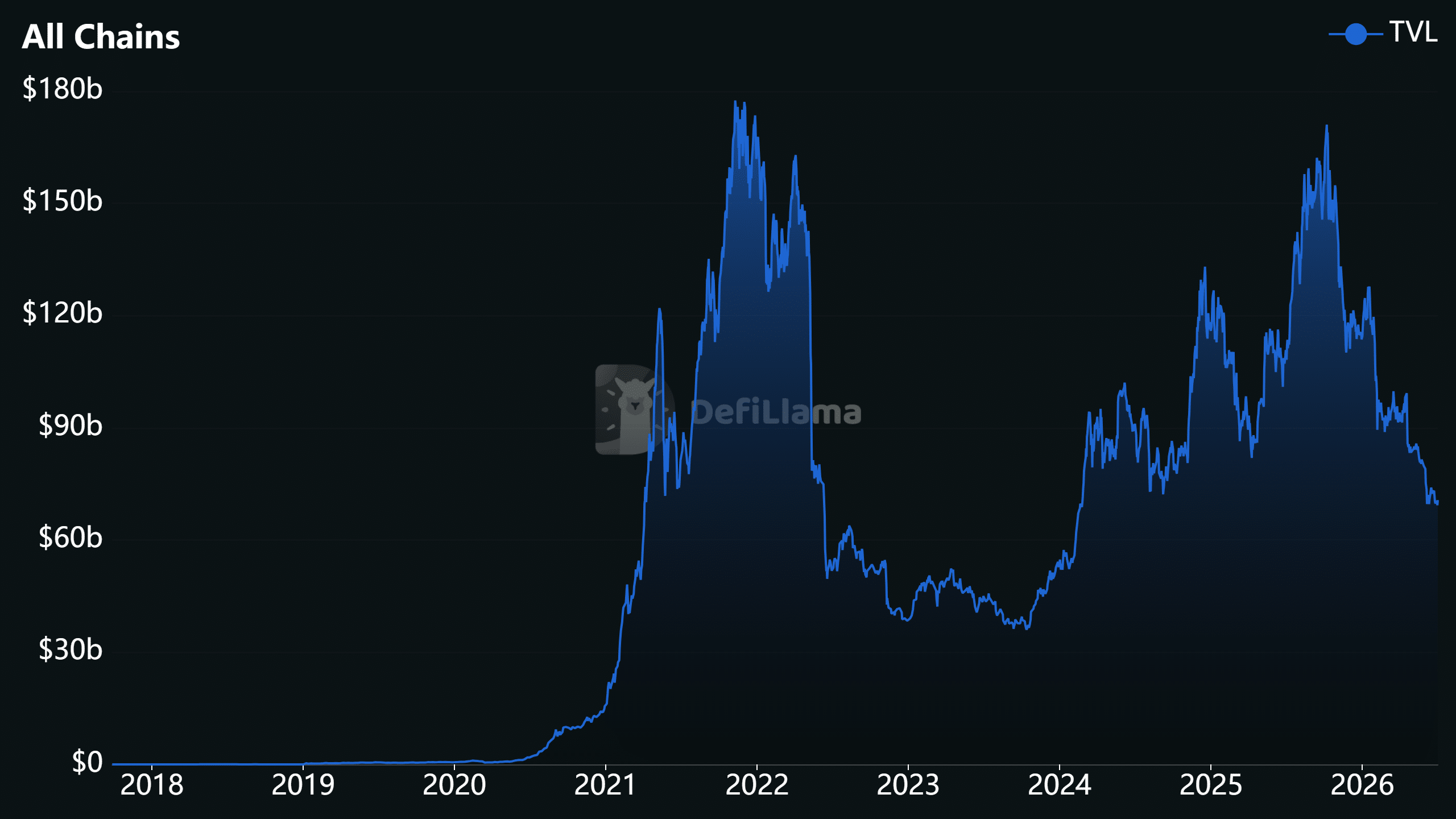
Source: DeFiLlama

Final Summary

  • Crypto hack cases hit a record high of 207 in H1 2026, but the stolen value was below $1B
  • North Korea-based threat actors accounted for $643M, or 66% of stolen funds over the same period.


相关问答

QAccording to the report, what was the total number of crypto hacks reported in H1 2026 and how does it compare to the same period in 2025?

AThere were 207 crypto hacks reported in the first half of 2026, which is more than double the 85 hacks reported in H1 2025.

QWhat percentage of the crypto hacks in H1 2026 were due to smart contract exploits, and what was identified as the main source of the majority of stolen value?

ASmart contract exploits accounted for 125 out of 207 incidents, or 60% of the hacks. However, the main source of stolen value (75%) was compromises of keys, custody systems, and signing infrastructure, not smart contract bugs.

QWhat percentage of the total stolen funds in H1 2026 were attributed to North Korea-linked entities?

ANorth Korea-linked entities were responsible for 66% of the total stolen funds in H1 2026.

QHow did the overall value stolen from crypto hacks in H1 2026 compare to the value stolen in H1 2025?

AThe total value stolen in H1 2026 was $972 million, which is less than half of the approximately $2.3 billion stolen in H1 2025.

QWhat was one significant consequence of the KelpDAO hack, as described in the article?

AIn the KelpDAO hack, the attacker used fake tokens as collateral on Aave to borrow legitimate assets, causing a liquidity crunch and a bank run on Aave. This led to some Aave pools reaching full utilization, preventing some depositors from withdrawing their funds.

你可能也喜欢

SpaceX交易权限现已开放:WEEX上线SPCXON交易对

2026年6月,SpaceX完成了史上最大规模的IPO,但大量投资者因券商限制、开户障碍和地域壁垒而无法参与。加密货币交易所WEEX推出了解决方案SPCXON/USDT现货交易对。SPCXON是一种基于Ondo代币化股票框架构建的产品,旨在为美国以外的合格交易者提供追踪SpaceX经济收益的途径,以USDT结算,交易便捷,无传统券商门槛。 SpaceX IPO定价为135美元,首日收盘接近161美元,随后一度冲高至225美元,公司估值约1.75万亿美元。看涨理由基于星链收入增长、无可匹敌的发射频率以及星舰里程碑。看跌观点则认为,其估值已达营收的90-110倍,且存在流通股稀少和即将到来的内部持股解锁等风险。 需注意,SPCXON提供的是价格敞口,而非股票所有权,不包含投票权和直接股息。其价格可能相对净资产价值出现溢价或折价,交易者需关注价差。 WEEX平台整合了包括SpaceX、MicroStrategy和Micron在内的多种代币化股权产品,用户可在统一账户内交易加密货币和股权敞口。平台还提供高达400倍杠杆的加密货币期货交易。 WEEX成立于2018年,全球用户超过620万,提供超过1200个现货交易对,并设有1000 BTC保护基金。平台亦提供跟单交易和AI工具等功能。 免责声明:本文内容不构成投资建议。

TheNewsCrypto14小时前

SpaceX交易权限现已开放:WEEX上线SPCXON交易对

TheNewsCrypto14小时前

Gate 研究院:加密金融产品掀起“华尔街化”浪潮,是竞争还是融合?

2009年比特币的创世区块暗含对传统金融体系的批判,其理想是建立去中心化、去中介、去银行的点对点金融系统。然而十七年后,比特币现货ETF获批、贝莱德等巨头发行相关产品、CME推出受监管衍生品、RWA(真实世界资产)和代币化国债市场快速增长等现象,显示传统金融正系统性地介入加密资产的发行、定价、托管和分销环节,引发了加密市场是否“华尔街化”的讨论。 文章认为,这并非单方面的吞并,而是加密体系与传统金融的双向融合与互补。加密领域提供无许可开放性、24小时交易和可编程结算,但缺乏合规通道、机构级托管和主流分销网络;传统金融则拥有牌照、信任、资金和渠道,但受限于交易时间、跨境门槛和结算效率。双方正朝彼此的核心优势靠拢。 这种融合体现为两条路径:一是以Gate为代表的加密交易所,逐步从提供代币化美股、CFD差价合约,发展到接入真实股票、港股、韩股交易,成为连接加密账户与传统券商基础设施的前端入口;二是以Robinhood为代表的传统券商,通过收购加密交易所、推出股票代币和建设自有Layer 2,将加密资产和链上代币化产品整合进其平台。两者的共同目标是争夺下一代综合金融账户的入口,让用户在一个界面内交易多种资产。 同时,RWA和链上国债作为资产层的融合正在加速。尽管规模尚小,但代币化国债等产品为链上提供了低波动收益资产,并吸引JP摩根、贝莱德等传统机构参与,测试未来资本市场的底层结算方式。 最终,加密与华尔街并非谁征服谁,而是在共同塑造一个更高效、全球化的统一资本市场。用户未来或将在同一个账户中自由交易比特币、股票、ETF、链上国债等多种资产,体验无缝的跨资产配置。去中心化的理想仍在底层协议中延续,而在应用层,一个融合了双方优势的新金融形态正在形成。

marsbit15小时前

Gate 研究院:加密金融产品掀起“华尔街化”浪潮,是竞争还是融合?

marsbit15小时前

交易

现货
活动图片




