Original | Odaily Planet Daily (@OdailyChina)
Author | Wenser (@wenser2010)

The "lobster fever" sparked by OpenClaw has slightly subsided on major social media platforms. The other day, Anthropic, the developer of Claude, directly issued a statement prohibiting "OpenClaw subscription-based free riding," leading some to exclaim, "Has OpenClaw already cooled off?"
In my opinion, against the backdrop where over 90% of the global population of 8 billion has not used AI applications, OpenClaw is already a phenomenal AI product, remaining popular for a full three months is a testament to its sensational impact. On the other hand, for the majority in China, perhaps compared to OpenClaw, which consumes massive amounts of tokens, has complex configuration processes, excessively high update frequencies, and unclear security risks, Xianyu might be the "more localized OpenClaw".
Some might find this confusing upon reading: Xianyu? That second-hand trading platform? What does that have to do with OpenClaw, the current hot topic in AI?
Let me explain in detail.
Before OpenClaw Gave AI Hands and Feet, Xianyu Had Already Become the Transaction Engine for the Physical World
"If previous Chatbots gave AI a brain; then the value of OpenClaw lies in giving AI hands and feet for the first time."
This statement emphasizes that OpenClaw enables AI Agents to possess various operational and execution capabilities, replacing humans in performing various tasks in the digital world, and even to some extent, acting upon the physical world in reverse.
However, the more realistic problem facing everyone is that compared to Chatbots whose token consumption per conversation remained in the order of tens of thousands or hundreds of thousands, OpenClaw has skyrocketed the scale of API calls and token usage for AI Agents to millions, tens of millions, or even hundreds of millions. Many have bluntly stated that after the emergence of OpenClaw, to ensure effectiveness, the token cost of using high-quality models like Claude, GPT, and Gemini can reach hundreds of dollars a day.
Yet the same task, placed as an order on Xianyu, might cost less than one percent. Yes, you read that correctly. Entering the "summer of the 21st century," the cost of human labor on the Xianyu platform has been compressed to the extreme. The time of the 'poor' also has its own unit of measurement and pricing system—an economic system operating on RMB and Xianyu Coin.
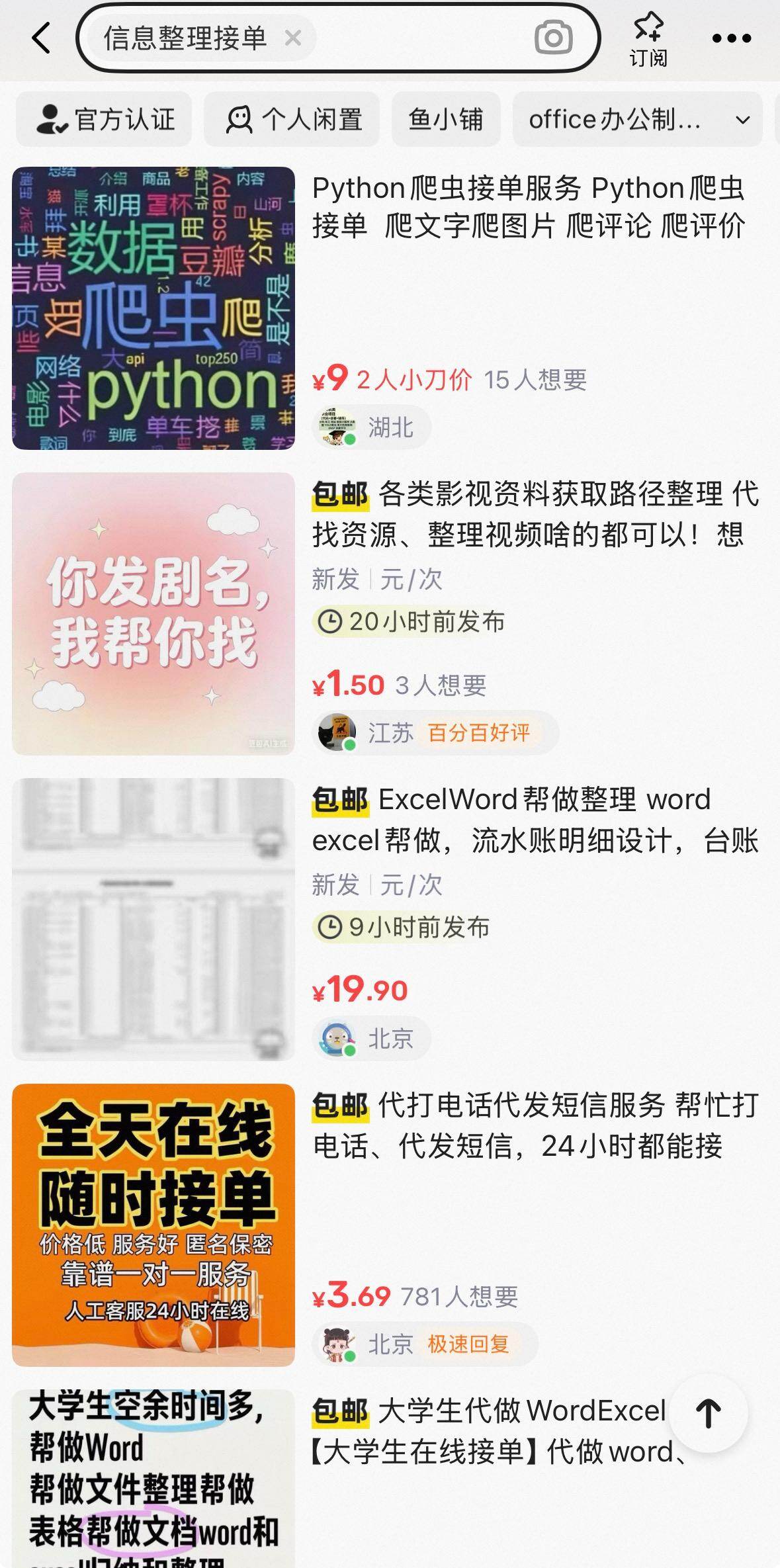
All Trades and Professions Produce Their Topmost Masters: Travel, AI, Sales, Recruitment, Matchmaking
Xianyu frequently sparks waves of discussion. People jokingly call the resourceful Xianyu platform the "domestic dark web"—on Xianyu, there's nothing you can't think of that it can't do.
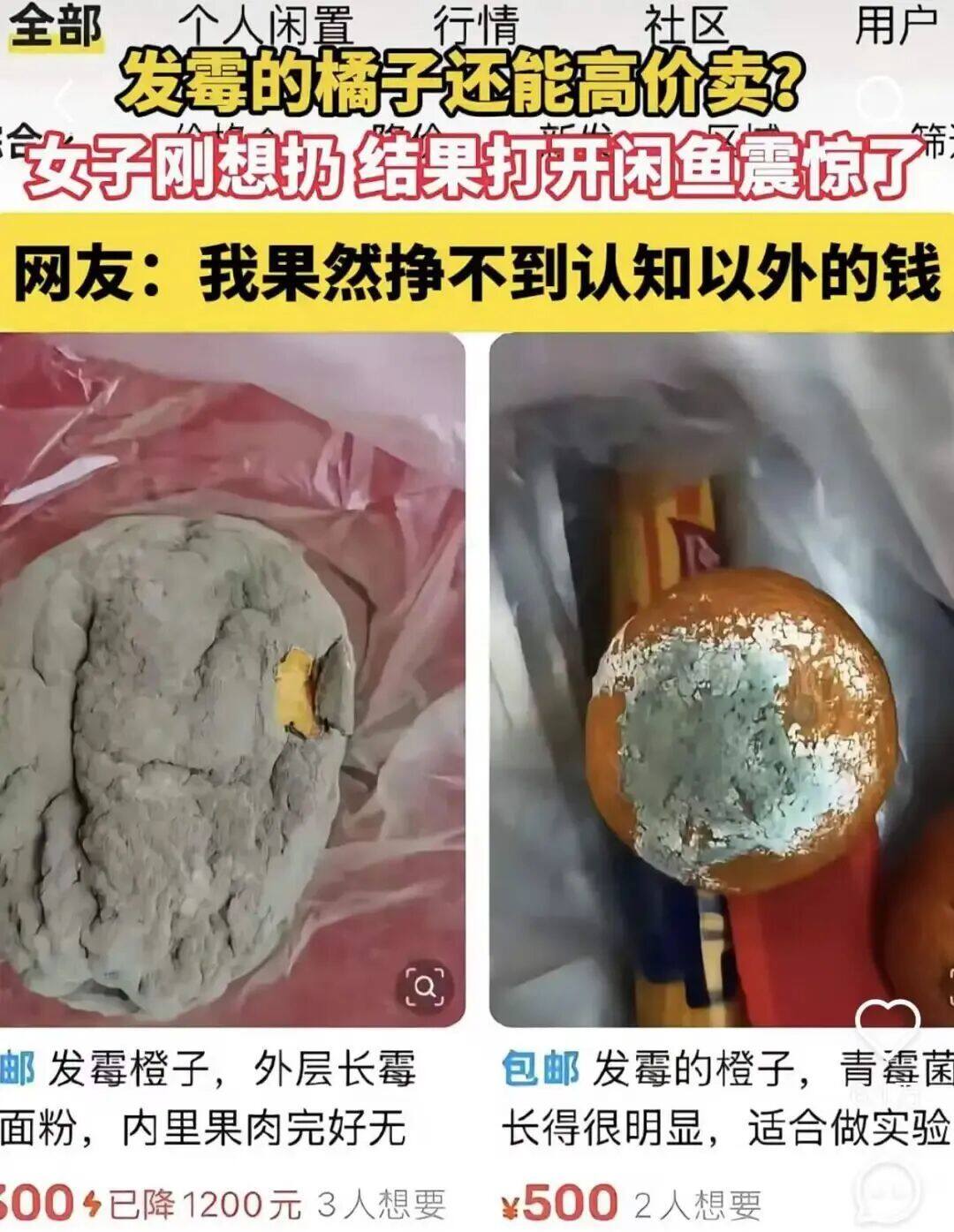
Some sell moldy oranges on Xianyu, which are spotted by biology and medical students who say they want to extract the mold for scientific research, buying them back at high prices ranging from hundreds to thousands of yuan;
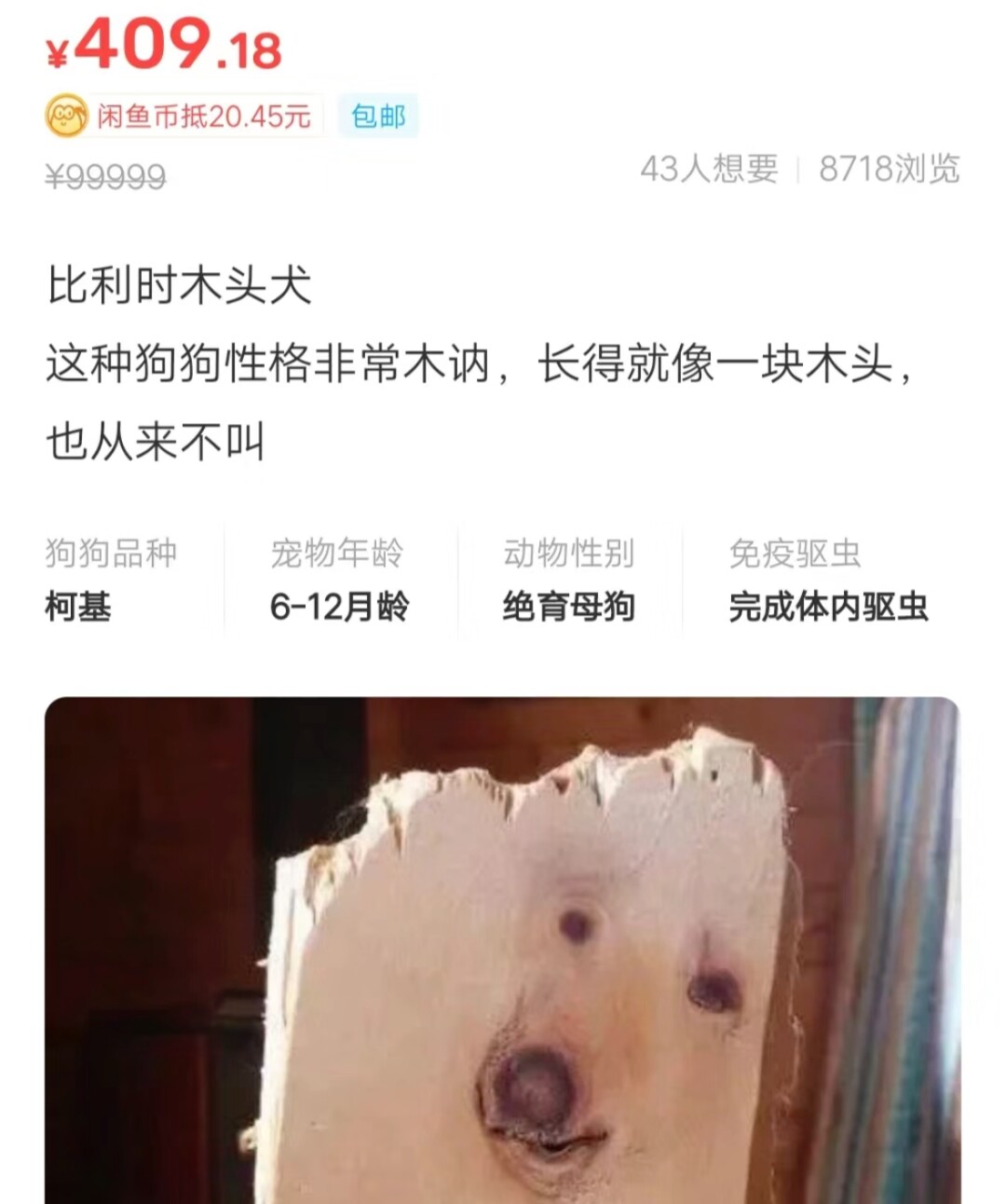
Some sell rare famous dogs on Xianyu at "low prices"—Belgian Wood Dogs, described as "spayed female dogs";
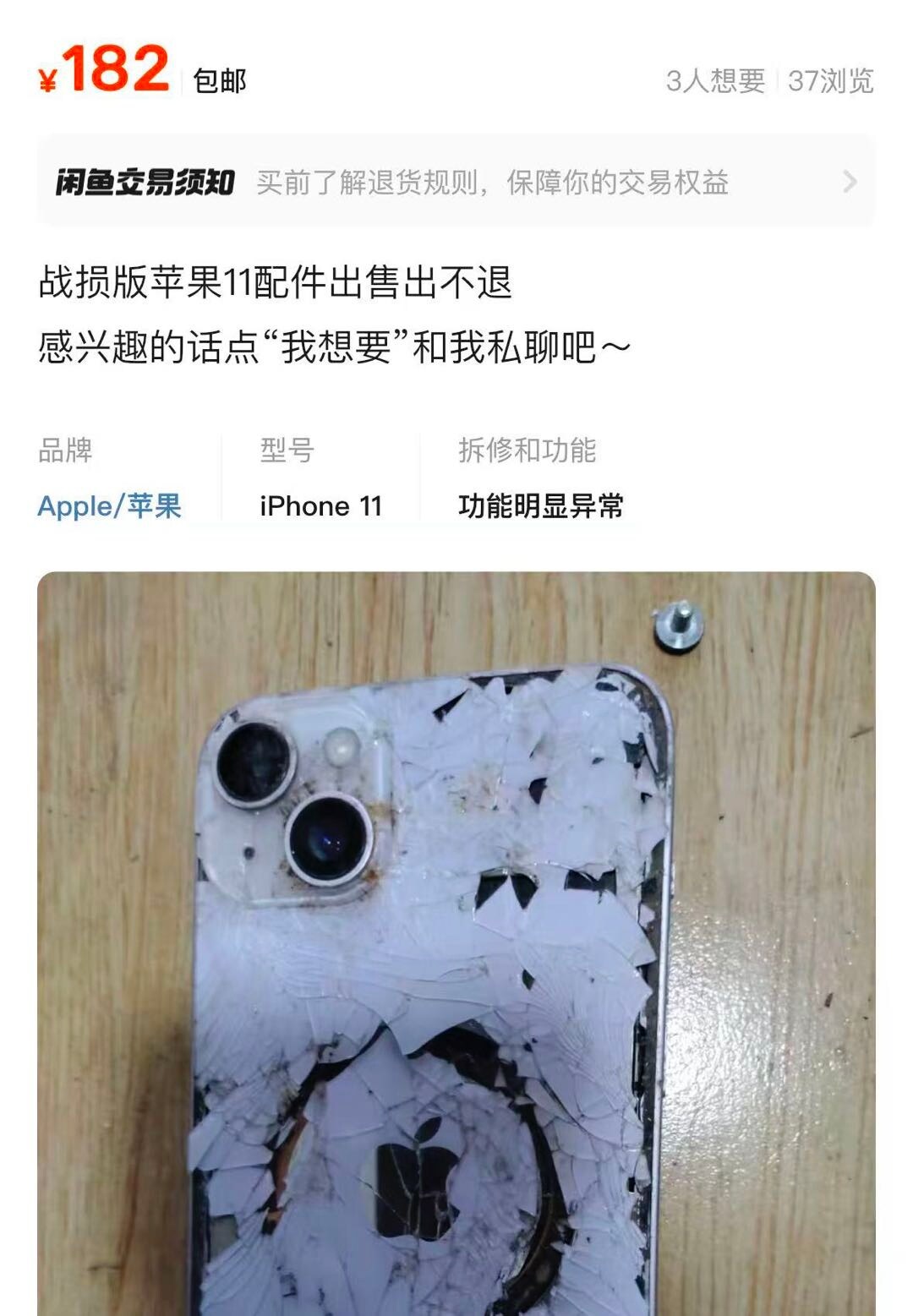
Battle-damaged second-hand Apple phones are considered a relatively normal "small case" on Xianyu.
As for using Xianyu to book hotels, buy tickets, purchase low-cost AI subscription memberships, find helpers, recruit people, and even for matchmaking and blind dates, these are also part of the platform's "daily business."

With the unconventional creativity of Xianyu sellers, the "sources of goods" are also quite unconventional:
There are those who help others collect拖欠的工资 (back wages), deploying an 80-year-old grandmother in a wheelchair to the front lines—
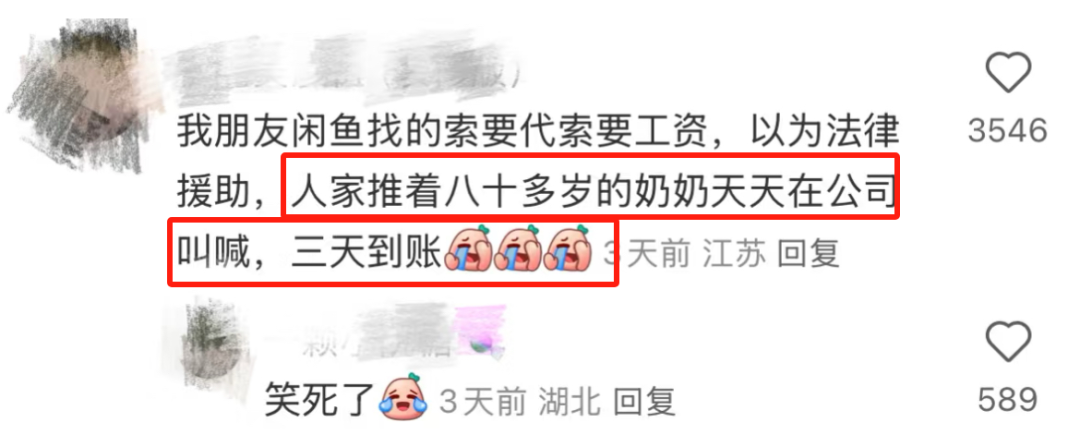
Finding someone to book hotel breakfast, costing as low as 5 yuan, only to later find out it was obtained by threatening to jump off a building—

Wanting to go to a music festival but not getting a ticket, you think the scalper has connections to get you in, but instead he leads you through a dog hole—

The once famous "Xianyu代办退机票" (Xianyu代办退机票) also sparked much discussion on major social media platforms, with the behind-the-scenes trick being "applying for a user's death certificate"—

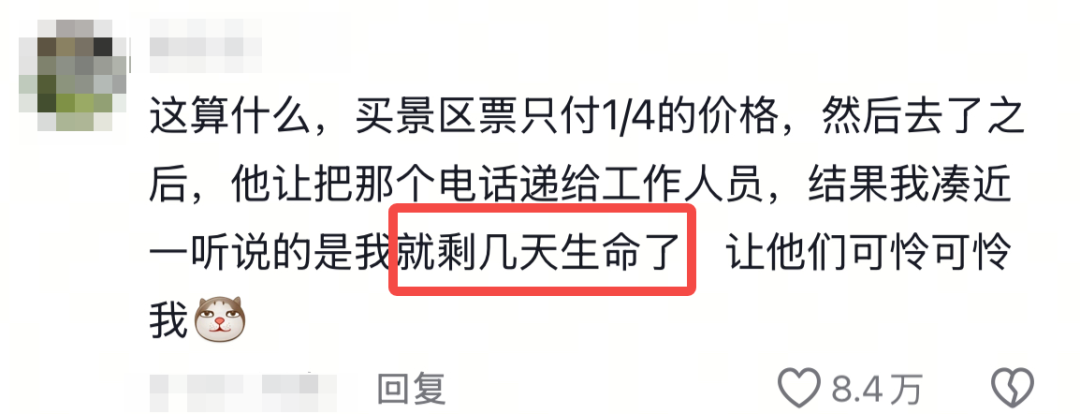
Want to buy low-priced scenic spot tickets? The Xianyu seller's external trick is a phone call telling the scenic spot staff "this person is almost gone"—
On this second-hand internet trading platform with over 200 million monthly active users, various marginal market demands hidden in the capillaries of the domestic internet market and diverse, flexible supplies coexist. Thus, a consumer market parallel to mainstream e-commerce platforms and even offline shopping channels has, in less than 13 years, gradually expanded into today's diverse trading universe, recording 217 million monthly active users in March, even surpassing Xiaohongshu.
As early as the beginning of 2024, its daily GMV (Gross Merchandise Volume) had already exceeded 1 billion yuan. Now, thanks to the "AI camera function" launched in early March, new products on Xianyu surged by over 50 million, with more than 12 million users participating in the experience. Additionally, industry predictions indicate that the scale of the domestic second-hand trading market is expected to exceed 3.1 trillion yuan by 2026, with Xianyu playing a significant role in this.
The Premium Economics and Free Power Theory Behind Xianyu: Leverage, Arbitrage, Collaboration, and Productivity
Its unique survival rules, distinct from other e-commerce platforms, have allowed Xianyu to rise suddenly amidst the stock competition in the domestic internet user market, finding its own comfort zone.
Behind this现状 lies a similarity to the rapidly developing AI in recent years and OpenClaw, which topped the GitHub star chart this year. It contains its own set of premium economics and free power theory.
Last month, Justin Sun, founder of TRON, discussed this phenomenon:
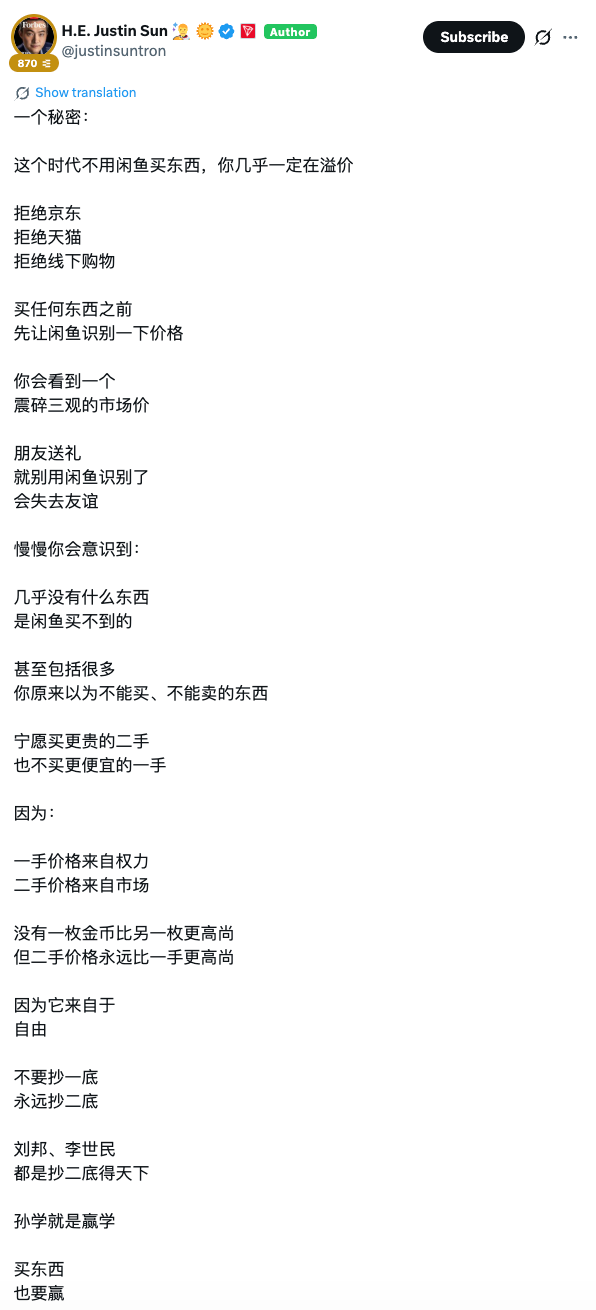
Although some wording is quite extreme, the "premium theory" and "power theory" within it indeed reveal the unique value and market pricing system of Xianyu as a second-hand trading platform. Behind these words, we can glimpse more reasons why Xianyu can be called the "Chinese Localized OpenClaw":
1. AI Hands/Feet vs. Human/Material Leverage
If OpenClaw gave AI independent operational execution capabilities for the first time, then the value of Xianyu lies in enabling the movement, circulation, and value production of human and material resources with an extremely low threshold.
As the joke about学历贬值 (devaluation of academic qualifications) goes: "For 3000 yuan, you can't even buy a 5090 graphics card; but you can hire a college student to work for you."
Whether it's second-hand goods or cheap labor, the Xianyu platform has subjected them to full market pricing and value quantification. In a双边市场 (two-sided market) where supply far exceeds demand, the human and material resources on Xianyu are even more abundant than the AI models and token resources required by OpenClaw.
2. Token Arbitrage vs. Bilateral Arbitrage
For countless human users, OpenClaw, which responds 24/7 and allows随意添加 Skill 配置文件 (arbitrary addition of Skill configuration files) to expand capability boundaries, is undoubtedly a "token arbitrage tool"—inputting尽可能低廉的 Token 原料 (as cheap token raw materials as possible) into the machine, which then produces specific content production materials according to instructions. Although this brings large-scale, exponential token usage consumption problems, it still allows countless people to experience the thrill of "mastering AI production materials" and becoming "AI capitalists" for the first time.
The commodity resources and market demands on the Xianyu platform, however, represent a form of bilateral arbitrage based on buyers and sellers—leveraging lower entry costs, lower handling fees (Odaily Planet Daily Note: In June 2024, the Xianyu platform announced that starting September 1 of that year, it would charge all sellers a 0.6% basic software service fee, with a maximum of 60 yuan per transaction, including individual merchants), and the platform's aggregated large-scale idle human resources to do platform business.
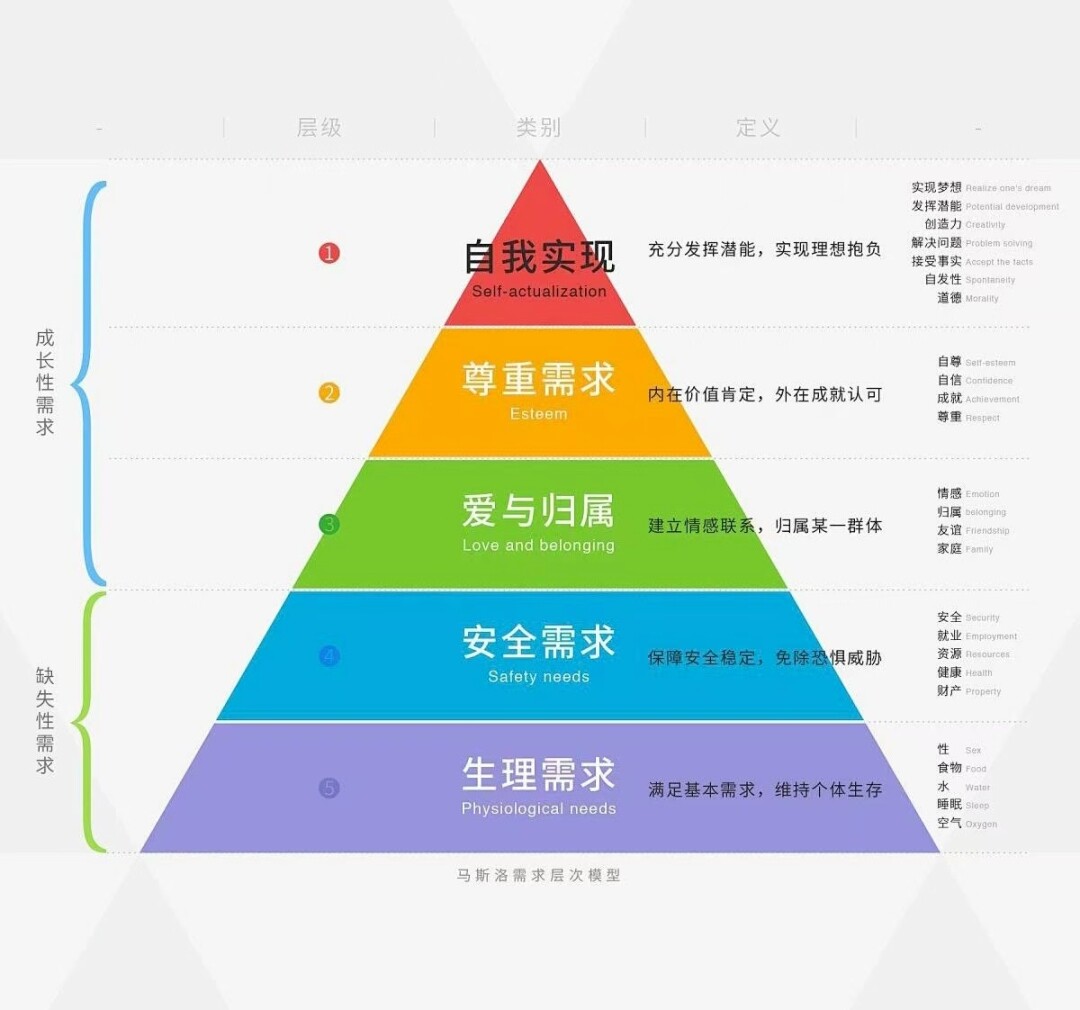
Moreover, similar to OpenClaw catering to both token providers and consumer users, Xianyu also satisfies the bilateral needs of product/service providers and market demanders, and corresponds to Maslow's hierarchy of needs.
3. Lobster Collaboration vs. Human Collaboration
In terms of team collaboration, compared to OpenClaw's "lobster corps" or "AI Agent teams," Xianyu also has its merits, which is筛选满足不同要求、具备不同能力、扮演各种角色的专业“雇佣兵” (screening professional "mercenaries" who meet different requirements, possess different abilities, and play various roles).
Like the autonomous driving in the new energy vehicle sector, the intent engine highly praised in the cryptocurrency market, and the self-driving, self-evolving, self-developing large language models in the AI field, Xianyu can also be seen as a "screening platform" for finding collaborative members.
In essence, the puzzles formed by the technologies and personnel involved above are all the same thing. The ultimate goal of the user is所思即所求、所言即所用、所见即所得 (what one thinks is what one seeks, what one says is what one uses, what one sees is what one gets).
4. Information Productivity vs. Information Gap Productivity
Strictly speaking, AI does not originally create information. Large language models and various AI Agents merely follow inference rules, combine, match, and call various information raw materials (including text, images, videos, and other multimodal content), and finally output information products in different forms.
In contrast, humans can not only absorb and learn information but also produce various types of information, and can create information gaps through various types of information and thereby create value. The various service providers on Xianyu have their own subjective judgment abilities, self-screening abilities, and self-driving abilities.
For overseas countries with high labor costs and an accelerating aging population, AI Agent applications represented by OpenClaw and embodied intelligent robots might open a new "window of productivity development" for them;而对于享受着过往人口红利、资源红利乃至制造业红利的国内互联网人群而言 (for domestic internet users who have enjoyed past demographic dividends, resource dividends, and even manufacturing dividends), perhaps internet platforms for labor and commodity services like Xianyu are the better solution. Just as百度创始人李彦宏 (Robin Li, founder of Baidu) once bluntly stated—in terms of trading privacy for convenience, Chinese people have always been utterly uninhibited. In front of Xianyu, which efficiently extracts personal information from users in exchange for convenience, OpenClaw with its potential security risks can only be considered a small巫见大巫 (witch meeting a great witch—pales in comparison).
Facing the declining热度 (heat) of AI Agents and OpenClaw, looking from another perspective, the biggest reason might be—
Xianyu, this OpenClaw more suited for Chinese users.
References:
Has OpenClaw Cooled Off?
Haven't Been on Xianyu for 3 Days, How Did It Become the Chinese Dark Web?!
The Chinese Version of the Dark Web Understands Too Well What Young People Want
Xianyu Doesn't Want to Compare with Xiaohongshu Either, But It Really Has No Choice
600 Million People Look for Services on It, The Worse the Economy, The Hotter the "Chinese Version Dark Web"?