Author: Golem
Original Title: Don't Just Focus on Yi Lihua, These Whales' Moves During the Crash Are More Worth Watching
Blockchain is killing again. Bitcoin has been falling for days, dropping more than 15% in the past 24 hours at one point, quickly sliding to $60,000, down over 40% from the October 2025 high, hitting a new low for the phase, and potentially recording its largest single-day drop since the FTX incident in 2022. Altcoins were hit even harder, with a river of blood flowing. (Related reading: A nearly 20% single-day crash, how long has it been since you saw Bitcoin at $60,000?)
Regarding the reasons behind this decline, the market mostly links it to macro factors, such as the "Warsh effect" triggered by the new Fed Chair Warsh taking office, the AI capital race sucking liquidity from other global assets, and the escalation of US-Iran tensions.
In addition, there have been many baseless speculations. Because this decline was too smooth, almost without pause, and lacked specific event drivers, many voices speculate whether a large institution has blown up, and a hidden black swan may surface soon. It's like watching a pile of explosives detonate without knowing who lit the fuse. According to Alternative.me data, today's crypto market Fear and Greed Index fell to 9, in the "Extreme Fear" zone, down from 12 the previous day and 16 last week, while last month the index was still 42.
"The peak produces false adherents, the twilight reveals the true believers."
The more such moments when "analysis fails," the more one can see investors' true intentions from their positions. As we fear the deep bear is coming, which whales in the market are selling, and who is truly buying the dip in a big way?
Who is Selling Valuable Coins?
Vitalik and Aave Founder Sell ETH to Cash Out
During the market drop in the early hours of February 6, Aave founder Stani Kulechov (0×803...c78d) sold 4,504 ETH on-chain at a price of $1,855, converting it into 8.36 million USDC. ETH fell to a low of $1,747 in the early hours of February 6.
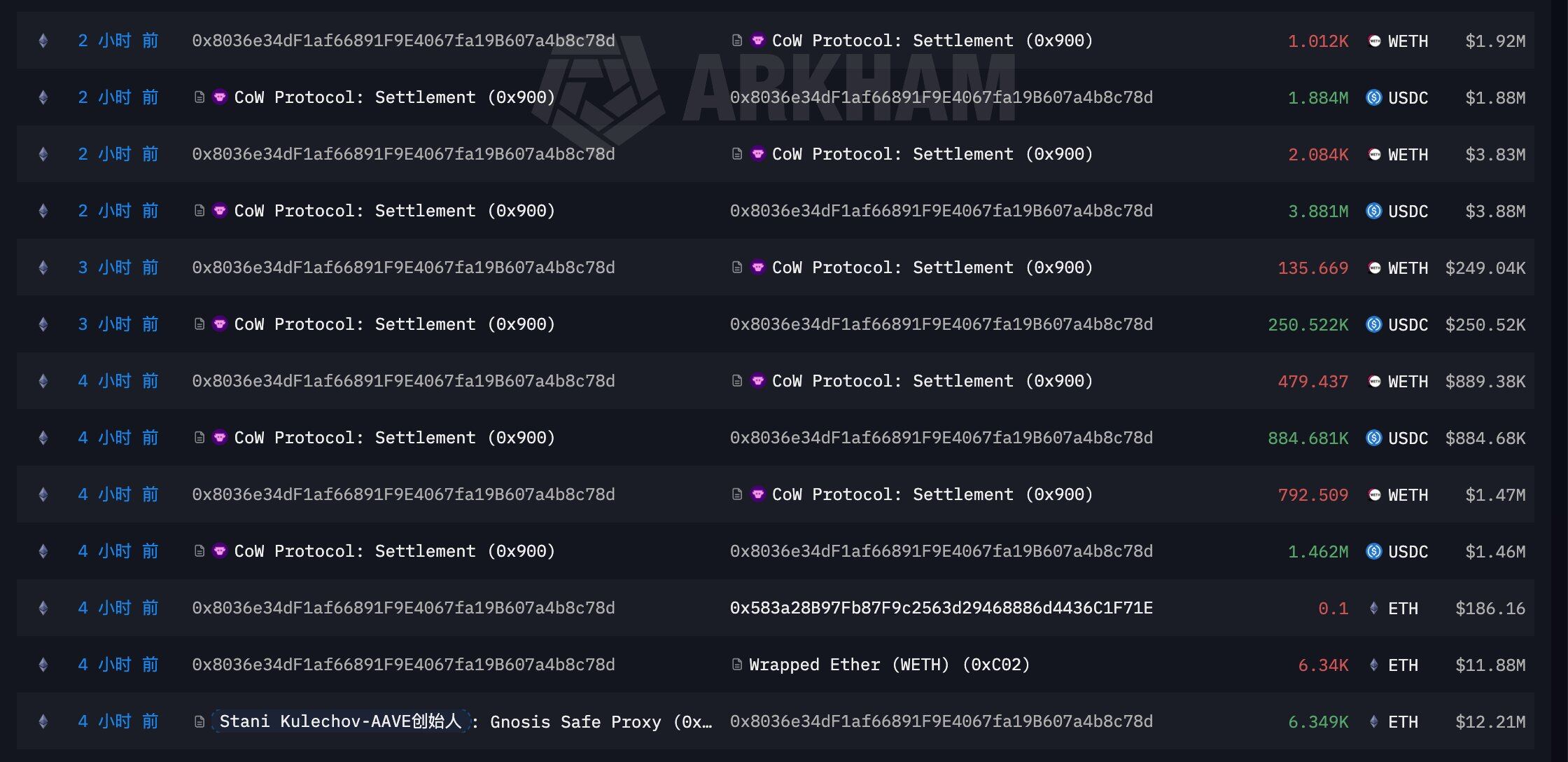
Aave Founder Selling ETH
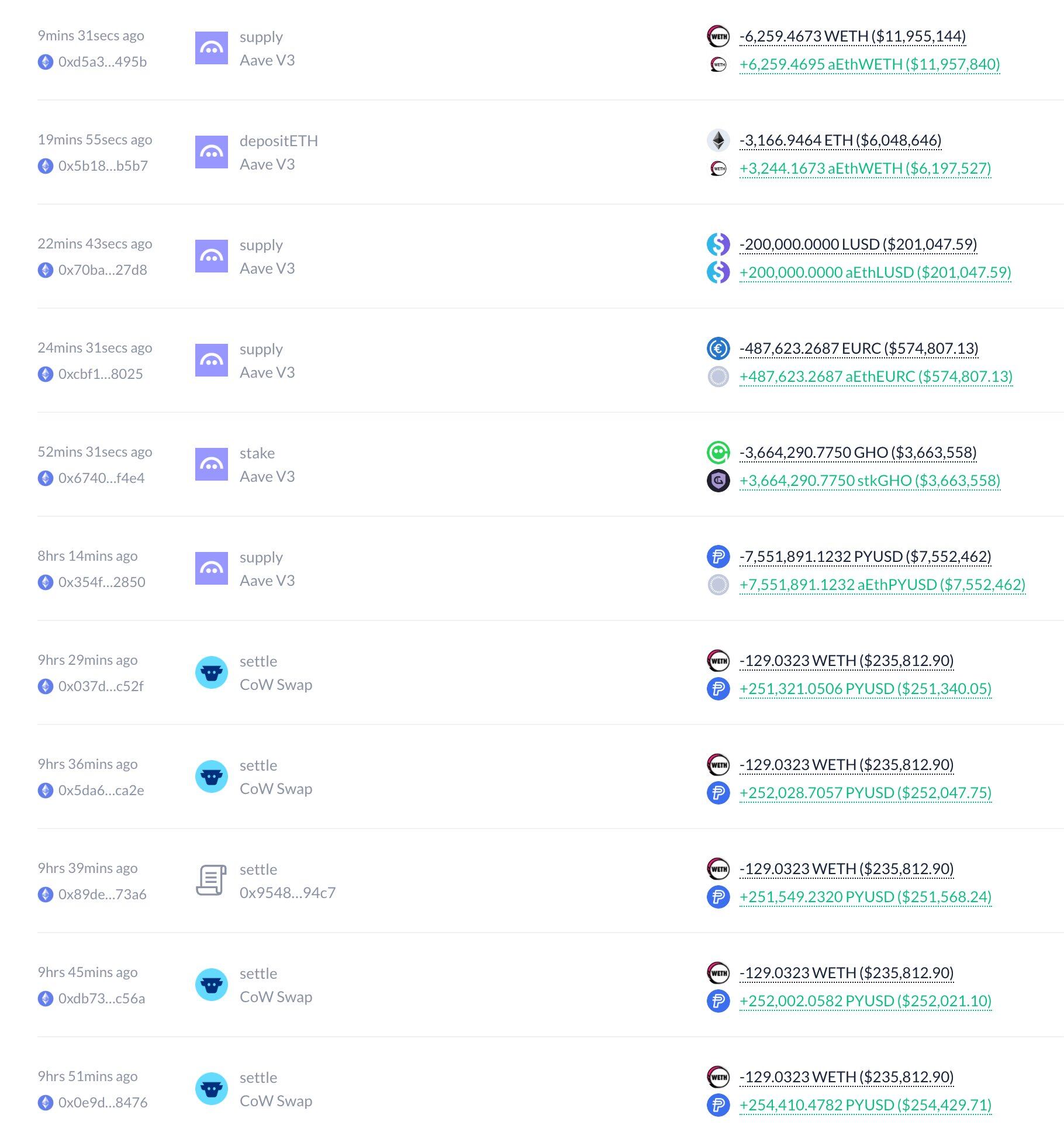
Besides the Aave founder, Ethereum founder Vitalik has also been selling ETH frequently recently. On January 30, Vitalik posted that he had withdrawn 16,384 ETH for a multi-year donation plan, focusing on supporting an open, verifiable, end-to-end software and hardware technology stack to protect personal life and the public environment.
On February 3, Vitalik began selling these ETH, selling 493 ETH that day worth about $1.16 million. As of February 6, the sale progress of the 16,384 ETH planned for donation had reached 42.1%, with a cumulative sale of 6,899.5 ETH, totaling $14.15 million, at an average selling price of $2,052. However, Vitalik has deposited the remaining 9,484.5 ETH into Aave, which may mean he does not plan to sell in the short term.
"ETH Mega-Bull" Yi Lihua Falls, Sells About 250,000 ETH
Yi Lihua's Trend Research was one of the most watched ETH bulls this cycle, and he himself often publicly expressed bullish views on the bull market on social media, with the community drawing a comparison: "West has Tom Lee, East has Yi Lihua."
However, as ETH fell, Yi Lihua couldn't hold on either. On February 1, according to monitoring, Yi Lihua's Trend Research began depositing over 10,000 ETH into Binance. On February 2, Yi Lihua posted on X to admit that he had indeed been too early bullish on ETH, and the profits from selling at the last top had been wiped out. He decided to continue waiting for the market to rise while controlling risks.
On February 3, he posted again, saying he still看好 (is optimistic about) the new bull market performance, expecting ETH to reach over $10,000 and BTC to exceed $200,000, but recently adjusted some positions to control risks.
This statement may have paved the way for subsequent ETH transfers. As of now, the six publicly known addresses of Trend Research hold only about 396,000 ETH. On February 1, Trend Research publicly held 650,000 ETH, meaning they sold about 250,000 ETH, worth $554 million. Meanwhile, Yi Lihua's latest liquidation range is $1,509 to $1,800.
But from firmly buying long to being forced to "cut losses," Yi Lihua is probably filled with helplessness.

Whales Sell 81,068 BTC in the Past 8 Days
Besides these celebrities selling公开 (public) positions, hidden on-chain whales are also "fleeing." According to Santiment statistics, whales holding 10 to 10,000 BTC currently hold 68.04% of the total BTC supply, a new low in 9 months, having sold 81,068 BTC in just the past 8 days.
After the market drop, whales also began to stop losses and deleverage. According to monitoring, during yesterday's market drop, a whale deposited 10,128 ETH into Galaxy and FalconX, worth $20.44 million. A whale (0xfdd...6a92) holding an ETH lending position on Spark also began selling ETH to stop losses when the ETH price fell to $2,050. This whale累计 (cumulatively) sold 27,800 ETH, repaying $44.14 million in loans.
However, unlike whales, retail investors are more inclined to buy the dip at this time. According to Santiment statistics, addresses holding less than 0.01 BTC, "shrimp addresses," now hold 0.249% of the total BTC supply, a 20-month high, reflecting retail investors buying the dip. But beware, this combination of whale selling and retail buying has historically led to bear market cycles.
Who is Quietly Buying the Dip
Besides retail investors buying the dip, some faith-strong large holders/institutions are also buying. According to statistics, after the market fell, Bitfinex margin long positions rose to about 77,100 BTC, hitting a nearly two-year high. This trend shows that there is still明显的 (obvious) leveraged funds buying the dip during the decline. Additionally, Bitfinex margin long positions have grown about 64% in the past six months, usually seen as a signal that large holders or high-risk preference funds continue to add positions during market stress periods.
Well-known trader Eugene Ng Ah Sio also posted on his personal channel, "Buy when there's blood in the streets, even if it's your own."
"Machi" with Unlimited Ammo Going Long
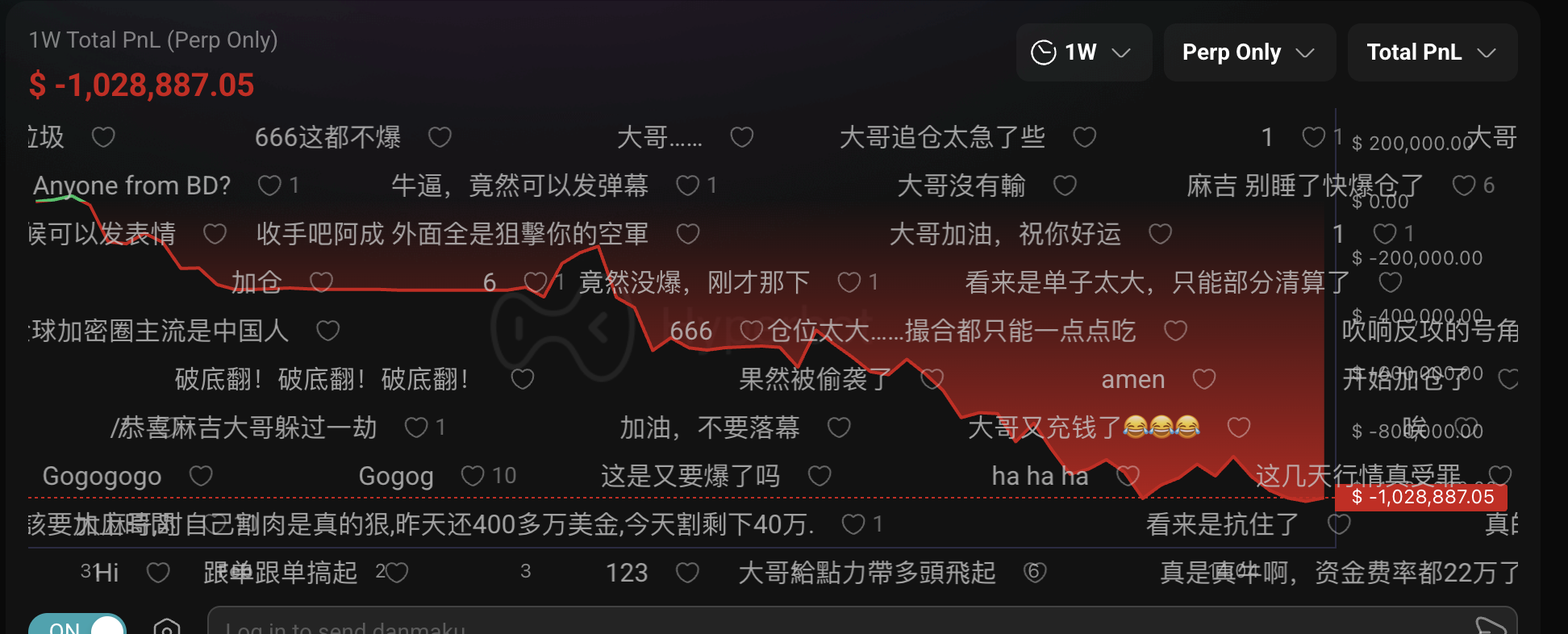
Iron-headed "Machi" is a representative large holder who goes long on the dip. According to monitoring, in the early hours of February 6, during the market drop, Machi大哥 (big brother) persisted in going long, depositing 250,000 USDC into Hyperliquid, opening a 25x leveraged ETH long, a 40x leveraged BTC long, a 10x leveraged HYPE long, and a 10x leveraged PUMP long. However, the BTC and PUMP longs were quickly liquidated in the subsequent market drop. The HYPE and ETH longs were partially liquidated and then added to.
As of now, "Machi" still holds a 25x leveraged Ethereum long, with a position of 320 ETH, liquidation price $1,841; he also holds a 10x leveraged HYPE long, position 14,720 HYPE, liquidation price about $31.
This week, Machi大哥 had 11平仓 (position closures), with 3 profitable and 8 losing, a win rate of 27.27%, and a net loss of about $286,000 for the week. In the hyperbot弹屏 (live comment) messages, there were all voices encouraging Machi.
BTC's Eternal "Backstop" MicroStrategy: Cost Basis $76,052
Fortunately, during the market crash, the largest BTC treasury, MicroStrategy, did not choose to sell. MicroStrategy CEO Phong Le said at the MicroStrategy Q4 financial results webinar that Bitcoin would need to fall to $8,000 and stay at that level for five to six years to pose a real threat to repaying its convertible debt. This means only then might MicroStrategy sell BTC, which is somewhat reassuring for the market.
Meanwhile, during the market drop earlier this month, MicroStrategy bought another 855 BTC for about $75.3 million, at a unit price of about $87,974. As of now, MicroStrategy holds
713,502 BTC, with a total acquisition cost of approximately $54.26 billion, and an average acquisition price of about $76,052. Therefore, at the current Bitcoin price of $66,000, MicroStrategy has a floating loss of over $7.168 billion.
Besides MicroStrategy holding firm and buying, Japan's largest BTC treasury company, Metaplanet, also expressed faith in BTC on February 6. Its CEO Simon Gerovich posted on X: "Regarding recent stock price movements and the severe situation facing shareholders, Metaplanet's strategy remains unchanged. The company will continue to accumulate BTC." But data shows Metaplanet has not bought BTC for three consecutive weeks.
ETH's Staunch Supporter Tom Lee: $6.6B Floating Loss Just a "Small Problem"
Just from the perspective of holding ETH, Tom Lee is clearly more resilient than Yi Lihua. His ETH treasury company, Bitmine, not only did not sell ETH but also continued to buy during the market drop.
In the last week of January, when ETH fell to a low of $2,200, Bitmine bought 41,788 ETH that week, worth $96.55 million. Subsequently, Tom Lee said on February 2, "The company currently has no debt. Given Ethereum's strengthening fundamentals, the recent market pullback is极具吸引力 (extremely attractive),". This basically indicates Tom Lee's strategy of buying the dip. On February 3, Bitmine bought 20,000 ETH through FalconX, worth $46.04 million.
On February 4, in response to外界称 (external claims that) Bitmine's ETH holdings had a floating loss of up to $6.6 billion, Tom Lee responded that this was normal. But as of now, Bitmine holds 4,285,125 ETH, with an average cost basis above $3,500. With ETH falling below $2,000, Bitmine's floating loss has exceeded $8 billion.
On-chain Whales Still Bullish on ETH
For on-chain whales, the declining market is also a rare opportunity to buy the dip. According to monitoring, a whale dormant for 7 months (3M4p1i) began buying the dip after the BTC crash on February 6. This whale bought 482 BTC, worth $32.5 million, and currently holds 1,960 BTC,总价值 (total value) $128 million.
Compared to BTC, on-chain whales seem to prefer ETH more. A newly created wallet withdrew 55,483 ETH from WhiteBIT in the past 2 days, worth $115.16 million.
From the evening of February 5 to February 6, several on-chain whales/institutions also continued to buy ETH. According to Lookonchain monitoring, a wallet associated with Longling Capital withdrew 8,500 ETH from Binance on the evening of February 5, worth $17.51 million. The whale/institution "7 Siblings" added another 6,923.85 ETH in the early hours when ETH fell below $2,000, about $13.91 million, at an average cost of $2,009.8. Their current ETH holdings reached 318,508.07. Meanwhile, another whale account spent 28 million USDT to buy 13,837 ETH, purchase average $2,024, but this whale address is also thought to possibly belong to "7 Siblings".
Twitter:https://twitter.com/BitpushNewsCN
Bitpush TG Discussion Group:https://t.me/BitPushCommunity
Bitpush TG Subscription: https://t.me/bitpush







