When the Market Plunges: Who is Selling and Exiting, Who is Buying the Dip Against the Trend

比推Xuất bản vào 2026-02-06Cập nhật gần nhất vào 2026-02-06

Tóm tắt

Amid a significant cryptocurrency market downturn, Bitcoin fell over 15% to around $60,000, marking a 40% drop from its October 2025 high and its worst single-day decline since the FTX collapse. Altcoins suffered even steeper losses. The sell-off has been attributed to macro factors, including the new Fed Chair’s policies, AI capital shifts, and geopolitical tensions, alongside speculation about undisclosed institutional failures. Key sellers included Aave’s founder Stani Kulechov, who sold 4,504 ETH, and Ethereum’s Vitalik Buterin, who sold 6,899.5 ETH from a planned donation. Prominent ETH bull Yi Lihua (Trend Research) sold approximately 250,000 ETH ($554 million), citing risk management. On-chain data shows whales offloaded 81,068 BTC in eight days, reducing their holdings to a nine-month low. Conversely, retail investors increased their small BTC holdings, a pattern historically associated with bear markets. Some large players, however, bought the dip. Bitfinex margin long positions hit a two-year high. "Million" (Machi Big Brother) aggressively opened leveraged long positions, though several were liquidated. MicroStrategy reaffirmed its commitment, purchasing more BTC despite a paper loss exceeding $7 billion, with CEO Phong Le stating they would only sell if BTC fell to $8,000 for years. Similarly, Tom Lee’s Bitmine continued buying ETH, despite an over $8 billion unrealized loss, calling the dip attractive. On-chain whales also accumulated ETH, with one new wallet w...

Author: Golem

Original Title: Don't Just Focus on Yi Lihua, These Whales' Moves During the Crash Are More Worth Watching


Blockchain is killing again. Bitcoin has been falling for days, dropping more than 15% in the past 24 hours at one point, quickly sliding to $60,000, down over 40% from the October 2025 high, hitting a new low for the phase, and potentially recording its largest single-day drop since the FTX incident in 2022. Altcoins were hit even harder, with a river of blood flowing. (Related reading: A nearly 20% single-day crash, how long has it been since you saw Bitcoin at $60,000?)

Regarding the reasons behind this decline, the market mostly links it to macro factors, such as the "Warsh effect" triggered by the new Fed Chair Warsh taking office, the AI capital race sucking liquidity from other global assets, and the escalation of US-Iran tensions.

In addition, there have been many baseless speculations. Because this decline was too smooth, almost without pause, and lacked specific event drivers, many voices speculate whether a large institution has blown up, and a hidden black swan may surface soon. It's like watching a pile of explosives detonate without knowing who lit the fuse. According to Alternative.me data, today's crypto market Fear and Greed Index fell to 9, in the "Extreme Fear" zone, down from 12 the previous day and 16 last week, while last month the index was still 42.

"The peak produces false adherents, the twilight reveals the true believers."

The more such moments when "analysis fails," the more one can see investors' true intentions from their positions. As we fear the deep bear is coming, which whales in the market are selling, and who is truly buying the dip in a big way?

Who is Selling Valuable Coins?

Vitalik and Aave Founder Sell ETH to Cash Out

During the market drop in the early hours of February 6, Aave founder Stani Kulechov (0×803...c78d) sold 4,504 ETH on-chain at a price of $1,855, converting it into 8.36 million USDC. ETH fell to a low of $1,747 in the early hours of February 6.
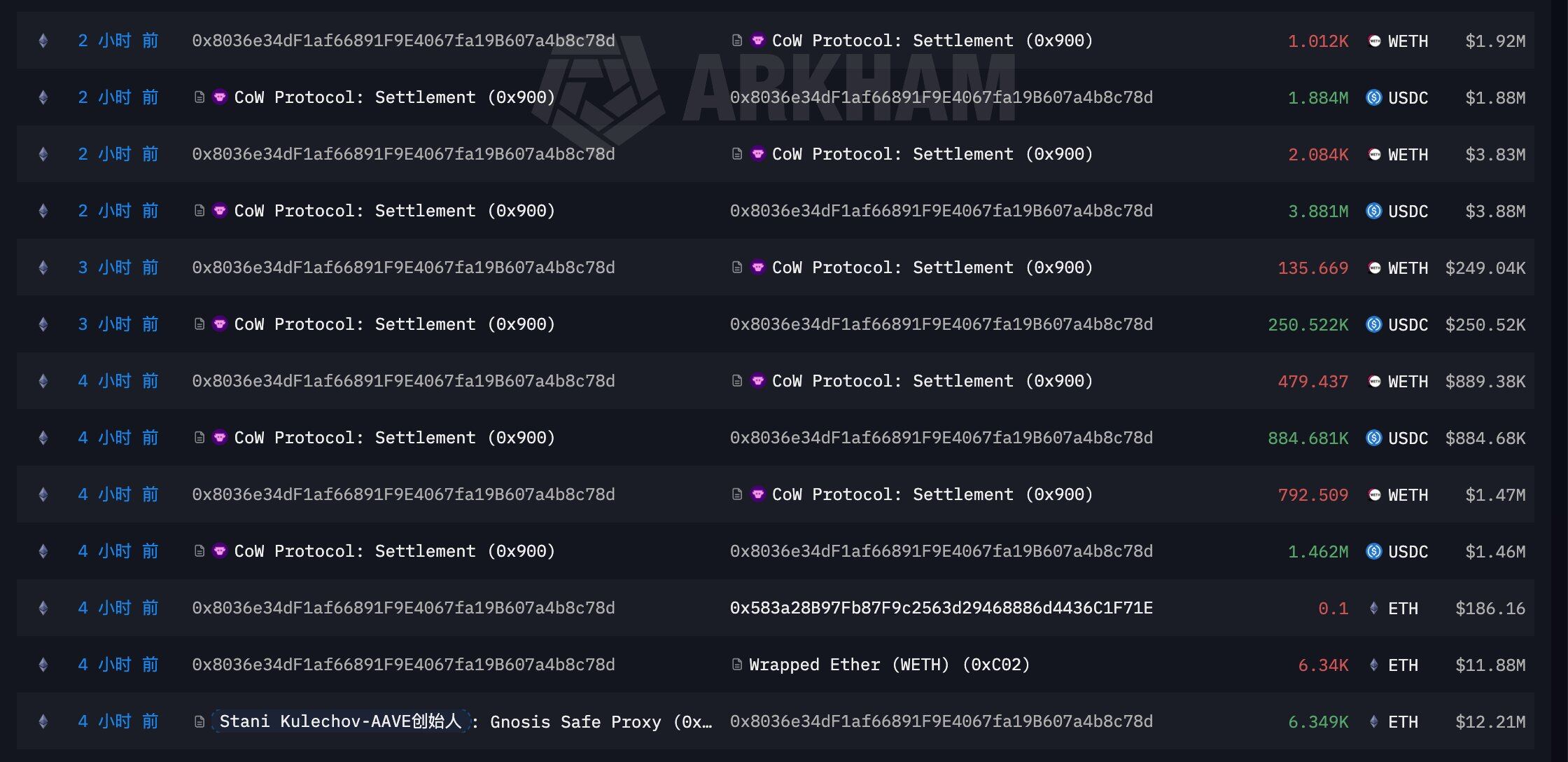
Aave Founder Selling ETH

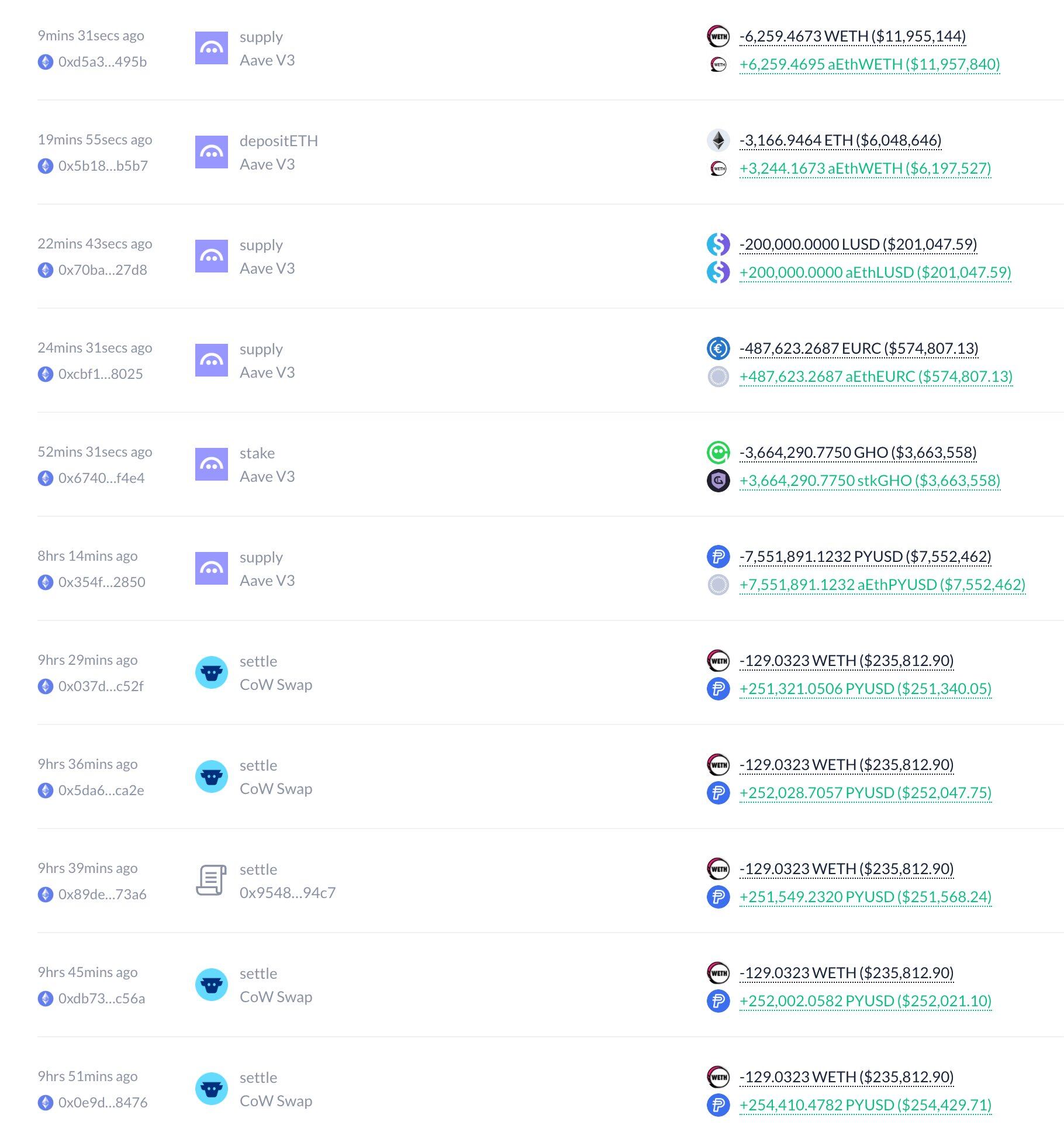
Besides the Aave founder, Ethereum founder Vitalik has also been selling ETH frequently recently. On January 30, Vitalik posted that he had withdrawn 16,384 ETH for a multi-year donation plan, focusing on supporting an open, verifiable, end-to-end software and hardware technology stack to protect personal life and the public environment.

On February 3, Vitalik began selling these ETH, selling 493 ETH that day worth about $1.16 million. As of February 6, the sale progress of the 16,384 ETH planned for donation had reached 42.1%, with a cumulative sale of 6,899.5 ETH, totaling $14.15 million, at an average selling price of $2,052. However, Vitalik has deposited the remaining 9,484.5 ETH into Aave, which may mean he does not plan to sell in the short term.
"ETH Mega-Bull" Yi Lihua Falls, Sells About 250,000 ETH

Yi Lihua's Trend Research was one of the most watched ETH bulls this cycle, and he himself often publicly expressed bullish views on the bull market on social media, with the community drawing a comparison: "West has Tom Lee, East has Yi Lihua."

However, as ETH fell, Yi Lihua couldn't hold on either. On February 1, according to monitoring, Yi Lihua's Trend Research began depositing over 10,000 ETH into Binance. On February 2, Yi Lihua posted on X to admit that he had indeed been too early bullish on ETH, and the profits from selling at the last top had been wiped out. He decided to continue waiting for the market to rise while controlling risks.

On February 3, he posted again, saying he still看好 (is optimistic about) the new bull market performance, expecting ETH to reach over $10,000 and BTC to exceed $200,000, but recently adjusted some positions to control risks.

This statement may have paved the way for subsequent ETH transfers. As of now, the six publicly known addresses of Trend Research hold only about 396,000 ETH. On February 1, Trend Research publicly held 650,000 ETH, meaning they sold about 250,000 ETH, worth $554 million. Meanwhile, Yi Lihua's latest liquidation range is $1,509 to $1,800.

But from firmly buying long to being forced to "cut losses," Yi Lihua is probably filled with helplessness.

Whales Sell 81,068 BTC in the Past 8 Days

Besides these celebrities selling公开 (public) positions, hidden on-chain whales are also "fleeing." According to Santiment statistics, whales holding 10 to 10,000 BTC currently hold 68.04% of the total BTC supply, a new low in 9 months, having sold 81,068 BTC in just the past 8 days.

After the market drop, whales also began to stop losses and deleverage. According to monitoring, during yesterday's market drop, a whale deposited 10,128 ETH into Galaxy and FalconX, worth $20.44 million. A whale (0xfdd...6a92) holding an ETH lending position on Spark also began selling ETH to stop losses when the ETH price fell to $2,050. This whale累计 (cumulatively) sold 27,800 ETH, repaying $44.14 million in loans.

However, unlike whales, retail investors are more inclined to buy the dip at this time. According to Santiment statistics, addresses holding less than 0.01 BTC, "shrimp addresses," now hold 0.249% of the total BTC supply, a 20-month high, reflecting retail investors buying the dip. But beware, this combination of whale selling and retail buying has historically led to bear market cycles.

Who is Quietly Buying the Dip

Besides retail investors buying the dip, some faith-strong large holders/institutions are also buying. According to statistics, after the market fell, Bitfinex margin long positions rose to about 77,100 BTC, hitting a nearly two-year high. This trend shows that there is still明显的 (obvious) leveraged funds buying the dip during the decline. Additionally, Bitfinex margin long positions have grown about 64% in the past six months, usually seen as a signal that large holders or high-risk preference funds continue to add positions during market stress periods.

Well-known trader Eugene Ng Ah Sio also posted on his personal channel, "Buy when there's blood in the streets, even if it's your own."

"Machi" with Unlimited Ammo Going Long

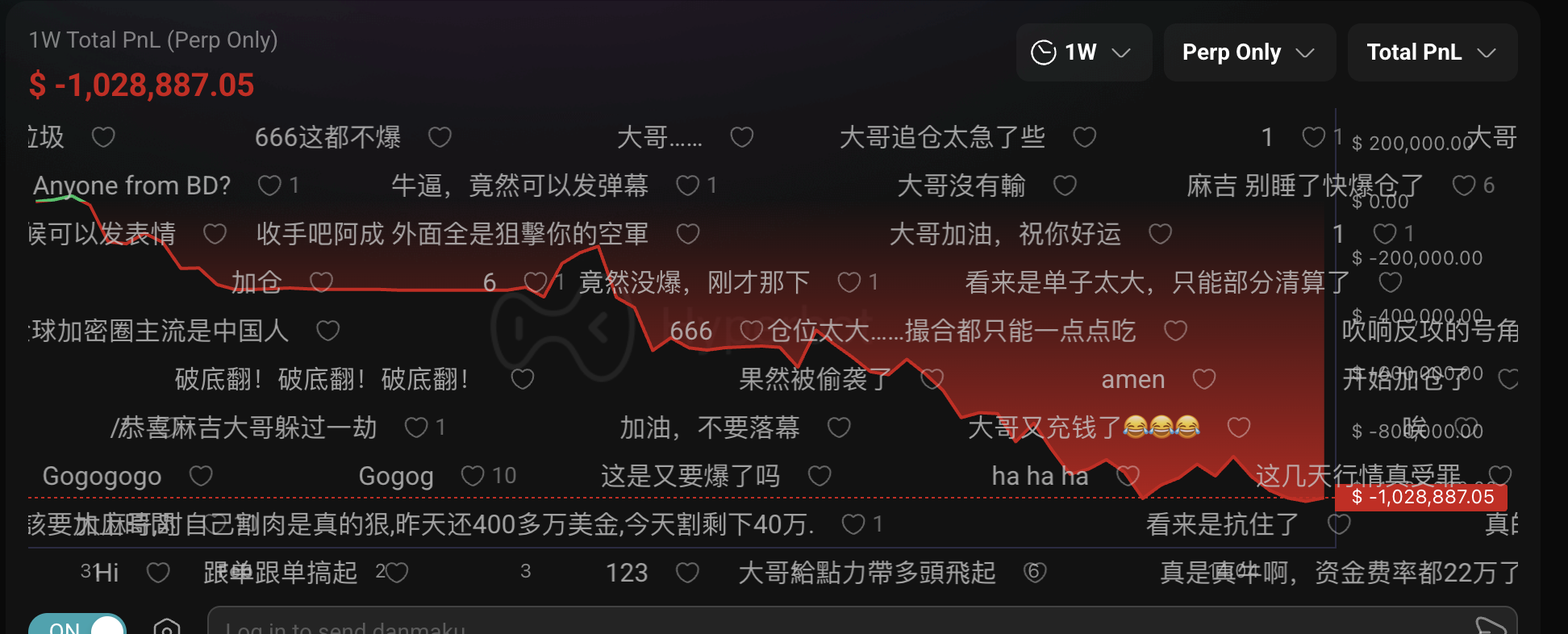
Iron-headed "Machi" is a representative large holder who goes long on the dip. According to monitoring, in the early hours of February 6, during the market drop, Machi大哥 (big brother) persisted in going long, depositing 250,000 USDC into Hyperliquid, opening a 25x leveraged ETH long, a 40x leveraged BTC long, a 10x leveraged HYPE long, and a 10x leveraged PUMP long. However, the BTC and PUMP longs were quickly liquidated in the subsequent market drop. The HYPE and ETH longs were partially liquidated and then added to.

As of now, "Machi" still holds a 25x leveraged Ethereum long, with a position of 320 ETH, liquidation price $1,841; he also holds a 10x leveraged HYPE long, position 14,720 HYPE, liquidation price about $31.

This week, Machi大哥 had 11平仓 (position closures), with 3 profitable and 8 losing, a win rate of 27.27%, and a net loss of about $286,000 for the week. In the hyperbot弹屏 (live comment) messages, there were all voices encouraging Machi.
BTC's Eternal "Backstop" MicroStrategy: Cost Basis $76,052

Fortunately, during the market crash, the largest BTC treasury, MicroStrategy, did not choose to sell. MicroStrategy CEO Phong Le said at the MicroStrategy Q4 financial results webinar that Bitcoin would need to fall to $8,000 and stay at that level for five to six years to pose a real threat to repaying its convertible debt. This means only then might MicroStrategy sell BTC, which is somewhat reassuring for the market.

Meanwhile, during the market drop earlier this month, MicroStrategy bought another 855 BTC for about $75.3 million, at a unit price of about $87,974. As of now, MicroStrategy holds

713,502 BTC, with a total acquisition cost of approximately $54.26 billion, and an average acquisition price of about $76,052. Therefore, at the current Bitcoin price of $66,000, MicroStrategy has a floating loss of over $7.168 billion.

Besides MicroStrategy holding firm and buying, Japan's largest BTC treasury company, Metaplanet, also expressed faith in BTC on February 6. Its CEO Simon Gerovich posted on X: "Regarding recent stock price movements and the severe situation facing shareholders, Metaplanet's strategy remains unchanged. The company will continue to accumulate BTC." But data shows Metaplanet has not bought BTC for three consecutive weeks.

ETH's Staunch Supporter Tom Lee: $6.6B Floating Loss Just a "Small Problem"

Just from the perspective of holding ETH, Tom Lee is clearly more resilient than Yi Lihua. His ETH treasury company, Bitmine, not only did not sell ETH but also continued to buy during the market drop.

In the last week of January, when ETH fell to a low of $2,200, Bitmine bought 41,788 ETH that week, worth $96.55 million. Subsequently, Tom Lee said on February 2, "The company currently has no debt. Given Ethereum's strengthening fundamentals, the recent market pullback is极具吸引力 (extremely attractive),". This basically indicates Tom Lee's strategy of buying the dip. On February 3, Bitmine bought 20,000 ETH through FalconX, worth $46.04 million.

On February 4, in response to外界称 (external claims that) Bitmine's ETH holdings had a floating loss of up to $6.6 billion, Tom Lee responded that this was normal. But as of now, Bitmine holds 4,285,125 ETH, with an average cost basis above $3,500. With ETH falling below $2,000, Bitmine's floating loss has exceeded $8 billion.

On-chain Whales Still Bullish on ETH

For on-chain whales, the declining market is also a rare opportunity to buy the dip. According to monitoring, a whale dormant for 7 months (3M4p1i) began buying the dip after the BTC crash on February 6. This whale bought 482 BTC, worth $32.5 million, and currently holds 1,960 BTC,总价值 (total value) $128 million.

Compared to BTC, on-chain whales seem to prefer ETH more. A newly created wallet withdrew 55,483 ETH from WhiteBIT in the past 2 days, worth $115.16 million.

From the evening of February 5 to February 6, several on-chain whales/institutions also continued to buy ETH. According to Lookonchain monitoring, a wallet associated with Longling Capital withdrew 8,500 ETH from Binance on the evening of February 5, worth $17.51 million. The whale/institution "7 Siblings" added another 6,923.85 ETH in the early hours when ETH fell below $2,000, about $13.91 million, at an average cost of $2,009.8. Their current ETH holdings reached 318,508.07. Meanwhile, another whale account spent 28 million USDT to buy 13,837 ETH, purchase average $2,024, but this whale address is also thought to possibly belong to "7 Siblings".


Twitter:https://twitter.com/BitpushNewsCN

Bitpush TG Discussion Group:https://t.me/BitPushCommunity

Bitpush TG Subscription: https://t.me/bitpush

Original article link:https://www.bitpush.news/articles/7609779

Câu hỏi Liên quan

QWho are the major whales selling during the market crash mentioned in the article?

AVitalik Buterin and Aave founder Stani Kulechov sold ETH, while Yi Lihua's Trend Research sold approximately 250,000 ETH. Additionally, whales holding 10 to 10,000 BTC collectively sold 81,068 BTC in the past 8 days.

QWhat actions did散户 (retail investors) take during the market downturn?

ARetail investors, specifically 'shrimp addresses' holding less than 0.01 BTC, increased their holdings, accounting for 0.249% of the total BTC supply, a 20-month high, indicating they were buying the dip.

QWhich entities or individuals were buying or holding despite the market crash?

AMicroStrategy continued buying and holding BTC, Bitmine (Tom Lee's company) bought more ETH, and on-chain whales purchased significant amounts of both BTC and ETH. 'Machi Big Brother' also opened leveraged long positions.

QWhat was the average purchase price of MicroStrategy's BTC holdings and their current unrealized loss?

AMicroStrategy's average purchase price for its BTC holdings is approximately $76,052 per BTC. With the current price around $66,000, the company has an unrealized loss of over $7.168 billion.

QWhat reason did Vitalik Buterin give for selling his ETH?

AVitalik Buterin stated that he sold his ETH to fund a multi-year donation plan focused on supporting an open, verifiable, end-to-end soft and hard technology stack to protect personal life and the public environment.

Nội dung Liên quan

Vụ ly hôn của Choi Tae-won chính thức kết thúc: Tiết lộ tuyến kế thừa ẩn sau đế chế nghìn tỷ SK Hynix

Vào tháng 11/2024, trong một sự kiện kỷ niệm, Chủ tịch SK Group Choi Tae-won đã cho các con xem hình ảnh AI tái hiện người cha quá cố của mình, nhấn mạnh về việc kế thừa di sản. Trong bối cảnh SK Hynix trở thành tài sản trị giá nhất Hàn Quốc, câu chuyện kế thừa thế hệ thứ ba của tập đoàn này lại không đi theo kịch bản truyền thống. Choi Yun-jung (sinh 1989), trưởng nữ, được coi là ứng viên kế thừa rõ ràng nhất. Cô có nền tảng học thuật về sinh học, từng làm tư vấn, hiện đang học tiến sĩ và giữ chức vụ lãnh đạo tại SK Bioscience và bộ phận hỗ trợ tăng trưởng của SK Inc. Cuộc hôn nhân của cô với một doanh nhân khởi nghiệp AI cũng phản ánh sự thay đổi trong các mối liên kết giữa các giới tinh hoa. Choi Min-jung (sinh 1991), con gái thứ, có hành trình khác biệt: học đại học tại Bắc Kinh, tình nguyện gia nhập Hải quân Hàn Quốc và từng làm việc tại SK Hynix ở Washington về các vấn đề chính sách quốc tế. Cô hiện là nhà sáng lập một công ty chăm sóc sức khỏe AI và kết hôn với một cựu sĩ quan Thủy quân Lục chiến Mỹ, cho thấy mạng lưới toàn cầu và an ninh chuỗi cung ứng ngày càng quan trọng đối với các tập đoàn bán dẫn. Choi In-geun (sinh 1995), con trai trưởng, có lộ trình học vấn tương đồng với cha (vật lý) và đang làm việc tại McKinsey sau thời gian ở SK E&S. Dù mang hình mẫu người kế thừa truyền thống, anh lại là người ít lộ diện công khai nhất. Cuộc chiến ly hôn kéo dài giữa Choi Tae-won và vợ cũ Roh So-young, với giá trị tài sản tranh chấp lên tới hàng nghìn tỷ won, là bối cảnh phức tạp mà thế hệ thứ ba phải đối mặt. Cả ba người con đều đã đệ đơn lên tòa án trong vụ việc này, dù nội dung không được tiết lộ. Tóm lại, trong kỷ nguyên AI khi SK Hynix trở thành tài sản địa chính trị toàn cầu, việc kế thừa tại SK Group không còn là chuyện nội bộ gia đình hay chỉ xoay quanh cổ phần và quyền trưởng nam. Thế hệ thứ ba được định vị thông qua năng lực chuyên môn, mạng lưới quốc tế và khả năng giải quyết những thách thức của thời đại công nghệ và địa chính trị mới.

marsbit6 giờ trước

Vụ ly hôn của Choi Tae-won chính thức kết thúc: Tiết lộ tuyến kế thừa ẩn sau đế chế nghìn tỷ SK Hynix

marsbit6 giờ trước

Các ngân hàng phản đối thỏa thuận lợi suất stablecoin – Liệu Đạo luật CLARITY có thể giành được 60 phiếu?

Viện Chính sách Ngân hàng Hoa Kỳ (BPI) đã phản đối dự thảo Đạo luật CLARITY mới, chỉ ra những thiếu sót về quy định lợi suất stablecoin và chống tài trợ bất hợp pháp. Ngành ngân hàng muốn cấm hoàn toàn mọi hình thức khuyến khích từ stablecoin, trong khi dự thảo hiện tại chỉ cho phép dựa trên hoạt động tài khoản, không phải số dư nhàn rỗi. Sự phản đối này ảnh hưởng đến cơ hội thông qua đạo luật tại Thượng viện, nơi cần 60 phiếu. Sự ủng hộ từ đảng Cộng hòa có thể giảm xuống còn 49 phiếu nếu các Thượng nghị sĩ John Curtis và John Cornyn rút lại hỗ trợ, đòi hỏi 11 phiếu từ đảng Dân chủ. Tuy nhiên, một số nhà lập pháp Dân chủ ủng hộ tiền mã hóa cũng phản đối dự luật do lo ngại về đạo đức và chống rửa tiền. Lãnh đạo đa số Thượng viện John Thune tỏ ra hoài nghi về khả năng thông qua dự luật trước kỳ nghỉ tháng Tám, chỉ còn hai tuần. Cố vấn trưởng về Tiền mã hóa của Nhà Trắng, Patrick Witt, kêu gọi tiến hành bỏ phiếu ngay. Kỳ vọng thị trường về việc thông qua đạo luật trong năm 2026 đã giảm xuống còn 32%.

ambcrypto6 giờ trước

Các ngân hàng phản đối thỏa thuận lợi suất stablecoin – Liệu Đạo luật CLARITY có thể giành được 60 phiếu?

ambcrypto6 giờ trước

Giá trị gia tăng từ 88 tỷ lên 680 tỷ chỉ sau 2 tháng! OpenRouter, trạm trung chuyển AI lớn nhất sắp được mua lại

Theo tờ Wall Street Journal và The Information, Stripe - nền tảng thanh toán hàng đầu - đang đàm phán mua lại startup AI OpenRouter với giá khoảng 10 tỷ USD. Chỉ hai tháng trước, định giá của OpenRouter là 1,3 tỷ USD, tức giá chào mua cao hơn gần 7 lần. Thương vụ có thể được công bố trong vòng một tháng nhưng vẫn có nguy cơ đổ vỡ. OpenRouter hoạt động như một "trung tâm chuyển tiếp" AI, cung cấp một API duy nhất để các nhà phát triển truy cập vào hơn 400 mô hình lớn (như GPT, Claude). Nó tự động lựa chọn mô hình phù hợp dựa trên độ phức tạp, chi phí và tốc độ, giúp các ứng dụng AI tối ưu hóa hiệu quả chi phí. Được đồng sáng lập bởi Alex Atallah (cựu đồng sáng lập OpenSea), OpenRouter hiện có hơn 1 triệu nhà phát triển và doanh thu hàng năm đạt 50 triệu USD, tăng gấp 5 lần trong nửa năm. Đây là bước đi chiến lược tiếp theo của Stripe trong việc mở rộng sang hạ tầng AI, sau khi họ mua lại nền tảng định giá theo lượng sử dụng Metronome vào cuối năm 2025. Mục tiêu của Stripe là kết hợp khả năng định tuyến mô hình của OpenRouter với hệ thống thanh toán và đo lường sử dụng hiện có, để trở thành "trung tâm điều phối và thu ngân" toàn diện cho nền kinh tế AI. Điều này cho phép doanh nghiệp quản lý toàn bộ việc sử dụng và hóa đơn AI qua một nhà cung cấp duy nhất.

链捕手6 giờ trước

Giá trị gia tăng từ 88 tỷ lên 680 tỷ chỉ sau 2 tháng! OpenRouter, trạm trung chuyển AI lớn nhất sắp được mua lại

链捕手6 giờ trước

Từ OpenSea Đến OpenRouter: Kịch Bản “Chốt Lời Đỉnh Cao” Của Alex Atallah Lại Lặp Lại?

Tác giả: Nancy, PANews Hơn bốn năm trước, Alex Atallah rời đi trước đỉnh bong bóng NFT; giờ đây, anh lại tỏa sáng trong cơn sốt AI và chuẩn bị bán nền tảng tổng hợp mô hình AI OpenRouter với giá cao. Ngày 23/7, theo Wall Street Journal, gã khổng lồ thanh toán Stripe đang đàm phán mua lại OpenRouter, với định giá giao dịch có thể lên tới gần 100 tỷ USD. Nếu thành công, đây sẽ là lần thứ hai Alex Atallah xây dựng một công ty trị giá hàng trăm tỷ USD, sau sàn giao dịch NFT OpenSea. OpenRouter, được mô tả là "Stripe của lĩnh vực AI", đã kết nối hơn 400 mô hình AI, có khoảng 10 triệu người dùng và xử lý hơn 200 nghìn tỷ token mỗi tháng. Tuy nhiên, mô hình kinh doanh chủ yếu dựa vào phí dịch vụ nền tảng (5%-5.5%) từ việc gọi API, với doanh thu hàng năm khoảng 50 triệu USD (tính đến tháng 4/2026). Đây là một mô hình kênh dẫn có quy mô lớn nhưng biên lợi nhuận hạn chế, dễ bị ảnh hưởng bởi sự cạnh tranh, mô hình nguồn mở và áp lực giảm giá. Giá trị thực sự của OpenRouter đối với các nhà mua tiềm năng như Stripe có thể nằm ở kho dữ liệu sử dụng AI thực tế khổng lồ mà nó tích lũy được, cung cấp insights quý giá về hiệu suất mô hình, sở thích nhà phát triển và quan hệ thay thế trên thị trường. Từ NFT đến AI, Alex Atallah hai lần bắt đúng xu hướng thời đại. Việc OpenRouter được định giá 100 tỷ USD đặt ra câu hỏi: đây là sự định giá lại giá trị cơ sở hạ tầng AI hay một tín hiệu đỉnh chu kỳ mới? Thời gian sẽ trả lời.

链捕手7 giờ trước

Từ OpenSea Đến OpenRouter: Kịch Bản “Chốt Lời Đỉnh Cao” Của Alex Atallah Lại Lặp Lại?

链捕手7 giờ trước

Pons V2 mang đến các cặp giao dịch RWA khi Robinhood Chain mở rộng tham vọng

Pons, một launchpad được xây dựng trên Robinhood Chain, đã ra mắt bản nâng cấp V2 với các thay đổi nhằm cải thiện thanh khoản, loại bỏ hạn chế giao dịch và hỗ trợ tài sản thực được mã hóa (RWA). Bản cập nhật này diễn ra trong bối cảnh Robinhood Chain tiếp tục tăng trưởng nhanh, vượt 300 triệu USD tổng giá trị bị khóa và nổi lên như một trong những mạng Lớp 2 Ethereum sôi động nhất cho giao dịch đầu cơ. Pons V2 giải quyết các phàn nàn chính của người dùng về thanh khoản bằng cách giới thiệu đường cong liên kết định danh bằng ETH, đồng thời cho phép hầu hết ví giao dịch tự do. Cấu trúc phí cũng được thiết kế lại để nhà phát triển có thể nhận phí bằng ETH mặc định. Robinhood Chain đã thu hút sự chú ý của thị trường, với khối lượng DEX tích lũy vượt 9 tỷ USD, trong đó 80% đến từ memecoin rủi ro cao. Tuy nhiên, lợi nhuận tập trung vào số ít, với 63% nhà giao dịch thua lỗ. Việc Pons V2 bổ sung các cặp giao dịch RWA tùy chỉnh trực tiếp hỗ trợ trọng tâm phát triển tài sản thực của Robinhood Chain, có thể thúc đẩy việc áp dụng mạng lưới một cách hữu cơ trong tương lai.

ambcrypto7 giờ trước

Pons V2 mang đến các cặp giao dịch RWA khi Robinhood Chain mở rộng tham vọng

ambcrypto7 giờ trước

Giao dịch

Giao ngay
活动图片





