When the Bubble Comes, How to Short "Smartly"?

marsbitXuất bản vào 2026-05-14Cập nhật gần nhất vào 2026-05-14

Tóm tắt

Title: When the Bubble Comes, How to "Smartly" Short? Author: Campbell (Macro Analyst) Summary: Amid the heated debate over whether the current AI-driven market is in a bubble, analysts are divided. While some, like Dan Niles and Paul Tudor Jones, argue that the AI boom has further to run, Michael Burry warns of similarities to the dot-com bubble. The author explores practical strategies for navigating and potentially shorting a bubble without being crushed by its momentum. Key challenges in shorting a bubble include the exponential risk from parabolic price increases and the high cost of options due to extreme volatility. Instead of directly shorting the bubbly asset, the author proposes three approaches: 1. **Find the "Wedge"**: Identify external factors that could pop the bubble, such as rising interest rates. By betting on trends that could undermine the bubble (e.g., inflation or higher rates), investors can hedge without timing the bubble's collapse. 2. **Short the "Victims"**: Target assets adjacent to the bubble that are highly vulnerable to its burst, such as over-leveraged companies or sectors with "negative convexity." These assets may have cheaper options and suffer disproportionately when the bubble stalls. 3. **Wait for Confirmation**: Exercise discipline and wait for clear signals of a breakdown, including deteriorating fundamentals, exhausted buying sentiment, and decisive breaks in trendlines. Only then should investors take substantial short...

Author: Campbell, Macro Analyst

Compiled by: Yuliya, PANews

Editor's Note: Recently, the US stock market's memory chip sector has become the main theme of the technology rally, with companies like Micron Technology, SK Hynix, and SanDisk continuing to surge. At the same time, debates about whether AI has entered a bubble phase have heated up again. Opinions in the market are divided: Dan Niles, a renowned chip analyst from the internet bubble era, believes the current AI development is closer to the mid-stage sprint of internet infrastructure construction in 1997, not the tail end of the bubble in 1999. He points out that the rise of AI agents is driving a sharp increase in computing power demand; although chip stock valuations are high in the short term, they still have long-term potential. Hedge fund legend Paul Tudor Jones also predicts that the AI bull market is currently about 50% to 60% complete and might last another one to two years. In contrast, Michael Burry, the inspiration for the protagonist of *The Big Short*, has issued a warning, seeing strong similarities between the current market and the pre-crash period of the 2000 internet bubble.

Amidst the intertwining of狂热 and担忧, with big names holding opposing views, if a bubble truly exists, how should we actually respond? The author of this article shares a hands-on guide on "how to short a bubble" based on personal experience. Below is the original article:
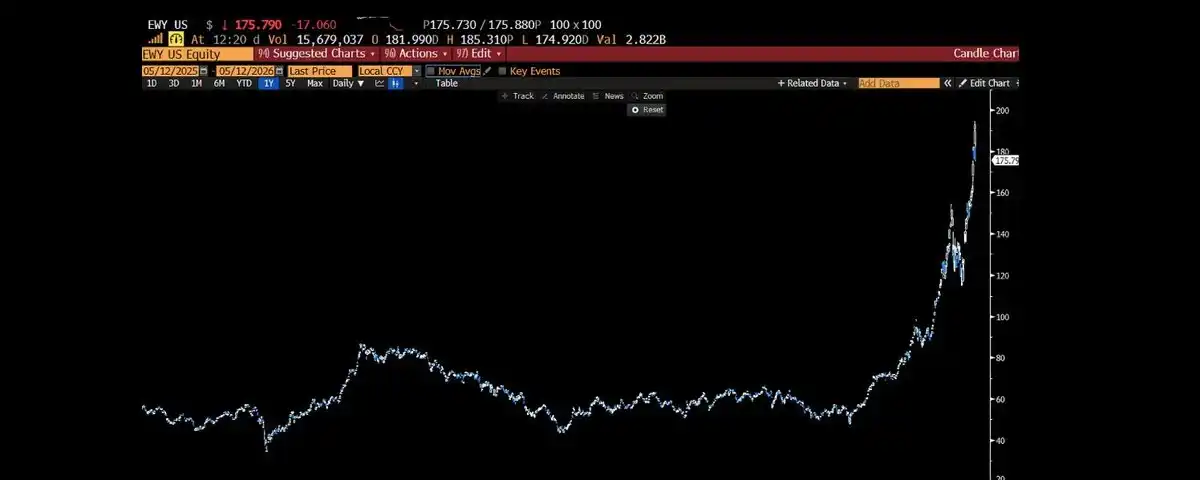
To be honest, I don't know if we are in a bubble right now. I'm not even sure if that's a knowable question. I know about as much as you do: the AI revolution is real.

Even though I gave up my professional investing career to go long, and have been writing about it for the past three years, I still feel like I'm not long enough. I look around like you do, see people getting incredibly rich just by stringing tokens together for AI apps (or going all-in on those infrastructure projects providing蒜力 for generating these tokens), and it gives me chills and fills me with envy. This then triggers a feedback loop where I can't tell if my view is being colored by jealousy, or if the jealousy is telling me something I already know: "Keep going long."

To some extent, I really feel like "the future is here, and we need massive amounts of computing power", so you really do want to buy these assets.

I don't think software stocks have performed all that well, and the market is selling them off, so there's not much fat to trim there.

Like you, I've also noticed the extremely low valuations of South Korean stocks and am intrigued by the opening up of their market, which is clearly tied to the recent stock market surge.

I was also surprised by the quiet easing of the supplementary leverage ratio (eSLR), where banks and funds are allowed to hold less regulatory capital to buy US Treasuries. It's classic money printing in sheep's clothing.

  • I can imagine a day when interest rates rise enough to pull the plug on this "liquidity party," but that day is not here yet.

  • I can also imagine war ending the party; the violent swings there shook me out of the uptrend, so who knows what the future holds.

  • I can also imagine that Canadian bank stocks with price-to-book ratios as high as 3x and low volatility are a fantastic short opportunity, but I can't write a good article with actionable干货 for you because of a lack of trading channels and sufficiently long-dated options.

Frankly, there's a lot more I can't say explicitly here. This doesn't change my fundamental view on the trend, but it greatly limits the people and things I can discuss here. If you know Andreesen's "It's Time to Build" thesis, you'll know that my cautious, worrying personality注定 I'll never become a billionaire.

But there's one thing I know how to do. It's also a little bit of Alpha I can give you. We're not going to discuss today whether we are in a bubble, but rather, if you want to, how you should go about shorting a bubble.

Why Is Shorting a Bubble So Difficult?

What is a bubble? If something looks like a bubble, sounds like a bubble, moves like a parabola shooting to the sky, and requires ever-higher expectations and leverage to sustain price increases, then it's a bubble.

Why are bubbles so hard to short?

The problem is, the easiest things to short are those where negative fundamentals gradually become known to the public, then they grind down and finally collapse. You might face a short squeeze along the way (forcing shorts to buy to cover, causing a surge), but that反而 provides a good opportunity to add to your short, because this thing is eventually going to zero.

But shorting a bubble is an entirely different matter. When an asset price rises insanely in an unsustainable manner, your short risk exposure放大 exponentially as the price goes up.

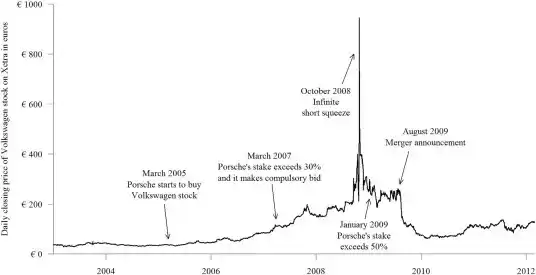
Just ask the people who shorted Porsche and Volkswagen in 2008.
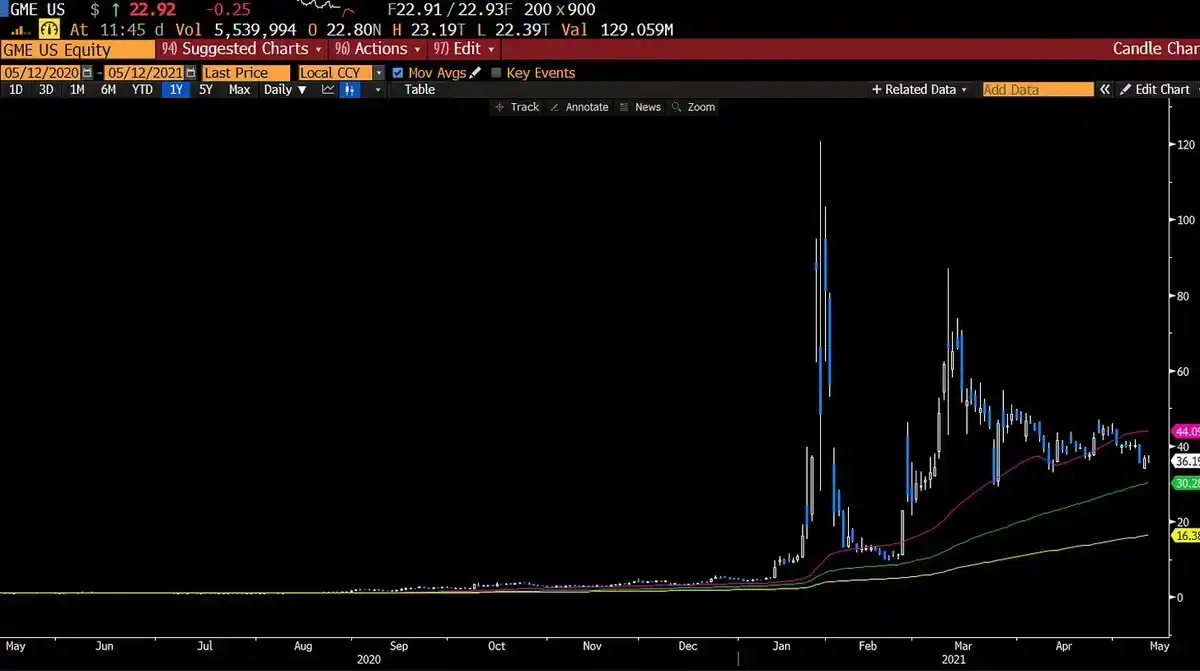
Ask the people who shorted GameStop.
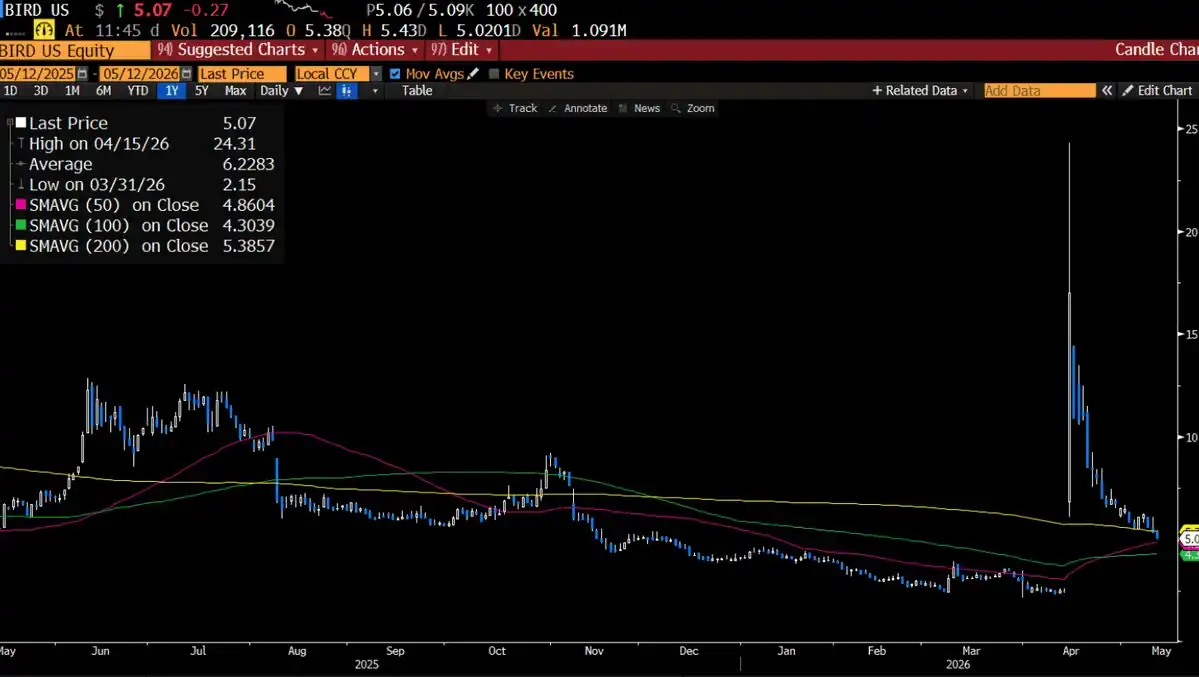
Or ask the people who shorted that unknown shoe company a few weeks ago that somehow turned into an AI company and crushed all shorts.
If a long sells, they simply sit in cash. But if a short sells, it means they must buy back tomorrow to cover their position and settle. If you can make their bill quintuple, they will have double the incentive to cover, sometimes at any cost.

Another reason bubbles are hard to short is that the very features that make them look so exciting—"explosive volatility! Awesome!"—make their options ridiculously expensive.

If it goes up 10% daily, the annualized volatility is 160. For options with volatility of 160, buying a call today could cost you half the stock price. Because the hedging value from actual volatility is so high, these options are practically unusable for directional bets.

So, we are left with the following few paths.

The only ways to short a bubble are:

a) Find the "Wedge"—find something external that can pop the bubble.

b) Short the "Victims"—bet on things related to the bubble that will fall into an abyss.

c) Wait for "Confirmation"—wait for the trend and charts to truly break down.

The rest of this article will be examples of each method.

A) Finding the Wedge

The first method to short a bubble is to not directly short the bubble itself.

You need to find the thing that will pop the bubble. Then you buy it to protect your portfolio from the bubble bursting.

We started doing exactly that today, right before the CPI data confirmed what we already knew. Inflation is re-accelerating.
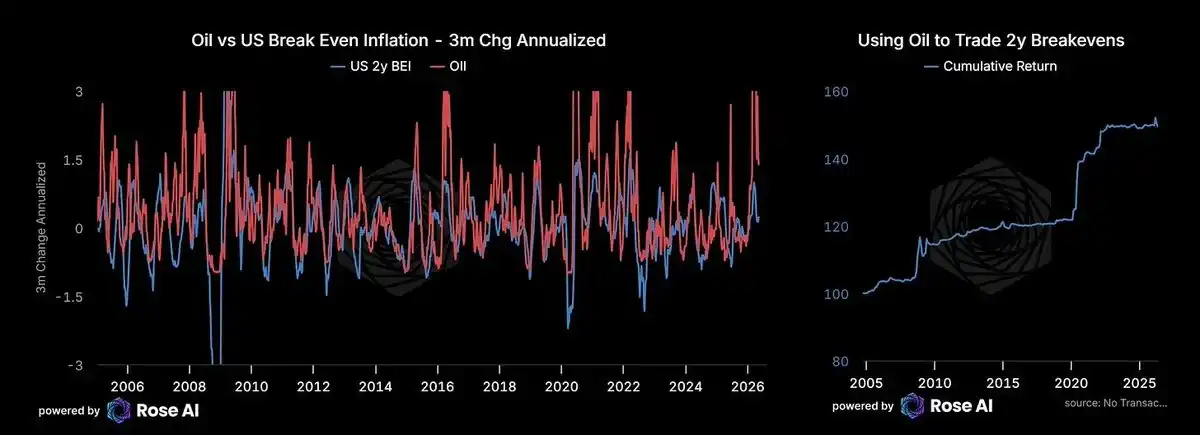
Interest rates are likely to rise too. As it turns out, just as Bob Prince used to say, there is a bond hiding inside stocks.
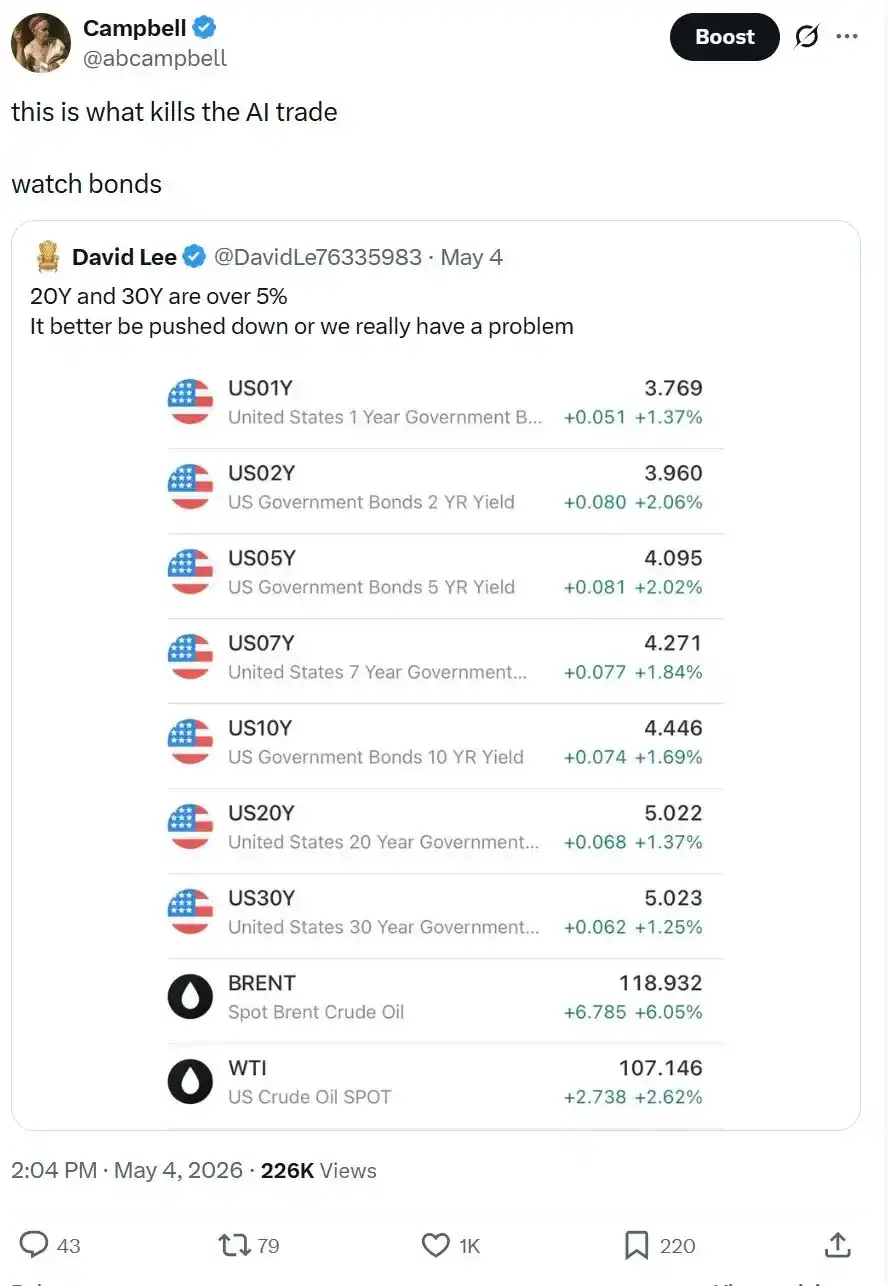
This is the "wedge." You don't short the bubble; you go long the trend that will kill the bubble. If AI is the bubble, then interest rates are the wedge that pops it.
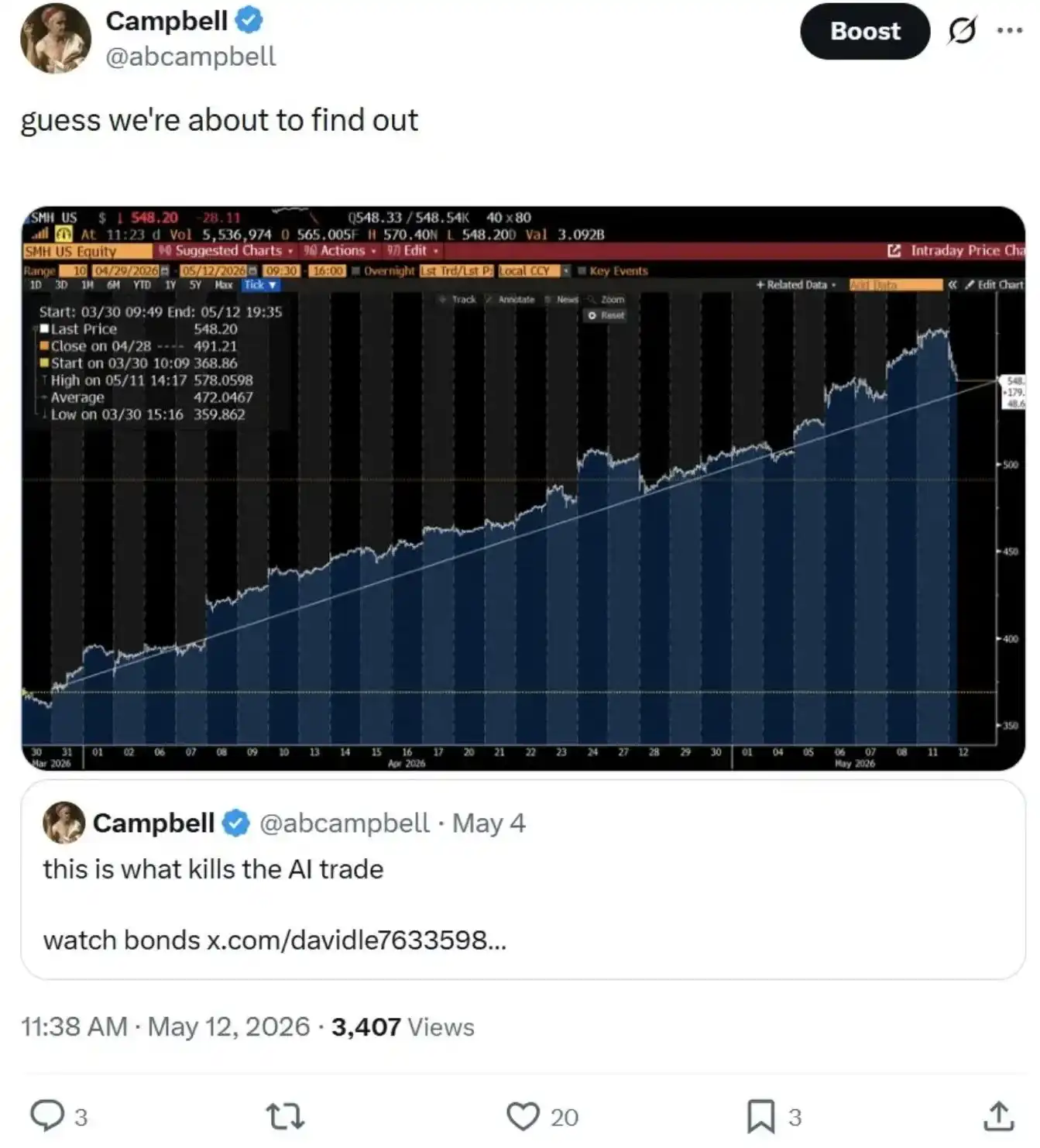
All assets with ridiculously high valuations are essentially disguised ultra-long-duration assets. When the discount rate (interest rate) rises, the present value of those wonderful future expectations gets heavily discounted, and stocks propped up by fantasies of 2030 cash flows get brought back to earth.
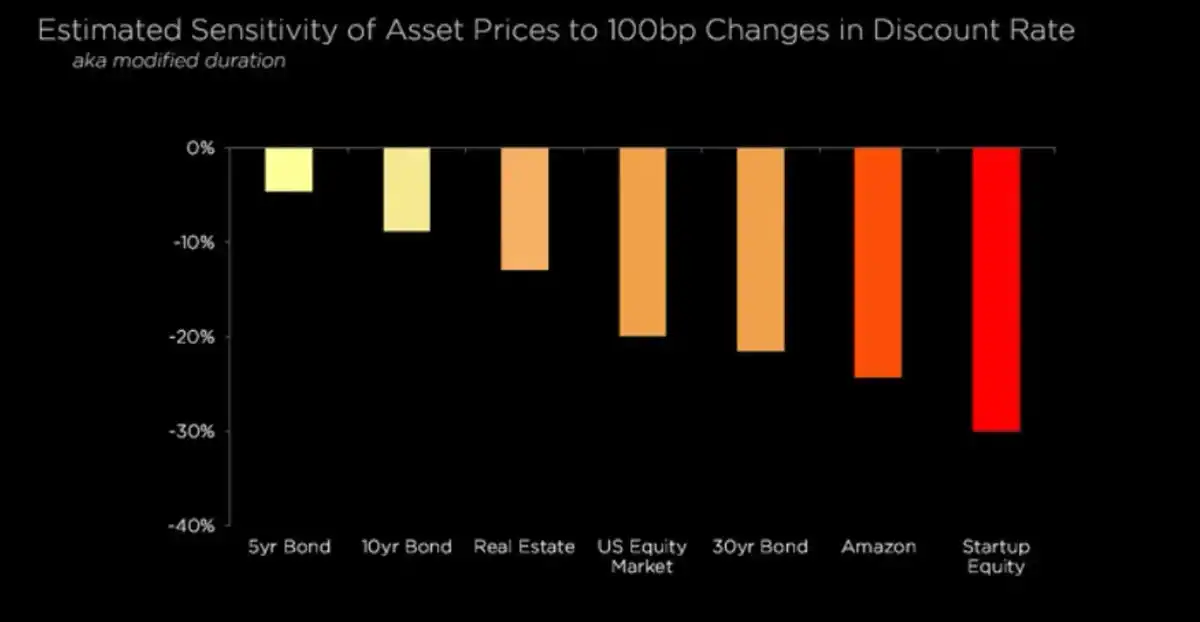
The core principle is: In every bubble, there are things that must depend on the bubble to survive. If the bubble just pauses for a moment, the weakest links will break. You are not betting that the market mania will end; you are betting that the weakest links cannot survive a market pause.

The beauty of the "wedge" strategy is you don't need precise timing. The bubble doesn't even need to pop; it just needs to stop accelerating for a quarter, and the highly levered junk starts to break.

Where is the "wedge" now? I'll tell you what I'm watching. Those Canadian banks with price-to-book ratios of 3x, holding "negative amortization" mortgages (where payments don't even cover interest, and the shortfall gets added to principal, like interest-capitalizing PIK loans), facing a housing market that makes 2007 US real estate look downright restrained.
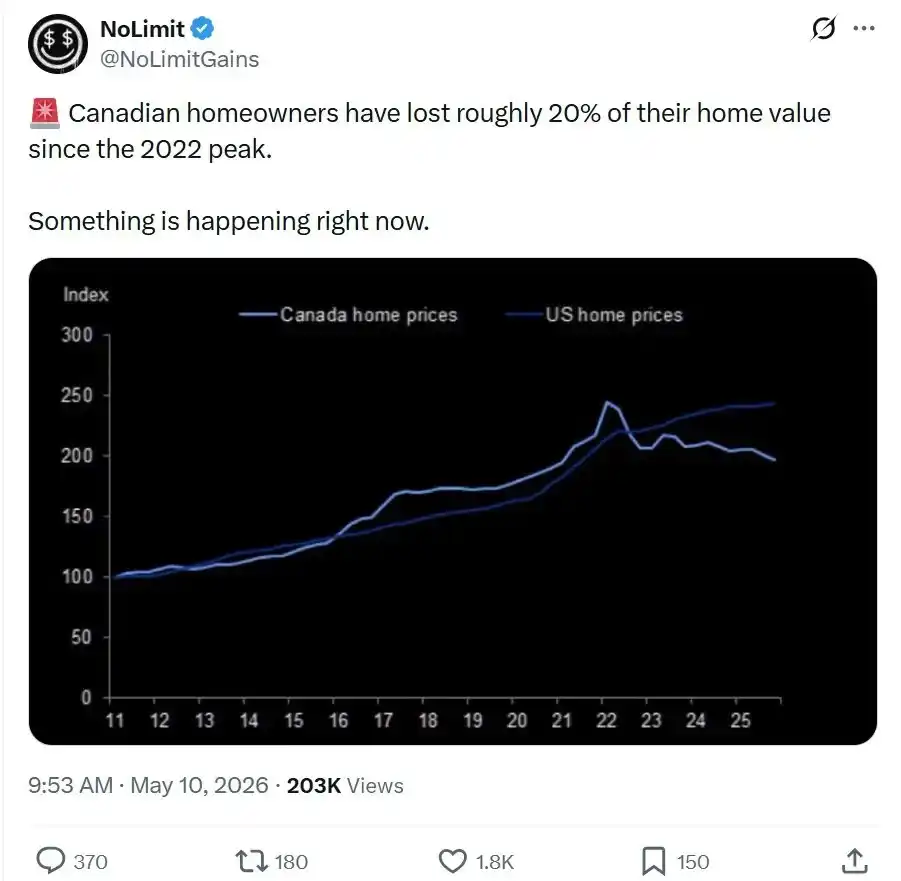
I can't get the options I want on these banks, but I'm watching. Then broadly in credit, we wrote in "Watching Credit" that private credit feels like a "roach motel," reflecting loosening lending standards overall. Money goes in and doesn't come out. When the bubble pauses, the book value of these assets doesn't change because no one forces them to revalue. Until the day they have to face reality.

B) Shorting the Victims

The second method to short a bubble is to find things that will go down with the bubble, the assets adjacent to the bubble.

Evergrande is a great example. You didn't need to short Chinese bank stocks—that would have just cost you money for a decade. You needed the developer with insane leverage,极度依赖 pre-sales, that would explode if the Chinese property market just slowed a little. The bubble could keep inflating, but Evergrande couldn't last.

You look for "negative convexity" (things that fall faster and harder as they decline). You can't short the thing going parabolic itself; that's fighting double the upward momentum.

But look at its neighbor; maybe its options aren't trading at 70 vol.

Think back to airlines pre-pandemic. They weren't in a bubble themselves, but faced极度 asymmetric risk, so they fell viciously. Puts were priced richly but not ridiculously. You could still buy wings. So we did. It seems obvious in hindsight, but the "bubble" then was the blind optimism that "everything is fine."

Think back to financials in 07/08. You didn't need to directly short housing (frankly, directly shorting housing was extremely difficult and technical, though if you could find CDS, good for you). You just needed to short Bank of America.

The core principle is: Bubbles create correlations that only manifest during a crash. The options market usually only prices in this correlation when disaster strikes. Your job is to find the "victims" with cheap options, destined to be dragged down by the bubble asset with expensive options.

Who are the "victims" right now? Honestly, I haven't pinpointed them yet.

C) Waiting for Confirmation

The third method requires the most discipline, which is why most people mess it up.

That is: Wait.

I know, waiting is agony. Sometimes you see something shooting straight up, and you just can't help yourself. But again, you absolutely do not want to get run over by a train at full speed.

So you wait for the confirmation signal. What does it look like?

It's usually a combination of:

  • Fundamentals starting to deteriorate;

  • Buying drying up, market sentiment exhausted;

  • Trendline decisively broken.

Not a small pullback, but a decisive break. The kind where something that was going up nicely suddenly slices through a beautiful support line, and everyone starts screenshotting and sharing it on Twitter. We saw this break in silver earlier this January (don't look now, it's back up; we'll talk about that in a future article).
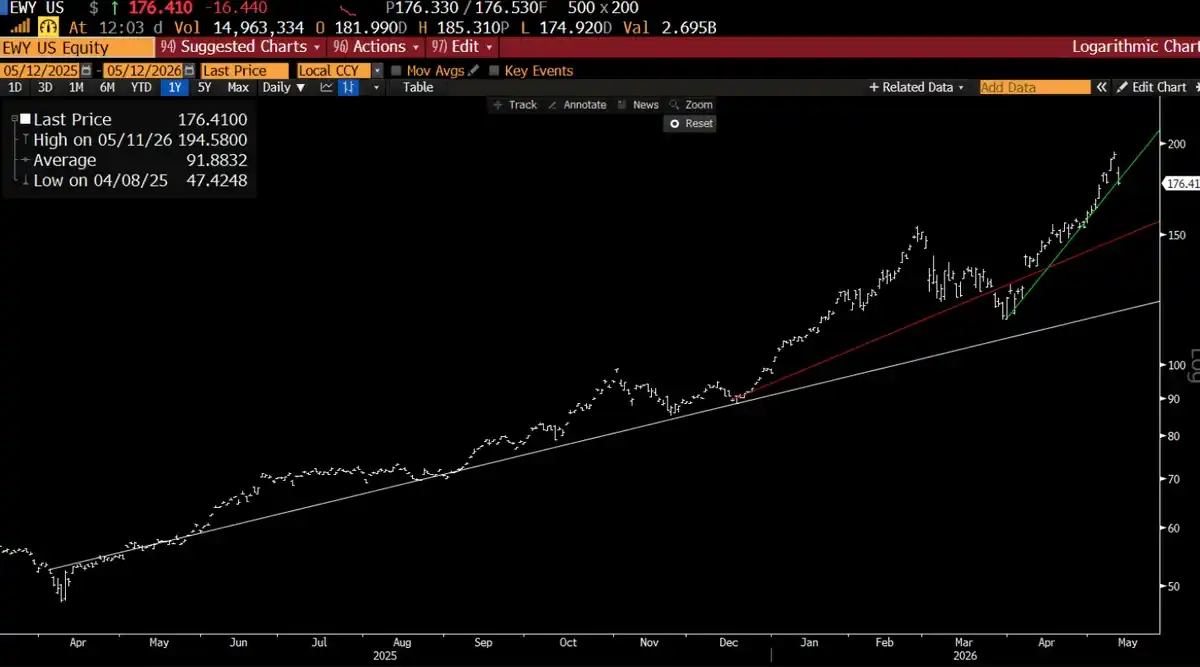
Depending on the timeframe you look at, the chart tells a completely different story.
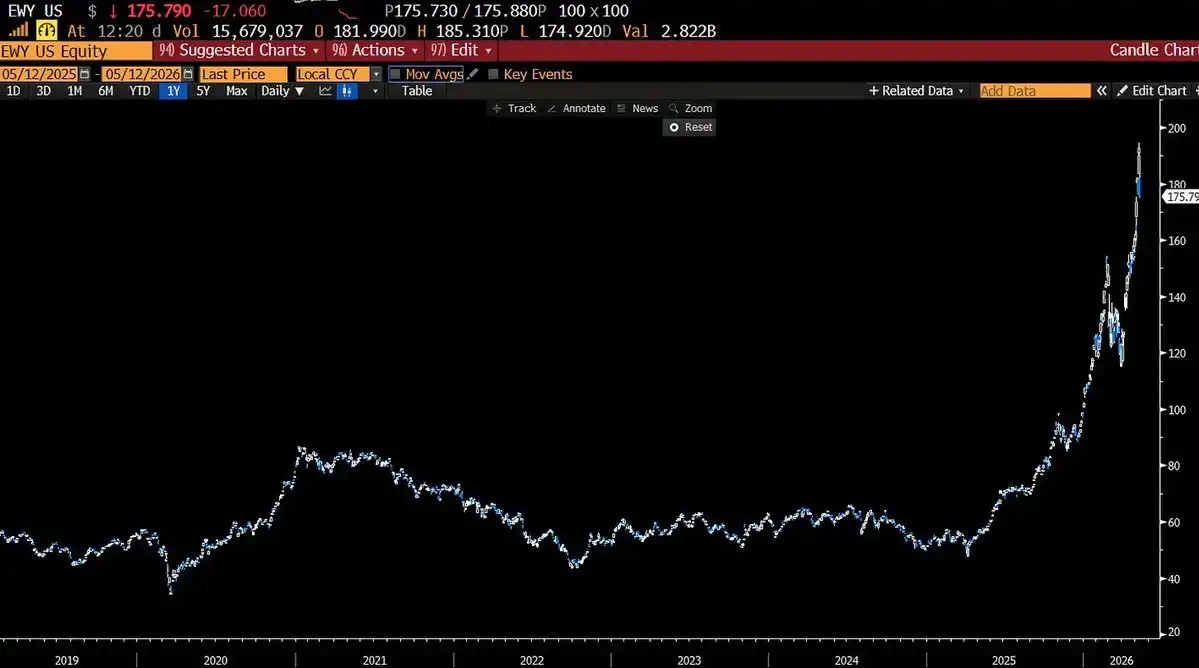
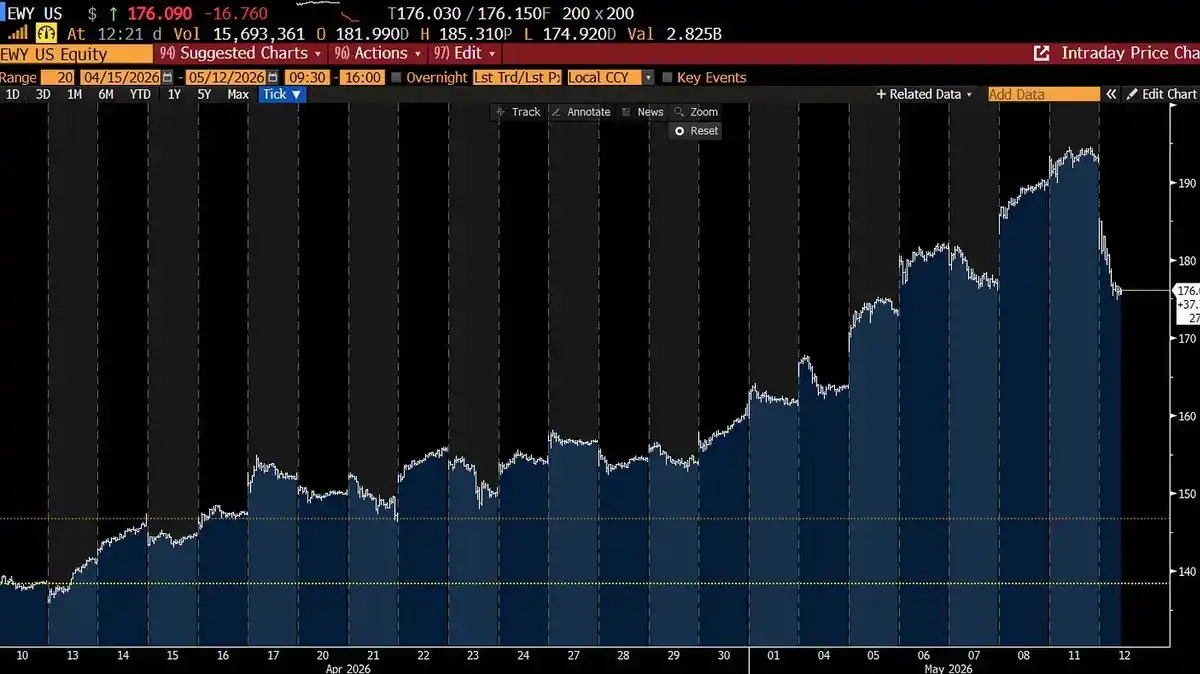
The single most central truth right now about AI is that the only thing deteriorating is: Too much of its cash flow is promised far into the future.

The problem is you have to discount those future promises with today's rate. If inflation picks up and policymakers are forced to tighten (imagine if oil goes to $150-$200/barrel, they will), the net present value (NPV) of a lot of these assets shrinks massively. It's the same thing we wrote about with the bond bubble in 2021.

The other thing to watch is correlation. When what used to work perfectly suddenly stops working, when it suddenly becomes sensitive to factors it used to easily ignore, be careful. We may be seeing that today.

Practical Application and Summary

What did I do today? (Beijing time early May 13th) I had some hedges on before the market plunge, but not enough. I shorted another 5% of the S&P 500 (SPX) and 10% of high-yield bonds (HYG), then bought a little more short-dated put spreads. Then I stepped away, came back, and it was bad.
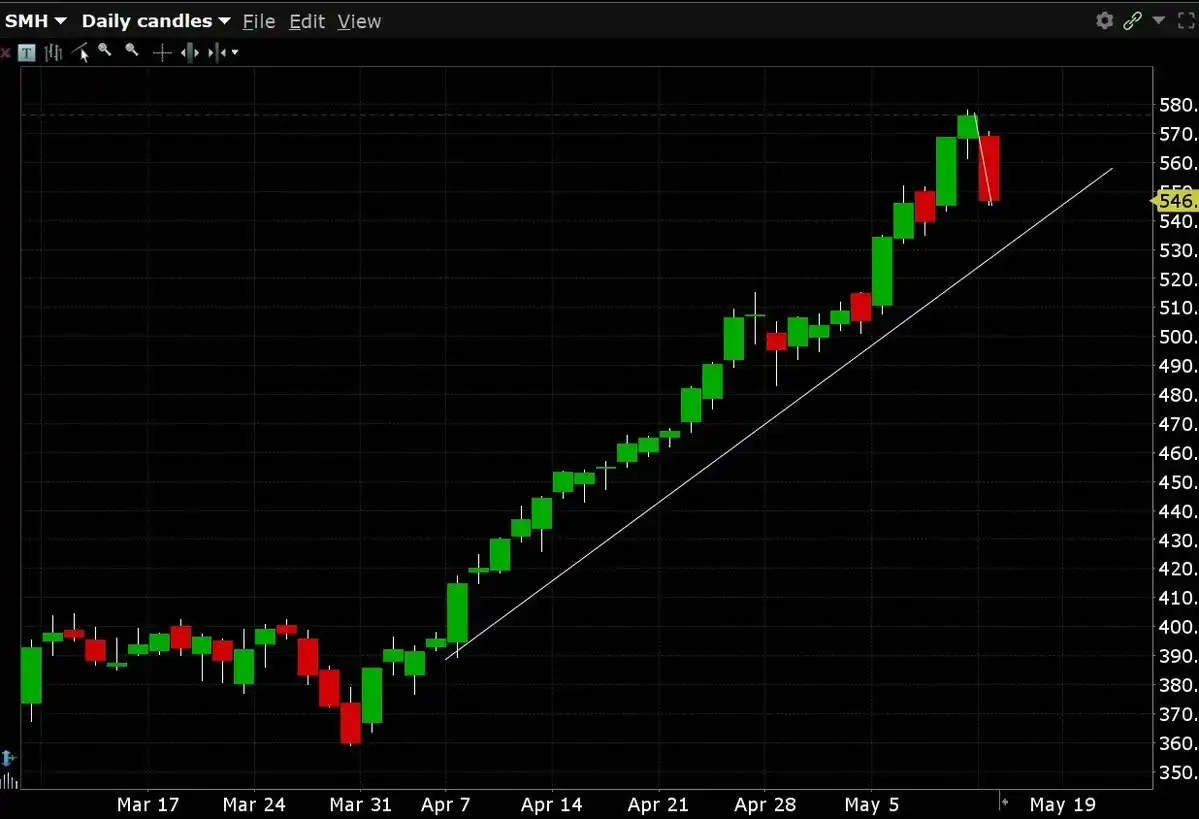
What did I actually do? I didn't short semiconductors because the core fundamental demand is still there, and the uptrend isn't broken. But I did short more bonds, this time directly buying put spreads on US Treasuries. If the trendline holds and the market bounces, I'll consider it cheap insurance for my "wedge" strategy, no big deal. If the trendline doesn't hold, I have cash, I have protection, and then, only then, will I go big on specific shorts. Oh, and I sold 5% of my Canadian bank stocks.

Hedge, find the wedge, wait for confirmation, go big.

Look, I don't know if we are in a bubble right now. This rally could be in the 4th inning (probably not, the price action is already too intense), or it could be in the 9th (I doubt it; that requires seeing demand for these underlying算力 tokens get destroyed, and I don't see signs of that yet). All I know is that the feeling of "inevitability" that AI gives me feels eerily similar to when I was in high school in 1999, putting together my first internet stock portfolio. Yes, those stocks eventually came back, and Amazon emerged from them. If you held until today, the IRR would be in the teens.

But I also haven't forgotten the brutal crash.
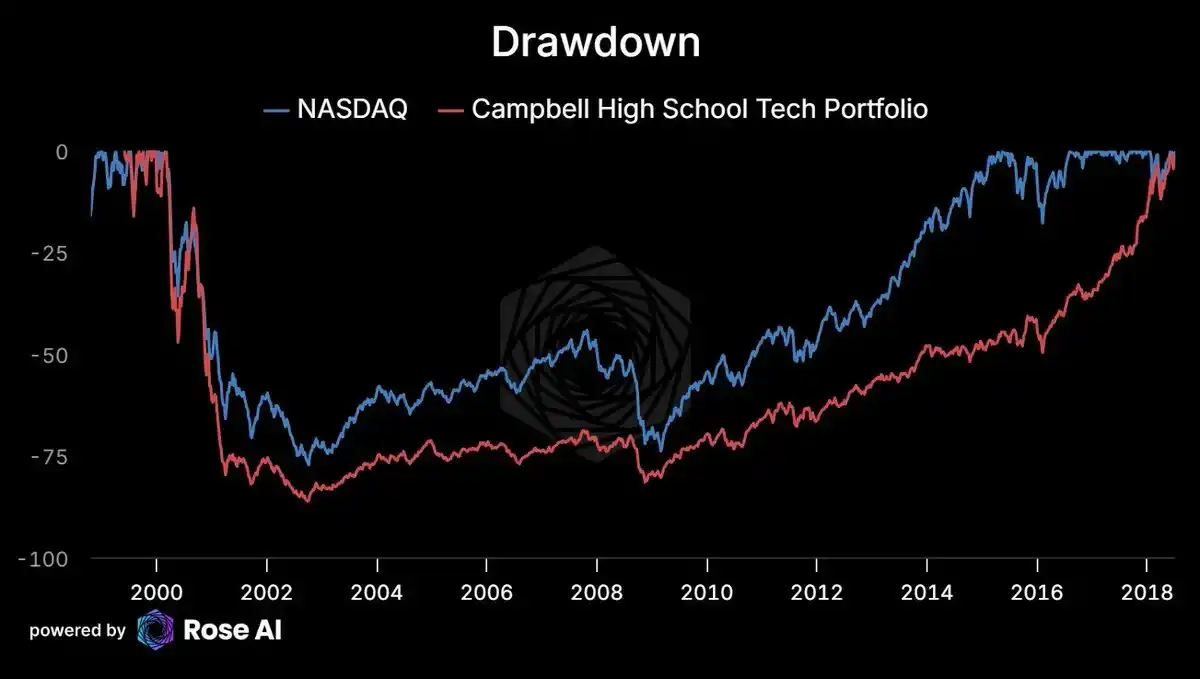
So, if you've read to the end of this rambling essay, you might feel nervous. If you feel nervous, the answer is definitely not to short the thing going vertical. The answer is: Find the wedge, buy puts on the victims, and then wait like hell for the confirmation signal before going big.

In the meantime, never fight the market trend. Never short the thing going parabolic.

Câu hỏi Liên quan

QAccording to the article, what are the three main strategies the author suggests for 'smartly' shorting a bubble?

AThe author suggests three strategies: a) Finding the 'Wedge' - identifying and buying into the external force that could burst the bubble. b) Shorting the 'Victims' - betting against assets adjacent to the bubble that are likely to crash when it bursts. c) Waiting for 'Confirmation' - waiting for clear technical breakdowns and shifts in fundamentals before taking a major short position.

QWhy does the author argue that shorting a bubble directly is extremely difficult and risky?

AThe author argues that directly shorting a bubble is difficult because the risk exposure increases exponentially as the price rises in an unsustainable parabolic move. Unlike a long position, a short seller must buy back to cover, creating forced buying pressure if the price rises sharply. Additionally, assets in a bubble often have extremely high implied volatility, making their options prohibitively expensive for directional bets.

QIn the context of the current AI/tech market, what does the author identify as a potential 'Wedge' that could burst the bubble?

AThe author identifies rising interest rates as a potential 'Wedge'. The logic is that high-valuation assets are essentially long-duration assets. If inflation picks up and central banks are forced to tighten monetary policy (raise rates), the discounted present value of their future cash flows would drop significantly, deflating the bubble.

QWhat is the key principle behind the strategy of 'Shorting the Victims' of a bubble?

AThe key principle is that a bubble creates hidden correlations that only become apparent during a crash. The options market often underprices this correlation until it's too late. The strategy involves finding assets with relatively cheap options that are fundamentally weak or highly leveraged—'victims' that are destined to be dragged down when the adjacent bubble asset falters, even if the bubble itself doesn't fully burst immediately.

QWhat specific conditions does the author recommend waiting for as 'Confirmation' before aggressively shorting a bubbly asset?

AThe author recommends waiting for a combination of: 1) Fundamentals beginning to deteriorate. 2) Exhaustion of buying pressure and market sentiment. 3) A clear and decisive break of the key trendline or support level on the price chart. It's not a minor pullback, but a definitive breakdown that signals a change in trend.

Nội dung Liên quan

Trước Thềm Làn Sóng IPO Công Nghệ, Polymarket Hợp Tác Cùng Nasdaq Tranh Quyền 'Định Đoạt Định Giá'

Làn sóng IPO công nghệ sắp tới đang thu hút nhiều bên tham gia, trong đó có Polymarket. Nền tảng thị trường dự đoán này vừa công bố hợp tác độc quyền với Nasdaq Private Market (NPM) - công ty con của Nasdaq chuyên về thị trường tư nhân, để ra mắt các hợp đồng dự đoán định giá trước IPO của các "kỳ lân" công nghệ như OpenAI, Anthropic và SpaceX. Động thái này diễn ra trong bối cảnh Polymarket đang tụt hậu so với đối thủ Kalshi về khối lượng giao dịch và thị phần tại Mỹ. Hợp tác với NPM mang lại cho Polymarket quyền tiếp cận độc quyền vào cơ sở dữ liệu định giá dựa trên giao dịch cổ phiếu nội bộ thực tế của các công ty tư nhân, điều mà các nguồn dữ liệu khác khó có được. NPM sẽ sử dụng dữ liệu này để xác định kết quả cho các hợp đồng dự đoán trên Polymarket. Đây là một phần trong chiến lược mở rộng ảnh hưởng của Polymarket thông qua việc bán dữ liệu dự đoán của mình cho các tổ chức. Trước đó, họ đã có thỏa thuận phân phối dữ liệu toàn cầu với ICE (chủ sở hữu NYSE) và hợp tác với Dow Jones để đưa dữ liệu vào các ấn phẩm tài chính. Việc hợp tác với NPM được xem như một bước đi then chốt để giành "quyền định đoạt giá trị" trên thị trường định giá tư nhân sôi động hiện nay, đồng thời tạo lợi thế cạnh tranh trước đối thủ Kalshi trong việc thu hút người dùng cá nhân.

marsbit31 phút trước

Trước Thềm Làn Sóng IPO Công Nghệ, Polymarket Hợp Tác Cùng Nasdaq Tranh Quyền 'Định Đoạt Định Giá'

marsbit31 phút trước

Đừng chỉ nhắm mắt nhấn xác nhận nữa, Ethereum muốn bạn hiểu rõ mình đang ký cái gì

Bài viết phân tích vấn đề "ký mù" (blind signing) phổ biến trên Ethereum – khi người dùng phải chấp thuận các giao dịch dưới dạng mã hex khó hiểu, dẫn đến rủi ro bảo mật. Giải pháp "Clear Signing" (Ký rõ ràng) thông qua tiêu chuẩn ERC-7730 được giới thiệu để giải quyết vấn đề này. Mấu chốt của ERC-7730 là yêu cầu các giao thức cung cấp metadata (siêu dữ liệu) theo cấu trúc JSON, hoạt động như "từ điển dịch thuật" chuẩn hóa. Metadata này mô tả ý nghĩa con người có thể đọc được cho các hàm hợp đồng và tham số (ví dụ: "Hoán đổi 1.000 USDC lấy tối thiểu 0.42 WETH trên Uniswap V3"). Ví tiền sẽ truy vấn một sổ đăng ký (registry) công khai để lấy metadata này và hiển thị thông tin rõ ràng trước khi người dùng ký. Bài viết nhấn mạnh Clear Signing không phải là công tắc thần kỳ. Việc triển khai đầy đủ đòi hỏi sự chấp nhận rộng rãi từ các giao thức, ví và công cụ, đồng thời cần cơ chế xác thực metadata để chống gian lận. Nó bổ sung cho (chứ không thay thế) các biện pháp bảo mật hiện có như mô phỏng giao dịch. Hướng đi này được đánh giá là cần thiết cho sự phát triển đại chúng của Ethereum, chuyển từ mô hình yêu cầu người dùng hiểu code sang trao lại quyền được thông tin rõ ràng khi ủy quyền giao dịch.

marsbit36 phút trước

Đừng chỉ nhắm mắt nhấn xác nhận nữa, Ethereum muốn bạn hiểu rõ mình đang ký cái gì

marsbit36 phút trước

Liệu Alibaba Cloud có thể tự viết lại mình?

Trong vòng 5 tháng qua, doanh thu MaaS của Alibaba Cloud đã tăng gấp 15 lần, phản ánh một cuộc tái cấu trúc sâu sắc. Tại hội nghị thượng đỉnh, họ công bố hoàn thành nâng cấp toàn diện "Chip - Đám mây - Mô hình - Suy luận" (chip-cloud-model-inference) thành Agent, đồng thời ra mắt trang web sản phẩm AI mới "Qianwen Cloud", máy chủ siêu nút với chip AI tự nghiên cứu Zhenwu M890 và mô hình hàng đầu mới Qwen3.7-Max. Bản chất của cuộc tái thiết này là chuyển đổi toàn bộ hệ thống được xây dựng trong 17 năm qua xoay quanh "con người sử dụng đám mây" sang một hệ thống mới cho "Agent tiêu thụ Token". **1. Chip - Đòn bẩy chi phí:** Alibaba Cloud nhấn mạnh đến chip tự nghiên cứu, với việc công bố lộ trình chip và thông tin về quy mô triển khai. Mục tiêu là kiểm soát chi phí biên cho mỗi Token, yếu tố then chốt trong cuộc cạnh tranh về giá và hiệu suất. **2. Đám mây được viết lại cho Agent:** Nền tảng đám mây truyền thống được thiết kế cho con người không phù hợp với Agent. Alibaba Cloud đang tái cấu trúc để cung cấp giao diện lập trình tiêu chuẩn hóa (Skill hóa, MCP hóa, CLI hóa), môi trường thực thi chuyên biệt (sandbox nhẹ) và logic điều phối chuyển từ "điều phối tài nguyên" sang "điều phối tác vụ". Điều này cho phép Agent tự động kích hoạt và quản lý tài nguyên đám mây. **3. Mô hình hướng đến hành động, không chỉ trò chuyện:** Qwen3.7-Max thể hiện khả năng thực thi tự chủ dài hạn, như tự viết và tối ưu mã lõi tính toán AI. Xu hướng chuyển từ mô hình "nói tốt" sang mô hình "làm được", có khả năng lập kế hoạch và thực thi nhiều bước phức tạp. **4. Cược vào tương lai AI:** Cuộc tái cấu trúc này là một canh bạc lớn vào một tương lai nơi AI và Agent thống trị. Tốc độ tăng trưởng của doanh thu AI vượt xa doanh thu đám mây truyền thống, và Token có thể thay thế ECS để trở thành sản phẩm chính. Alibaba Cloud đang điều chỉnh cơ cấu tổ chức, chỉ số đánh giá và đội ngũ bán hàng để phù hợp với thực tế mới, chấp nhận sự không chắc chắn để nắm bắt một cơ hội được cho là lớn hơn gấp hàng chục, thậm chí hàng trăm lần.

marsbit44 phút trước

Liệu Alibaba Cloud có thể tự viết lại mình?

marsbit44 phút trước

Những Người Lấn Sân Vào Thị Trường Thứ Cấp Cổ Phần SpaceX, Giữa Cơn Sóng Tạo Ra Của Cải Mạnh Nhất Lịch Sử, Chỉ Biết Ngơ Ngác

Một bài báo của WSJ kể câu chuyện về quỹ Darsana Capital, với khoản đầu tư 6 tỷ USD vào SpaceX năm 2019 giờ có thể trị giá 150 tỷ USD, minh họa cho làn sóng làm giàu lịch sử xung quanh đợt IPO sắp tới của SpaceX. Tuy nhiên, một thực tế trái ngược tồn tại: nhiều nhà đầu tư khác tham gia thị trường thứ cấp tư nhân (mua bán cổ phần công ty chưa niêm yết) lại không chắc chắn về tính hợp lệ của cổ phần SpaceX họ mua. Nguyên nhân bắt nguồn từ "cơn sốt AI" và sự khan hiếm cơ hội đầu tư vào các công ty như SpaceX, OpenAI, hay Anthropic. Nhu cầu cao đã tạo ra một thị trường thứ cấp phình to với hàng trăm phương tiện đầu tư đặc biệt (SPV) – các "vỏ bọc" phức tạp được dựng lên để nắm giữ và bán lại cổ phần. Cấu trúc này tạo ra nhiều tầng lớp trung gian, làm giảm số tiền thực tế chảy vào công ty mục tiêu và che khuất quyền sở hữu thực sự, dẫn đến những vụ lừa đảo và tình trạng mua bán "mù mờ". SpaceX, với 24 năm là công ty tư nhân, là một ví dụ điển hình. Việc công ty kiểm soát chặt chẽ việc chuyển nhượng cổ phần càng đẩy giá trên thị trường thứ cấp lên cao và làm phức tạp thêm mạng lưới SPV chồng chéo. Gần đây, các công ty như Anthropic và OpenAI đã công khai tuyên bố các giao dịch thứ cấp không được phê duyệt là vô hiệu, nhằm kiểm soát số lượng cổ đông và thông tin nội bộ. Kết quả là, việc đầu tư vào các SPV này giống như "mở hộp may rủi". Sự thật sẽ chỉ được làm sáng tỏ khi SpaceX công bố danh sách cổ đông chính thức trong hồ sơ IPO. Bài báo kết luận rằng miễn còn sự mất cân bằng giữa dòng tiền khổng lồ và số lượng công ty "khan hiếm" đáng đầu tư, thị trường thứ cấp tư nhân sẽ tiếp tục là một trò chơi mơ hồ và đầy rủi ro.

marsbit56 phút trước

Những Người Lấn Sân Vào Thị Trường Thứ Cấp Cổ Phần SpaceX, Giữa Cơn Sóng Tạo Ra Của Cải Mạnh Nhất Lịch Sử, Chỉ Biết Ngơ Ngác

marsbit56 phút trước

Bế tắc đầu tiên của Warsh: Giảm lãi suất, lạm phát và Cục Dự trữ Liên bang bị chia rẽ

Nguồn: Phố Wall Ngày 15/5, Kevin Warsh chính thức nhậm chức Chủ tịch Cục Dự trữ Liên bang (Fed) trong một thời điểm cực kỳ khó khăn. Thay vì kế thừa một Fed sẵn sàng cắt giảm lãi suất như kỳ vọng của Tổng thống Trump, ông phải đối mặt với một Ủy ban Thị trường Mở (FOMC) bị chia rẽ sâu sắc từ bên trong. Tại cuộc họp tháng 4, ba thành viên đã bỏ phiếu phản đối ngay cả việc gợi ý khả năng cắt giảm lãi suất trong tương lai, phản ánh mối lo ngại lớn về lạm phát. Lạm phát Mỹ hiện ở mức cao, với CPI lõi tăng nhanh nhất kể từ cuối năm 2025. Trong khi cú sốc giá dầu từ Iran có thể là tạm thời, lạm phát dịch vụ đang tăng tốc và lan rộng, thể hiện sức ép giá cả dai dẳng trong nền kinh tế. Warsh, với quan điểm lịch sử là người cảnh giác cao độ với lạm phát, khó có thể lặp lại sai lầm đánh giá "tạm thời" của Fed trước đây. Một vấn đề then chốt khác là lãi suất trung lập (r-star). Nếu ước tính của Warsh (thiên về mức cao hơn) là chính xác, thì chính sách tiền tệ hiện tại có thể chưa đủ hạn chế để kiềm chế lạm phát lâu dài, thu hẹp thậm chí cả không gian để giữ lãi suất ổn định, chưa nói đến cắt giảm. Warsh bị mắc kẹt trong một tình thế tiến thoái lưỡng nan về chính trị: được lựa chọn để cắt giảm lãi suất nhưng thiếu điều kiện kinh tế phù hợp; nếu không cắt giảm có thể đối mặt với phản ứng từ Nhà Trắng; nếu cắt giảm vì áp lực chính trị, sẽ làm suy yếu nghiêm trọng tính độc lập của Fed. Thị trường tài chính đang định giá lại. Lợi suất trái phiếu dài hạn có thể tiếp tục tăng, thậm chí chạm 5.5%, nếu Fed có bất kỳ gợi ý nào về việc thắt chặt hơn. Cổ phiếu công nghệ, với định giá vẫn còn cao, dễ bị tổn thương trước môi trường lãi suất cao hơn. Biến số lớn nhất là tiến trình đàm phán với Iran: một giải pháp hòa bình có thể làm giảm giá dầu và áp lực lạm phát trong ngắn hạn, cho Warsh chút thời gian trì hoãn, nhưng về cơ bản không giải quyết được áp lực lạm phát dịch vụ nội sinh. Tất cả sẽ phụ thuộc vào cuộc họp FOMC đầu tiên dưới sự chủ trì của Warsh vào ngày 17/6. Ngôn từ và thông điệp của ông sẽ định hình lại kỳ vọng của thị trường và lộ trình chính sách trong nhiều tháng tới.

marsbit1 giờ trước

Bế tắc đầu tiên của Warsh: Giảm lãi suất, lạm phát và Cục Dự trữ Liên bang bị chia rẽ

marsbit1 giờ trước

Giao dịch

Giao ngay
Hợp đồng Tương lai
活动图片





