Unlocking Unicorn Tickets: From Robinhood to MSX, An On-Chain Experiment in Pre-IPO Democratization

比推Xuất bản vào 2026-03-04Cập nhật gần nhất vào 2026-03-04

Tóm tắt

"Unicorn Ticket Opening: From Robinhood to MSX, A Chain-Based Pre-IPO Equality Experiment" The article explores the emerging trend of using tokenization to democratize access to Pre-IPO shares of high-value unicorn companies like SpaceX, OpenAI, and ByteDance. While RWA (Real World Asset) tokenization has already brought traditional assets like bonds and stocks on-chain, the primary market for pre-IPO equities remains largely inaccessible to retail investors. Two main approaches are emerging: 1. **Perpetual Contracts (exemplified by Hyperliquid):** Offers synthetic exposure to a company's valuation through derivatives, providing low barriers and high liquidity but lacking direct ownership of the underlying asset and carrying regulatory uncertainty. 2. **Tokenized Equity Mirrors (exemplified by Robinhood Europe and MSX):** Uses a compliant structure where a regulated third-party custodian (like Republic) holds the actual shares in an SPV (Special Purpose Vehicle). This SPV's equity is then tokenized and distributed to investors. This method, though more complex to implement, provides legally protected ownership rights and a direct claim on the equity. The collaboration between MSX and Republic to launch a Pre-IPO专区 (dedicated zone) in the Asia market, following Robinhood's earlier experiment, is highlighted as a key development. It aims to bridge the gap for Asian investors, offering access to tokenized shares of top unicorns with a low entry threshold (e.g., 10 USDT). ...

By leveraging tokenization, could enabling ordinary users to enter the market for unicorns like SpaceX before their IPO become the new future narrative for RWA?

Written by: Frank

As of 2026, RWA still seems to lack new battlefields.

Looking back over the past 5 years, from stablecoins to U.S. bonds, and then to funds and U.S. stocks, mainstream assets have been gradually introduced into the on-chain ecosystem. Through tokenization, they have become new, tradable financial products, to some extent streamlining the on-chain trading logic for secondary market assets from TradFi.

However, the primary market, that place harboring super unicorns like SpaceX, ByteDance, OpenAI, Anthropic, remains behind closed doors. Users can trade Tesla seamlessly on-chain, yet struggle to buy a "ticket" to SpaceX before the bell rings.

Nevertheless, since last year, boundaries are indeed being explored: Robinhood tested waters in Europe with tokenized equity products for companies like OpenAI; Hyperliquid listed perpetual contracts for SpaceX; and this week, MSX launched on-chain Pre-IPO share offerings for unicorns like SpaceX and ByteDance.

Although the approaches differ, they point in the same direction: Pre-IPO, this previously highly封闭的 primary market, is beginning to embrace the chain.

I. Pre-IPO Is, and Must, Embrace the Chain

To understand the significance of Onchain for Pre-IPO, we must first clarify the unique role "Pre-IPO" plays in the capital market lifecycle.

Long have we heard familiar investment myths: Masayoshi Son finalizing the Alibaba deal in 6 minutes, a16z's early investment in Meta (Facebook), Sequoia's bet on Coinbase, etc. Essentially, they all tell the same story: securing a position in优质 assets before their IPO through institutional身份, capturing the "scissor差" from the valuation leap between private and public markets.

Objectively speaking, they deserve it.

After all, early-stage VC is a "game of probability"; a16z might have invested in hundreds of failed social networks before hitting one Facebook; Masayoshi Son, before and after betting on Alibaba, missed/mis-invested in countless internet companies... Ultimately, bearing extremely high trial-and-error costs, enduring exit cycles as long as a decade, and finally covering overall losses with the超额 returns from a few successful projects—this is the basic business logic of risk investment, and the "risk premium" institutional capital理应 earns.

However, when we discuss Pre-IPO (the eve of listing), the logic undergoes a qualitative change.

Because this is a截然不同的 stage. As the "last mile" before going public, the company has grown into a super unicorn like SpaceX, ByteDance, OpenAI, Anthropic. The business model is extremely mature, revenue paths are clear and visible. Entering at this point carries significantly lower risk compared to early-stage VC, even possessing a certain二级市场-like certainty.

And ironically, in this high-certainty stage, the returns around the IPO can still be astonishing. Take two representative stocks in 2025 as examples: Figma's IPO price was $33, it closed at $115.5 on the first day, a surge of over 250%; Bullish's first-day gain was also接近 290%.

This means that those institutions that secure allocations before the bell, under extremely low risk, still take away the fattest piece of the cake.

Regrettably, even with secondary trading platforms for private company equity like Forge and EquityZen, they普遍 adopt a point-to-point OTC matching model, with entry thresholds in the hundreds of thousands of dollars, and are only open to accredited investors. Ordinary users can only go to the secondary market to pick up the pieces after the IPO bell rings.

From the perspective of capital efficiency, this is inherently an inefficient structure. On one side, unicorn valuations continue to climb; on the other, ordinary investors are blocked outside the high wall. A natural question随之 arises:

Since blockchain can lower the entry barrier for U.S. stocks and achieve asset fragmentation, can it also, through tokenization before unicorn assets go public, allow users to share in the valuation growth红利 during the transition from private to IPO?

II. Diverging Paths: Perps or Tokenized Mirrors?

The on-chain experimentation with Pre-IPO has currently diverged into two logically distinct paths.

One is the perpetual contract model represented by Hyperliquid. For example, based on the HIP-3 framework, developers can自定义 deploy perpetual contract products for Pre-IPO assets like OpenAI and SpaceX. The core logic is combining Pre-IPO with perpetual contracts, not involving actual equity settlement. Essentially, it bypasses the equity itself, only providing price exposure, allowing users to bet on the valuation rise and fall of companies like SpaceX and OpenAI.

The advantages are obvious: extremely low entry threshold, no need for accredited investor certification; trades are instant, without complex equity settlement processes, etc.

At the mechanism level, we can simply understand it as a betting agreement on the valuation of unicorns like SpaceX. Liquidity is activated jointly by market makers and leverage mechanisms. Precisely because of this, it requires constant attention to whether the oracle is stable, whether the risk control mechanism is reliable, and whether清算 is fair under extreme conditions.

Furthermore, from a compliance perspective, whether this model constitutes变相 securities issuance remains in a global regulatory grey area in major jurisdictions.
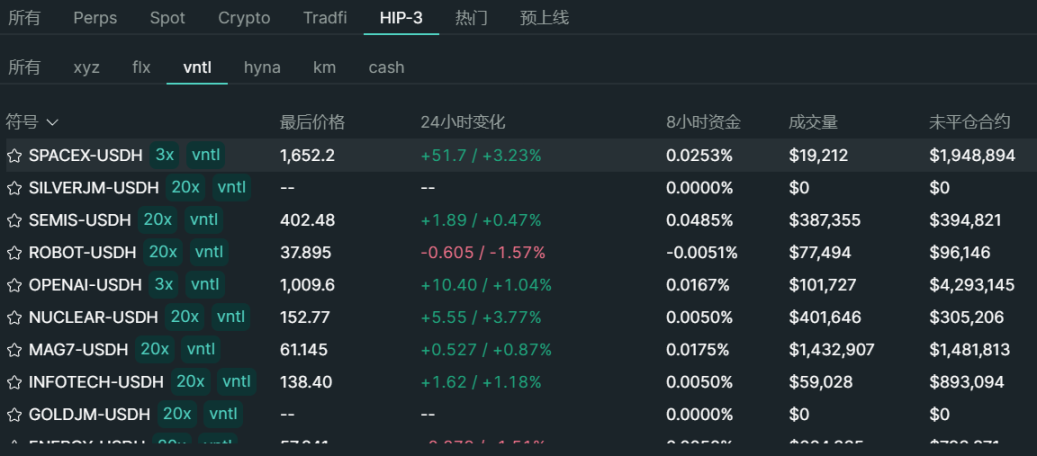
The other path is much more difficult: under compliant premises, allowing users to actually hold tokenized equity, not just trade prices.

Robinhood's European test in June 2025 and MSX's launch of the on-chain Pre-IPO zone in March 2026 both point in this direction—both platforms相继 partnered with Republic, a U.S. compliant asset tokenization platform,致力于将真实的 Pre-IPO equity tokenized through an SPV (Special Purpose Vehicle) structure, allowing investors to hold legally protected equity份额.

The core value of this model lies in the fact that the tokens correspond to real existing equity, held by a regulated third-party custodian,具备 legal and asset backing foundation.

Specifically, Republic adopts an "SPV indirect holding" structure. An offshore SPV is established to hold the underlying company shares, and then the SPV's权益 is tokenized and distributed to investors. Although it is still indirect holding, compared to pure derivatives, this model at least establishes a traceable chain of "Token → SPV → Equity".

Of course, the落地 of this model highly depends on compliant infrastructure. It must operate under the U.S. SEC regulatory framework, cooperate with licensed custodians (like BitGo Trust Company, etc.), ensure asset security and legal validity. This also means it is not just product innovation, but an institutional engineering project.

Overall, these two paths represent two截然不同的 value orientations. The former (perps) is closer to DeFi's efficiency logic, pursuing extreme liquidity and low thresholds, at the cost of lacking real correlation with the underlying asset; the latter (tokenized equity mirrors) is closer to TradFi's institutional logic, with the difficulty lying in building the compliance framework.

But regardless of the path chosen, a consensus is forming: through the tokenization of unlisted equity, a "one-and-a-half market"介于 primary and secondary is taking shape.

III. From Robinhood to MSX: The Global Bridge for the "One-and-a-Half Market"

The爆发 of a market requires not only a grand narrative but, more crucially,入口-level products.

From a technical perspective, tokenization technology,经过 years of engineering verification, smart contracts, oracles, and on-chain compliance frameworks all possess the capability to carry complex financial products. From an application perspective, DeFi and TradFi have初步融合. Global users are increasingly accustomed to sharing this era's scarcest优质 asset growth红利 in a decentralized, permissionless manner.

It can be said that the on-chaining of Pre-IPO assets is at a historical inflection point,临门一脚. But单纯的 DeFi protocols often struggle to independently complete user education, compliance docking, and large-scale capital introduction alone. Therefore, at this time, on-chain infrastructure that can connect with traditional financial genes often becomes the most critical variable between narrative and落地.

Looking back, the attempt by Robinhood in June 2025 was profoundly significant.

As a global标杆 for internet retail brokers, it allowed European users to participate in on-chain份额 trading for star unicorns like OpenAI and SpaceX with extremely low thresholds. This算得上 the first time a mainstream broker has taken such a clear, large-scale stance towards the on-chain Pre-IPO market. This verified that the regulatory framework can be adapted弹性地, and proved that the masses have a real and旺盛 demand for such products.

But Europe is just the beginning. The larger, higher-growth Asian market同样 harbors an incremental space that cannot be ignored. And here, a truly entry-level platform is still lacking.
This is precisely why MSX's newly launched Pre-IPO zone deserves attention.

On March 2nd, MSX partnered with Republic—the same platform that supported Robinhood's European compliant structure—replicating this verified path to the Asian market: the first batch opened subscriptions for tokenized equity of top unicorns like SpaceX, ByteDance, Lambda Labs, Cerebras Systems, with a minimum threshold of only 10 USDT.

To some extent, MSX is playing the role of an "Asian version of Robinhood"—using a compliant tokenization structure to connect the稀缺 equity "pre-bell" with global liquidity "post-bell" in the relatively complex regulatory environment of the Asian market, bridging that hardest-to-cross "last mile".

From a broader perspective, the on-chaining of Pre-IPO is never just a one-sided demand from ordinary users; it is essentially a two-way rush:

  • Ordinary users need a truly equitable entry point to share the growth红利 of global top unicorns before the bell rings, without having to wait outside the secondary market door;

  • Private equity and early shareholders同样 hope to introduce an unprecedented global incremental funding pool, exchanging on-chain liquidity for diversified exit options for their holdings;

Both needs一拍即合.

So from Robinhood to MSX, one in Europe, one in Asia,确实说明 the Pre-IPO market is gradually moving from its原始形态 of "point-to-point matching" into the tokenization era of "low threshold, high efficiency".

IV. Final Words

The maturity and large-scale普及 of underlying technology often don't immediately materialize as product爆发. But when accumulation is sufficient, the delayed wave of innovation反而 comes more fiercely.

In this sense, it is not without basis for on-chain Pre-IPO to become a mainstream asset class in the next 3~5 years: blockchain technology has reached today, tokenization infrastructure already possesses the engineering capability to carry complex financial products, on-chain compliance frameworks are gradually clarifying, and bilateral trust between institutions and users is being slowly but steadily built.

But logical feasibility never equals natural occurrence.

Whether the compliance path is clear enough, whether the risk control mechanism is truly reliable, whether the liquidity between institutions and retail investors can be effectively matched, etc.—each is a necessary condition,缺一不可. More importantly, it's not just Robinhood and MSX; more platforms are needed, willing to bear the cost of "being the first to eat crab", using real products and real users to tread a replicable path.

In 2026, will the tokenization of Pre-IPO be a flash-in-the-pan concept game, or the true starting point for重塑 the rules of capital market access? We will know soon.

Disclaimer: All Bitpush articles represent only the author's views and do not constitute investment advice.
RWA

Câu hỏi Liên quan

QWhat is the core concept behind the on-chain Pre-IPO equity experiment discussed in the article?

AThe core concept is to use tokenization to allow ordinary users to invest in pre-IPO shares of unicorn companies like SpaceX and ByteDance before they go public. This aims to democratize access to the high-growth, high-return phase traditionally reserved for institutional investors, creating a more inclusive 'level 1.5 market' between private and public markets.

QWhat are the two main technological paths explored for bringing Pre-IPO assets on-chain?

AThe two main paths are: 1) Perpetual contracts (e.g., Hyperliquid's model), which provide synthetic exposure to a company's valuation without holding the actual equity, and 2) Tokenized equity mirrors (e.g., the model used by Robinhood Europe and MSX), where users hold a legal claim to the actual shares through a compliant structure involving SPVs and regulated custodians.

QWhich companies are mentioned as key partners in building the compliant infrastructure for tokenized Pre-IPO shares?

AThe article highlights Republic, a U.S.-regulated asset tokenization platform, as a key infrastructure partner. It has partnered with Robinhood for its European offering and with MSX to bring its compliant framework to the Asian market. Custodians like BitGo Trust Company are also mentioned as crucial for ensuring asset safety and legal validity.

QWhat is the significance of the collaboration between MSX and Republic in the Asian market?

AThe collaboration between MSX and Republic is significant because it replicates the compliant, low-minimum-investment model proven in Europe for the Asian market. MSX acts as an 'Asian version of Robinhood,' using Republic's legal and technical framework to offer tokenized shares of top unicorns like SpaceX to users in a regulated manner, with a minimum entry threshold as low as 10 USDT.

QAccording to the article, what is the fundamental driver for the potential success of on-chain Pre-IPO markets?

AThe fundamental driver is a powerful two-sided demand: 1) Ordinary users demand a fair entry point to share in the growth红利 of top unicorns before their IPOs, and 2) Private companies and early shareholders seek to tap into a new, global pool of incremental capital and gain liquidity options through on-chain trading, creating a natural and mutually beneficial market fit.

Nội dung Liên quan

Sự Bùng Nổ ETF Bitcoin Tiếp Theo Có Thể Đến Từ Nhật Bản – Đây Là Lý Do

Các quỹ ETF Bitcoin tại Mỹ đang trải qua đợt rút vốn kéo dài, với dòng tiền ròng âm liên tục trong 13 phiên giao dịch. Tuy nhiên, thị trường đang hướng sự chú ý sang Nhật Bản như là ứng viên tiếp theo cho sự bùng nổ ETF Bitcoin. Các nhà phân tích từ XWIN Research Japan chỉ ra rằng những cải cách quy định ở Nhật Bản, nơi chuyển đổi cách phân loại tài sản crypto sang khuôn khổ của Đạo luật Công cụ Tài chính, đang mở đường cho việc phê duyệt ETF Bitcoin spot. Sự thay đổi này đã chuyển cuộc thảo luận từ "nếu" sang "khi nào". Nếu thành công, ETF Bitcoin tại Nhật Bản có thể thu hút một lượng vốn đầu tư đáng kể từ khối tài sản tài chính hộ gia đình khổng lồ của nước này. Các kịch bản dự báo cho thấy: * Kịch bản thận trọng: Thu hút khoảng 900 tỷ Yên (5.61 tỷ USD). * Kịch bản cơ bản: Dòng tiền có thể đạt khoảng 1.4 nghìn tỷ Yên (8.73 tỷ USD), tương đương nhu cầu cho ~140,000 BTC. * Kịch bản lạc quan: Có thể lên tới 3.1 nghìn tỷ Yên (19.34 tỷ USD) trong năm đầu tiên. Tác động quan trọng của việc ra mắt ETF Bitcoin tại Nhật Bản không chỉ là tăng giá, mà còn giúp nhà đầu tư tiếp cận dễ dàng hơn, cho phép các quản lý tài sản đề xuất Bitcoin, tăng sự thoải mái cho nhà đầu tư tổ chức và nâng cao tính hợp pháp của Bitcoin trong tài chính truyền thống. Trong khi đó, giá Bitcoin hiện giao dịch quanh mức $61,038, giảm 2.81% trong 24 giờ qua.

bitcoinist2 phút trước

Sự Bùng Nổ ETF Bitcoin Tiếp Theo Có Thể Đến Từ Nhật Bản – Đây Là Lý Do

bitcoinist2 phút trước

43 phút của Trump: Cốt truyện người mạnh mất kiểm soát, chiến tranh truyền thông leo thang

Trong bài diễn văn kéo dài 43 phút sau hơn một tuần vắng bóng công chúng, Tổng thống Mỹ Donald Trump đã cố gắng thể hiện hình ảnh một nhà lãnh đạo mạnh mẽ và kiểm soát. Tuy nhiên, phần lớn thời gian được dành cho các chủ đề phụ như hồ phản chiếu trên National Mall, so sánh quy mô đám đông với Martin Luther King Jr., cùng những lời công kích nhắm vào phóng viên, đảng Dân chủ và các thành phố lớn. Ông còn ký sắc lệnh hành pháp hủy bỏ các biện pháp bảo vệ việc làm cho hàng nghìn công chức cấp cao liên bang, một động thái có thể gia tăng sự phụ thuộc vào lòng trung thành cá nhân hơn là năng lực chuyên môn trong chính phủ. Bài viết nêu bật trạng thái cá nhân đầy lo lắng và phòng thủ của Trump, thể hiện qua việc ông đột ngột kết thúc sự kiện và nhân viên nhanh chóng dọn dẹp hiện trường. Tác giả cũng phân tích cuộc tấn công của Trump vào nữ phóng viên CNN, Kaitlan Collins, coi đó là một phần của nỗ lực làm mất uy tín giới truyền thông. Bài báo cảnh báo về áp lực ngày càng lớn từ quyền lực chính trị và lợi ích thương mại lên các cơ quan báo chí chính thống, dẫn đến cuộc khủng hoảng về tính độc lập biên tập, như trường hợp Scott Pelley của CBS. Thông điệp chính kêu gọi công chúng ủng hộ các nhà báo và phương tiện truyền thông độc lập, những người được coi là lực lượng quan trọng duy trì sự thật khi các thể chế khác bị xâm phạm. Bài viết kết thúc với viễn cảnh lạc quan khi đề cập đến việc Hạ viện, với sự ủng hộ của một số thành viên đảng Cộng hòa, đã thông qua nghị quyết yêu cầu chấm dứt hành động quân sự ở Iran, cho thấy sự bất đồng ngày càng tăng ngay trong nội bộ đảng của Trump.

marsbit4 giờ trước

43 phút của Trump: Cốt truyện người mạnh mất kiểm soát, chiến tranh truyền thông leo thang

marsbit4 giờ trước

Kalshi, MTS và tham vọng của a16z

Trí tuệ thị trường dự đoán và tham vọng "Truyền thông Mới" của a16z Bài viết phân tích sự trỗi dậy của thị trường dự đoán (prediction markets), đặc biệt là công ty Kalshi được định giá 220 tỷ USD, dưới góc nhìn chiến lược đầu tư và truyền thông của quỹ mạo hiểm a16z. Tác giả điểm lại lịch sử tư tưởng của thị trường dự đoán, từ học thuyết của Hayek về việc thị trường tổng hợp tri thức phân tán, đến cơ chế khuyến khích của Robin Hanson (LMSR) và ý tưởng chính phủ dựa trên dự đoán (Futarchy). Trọng tâm bài viết nằm ở việc a16z, sau khi đầu tư vào Kalshi, đã định vị lại giá trị cốt lõi của thị trường dự đoán không chỉ là sòng bạc hay sàn giao dịch, mà là một phương tiện truyền thông mới mang lại "cảm giác hiện diện" (presence). Trong một thế giới ngày càng bị che khuất và bất lực, việc dùng tiền thật để đặt cược vào các sự kiện toàn cầu giúp cá nhân tái khẳng định vai trò "người quan sát tối thượng", can thiệp và diễn giải thực tại. Kalshi, theo logic này, sẽ trở thành nơi định đoạt tính xác thực và tầm quan trọng của sự kiện. Bài viết liên kết điều này với tầm nhìn "Truyền thông Mới" của a16z – một hệ thống truyền thông toàn diện từ định hình luận điệu, tài trợ, phát hành sản phẩm đến thu hút khách hàng với tốc độ và cường độ chưa từng có, nhằm "tiếp quản dòng thời gian". Ví dụ điển hình là MTS (Monitoring The Situation), một hãng truyền thông chuyên phát sóng tin tức 24/7 trên Twitter. Kết luận cho rằng sức hút thực sự của Kalshi và lý do định giá khổng lồ của nó nằm ở "trường lực bẻ cong hiện thực" – khả năng tạo ra một thực tại thay thế có sức thuyết phục cao nhờ vào khối lượng giao dịch bằng tiền thật, từ đó trở thành một mảnh ghép quyền lực trong đế chế truyền thông mới của a16z.

marsbit5 giờ trước

Kalshi, MTS và tham vọng của a16z

marsbit5 giờ trước

Bất Ngờ: Cựu Nhân Sự Trụ Cột Trong Dự Án Chip Của OpenAI Gia Nhập Anthropic

Chuyên gia chip "nhân viên số 002" của OpenAI, Clive Chan, vừa thông báo rời OpenAI để gia nhập Anthropic. Anh là một trong những thành viên sớm nhất của đội ngũ phát triển chip tự thiết kế của OpenAI, tham gia từ giai đoạn hình thành đến nay. Dù đánh giá cao đội ngũ chip tại OpenAI, Clive Chan chia sẻ anh luôn có mong muốn "chinh phục một ngọn núi mới từ chân núi", đó là lý do anh chuyển sang Anthropic. Tại Anthropic, anh ấn tượng với năng lực, giá trị cốt lõi và tham vọng của đội ngũ, đồng thời trải nghiệm cường độ làm việc rất cao. Khi được hỏi về tiến độ dự án chip của OpenAI, Clive Chan đề cập đến thông tin hợp tác công khai giữa OpenAI và Broadcom, với kế hoạch triển khai bắt đầu từ nửa cuối năm 2026. Clive Chan có kinh nghiệm làm việc tại nhiều công ty công nghệ hàng đầu như Tesla, Google, SpaceX trước khi gia nhập OpenAI vào đầu năm 2024. Việc chuyển đổi của anh là một ví dụ nữa cho thấy dòng chảy nhân tài đáng chú ý giữa OpenAI và Anthropic, sau sự kiện nhà nghiên cứu nổi tiếng Andrej Karpathy chuyển sang Anthropic hồi tháng 5. Động thái này càng thu hút sự chú ý khi Anthropic vừa hoàn thành vòng gọi vốn với định giá gần 1.000 tỷ USD.

marsbit6 giờ trước

Bất Ngờ: Cựu Nhân Sự Trụ Cột Trong Dự Án Chip Của OpenAI Gia Nhập Anthropic

marsbit6 giờ trước

a16z chuyển hướng toàn cầu hóa: VC đang trở thành "động lực thúc đẩy" của liên minh công nghệ Mỹ

Biên tập: Thông báo của Ben Horowitz cho thấy một bước chuyển quan trọng trong chiến lược toàn cầu hóa của a16z: họ không chỉ tìm kiếm dự án ở nước ngoài hay mở rộng đầu tư quốc tế, mà còn đặt mình vào khuôn khổ cạnh tranh công nghệ và hợp tác đồng minh rộng lớn hơn. Trong bối cảnh AI, robot, công nghệ quốc phòng, an ninh mạng và tái cấu trúc chuỗi cung ứng trở thành trọng tâm cạnh tranh quốc gia, con đường quốc tế hóa của startup trở nên phức tạp hơn. A16z đang phản ứng với sự thay đổi này thông qua việc thành lập văn phòng Tokyo, bổ nhiệm Anne Neuberger phụ trách các vấn đề toàn cầu, và nâng cấp nhóm quan hệ nhà đầu tư thành nhóm đối tác toàn cầu. Tín hiệu quan trọng nhất là a16z gắn kết mạng lưới toàn cầu của mình với năng lực lãnh đạo công nghệ của "Mỹ và các đồng minh". Đối với a16z, mạng lưới đầu tư mạo hiểm trong tương lai không chỉ giúp nhà sáng lập gọi vốn, tuyển dụng, bán hàng mà còn hỗ trợ họ tiếp cận thị trường trọng điểm, kết nối với chính phủ và các tổ chức chiến lược, cũng như hiểu rõ môi trường chính sách và quy định của các quốc gia khác nhau. Điều này có nghĩa vai trò của các tổ chức đầu tư mạo hiểm hàng đầu đang được định nghĩa lại. Họ không còn chỉ là trung gian vốn, mà là người tổ chức kết nối công ty khởi nghiệp, năng lực quốc gia, nguồn lực ngành, hệ thống đồng minh và vốn toàn cầu. Chiến lược toàn cầu hóa lần này của a16z có thể được xem như một sự chủ động định vị của vốn Silicon Valley trong cuộc cạnh tranh công nghệ toàn cầu mới.

marsbit6 giờ trước

a16z chuyển hướng toàn cầu hóa: VC đang trở thành "động lực thúc đẩy" của liên minh công nghệ Mỹ

marsbit6 giờ trước

Giao dịch

Giao ngay
Hợp đồng Tương lai

Bài viết Nổi bật

Làm thế nào để Mua F

Chào mừng bạn đến với HTX.com! Chúng tôi đã làm cho mua Synfutures (F) trở nên đơn giản và thuận tiện. Làm theo hướng dẫn từng bước của chúng tôi để bắt đầu hành trình tiền kỹ thuật số của bạn.Bước 1: Tạo Tài khoản HTX của BạnSử dụng email hoặc số điện thoại của bạn để đăng ký tài khoản miễn phí trên HTX. Trải nghiệm hành trình đăng ký không rắc rối và mở khóa tất cả tính năng. Nhận Tài khoản của tôiBước 2: Truy cập Mua Crypto và Chọn Phương thức Thanh toán của BạnThẻ Tín dụng/Ghi nợ: Sử dụng Visa hoặc Mastercard của bạn để mua Synfutures (F) ngay lập tức.Số dư: Sử dụng tiền từ số dư tài khoản HTX của bạn để giao dịch liền mạch.Bên thứ ba: Chúng tôi đã thêm những phương thức thanh toán phổ biến như Google Pay và Apple Pay để nâng cao sự tiện lợi.P2P: Giao dịch trực tiếp với người dùng khác trên HTX.Thị trường mua bán phi tập trung (OTC): Chúng tôi cung cấp những dịch vụ được thiết kế riêng và tỷ giá hối đoái cạnh tranh cho nhà giao dịch.Bước 3: Lưu trữ Synfutures (F) của BạnSau khi mua Synfutures (F), lưu trữ trong tài khoản HTX của bạn. Ngoài ra, bạn có thể gửi đi nơi khác qua chuyển khoản blockchain hoặc sử dụng để giao dịch những tiền kỹ thuật số khác.Bước 4: Giao dịch Synfutures (F)Giao dịch Synfutures (F) dễ dàng trên thị trường giao ngay của HTX. Chỉ cần truy cập vào tài khoản của bạn, chọn cặp giao dịch, thực hiện giao dịch và theo dõi trong thời gian thực. Chúng tôi cung cấp trải nghiệm thân thiện với người dùng cho cả người mới bắt đầu và người giao dịch dày dạn kinh nghiệm.

Tổng lượt xem 387Xuất bản vào 2024.12.21Cập nhật vào 2026.06.02

Làm thế nào để Mua F

Thảo luận

Chào mừng đến với Cộng đồng HTX. Tại đây, bạn có thể được thông báo về những phát triển nền tảng mới nhất và có quyền truy cập vào thông tin chuyên sâu về thị trường. Ý kiến ​​của người dùng về giá của F (F) được trình bày dưới đây.

活动图片