Authors: David Yaffe-Bellany and Eric Lipton, The New York Times
Compiled by: Chopper, Foresight News
Original Title: The New York Times: The Untold Story Behind Trump's Embrace of Cryptocurrency
This summer, a group of corporate executives pitched a business plan to Wall Street financier and former Trump advisor Anthony Scaramucci. They wanted Scaramucci to join a publicly traded company with a unique strategy: boosting the company's appeal to investors by hoarding massive amounts of cryptocurrency assets.
"They didn't really have to say much," Scaramucci recalled. Soon after, he joined three little-known companies adopting this strategy as an advisor. "The whole negotiation process went very smoothly."
However, the frenzy didn't last long. This fall, the cryptocurrency market crashed, and the stock prices of the three companies Scaramucci was involved with plummeted, with the worst performer dropping over 80%.
The rise and fall of these companies is a microcosm of the cryptocurrency craze ignited by Trump. The self-proclaimed "first cryptocurrency president" not only ended the regulatory crackdown on cryptocurrency companies but also publicly endorsed cryptocurrency investments at the White House, signed bills supporting cryptocurrency development, and even issued a meme coin named TRUMP, thrusting this once-niche field into the spotlight of the global economy.
Now, the ripple effects of Trump's strong support for cryptocurrency are gradually becoming apparent.
This year, a large number of new cryptocurrency ventures pushing the boundaries of the industry have emerged, drawing more people into this highly volatile market. Currently, over 250 publicly traded companies have begun hoarding cryptocurrencies—digital assets whose price volatility is no different from traditional investments like stocks and bonds.

2024: Former Trump advisor Anthony Scaramucci attends the UAE Bitcoin Conference
A wave of companies has顺势 launched innovative products, lowering the barrier to including cryptocurrencies in brokerage accounts and retirement plans. Meanwhile, industry executives are lobbying regulators, planning to issue crypto tokens pegged to publicly traded company stocks, creating a stock trading market based on encryption technology.
This radical innovation wave has already exposed numerous problems. Over the past two months, the prices of mainstream cryptocurrencies have plummeted, causing companies heavily invested in crypto assets to face a crash crisis. Other emerging projects have also raised warnings from economists and regulators, as market risks continue to accumulate.
The core concern triggering各方担忧 is the continuous膨胀 of borrowing规模. By this fall, publicly traded companies had borrowed heavily to purchase cryptocurrencies; investors' futures contract holdings for cryptocurrencies exceeded $200 billion, with most of these trades relying on leveraged funds, which can bring huge profits but also hide the risk of liquidation.
More alarmingly, a series of new initiatives in the cryptocurrency industry have deeply tied the crypto market to the stock market and other financial sectors. Once a crisis erupts in the cryptocurrency market, the risk could spread to the entire financial system, causing a chain reaction.
"Now, the line between speculation, gambling, and investment has become blurred," said Timothy Massad, who served as Assistant Secretary of the Treasury for Financial Stability after the 2008 financial crisis. "This current state deeply worries me."
White House Press Secretary Karoline Leavitt responded that Trump's policies are "making the United States a global cryptocurrency hub by driving innovation and creating economic opportunities for all Americans."
Cryptocurrency industry executives argue that these emerging projects demonstrate the potential of encryption technology to reshape the outdated financial system. In their view, market volatility is precisely an opportunity for profit.
"High risk often comes with high reward," said Duncan Moir, president of 21Shares, which issues cryptocurrency investment products. "Our mission is to bring these investment opportunities to more people."
The rise of this innovation wave is inseparable from the comprehensive relaxation of the regulatory environment, making this the most friendly regulatory window for cryptocurrency companies. For many years prior, the U.S. Securities and Exchange Commission (SEC) had been in court battles with the cryptocurrency industry; but in January of this year, the agency established a dedicated cryptocurrency task force and has held meetings with dozens of companies seeking new regulations or product上市许可.
An SEC spokesperson stated that the agency is committed to "ensuring investors have sufficient information to make rational investment decisions."
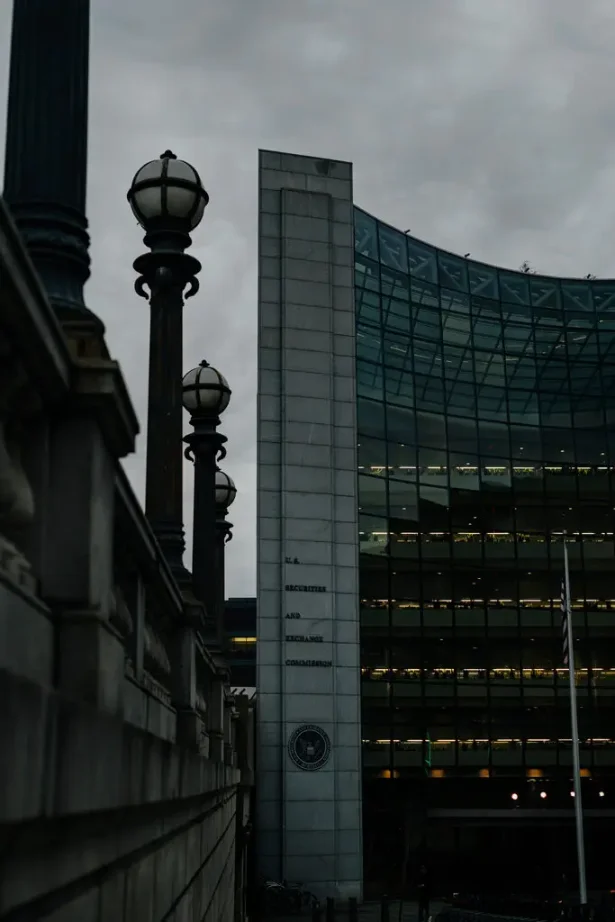
U.S. Securities and Exchange Commission headquarters building in Washington, D.C.
Notably, many of these emerging companies are connected to the Trump family's expanding cryptocurrency business empire, a connection that has blurred the lines between business and government.
This summer, executives from Trump's cryptocurrency startup World Liberty Financial announced they would join the board of the publicly traded company ALT5 Sigma. This company, originally in the recycling business, now plans to raise $1.5 billion to enter the cryptocurrency market.
Capital Frenzy: An Out-of-Control Crypto Gamble
Cryptocurrency enthusiasts have named the high-risk investment frenzy催生 by the Trump administration the "Summer of Crypto Treasury Companies."
A Digital Asset Treasury (DAT) company is a publicly traded company whose core goal is to hoard cryptocurrency. Data from cryptocurrency consulting firm Architect Partners shows that among these emerging companies, nearly half focus on囤积 Bitcoin, the most well-known cryptocurrency, while dozens of others have announced plans to purchase non-mainstream coins like Dogecoin.
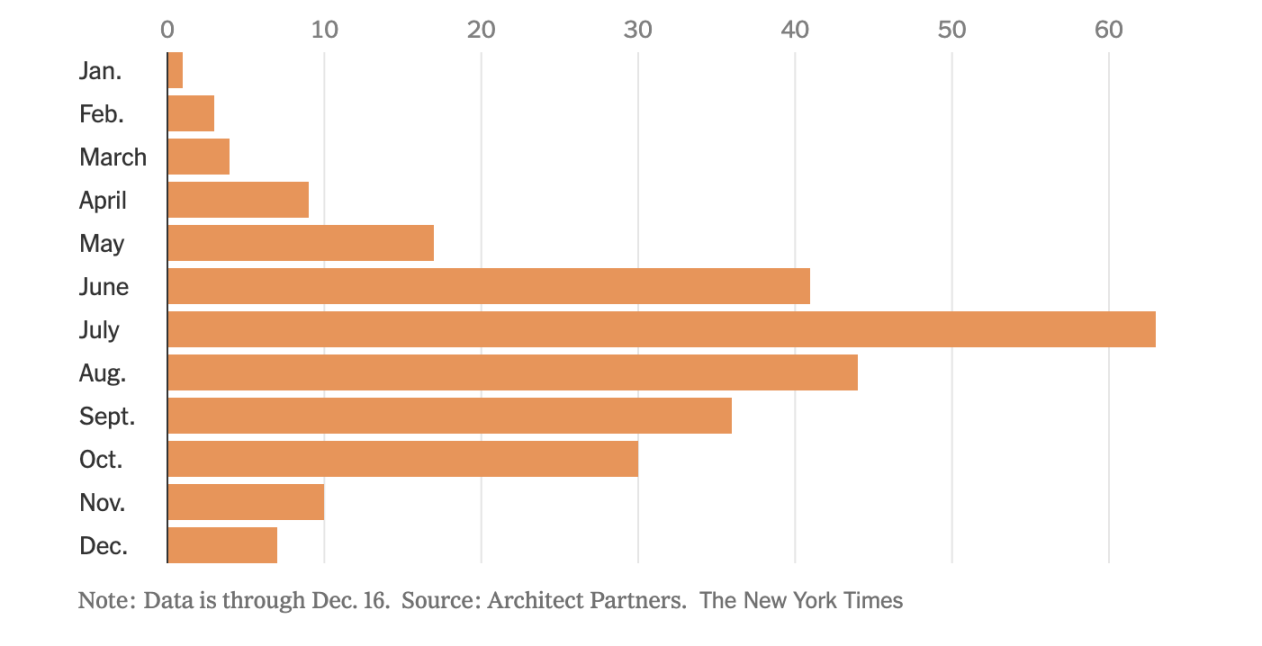
Number of Crypto Treasury Companies established each month in 2025. Source: Architect Partners, statistics as of December 16th.
The operating model of these companies is often straightforward: a group of executives identifies a small company trading on the public market (e.g., a toy manufacturer), persuades it to转型 into a cryptocurrency hoarding business; then partners with the company to raise hundreds of millions of dollars from high-net-worth investors, ultimately using the funds to purchase cryptocurrency.
The core purpose is to allow more people to participate in cryptocurrency investment by issuing traditional stocks that track the price of cryptocurrency. This strategy theoretically has considerable profit potential. Many investment funds and asset management institutions have been hesitant to invest directly in cryptocurrencies due to the complex and costly storage process and vulnerability to hacker attacks.
Investing in a crypto treasury company is equivalent to outsourcing the storage and other logistical work of cryptocurrencies. But these companies also隐藏巨大风险: Many are hastily established, and their management lacks experience in operating public companies. Data from Architect Partners shows these companies have collectively announced plans to borrow over $20 billion to purchase cryptocurrencies.
"Leverage is the primary culprit behind financial crises," warned Corey Frayer, a former SEC cryptocurrency advisor. "And the current market is generating a massive amount of leverage."
Some crypto treasury companies have already encountered operational difficulties or management crises, causing investors to suffer huge losses.
The publicly traded company Forward Industries转型 into a crypto treasury company and heavily invested in SOL. In September, the company raised over $1.6 billion from private investors, and its stock price一度飙升至 nearly $40 per share.
Allan Teh from Miami, who manages assets for a family office, invested $2.5 million in Forward Industries this year. "At that time, everyone thought this strategy was foolproof, and crypto asset prices would keep rising," Allan Teh recalled.
However, as the cryptocurrency market crashed, Forward Industries' stock price fell to $7 per share this month. The company announced plans to spend $1 billion to repurchase shares over the next two years, but this move failed to stop the stock's decline.
"The music stopped, the game is over. Now I'm starting to panic. Can I get out unscathed?" Allan Teh has lost about $1.5 million. "How much will this investment ultimately lose?" Forward Industries declined to comment.
The proliferation of crypto treasury companies has alerted the SEC. "Clearly, we are very worried about this," said the agency's Chairman, Paul Atkins, in an interview last month at a cryptocurrency conference in Miami. "We are closely monitoring the developments."
And behind this new cryptocurrency track lies the powerful support of the Trump family.

World Liberty Financial's founders include Trump's son Eric Trump and Zach Witkoff
In August, World Liberty Financial announced that its founders (including the president's son, Eric Trump) would join the board of ALT5 Sigma. This publicly traded company plans to囤积 the加密代币 WLFI issued by World Liberty Financial (Eric Trump's current title is Strategic Advisor and Board Observer).
This collaboration seemed poised to quickly profit the Trump family. According to the revenue-sharing agreement published on World Liberty Financial's website, commercial entities owned by the Trump family receive a cut whenever WLFI tokens are traded.
Subsequently, ALT5 Sigma's business took a turn for the worse. In August, the company disclosed that an executive of a subsidiary had been convicted of money laundering in Rwanda, and the board was investigating other "undisclosed matters." Soon after, ALT5 Sigma announced the suspension of its CEO and terminated contracts with two other executives.
Since August, the company's stock price has plummeted 85%. An ALT5 Sigma spokesperson said the company "remains confident about its future development."
Flash Crash: A Trillion in Market Value Vanishs Overnight
The recent turmoil in the cryptocurrency market can be traced back to one night in October.
Driven by Trump's policies, the cryptocurrency market had been rising for most of this year. But on October 10th, the prices of Bitcoin, Ethereum, and dozens of other cryptocurrencies collectively暴跌,上演了一场 flash crash.
The immediate trigger for this crash was Trump's announcement of new tariffs on China, a move that caused剧烈震荡 in the global economy. The reason the cryptocurrency market was hit so hard lies in the huge amount of leveraged funds that drove the market up.
On cryptocurrency trading platforms, traders can use their held crypto assets as collateral to borrow fiat currency or use leveraged funds to increase their cryptocurrency investment positions. Data from cryptocurrency data firm Galaxy Research shows that in the third quarter of this year, global cryptocurrency lending规模 grew by $20 billion in a single quarter, reaching a historical peak of $74 billion.
Previously, the riskiest cryptocurrency leverage trading mostly occurred in overseas markets. But in July of this year, the largest U.S. cryptocurrency exchange, Coinbase, announced the launch of a new investment tool allowing traders to bet on Bitcoin and Ethereum futures prices with 10x leverage. Prior to this, U.S. federal regulators had revoked guidance restricting such leveraged trading, giving Coinbase's new product the green light.

In July of this year, Coinbase exchange launched a 10x leverage cryptocurrency trading tool
The flash crash in October, while not causing an industry catastrophe like the bankruptcy of several large cryptocurrency companies in 2022, served as a wake-up call for the market, signaling the potential systemic crisis lurking in the cryptocurrency领域.
The nature of leveraged trading is that when the market falls, losses are magnified. Trading platforms will force liquidate, selling clients' collateral assets, a process that often further exacerbates price declines.
Data from cryptocurrency data firm CoinGlass shows that on October 10th alone, at least $19 billion worth of cryptocurrency leveraged trades were forcibly liquidated globally, affecting 1.6 million traders. This wave of liquidations was concentrated on platforms like Binance, OKX, and Bybit.
The crash caused a surge in trading volume, and several major exchanges experienced technical failures, preventing traders from transferring funds promptly. Coinbase stated it was "aware that some users experienced delays or degraded system performance while trading."
Derek Bartron, a software developer from Tennessee and also a cryptocurrency investor, said his Coinbase account was frozen during the flash crash. "I wanted to close my position and exit, but there was no way to operate," Derek Bartron said. "Coinbase effectively locked users' funds. We could only watch helplessly as asset values plummeted."
Derek Bartron said that in the days following the flash crash, his cryptocurrency assets lost about $50,000, partly because he couldn't close positions in time to stop losses.
A Coinbase spokesperson responded that the company provides automated risk management tools, "These tools functioned normally during this market volatility, and our exchange remained stable and operational throughout the event."
A Binance spokesperson admitted the exchange "experienced technical issues due to a surge in trading volume" and said measures had been taken to compensate affected users.
Crazy Experiment: The Regulatory Dilemma of the Tokenization Wave
One night this summer, cryptocurrency entrepreneurs Chris Yin and Teddy Pornprinya, dressed in formal wear, appeared at the Kennedy Center in Washington, D.C., attending a grand black-tie dinner.
The dinner was star-studded. Chris Yin, in a tuxedo bought the night before, met U.S. Vice President JD Vance, who had previously been involved in Silicon Valley venture capital; he and Teddy Pornprinya also exchanged words with former hedge fund manager and current U.S. Treasury Secretary Scott Bessent; they even took a photo with Trump, with the president giving a thumbs up to the camera.
Chris Yin and Teddy Pornprinya were there to pave the way for their startup, Plume. This company is advancing an industry-disrupting innovation plan, attempting to expand the underlying technology of cryptocurrency to a broader financial领域.
For months, Plume has been seeking permission from U.S. regulators to build an online trading platform to issue crypto tokens to clients pegged to real-world assets, covering everything from publicly traded company stocks to farms and oil wells.
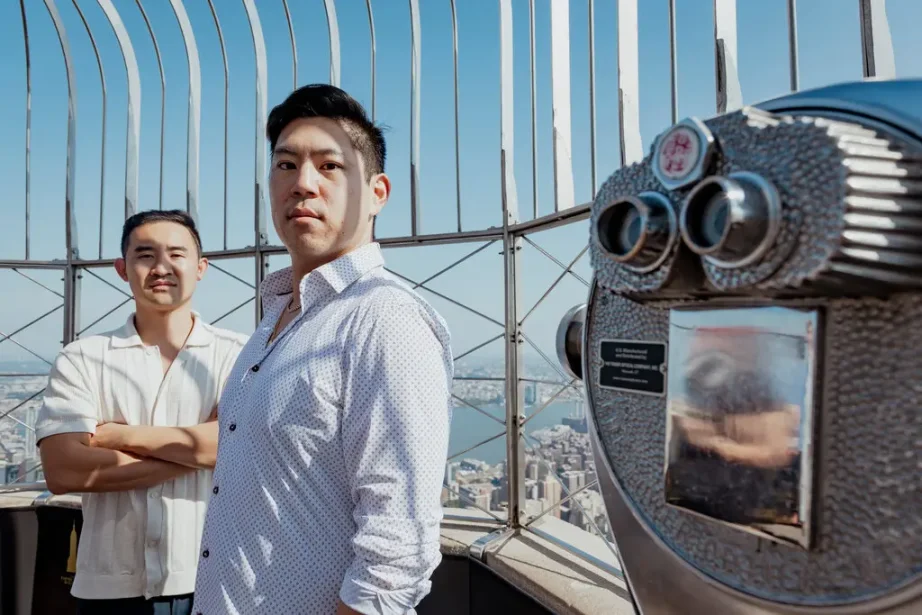
Plume founders Chris Yin and Teddy Pornprinya pose for a photo at the Empire State Building
Currently, Plume has launched such tokenized products in overseas markets, where clients can buy and sell these asset tokens like cryptocurrencies. But this business, known as asset tokenization, exists in a legal gray area in the United States. Securities laws enacted decades ago impose strict regulatory rules on the issuance of equity in various assets, requiring issuers to disclose detailed information to protect investor rights.
This year, asset tokenization has become the hottest concept in the cryptocurrency industry. Industry executives claim that tokenized stocks can make stock trading more efficient and faster, creating a 24/7 global trading market. The major U.S. cryptocurrency exchange Kraken has already launched crypto-based stock trading services for clients in overseas markets.
Cryptocurrency industry executives say that cryptocurrency transactions are recorded on a public ledger, making them more transparent than the traditional financial system. "All transactions are traceable and auditable," said Kraken CEO Arjun Sethi. "It carries almost no risk."
Representatives from Kraken and Coinbase have met with the SEC to discuss regulatory rules for tokenized assets; meanwhile, Plume is also seeking a legal path to expand its business in the United States.
But this race for tokenized products has raised concerns among current and former regulatory officials, as well as executives of traditional financial giants.
In September of this year, Federal Reserve economists warned that asset tokenization could lead to the transmission of risks from the cryptocurrency market to the entire financial system, "weakening policymakers' ability to maintain the stability of the payment system during times of market stress."
SEC Chairman Paul Atkins, however, has a positive attitude towards tokenized stocks, calling them a "major technological breakthrough." "Under the securities laws, the Commission has broad discretion to provide regulatory support for the cryptocurrency industry. I am determined to push this work forward," Atkins said at a roundtable meeting on asset tokenization in May.
To promote the compliance of their company's business, Chris Yin and Teddy Pornprinya took a series of measures. In May, the two met with the SEC's cryptocurrency task force; they also provided chart support for the White House's cryptocurrency industry report; and established Plume's U.S. headquarters on the 77th floor of the Empire State Building.
At that black-tie dinner in Washington this summer, Trump's team showed great interest in the two founders. "They knew about Plume," Teddy Pornprinya recalled. "Everyone was somewhat aware of our business."
A few weeks later, Plume announced a key partnership, establishing a business relationship with the Trump family's World Liberty Financial.
Twitter:https://twitter.com/BitpushNewsCN
Bitpush TG Discussion Group:https://t.me/BitPushCommunity
Bitpush TG Subscription: https://t.me/bitpush