Thunderbolt Chen Lei Case: Dark Deals, Mistresses, and Cryptocurrency Black Money Under the Blockchain Frenzy

marsbitXuất bản vào 2026-01-15Cập nhật gần nhất vào 2026-01-15

Tóm tắt

Lei Chen, former CEO of Xunlei and its subsidiary Wangxin Technology, is facing a 200 million RMB civil lawsuit filed by the company in January 2026 for alleged damage to corporate interests. The case, accepted by a Shenzhen court, revives earlier accusations from 2020 that Chen embezzled company funds through fabricated transactions and false contracts, diverting tens of millions of yuan into illegal cryptocurrency speculation. Chen, a tech elite with a background at Google, Microsoft, and Tencent, led Xunlei's pivot to blockchain in 2017, launching the popular "Wanke Cloud" device and its associated "Wanke Coin" (later renamed "LinkToken"). The initiative initially boosted Xunlei’s stock, but internal governance issues emerged. An audit revealed Chen allegedly funneled money through a controlled supplier, Xingronghe, and used company resources for crypto trading—violating China’s crypto ban. The case also involves Chen’s close relationship with Dong Xia, a senior VP he appointed, with whom he had a child—contradicting his prior denials. Both left China in April 2020, hindering a criminal investigation that was later dropped. The civil case now seeks accountability, highlighting early crypto industry risks and corporate governance failures in Chinese tech.

Original Author: Ma He, Foresight News

In January 2026, Thunderbolt Company and its subsidiary Wangxin Technology filed a civil lawsuit against Chen Lei and his core team on the grounds of "dispute over liability for damaging company interests," seeking compensation of up to 200 million yuan. The case has been accepted and filed by the relevant court in Shenzhen.

This lawsuit stems from a series of allegations in 2020, including Chen Lei's suspected embezzlement of company assets through fabricated transactions and false contracts, as well as the misappropriation of tens of millions of funds for illegal cryptocurrency trading. To evade investigation, Chen Lei left the country in early April 2020 and has since remained overseas for an extended period, leading to the criminal investigation being dropped due to difficulties in obtaining evidence.

This incident not only exposed the internal governance chaos at Thunderbolt but also reflected the wild growth and regulatory risks of early Chinese internet companies venturing into the cryptocurrency space.

Chen Lei began learning programming in high school, enrolled in the Computer Science Department of Tsinghua University for college, pursued further studies in the United States, gained experience at Google and Microsoft, and then returned to China to join Tencent. Chen Lei is a standard sample of a technical elite.

In 2014, he joined Thunderbolt as Chief Technology Officer (CTO) when the company was facing a decline in its download business. As a former Microsoft employee, Chen Lei excelled in distributed computing and cloud computing technologies, which aligned with Thunderbolt's core P2P download business. From 2015 to 2017, he served as Thunderbolt's co-CEO, and in July 2017, he officially became CEO and director.

At this time, the global blockchain boom was rising, Bitcoin prices were soaring, and Chinese companies were actively exploring this emerging field. Chen Lei led Thunderbolt's transformation toward blockchain, viewing it as the key to the company's revival.

Wankeyun: From Glory to Decline

Thunderbolt's landmark product in the cryptocurrency space was "Wankeyun." In October 2017, Thunderbolt launched the Wankeyun hardware, a smart shared storage device where users were rewarded with "Wankey Coins" for contributing idle bandwidth and storage resources.
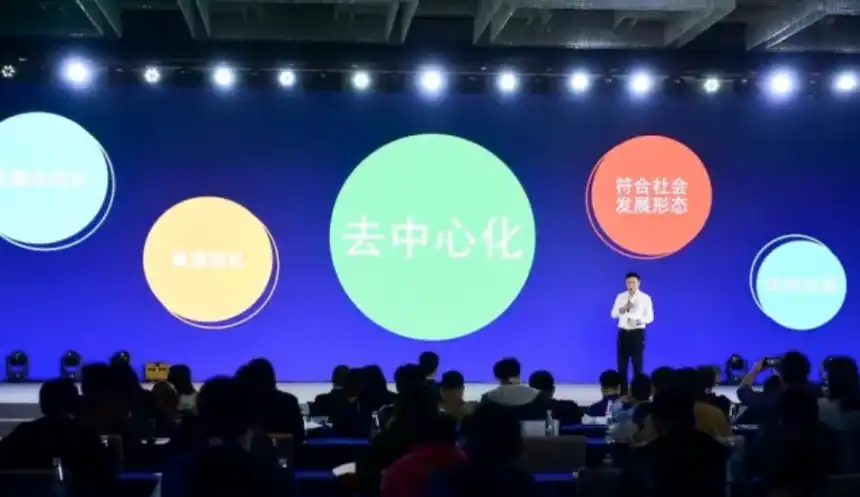
This model quickly ignited the market, with Wankeyun sales surging and the price of LinkToken soaring hundreds of times at one point. At its peak, the daily revenue from Wankeyun devices exceeded 100 million yuan, and the originally 399-yuan Wankeyun devices were resold for as much as 3,000 yuan even as second-hand items. The initial unofficial opening price of LinkToken was 0.1 yuan, and it once rose to nearly 10 yuan.

Chen Lei repeatedly emphasized in public that this was Thunderbolt's innovation in "shared economy + blockchain," aimed at building a distributed computing ecosystem. Thunderbolt also established a blockchain laboratory to promote projects like Onething Chain, attempting to position itself in the field of decentralized storage and computing.

However, in late 2017 and early 2018, due to the impact of the 94 ban and the announcement by the China Internet Finance Association, Wankey Coin was renamed "LinkToken." The price of LinkToken continued to fall, leading to protests from some investors.

Having a Child with a Lover, Misappropriating Tens of Millions for Cryptocurrency Trading

Thanks to the blockchain布局, Thunderbolt's stock price once soared from $4 to $27.
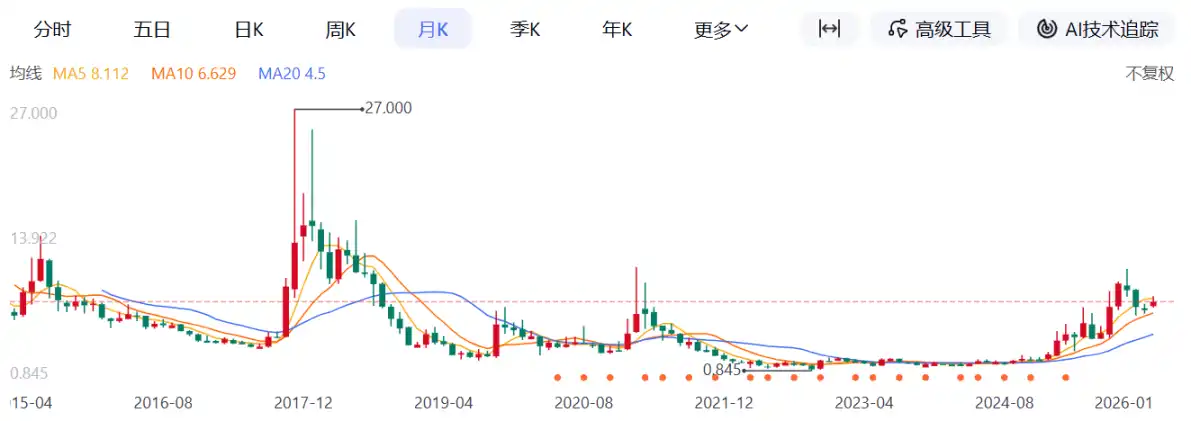
Chen Lei's cryptocurrency布局 seemed successful but埋下hidden dangers: company resources were倾斜toward blockchain, internal management was loose, and fund flows were unclear. Entering 2019, Thunderbolt's blockchain business faced bottlenecks. The global crypto market corrected, Chinese regulation tightened, and Wankeyun sales declined. Chen Lei attempted to expand edge computing through subsidiary Wangxin Technology, but internal conflicts gradually emerged.

According to informed sources, Chen Lei had a close relationship with then Senior Vice President Dong Xia, who recruited many fellow townspeople and relatives from Heilongjiang into key positions, forming a "small circle."

This provided the soil for subsequent corruption allegations. In April 2020, Thunderbolt's board suddenly dismissed Chen Lei, citing suspected job-related embezzlement. The new management's audit found that Chen Lei transferred funds through the company "Xingronghe" (a Thunderbolt bandwidth supplier) that he actually controlled. Xingronghe was established in 2019 and had frequent transactions with Wangxin Technology. Chen Lei was suspected of fabricating transaction links and creating false contracts to embezzle approximately 200 million yuan from the company.

More notably, there were allegations of misappropriating funds for cryptocurrency trading. The audit showed that Chen Lei was suspected of misappropriating tens of millions of company funds for illegal cryptocurrency trading activities explicitly prohibited by the state.

Specific details include: through close associates like Dong Xia, placing personnel in departments such as finance and procurement to create false reimbursements and overpaid salaries, with the funds ultimately flowing into the cryptocurrency market. At the time, Bitcoin prices were rebounding from lows in early 2020, and Chen Lei may have used this for speculation. This behavior violated China's ban on virtual currency transactions and涉嫌job-related embezzlement.

Additionally, Chen Lei and Dong Xia had a child together during their tenure, and their relationship was not purely professional, further fueling suspicions of利益输送.

Public information shows that Dong Xia once served as Senior Vice President of Thunderbolt Group and Marketing Vice President of Wangxin Technology, overseeing core departments such as business marketing and human resources, reporting directly to then CEO Chen Lei. The two had early interactions during the Tencent Cloud era (Dong Xia was once an ordinary public relations staff member at Tencent Cloud). After Chen Lei joined Thunderbolt in 2014, Dong Xia was gradually promoted and became an important confidant. As early as during Chen Lei's tenure, there were internal rumors that the two were lovers (or had an improper relationship).

The Thunderbolt board once questioned Chen Lei face-to-face, and he guaranteed with his "Christian reputation" that they were merely colleagues with no other relationship.

However, after Chen Lei was dismissed, the company's audit and investigation found that Chen Lei and Dong Xia had a child together during their tenure at Thunderbolt. This directly contradicted Chen Lei's previous guarantee, confirming that the two had an intimate personal relationship and formed a tight利益共同体.

To evade investigation, Chen Lei left the country with Dong Xia in early April 2020, transferring equity at low prices to relatives, making it difficult for Thunderbolt to pursue accountability.

In October 2020, Thunderbolt reported to the Shenzhen Public Security Bureau that Chen Lei and others were suspected of job-related embezzlement, and the police filed a case for investigation. The company issued a公告calling for Chen Lei to return to the country to cooperate, but to no avail. The criminal case was dropped at the end of 2022 due to Chen Lei's overseas stay and obstacles in obtaining evidence.

Five years later, in 2026, Thunderbolt restarted civil litigation, with the focus still on fund transfers and misappropriation for cryptocurrency trading. New evidence shows that Chen Lei dismissed dozens of core employees before his dismissal, causing brain drain and compensation losses.

If this case is won, it may provide an example for corporate governance in China. Chen Lei started with Thunderbolt's blockchain innovation and ended with涉嫌misappropriating funds for cryptocurrency trading, reflecting the opportunities and pitfalls of the early cryptocurrency space. Thunderbolt once revived with the blockchain concept but collapsed due to regulation and internal corruption. Chen Lei's case serves as a warning that technological innovation must comply with regulations, and personal ambition that crosses boundaries will inevitably lead to serious consequences.


Nội dung Liên quan

Đối thoại với Ray Dalio: Chúng ta đang ở trong bong bóng AI, 1% danh mục đầu tư của tôi là Bitcoin

Ray Dalio, người sáng lập Bridgewater Associates, trong một cuộc phỏng vấn đã chỉ ra rằng thế giới hiện tại đang trong một "AI bubble" (bong bóng AI) cổ điển, với giá tài sản tăng vọt và đầu cơ quá mức. Ông cảnh báo bong bóng có thể vỡ do lãi suất tăng, nguồn cung cổ phiếu dư thừa hoặc khi nhà đầu tư cần tiền mặt trả nợ, dẫn đến suy thoái kinh tế. Đồng thời, Dalio mô tả một "chu kỳ lớn" kéo dài khoảng 80 năm, bao gồm ba động lực chồng chéo: khoảng cách giàu nghèo và xung đột nội bộ, thâm hụt ngân sách chính phủ khổng lồ và thay đổi địa chính trị. Ông nhấn mạnh rằng Mỹ và Anh đang đối mặt với những thách thức trong giai đoạn suy yếu này. Để bảo vệ của cải, Dalio khuyến nghị đa dạng hóa danh mục đầu tư với cổ phiếu, vàng, trái phiếu, bất động sản thay vì chỉ giữ tiền mặt. Ông tiết lộ khoảng 1% danh mục của mình là Bitcoin, nhưng vẫn ưa chuộng vàng vật chất hơn do tính ổn định và vai trò tiền tệ dự trữ. Về tác động của AI, Dalio cho rằng nó không chỉ thay thế lao động chân tay mà còn cả tư duy, làm trầm trọng thêm bất bình đẳng thu nhập. Con người cần phát huy trí tuệ cảm xúc và trực giác - những thứ AI chưa có - và học cách hợp tác với AI. Cuối cùng, ông phân tích những rủi ro của thuế tài sản và xu hướng thế giới có thể trở nên "khu vực hóa" hơn, với các khối như châu Mỹ và châu Á - Thái Bình Dương, trong bối cảnh sự thống trị toàn cầu của Mỹ đang suy yếu.

marsbit1 giờ trước

Đối thoại với Ray Dalio: Chúng ta đang ở trong bong bóng AI, 1% danh mục đầu tư của tôi là Bitcoin

marsbit1 giờ trước

Hơn 7.2 nghìn tỷ won trong một ngày, ngoại hải nước ngoài mua ròng kỷ lục vào thứ Sáu! Phố Wall: Cơn gió ngược về mặt vốn của thị trường chứng khoán Hàn Quốc đã tan biến

Dòng vốn nước ngoài đổ mạnh vào thị trường chứng khoán Hàn Quốc (KOSPI) với mức mua ròng kỷ lục 7,2 nghìn tỷ won chỉ trong ngày 31/7, đánh dấu sự đảo chiều rõ rệt sau nhiều tháng bán ròng mạnh. Theo báo cáo từ Citigroup, áp lực bán từ dòng vốn nước ngoài đã giảm đáng kể, với mức bán ròng tháng 7 thu hẹp còn 9,8 nghìn tỷ won so với mức 48,4 và 44,5 nghìn tỷ won trong tháng 6 và tháng 5. Đồng thời, các quỹ hưu trí và quỹ đầu tư trong nước cũng chuyển sang vị thế mua ròng 1,0 nghìn tỷ won trong tháng 7. Một yếu tố hỗ trợ khác là quy định mới từ Ủy ban Dịch vụ Tài chính Hàn Quốc (FSC), có hiệu lực từ 31/7, siết chặt điều kiện đầu tư vào các ETF có đòn bẩy đối với nhà đầu tư cá nhân. Quy định này đã ngay lập tức làm giảm khoảng 50% khối lượng giao dịch của các ETF này, góp phần kỳ vọng giảm bớt biến động cho thị trường. Citigroup duy trì mục tiêu chỉ số KOSPI ở mức 10.000 điểm, dựa trên các yếu tố thuận lợi như ngành chip bán dẫn ổn định, định giá thị trường thấp, nền tảng kinh tế vững mạnh và các chính sách hỗ trợ. Họ nhận định áp lực dòng vốn ngược chiều đang giảm dần, tạo điều kiện cho các yếu tố cơ bản và chính sách tích cực phát huy tác dụng.

marsbit1 giờ trước

Hơn 7.2 nghìn tỷ won trong một ngày, ngoại hải nước ngoài mua ròng kỷ lục vào thứ Sáu! Phố Wall: Cơn gió ngược về mặt vốn của thị trường chứng khoán Hàn Quốc đã tan biến

marsbit1 giờ trước

Làm thế nào để khiến bản thân trở nên không thể bị thay thế bởi trí tuệ nhân tạo

**Tóm tắt: Làm thế nào để trở nên không thể bị thay thế bởi AI** Bài viết phản đối việc than vãn về AI và thay vào đó đề xuất một giải pháp căn cơ: trở thành một "siêu cá nhân" không thể bị thuê mướn. Mối đe dọa thực sự không phải là AI, mà là tình trạng "nô lệ lương thưởng" – phụ thuộc hoàn toàn vào người khác để sinh tồn, làm công việc nhàm chán mà không có mục đích. Để thoát khỏi vòng luẩn quẩn này và phát triển mạnh trong kỷ nguyên AI, bạn cần trau dồi 5 yếu tố then chốt: 1. **Tính tự chủ:** Khả năng hành động mà không cần chờ chỉ thị. 2. **Khiếu thẩm mỹ:** Khả năng nhận biết điều gì thực sự có giá trị. 3. **Khả năng thuyết phục:** Thu hút sự chú ý và sự công nhận. 4. **Sự kiên trì:** Không sợ thất bại, xem đó là bài học. 5. **Khả năng lặp:** Điều chỉnh dựa trên phản hồi để tiến tới mục tiêu. Giải pháp là đầu tư vào sự nghiệp của chính mình. Trong khi AI giỏi tạo ra "tài sản" (nội dung, code), nó không thể thay thế được khả năng phân biệt thứ gì đáng để tạo ra, làm cho mọi người quan tâm và kiên trì theo đuổi. Trong hai kỹ năng đòn bẩy mạnh mẽ là **Code (Lập trình)** và **Media (Nội dung)**, bài viết nhấn mạnh **Nội dung** quan trọng hơn. Giá trị của nội dung là chủ quan và đòi hỏi sự am hiểu, trải nghiệm mà AI khó có được, tạo không gian cho các cá nhân sáng tạo thực sự. **Cách bắt đầu (Bài tập 15 phút):** 1. **Khai thác nguyên liệu thô của bạn:** Xác định chủ đề bạn am hiểu sâu, vấn đề bạn tự giải quyết được, hay sở thích đặc biệt từ nhỏ. 2. **Xác định "trục phản biện" của bạn:** Tìm ra quan điểm độc đáo của bạn – những điều bạn tin là đúng nhưng số đông lại sai trong lĩnh vực của mình. 3. **Xuất bản ý tưởng đầu tiên:** Kết hợp câu trả lời từ bước 1 và 2, tạo ra một nội dung (bài đăng, video) và đăng nó lên. Hành động này mang lại phản hồi thực tế, bắt đầu quá trình học hỏi, lặp lại và phát triển kỹ năng thuyết phục. Bằng cách xây dựng một sự nghiệp xoay quanh con người thật, trải nghiệm thật và góc nhìn độc đáo của mình thông qua nội dung, bạn có thể tạo ra giá trị mà AI không thể sao chép, từ đó trở nên không thể thay thế.

marsbit3 giờ trước

Làm thế nào để khiến bản thân trở nên không thể bị thay thế bởi trí tuệ nhân tạo

marsbit3 giờ trước

Nhờ việc tung xúc xắc, chìa khóa Bitcoin được lưu trữ offline, nhưng không phải ai cũng muốn làm điều này

Cảm biến từ cuộc tranh cãi gần đây xung quanh lỗ hổng trong ví phần cứng Coldcard, bài viết thảo luận về phương pháp tạo seed (cụm từ khôi phục) cho ví Bitcoin bằng cách xúc xắc vật lý. Mỗi lần xúc xắc công bằng cung cấp khoảng 2,6 bit entropy (thước đo tính ngẫu nhiên). Để đạt mức entropy an toàn cho một seed 12 từ (128 bit), cần khoảng 50 lần xúc xắc; Coldcard khuyến nghị 99 lần để đạt mức bảo mật cao hơn. Lợi thế chính của phương pháp này là tách biệt hoàn toàn với bất kỳ lỗi phần cứng hoặc phần mềm nào trong trình tạo số ngẫu nhiên của thiết bị, từ đó bảo vệ seed chính của ví. Tuy nhiên, bài viết cảnh báo rằng trong sự cố Coldcard, các chức năng phụ khác của thiết bị (như tạo ví giấy, khóa đa chữ ký, mật mã phiên USB) vẫn có thể bị ảnh hưởng nếu chúng dựa vào trình tạo số lỗi, ngay cả khi seed chính được tạo an toàn bằng xúc xắc. Nhược điểm lớn của việc dùng xúc xắc là quá trình thủ công, dễ xảy ra sai sót, tốn thời gian và không thực tế cho đa số người dùng mới. Người dùng có thể ghi chép sai, sử dụng xúc xắc gian lận, hoặc để lộ chuỗi kết quả. Do đó, mặc dù có nền tảng toán học vững chắc, phương pháp này đòi hỏi sự tỉ mỉ cao và không phải là giải pháp khả thi cho việc áp dụng Bitcoin rộng rãi. Bài viết kết luận rằng mục tiêu dài hạn vẫn là phát triển phần cứng/phần mềm tạo số ngẫu nhiên mạnh mẽ và đáng tin cậy, trong khi vẫn giữ phương pháp thủ công như một tùy chọn cho người dùng có kinh nghiệm. Cuối cùng, bài viết đưa ra khuyến nghị cho chủ sở hữu Coldcard: cập nhật firmware, kiểm tra các chức năng phụ đã sử dụng và xem xét các biện pháp bảo mật bổ sung như ví đa chữ ký kết hợp nhiều nhà sản xuất để giảm thiểu rủi ro từ một điểm yếu đơn lẻ.

cryptonews.ru7 giờ trước

Nhờ việc tung xúc xắc, chìa khóa Bitcoin được lưu trữ offline, nhưng không phải ai cũng muốn làm điều này

cryptonews.ru7 giờ trước

Giao dịch

Giao ngay
活动图片



