Tencent Heavily Invests in an IPO

marsbitXuất bản vào 2026-07-12Cập nhật gần nhất vào 2026-07-12

Tóm tắt

"Tencent-Backed DPU Unicorn Leopard Cloud Intelligence Files for IPO on Shenzhen's ChiNext Board" Leopard Cloud Intelligence, a Shenzhen-based developer of Data Processing Unit (DPU) chips, has officially applied for an IPO on the ChiNext Board, aiming to become China's first publicly listed DPU company. Founded in August 2020 by Dr. Xiaoyang Xiao, a Stanford PhD graduate and serial entrepreneur who previously co-founded chip company RMI (acquired by Broadcom), the company focuses on the high-growth DPU sector. Its development accelerated following NVIDIA's formal introduction of the DPU concept in late 2020. The company has developed China's first high-performance, general-purpose programmable DPU SoC chip, boasting 400Gbps network bandwidth and claiming significant performance improvements and power savings over traditional solutions. Financially, Leopard Cloud's revenue grew exponentially from RMB 170,000 in 2023 to RMB 370 million in 2025, yet it remains unprofitable with substantial net losses. Its IPO application utilizes ChiNext's recently introduced fourth set of listing standards, which emphasize R&D and market valuation over short-term profitability. Tencent is the company's most significant backer and largest shareholder, holding a 19.78% stake after participating in multiple funding rounds. Other prominent investors include Sequoia Capital China, Shenzhen Capital Group, Five Dimensions Capital, and various government-guided funds from Shenzhen and Hangzhou. P...

Image Source: Visual China

Author / Yang Jiyun

Report / Investment Community PEdaily

A super IPO is coming to Shenzhen.

Recently, Shenzhen Yunbao Intelligent Co., Ltd. (referred to as "Yunbao Intelligent") officially submitted its IPO application for the ChiNext board, which has been accepted by the Shenzhen Stock Exchange. It has become another company choosing to list using the fourth set of listing standards for the ChiNext board, sprinting to become the "first domestic DPU stock".

Looking back six years, Dr. Xiao Qiyang from Stanford founded Yunbao Intelligent in Shenzhen, focusing on the DPU track. Two months after this team set sail, the trillion-yuan DPU market began to explode. To date, he is backed by a long line of investors including Tencent.

Tencent is undoubtedly the heaviest investor and has become the largest shareholder of Yunbao Intelligent. Together with Yuexin Semiconductor, backed by Guangdong state-owned capital, Yunbao Intelligent has become another landmark semiconductor case in the Greater Bay Area.

Stanford PhD Founds Shenzhen Unicorn, Fast Approaching IPO

Let's start with the founder, Xiao Qiyang.

He was born in Hong Kong, China, and went to the United States for studies in his early years, with an extremely impressive academic resume: He graduated with the highest honors (Summa Cum Laude) simultaneously from New York University (Bachelor's in Mathematics and Computer Science) and Cooper Union (Bachelor's in Electrical Engineering). At the age of 24, he obtained a PhD in Electrical Engineering from Stanford University. Subsequently, he taught at the University of California, Irvine, and the Massachusetts Institute of Technology.

During his PhD, Xiao Qiyang focused on artificial intelligence and neural networks. One of his achievements solved a theoretical problem in the AI field that had remained unsolved for over thirty years, receiving high praise from "the father of artificial intelligence" Marvin Minsky, who personally wrote the preface.

His first venture was in 2002 when he co-founded the chip company RMI in Silicon Valley, which was later acquired by Broadcom for a staggering $3.7 billion in cash, shocking the industry.

In 2020, witnessing the opportunity for domestic substitution in computing power, Xiao Qiyang started another business. Considering the talent and cost advantages in China, in August of that year, he returned to Shenzhen to establish Yunbao Intelligent—focusing on DPU while many were still discussing CPUs and GPUs.

Coincidentally, soon after, NVIDIA officially introduced the DPU concept at its GTC conference. Jensen Huang proposed the "three-chip" strategy of "CPU + DPU + GPU", and the DPU track rapidly became a fiercely contested territory.

Since then, Yunbao Intelligent has risen rapidly. It independently developed China's first high-performance, general-purpose programmable DPU SoC chip, with network bandwidth reaching 400Gbps, achieving a 4x performance improvement and over 50% reduction in power consumption compared to traditional solutions. It took only 4 years to complete the entire process from FPGA verification to 6nm SoC mass production.

According to the prospectus, Yunbao Intelligent currently provides a one-stop solution including functions such as elastic networking and storage, virtualization, security, and low-latency RDMA.
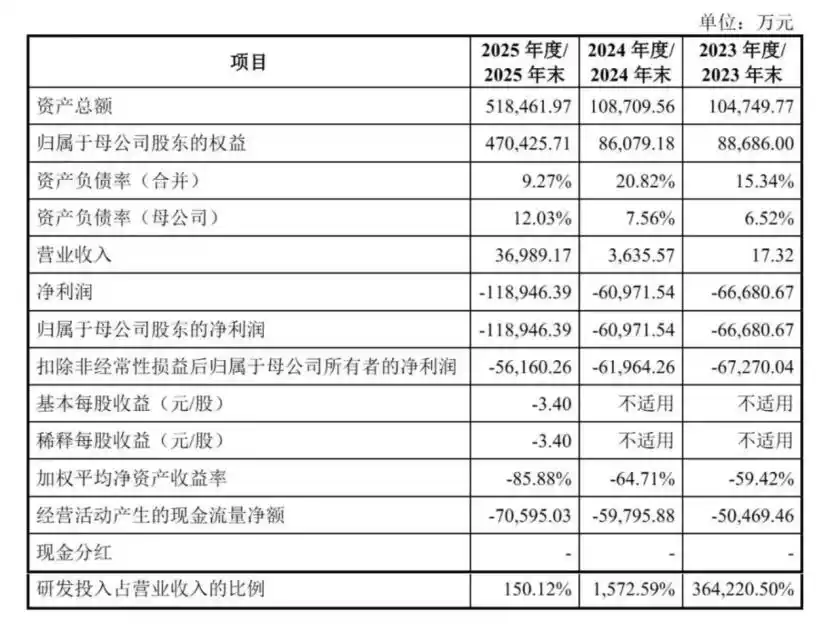
Prospectus

The prospectus shows that Yunbao Intelligent's revenue for 2023, 2024, and 2025 was 170,000, 36.35 million, and 370 million yuan respectively; net losses were 667 million, 600 million, and 1.19 billion yuan respectively; non-GAAP net losses were 670 million, 620 million, and 560 million yuan respectively. Although revenue in 2025 increased by over 900% year-on-year, Yunbao Intelligent is still in a loss-making state.

Thus, another super IPO in Shenzhen emerges.

VC/PE Gathered, Tencent Becomes Largest Shareholder

Chip startups are undoubtedly money-burning ventures.

As of the submission of the prospectus, Yunbao Intelligent has also undergone several rounds of financing. The earliest was at the end of 2020, when the company had just been registered for two months. It secured a seed round backed by investment institutions including 5Y Capital, ZhenFund, China Integrated Circuit Industry Investment Fund, Huayecheng Capital, Yaotu Capital, and Hongzhuo Capital.

Six months later, Yunbao Intelligent completed another angel round with a star-studded lineup, including Sequoia Capital China, Shenzhen Capital Group, Tencent, 5Y Capital, Huayecheng Capital, and QBN Capital. Xiao Qiyang mentioned in a speech, "When I founded Yunbao Intelligent, I was alone. Only after getting the angel round did I dare to invite the founding team."

It was in this round that Tencent, Yunbao Intelligent's most important shareholder to date, appeared. This was Tencent's first entry, and it continued to invest heavily thereafter.

In September 2021, Yunbao Intelligent completed its Series A financing. Tencent again invested several hundred million RMB. Other investors, in addition to existing shareholders like Sequoia Capital China, Shenzhen Capital Group, and 5Y Capital, included Temasek, NIO Capital, ZhenFund, investment platform Yicun Capital under Huaxicun Shares, Minsheng Bank's listed financial holding platform Minsheng Bank Financial Holdings, Yaotu Capital, and others.

By this point, Yunbao Intelligent had become a domestic DPU unicorn.

Subsequent financings progressed even more rapidly—in 2023, it secured financing from Sunshine Insurance, Guoxin Capital, Runxin Xinguanxiang Industrial Fund, etc. After 2024, government guidance funds entered, with the Shenzhen Guidance Fund and Bao'an District Industrial Investment Guidance Fund participating in the Series B financing. In 2025, IDG Capital, Hangzhou Industrial Investment, Hangshi Asset Management, Xiaoshan Capital (three Hangzhou state-owned capitals), Pegatron Corporation, Yunjian Information, and other industry players all entered, with old shareholders participating.

In late November 2025, several Shenzhen-based VCs including Tongchuang Weiye, Oriental Fortune Capital, and Jinshi Capital participated in a round, with IDG Capital and Tencent joining again. The valuation subsequently exceeded 14 billion yuan.

Before the IPO, Tencent became the largest shareholder of Yunbao Intelligent through related entities, holding 19.7792% of the shares. The company's actual controllers, Xiao Qiyang and Zhang Xueli, directly held 7.1520% of the company's equity collectively and indirectly controlled 22.6588% of the voting rights through two equity incentive platforms, Yunbao Chuangxin and Yunbao Chuangzhi.

This also indicates a risk: As the largest shareholder, Tencent's future share purchases or sales in the secondary market may impact the stability of the company's control.

ChiNext Window Opens, Greater Bay Area Starts IPO Wave

Finally, it's Shenzhen's turn.

For a long time, Shenzhen's label in the semiconductor field was more about "consumer electronics applications" and "terminal manufacturing." In the wave of the AI computing power explosion, the capital race surrounding domestic computing power is accelerating comprehensively. Shenzhen urgently needs a super IPO representing underlying core technology.

In the previous IPO wave of domestic GPUs, companies like Moore Threads, MetaX, and Biren Technology were mostly concentrated in Beijing, Shanghai, and other places. Now, Yunbao Intelligent sprinting to become the "first domestic DPU stock" precisely adds an important piece to the puzzle for Shenzhen in the dimension of "infrastructure chips."

Looking from this perspective, semiconductor capitalization in the Greater Bay Area is forming a tiered effect.

Not long ago, Yuexin Semiconductor Technology Co., Ltd. ("Yuexin Semiconductor") successfully passed the review for its ChiNext board IPO, planning to raise 7.5 billion yuan. For investors, this was also a long-term bet—starting eight years ago from an empty plot in Huangpu, Guangzhou, it later became the first 12-inch wafer manufacturer in the Greater Bay Area to achieve mass production.

Along the way, behind this Guangzhou super unicorn, Guangdong state-owned capital was involved in almost every round of financing, placing heavy expectations on it.

It seems that Yuexin Semiconductor represents a breakthrough for the Greater Bay Area in wafer manufacturing, while Yunbao Intelligent represents a breakthrough in high-end chip design (DPU).

At this moment, they are riding the tailwind of the ChiNext board's reform红利.

Yuexin Semiconductor chose to apply the third set of listing standards for the ChiNext board, becoming the second unprofitable company to pass the review after Dapu Microelectronics. In April this year, the ChiNext board officially activated the "fourth set of listing standards," focusing on R&D investment and market value rather than short-term net profit. Subsequently, Yunbao Intelligent's IPO progressed smoothly. They both signal to hard-tech companies—as long as the technology is solid, R&D is high, and growth potential is strong, the door to the capital market is now open.

The ChiNext board is getting lively. Since September 2024, the ChiNext Index has risen by approximately 150%, becoming one of the most prominent main lines in the A-share market. Looking around, the ChiNext board has become one of the most concentrated capital market samples for Chinese hard-tech companies.

Among them, the hard-tech army of the Greater Bay Area has sounded the horn for a breakthrough.

This article is from the WeChat public account "Investment Community," author: Yang Jiyun

Câu hỏi Liên quan

QWhat is Yunbao Intelligence and what is its significance in the context of the article?

AYunbao Intelligence (Shenzhen Yunbao Intelligent Co., Ltd.) is a company founded in Shenzhen in 2020 by Dr. Xiao Qiyang, focusing on the DPU (Data Processing Unit) sector. It is significant because it is sprinting to become the 'first domestic DPU stock' with its IPO application accepted by the Shenzhen Stock Exchange for the ChiNext board. It represents a key example of high-end chip design in the Greater Bay Area.

QWho is the founder of Yunbao Intelligence and what is his background?

AThe founder is Dr. Xiao Qiyang. He was born in Hong Kong, earned his Ph.D. in Electrical Engineering from Stanford University at age 24, and later taught at UC Irvine and MIT. He co-founded the chip company RMI in Silicon Valley in 2002, which was later acquired by Broadcom for $3.7 billion. He founded Yunbao Intelligence in Shenzhen in 2020.

QWhat role does Tencent play in Yunbao Intelligence's development according to the article?

ATencent is the most heavily invested shareholder in Yunbao Intelligence, becoming its largest shareholder with a 19.7792% stake before the IPO. It first invested in the company's angel round in 2021 and continued to invest heavily in subsequent funding rounds, including the A-round and later rounds in 2025.

QWhat are the financial performance figures for Yunbao Intelligence as mentioned in its prospectus?

AAccording to the prospectus, Yunbao Intelligence's revenue was 170,000 RMB in 2023, 36.35 million RMB in 2024, and 370 million RMB in 2025. Its net losses were 667 million RMB, 600 million RMB, and 1.19 billion RMB for those respective years. Despite a revenue growth of over 900% year-on-year in 2025, the company was still in a loss-making state.

QHow does the article connect Yunbao Intelligence and Yuexin Semiconductor to the broader trend in the Greater Bay Area?

AThe article positions Yunbao Intelligence and Yuexin Semiconductor as representative cases of a growing semiconductor capital wave in the Greater Bay Area. Yuexin Semiconductor, which recently passed its ChiNext board IPO review, represents a breakthrough in wafer manufacturing for the region. Yunbao Intelligence, aiming for a DPU IPO, represents an突围 (breakthrough) in high-end chip design. Together, they show the region forming a capital梯队效应 (echelon effect) and benefiting from the ChiNext board's reformed listing standards favorable to hard tech companies.

Nội dung Liên quan

Báo cáo của QCP Capital: Tại sao Bitcoin mắc kẹt ở mức 80.000 USD trong khi chờ đợi dữ liệu lạm phát Mỹ

Báo cáo từ QCP Capital phân tích việc Bitcoin mắc kẹt quanh mốc 80.000 USD trong bối cảnh thị trường chờ đợi dữ liệu lạm phát quan trọng của Mỹ. Dữ liệu việc làm tháng 8 mạnh mẽ bất ngờ (162.000 việc mới) đã chuyển trọng tâm thị trường từ lo ngại suy thoái sang chủ đề lạm phát và lộ trình lãi suất của Fed. Thị trường tiền mã hóa phản ứng đi ngang: BTC dao động quanh 79.300-82.000 USD, ETH quanh 2.500 USD. Dòng tiền vào ETF Bitcoin ghi nhận dòng ròng dương mạnh (+770 triệu USD từ 1-4/9), cung cấp hỗ trợ cấu trúc. Tuy nhiên, áp lực bán kỹ thuật vẫn tồn tại ở các mức kháng cự chính (BTC: 80.000-82.000 USD, ETH: 2.500-2.550 USD). Biến động ngắn hạn bị nén chặt, phản ánh tâm lý chờ đợi. Tuần tới là then chốt với việc công bố Chỉ số giá sản xuất (PPI) thứ Năm và Chỉ số giá tiêu dùng (CPI) thứ Sáu. CPI, đặc biệt là lõi CPI, sẽ là phép thử quyết định cho kỳ vọng điều chỉnh lãi suất của Fed tại cuộc họp tháng 9. QCP nhận định môi trường vẫn tích cực nhưng chưa xác định rõ hướng đi. Thị trường giống như lò xo bị nén, với năng lượng tích tụ chờ tín hiệu từ dữ liệu lạm phát. Kết quả CPI sẽ quyết định liệu BTC và ETH có phá vỡ các vùng kháng cự hiện tại hay không, đồng thời định hình lại kỳ vọng chính sách tiền tệ.

cryptonews.ru14 phút trước

Báo cáo của QCP Capital: Tại sao Bitcoin mắc kẹt ở mức 80.000 USD trong khi chờ đợi dữ liệu lạm phát Mỹ

cryptonews.ru14 phút trước

Đối tác tại Blockchain Capital: Bảng cân đối kế toán toàn cầu cuối cùng sẽ được số hóa toàn bộ

Bài viết của đối tác Blockchain Capital, Aleks Larsen, lập luận rằng bảng cân đối kế toán toàn cầu cuối cùng sẽ được đưa lên blockchain nhờ token hóa, giống như cách container tiêu chuẩn hóa vận tải biển. Ông chỉ ra rằng tài chính truyền thống bị cản trở bởi chi phí vận hành cao và sự phân mảnh, với mỗi loại tài sản có hệ thống ghi chép riêng biệt, gây khó khăn cho việc luân chuyển vốn. Token hóa giải quyết vấn đề này bằng cách tạo ra một giao diện tiêu chuẩn, máy có thể đọc được cho các tài sản hoặc công cụ tài chính. Điều này cho phép các sàn giao dịch, nền tảng cho vay và ứng dụng tương tác trực tiếp với tài sản mà không cần xây dựng lại cơ sở hạ tầng từ đầu, giảm đáng kể ma sát và chi phí. Bài viết so sánh token với container vận tải, vốn đã cách mạng hóa chuỗi cung ứng toàn cầu bằng cách giảm chi phí và mở rộng quy mô thương mại. Tương tự, stablecoin là minh chứng rõ ràng cho tiềm năng của token hóa, tạo ra một mạng lưới thanh toán USD toàn cầu hiệu quả với tốc độ nhanh và chi phí thấp. Mạng lưới này hiện đang thu hút nhiều tài sản thế chấp (RWA) được token hóa hơn. Tác giả dự đoán thị trường vốn sẽ được tái cấu trúc xung quanh token. Tài sản sẽ trở nên có thể lập trình được, cho phép các dịch vụ tài chính chuyên môn hóa (cho vay, giao dịch, quản lý) tích hợp một cách mô-đun thay vì được đóng gói bởi các tổ chức lớn. Điều này chuyển lợi thế cạnh tranh từ các thể chế lớn sang mạng lưới mở, giảm rào cản gia nhập. Kết quả cuối cùng sẽ là một thị trường vốn toàn cầu không biên giới. Token hóa giảm mạnh chi phí tham gia, cho phép các tài sản nhỏ, cục bộ hoặc không chuẩn hóa trước đây không thể tiếp cận thị trường truyền thống nay có thể được tài trợ và giao dịch. Trí tuệ nhân tạo (AI) sẽ khuếch đại thêm sự chuyển đổi này bằng cách tự động hóa các nhiệm vụ vận hành. Giống như container cho phép các mô hình thương mại và sản xuất mới, token hóa sẽ cho phép vốn lưu chuyển tự do dựa trên giá trị thực của tài sản, mở rộng đáng kể phạm vi và khả năng tiếp cận của thị trường vốn toàn cầu.

marsbit38 phút trước

Đối tác tại Blockchain Capital: Bảng cân đối kế toán toàn cầu cuối cùng sẽ được số hóa toàn bộ

marsbit38 phút trước

Quỹ ETF Bitcoin và Ethereum thu hút vốn ba tuần liên tiếp

Các quỹ giao dịch hoán đổi (ETF) cho Bitcoin và Ethereum đã thu hút dòng vốn ròng trong tuần thứ ba liên tiếp. Quỹ iShares Bitcoin Trust (IBIT) của BlackRock dẫn đầu với dòng vào ròng 691,5 triệu USD, theo SoSoValue. Tuy nhiên, hoạt động giao dịch giảm, với khối lượng giao dịch tuần của các ETF Bitcoin giảm từ 19 tỷ USD xuống 14,5 tỷ USD. Tháng 8 là tháng mạnh nhất kể từ tháng 9 năm ngoái với dòng vốn ròng 3,52 tỷ USD cho các ETF Bitcoin. ETF Ethereum cũng ghi nhận dòng vào ròng tích cực 218,4 triệu USD trong tuần, dù khối lượng giao dịch giảm từ 6,3 tỷ USD xuống 4,1 tỷ USD. Tháng 8 cũng là tháng tốt nhất kể từ tháng 8 năm ngoái với 1,85 tỷ USD. Chuyên gia Dominick John từ Zeus Research nhận định dòng vốn ổn định cho thấy mong muốn của các công ty đầu tư trong việc tăng dần tiếp xúc với Bitcoin. Ông tin rằng sự quan tâm trở lại đối với ETF Bitcoin và Ethereum tạo ra nhu cầu thực sự, không dựa trên đòn bẩy. Bitcoin hiện giao dịch quanh 79.000 USD. Nhà phân tích này kỳ vọng Bitcoin tiếp tục hướng đến vùng 82.000-85.000 USD, với các sự kiện kinh tế như dữ liệu về yêu cầu trợ cấp thất nghiệp (ngày 10/9) và chỉ số CPI (ngày 11/9) của Mỹ có thể là yếu tố chính thúc đẩy tăng trưởng, vì chúng cung cấp manh mối về chính sách của Fed. Matt Hougan, Giám đốc đầu tư của Bitwise, cho rằng dòng vốn vào ETF tiền mã hóa, cùng với sự phổ biến của stablecoin và token hóa tài sản, có thể kích hoạt một chu kỳ tăng giá mới trên thị trường.

cryptonews.ru1 giờ trước

Quỹ ETF Bitcoin và Ethereum thu hút vốn ba tuần liên tiếp

cryptonews.ru1 giờ trước

Tin tặc đột nhập vào cơ sở dữ liệu của chính quyền Berlin và đòi tiền chuộc bằng Bitcoin

Nhóm tin tặc Rhysida đã tấn công cơ sở dữ liệu của chính quyền Berlin, đánh cắp 5,7 TB dữ liệu tương đương 1,44 triệu file và yêu cầu tiền chuộc bằng Bitcoin. Sau khi hạn chót ngày 4/9 trôi qua, một phần dữ liệu bị đánh cắp đã bị rò rỉ. Đến ngày 6/9, tin tặc tiếp tục công bố thêm một gói dữ liệu khác chứa thông tin đăng nhập vào cơ sở dữ liệu của chính quyền Berlin. Thông tin bị đánh cắp được cho là có thể chứa dữ liệu hộ chiếu của công chức và người dân, tài liệu công ty của các pháp nhân, cũng như các tài liệu mật liên quan đến cơ sở hạ tầng thủ đô, bao gồm kế hoạch ứng phó khẩn cấp và thông tin về các doanh nghiệp công nghiệp quốc phòng, quân đội, cảnh sát, nhà tù. Nhóm Rhysida, hoạt động từ giữa năm 2023, chuyên thực hiện các cuộc tấn công ransomware nhắm vào cơ quan nhà nước, cơ sở hạ tầng trọng yếu, tổ chức y tế, giáo dục và doanh nghiệp lớn. Chúng thường mã hóa dữ liệu và yêu cầu tiền chuộc, hoặc bán lại cho các tin tặc khác. Trước đây, nhóm này từng rao bán dữ liệu bí mật từ Sở Giao thông Vận tải bang Maryland (Mỹ) với yêu cầu 30 Bitcoin (khoảng 3,4 triệu USD) và gần đây là tấn công sân bay quốc tế Seattle, đòi 100 Bitcoin cho thông tin hành khách bị đánh cắp, nhưng sân bay này đã từ chối trả tiền.

cryptonews.ru1 giờ trước

Tin tặc đột nhập vào cơ sở dữ liệu của chính quyền Berlin và đòi tiền chuộc bằng Bitcoin

cryptonews.ru1 giờ trước

Chủ sở hữu tiền mã hóa tại Hàn Quốc buộc phải khai báo ngay cả khi sàn giao dịch tiền mã hóa nước ngoài phá sản

Cơ quan Thuế Quốc gia Hàn Quốc đã ra quyết định vào ngày 28/8, yêu cầu các chủ sở hữu tiền mã hóa phải khai báo tài khoản của mình trên các sàn giao dịch nước ngoài theo quy định về công bố thông tin tài khoản nước ngoài. Quy tắc này vẫn áp dụng ngay cả khi sàn giao dịch nước ngoài phá sản và người nắm giữ mất khả năng giao dịch hoặc rút tiền. Quyết định này được đưa ra sau một trường hợp cụ thể, nơi một chủ nợ của một sàn giao dịch phá sản vào tháng 11/2022 vẫn phải báo cáo số dư tài khoản. Cơ quan thuế khẳng định nghĩa vụ khai báo phát sinh khi mở tài khoản và vẫn tồn tại sau khi nhà điều hành phá sản. Theo quy định, công dân và công ty Hàn Quốc phải báo cáo tài khoản tài chính nước ngoài nếu tổng số dư vượt quá 500 triệu won (khoảng 350.000 USD) vào cuối bất kỳ tháng nào trong năm. Tài sản kỹ thuật số đã được đưa vào hệ thống này từ chu kỳ báo cáo năm 2023, nhưng ví cá nhân không nằm trong phạm vi điều chỉnh. Việc báo cáo số dư bị đóng băng có thể gây khó khăn vì giao diện sàn có thể vẫn hiển thị số dư ban đầu, trong khi giá trị thực tế nhận được sau phá sản có thể chỉ là một phần và quá trình này có thể kéo dài nhiều năm. Quy tắc khai báo này là riêng biệt với thuế lợi nhuận tiền mã hóa 22% dự kiến có hiệu lực từ tháng 1/2027. Cho đến nay, cơ quan thuế vẫn chưa làm rõ cách xử lý các hoạt động như staking, airdrop hoặc cách tính chi phí cơ bản.

cryptonews.ru1 giờ trước

Chủ sở hữu tiền mã hóa tại Hàn Quốc buộc phải khai báo ngay cả khi sàn giao dịch tiền mã hóa nước ngoài phá sản

cryptonews.ru1 giờ trước

Giao dịch

Giao ngay
活动图片