Stole $2 Million from pump.fun, Sentenced to 6 Years in Prison, He Chose to 'Self-Destruct'

marsbitXuất bản vào 2026-03-06Cập nhật gần nhất vào 2026-03-06

Tóm tắt

In May 2024, pump.fun was exploited for approximately $2 million worth of SOL and meme coins. The attacker, Jarett Dunn (also known as Stacc), a former employee, was later sentenced to six years in prison. Two days prior to the sentencing, he leaked internal Telegram chats from his time at the company, claiming to be a whistleblower exposing misconduct. However, the leaked messages did not reveal deliberate malicious activities such as market manipulation or fee misconduct by pump.fun. Instead, Dunn highlighted issues like the team's failure to implement KYC/AML measures for live streaming features, which he had warned about, and what he perceived as irresponsible attitudes toward known "Ruggers" (developers who abandon projects after fundraising). Some messages also illustrated the company's early-stage disorganization, including rushed contracts under investor pressure. Dunn, a talented programmer diagnosed with paranoid schizophrenia at age 20, had joined pump.fun just six weeks before the attack. His mother had recently died, and he had been off medication for months. After the exploit, he was arrested near pump.fun’s London office and underwent mental health treatment. He later attempted to withdraw his guilty plea and expressed homelessness in social media posts. The leak included private phone numbers of pump.fun co-founders, raising privacy concerns. The overall narrative portrays a troubled individual whose actions were influenced by personal trauma and mental hea...

In May 2024, pump.fun was hacked, with the attacker stealing approximately $2 million worth of SOL and a large number of meme coins. At the time, the attacker claimed they would airdrop these funds randomly to players on Solana, once dubbed the "Robin Hood of the crypto world."

Jarett Dunn (online alias Stacc), the attacker, is a former pump.fun employee. Last December, he was sentenced to 6 years in prison by a judge in London.
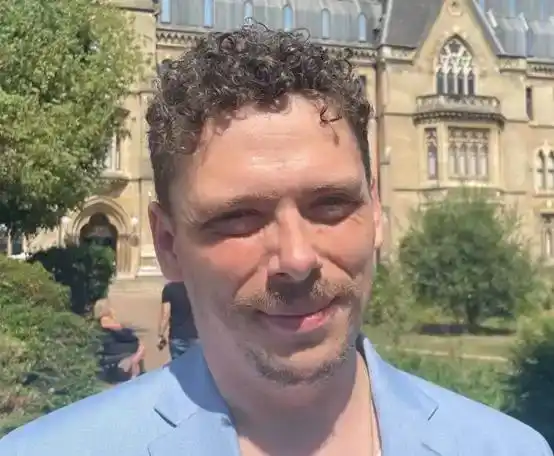
Two days ago, he exposed a large number of Telegram chat records from his time at pump.fun.

So I spent a lot of time going through these chat logs one by one. Honestly, after reading them, I was confused because these records did not contain the kind of intentional malicious content I had imagined, such as the pump.fun team manipulating liquidity or secretly collecting user fees. There was also no content suggesting major personal moral issues with founder alon or other team members.

But in Jarett Dunn's tweet, he called himself a whistleblower and viewed his exposure as a form of "righteous self-destruction." Someone expressed the same doubt in his comments, to which he replied:
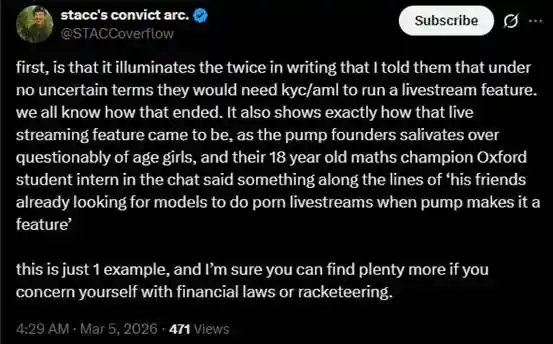
"These records show that I told them twice they must complete the KYC/AML process to enable livestreaming on the platform, (but they ignored it) and then we all know how things ended up (referring to the chaotic and unrestrained livestreaming scene on pump.fun in its early days)."

If this accusation has some merit, the next one is a bit more of a leap:

"An employee said something like this in the group: his friend was already looking for models to do porn as soon as pump.fun's livestreaming went live."

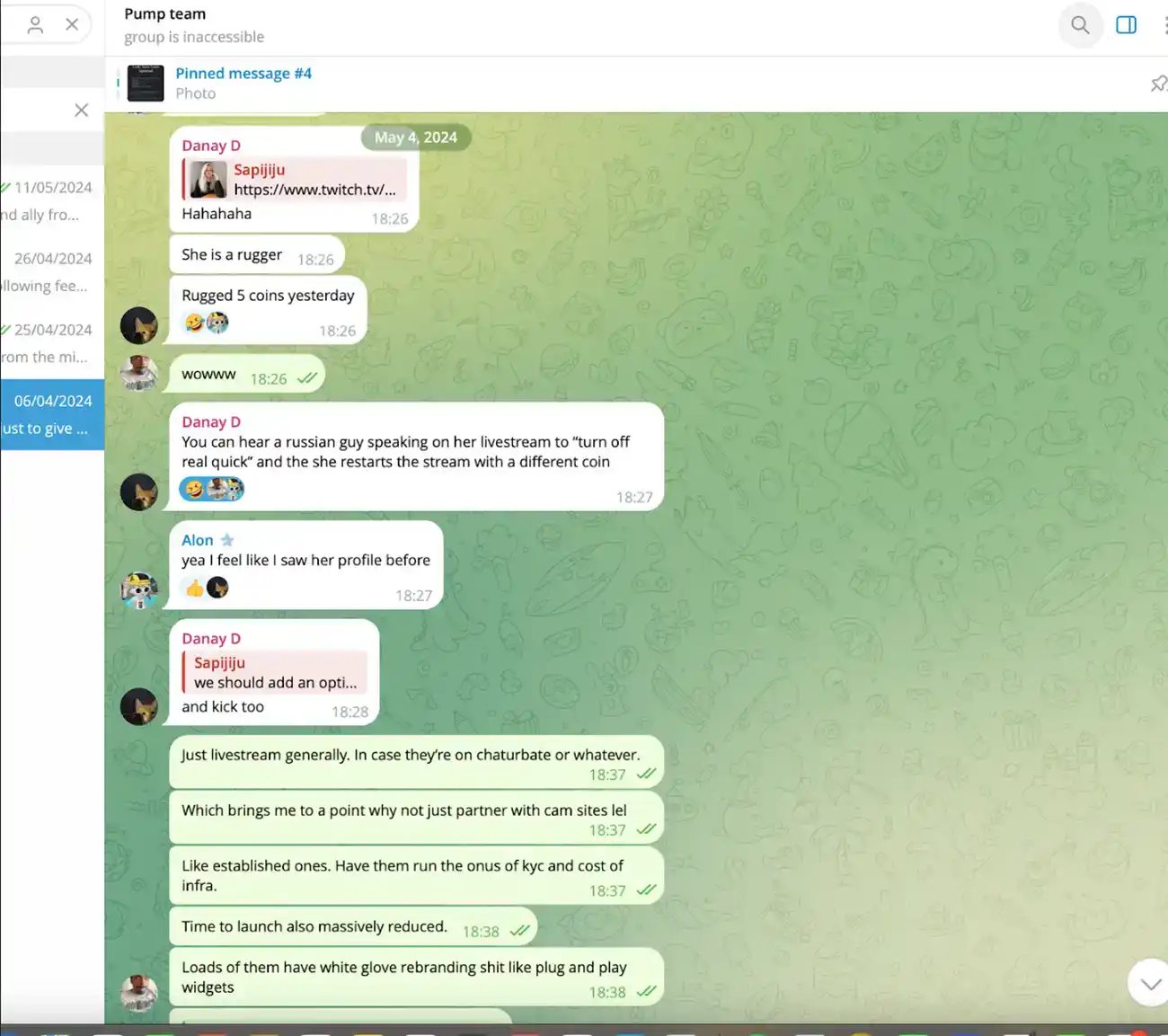
The chat record corresponding to this accusation is as follows. First, pump.fun co-founder Sapijiju shared a Twitch streamer in the pump.fun company group, saying another Twitch streamer had launched a token through pump.fun. An employee stated that this streamer was a Rugger (someone who performs a rug pull) and had rugged 5 tokens the day before.
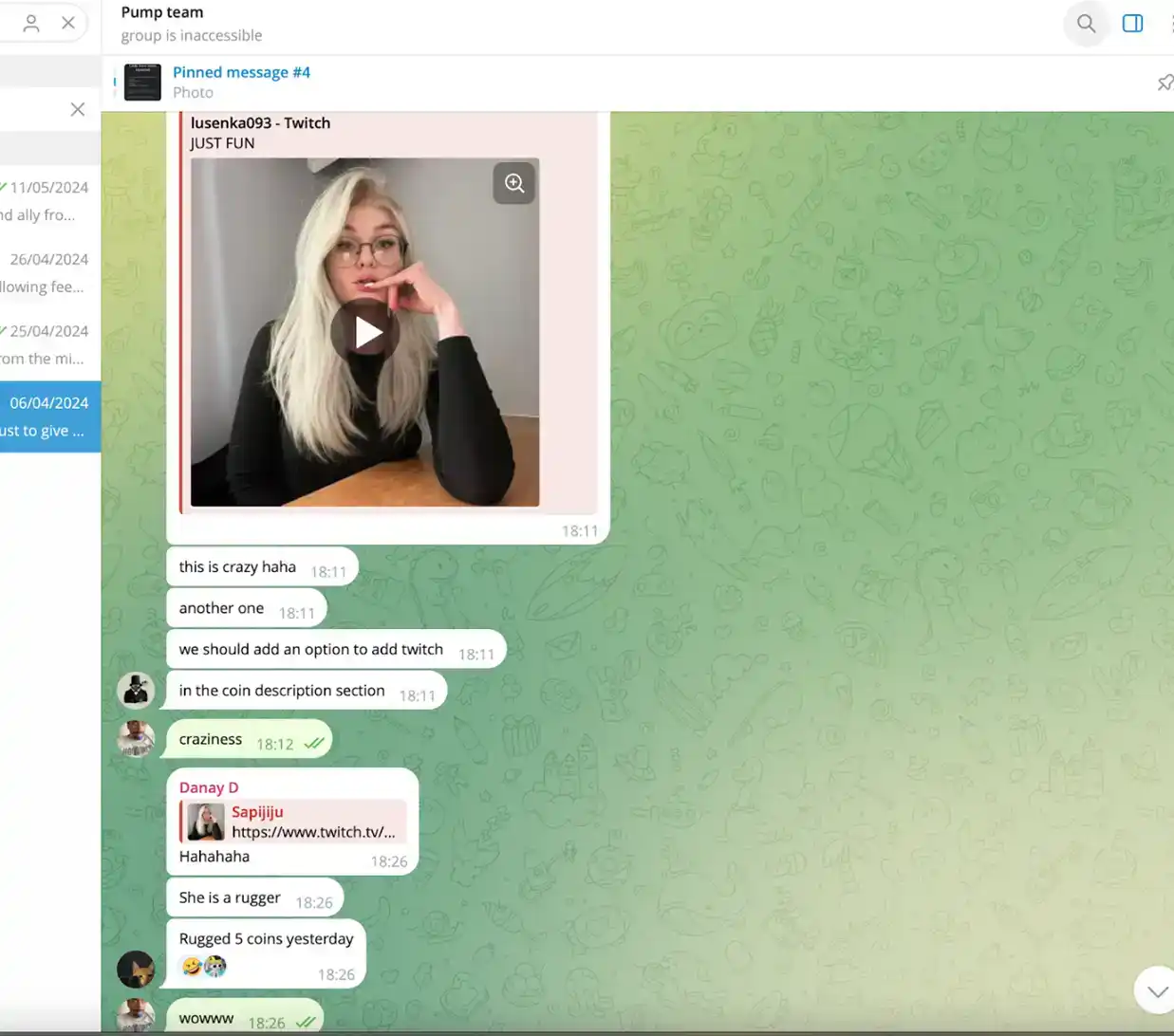
Then this employee said his friend was looking for "models" (to do the same thing). In context, this seems more like a joke. However, Jarett Dunn's suggestion was indeed interspersed, where he took the opportunity to express that partnering with a livestreaming platform would be better, as it would avoid KYC responsibilities and significantly shorten the time needed for pump.fun to launch its livestreaming feature.
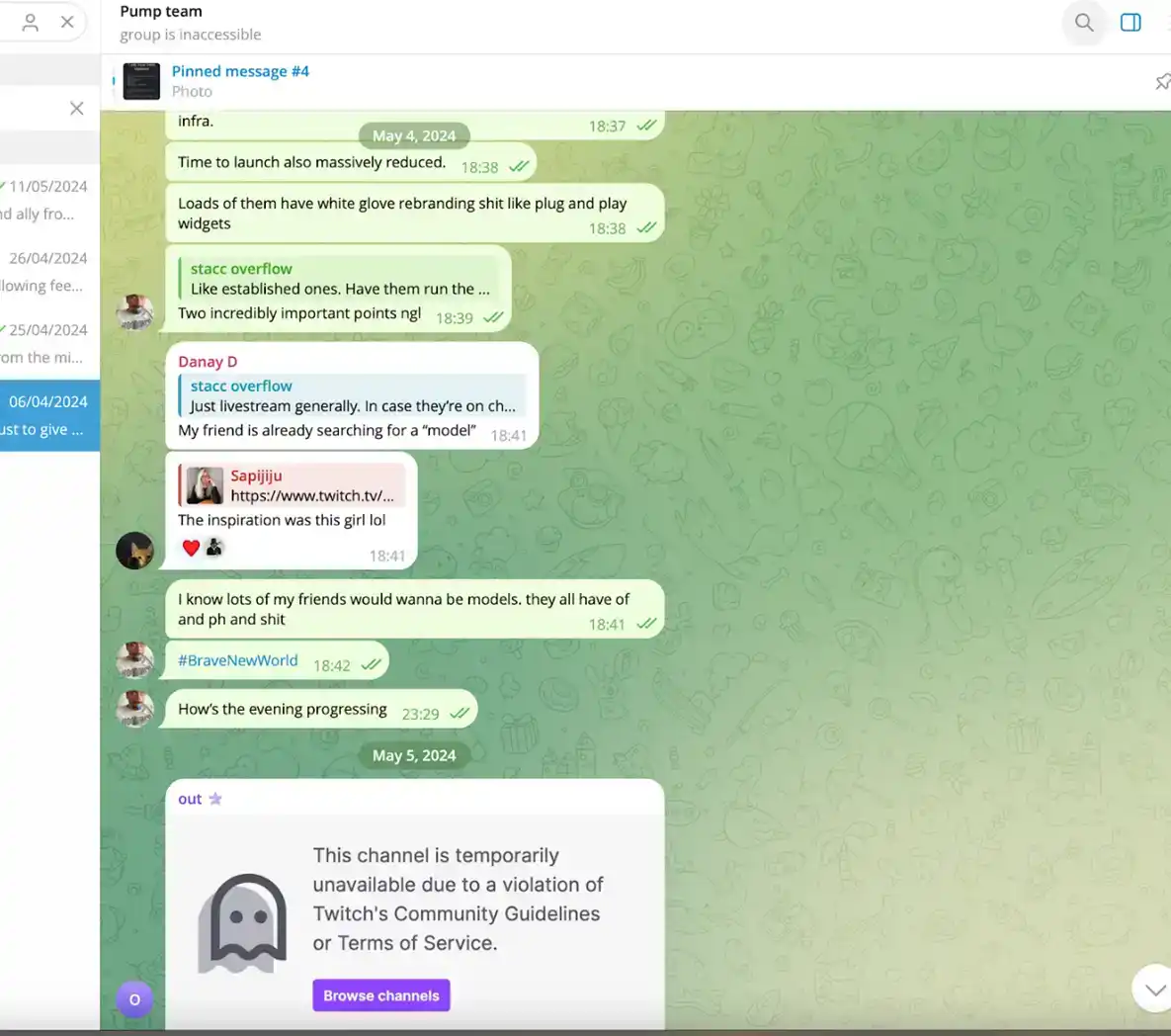
The more significant accusation here should be that the entire team, knowing this was a serial Rugger, still maintained a casual, joking attitude. alon, as a co-founder, stated in the records that he "felt like he had seen her profile before," and then nothing more came of it.
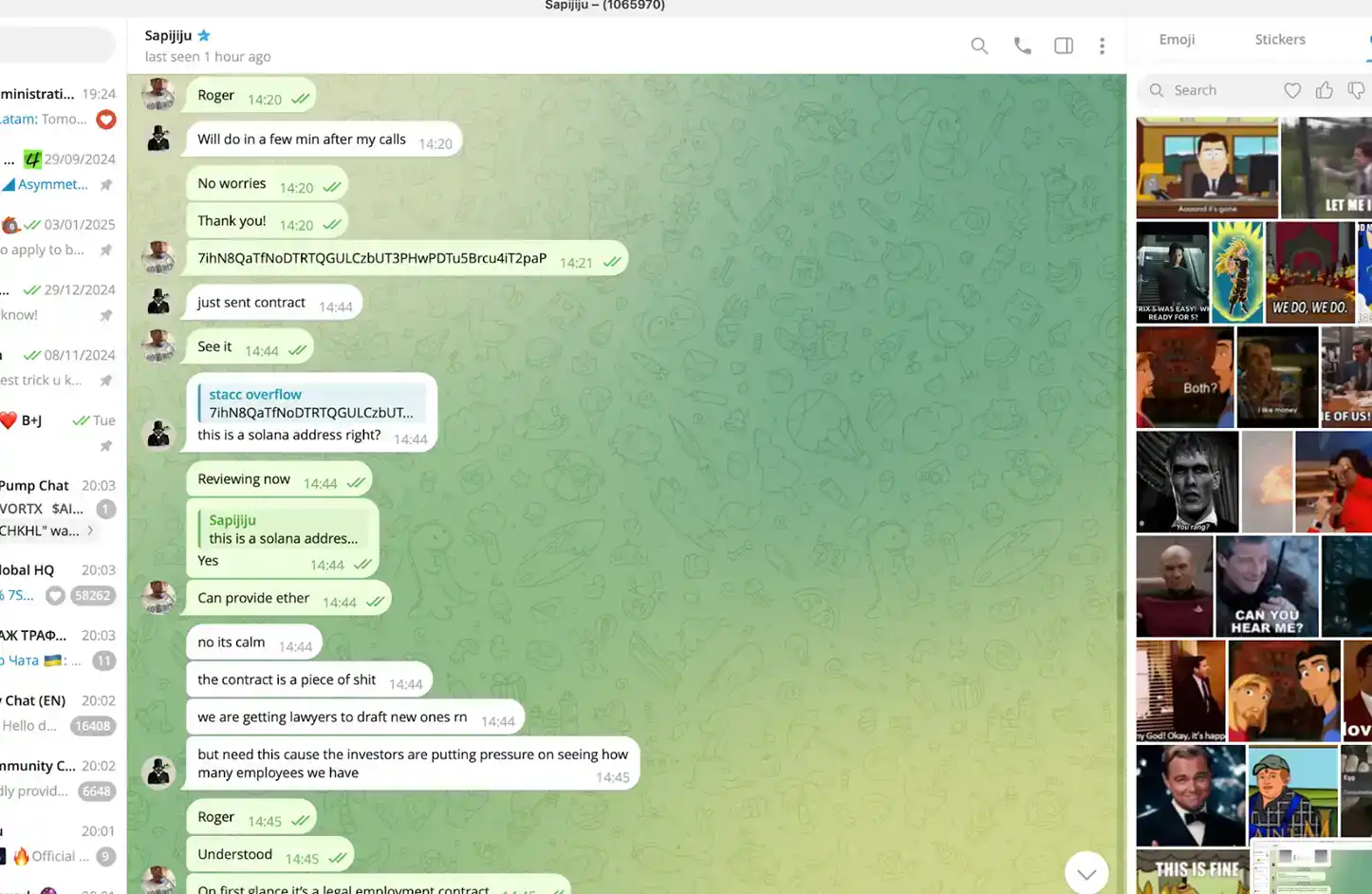
Some other records show the early "makeshift" nature of pump.fun. For example, creating a contract they themselves felt was "a piece of shit" just to handle investor pressure (needing to show investors how many employees the company had), while also looking for lawyers to draft a new one. For a then "young" pump.fun, it's hard to call this a black mark:
The most "explosive" part of the records disclosed by Jarett Dunn might be the release of the phone numbers associated with the Telegram accounts of alon and Sapijiju. Since this involves privacy, screenshots of this part will not be included in this article.

So, what kind of deep grudge is this? From the records, I cannot find the beginning of the enmity between Jarett Dunn and pump.fun, but he is a talented programmer who was also diagnosed with paranoid schizophrenia at the age of 20.

Two years ago, when he attacked pump.fun, his mother had recently passed away. At this time, he had only been with pump.fun for 6 weeks.

Four days after the attack, he was arrested at a hotel located just 90 meters from pump.fun's office in London; he was staying there. After his arrest, he was immediately deemed unfit for questioning by the police and sent to a hospital for a two-week mental health treatment, having been off his medication for months.

At his sentencing hearing two months after pleading guilty, he tried to withdraw his plea, a sudden change that made his legal team quit.

In September 2023, he wrote in a tweet, "I'm homeless, planning to sleep in the park, fighting the bugs I created with 5G."

Yet in the records, pump.fun reimbursed his flight tickets for him to fly from Canada to the UK. Was he happy and fulfilled back then?

Faced with such a complex, life-troubled programmer, I can only sigh at the vicissitudes of life.


Câu hỏi Liên quan

QWho was the individual responsible for the $2 million hack of pump.fun and what was his sentence?

AJarett Dunn (also known as Stacc), a former pump.fun employee, was responsible for the hack. He was sentenced to 6 years in prison by a judge in London.

QWhat was the main reason Jarett Dunn gave for his 'whistleblower' act of leaking internal chats?

AHe claimed that he had twice warned the pump.fun team that they needed to complete KYC/AML procedures before launching a live-streaming feature, but they ignored him, which he implied led to the platform's early chaos.

QWhat personal circumstances were mentioned that may have contributed to Jarett Dunn's actions?

AHe was diagnosed with paranoid schizophrenia at age 20, his mother had recently passed away just before the attack, and he had been off his prescribed medication for several months.

QAccording to the article, what was the nature of the most 'explosive' information leaked by Dunn?

AThe most sensitive information leaked was the personal phone numbers associated with the Telegram accounts of pump.fun's co-founders, Alon and Sapijiju.

QHow did the author of the article characterize the internal chat logs that were leaked?

AThe author was initially confused because the logs did not contain evidence of intentional malicious acts like market manipulation or stealing user fees. Instead, they showed a 'ragtag' or immature early-stage startup culture with some questionable jokes and attitudes, but not major ethical scandals.

Nội dung Liên quan

Robot 'Teletubbies' Đến Nhà Làm Vệ Sinh, 200 Nghìn Đồng/Giờ, Trí Tuệ Nhân Tạo 'Thuần Khiết'

Ở San Francisco, một công ty khởi nghiệp robot có tên Tau Robotics đã ra mắt dịch vụ dọn dẹp nhà cửa bằng robot hình người với giá 30 USD/giờ. Tuy nhiên, điểm đáng chú ý là các robot này hiện hoạt động dựa trên điều khiển từ xa (teleoperation) hơn là trí tuệ nhân tạo tự chủ hoàn toàn. Công ty, thành lập năm 2024 với khoảng 10 nhân viên, giới thiệu ba robot "nhân viên": Chelsea chuyên dọn dẹp nhà bếp và phòng tắm, Elon phụ trách dọn dẹp định kỳ và ghi nhớ vị trí đồ đạc, và Tony tập trung vào việc vệ sinh chuyên sâu. Lý do chọn thiết kế hình người, theo bài viết, là để tạo điều kiện thuận lợi cho việc điều khiển từ xa, vì người vận hành có thể ánh xạ trực quan các cử động của mình lên robot. Cách tiếp cận "gian lận thông minh" này nhằm mục đích thu thập dữ liệu từ môi trường thực tế để huấn luyện AI trong tương lai, tương tự mô hình "chế độ bóng" trong xe tự lái. Bài viết so sánh với thị trường Trung Quốc, nơi trọng tâm chính của robot hình người vẫn là trong môi trường công nghiệp có kiểm soát, và đề cập đến một công ty Mỹ khác là 1X Neo cũng theo đuổi hướng đi tương tự. Mặc dù hiệu quả về mặt kỹ thuật, nhưng việc người tiêu dùng có sẵn sàng trả tiền cho một robot được điều khiển từ xa với camera trong nhà mình hay không vẫn là một câu hỏi mở. Dịch vụ của Tau Robotics hiện đang trong chế độ mời thử nghiệm tại San Francisco.

marsbit4 phút trước

Robot 'Teletubbies' Đến Nhà Làm Vệ Sinh, 200 Nghìn Đồng/Giờ, Trí Tuệ Nhân Tạo 'Thuần Khiết'

marsbit4 phút trước

Từ Hàn Quốc đến Mỹ: Nhờ AI, Lao Động Chân Tay Ngày Càng 'Lên Ngôi'

Trí tuệ nhân tạo (AI) đang định hình lại thị trường lao động. Bằng đại học 4 năm không còn là "tấm vé an toàn", trong khi các nghề kỹ thuật như thợ điện, thợ hàn, thợ sửa ống nước đang có nhu cầu cao và mức lương hấp dẫn chưa từng thấy. Thanh niên từ Mỹ đến Hàn Quốc đang thay đổi quan điểm về giáo dục và nghề nghiệp. Số liệu cho thấy sự chuyển dịch rõ rệt: doanh thu trường dạy nghề ở Mỹ tăng mạnh 11.4%, trong khi các đợt sa thải nhân viên văn phòng do AI cũng lên mức cao kỷ lục. Áp lực AI thay thế lao động trí thức, cộng với nhu cầu mở rộng cơ sở hạ tầng và trung tâm dữ liệu, đang đẩy cung-cầu nghiêng về lao động kỹ thuật. Khảo sát cho thấy 60% thế hệ Z có kế hoạch làm nghề lao động kỹ thuật vào năm 2026, vì tin rằng những nghề này có tính an toàn nghề nghiệp cao hơn trước AI. Nhiều nghề kỹ thuật hiện có mức lương trung bình ngang bằng hoặc vượt các nghề yêu cầu bằng đại học. Mô hình học việc "vừa học vừa làm" hấp dẫn, và công việc này khó bị AI thay thế hoặc gia công ra nước ngoài. Tại Hàn Quốc, học sinh tốt nghiệp trung học bán dẫn có tỷ lệ có việc làm ngay lên tới 96.4%. Tuy nhiên, ngành này đang đối mặt với khoảng trống kép: làn sóng nghỉ hưu ồ ạt và nhu cầu mở rộng cơ sở hạ tầng. Dự báo Mỹ sẽ thiếu hụt hàng triệu lao động có kỹ năng. Nhiều tập đoàn lớn như Meta, Lowe's đã đầu tư hàng trăm triệu USD vào các chương trình đào tạo. Dù nhu cầu thị trường rõ ràng, định kiến xã hội coi trọng bằng đại học hơn học nghề vẫn tồn tại. Các chuyên gia nhấn mạnh cần có những nỗ lực chủ động từ ngành công nghiệp để thu hẹp khoảng cách nhận thức này, thông qua các chương trình trải nghiệm thực tế cho giới trẻ, nhằm giải quyết tận gốc tình trạng thiếu hụt lao động kỹ thuật.

marsbit48 phút trước

Từ Hàn Quốc đến Mỹ: Nhờ AI, Lao Động Chân Tay Ngày Càng 'Lên Ngôi'

marsbit48 phút trước

Từ TPU đến Agent Tự Tiến Hóa: Jeff Dean Nhìn Nhận Bước Tiếp Theo của AI Như Thế Nào?

Trong buổi phỏng vấn tại YC Startup School 2026, Jeff Dean chia sẻ tầm nhìn về tương lai của AI. Ông nhấn mạnh rằng cuộc cạnh tranh AI không còn là ai có mô hình lớn hơn, mà là ai có thể tổ chức trí thông minh hiệu quả hơn. Điểm then chốt là sự chuyển dịch từ việc huấn luyện các mô hình đơn thuần sang xây dựng các hệ thống "Agent" có khả năng làm việc lâu dài, tự động thử nghiệm, xác minh và tích lũy kinh nghiệm. Các Agent này cần được trang bị công cụ, bộ nhớ, môi trường thực thi và cơ chế phản hồi rõ ràng. Jeff Dean cho rằng cơ hội cho các startup nằm ở những lĩnh vực chuyên biệt nơi các mô hình phổ thông hiện có tỷ lệ thành công rất thấp (gần 0-1%), nhờ vào dữ liệu độc quyền, công cụ đánh giá chuyên môn hoặc mô hình chuyên sâu. Ông cũng dự đoán phần cứng chuyên dụng cho suy luận (inference) với độ trễ thấp và tiêu thụ năng lượng thấp sẽ là chìa khóa. Khi chi phí tạo mã trở nên rẻ hơn, giá trị thực sự sẽ nằm ở khả năng xác định vấn đề đáng giải quyết, thiết kế thông số kỹ thuật rõ ràng và có "khiếu" thẩm định. Tương lai của AI là xây dựng các hệ thống có thể tự động hóa phương pháp khoa học, chạy các vòng lặp thử nghiệm với tốc độ cao để khám phá và cải tiến không ngừng.

marsbit50 phút trước

Từ TPU đến Agent Tự Tiến Hóa: Jeff Dean Nhìn Nhận Bước Tiếp Theo của AI Như Thế Nào?

marsbit50 phút trước

Qualcomm: Cơn sốt AI dịu dần, khi nào điện thoại mới thoát khỏi 'bóng mây'?

Qualcomm (QCOM.O) công bố báo cáo tài chính quý III năm tài chính 2026 (kết thúc tháng 6/2026) với doanh thu 9,95 tỷ USD, giảm 4% so với cùng kỳ, vượt kỳ vọng thị trường. Tuy nhiên, lợi nhuận gộp giảm 2,5 điểm phần trăm xuống 53,1% do chi phí sản xuất và lưu trữ tăng. Mảng kinh doanh bán dẫn (QCT) chịu ảnh hưởng nặng từ smartphone, doanh thu giảm 19,6% xuống 5,09 tỷ USD. Nguyên nhân do sản lượng điện thoại Android (trừ Apple) giảm 11% và xu hướng các hãng sử dụng nền tảng cũ để tiết kiệm chi phí. Trong khi đó, mảng ô tô tăng trưởng mạnh 61% lên 1,59 tỷ USD nhờ Snapdragon Digital Chassis, và IoT tăng 9% lên 1,83 tỷ USD. Lợi nhuận hoạt động cốt lõi giảm 41% do áp lực biên lợi nhuận và chi phí hoạt động tăng. Dự báo quý tới, doanh thu dự kiến 9,7-10,5 tỷ USD, phù hợp với kỳ vọng, nhưng EPS (Non-GAAP) dự báo thấp hơn. Trong bối cảnh thị trường điện thoại trì trệ, Qualcomm đang tìm kiếm tăng trưởng từ AI, bao gồm AI trên thiết bị (AI Phone, AI PC) và đặc biệt là trung tâm dữ liệu AI với bốn hướng: bộ tăng tốc AI, CPU thương mại, chip tùy chỉnh và sản phẩm kết nối. Công ty đặt mục tiêu doanh thu 15 tỷ USD cho mảng trung tâm dữ liệu vào năm tài chính 2029, nhưng hiện tại thị trường vẫn đang thận trọng. Giá cổ phiếu đã giảm từ đỉnh 250 USD xuống dưới 160 USD, phản ánh lo ngại về chi tiêu AI và hiệu suất cơ bản hiện tại.

marsbit52 phút trước

Qualcomm: Cơn sốt AI dịu dần, khi nào điện thoại mới thoát khỏi 'bóng mây'?

marsbit52 phút trước

Sự cố Coldcard kích hoạt làn sóng Bitcoin, củng cố tiền điện tử 'tăng giá': Hodler's Digest, 2 tháng 8

Sự kiện khai thác lỗ hổng trên ví cứng Coldcard đã dẫn đến việc mất khoảng 90 triệu USD Bitcoin, khiến nhiều nhà đầu tư nhỏ chuyển tiền gấp sang các sàn tập trung. Dữ liệu cho thấy khối lượng giao dịch Bitcoin dưới 1 BTC đạt mức cao nhất hàng ngày kể từ năm 2022. Trong bối cảnh đó, ngành công nghiệp tiền mã hóa được cho là đang bước vào giai đoạn củng cố lớn nhất, với doanh thu ngày càng tập trung vào một số ít giao thức hàng đầu như Hyperliquid và Pump.fun. Nhà phân tích Lorenzo Valente của ARK Invest nhận định xu hướng này là "cực kỳ tích cực" cho không gian crypto, dù nó có thể đi kèm với nhiều vụ sáp nhập, phá sản và đóng cửa dự án. Mặt khác, báo cáo thu nhập quý II của các công ty lớn như Coinbase và MicroStrategy cho thấy kết quả ảm đạm, với thua lỗ gia tăng. Đồng thời, những bất ổn về mặt pháp lý vẫn tiếp diễn, như sự bế tắc của Dự luật Clarity Act tại Mỹ hay các cáo buộc nhắm vào nhà sáng lập Telegram Pavel Durov từ Nga và Australia. Cuối tuần, thị trường chung đi xuống, với Bitcoin giảm 3%. Grayscale đưa ra dự báo lạc quan rằng Bitcoin có thể đã chạm đáy sớm hơn chu kỳ truyền thống, mặc dù nhiều tín hiệu tương tự trước đó vẫn chưa ứng nghiệm.

cointelegraph1 giờ trước

Sự cố Coldcard kích hoạt làn sóng Bitcoin, củng cố tiền điện tử 'tăng giá': Hodler's Digest, 2 tháng 8

cointelegraph1 giờ trước

Giao dịch

Giao ngay
活动图片




