Author:Campbell
Compiled by: Deep Tide TechFlow
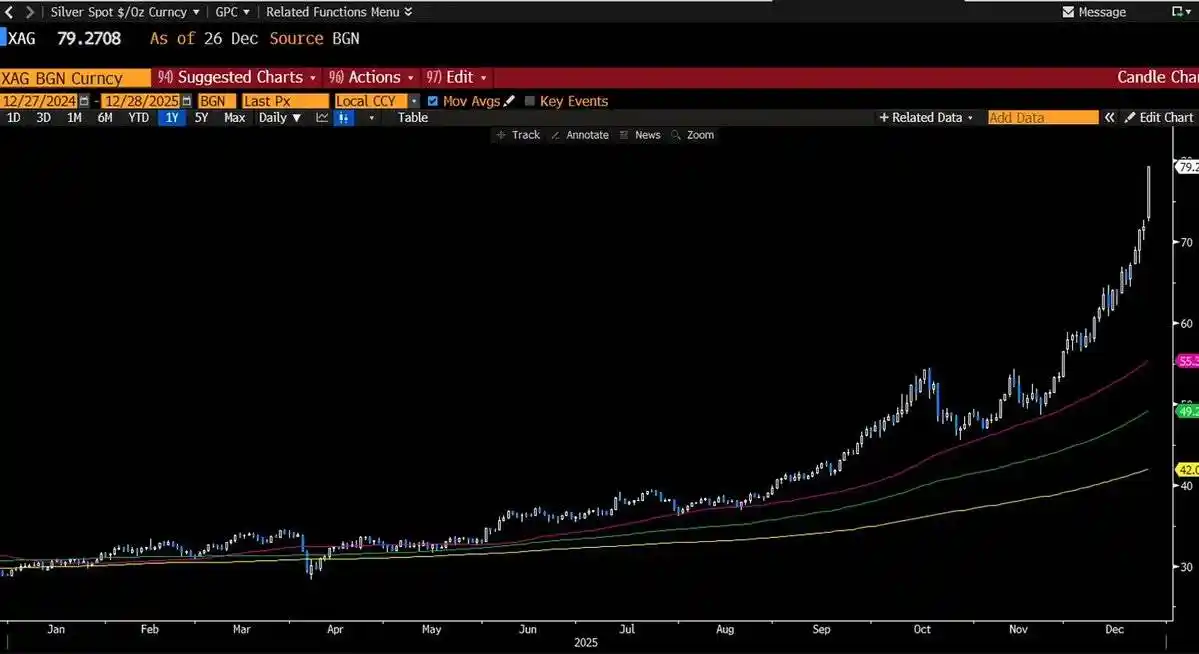
It has been 10 days since our last analysis on silver.
The market dynamics from 10 days ago seem like a quarter of a century ago. Yet, in this short period, the silver market has experienced a series of significant events:
-
China announced that it will implement a licensing system for silver exports starting January 1st next year.
-
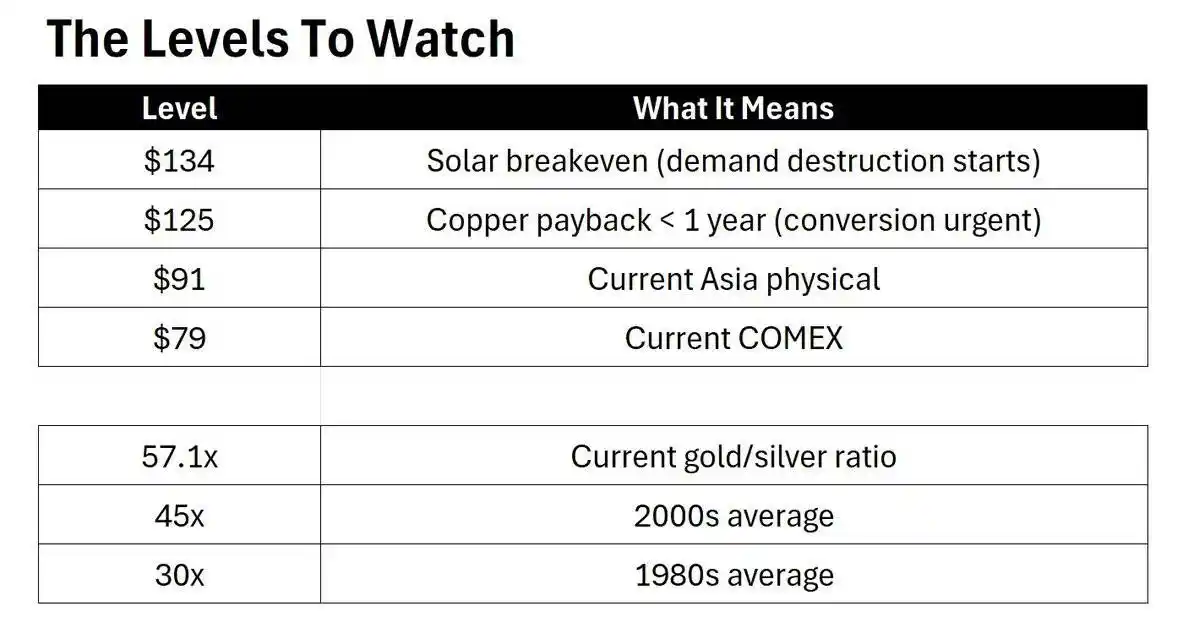
The price of physical silver in Shanghai surged to $91, while the COMEX (New York Commodity Exchange) settlement price was $77.
-
The London forward curve remains deeply in backwardation, although not as extreme as in October, it is still inverted.
-
The CME (Chicago Mercantile Exchange) raised margin requirements for silver.
-
After a much-needed digital "detox," I spent the entire afternoon staring at Bloomberg and Rose, trying to figure out if these changes affect our market view.
Short-term conclusion: Now is not a good time to make new purchases.
I will wait for the upcoming pullback opportunities to continue building positions and remain flexible when trading through options.
This is exactly the part that trading books don’t tell you—when your investment logic works, or even works too well, you need to manage not only your capital but also your emotional resilience. At this point, the mathematical models from paper simulations are no longer just probability distributions but have become "realized profit" call options.
This stage is unsettling because you need to do more homework: recheck your calculations and evaluate counter-narratives that could work against you.
This is the current situation.
Bearish Warnings (Or: Potentially "Fatal" Risk Factors)
In the next two weeks, silver bulls will have to contend with some narratives and pressures that could trigger bearish sentiment in the short term.
Please don’t be surprised by the upcoming "red candles"—they are likely to happen. The key is whether you will choose to buy the dip. We have shifted some "Delta" (i.e., price exposure) to gold, rebalancing the portfolio. We currently hold about 15% in gold and 30%-40% in silver, whereas previously this ratio was closer to 10:1.
Additionally, we have purchased some upside butterflies and significantly increased our dollar call options. The logic behind these moves will become clearer later.
In any case, here are the main factors that could bring bearish pressure in the near term:
-
Tax Selling Pressure
You’ve made a lot of money on this trade, perhaps even enough to make your accountant nervous. For investors who acquired silver by exercising long-term call options, they may be reluctant to sell their positions before December 31st.
Especially if these positions have been held for less than a year, as this involves not only capital gains tax but also potential differences in short-term and long-term tax treatment.
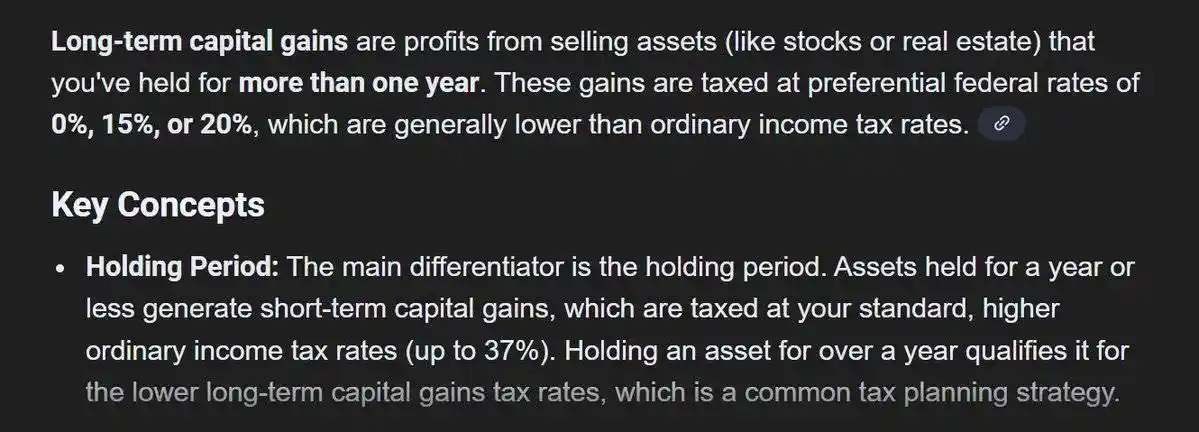
This means there is bullish pressure now, but it will turn into bearish pressure after January 2nd.
-
Dollar and Interest Rate Issues
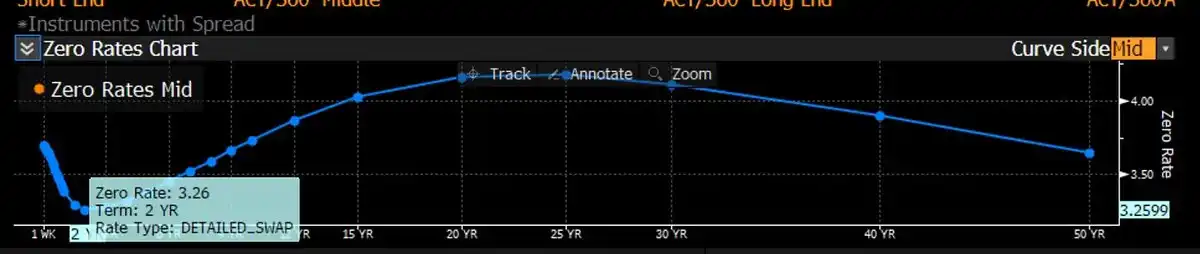
The latest GDP data was strong, which could weaken expectations for easing in the 2-year Treasury yield curve, forcing policymakers to choose between a stronger dollar and higher short-term interest rates. Either choice is not good news for dollar-denominated precious metals like silver and gold in the short term.
-
Margin Hike
The CME (Chicago Mercantile Exchange) announced an increase in margin requirements for precious metals, effective December 29th.
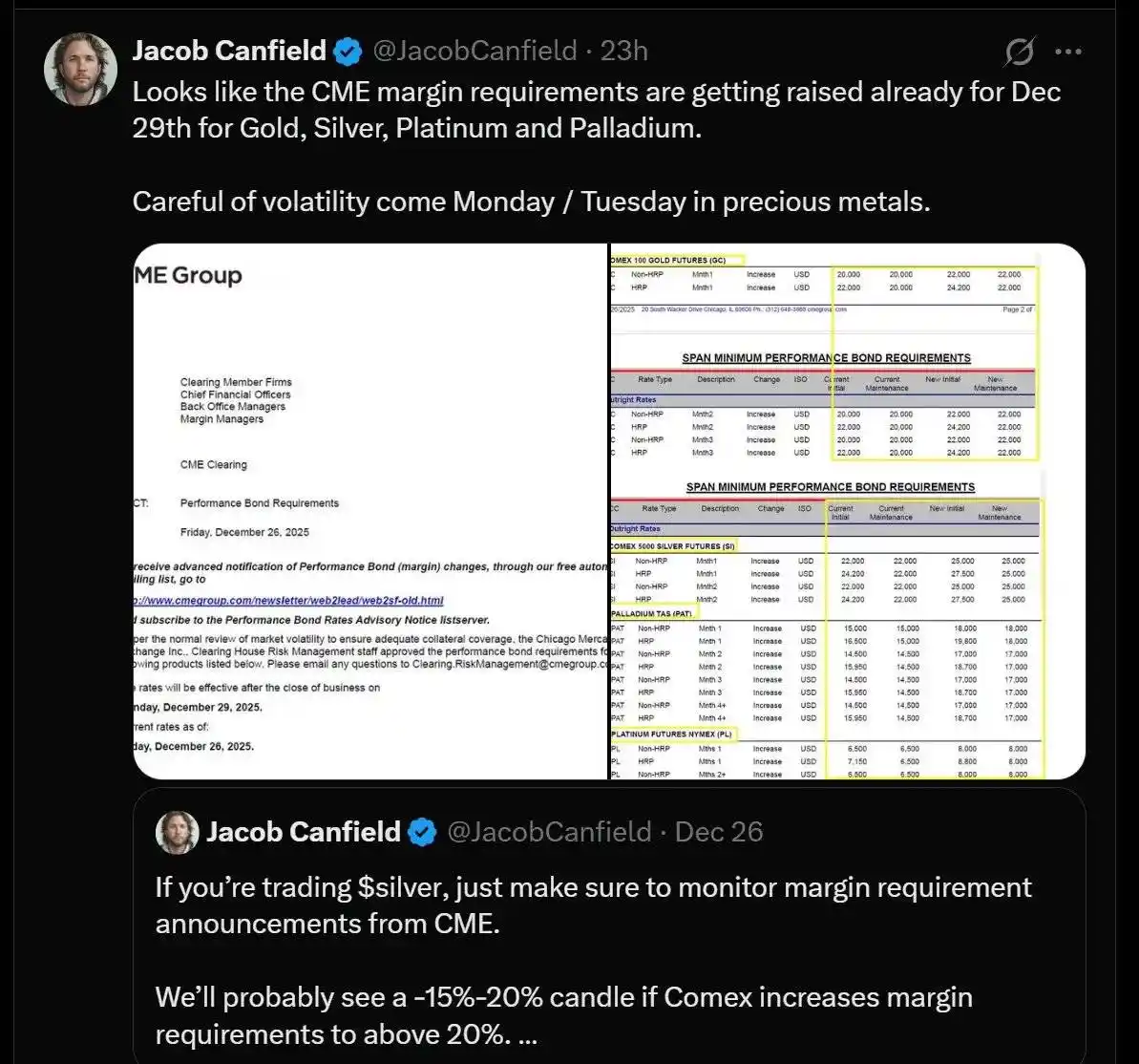
If you are using leverage in the futures market, this change could significantly impact you. Higher margin requirements = higher capital needs = forced liquidations for undercapitalized investors. This is similar to the situation during the silver market crash in 2011, when the CME raised margin requirements five times in eight days, causing leverage to plummet and abruptly ending silver’s rally.
So, is this something to worry about? Actually, it’s not that bad. The reason is that silver margin requirements are already far higher than in 2011, so the recent hike, while impactful, is relatively less severe. Moreover, most of the demand in the silver market now is primarily physical demand, which is very different from the situation in 2011.
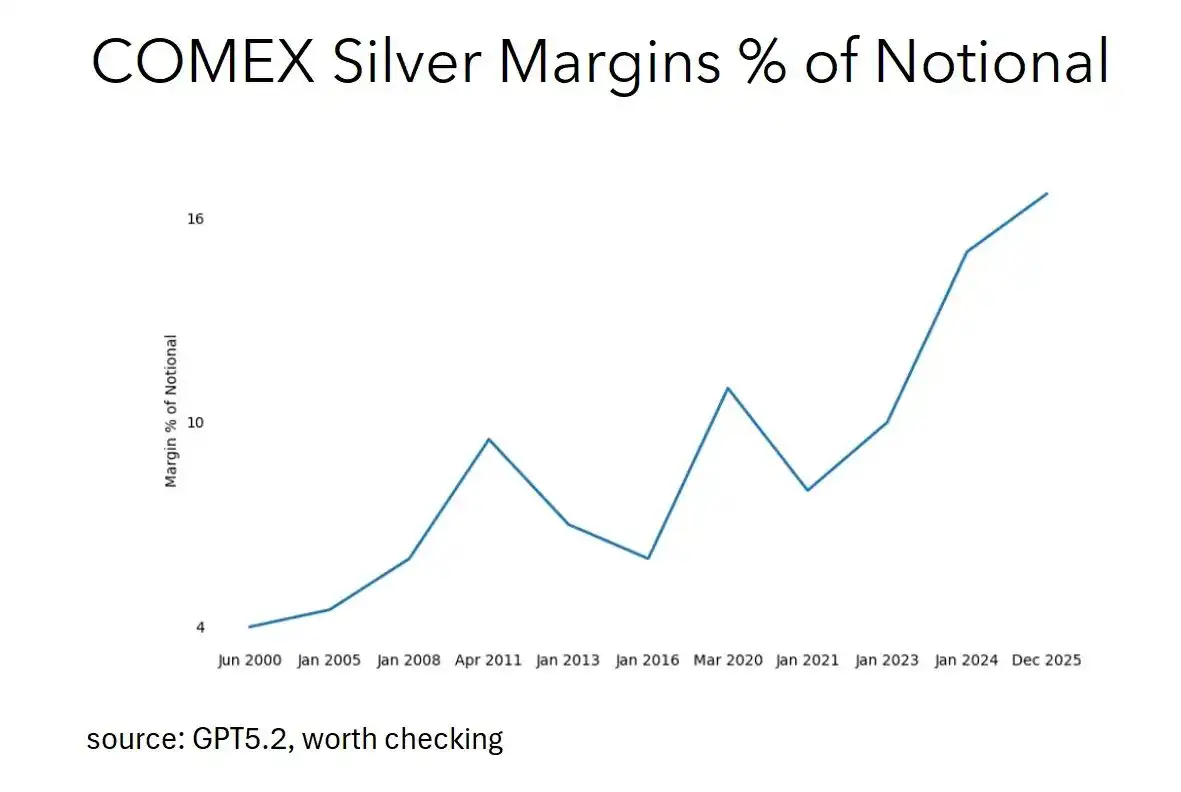
Looking back at 2011, the margin for silver started at about 4% of the notional value, meaning that with just $4 of capital, you could control $100 worth of silver—a 25x leverage, which was extremely risky. Then, the CME raised the margin to about 10% within a few weeks, reducing leverage from 25x to 10x. The chain reaction of forced liquidations directly killed that silver rally.
And today? The current margin for silver is as high as about 17%, equivalent to 6x leverage, which is even stricter than the most stringent requirements in 2011.
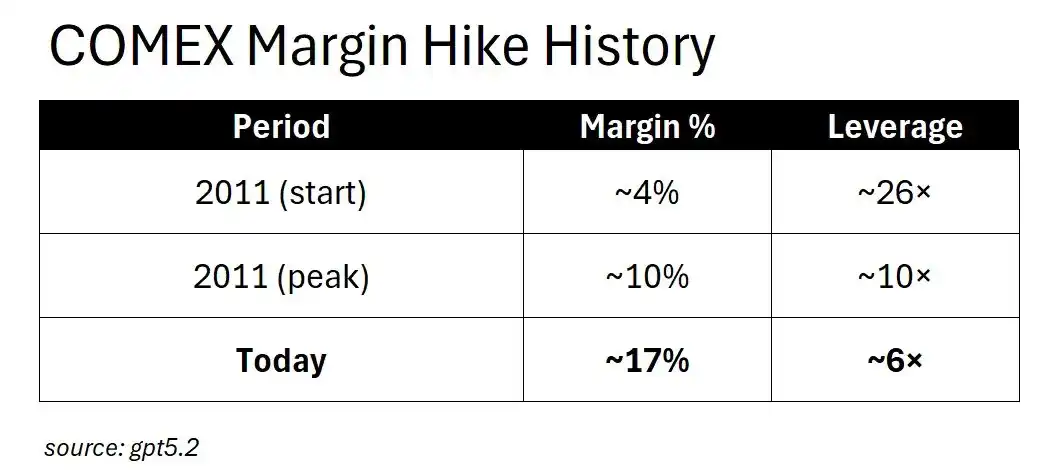
The market environment has now entered the "post-squeeze" margin phase. So, what will further margin hikes bring? The answer is: they will no longer trigger panic selling among speculators because there isn’t much speculative leverage left to clean out. Instead, these adjustments will have a greater impact on hedgers, such as producers trying to lock in prices, refiners managing inventory risks, and commercial players relying on the futures market.
If the margin is raised to 20%, you won’t see a chain reaction of forced liquidations like in 2011. The real result will be: reduced liquidity, wider bid-ask spreads, and commercial players moving to the over-the-counter (OTC) market. The market’s mechanics have fundamentally changed.
Therefore, those warning about margin hikes are fighting the "last war" (if the above analysis is correct). Although this narrative may help build a "counter-narrative" in the short term, its practical significance is limited.
-
Emergence of "Overbought" Rhetoric
When the factors mentioned above start to materialize, you’ll hear FinTwit (Financial Twitter) "chart astrologers" repeatedly chanting "overbought." And technical selling often triggers more technical selling, creating a negative feedback loop.
But the question is, overbought relative to what?
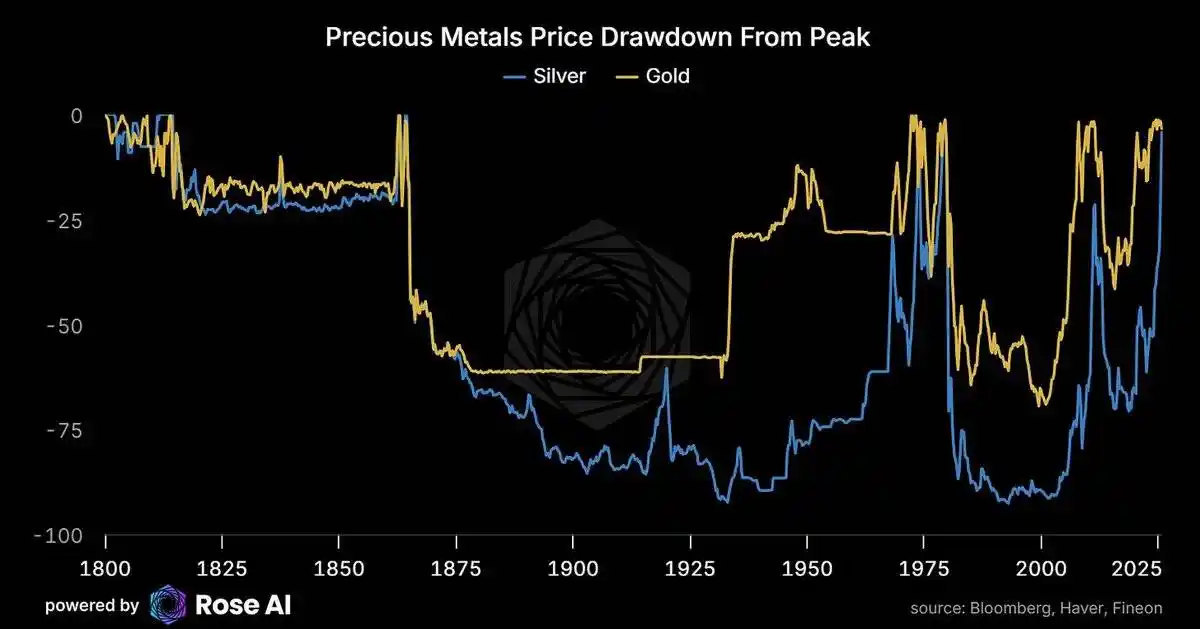
The investment thesis for silver is not based on technical "lines" or "tea-leaf reading." The core driver of silver is its supply and demand fundamentals: the collision between the economics of solar panels (inelastic demand, with silver costs accounting for only about 10% of the panel price) and the rigidity of silver supply (75% of silver is a byproduct of other metals). These are the real factors driving short-term price movements.
Moreover, silver just hit an all-time high. Do you know what else hits all-time highs? Assets that are still rising.
-
Copper Substitution Argument
This is one of the most common arguments from the bears: "They will substitute copper for silver."
Well, this argument has some merit, but let’s do the math.
The Reality of Copper Substitution (Or: Four Years Is a Long Time)
The bearish argument for copper substitution does exist, but the problem is: it’s slow.
Here’s the actual math, not emotional reasoning:
Time is the Key Constraint
Even with unlimited funding, conversion is still constrained by physical realities:
-
There are about 300 solar cell manufacturing plants globally;
-
Converting each plant to copper plating takes 1.5 years;
-
The maximum parallel conversion capacity is 60 plants per year;
-
It will take at least 4 years to achieve a 50% copper substitution rate.
From a return-on-investment perspective, a 1.5-year conversion time is an obvious capital allocation decision. In other words, CFOs should be rushing to approve such retrofitting plans.
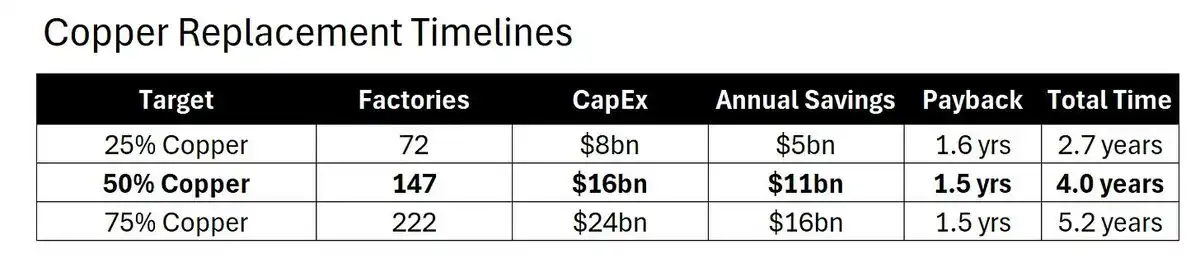
But the problem is, even then, it will take at least 4 years to complete half of the conversions.
Plants need to be retrofitted one by one, engineers need to be retrained, copper plating formulas need to be revalidated, and supply chains need to be readjusted. All of this takes time.
Demand Elasticity Calculation
Solar manufacturers have already absorbed the impact of a 3x increase in silver prices. Let’s look at how this affects their profits:

-
When silver was at $28/oz (2024 average), the entire industry’s profit was $31 billion;
-
When silver rose to $79/oz (current price), industry profits fell to $16 billion. Even though profits were halved, they continued to buy.
Where is the Breakeven Point?
Demand destruction will only begin when silver reaches $134/oz, which is 70% above the current spot price.
Note that $134/oz is not a price target but the starting point for demand destruction.
Urgency Threshold
As silver prices rise further, the economics of copper substitution do become more attractive:
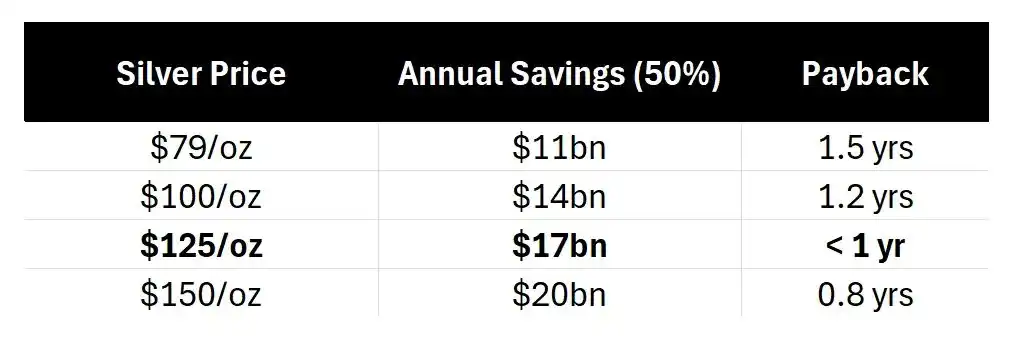
When silver reaches $125/oz, the payback period for copper substitution shortens to less than a year. At that point, every board meeting will likely revolve around copper substitution. However, even if all companies decide tomorrow, it will still take 4 years to achieve 50% copper substitution. Meanwhile, $125/oz is still 50% above the current spot price.
Money is "screaming" "act now," while physical reality says "wait."
Intensity Paradox
Interestingly, while everyone is talking about "copper substitution," the solar industry is actually shifting toward panel technologies that use more silver:
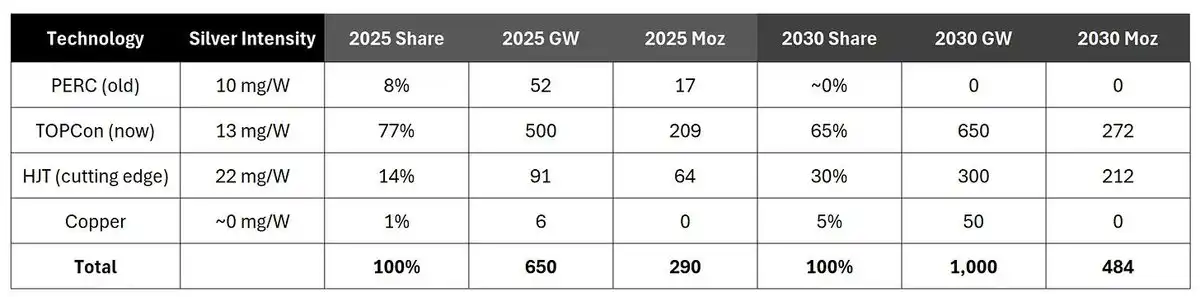
Weighted Average Silver Usage:
-
2025: about 13.5 mg/W
-
2030: about 15.2 mg/W
The shift from PERC to TOPCon to HJT (heterojunction) technologies actually increases the amount of silver used per watt of solar panels, even as copper gradually substitutes silver in some aspects. However, note that while the silver usage efficiency of each technology improves over time, without large-scale copper investment plans, the industry as a whole is moving toward using more silver per watt, not less.
The bears are talking about copper substitution, while the industry is actually adopting HJT technology.
Conclusion on Copper Substitution
Time is passing, but it’s passing slowly.
Silver prices are rising faster than factories can be retrofitted. The 4-year window is a protective umbrella for the silver bull thesis: silver has 70% upside before demand destruction is triggered, and even if copper substitution starts today, it cannot catch up with silver’s rally in the short term.
Silver Bull Thesis (Or: Why This Rally Might "Rip Your Face Off, but Pleasantly")
Okay. The bad stuff is out of the way. Now let’s talk about why I’m still bullish.
-
China Is "Weaponizing" Silver
Starting January 1st, China will implement a licensing system for silver exports. This is critical because China is the world’s largest net exporter of refined silver, exporting about 121 million ounces annually, almost entirely through Hong Kong to the global market.
And now, this export flow will require government approval.
A strategic resource game is underway.
-
Physical Silver Premiums Are Staggeringly High
-
London Market Is "Screaming"
-
One year ago: Spot price $29, with the curve gradually rising to $42, in normal contango.
-
Now: Spot price $80, with the curve dropping to $73, inverted.
-
Volatility Has Been Repriced
-
Buy 1 SLV (iShares Silver Trust ETF) $70 call;
-
Sell 2 $90 calls;
-
Buy back 1 $110 call.
-
Speculators Are Not Yet Crowded
-
ETF Demand Is Catching Up
-
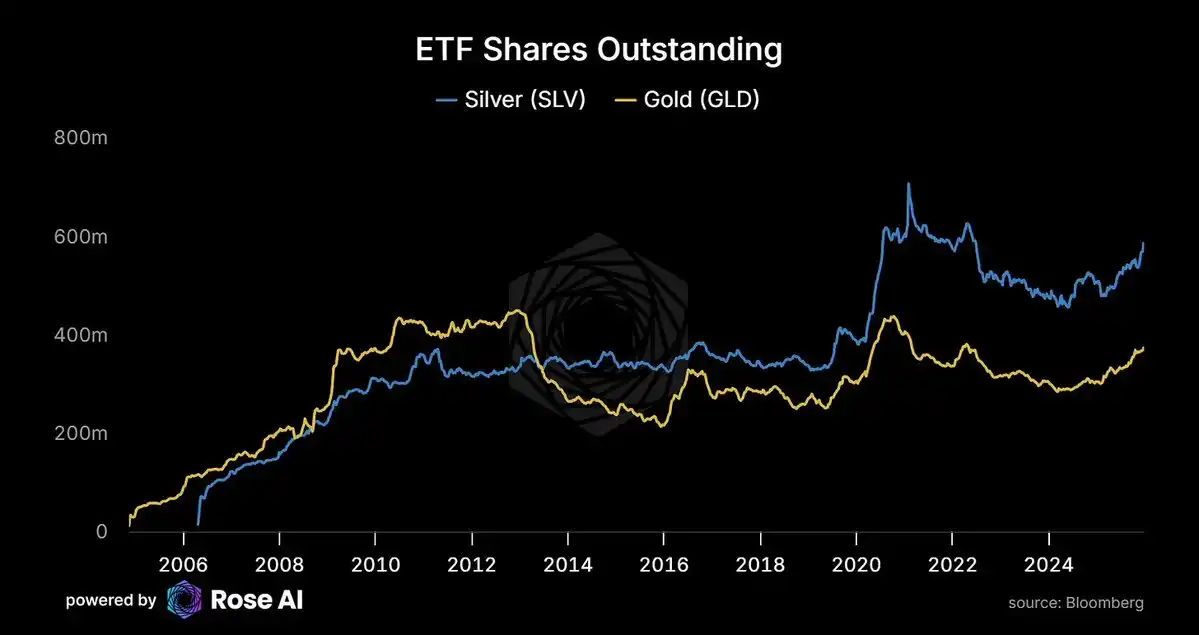
The number of shares outstanding for the SLV ETF is rising again after years of outflows. As prices increase, demand is also increasing.
-
This is not typical commodity market behavior but reflects growing demand for silver as a monetary asset.
-
Western ETFs are starting to buy silver again;
-
And physical demand for silver in the East has never stopped.
-
Solar Industry’s "Devouring" of Silver
-
Current solar industry demand for silver is 290 million ounces;
-
By 2030, this number is expected to exceed 450 million ounces.
-
AI → Energy → Solar → Silver
-
Sam Altman (OpenAI CEO) is reaching out to companies everywhere, desperately seeking power supply;
-
Data centers are even installing jet engines as emergency power sources to avoid grid connection delays;
-
Every AI query consumes electricity, and the marginal contribution to new power supply comes from solar;
-
And solar development离不开 silver.
-
January tax selling: Investors may sell for tax reasons at the beginning of the year, causing short-term volatility;
-
Stronger dollar: A strong dollar could pressure dollar-denominated silver prices;
-
Margin hikes: Although the "kill switch" is exhausted, further margin increases仍需警惕.
-
Backwardation deepens, price consolidates: Indicates accumulation;
-
Backwardation eases, price falls: Indicates the squeeze is unwinding;
-
Shanghai premium persists: Indicates a structural issue, not market noise.
-
Either supply suddenly increases (prices spike to release hoarded silver);
-
Or paper market prices are forced to readjust to reflect the reality of the physical market.
-
Tax selling: Tax-related selling at the beginning of the year may cause short-term volatility;
-
Margin hikes: Potential margin adjustments could affect market sentiment;
-
Stronger dollar: Dollar appreciation could pressure dollar-denominated silver prices.
-
London market backwardation is at extreme levels not seen in decades;
-
Asian market premiums are as high as $10-14;
-
China will implement silver export restrictions in 5 days;
-
Solar demand is extremely low elasticity to silver prices, with demand destruction only beginning at $134/oz;
-
Copper substitution will take at least 4 years to achieve 50% conversion;
-
72% of silver supply is a byproduct of other metals and cannot be easily increased to meet demand;
-
Speculative positioning is not overly crowded, and ETFs are continuously absorbing physical silver;
-
Volatility has been repriced, and the market is pricing in tail risks of大幅 price increases.

Shanghai: $85/oz; Dubai: $91/oz; COMEX: $77/oz
You live in a dollar-denominated world, but the marginal buyer does not. They are paying a $10-14 premium and don’t seem to care.
When physical silver prices diverge this much from paper prices, one side must be wrong. And historically, it’s usually not the physical market that is wrong.
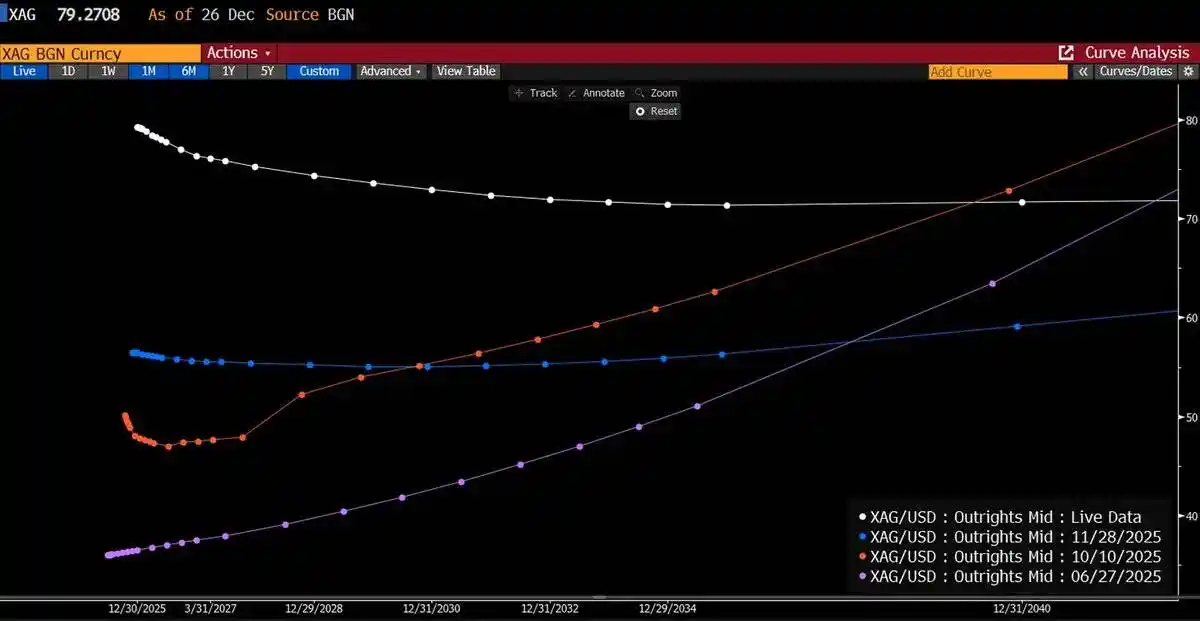
The London over-the-counter (OTC) market is the core where physical silver is traded among bullion banks, refiners, and industrial users, and it is currently in the most severe backwardation in decades.
What is backwardation?
Simply put, the market is willing to pay more for physical metal today than for promised delivery in the future. That is, spot price > forward price. This is not normal and usually indicates severe market stress.
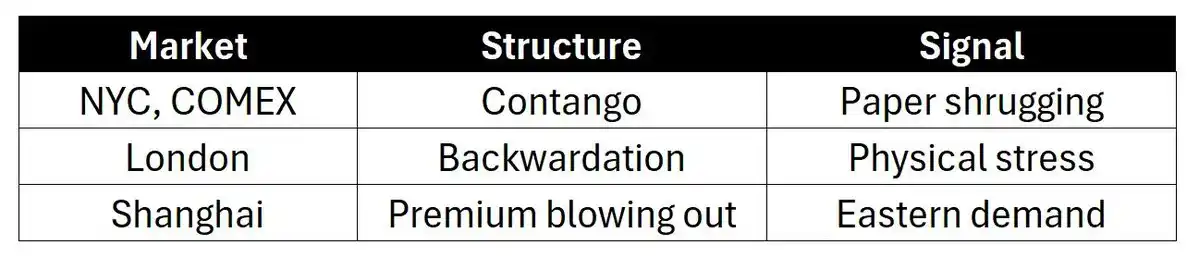
Meanwhile, the COMEX paper market remains in lazy contango, pretending everything is fine.
Three markets, three narratives:
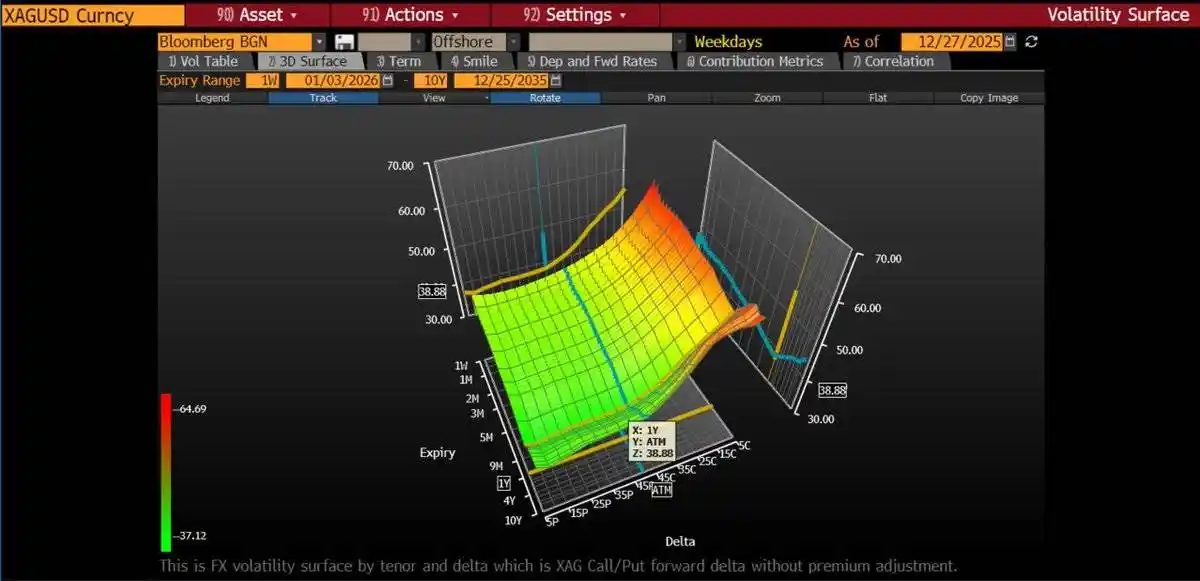
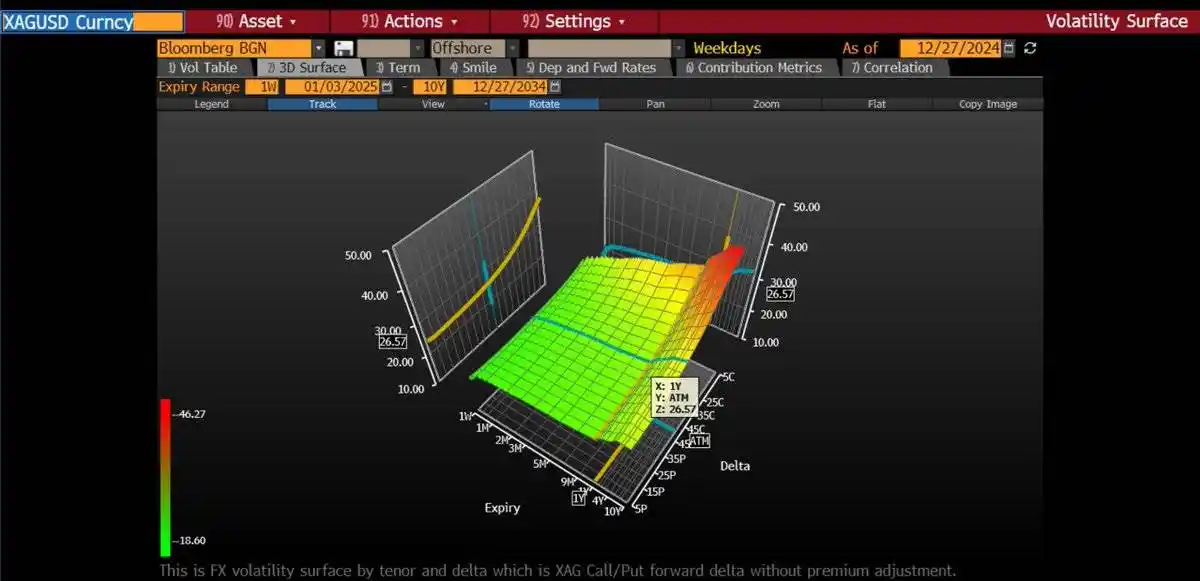
At-the-money (ATM) option implied volatility has risen year-over-year from 27% to 43%. Call option implied volatility is even steeper—out-of-the-money (OTM) strike options have implied volatility as high as 50-70%. This indicates that the options market is pricing in tail risks of大幅 price increases.
We have been gradually building positions along the volatility curve by continuously buying call spreads, specifically: buying ATM implied volatility while selling higher-strike calls to hedge costs. Recently, we even adopted a strategy of buying 6-month butterflies:
This strategy reflects our short-term view of wanting to reduce our Delta exposure (sensitivity to price changes) appropriately in the event of a significant price increase.
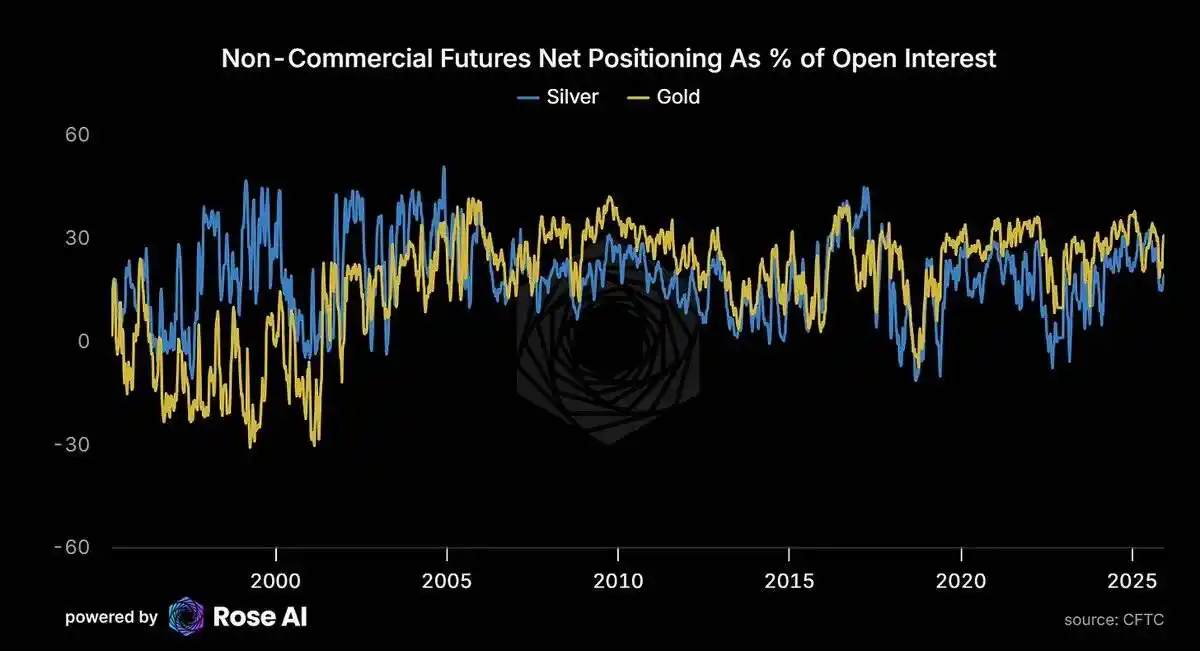
Currently, speculative net long positions in gold account for 31% of total open interest, while in silver, this figure is only 19%. This indicates that, despite the price increase, speculative positioning is not at extreme levels, and there is still room for further upside.
Investment demand is increasing as prices rise, validating our earlier prediction that silver would exhibit characteristics of a Veblen Good, where higher prices lead to greater demand.
Meanwhile, the premium for silver in the Chinese market persists:


25 years of no demand growth, no supply growth, and then came solar
For the past 25 years, silver demand had几乎没有 growth, and supply hadn’t increased significantly. But everything changed with the rise of the solar industry. Photography’s for silver gradually disappeared, and the solar industry not only filled this gap but also drove explosive growth in silver demand.
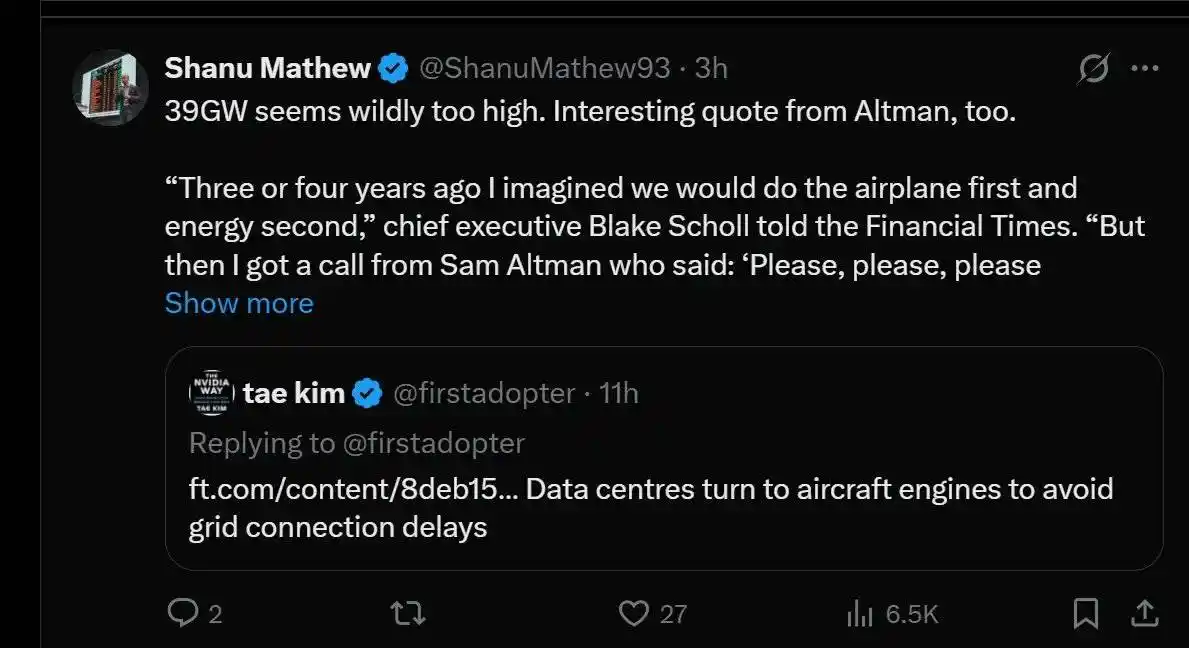
The demand chain from AI to silver has been formed:
This chain has closed the loop.
Key Prices and Signals to Watch
Risks to Watch
Signals to Watch
Observation Framework:
Watch the curve, not the price.
If pressure in the London physical market continues while the COMEX paper market remains indifferent, the arbitrage gap will widen until the market "breaks":
Final Summary
In the short term, bearish logic does exist, and the following factors could impact the market:
However, the long-term structural factors supporting silver prices remain strong:
This is where the market is most interesting and also most terrifying.
Advice: Adjust positions based on the above information and invest rationally. See you next time!



















