Risk Assets' Night of Terror: The Whole World Is Watching the US-Iran Conflict

marsbitXuất bản vào 2026-01-29Cập nhật gần nhất vào 2026-01-29

Tóm tắt

Global markets experienced a sharp selloff amid escalating tensions between the U.S. and Iran, with investors bracing for potential military conflict. Risk assets, including tech stocks and cryptocurrency-related equities, saw significant declines. Major indices like Nasdaq 100 and S&P 500 dropped, while gold and silver also fell unexpectedly. Cryptocurrencies, including Bitcoin and Ethereum, retreated from recent highs. The U.S. has deployed the USS Lincoln aircraft carrier to the Middle East, with a second carrier, the USS George Bush, potentially en route. Military analysts suggest that an attack on Iran may be imminent once both carrier groups are positioned. The U.S. has also conducted regional military exercises and deployed anti-missile systems to protect allies like Israel. Domestically, the U.S. faces a potential government shutdown due to partisan disagreements over immigration enforcement and budget allocations, adding to economic uncertainty. The situation remains highly volatile, with global markets pricing in the risk of a major geopolitical event.

The US fleet deployed to Iran is much larger than the one sent to Venezuela some time ago, which also means this asset plunge is more severe.

A few hours ago, Trump and the Iranian side began exchanging fierce rhetoric frequently. Meanwhile, rumors circulated in communities that the US aircraft carrier "Lincoln" and its strike group deployed in the Middle East had entered a "total blackout" communication shutdown, indicating that action against Iran might be imminent.

Every financial market investor is on edge.

First, look at US stocks. The Nasdaq 100 quickly widened its decline to 2%, the S&P 500 fell more than 1%, and the Dow Jones was not spared either, dropping 0.5%. The hardest hit were all assets highly tied to risk appetite; cryptocurrency-related stocks were practically crushed. MSTR once fell nearly 10%, COIN dropped over 4%, while HOOD, SBET, BMNR, and CRCL all saw significant pullbacks.

Even the so-called safe-haven assets, gold and silver, were also falling. Spot gold fell through three whole hundred thresholds in just half an hour, plummeting over $400 from the high, now trading near $5,155. Silver was even more dramatic, plunging 8% intraday, directly knocked down from $121 to just over $108.

The crypto market couldn't escape either. As US stocks opened, Bitcoin began to decline, sliding from $88,000 to around $83,000; Ethereum briefly fell below $2,800, SOL lost $118, and BNB also dropped below $865.

This means global capital has already priced in the worst-case scenario: war is about to begin.

What the US Prepared Before the Last "Strike"

Put the cards on the table first, then decide whether to flip it. This seems to be the consistent approach of the US government.

Looking back at the recent action against Venezuela, we can see the series of US signals before a formal attack: weeks before launching a series of attacks on Venezuelan vessels, the US had already amassed significant military assets in the Caribbean. The official statement at the time was that these ships were suspected of smuggling drugs to the US, but no clear evidence was ever provided.

The real outcome is known to all: on January 3rd, US forces directly intervened, taking Venezuelan President Maduro from Caracas.

It is said that the US aircraft carrier was already in position then; typically, 5 to 7 days before正式动手 (formal action begins), the US military's core strike forces are all in designated waters, waiting only for an "opportune moment."

Before Iran was attacked in June 2025, it was exactly the same rhythm. Days before the operation began, media caught abnormal movements of US military equipment. On June 21st, the US suddenly deployed 6 B-2 stealth bombers to Guam, later casually explaining it was a feint to maintain surprise advantage. But those familiar with US military operational logic understand that strategic assets of this level are never just for "drills." Meanwhile, two carrier strike groups led by the USS Carl Vinson and USS Lincoln had already been提前部署 (pre-deployed) in the Arabian Sea. The Arleigh Burke-class guided-missile destroyer USS Thomas Hudner was also moved to the eastern Mediterranean.

Thus, the deployment of carriers at sea, the mobilization of strategic bombers and heavy strike capabilities in the air, and the deployment of air defense systems are the three hallmark features of US military preparations before conflict.

And now, similar signals are gradually replaying.

Is a Second Aircraft Carrier on the Way?

"We have a massive fleet heading in that direction, maybe we won't need to use it." After Trump said this, US Central Command later confirmed on social platform X that a nuclear-powered aircraft carrier, the "Lincoln," had been sent to the Middle East.

This carrier left San Diego last November and had been performing missions in the South China Sea. Now, it has a new combat objective—Iran.

The Lincoln is one of the US Navy's core assets and one of the ten nuclear-powered aircraft carriers. It doesn't run on diesel but is driven by a nuclear reactor, theoretically capable of operating continuously for decades without refueling. It is equipped with highly advanced missile systems, radar, and sensors, essentially a floating combat command center at sea.
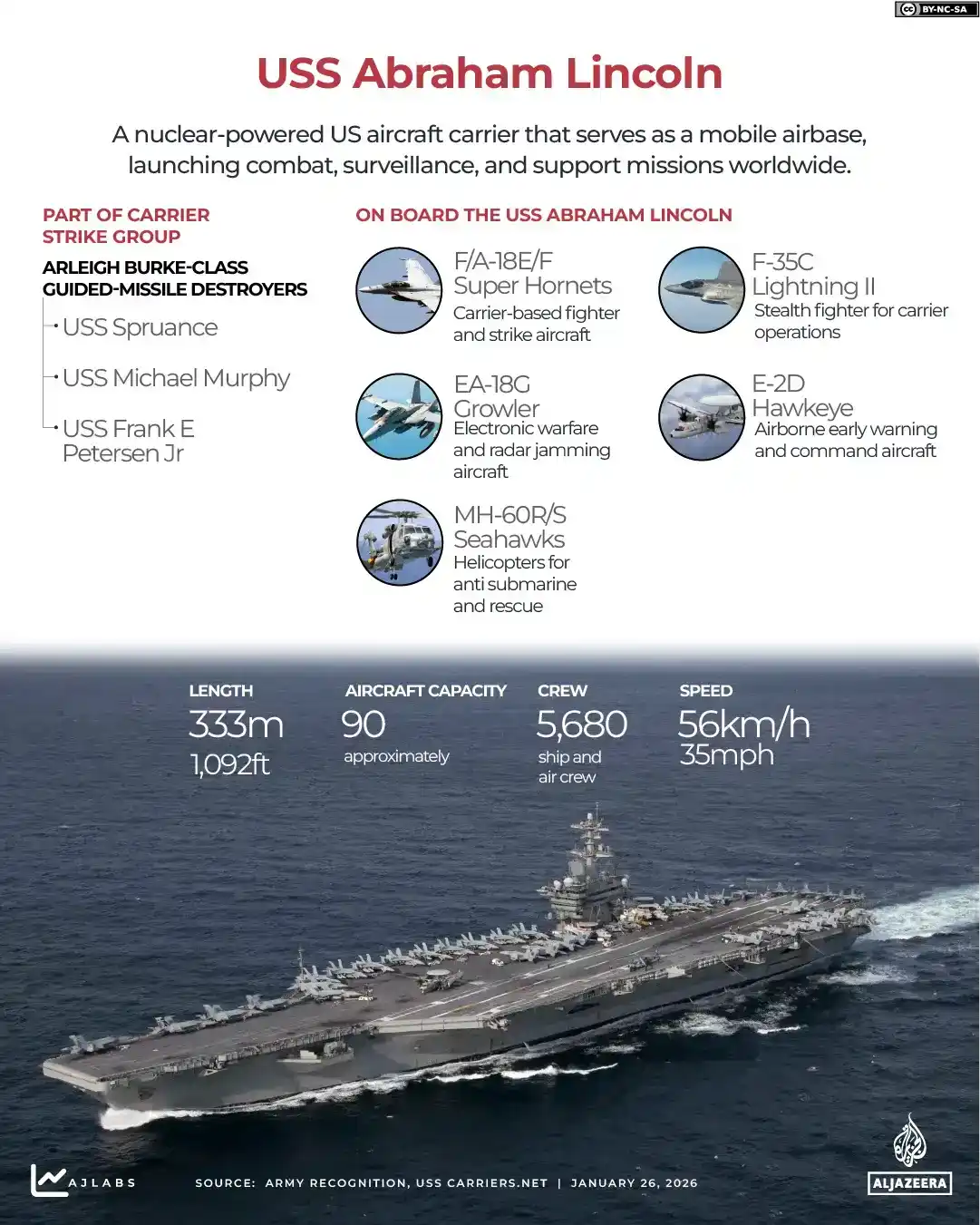
The Lincoln's whereabouts were originally highly classified, but because it had to pass through the Strait of Malacca, one of the world's busiest shipping lanes, it had to turn on its transponder to avoid collisions. It was this brief "lighting up" that allowed the outside world to confirm it had crossed the Indian Ocean on January 23rd. Subsequently, the transponder was turned off, and its location disappeared again. But based on speed calculations, it has now basically reached near the theater and entered a standby state.

After passing through the Strait of Malacca, the transponder was turned off again, and the carrier disappeared from radar. The rest can only be estimated by speed. But according to speed calculations, the Lincoln has now basically arrived near the theater and is in position.

At the same time, a second carrier seems to be on the way.

The "George Bush" set sail from the US East Coast on January 13th. It is widely believed that it will likely cross the Atlantic, enter the Mediterranean via the Strait of Gibraltar. Although it cannot be ruled out as just combat readiness training, at this point in time, few really believe it's a coincidence. Most military analyses speculate that the purpose of the George Bush's deployment is to "raise the stakes" in the Middle East situation.
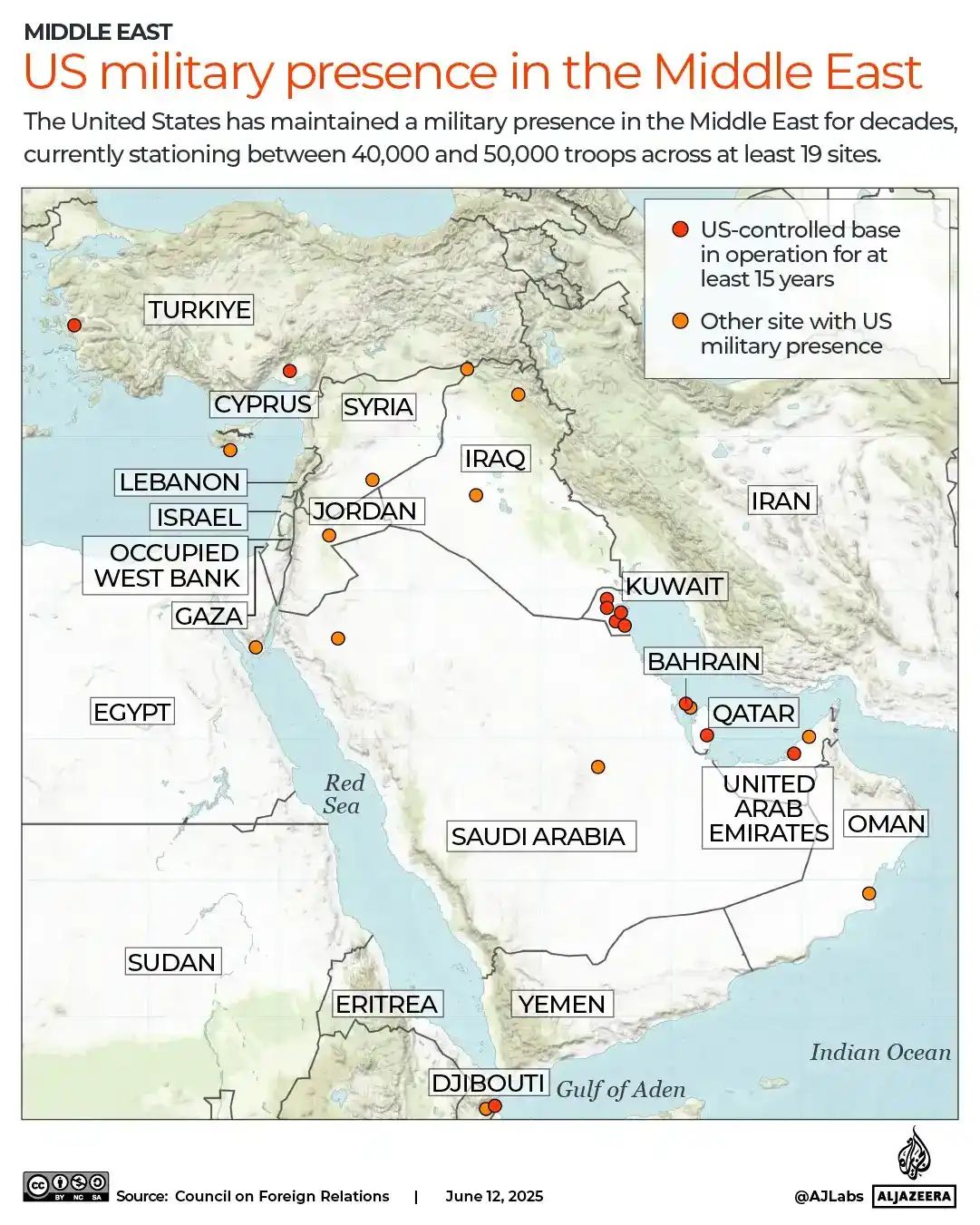
The judgment of many military analysts is also consistent: the truly "suitable" time to start fighting is likely after the second carrier strike group is in place. One carrier can certainly fight, but two mean air superiority, strike frequency, and fault tolerance are maximized. Since the best window for attack missed in early January when Iran protested, the difference between waiting a day and a week is not significant. Rather than acting hastily, it's better to wait for the second carrier strike group to arrive, pile up military strength in the Middle East to the highest level, and then strike decisively.

But as of now, the Bush has not been photographed passing through key straits. Based on speed estimates, it has not yet fully entered a combat-ready position.

After discussing carrier deployment, the air side is not idle either. US Air Force Central Command has announced multi-day combat readiness exercises in its area of responsibility, covering over 20 countries in the Middle East, Asia, and Africa. The term "exercise" itself is very flexible.

Of course, where there is offense, there must be defense.

Especially US protection of Israel. According to the Wall Street Journal, the US is also sending additional "Patriot" and "THAAD" anti-missile systems to the Middle East. After air defense systems are deployed, the real timeline for war often begins. But the specific timing is almost impossible for outsiders to know.

Some analyses even look further afield: Trump's obsession with Greenland is not just about resources. There are critically important US radar early warning facilities there, key nodes in preventing long-range ballistic missile surprise attacks. Controlling these places is essentially about creating defensive depth for larger-scale conflicts.

Israel has clearly entered the same timeline. On January 25th local time, Israeli Defense Forces Northern Command Chief Rafi Milo publicly stated that the IDF is preparing for the chain reaction after possible US military action against Iran. Earlier, Haaretz had cited defense sources saying the IDF had全面提高警戒级别 (raised alert levels across the board) in response to "a possible US attack within days."

Against this background, the US's real target appears increasingly clear. If it acts, the target is likely not just a limited strike but directly aimed at the Iranian regime itself. Precisely because of this, the US格外强调 (places great emphasis on) "everything being ready." A failed strike would mean long-term consumption, a political risk no US administration is willing to bear.

The Internal and External Troubles of the US Government's "Partial Shutdown"

Beyond military risks, domestic pressure is also building in the US simultaneously.

Lüdong's editors believe that the US government's "partial shutdown" before the end of the month is also an important reason for today's decline.

Each fiscal year, the US Congress must pass 12 appropriation bills. If no agreement is reached, the government shuts down. The current temporary funding bill expires on January 31st, and Congress has only two working days left. Informal vote counts in the Senate already show that the procedural vote to advance the appropriation bill failed. A partial or full government shutdown has almost become a high probability event.

And now, with only 2 working days left, a partial government shutdown is basically certain. The US Senate's informal vote count结果显示 (showed) that the procedural vote held that day failed to advance the government funding bill already passed by the House.

The budget disagreement between the two parties is mainly over the Department of Homeland Security. The main event is: Minnesota, a long-time Democratic stronghold, was recently exposed to one of the largest welfare fraud cases in US history, involving up to $9 billion. For more details, see related reading: "Is the US Government Shutting Down Again, Will Crypto Be Hit Again?" The editor will only briefly mention the points of disagreement here:

Many organizations involved are closely linked to the local Democratic political ecosystem. Evidence suggests that funds obtained by these welfare fraud organizations have flowed into Democratic campaign donations.

Minnesota itself is also a highly immigrant state, with large populations of Somali and other immigrant groups. The Minnesota Attorney General's office said that among the 92 defendants charged in this case, 82 are Somali Americans. This highly intertwines issues of immigration enforcement, welfare distribution, and public safety,恰好踩中了 (exactly stepping on) the core issues of long-standing opposition between the Democratic and Republican parties, and is also a policy promise repeatedly emphasized by Trump and the Republicans in the campaign.

Thus, Trump strengthened immigration enforcement in Minnesota. However, the sudden increase in enforcement intensity quickly led to serious consequences. Two incidents occurred where federal immigration enforcement officers accidentally shot and killed local residents, leading to large-scale protests and riots, even requiring the National Guard to maintain order. The Democrats quickly seized this opportunity, using the fatal shootings by ICE in Minnesota as ironclad evidence of the agency's out-of-control enforcement methods.

The Democrats' logic is clear: ICE caused two deaths in Minnesota, proving the agency's enforcement methods have serious problems. Without substantial reform of ICE and adding strict restrictions, why should we continue to fund it? Democrats demand reducing ICE's scale or at least attaching strict restrictions.

The Republican stance is diametrically opposed: The Minnesota welfare fraud case involves $9 billion, most defendants are Somali,恰恰说明 (precisely illustrating) the need to strengthen, not weaken, immigration enforcement. ICE is a key force in combating illegal immigration and welfare fraud; it must be fully funded.

Internal strife has no resolution, while external risks are simultaneously heating up. Whether war will truly happen, no one can give a definite answer. But Lüdong's editors hope for world peace.


Tiền kỹ thuật số thịnh hành

Câu hỏi Liên quan

QWhat are the three key characteristics of US military deployment before a potential conflict with Iran, as mentioned in the article?

AThe three key characteristics are: 1) Deployment of aircraft carriers at sea, 2) Mobilization of strategic bombers and heavy strike capabilities in the air, and 3) Deployment of air defense systems.

QAccording to the article, which specific US Navy carrier has been confirmed to be heading to the Middle East, and what is its significance?

AThe USS Lincoln, a nuclear-powered aircraft carrier, has been confirmed by US Central Command to be heading to the Middle East. It is significant as one of the US Navy's core assets, acting as a floating command center with advanced missile systems, radar, and sensors.

QWhat major domestic US issue is cited in the article as a significant contributor to the market downturn, and when is its deadline?

AA potential partial US government shutdown is cited as a major contributor. The deadline for the temporary funding bill is January 31st, with only two working days left for Congress to reach an agreement.

QHow did the prices of traditional safe-haven assets like gold and silver react to the rising US-Iran tensions, as described in the article?

AContrary to their typical 'safe-haven' status, both gold and silver prices fell sharply. Spot gold dropped over $400, breaking through three key hundred-dollar levels to around $5,155. Silver plummeted by 8% intraday, falling from $121 to just over $108.

QWhat is the core political disagreement between Democrats and Republicans that is causing the budget impasse and potential government shutdown?

AThe core disagreement is over funding for the Homeland Security Department, specifically Immigration and Customs Enforcement (ICE). Democrats want to cut funding or add strict restrictions following fatal shootings by ICE officers in Minnesota. Republicans argue for full funding, linking it to combating a massive $90 billion welfare fraud case in the same state, which involved many Somali-Americans.

Nội dung Liên quan

Ngân hàng Ý không nhìn thấy lợi thế hệ thống của stablecoin trong chuyển tiền

Một nghiên cứu của Ngân hàng Ý kết luận rằng stablecoin không mang lại lợi thế hệ thống bền vững về chi phí và tốc độ trong chuyển tiền quốc tế so với các dịch vụ tiêu chuẩn. Các ưu điểm tiềm năng bị mất đi bởi phí chuyển đổi sang/và từ tiền pháp định và hiệu quả của cơ sở hạ tầng thanh toán địa phương. Nghiên cứu so sánh việc chuyển 200 USDC qua 10 hành lang giữa Ý và các nước như Brazil, Argentina, Nhật Bản, UAE và Nam Phi. Tổng chi phí chuyển stablecoin dao động từ 0,3% đến gần 9%, tùy tuyến. Thời gian giải quyết giao dịch dưới 20 phút ở những nơi có hệ thống thanh toán tức thời, nhưng có thể kéo dài 1-2 ngày làm việc ở khu vực không có. Chi phí và độ trễ chủ yếu đến từ việc trao đổi, chuyển đổi tiền tệ và chất lượng hạ tầng địa phương, không phải từ phí blockchain. Dù stablecoin rẻ hơn mức trung bình toàn cầu là 6,65%, chúng chỉ rẻ hơn dịch vụ Wise ở 3/7 tuyến so sánh được. Các tác giả cho rằng lợi ích sẽ rõ ràng hơn nếu stablecoin có thể được chi tiêu trực tiếp mà không cần đổi sang tiền địa phương. Họ cũng lưu ý rằng các quy định cấm đoán không làm giảm nhu cầu với stablecoin, trong khi quy định quá chặt chẽ lại gây khó khăn cho người dùng phổ thông.

cryptonews.ru33 phút trước

Ngân hàng Ý không nhìn thấy lợi thế hệ thống của stablecoin trong chuyển tiền

cryptonews.ru33 phút trước

Cơn sốt Bitcoin đang bùng nổ: Tuyên bố mới của Saylor gây nên những đồn đoán về việc mua vào

Giám đốc điều hành của Strategy Inc. (Nasdaq: MSTR), Michael Saylor, một lần nữa khơi dậy những đồn đoán về việc công ty sẽ thông báo mua Bitcoin mới vào thứ Hai, sau khi đăng thông điệp "Bitcoin Drive engaged" vào ngày 2 tháng 8. Thông báo này đi kèm với biểu đồ mua hàng quen thuộc của công ty, phù hợp với thói quen báo hiệu thay đổi kho bạc trước các báo cáo hàng tuần của Saylor. Báo cáo kèm theo cho thấy dự trữ Bitcoin của Strategy là 843.775 BTC, trị giá khoảng 53,25 tỷ USD. Giá mua trung bình được ghi nhận là 75.653 USD/BTC, với lỗ chưa thực hiện là 10,58 tỷ USD (-16,58%). Một tín hiệu tương tự vào Chủ nhật tuần trước đã dẫn đến thông báo vào ngày 27/7 về việc công ty gia tăng dự trữ tiền mặt. Sổ cái thời gian thực của Strategy hiển thị 116 giao dịch đã đăng ký với tổng số 843.775 BTC được mua, đồng thời ghi nhận hai đợt bán Bitcoin gần đây tổng cộng 3.588 BTC (giảm từ 847.363 BTC), nhằm mục đích tài trợ cho cổ tức ưu đãi và bổ sung dự trữ USD. Công ty được báo cáo là đã không mua BTC trong tuần kết thúc ngày 26/7, đồng thời tăng dự trữ USD lên khoảng 3,75 tỷ USD. Bối cảnh tài chính đầy thách thức khi Strategy báo lỗ hoạt động 8,33 tỷ USD trong quý II/2026, chủ yếu do lỗ chưa thực hiện trên tài sản kỹ thuật số. Ban lãnh đạo có thể bán thêm tới 1,25 tỷ USD Bitcoin để củng cố dự trữ USD. Thông báo cập nhật dự kiến vào thứ Hai sẽ cho thấy liệu "Bitcoin Drive" có đánh dấu việc tái tích lũy hay không, khi Strategy cân bằng giữa kho dự trữ Bitcoin khổng lồ và các nghĩa vụ tiền mặt ngày càng tăng.

cryptonews.ru35 phút trước

Cơn sốt Bitcoin đang bùng nổ: Tuyên bố mới của Saylor gây nên những đồn đoán về việc mua vào

cryptonews.ru35 phút trước

Cổ phiếu các công ty trí tuệ nhân tạo được giao dịch như 'meme coin', trong khi Bitcoin hầu như không thay đổi giá - Tổng quan tuần

**Tóm tắt:** Bài viết phân tích các diễn biến chính trên thị trường tài chính và tiền điện tử trong tuần, với trọng tâm là sự biến động mạnh ở lĩnh vực AI và sự trầm lặng tương đối của Bitcoin. **Thị trường chứng khoán & AI:** * Cổ phiếu AI được giao dịch như "meme coin" với biến động cực đoan. Thị trường Hàn Quốc lao dốc 8% trong một phiên, chịu ảnh hưởng từ đợt bán tháo chip toàn cầu. * Quỹ "Situational Awareness" của Leopold Aschenbrenner bị thua lỗ nặng, dẫn đến thanh lý tài sản lớn, góp phần gây ra biến động. Citadel được cho là đã mua lại phần lớn danh mục của quỹ này. * Các chuyên gia như Ram Ahluwalia và Flood khuyên nên kiên nhẫn, trong khi Jim Bianco lưu ý thị trường thường tìm đáy sau khi một sự kiện lớn (như sự sụp đổ của một quỹ) xảy ra. **Macro & Tiền tệ:** * Các phát biểu của Chủ tịch Fed Kevin Warsh được cho là đã góp phần gây ra biến động, với một số ý kiến cho rằng ông thiếu năng lực. * Bộ Tài chính Nhật Bản can thiệp để hỗ trợ đồng Yên, nhưng hiệu quả hạn chế. * Có dấu hiệu về việc giảm thanh khoản toàn cầu và đà tăng trưởng sản xuất Mỹ chậm hơn kỳ vọng. **Thị trường Tiền điện tử:** * Bitcoin ít biến động, dao động quanh mức 64,000 USD, trong khi sự chú ý đổ dồn sang thị trường truyền thống. * Nhiều công ty tiền điện tử gặp khó khăn: BitMart và Storj Labs tuyên bố đóng cửa/phá sản; Coinbase (COIN) lao dốc sau báo cáo tài chính yếu; Uphold và các sàn khác cắt giảm nhân sự. * MicroStrategy tiếp tục tích lũy Bitcoin và mua lại cổ phiếu của chính mình, một chiến lược bị chỉ trích là "vòng xoáy Ponzi". * Cảnh báo bảo mật nghiêm trọng về lỗ hổng trên ví phần cứng Coldcard có thể làm lộ khóa riêng tư, đòi hỏi người dùng hành động ngay. **Các chủ đề khác:** * **DeFi/Blockchain:** Trade.xyz trên Hyperliquid và Pump.fun trên Solana cực kỳ thành công, đặt ra câu hỏi liệu họ có tự khởi chạy blockchain riêng hay không. Nghi ngờ giao dịch nội gián trên Hyperliquid. * **AI & Crypto:** Jason Calacanis và Barry Silbert nhiệt tình ủng hộ dự án Bittensor (TAO), coi đó là mô hình AI phi tập trung. Tác giả cảnh báo nên thận trọng trước sự cổ xúy của các nhà đầu tư mạo hiểm. * Các tranh cãi trong ngành: Kyle Samani chỉ trích Multicoin Capital; Charles Hoskinson khó chịu vì câu hỏi về quá khứ đồng sáng lập Ethereum. **Thông điệp chính:** Thị trường đang trải qua giai đoạn biến động mạnh, đặc biệt ở mảng AI, trong khi tiền điện tử chịu áp lực. Tính kỷ luật, sự kiên nhẫn và cảnh giác cao độ (đặc biệt về bảo mật) là cần thiết trong bối cảnh hiện tại.

cryptonews.ru46 phút trước

Cổ phiếu các công ty trí tuệ nhân tạo được giao dịch như 'meme coin', trong khi Bitcoin hầu như không thay đổi giá - Tổng quan tuần

cryptonews.ru46 phút trước

Coinkite bị chỉ trích vì lưu trữ email khách hàng sau vụ hack Coldcard trị giá 88 triệu USD

Coinkite một lần nữa đối mặt với làn sóng chỉ trích từ khách hàng sau khi lỗi trong quá trình tạo cụm từ seed ngẫu nhiên cho ví phần cứng Coldcard dẫn đến việc hơn 1.000 BTC (trị giá hơn 88 triệu USD tính đến thời điểm đó) bị đánh cắp trong hai ngày. Để cảnh báo phần lớn khách hàng có thể bị ảnh hưởng, công ty đã gửi email thông báo đến các địa chỉ email liên quan đến giao dịch mua hàng từ năm 2019. Hành động này vấp phải chỉ trích khi khách hàng chất vấn việc công ty lưu trữ dữ liệu email lâu dài. Coinkite phản hồi bằng cách viện dẫn chính sách công khai, nói rằng email được lưu để khách hàng có thể đăng nhập và xác nhận các thông tin khác đã bị xóa, nhưng không nêu rõ thời hạn xóa các địa chỉ email này. Trong một tuyên bố dường như mâu thuẫn, CEO Rodolfo Novak nhấn mạnh rằng công ty không lưu trữ thông tin khách hàng và không có cách nào liên lạc trực tiếp với những người bị ảnh hưởng, đồng thời kêu gọi sự hỗ trợ để tiếp cận tất cả người dùng có nguy cơ. Ông cũng khẳng định Coinkite cung cấp tùy chọn mua hàng ẩn danh và xóa dữ liệu khách hàng sau 90 ngày, đồng thời nhấn mạnh công ty rất coi trọng vấn đề bảo mật.

cryptonews.ru47 phút trước

Coinkite bị chỉ trích vì lưu trữ email khách hàng sau vụ hack Coldcard trị giá 88 triệu USD

cryptonews.ru47 phút trước

Giao dịch

Giao ngay

Bài viết Nổi bật

Làm thế nào để Mua NIGHT

Chào mừng bạn đến với HTX.com! Chúng tôi đã làm cho mua Midnight (NIGHT) trở nên đơn giản và thuận tiện. Làm theo hướng dẫn từng bước của chúng tôi để bắt đầu hành trình tiền kỹ thuật số của bạn.Bước 1: Tạo Tài khoản HTX của BạnSử dụng email hoặc số điện thoại của bạn để đăng ký tài khoản miễn phí trên HTX. Trải nghiệm hành trình đăng ký không rắc rối và mở khóa tất cả tính năng. Nhận Tài khoản của tôiBước 2: Truy cập Mua Crypto và Chọn Phương thức Thanh toán của BạnThẻ Tín dụng/Ghi nợ: Sử dụng Visa hoặc Mastercard của bạn để mua Midnight (NIGHT) ngay lập tức.Số dư: Sử dụng tiền từ số dư tài khoản HTX của bạn để giao dịch liền mạch.Bên thứ ba: Chúng tôi đã thêm những phương thức thanh toán phổ biến như Google Pay và Apple Pay để nâng cao sự tiện lợi.P2P: Giao dịch trực tiếp với người dùng khác trên HTX.Thị trường mua bán phi tập trung (OTC): Chúng tôi cung cấp những dịch vụ được thiết kế riêng và tỷ giá hối đoái cạnh tranh cho nhà giao dịch.Bước 3: Lưu trữ Midnight (NIGHT) của BạnSau khi mua Midnight (NIGHT), lưu trữ trong tài khoản HTX của bạn. Ngoài ra, bạn có thể gửi đi nơi khác qua chuyển khoản blockchain hoặc sử dụng để giao dịch những tiền kỹ thuật số khác.Bước 4: Giao dịch Midnight (NIGHT)Giao dịch Midnight (NIGHT) dễ dàng trên thị trường giao ngay của HTX. Chỉ cần truy cập vào tài khoản của bạn, chọn cặp giao dịch, thực hiện giao dịch và theo dõi trong thời gian thực. Chúng tôi cung cấp trải nghiệm thân thiện với người dùng cho cả người mới bắt đầu và người giao dịch dày dạn kinh nghiệm.

Tổng lượt xem 523Xuất bản vào 2025.12.08Cập nhật vào 2026.06.02

Làm thế nào để Mua NIGHT

Thảo luận

Chào mừng đến với Cộng đồng HTX. Tại đây, bạn có thể được thông báo về những phát triển nền tảng mới nhất và có quyền truy cập vào thông tin chuyên sâu về thị trường. Ý kiến ​​của người dùng về giá của NIGHT (NIGHT) được trình bày dưới đây.

活动图片












