Ripple Chiseled a Crack in the Wall, but Swift Tore Down the Entire Wall

marsbitXuất bản vào 2025-12-23Cập nhật gần nhất vào 2025-12-23

Tóm tắt

At the Sibos 2025 conference, Swift announced the integration of a blockchain-based shared ledger into its infrastructure, built on Consensys' Ethereum Layer-2 network Linea, to enable secure, real-time, and interoperable digital finance. This move, supported by major banks like JPMorgan and Citibank, aims to bridge traditional finance with tokenized assets using zk-EVM technology for faster, cheaper, and more transparent settlements. While Ripple pioneered blockchain-based cross-border payments with XRP Ledger and achieved significant legal and operational milestones—including court victories against the SEC and expansion into 40+ markets—its reach remains limited compared to Swift’s global network of over 11,000 institutions. Ripple’s model relies heavily on XRP as a bridge currency, whereas Swift’s asset-agnostic approach supports multiple currencies, stablecoins, and CBDCs, reducing dependency on any single asset. Swift’s adoption of blockchain signals a major shift in global finance, potentially freeing trillions in trapped capital and enabling 24/7 real-time settlement. This transition from legacy systems to mathematically verified transactions represents a convergence of TradFi and DeFi, positioning Swift to dominate the next era of value transfer.

Author: Sanqing, Foresight News

During the Sibos 2025 conference in Frankfurt, Swift's Chief Business Officer Thierry Chilosi and Standard Chartered Bank's Global Head of Transaction Banking, Michael Spiegel, discussed the major transformation of global finance. As tokenization moves from pilot programs to reality, Swift officially announced the addition of a blockchain-based shared ledger to its infrastructure, aiming to achieve trusted and interoperable digital finance on a global scale. This ledger will serve as a secure, real-time transaction record between financial institutions, using smart contracts to validate transaction sequences and execute agreed-upon rules. It is designed to complement existing systems and seamlessly bridge traditional finance with tokenized assets.
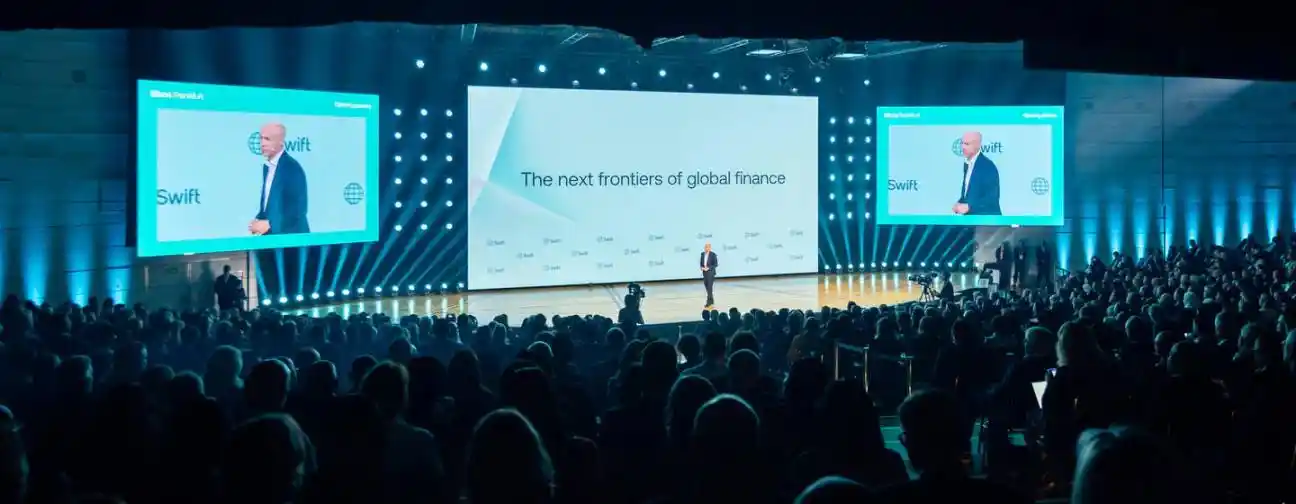
Image Source: Swift Official Website

Although Swift did not explicitly mention the technical platform when initially announcing this major news to the banking industry, Consensys CEO Joe Lubin revealed at the Token2049 conference in Singapore that Swift is leveraging the Ethereum Layer 2 network Linea to build its new payment settlement platform. By adopting Linea's zk-EVM rollup technology, Swift can significantly reduce costs and latency while meeting the financial industry's stringent requirements for 24/7 real-time settlement and security. Currently, over 30 top global financial institutions, including JPMorgan Chase, Bank of America, and Citibank, are preparing to participate in the pilot of this new blockchain-based payment rail built on Linea.

Ripple's Deep Cultivation and Current Status

Before discussing Swift, we must revisit the pioneer that challenged the old system for over a decade: Ripple.

In 2012, Ripple emerged with the XRP Ledger (XRPL), with the core goal of replacing the inefficient Swift correspondent banking model. During this period, Ripple successfully built the global payment network RippleNet, connecting over 300 financial institutions. In fragmented markets like Southeast Asia, its On-Demand Liquidity (ODL) service demonstrated that XRP, as a bridge currency, could reduce cross-border settlement times from days to just 3 to 5 seconds.

By 2020, affected by the U.S. SEC lawsuit, Ripple faced a blockade and stagnation in the U.S. market due to securities allegations, but its global scale continued to expand. By 2022, its business had reached over 40 payment markets, with total payment volume doubling to approximately $30 billion.

In 2023, Ripple saw a turning point when the court ruled that XRP itself is not a security, marking a milestone victory for Ripple and the industry.

In August 2025, with the SEC completely abandoning its appeal, the five-year legal battle came to an end. The full clarification of its legal status led to the approval of an XRP spot ETF, marking its official entry into mainstream institutional asset allocation portfolios.

Today, Ripple is conducting cross-border payment and receipt businesses in multiple real-world scenarios, ranging from retail remittances (To C) to enterprise-level payments (To B).

In the retail sector, Japan's SBI Remit uses XRP to bridge real-time remittance channels to the Philippines, Vietnam, and Indonesia, significantly reducing the pre-funding costs for overseas workers; Santander Bank offers transparent real-time transfers to its customers through the One Pay FX app. Meanwhile, the Southeast Asian payment platform Tranglo has significantly improved the efficiency of peso and baht settlements with the support of Ripple ODL.

At the enterprise level, American Express and PNC Bank utilize RippleNet to optimize B2B trade settlements and international payment experiences, respectively.

Additionally, in national infrastructure, Ripple is collaborating with over 20 countries, including Palau, Montenegro, and Bhutan, to develop CBDC platforms, applying blockchain technology to the issuance and清算体系 of sovereign currencies.

Why Did Swift Choose Linea?

When giants布局 the Ethereum ecosystem, they have shown a high degree of consistency in their preference for Layer 2 technology: Coinbase's Base chain is built on OP Stack, and Robinhood announced this year the launch of Robinhood Chain based on Arbitrum technology to support the tokenization and 24/7 trading of RWA.

This preference stems from L2's ability to leverage Ethereum's security while meeting high-performance needs through a modular architecture. The core difference between Swift's choice of Linea over OP or Arbitrum lies in the underlying validation logic.

OP and Arbitrum use Optimistic Rollup, which operates on the logic of assuming transactions are valid by default and only verifying them if challenged. Asset withdrawals typically require a multi-day challenge period, which is a significant time cost for financial清算追求流动性.

Linea, on the other hand, uses zk-EVM, which provides instant validity proofs mathematically. For Swift and its partner banks handling massive value settlements, zk-EVM not only offers faster finality but also ensures compliance verification while protecting transaction privacy.

Swift's choice of Linea embodies the first principle of capital operation: maximizing flow velocity.

Capital will flow like a fluid from the low-velocity (requiring large amounts of idle准备金预存 in Nostro/Vostro accounts), high-friction (layered fees from correspondent banks), slow-settlement (days-long settlement) telegraphic instruction traditional system to a high-velocity, low-friction, fast-settlement blockchain digital system.

Swift handles approximately $150 trillion in global payments annually. If it can achieve atomic-level reconciliation and 24/7 real-time settlement through Linea's technology stack, it means that trillions of dollars in准备金积压 in the global financial system, originally held to hedge against清算延迟, will be released and reinjected into the real economy.

As Consensys CEO Joe Lubin stated at the Token 2049 conference in Singapore, this is not merely a technological upgrade but the true convergence of TradFi and DeFi, marking the global value transfer protocol's official transition from the "telegraphic instruction era" to the "mathematical verification era."

The Significance of Swift Embracing Blockchain

As the global financial backbone network handling approximately $150 trillion in transaction volume annually, Swift's decision to build its ledger on Linea, an Ethereum Layer 2, signifies that blockchain technology will become the heart of mainstream finance.

Swift will eliminate fragmentation between different tokenized networks through unified technical standards, breaking down the long-standing barrier between TradFi and DeFi, and implanting the efficiency genes of decentralized finance into the traditional清算体系.

Through a 24/7 operational real-time ledger, global financial institutions will no longer be constrained by the cumbersome manual reconciliation and time-zone delays of the correspondent banking model. The massive amounts of capital积压 in correspondent bank accounts, originally held to hedge against清算风险, will be effectively released. This will allow the speed of capital flow to truly match the demands of the modern economy, ushering in a new era of global value transfer that is more transparent, lower cost, and更具互操作性.

Ripple struggled for a decade to build a new city based on the XRP Ledger outside the old system, but the scale of financial institutions it currently connects appears势单力薄 compared to Swift's存量 network covering over 11,000 institutions across more than 200 countries.

The core threat from Swift lies in its "asset neutrality." Unlike Ripple's ODL model, which heavily relies on XRP as a bridge currency, Swift's blockchain ledger is designed to support multiple assets, including fiat currencies, stablecoins, and CBDCs.

Banks within the Swift system can achieve instant settlement by upgrading their existing rails without bearing the volatility risk of a single asset. This combination of "存量优势 + technical compliance" is giving Ripple its most透骨的寒意 since its inception.


Câu hỏi Liên quan

QWhat is the core innovation announced by Swift at Sibos 2025, and what technology is it built on?

ASwift announced the addition of a new blockchain-based shared ledger to its infrastructure, built on the Ethereum Layer 2 network Linea, utilizing its zk-EVM rollup technology.

QHow does Ripple's ODL (On-Demand Liquidity) service using XRP improve cross-border payments?

ARipple's ODL service uses XRP as a bridge currency to reduce cross-border settlement times from several days to just 3 to 5 seconds, significantly lowering the cost of pre-funding for overseas payments.

QWhat key advantage does a zk-EVM rollup (like Linea) have over an Optimistic Rollup for a financial settlement network?

AA zk-EVM rollup provides instant validity proofs for transactions, enabling faster finality and near-instant withdrawals. This is superior to Optimistic Rollups, which have a multi-day challenge period for withdrawals, creating undesirable delays for high-value financial settlements.

QWhat major legal victory did Ripple achieve in 2023, and what was a significant consequence of its final resolution in 2025?

AIn 2023, a court ruled that XRP itself is not a security. In 2025, the SEC abandoned its appeal, which led to the approval of XRP spot ETFs, marking its entry into mainstream institutional asset allocation.

QWhy does the article suggest Swift's new platform poses a fundamental threat to Ripple's business model?

ASwift's threat stems from its 'asset neutrality' and massive existing network. Unlike Ripple's model which relies heavily on the XRP asset, Swift's ledger is designed to support multiple assets (fiat, stablecoins, CBDCs), allowing its vast network of over 11,000 banks to upgrade for instant settlement without exposure to a single asset's volatility.

Nội dung Liên quan

750 tỷ USD Tái Phân Bổ Tài Sản Rủi Ro: SpaceX Niêm Yết Sẽ Kéo Theo Thị Trường Chứng Khoán Mỹ Và Bitcoin Ra Sao?

Tác giả: Chloe, ChainCatcher SpaceX (SPCX.O) đã lên sàn với giá chỉ dẫn mở cửa 172 USD, cao hơn 26-30% so với giá phát hành IPO 135 USD, huy động khoảng 750 tỷ USD và định giá khoảng 1,77 nghìn tỷ USD. Sự kiện này được coi là một trong những đợt IPO lớn nhất lịch sử. Thị trường coi SpaceX là cổ phiếu tăng trưởng siêu cấp nhờ yếu tố "AI + không gian + phí bảo hiểm Musk", chứ không chỉ là một công ty sản xuất vũ trụ thuần túy. Trong khi Bitcoin ổn định quanh 63.300 USD, thị trường phái sinh crypto đã giao dịch sôi động các hợp đồng tương lai vĩnh viễn pre-IPO của SpaceX, cho thấy giới giao dịch coi đây là tài sản có beta cao tiếp theo. IPO 750 tỷ USD có thể trở thành máy hút vốn khỏi các tài sản rủi ro khác như cổ phiếu, ETF hoặc crypto, vì nguồn vốn được chuyển hướng mạnh mẽ vào cổ phiếu mới. Nhu cầu đăng ký mua cao gấp 3-4 lần cho thấy một lượng vốn lớn đang điều chỉnh danh mục để tranh mua. Ngắn hạn, điều này có thể khuếch đại sự thèm ăn rủi ro, nhưng trung hạn, việc SpaceX có thể nhanh chóng được đưa vào các chỉ số lớn khiến các danh mục đầu tư thụ động tập trung hơn vào chủ đề AI/công nghệ. Lịch sử tương tự là đợt lên sàn của Coinbase năm 2021, đánh dấu đỉnh cao ngắn hạn của Bitcoin. SpaceX có thể là "lễ trưởng thành" cho chủ đề AI, không gian và hệ sinh thái Musk, thường báo hiệu câu chuyện đã được định giá tối đa. Mặt khác, SpaceX nắm giữ 18.712 BTC (trị giá khoảng 1,2 tỷ USD) trên bảng cân đối kế toán, củng cố hình ảnh Bitcoin như một tài sản kho bạc doanh nghiệp. Tuy nhiên, con số này chỉ chiếm 0,07% định giá của SpaceX, mang nhiều giá trị biểu tượng hơn trọng lượng tài chính. Tóm lại, IPO SpaceX là con dao hai lưỡi với Bitcoin. Ngắn hạn, nó là máy hút vốn cạnh tranh, nhưng dài hạn, việc nắm giữ BTC của SpaceX có thể trở thành cột mốc quan trọng trong việc các thể chế chấp nhận Bitcoin.

链捕手1 giờ trước

750 tỷ USD Tái Phân Bổ Tài Sản Rủi Ro: SpaceX Niêm Yết Sẽ Kéo Theo Thị Trường Chứng Khoán Mỹ Và Bitcoin Ra Sao?

链捕手1 giờ trước

Định luật Thao (τ), đưa EDA “nổ” ra khỏi vòng tròn

Tháng 5/2026, tại IEEE ISCAS, bà Hà Đình Ba, Chủ tịch bộ phận kinh doanh bán dẫn của Huawei, đã giới thiệu khái niệm "Định luật Thao (τ)". Khác với Định luật Moore tập trung vào thu nhỏ hình học, định luật τ hướng tới "thu nhỏ thời gian", tối ưu hóa hằng số thời gian τ xuyên suốt các cấp độ linh kiện, mạch, chip và hệ thống để tăng hiệu suất xử lý thông tin. Huawei cho biết đã sản xuất 381 chip dựa trên nguyên tắc này và dự kiến đạt trình độ tương đương 1.4nm vào năm 2031. Định luật τ đặt ra yêu cầu mới cho công cụ EDA, đẩy nó từ công cụ thiết kế hỗ trợ lên thành nền tảng tối ưu hóa hiệu suất hệ thống trọng yếu. Các thách thức chính bao gồm: thiếu khả năng thiết kế "3D thực sự" bản địa và tối ưu hóa xuyên tầng (STCO), cũng như thiếu công cụ phân tích đa trường vật lý (điện, nhiệt, cơ) kết hợp hiệu quả cho các cấu trúc xếp chồng 3D và Chiplet. Định luật này có thể thúc đẩy EDA trong nước Trung Quốc chuyển từ các công cụ điểm sang xây dựng nền tảng phần mềm công nghiệp "toàn quy trình, xuyên tầng, hợp tác mạnh". Các công ty như Hoa Đại Cửu Thiên đã bắt đầu phát triển các giải pháp toàn quy trình cho thiết kế 3DIC. Đại học Bắc Kinh cũng công bố nguyên mẫu công cụ EDA "3D thực sự" cho nhu cầu gấp logic, cho thấy sự tiến bộ trong việc lấp đầy khoảng trống then chốt, hướng tới mục tiêu không chỉ "có thể dùng" mà còn "dùng tốt" toàn diện.

marsbit3 giờ trước

Định luật Thao (τ), đưa EDA “nổ” ra khỏi vòng tròn

marsbit3 giờ trước

Giao dịch

Giao ngay
Hợp đồng Tương lai

Bài viết Nổi bật

Làm thế nào để Mua BILL

Chào mừng bạn đến với HTX.com! Chúng tôi đã làm cho mua Billions Network (BILL) trở nên đơn giản và thuận tiện. Làm theo hướng dẫn từng bước của chúng tôi để bắt đầu hành trình tiền kỹ thuật số của bạn.Bước 1: Tạo Tài khoản HTX của BạnSử dụng email hoặc số điện thoại của bạn để đăng ký tài khoản miễn phí trên HTX. Trải nghiệm hành trình đăng ký không rắc rối và mở khóa tất cả tính năng. Nhận Tài khoản của tôiBước 2: Truy cập Mua Crypto và Chọn Phương thức Thanh toán của BạnThẻ Tín dụng/Ghi nợ: Sử dụng Visa hoặc Mastercard của bạn để mua Billions Network (BILL) ngay lập tức.Số dư: Sử dụng tiền từ số dư tài khoản HTX của bạn để giao dịch liền mạch.Bên thứ ba: Chúng tôi đã thêm những phương thức thanh toán phổ biến như Google Pay và Apple Pay để nâng cao sự tiện lợi.P2P: Giao dịch trực tiếp với người dùng khác trên HTX.Thị trường mua bán phi tập trung (OTC): Chúng tôi cung cấp những dịch vụ được thiết kế riêng và tỷ giá hối đoái cạnh tranh cho nhà giao dịch.Bước 3: Lưu trữ Billions Network (BILL) của BạnSau khi mua Billions Network (BILL), lưu trữ trong tài khoản HTX của bạn. Ngoài ra, bạn có thể gửi đi nơi khác qua chuyển khoản blockchain hoặc sử dụng để giao dịch những tiền kỹ thuật số khác.Bước 4: Giao dịch Billions Network (BILL)Giao dịch Billions Network (BILL) dễ dàng trên thị trường giao ngay của HTX. Chỉ cần truy cập vào tài khoản của bạn, chọn cặp giao dịch, thực hiện giao dịch và theo dõi trong thời gian thực. Chúng tôi cung cấp trải nghiệm thân thiện với người dùng cho cả người mới bắt đầu và người giao dịch dày dạn kinh nghiệm.

Tổng lượt xem 327Xuất bản vào 2026.05.07Cập nhật vào 2026.06.02

Làm thế nào để Mua BILL

ATWO là gì

I. Giới thiệu Dự ánArena Two là một nền tảng tương tác phi tập trung cho phép người hâm mộ đóng vai trò tích cực, có thể mã hóa trong kết quả sự kiện theo thời gian thực. Khác với các mô hình phát sóng truyền thống khiến người hâm mộ trở thành người xem thụ động, Arena Two tận dụng công nghệ blockchain để cho phép người hâm mộ trực tiếp bỏ phiếu theo thời gian thực và ảnh hưởng đến kết quả trên sân.II. Thông tin TokenTên token: ATWO(Arena Two)III. Liên kết liên quanWebsite:https://arenatwo.com/Explorers:https://basescan.org/token/0x499D35eBE6cEe9B2Ac35Fd003fcBbeeB9CFc7B32Twitter:https://x.com/arenatwoXGhi chú: Giới thiệu dự án đến từ các tài liệu được công bố hoặc cung cấp bởi đội ngũ dự án chính thức, chỉ mang tính tham khảo và không cấu thành lời khuyên đầu tư. HTX không chịu trách nhiệm cho bất kỳ tổn thất trực tiếp hoặc gián tiếp nào phát sinh.

Tổng lượt xem 289Xuất bản vào 2026.05.18Cập nhật vào 2026.06.02

ATWO là gì

Làm thế nào để Mua ATWO

Chào mừng bạn đến với HTX.com! Chúng tôi đã làm cho mua Arena Two (ATWO) trở nên đơn giản và thuận tiện. Làm theo hướng dẫn từng bước của chúng tôi để bắt đầu hành trình tiền kỹ thuật số của bạn.Bước 1: Tạo Tài khoản HTX của BạnSử dụng email hoặc số điện thoại của bạn để đăng ký tài khoản miễn phí trên HTX. Trải nghiệm hành trình đăng ký không rắc rối và mở khóa tất cả tính năng. Nhận Tài khoản của tôiBước 2: Truy cập Mua Crypto và Chọn Phương thức Thanh toán của BạnThẻ Tín dụng/Ghi nợ: Sử dụng Visa hoặc Mastercard của bạn để mua Arena Two (ATWO) ngay lập tức.Số dư: Sử dụng tiền từ số dư tài khoản HTX của bạn để giao dịch liền mạch.Bên thứ ba: Chúng tôi đã thêm những phương thức thanh toán phổ biến như Google Pay và Apple Pay để nâng cao sự tiện lợi.P2P: Giao dịch trực tiếp với người dùng khác trên HTX.Thị trường mua bán phi tập trung (OTC): Chúng tôi cung cấp những dịch vụ được thiết kế riêng và tỷ giá hối đoái cạnh tranh cho nhà giao dịch.Bước 3: Lưu trữ Arena Two (ATWO) của BạnSau khi mua Arena Two (ATWO), lưu trữ trong tài khoản HTX của bạn. Ngoài ra, bạn có thể gửi đi nơi khác qua chuyển khoản blockchain hoặc sử dụng để giao dịch những tiền kỹ thuật số khác.Bước 4: Giao dịch Arena Two (ATWO)Giao dịch Arena Two (ATWO) dễ dàng trên thị trường giao ngay của HTX. Chỉ cần truy cập vào tài khoản của bạn, chọn cặp giao dịch, thực hiện giao dịch và theo dõi trong thời gian thực. Chúng tôi cung cấp trải nghiệm thân thiện với người dùng cho cả người mới bắt đầu và người giao dịch dày dạn kinh nghiệm.

Tổng lượt xem 161Xuất bản vào 2026.05.18Cập nhật vào 2026.06.02

Làm thế nào để Mua ATWO

Thảo luận

Chào mừng đến với Cộng đồng HTX. Tại đây, bạn có thể được thông báo về những phát triển nền tảng mới nhất và có quyền truy cập vào thông tin chuyên sâu về thị trường. Ý kiến ​​của người dùng về giá của A (A) được trình bày dưới đây.

活动图片













