OpenAI Completely Overhauls Codex, Grows Its Own Mouse, Schedules Itself to Outwork Humans

marsbitXuất bản vào 2026-04-17Cập nhật gần nhất vào 2026-04-17

Tóm tắt

OpenAI has fundamentally transformed Codex from a coding assistant into a versatile AI agent capable of autonomous computer control. The updated Codex can now operate in the background with its own independent cursor, allowing it to run applications like Xcode, test software, and fix bugs without interrupting the user’s workflow. It features a built-in browser for real-time visual editing of web pages, enabling developers to make changes through direct UI interactions. The release also introduces over 90 plugins for tools like JIRA, CircleCI, and SharePoint, integrating end-to-end development and productivity workflows. A new "heartbeat" feature allows Codex to self-schedule tasks, maintain context across sessions, and work autonomously over extended periods. Additional enhancements include memory capabilities, support for handling GitHub code reviews, multi-tab terminals, and built-in file generation for Excel, PDF, and PowerPoint. Currently, advanced computer control is available on macOS (excluding EU/UK users), with Windows support limited to data retrieval. This expansion positions Codex as a foundational step toward OpenAI’s planned "super-app," combining coding, automation, and multi-tool integration into a single platform.

Just now, OpenAI has turned Codex upside down!

Yesterday you were still using Codex to write code.

Today it can already view your screen, click your mouse, remember your preferences from last week, and schedule its own tasks.

Multiple AI Agents work for you in the background simultaneously, without affecting your mouse and keyboard at all.
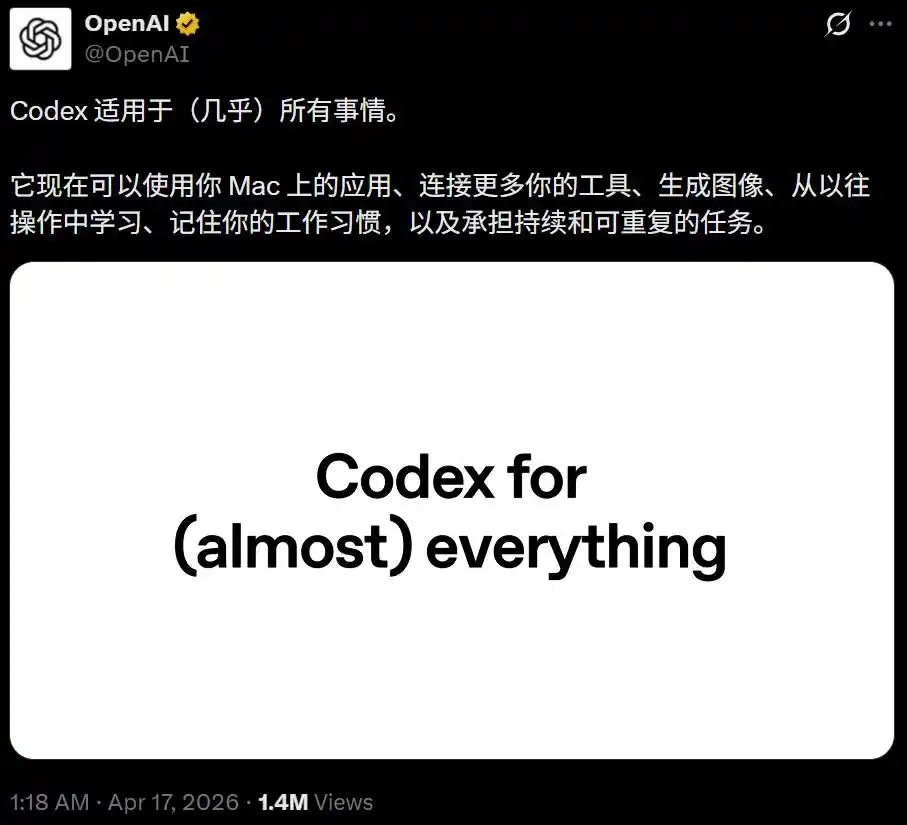
Codex's "Secret Sauce": It can use apps directly in the background without taking over your entire computer.

From today, this tool used weekly by 3 million developers is no longer just a programming Agent.

You Do Your Work, It Runs Xcode in the Background

Now, Codex has its own cursor, which does not interfere with your mouse.

You write documents while it runs Xcode to test an App next to you, both happening at the same time.

This feature has significant origins; its lead, Ari Weinstein, is the co-creator of Apple Shortcuts, whose team was acquired by OpenAI last fall.

To understand what it can do, just watch a demo.

First, the user gives the command: "Run this Tic-Tac-Toe App in Xcode, play a game to test it yourself, and fix any bugs you find."

Then, Codex opens Xcode by itself, starts the iOS simulator, and begins playing with its own cursor.

During testing, it discovers a logic bug—after a human move, the computer draws two O's simultaneously.

After some thought, Codex decisively switches back to the code interface and locates the position of the bug.

After modifying the Swift code, it immediately recompiles and performs a second round of complete testing for verification.

In less than a minute. Run → Test → Find bug → Fix → Regression verification, the entire Debug closed loop, all in one go.

Currently, Computer Use only supports macOS; users in the EU and UK cannot use it for now.

The Windows version can pull information from other apps into Codex but does not yet support background cursor-level control.
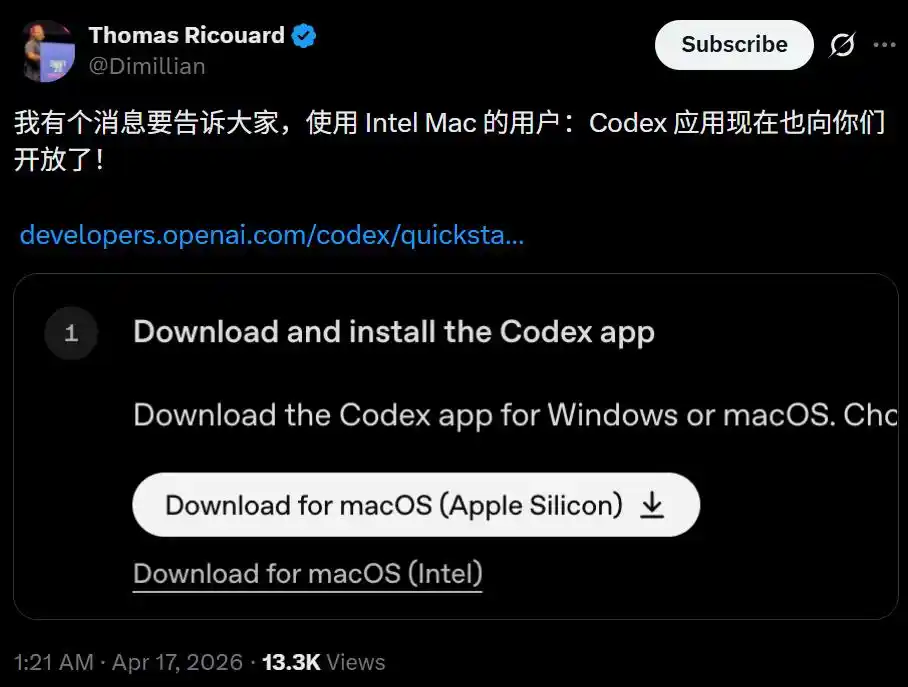
In this update, Codex gains support for Intel Macs for the first time.

Click to Modify, No More Code Hunting for Front-End Debugging

The Codex client now has a built-in browser,底层 powered by OpenAI's own Atlas engine.

In practical terms,以前 front-end developers adjusting UI had to jump back and forth between code and the browser. Now you can operate on the rendered webpage.

Click the main title, leave a comment "Reduce font size and shorten the slogan"; click the top left corner, "Add a logo";发现 the chart's X-axis legend is out of bounds, click the error spot, write "Fix the out-of-bounds issue".

Codex understands visual and spatial context,修改 code in the background instantly, and the page refreshes in real-time.
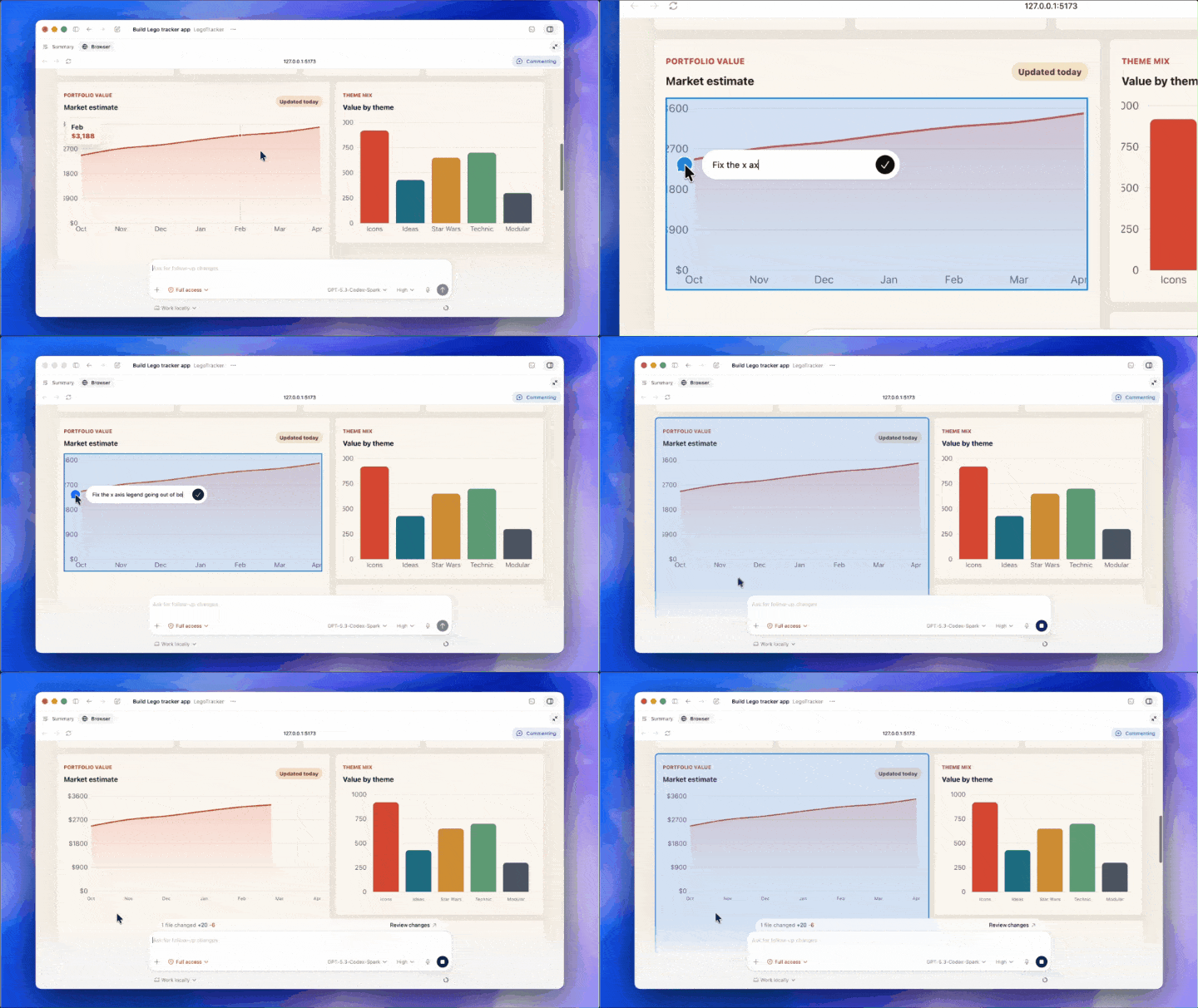
OpenAI used a web application called Brickfolio, a Lego set tracker, for the demo.

Codex wrote the code from scratch, configured the environment, started the local server, and opened the rendered page in the built-in browser. The whole process took just seconds.

Then came the WYSIWYG (What You See Is What You Get) modification experience. It feels like reviewing a design mockup; you just annotate the problems, and all underlying iterations are handled by the AI.

In other words, the user只需 clicks and marks here and there on the page, and Codex changes the code in the background, producing results in real-time on the front end.

The built-in browser is currently limited to localhost preview. OpenAI stated that future expansions will include full browser control capabilities.

Over 90 Plugins Launched, The Entire Toolchain Welded into Codex

On the plugin front, OpenAI launched over 90 in one go.

Atlassian Rovo manages JIRA, CircleCI handles CI/CD, GitLab Issues tracks requirements, Microsoft Suite processes documents, Neon by Databricks operates databases—covering almost all tools a development team uses daily.
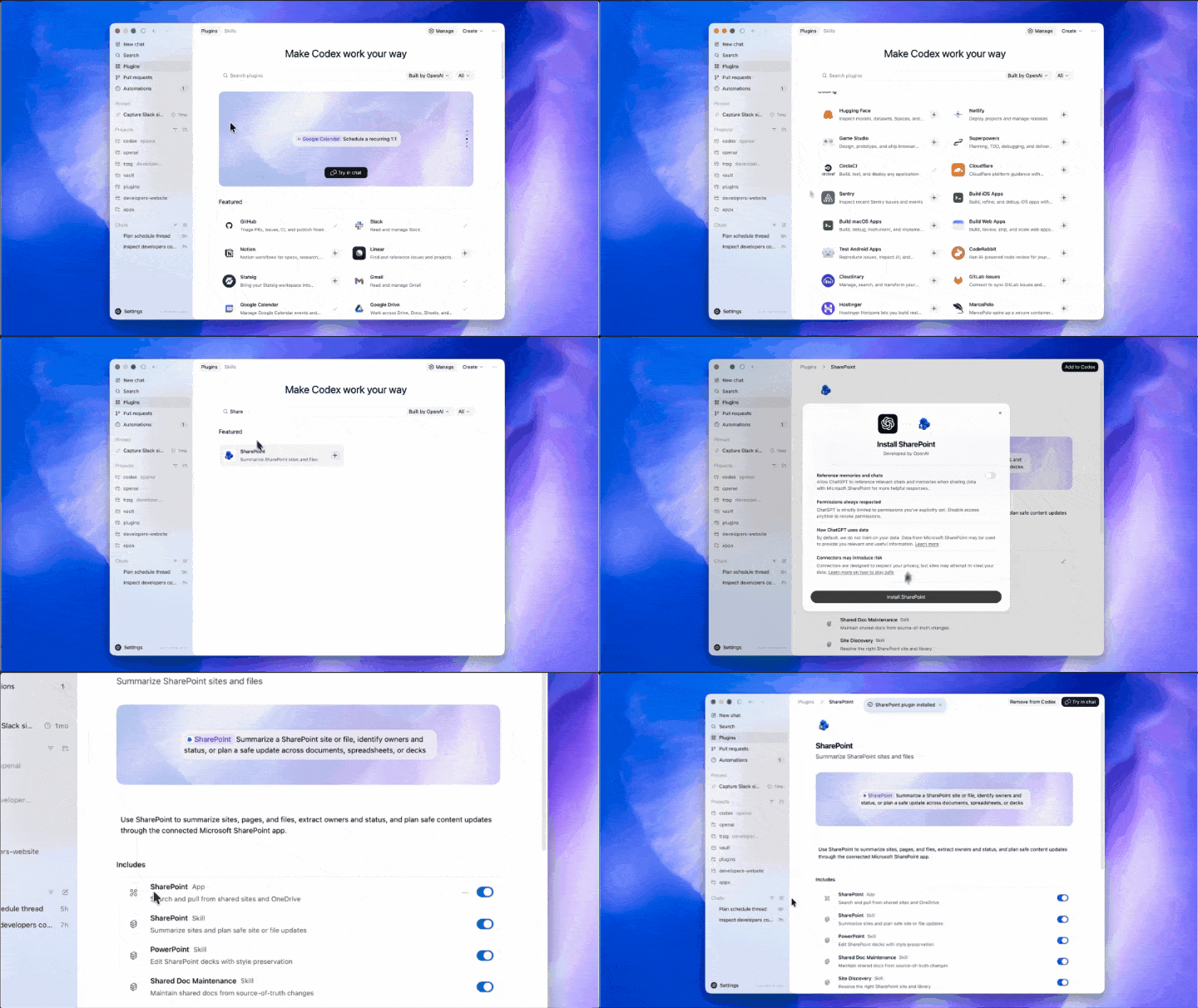
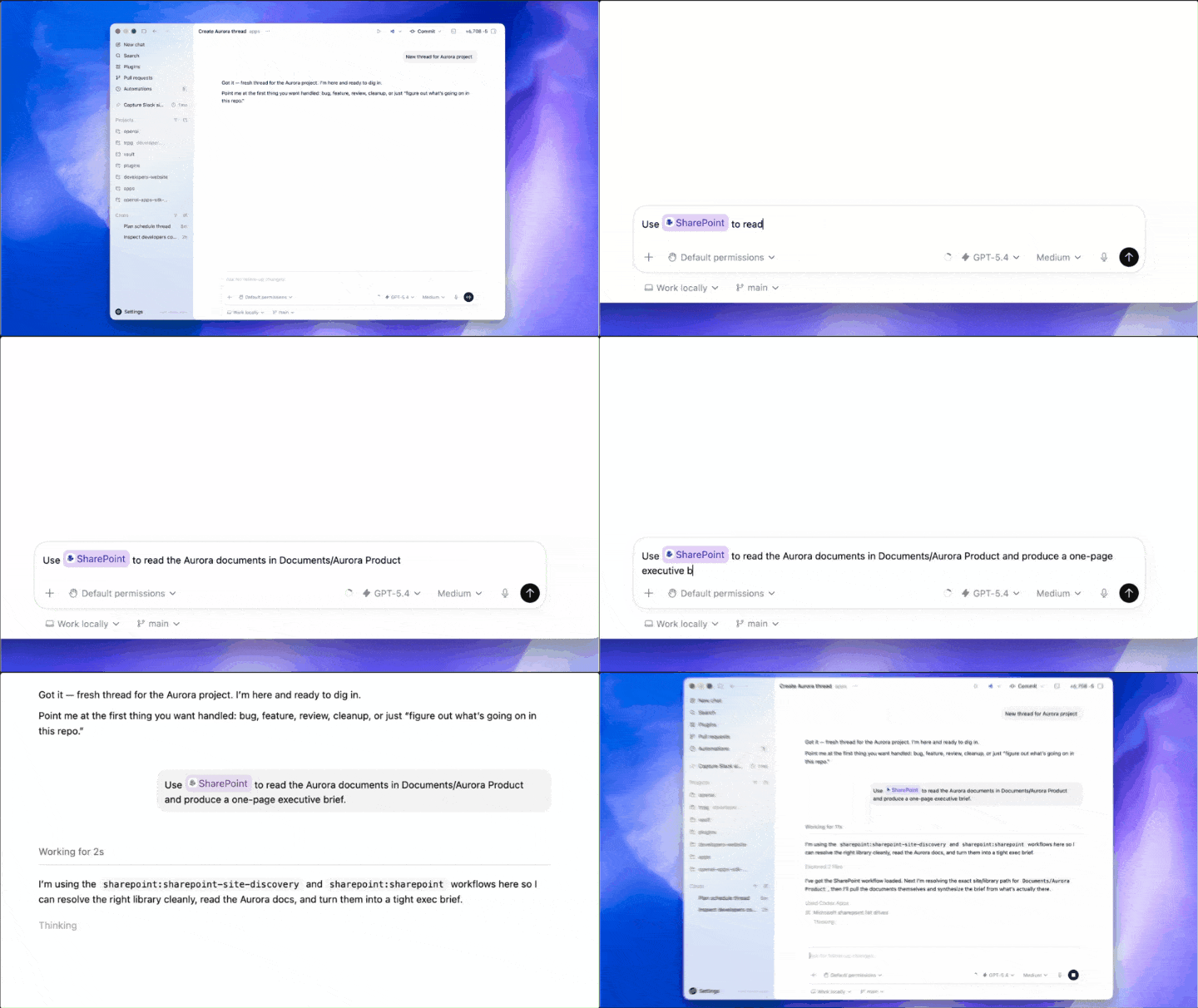
Usage is simple: just @ the plugin name in the input box.

For example, @SharePoint, ask Codex to read documents in the product catalog and generate an executive brief. It automatically searches the file tree, parses documents, and extracts core information, saving you from searching through various cloud drives.
Another example: @Superpowers, ask Codex to conceptualize a feature plan within the local code directory. It will traverse your file structure, read code and CSS, and provide a set of implementation suggestions that fit the current project architecture.

@CircleCI can help diagnose branch build failures; @Atlassian Rovo can read product specifications on Confluence, output summaries in format, and even convert feature points into standard JIRA tasks.
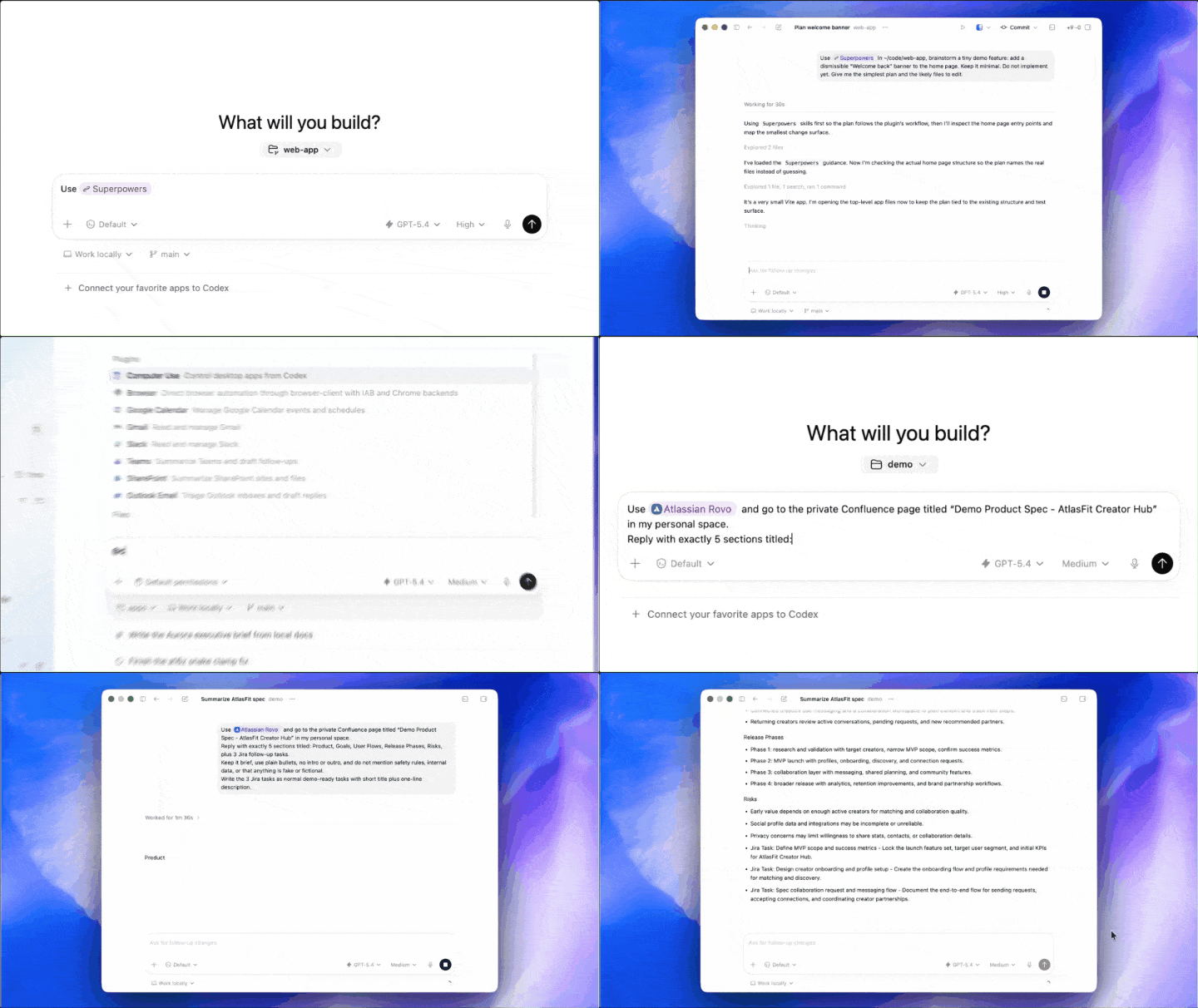
From upstream requirements to local coding, to CI/CD and task management, plugins串起来了 the entire chain.

AI Starts Scheduling Itself

Even more noteworthy is the new "Heartbeat" mechanism.

Now Codex can schedule future work for itself, automatically waking up at the set time to continue working, even across days or weeks. Moreover, it can reuse previous conversation threads, so the context accumulated last time is not lost.

For example, a user can ask Codex to check Slack, Gmail, Google Calendar, and Notion. It pulls relevant information from these four channels and throws out a prioritized to-do list.

The user adds, "Can you keep an eye on this for me?"

Codex immediately sets itself an hourly automatic patrol schedule, proactively reports on key points requiring decisions, and even asks, "Do you need me to draft a reply for you?"

This is no longer just a tool; it's a junior employee who doesn't sleep.

Coupled with the natively built-in image generation capability of gpt-image-1.5, product concept maps, front-end designs, and visual prototypes can all be completed in one go within the same workflow.

Daily Needs Filled in One Go

Besides these major features, there are also a batch of experience-level upgrades.

First, the memory function is available in preview; Codex can remember your preferences and corrected points, so you don't have to explain from scratch the next time you start a chat.

Second, GitHub code review comments can now also be processed in Codex.

Support for opening multiple terminal tabs simultaneously is here, and the ability to connect to remote development machines via SSH is also in internal testing. There's also a new summary panel to help you keep an eye on the Agent's work plans, information sources, and output files at any time.

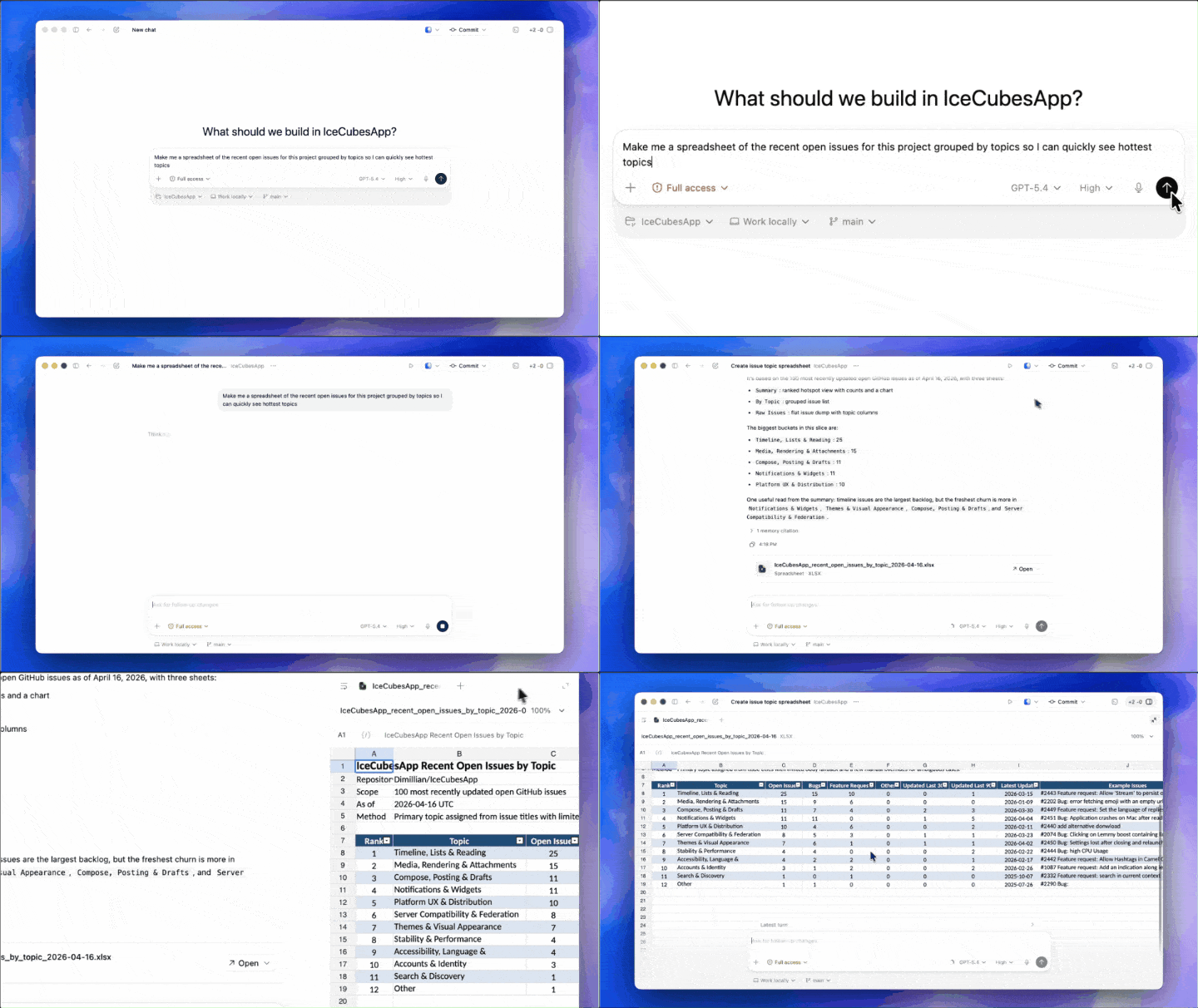
In the demo, the user asked Codex to organize the recent open issues of the current project and generate a table grouped by theme.

Codex then pulled the code repository context in the background and, after a few minutes, threw out a core summary listing the project's current biggest pain points.

Click to generate an Excel file—no need to switch to external software; a complete spreadsheet preview can be opened right in the sidebar.

The same goes for PDFs and PPTs, all handled within the Codex window.
The First Piece of the Super App Puzzle

Looking back at the timeline, you can feel OpenAI's pace.

March 19: Foreign media reported that OpenAI plans to merge ChatGPT, Codex, and the Atlas browser into a desktop "Super App".

March 31: OpenAI secured $122 billion in funding, with a valuation of $852 billion, led by Amazon, NVIDIA, and SoftBank. The funding documents clearly stated that the capital would be used for the development and deployment of the Super App.

April 16: This wave of Codex updates landed.

Another telling data point: over 80% of OpenAI's internal employees are already using Codex, and not just engineers.

Writing weekly reports, organizing feedback, drafting product requirement documents, reviewing contracts, sending security training reminders—they use it for everything.

50% of Codex users are already using it for non-coding tasks.

This isn't a programming tool adding features. This is a Super App using the shell of a programming tool for a cold start.

If You Can't Beat Them, Infiltrate: Made an Official Plugin for Anthropic

Even more interestingly, OpenAI also made an official plugin for Claude Code, actively embedding Codex into the competitor's ecosystem.

It somewhat has the vibe of, rather than waiting for developers to switch camps, better to infiltrate their workflow first.

Currently, Codex emphasizes background execution, multi-Agent parallelism, and unattended operation; Claude Code's advantages lie in long-context reasoning and deep code understanding. More and more teams are choosing to use both.

However, what OpenAI wants is clearly not just a share of the pie.

$122 billion is bet on something far greater than a programming tool.

Reference: https://openai.com/index/codex-for-almost-everything/

This article is from the WeChat public account "新智元" (New Wisdom Yuan), edited: Hao Kun (Very Sleepy)


Câu hỏi Liên quan

QWhat is the key new feature of OpenAI's Codex that allows it to operate in the background without taking over the user's entire computer?

AThe key new feature is called 'Computer Use', which gives Codex its own independent cursor, allowing it to operate applications in the background (like running Xcode) while the user continues their work uninterrupted with their own mouse and keyboard.

QWhich operating system currently has the most comprehensive support for Codex's new background control capabilities, and which regions are temporarily excluded?

AmacOS currently has the most comprehensive support for the new background cursor-level control. Users in the European Union and the United Kingdom are temporarily unable to use this feature.

QHow does the new 'heartbeat' mechanism in Codex function?

AThe 'heartbeat' mechanism allows Codex to schedule future work for itself. It can wake up automatically at a set time (even across days or weeks) to continue tasks and can reuse previous conversation threads, maintaining all accumulated context from earlier interactions.

QWhat was the significant business move mentioned in the article that suggests OpenAI is building a 'super app'?

AThe significant business move was OpenAI securing $122 billion in funding at an $852 billion valuation, with investors including Amazon, Nvidia, and SoftBank. The funding documents explicitly stated the capital would be used for the development and deployment of a desktop 'super app' that merges ChatGPT, Codex, and the Atlas browser.

QWhat surprising strategic move did OpenAI make regarding its competitor Anthropic's Claude Code?

AOpenAI created and released an official plugin for Anthropic's Claude Code, effectively embedding its own Codex tool into the ecosystem of its direct competitor. This is a strategic move to integrate into developers' workflows rather than waiting for them to switch platforms entirely.

Nội dung Liên quan

Giảm 30% trong Một Ngày, Hayes Đột Ngột Xả Hàng, ZEC Vì Sao Bị Phát Hiện Lỗ Hổng Bảo Mật?

Ngày 5 tháng 6, người sáng lập Zcash Zooko Wilcox đã cùng các cộng sự công bố một lỗ hổng bảo mật nghiêm trọng trong nhóm giao dịch riêng tư Orchard của mạng lưới. Lỗi này nằm trong một ràng buộc toán học của mạch halo2, cho phép kẻ tấn công có khả năng tạo ra số lượng ZEC giả mạo không giới hạn trong nhóm Orchard mà hệ thống vẫn xác thực là hợp lệ. Zcash đã thực hiện nâng cấp khẩn cấp để vá lỗi. Tuy nhiên, sau khi chi tiết về mức độ ảnh hưởng được tiết lộ, giá ZEC đã lao dốc hơn 30% trong ngày, chạm mức thấp nhất quanh 411 USD. Arthur Hayes, một nhân vật có ảnh hưởng vốn rất ủng hộ ZEC trước đó, tuyên bố đã bán toàn bộ số coin nắm giữ. Điểm đáng chú ý là lỗ hổng này được phát hiện bởi nhà nghiên cứu Taylor Hornby với sự trợ giúp của mô hình AI Anthropic Opus 4.8, chỉ một ngày sau khi mô hình này ra mắt. Orchard đã hoạt động từ năm 2022 và trải qua nhiều cuộc kiểm toán nhưng vẫn tồn tại lỗi, điều này cho thấy khoảng cách giữa lý thuyết toán học hoàn hảo và thực tế triển khai kỹ thuật. Người sáng lập Zooko thừa nhận rằng về mặt mật mã học, không thể chứng minh được liệu lỗ hổng đã bị khai thác trước khi sửa chữa hay chưa. Mối lo ngại lớn nhất là nếu kẻ tấn công đã in ZEC giả và rút chúng qua "cổng xoay" sang nhóm minh bạch để bán, thì tài sản của người dùng trong nhóm Orchard thực tế đã bị pha loãng một cách vô hình. Sự kiện này đặt ra một thách thức trực tiếp đối với luận điểm "giá trị cốt lõi nằm ở độ tin cậy kỹ thuật" của các đồng coin riêng tư. Nó cũng cảnh báo toàn ngành công nghiệp rằng trong kỷ nguyên AI, quan niệm "chưa bị phát hiện tức là an toàn" không còn đúng nữa. Các dự án cần tích hợp việc kiểm tra bảo mật liên tục với AI và khả năng phản ứng nhanh làm thông lệ tiêu chuẩn.

foresightnews_api10 phút trước

Giảm 30% trong Một Ngày, Hayes Đột Ngột Xả Hàng, ZEC Vì Sao Bị Phát Hiện Lỗ Hổng Bảo Mật?

foresightnews_api10 phút trước

Phá Bỏ Lời Nguyền Thanh Lý Lặp Đi Lặp Lại trong DeFi, Vitalik Đưa Ra Giải Pháp Mới

Vitalik Buterin đề xuất một giải pháp thay thế cho cơ chế thanh lý tự động truyền thống trong DeFi, vốn thường gây ra hiệu ứng bán tháo dây chuyền và khuếch đại biến động thị trường trong các đợt sụt giảm mạnh. Thay vì thiết lập một ngưỡng thanh lý cứng nhắc, phương án mới dựa trên cấu trúc tài sản tổng hợp được xây dựng từ các quyền chọn (option). Trong mô hình này, quyền sở hữu một tài sản (ví dụ: ETH) được chia thành hai loại chứng khoán giống quyền chọn, P và N. Giá trị vị thế của người dùng sẽ dần dần chệch khỏi mục tiêu neo ban đầu nếu thị trường biến động, thay vì bị thanh lý đột ngột. Điều này chuyển quyền quyết định tái cân bằng từ hệ thống sang tay người dùng hoặc các công cụ tự động. Ưu điểm chính là loại bỏ nguy cơ thanh lý tập trung cưỡng bức, vốn tạo ra áp lực bán lớn và là mục tiêu cho các cuộc tấn công thao túng giá. Nó cũng giảm áp lực lên các oracle, vì việc định giá có thể được trì hoãn đến ngày đáo hạn hợp đồng, cho phép sử dụng các cơ chế báo giá chắc chắn hơn. Tuy nhiên, giải pháp này đặt ra những thách thức về khả năng chấp nhận của người dùng đối với việc giá trị tài sản chệch hướng và chi phí giao dịch khi tái cân bằng vị thế. Tính khả thi của nó phụ thuộc vào việc hình thành một thị trường với thanh khoản sâu và các nhà tạo lập thị trường phù hợp để giảm thiểu trượt giá. Mô hình này phù hợp hơn cho các sản phẩm phòng ngừa rủi ro hoặc neo theo chỉ số, hơn là các stablecoin đòi hỏi sự neo giữ chính xác tuyệt đối. Đề xuất của Vitalik mở ra một hướng tư duy mới, thách thức quan niệm thanh lý tức thời là yếu tố bắt buộc trong thiết kế DeFi, và kêu gọi thử nghiệm các mô hình cơ bản thay thế.

foresightnews_api12 phút trước

Phá Bỏ Lời Nguyền Thanh Lý Lặp Đi Lặp Lại trong DeFi, Vitalik Đưa Ra Giải Pháp Mới

foresightnews_api12 phút trước

Sự sa sút của Bitcoin chính là sự lột xác của Crypto

Bài viết phân tích sự thay đổi cơ cấu sâu sắc trong ngành công nghiệp tiền mã hóa, cho rằng Bitcoin đang mất dần vị thế trung tâm và đây là dấu hiệu của sự trưởng thành thực sự. AI đã thu hút dòng vốn đầu cơ mạo hiểm vốn dành cho Bitcoin, trong khi stablecoin (đặc biệt là USDC) đã thay thế Bitcoin trở thành đồng tiền cơ sở và phương tiện lưu thông chính trong thị trường, phá vỡ mô hình định giá phụ thuộc trước đây. Ngành công nghiệp đang phát triển mạnh mẽ dựa trên các dự án có dòng tiền thực và nhu cầu sử dụng thực tế, như sàn giao dịch Hyperliquid và nền tảng thị trường dự đoán Polymarket. Quyền riêng tư đang trở thành tài nguyên giá trị, với các giải pháp như Zcash và cơ sở hạ tầng đa chuỗi như NEAR (cho phép chuyển tài sản riêng tư xuyên chuỗi mà không cần nắm giữ token gốc). Một lớp kết nối cơ sở hạ tầng mới, cung cấp khả năng tương tác đa chuỗi, giao dịch riêng tư và thanh toán bằng USD, đang dần đảm nhận vai trò kết nối toàn ngành thay cho Bitcoin. Tóm lại, ngành công nghiệp tiền mã hóa không còn phụ thuộc vào biến động giá của Bitcoin. Tiêu chuẩn đánh giá giờ đây là doanh thu thực, người dùng hoạt động và giá trị cơ bản của từng dự án. Sự suy giảm của Bitcoin đánh dấu bước ngoặt lịch sử khi crypto thoát khỏi sự ràng buộc và phát triển thành một nền kinh tế kỹ thuật số độc lập.

foresightnews_api15 phút trước

Sự sa sút của Bitcoin chính là sự lột xác của Crypto

foresightnews_api15 phút trước

Sau khi được IBM "để mắt tới", three tăng gấp 50 lần

Một tin hợp tác với IBM đã đưa dự án Solana three.ws (token: THREE) vào tầm ngắm thị trường, khiến giá token tăng tới 50 lần, từ vốn hóa 300.000 USD lên mức cao nhất 16,38 triệu USD. Three.ws định nghĩa mình là "Lớp Agent 3D cho Internet", nhằm giải quyết vấn đề AI Agent thường bị ẩn trong khung chat. Dự án muốn cung cấp cho AI Agent một cơ thể 3D, ký ức, danh tính, ví tiền và kênh phân phối, biến nó thành một nhân vật số có thể xuất hiện trên trang web, thực hiện hành động và giao dịch. Kiến trúc của three.ws gồm 4 tầng: Tầng Hiển thị (Viewer) để kết xuất mô hình 3D; Tầng Agent (não bộ) với LLM, trí nhớ, kỹ năng và hệ thống cảm xúc; Tầng Danh tính tùy chọn (có thể đăng ký trên Solana hoặc EVM); và Tầng Nhúng & Phân phối để triển khai Agent vào website. Dự án đã có mặt trên AWS Marketplace và tham gia chương trình Google Cloud for Web3 Startups. Hợp tác với IBM hướng đến việc kết hợp công nghệ Agent 3D với AI doanh nghiệp, điện toán đám mây lai và kênh thị trường của IBM, đồng thời tích hợp các mô hình Granite của IBM. Mục tiêu cuối cùng là biến AI Agent 3D trong trình duyệt từ một bản demo thành một dịch vụ mà doanh nghiệp có thể mua sắm, triển khai và quản lý được, với AWS xử lý khía cạnh mua sắm/tính cước và IBM bổ sung năng lực AI doanh nghiệp.

foresightnews_api17 phút trước

Sau khi được IBM "để mắt tới", three tăng gấp 50 lần

foresightnews_api17 phút trước

CEO của Lightspark: Sau 10 năm nữa, Bitcoin sẽ vô hình như TCP/IP, nhưng lại đỡ hàng nghìn tỷ USD giao dịch hàng ngày

Tác giả David Marcus, CEO của Lightspark, dự đoán rằng đến năm 2036, Bitcoin sẽ trở nên vô hình trong cuộc sống hàng ngày, giống như giao thức TCP/IP, nhưng lại là nền tảng cho hàng nghìn tỷ USD giao dịch. Bài viết mô tả một tương lai nơi các giao dịch xuyên biên giới—từ một quán cà phê ở Lagos đến một nhà sản xuất ở São Paulo—đều được xử lý ngay lập tức trên mạng Bitcoin mà người dùng không cần biết. Sự chuyển đổi bắt đầu từ ví điện tử. Các ví như Spark cho phép người dùng cùng lúc nắm giữ USD, tiền địa phương và Bitcoin tại một địa chỉ tự lưu trữ, xóa bỏ ma sát giữa chúng. Điều này khiến việc tiết kiệm bằng Bitcoin trở nên tự nhiên, vì người dùng thấy giá trị của nó tăng trưởng so với các loại tiền tệ khác. Doanh nghiệp cũng đi theo con đường tương tự. Xu hướng mới nổi là mọi người bắt đầu giao dịch trực tiếp bằng Bitcoin, đặc biệt khi cả hai bên đều đã nắm giữ nó. Ngoài ra, sự trỗi dậy của các đại lý AI đang đẩy nhanh quá trình này. Các đại lý này, khi tối ưu hóa tốc độ và giảm thiểu rủi ro đối tác, tự nhiên lựa chọn Bitcoin để thanh toán và bù trừ giá trị. Tóm lại, hệ thống tiền tệ toàn cầu đang được xây dựng lại từ lớp giao thức: cơ sở hạ tầng mở, tự lưu trữ mặc định, Bitcoin là lớp thanh toán nền tảng, và stablecoin là giao diện. Bitcoin đang trở thành tài sản tiết kiệm mặc định và dần là phương tiện giao dịch được ưa chuộng, không phải vì lý tưởng mà vì tính hiệu quả cấu trúc của nó. Hầu hết người dùng cuối sẽ không cần nghĩ về công nghệ đằng sau—nó chỉ đơn giản hoạt động.

foresightnews_api20 phút trước

CEO của Lightspark: Sau 10 năm nữa, Bitcoin sẽ vô hình như TCP/IP, nhưng lại đỡ hàng nghìn tỷ USD giao dịch hàng ngày

foresightnews_api20 phút trước

Giao dịch

Giao ngay
Hợp đồng Tương lai
活动图片