NVIDIA's Jensen Huang Latest Article: AI Is a Five-Layer Cake, Each Layer Represents a Trillion-Dollar Opportunity

比推Xuất bản vào 2026-03-11Cập nhật gần nhất vào 2026-03-11

Tóm tắt

AI is a five-layer infrastructure stack that represents a fundamental shift in computing, moving from pre-recorded software to real-time intelligence generation. The layers are: Energy (the foundational layer converting power into computation), Chips (processors enabling massive parallel computation), Infrastructure (AI factories orchestrating hardware systems), Models (AI systems understanding diverse domains like biology, chemistry, and language), and Applications (where economic value is created in fields like drug discovery, robotics, and autonomous vehicles). Each successful application pulls demand through all underlying layers. This industrial transformation requires trillions in infrastructure investment and a skilled workforce, driving global growth. AI has now crossed a usability threshold, with models generating real economic value and open-source initiatives accelerating adoption. The scale of this build-out is unprecedented, positioning AI as critical infrastructure that will be built and used by every company and nation.

Original Title: AI Is a Five‐Layer Cake

Source: Nvidia

Compiled by: BitpushNews

Artificial intelligence is one of the most powerful forces shaping the world today. It is not just a clever application or a single model; it is infrastructure, like electricity and the internet.

AI runs on real hardware, real energy, and real economics. It consumes raw materials and transforms them into intelligence at scale. Every company will use it. Every country will build it.

To understand why AI is developing in this way, it helps to start from first principles and examine the fundamental changes happening in computing.

From Pre-recorded Software to Real-time Intelligence

For most of computing history, software was pre-recorded. Humans described an algorithm. Computers executed it. Data had to be carefully structured, stored in tables, and retrieved through precise queries. SQL became indispensable because it made that world feasible.

AI breaks this pattern.

For the first time, we have computers that can understand unstructured information. They can see images, read text, listen to sounds, and comprehend meaning. They can reason about context and intent. Most importantly, they generate intelligence in real time.

Every response is newly created. Every answer depends on the context you provide. This is not software retrieving stored instructions. This is software reasoning and generating intelligence on demand.

Because intelligence is generated in real time, the entire computing stack beneath it must be reinvented.

AI as Infrastructure

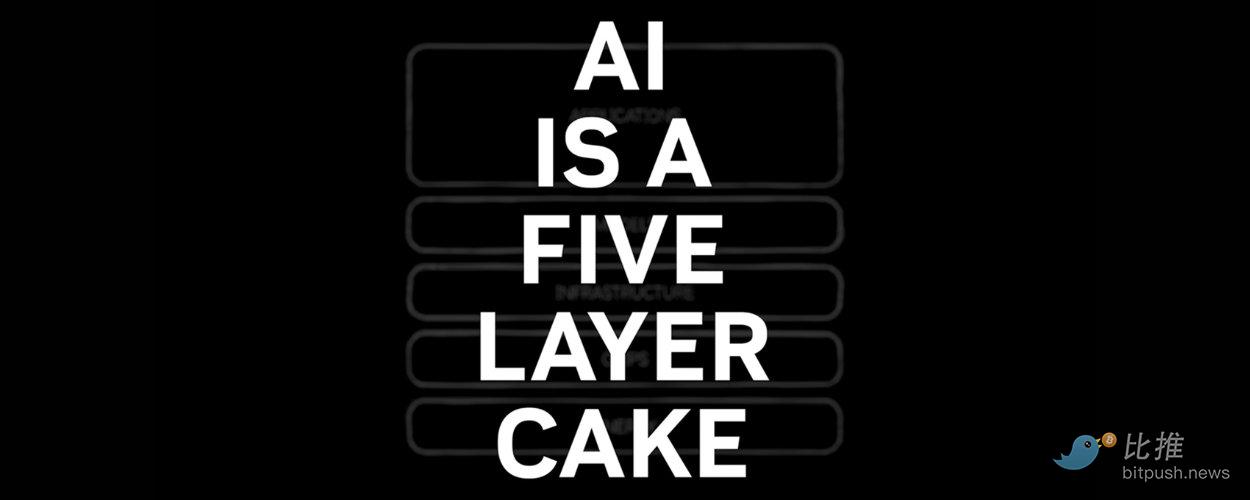
When you look at AI from an industrial perspective, it can be broken down into a five-layer stack.

Energy

The bottom layer is energy. Real-time generated intelligence requires real-time produced energy. Every generated token is the result of electrons moving, heat being managed, and energy being converted into computation. There is no abstraction layer below this. Energy is the first principle of AI infrastructure and the hard constraint on how much intelligence the system can produce.

Chips

Above energy are chips. These processors are designed to efficiently convert energy into computation at scale. AI workloads require massive parallelism, high-bandwidth memory, and fast interconnects. Advances in the chip layer determine how quickly AI can scale and how cheap intelligence can become.

Infrastructure

Above chips is infrastructure. This includes land, power delivery, cooling, buildings, networking, and systems that orchestrate tens of thousands of processors into a single machine. These systems are AI factories. They are not designed to store information. They are designed to manufacture intelligence.

Models

Above infrastructure are models. AI models understand multiple types of information: language, biology, chemistry, physics, finance, medicine, and the physical world itself. Language models are just one category. Some of the most transformative work is happening in protein AI, chemistry AI, physics simulation, robotics, and autonomous systems.

Applications

The top layer is applications, where economic value is created. Drug discovery platforms. Industrial robots. Legal assistants. Self-driving cars. A self-driving car is an AI application embodied in a machine. A humanoid robot is an AI application embodied in a body. Same stack. Different outcomes.

This is the five-layer cake:

Energy → Chips → Infrastructure → Models → Applications.

Every successful application pulls on every layer below it, all the way down to the power plant that sustain its life.

We are just beginning this construction. We have only invested a few hundred billion dollars. Trillions of dollars more in infrastructure need to be built.

Globally, we are seeing chip factories, computer assembly plants, and AI factories being built on an unprecedented scale. This is becoming the largest infrastructure construction in human history.

The workforce required to support this construction is immense. AI factories need electricians, plumbers, pipefitters, steelworkers, network technicians, installers, and operators.

These are skilled, well-paying jobs that are currently in high demand. You don't need a computer science PhD to participate in this transformation.

Meanwhile, AI is driving productivity across the entire knowledge economy. Take radiology as an example. AI now assists in reading scans, but the demand for radiologists is still growing. This is not a paradox.

The purpose of a radiologist is to care for patients. Reading scans is just one task. As AI takes on more routine work, radiologists can focus on judgment, communication, and care. Hospitals become more efficient. They serve more patients. They hire more staff.

Productivity creates capacity. Capacity creates growth.

What Changed in the Past Year?

Over the past year, AI crossed a significant threshold. Models became good enough for widespread use. Reasoning capabilities improved. Hallucinations decreased. Grounding improved significantly. For the first time, applications built on AI began to generate real economic value.

Applications in drug discovery, logistics, customer service, software development, and manufacturing have shown strong product-market fit. These applications strongly pull on every layer below them.

Open-source models play a key role here. Most models in the world are free. Researchers, startups, enterprises, and entire nations rely on open models to participate in the advancement of AI. When open models reach the frontier, they don't just change software. They activate demand across the entire stack.

DeepSeek-R1 is a powerful example. By making a powerful reasoning model widely available, it accelerates adoption at the application layer and increases demand for the training, infrastructure, chips, and energy beneath it.

What This Means

When you view AI as critical infrastructure, the implications become clear.

AI began with a transformer large language model. But it is far more than that. It is an industrial transformation reshaping how energy is produced and consumed, how factories are built, how work is organized, and how economies grow.

AI factories are being built because intelligence is now generated in real time. Chips are being redesigned because efficiency determines how quickly intelligence can scale. Energy becomes central because it sets the upper limit on how much intelligence can be produced. Applications are accelerating because the models beneath them have crossed the threshold of being useful at scale.

Each layer reinforces the others.

This is why the scale of construction is so vast. This is why it touches so many industries simultaneously. And this is why it will not be confined to a single country or a single domain. Every company will use AI. Every country will build it.

We are still in the early stages. Most of the infrastructure does not yet exist. Most of the workforce is not yet trained. Most of the opportunities have not yet been realized.

But the direction is clear.

AI is becoming the infrastructure of the modern world. And the choices we make now, how quickly we build, how broadly we participate, and how responsibly we deploy, will shape the character of this era.


Original link:https://www.bitpush.news/articles/7618907

Tiền kỹ thuật số thịnh hành

Câu hỏi Liên quan

QWhat are the five layers of the AI infrastructure stack according to Jensen Huang?

AThe five layers of the AI infrastructure stack are: Energy → Chips → Infrastructure → Models → Applications.

QWhy is energy considered the foundational layer of the AI stack?

AEnergy is the foundational layer because real-time generated intelligence requires real-time energy. Every generated token is a result of electrons moving, heat being managed, and energy being converted into computation. It is the hard constraint on how much intelligence the system can produce.

QHow does AI changed the traditional paradigm of pre-recorded software?

AAI broke the traditional paradigm by enabling computers to understand unstructured information (images, text, sounds) and reason about context and intent. It generates intelligence in real-time, creating new outputs on-demand based on the provided context, rather than just retrieving stored instructions.

QWhat role do open-source models play in the AI ecosystem as described in the article?

AOpen-source models are crucial because they allow researchers, startups, enterprises, and nations to participate in advanced AI development. When open models reach the frontier, they accelerate adoption at the application layer and increase demand for the entire underlying stack, including training, infrastructure, chips, and energy.

QWhat is the economic impact of AI on specialized fields like radiology, according to the article?

AIn fields like radiology, AI assists with routine tasks such as reading scans. This increases hospital efficiency and capacity, allowing professionals like radiologists to focus more on judgment, communication, and patient care. This productivity gain creates capacity, which in turn drives growth and leads to hiring more staff.

Nội dung Liên quan

Số người dùng hoạt động trên XRP Ledger gần chạm mốc 200,000

Số lượng người dùng hoạt động hàng ngày trên XRP Ledger đang tiến gần mốc 200.000, một trong những con số cao nhất trong những tháng gần đây, bất chấp việc giá XRP vẫn giao dịch dưới mức kháng cự kỹ thuật quan trọng. Dữ liệu trên chuỗi cho thấy hoạt động mạng đã tăng tốc bền vững vào nửa cuối tháng 7, vượt xa phạm vi 110.000-150.000 người dùng trước đó và cho thấy sự tham gia thực sự chứ không chỉ là giao dịch đầu cơ. Hoạt động gia tăng này thường phản ánh việc áp dụng blockchain rộng rãi hơn, thúc đẩy nhiều giao dịch, khối lượng thanh toán và thanh khoản cho các ứng dụng phi tập trung trên XRP Ledger. Tuy nhiên, về mặt giá cả, XRP vẫn đang vật lộn ở mức khoảng 1,07 USD, không thể vượt qua ngưỡng kháng cự 1,10 USD và vẫn nằm dưới các đường trung bình động 50 và 100 ngày. Cấu trúc kỹ thuật vẫn thiếu rõ ràng, cần một đợt bứt phá quyết định trên đường trung bình động 200 ngày (khoảng 1,21 USD) để củng cố triển vọng dài hạn. Tóm lại, trong khi các chỉ số cơ bản của mạng lưới cho thấy dấu hiệu cải thiện mạnh mẽ với số người dùng hoạt động tăng, thì động lực giá vẫn chưa theo kịp. Sự duy trì của cả hoạt động mạng cao và sự phục hồi về giá là chìa khóa để phản ánh đầy đủ sức mạnh nền tảng của XRP Ledger.

cryptonews.ru3 phút trước

Số người dùng hoạt động trên XRP Ledger gần chạm mốc 200,000

cryptonews.ru3 phút trước

Liệu iPhone có được sử dụng hiệu quả như một ví tiền điện tử?

Trong bối cảnh lo ngại về các cuộc tấn công lượng tử và lỗ hổng bảo mật trên ví phần cứng Coldcard, chủ đề bảo mật tiền điện tử lại được quan tâm. Chuyên gia ZachXBT trên Telegram bày tỏ sự nghi ngờ với các ví phần cứng chuyên dụng và cho rằng một chiếc iPhone cũ có thể là lựa chọn tốt hơn, mặc dù ý tưởng này không dành cho mọi người. Nhà phát triển chính của Tornado Cash, Roman Storm, đồng tình nhưng chỉ ra một thiếu sót quan trọng: thiếu ứng dụng di động thống nhất hỗ trợ cụm mật khẩu BIP39. Cụm mật khẩu BIP39 cung cấp một lớp bảo mật bổ sung tùy chọn. Storm cho rằng mối đe dọa thực sự là khi ai đó có mặt vật lý tại nhà bạn, và việc chuyển sang dùng iPhone riêng không giải quyết được vấn đề này. Ông kêu gọi các nhà cung cấp ví di động tích hợp hỗ trợ BIP39. Đồng thời, Storm lưu ý rằng hầu hết các thiết bị lưu trữ chuyên dụng như Trezor, Keystone, BitBox, Ledger và cả Coldcard đều hỗ trợ BIP39, khiến chúng vượt trội hơn iPhone trong cấu hình hiện tại. Tài khoản chính thức của Keystone và Danny Sanders từ Trezor bổ sung rằng iPhone, với tư cách là thiết bị đa năng hơn, có nhiều tính năng phụ khiến việc sử dụng nó làm ví đòi hỏi kiến thức kỹ thuật và kỷ luật bảo mật nghiêm ngặt.

cryptonews.ru16 phút trước

Liệu iPhone có được sử dụng hiệu quả như một ví tiền điện tử?

cryptonews.ru16 phút trước

Jim Cramer lên kế hoạch từ bỏ Bitcoin và cảnh báo công ty Quantum sắp tấn công tiền mã hóa này

Jim Cramer, người dẫn chương trình "Mad Money" của CNBC, thông báo kế hoạch bán toàn bộ Bitcoin của mình sau cuộc phỏng vấn với Chủ tịch IBM Arvind Krishna. Krishna cảnh báo máy tính lượng tử có thể phá vỡ mật mã hiện đại trong vòng 3-4 năm tới. Tuy nhiên, thị trường phản ứng ngược lại khi nhiều nhà giao dịch xem đây là tín hiệu mua vào, tiếp tục chiến lược "ngược Cramer". Giá Bitcoin vẫn ổn định quanh mức 63.764 USD. Mối lo ngại tập trung vào thuật toán mật mã ECDSA của Bitcoin. Máy tính lượng tử đủ mạnh có thể tính toán khóa riêng tư từ khóa công khai, đe dọa các địa chỉ đã tiết lộ khóa. Ước tính khoảng 30% tổng số Bitcoin (6-7 triệu BTC) thuộc nhóm này, chủ yếu nằm trong các ví cũ lâu không động. Các chuyên gia tranh cãi về thời gian cụ thể. Krishna dự đoán tác động thương mại từ 2028-2029, trong khi nhiều nhà nghiên cứu cho rằng mối đe dọa thực sự có thể xuất hiện vào những năm 2030 hoặc 2040. Dù vậy, sự tồn tại của rủi ro này đã được công nhận. Cramer nhiều lần thay đổi quan điểm về Bitcoin, khiến các tuyên bố của ông thường bị xem là chỉ báo tâm lý thị trường hơn là lời khuyên đầu tư.

cryptonews.ru18 phút trước

Jim Cramer lên kế hoạch từ bỏ Bitcoin và cảnh báo công ty Quantum sắp tấn công tiền mã hóa này

cryptonews.ru18 phút trước

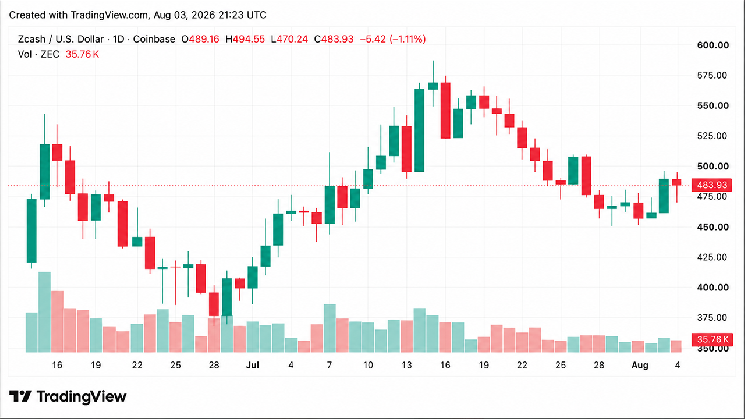
Giá ZEC vừa vượt mốc 490 USD – đây là lý do đằng sau đà tăng

Đồng ZEC (Zcash) đã tăng gần 5% vào chiều ngày 3/8, vượt mốc 490 USD và chạm gần 494 USD, giúp vốn hóa thị trường của nó vượt 8 tỷ USD. Đây là mức tăng trưởng hàng đầu trong tháng 8. Nguyên nhân chính của đà tăng vượt trội này là việc công ty Nym tích hợp nhóm bảo mật Ironwood của Zcash, cho phép thanh toán riêng tư đầu cuối cho các dịch vụ mạng bằng ZEC. Sự kiện này diễn ra trong bối cảnh ngành công nghiệp tiền mã hóa ngày càng chú trọng đến quyền riêng tư. Chuyên gia Will McEvoy nhận định quyền riêng tư là "biên giới cuối cùng" của tiền mã hóa, và công nghệ zero-knowledge (ZK) giờ đây đã sẵn sàng để thực hiện điều này, khác với Bitcoin vốn có tính minh bạch. Ngoài ra, Zcash cũng có tiến triển trong quản trị phi tập trung thông qua chương trình tài trợ RetroPGF, trao quyền quyết định cho cộng đồng nắm giữ đồng coin. Đà tăng của ZEC đã góp phần đưa tổng vốn hóa thị trường của các đồng coin tập trung vào riêng tư vượt 30 tỷ USD. Bên cạnh ZEC, một số đồng khác như NEAR, ZK, NOCK cũng tăng giá, trong khi ZANO, ZBT và đặc biệt là COTI (người dẫn đầu tuần trước) lại giảm mạnh.

cryptonews.ru18 phút trước

Giá ZEC vừa vượt mốc 490 USD – đây là lý do đằng sau đà tăng

cryptonews.ru18 phút trước

Giao dịch

Giao ngay

Bài viết Nổi bật

Làm thế nào để Mua LAYER

Chào mừng bạn đến với HTX.com! Chúng tôi đã làm cho mua Solayer (LAYER) trở nên đơn giản và thuận tiện. Làm theo hướng dẫn từng bước của chúng tôi để bắt đầu hành trình tiền kỹ thuật số của bạn.Bước 1: Tạo Tài khoản HTX của BạnSử dụng email hoặc số điện thoại của bạn để đăng ký tài khoản miễn phí trên HTX. Trải nghiệm hành trình đăng ký không rắc rối và mở khóa tất cả tính năng. Nhận Tài khoản của tôiBước 2: Truy cập Mua Crypto và Chọn Phương thức Thanh toán của BạnThẻ Tín dụng/Ghi nợ: Sử dụng Visa hoặc Mastercard của bạn để mua Solayer (LAYER) ngay lập tức.Số dư: Sử dụng tiền từ số dư tài khoản HTX của bạn để giao dịch liền mạch.Bên thứ ba: Chúng tôi đã thêm những phương thức thanh toán phổ biến như Google Pay và Apple Pay để nâng cao sự tiện lợi.P2P: Giao dịch trực tiếp với người dùng khác trên HTX.Thị trường mua bán phi tập trung (OTC): Chúng tôi cung cấp những dịch vụ được thiết kế riêng và tỷ giá hối đoái cạnh tranh cho nhà giao dịch.Bước 3: Lưu trữ Solayer (LAYER) của BạnSau khi mua Solayer (LAYER), lưu trữ trong tài khoản HTX của bạn. Ngoài ra, bạn có thể gửi đi nơi khác qua chuyển khoản blockchain hoặc sử dụng để giao dịch những tiền kỹ thuật số khác.Bước 4: Giao dịch Solayer (LAYER)Giao dịch Solayer (LAYER) dễ dàng trên thị trường giao ngay của HTX. Chỉ cần truy cập vào tài khoản của bạn, chọn cặp giao dịch, thực hiện giao dịch và theo dõi trong thời gian thực. Chúng tôi cung cấp trải nghiệm thân thiện với người dùng cho cả người mới bắt đầu và người giao dịch dày dạn kinh nghiệm.

Tổng lượt xem 634Xuất bản vào 2025.02.11Cập nhật vào 2026.06.02

Làm thế nào để Mua LAYER

Thảo luận

Chào mừng đến với Cộng đồng HTX. Tại đây, bạn có thể được thông báo về những phát triển nền tảng mới nhất và có quyền truy cập vào thông tin chuyên sâu về thị trường. Ý kiến ​​của người dùng về giá của LAYER (LAYER) được trình bày dưới đây.

活动图片