Japan Regulators Target Crypto Deals In Real Estate With New Guidance

bitcoinistXuất bản vào 2026-04-29Cập nhật gần nhất vào 2026-04-29

In response to the growing adoption of crypto in real estate, four Japanese regulatory authorities have issued joint guidance outlining compliance requirements to mitigate money laundering risks in property transactions.

Authorities Issue Crypto Guidance For Real Estate Industry

On Tuesday, Japan’s Financial Services Agency (FSA), in collaboration with the Ministry of Land, Infrastructure, Transport and Tourism, the National Police Agency, and the Ministry of Finance, published a joint guidance request that major industry bodies must follow when utilizing crypto assets in real estate transactions.

The request, addressed to key associations from the two industries, warned about the potential risks posed by real estate deals using digital assets, affirming that “given the nature of crypto assets, which can be transferred across borders instantaneously, there is a high risk that they will be used as a settlement method in real estate transactions for money laundering and other illicit activities.”

Therefore, Japanese regulators advised real estate firms conducting crypto transactions to strictly enforce Know Your Customer (KYC) procedures and source-of-funds verifications under the Act on Prevention of Transfer of Criminal Proceeds.

They also requested firms notify regulators and law enforcement upon discovering unlicensed transactions or unusual fund flows. In addition, it explained that cross-border crypto asset receipts and payments exceeding 30 million yen are subject to reporting obligations:

Furthermore, from the perspective of understanding these actual conditions, the Foreign Exchange and Foreign Trade Act (Act No. 228 of 1949) stipulates that: (1) any person who receives cryptocurrency or similar assets from overseas in an amount exceeding the equivalent of 30 million yen must submit a “Report on Payment or Receipt of Payment”; and (2) in cases where a non-resident acquires real estate or similar assets located in Japan, a “Report on the Acquisition of Real Estate or Rights Thereof Located in Japan.

Notably, the guidance request explicitly stated that activities involving the exchange of crypto assets for fiat currency or brokerage services on behalf of clients may constitute crypto asset exchange operations, adding that conducting such operations without proper registration carries the risk of legal violations.

Japan’s Digital Asset Landscape

This month, Japan amended its Financial Instruments and Exchange Act (FIEA) to classify crypto assets as financial instruments. As reported by Bitcoinist, digital assets in Japan have been regulated by the Payment Services Act, which focuses on digital money and transactions rather than investment activities.

If passed, the amended law would move crypto out of the payments category and bring it into the same framework as stocks and other securities. The reclassification will require issuers to file annual disclosures, bringing them closer in line with publicly listed companies.

Additionally, the legislation will impose substantial penalties on individuals engaged in illicit activities. For instance, unlicensed crypto operators would face prison sentences ranging from three to ten years.

Fines would be increased from ¥3 million, around $18,800, to ¥10 million, roughly $62,600. Meanwhile, insider trading would also be explicitly banned under the new framework, a prohibition that did not exist under the Payment Services Act.

Notably, Japanese authorities have been working to restructure how crypto assets are treated in the country, with the government also backing a tax reform plan to introduce a separate system for different transactions.

The outline of the 2026 Tax Reform, released last December, proposed changing the current progressive tax system, in which digital asset gains can be taxed at up to 55%, to a system like the one used for stocks, with a flat 20% tax on crypto income.
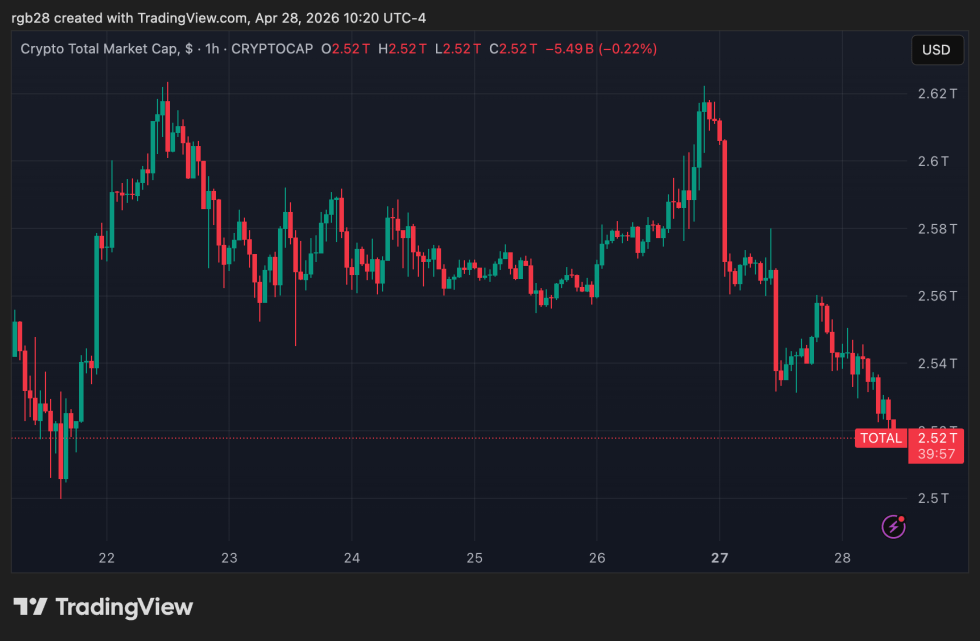
The total crypto market capitalization is at $2.52 trillion in the one-week chart. Source: TOTAL on TradingView
Nội dung Liên quan

Giải Phóng Token Trong Tuần: KAITO Giải Phóng Lượng Token Lên Đến 7.6% Lượng Lưu Hành

**Tuần này: Giải phóng Token KAITO (7.6% lưu thông) & LayerZero** **1. KAITO (KAITO)** * **Lượng giải phóng:** 32.59 triệu token. * **Giá trị (ước tính):** Khoảng 12.71 triệu USD. * **Tỷ lệ lưu thông tăng:** ~7.6%. * **Dự án:** Nền tảng thông tin Web3 điều khiển bằng AI, tập trung tổng hợp dữ liệu từ mạng xã hội và diễn đàn quản trị để cung cấp tìm kiếm thời gian thực, phân tích tâm lý và theo dõi xu hướng. * **Lộ trình giải phóng:** Có sẵn trong biểu đồ đính kèm bài viết gốc. **2. LayerZero (ZRO)** * **Lượng giải phóng:** 25.72 triệu token. * **Giá trị (ước tính):** Khoảng 20.19 triệu USD. * **Dự án:** Giao thức khả năng tương tác đa chuỗi (omnichain), được thiết kế để truyền tin nhắn xuyên chuỗi nhẹ, đáng tin cậy và có thể cấu hình. * **Lộ trình giải phóng:** Có sẵn trong biểu đồ đính kèm bài viết gốc. **Tóm tắt:** Tuần này chứng kiến đợt giải phóng token đáng chú ý từ hai dự án. KAITO sẽ bổ sung lượng token lớn vào nguồn cung lưu thông, trong khi LayerZero tiếp tục lộ trình giải phóng token theo kế hoạch. Nhà đầu tư nên lưu ý đến tác động tiềm năng của việc tăng nguồn cung lên thị trường.

marsbit1 giờ trước

Giải Phóng Token Trong Tuần: KAITO Giải Phóng Lượng Token Lên Đến 7.6% Lượng Lưu Hành

marsbit1 giờ trước

Bitcoin đạt 1 triệu USD vào năm 2030 là ‘không thể xảy ra về mặt toán học’ theo Markus Thielen

Markus Thielen, người đứng đầu bộ phận nghiên cứu tại 10x Research, tuyên bố dự đoán Bitcoin đạt 1 triệu USD vào năm 2030 là "bất khả thi về mặt toán học". Ông lập luận rằng để đạt mức giá đó, Bitcoin cần thu hút thêm khoảng 15 nghìn tỷ USD vốn trong bốn năm tới, tương đương 25% tổng giá trị thị trường chứng khoán Mỹ chuyển vào Bitcoin – một điều khó xảy ra. Thielen chỉ ra rằng tâm lý nhà đầu tư bán lẻ có thể trở nên dè dặt hơn khi giá Bitcoin tăng cao, vì nhiều người muốn sở hữu trọn vẹn một Bitcoin thay vì một phần nhỏ. Ông cũng cảnh báo rằng chu kỳ phục hồi lần này có thể chậm hơn và việc đạt mức đỉnh lịch sử mới (126.000 USD) không hề dễ dàng. Dự báo 1 triệu USD từng được các nhân vật nổi tiếng như CEO Coinbase Brian Armstrong ủng hộ, nhưng Thielen cho rằng đây thường là những tuyên bố gây chú ý truyền thông và có thể gây hại cho nhà đầu tư nhỏ lẻ vì tạo ra kỳ vọng không thực tế. Theo ông, cần một sự kiện tín dụng lớn hoặc biến động cực đoan toàn cầu thì Bitcoin mới có thể chạm ngưỡng đó.

cointelegraph3 giờ trước

Bitcoin đạt 1 triệu USD vào năm 2030 là ‘không thể xảy ra về mặt toán học’ theo Markus Thielen

cointelegraph3 giờ trước

Grayscale Dự Báo Ethereum và Solana Sẽ Trở Nên Khan Hiếm Hơn

Grayscale dự báo Ethereum và Solana sẽ trở nên khan hiếm hơn do các thay đổi tokenomics có thể được thực hiện. Nhà nghiên cứu Zach Pandl cho rằng cả hai blockchain này đang xem xét sửa đổi giao thức để giảm tốc độ phát hành token mới hàng năm. Theo phân tích, nếu các thay đổi được thông qua, lạm phát nguồn cung hàng năm của Ethereum và Bitcoin có thể chỉ còn khoảng 0,4% vào năm 2031, trong khi Solana là khoảng 1,1%. Con số này thấp hơn so với tốc độ tăng nguồn cung vàng (1,8%) và lạm phát giá tiêu dùng Mỹ (3,3%). Việc giảm phát hành token sẽ ảnh hưởng trực tiếp đến phần thưởng staking, vì chúng được trả bằng token mới. Tuy nhiên, sự khan hiếm hơn có thể tạo áp lực tăng giá cho tài sản. Do đó, người nắm giữ không stake có thể hưởng lợi, trong khi kết quả cho staker sẽ phụ thuộc vào sự đánh đổi giữa phần thưởng thấp hơn và giá token tăng tiềm năng. Cộng đồng Solana được cho là ủng hộ các đề xuất thay đổi rộng rãi hơn so với Ethereum. Song song đó, mạng lưới Solana tiếp tục phát triển cơ sở hạ tầng và chứng kiến khối lượng tài sản token hóa tăng mạnh, từ 2,69 tỷ USD lên 5,7 tỷ USD trong nửa đầu năm 2026.

cryptonews.ru3 giờ trước

Grayscale Dự Báo Ethereum và Solana Sẽ Trở Nên Khan Hiếm Hơn

cryptonews.ru3 giờ trước

Giao dịch

Giao ngay
活动图片