It's 2026, DAOs Should Have Matured by Now

marsbitXuất bản vào 2026-01-29Cập nhật gần nhất vào 2026-01-29

Tóm tắt

The year 2025 marked a pivotal turning point for DAOs, shifting from idealistic experiments to a more mature hybrid model that balances decentralized oversight with operational efficiency. Key trends include a move away from pure community governance towards structures with clearer operational control, as seen with Arbitrum's OpCo and Uniswap's DUNI framework. While voter participation declined, voting power became more concentrated among active delegates. A major development was the focus on value accumulation for token holders through mechanisms like buybacks, fee switches, and burns, addressing a critical flaw in previous tokenomics. Significant conflicts, such as those at Gnosis and Aave, forced DAOs to confront issues of accountability and structural flaws. Looking ahead to 2026, key trends will include: the formalization of legal structures becoming necessary; governance evolving into risk management infrastructure; the decline of purely governance-focused tokens in favor of those with value capture; increased professional delegation; and the growing role of privacy, AI for decision fatigue, and futarchy markets. This evolution represents a maturation of the space, moving towards more effective and accountable organizations where growth benefits token holders and all participants are held responsible.

Author: Pink Brains

Compiled by: Deep Tide TechFlow

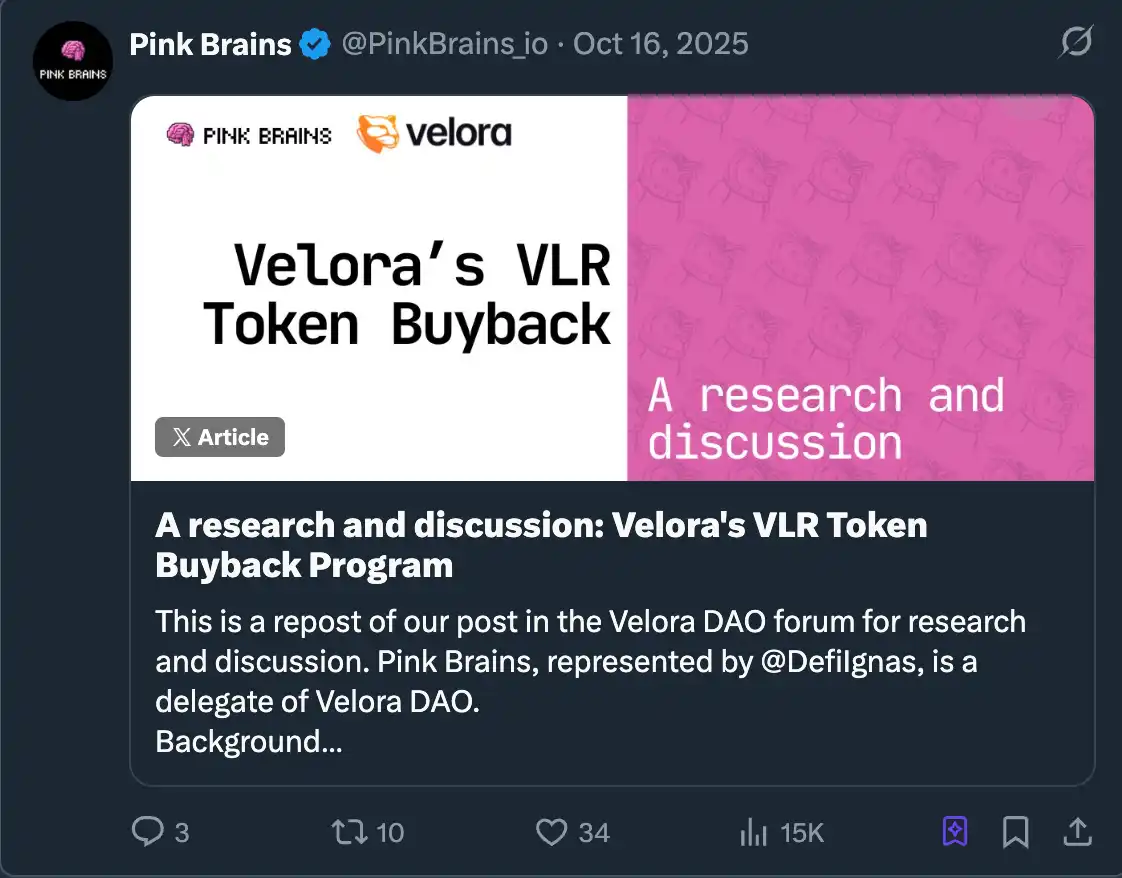
Deep Tide Intro: 2025 was a critical inflection point for decentralized governance (DAO). After years of idealistic experimentation, mainstream protocols began to seriously address core pain points such as power distribution, accountability mechanisms, and sustainability. This article, written by seasoned DAO delegate Pink Brains, draws from the practical experience of casting 725 votes within top protocols like Aave, Lido, and Gnosis, offering an in-depth analysis of the shift in DAOs from 'community autonomy' to a 'hybrid operation' model.

The author points out that governance tokens alone are no longer sustainable. The future of DAOs will evolve towards economic alignment, legal entity formation, and AI-assisted decision-making. This is not just a review of governance but also a prophecy for the evolution of Web3 organizational structures in 2026.

Full Text Below:

2025 marked a turning point for decentralized governance.

After years of experimentation, major protocols began to confront fundamental questions about power distribution, accountability, and sustainability.

The answers weren't always pleasant, but they were necessary.

What We Achieved in 2025

2025 was also the first year of our operation as an active DAO Delegate.

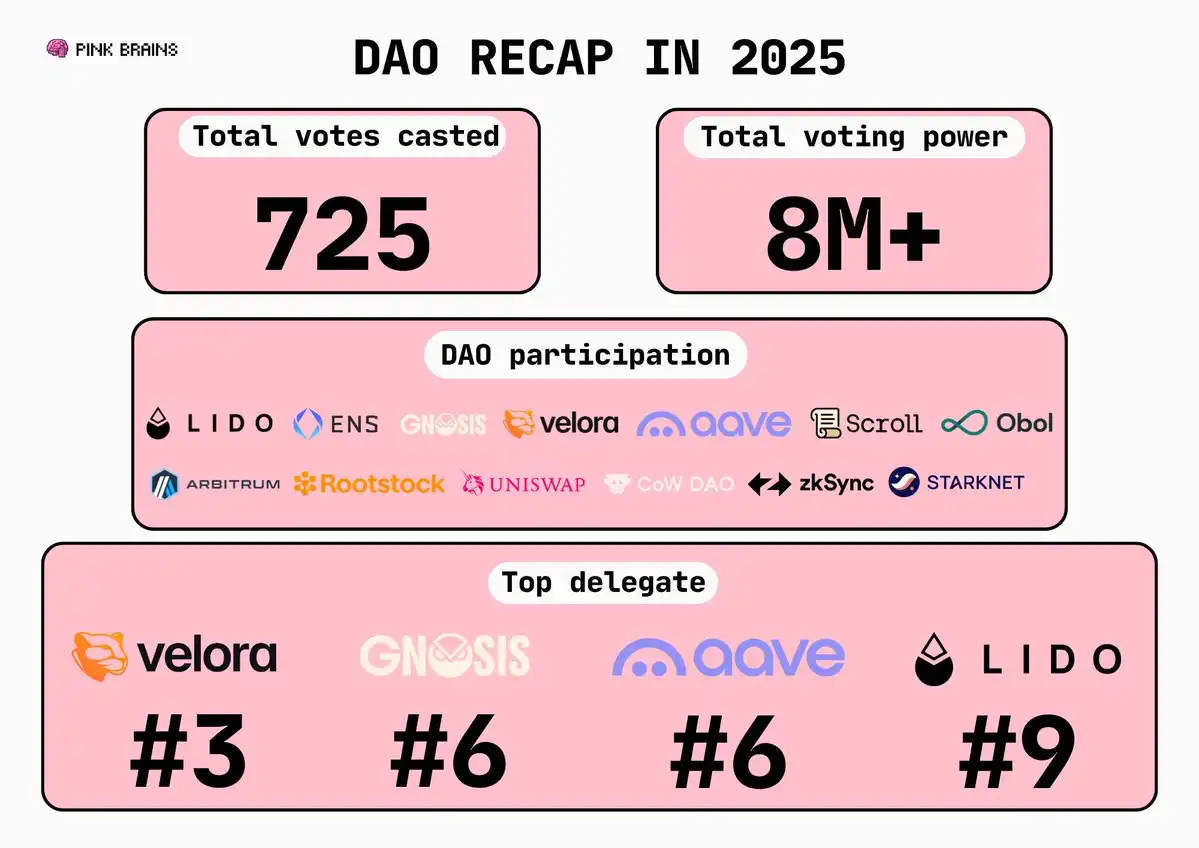
  • Cast 725 votes across 18 protocols
  • Held voting power exceeding 8 million
  • Top 10 delegate in Aave and Lido
  • Top 3 delegate in Velodrome
  • Top 6 delegate in Gnosis

This perspective, grounded in practical governance work, allowed us to clearly observe the patterns reshaping DAOs in 2025 and define their trajectory entering 2026.

Changes in DAOs in 2025

Shift in Operational Model: From Pure Community Governance to Hybrid Control

The most significant change in 2025 was the shift from purely community governance towards hybrid models with clearer operational control.

  • @arbitrum introduced an Operating Company (OpCo), channeling all DAO operations through a unified structure.
  • @JupiterExchange completely paused governance for nearly six months to reassess its approach.
  • @Uniswap launched the DUNI framework, centralizing operational authority.
  • The @Gnosis DAO executed a hard fork amidst reduced community engagement. Scroll transitioned to a CEO-led structure.
  • @Scroll_ZKP paused its DAO, shifting focus to centralized governance.
  • Recently, the Celo Foundation merged with @cLabs into a unified core contributor organization.
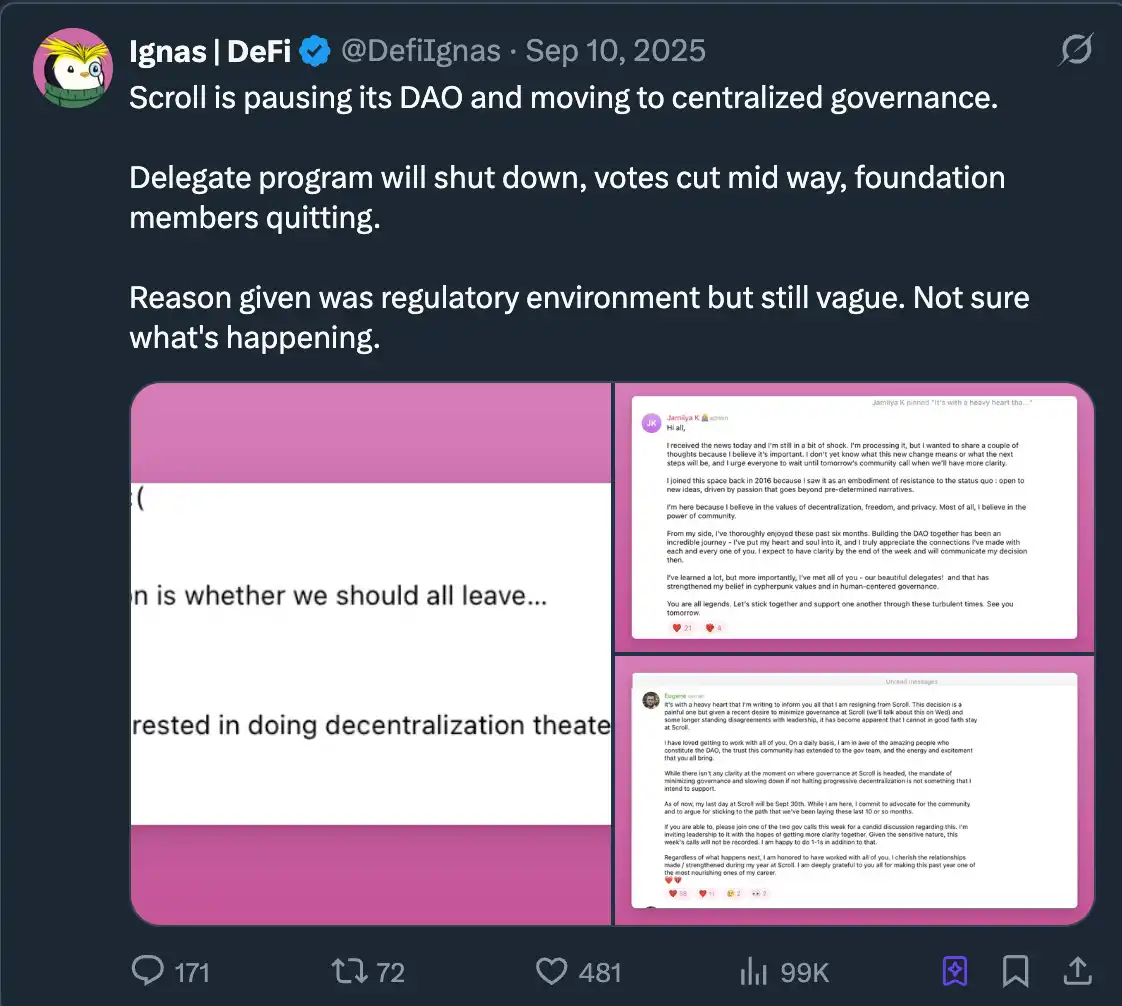
The motivation for this shift was DAOs hitting scaling limits. Execution became the bottleneck. Community-wide votes were often too slow for operations, too noisy for technical nuances, and too vulnerable for security-sensitive actions.

Consequently, governance power is concentrating towards smaller, high-context groups, while the broader community shifts towards an oversight role, as reflected in the next section.

Fewer Voters, But More Concentrated Power

In 2025, the number of proposals and voter participation dropped significantly across major DAOs. However, the voting power behind each proposal remained strong.

  • Lido saw an increase in participation after adopting a dual governance framework.
  • Arbitrum and Uniswap still had the highest overall participation, but the number of voters decreased for both.
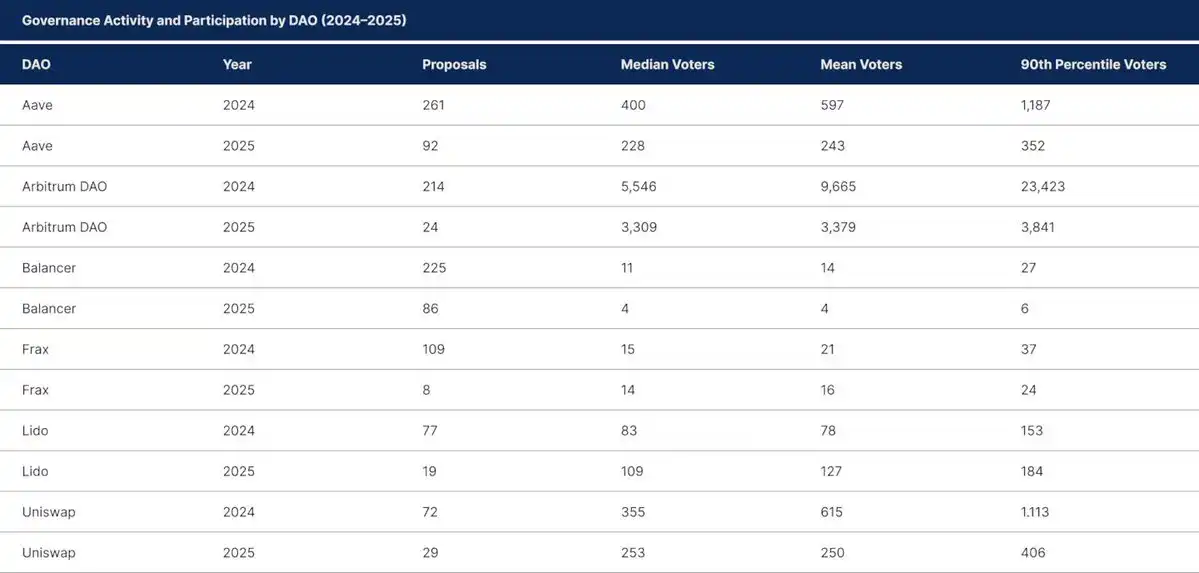
Caption: From DeFiLlama's State of DeFi 2025 Report

This does not signal the failure of governance. Instead, governance is becoming more bundled, more operationally abstract, and less frequent.

Governance influence migrated to a small number of highly active Delegates and large capital participants.

Value Accrual for Token Holders

"Token buyback", "buyback and burn", and "fee switch" became central themes in 2025.
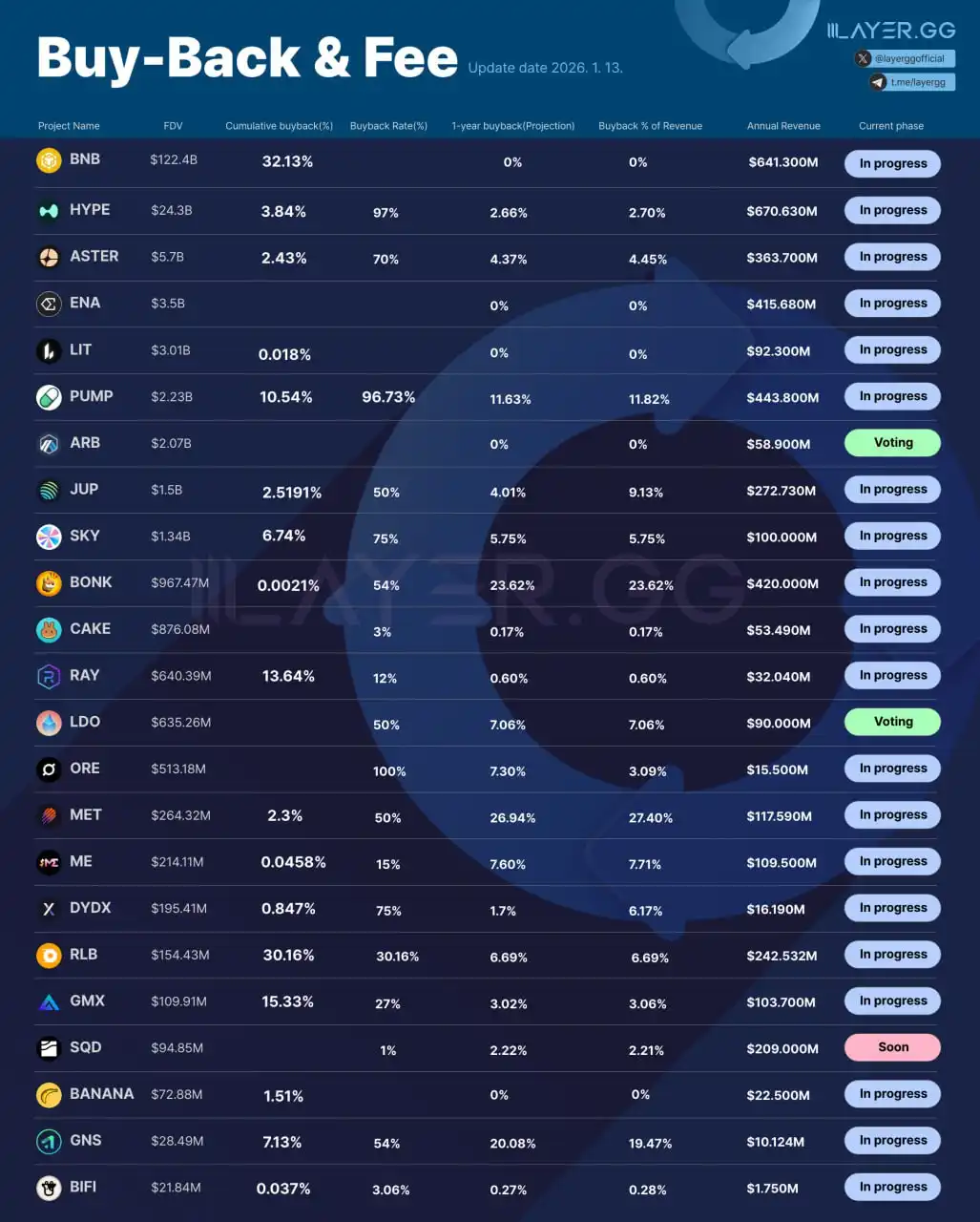
For years, token utility revolved around voting rights and incentive distribution, but offered minimal economic value to token holders. 2025 changed this equation.

  • Lido adopted a buyback framework.
  • Uniswap DAO activated the long-awaited fee switch, pledging to burn nearly $600 million worth of UNI tokens.
  • Aave implemented a token buyback mechanism. Optimism launched a buyback program.
  • CoW Protocol increased solver profitability in a way that benefits token holders.

This trend addresses a key challenge in tokenomics. Buybacks and burns reduce circulating supply, making the token more scarce. If demand remains stable, the price strengthens. When token holders can truly benefit from the protocol's success, they are more incentivized to buy, hold, and participate in governance decisions long-term.

Who Really Owns the DAO?

Two major controversies forced DAOs to confront structural flaws.

  • Gnosis voted to terminate Karpatkey's treasury mandate due to fee disputes, underperformance, and a ~$700k loss related to liquidity issues.
  • Tensions flared between Aave DAO and Aave Labs when it was discovered that approximately $10 million annually in swap fees from the CoW Swap integration were flowing to Aave Labs instead of the DAO. A vote on brand ownership failed, and the controversy left a harder question: what does "DAO-owned" really mean when the core team controls development and distribution?

These conflicts forced protocols to patch holes in accountability and governance structures.

Legal Infrastructure is Adapting to DAOs

Despite DeFi's growth, most DAOs still lack clear legal structures, creating increasing liability and regulatory risks as protocols scale.

While jurisdictions like Wyoming have introduced DAO LLC frameworks, and Switzerland offers mature legal pathways, most DAOs remain in a legal gray area.

2026 Trend Predictions

Centralized DAO as a New Practice

Protocols will develop clear frameworks to delineate "community decisions" from "operational decisions," moving beyond the false binary of "fully decentralized" or "fully centralized."

  • Operational Execution: Will be handled by Labs teams, not foundations.
  • Community Oversight: DAO delegates and the community will be responsible for treasury strategy, long-term direction, and major structural decisions.

Governance Shifts to Risk Management Infrastructure

The DAO of the future will look less like a forum full of chatter. More teams will bifurcate decisions into concave decisions and convex decisions.

Concave problems require:

  • Pre-approved guardrails and automated execution.
  • Professional oversight (risk services, auditors, security teams).
  • Rapid response frameworks for emergencies and market shocks.
  • Fewer proposals, but each decision carries higher economic impact.

Convex problems (like product direction) require decisive leadership, where the DAO acts as a "brake" or "checkpoint," not the "steering wheel."

By 2026, this will be standard for lending, stablecoins, perps, and any protocol where financial risk can compound quickly.

The End of Governance Tokens? Value Capture Must Be Built

Continuing into 2026, tokens with only governance functions will struggle to maintain long-term engagement.

Delegates, whales, and strategic holders will not consistently protect the system without a visible upside. Protocols will increasingly adopt at least one value accrual path:

  • Token buyback frameworks.
  • Fee diversion or revenue sharing.
  • Staking tied to protocol cash flows.
  • Treasury strategies aimed at supporting the token's value.

When holders gain economically from the protocol's success, they are incentivized to stay attentive, participate, and protect the system.
Legal Structures Shift from Optional to Necessary

Regulatory pressure and real-world legal challenges will push DAOs towards formal entity formation, seeking a balance between decentralized governance and legal clarity.

Professional Delegation

As governance complexity increases, token holders will increasingly delegate to full-time professional delegates. While this concentrates voting power, it may improve decision quality. Meanwhile, weaker delegate institutions that cannot financially sustain themselves will fold, as governance work becomes more professional, political, and costly.
Privacy, AI & Futarchy

Public governance is a social game. When every vote is public, decisions are influenced by reputation, pressure, and alliances, not purely the protocol's best interest. Therefore, governance privacy will become more important in the future.

AI will address decision fatigue. It can assist in analyzing proposals and auto-voting on routine upgrades based on user-defined preferences, requiring human intervention only for disputes or significant impact.

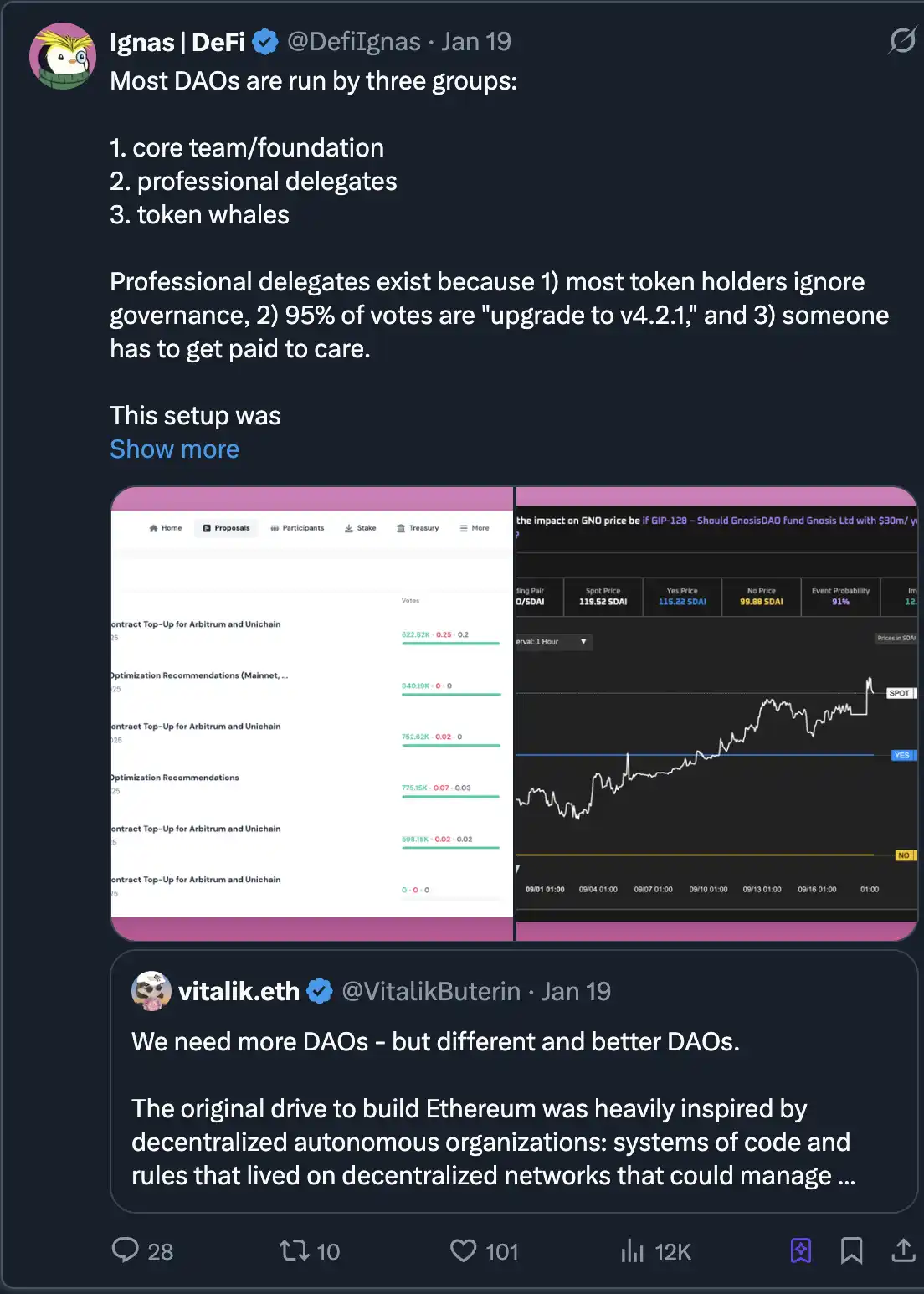
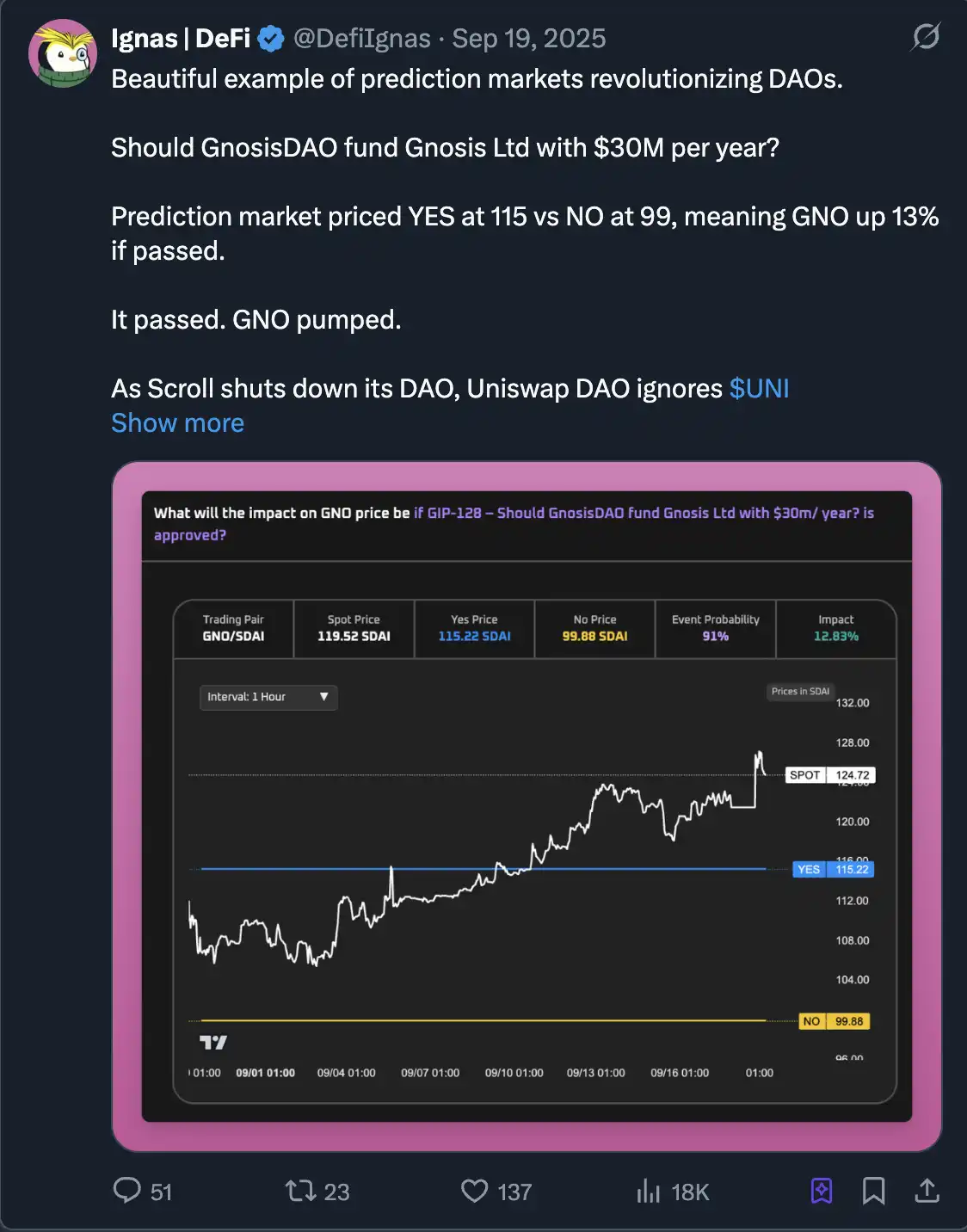
Futarchy markets will also play a larger role in DAOs. They let market signals predict which option might create value. Gnosis is testing this model, using retail prediction markets to reflect sentiment on proposals.
Crypto is Maturing, and So Are DAOs

The shifts we see in DAO operations, economic alignment, accountability conflicts, and professionalization represent maturation, not the end of DAOs.

DAOs are evolving from ideological experiments into organizational structures that balance "decentralized oversight" with "proven operational efficiency." We believe DAO governance becomes more meaningful if teams can align with community interests: moving fast when action is needed, letting growth benefit token holders, and holding all participants—core teams and delegates alike—accountable.

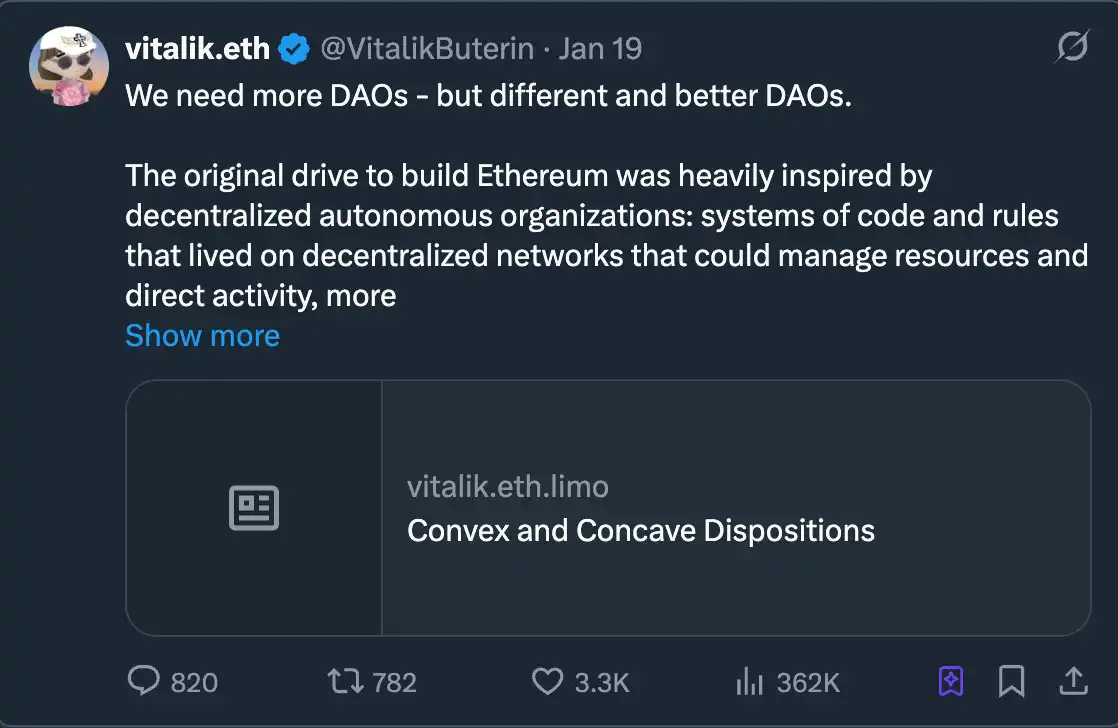
As Vitalik said: We need more DAOs, but different and better ones.
If you believe in the value of DAOs, we can be your voice.

Effective delegation is more than just casting a vote; it means doing the actual work: reading proposals, staying active on forums, understanding risks, and voting against bad decisions even when it's not popular.

This is how we operate as delegates: through clear communication and educational content, helping protocols grow while staying aligned with community incentives.


Câu hỏi Liên quan

QWhat was the most significant shift in DAO operational models in 2025 according to the article?

AThe most significant shift was the transition from pure community governance to hybrid models with clearer operational control, where governance power was concentrated into smaller, high-context groups while the broader community shifted to a supervisory role.

QHow did the trend of 'value accumulation for token holders' manifest in major protocols in 2025?

AIt manifested through mechanisms like token buybacks, burns, and fee switches. For example, Lido adopted a buyback framework, Uniswap DAO activated its fee switch to burn nearly $600 million worth of UNI, and Aave and Optimism implemented token buyback programs.

QWhat two major controversies forced DAOs to confront their structural flaws in 2025?

AThe first was Gnosis voting to terminate Karpatkey's treasury mandate due to fee disputes, underperformance, and a $700,000 loss. The second was the conflict between Aave DAO and Aave Labs over approximately $10 million in annual swap fees from a CoW Swap integration that went to the Labs instead of the DAO.

QWhat is one key prediction for DAO governance in 2026 regarding decision-making?

AGovernance will shift towards risk management infrastructure, where decisions are split into 'concave decisions' (requiring pre-approved guardrails, professional oversight, and fast response frameworks) and 'convex decisions' (requiring decisive leadership with the DAO acting as a brake or checkpoint).

QWhy does the article suggest that 'governance privacy' will become more important in the future?

ABecause public governance is a social game where decisions can be influenced by reputation, pressure, and alliances rather than the protocol's best interest. Privacy in governance can help mitigate these influences and lead to more objective decision-making.

Nội dung Liên quan

43 phút của Trump: Cốt truyện người mạnh mất kiểm soát, chiến tranh truyền thông leo thang

Trong bài diễn văn kéo dài 43 phút sau hơn một tuần vắng bóng công chúng, Tổng thống Mỹ Donald Trump đã cố gắng thể hiện hình ảnh một nhà lãnh đạo mạnh mẽ và kiểm soát. Tuy nhiên, phần lớn thời gian được dành cho các chủ đề phụ như hồ phản chiếu trên National Mall, so sánh quy mô đám đông với Martin Luther King Jr., cùng những lời công kích nhắm vào phóng viên, đảng Dân chủ và các thành phố lớn. Ông còn ký sắc lệnh hành pháp hủy bỏ các biện pháp bảo vệ việc làm cho hàng nghìn công chức cấp cao liên bang, một động thái có thể gia tăng sự phụ thuộc vào lòng trung thành cá nhân hơn là năng lực chuyên môn trong chính phủ. Bài viết nêu bật trạng thái cá nhân đầy lo lắng và phòng thủ của Trump, thể hiện qua việc ông đột ngột kết thúc sự kiện và nhân viên nhanh chóng dọn dẹp hiện trường. Tác giả cũng phân tích cuộc tấn công của Trump vào nữ phóng viên CNN, Kaitlan Collins, coi đó là một phần của nỗ lực làm mất uy tín giới truyền thông. Bài báo cảnh báo về áp lực ngày càng lớn từ quyền lực chính trị và lợi ích thương mại lên các cơ quan báo chí chính thống, dẫn đến cuộc khủng hoảng về tính độc lập biên tập, như trường hợp Scott Pelley của CBS. Thông điệp chính kêu gọi công chúng ủng hộ các nhà báo và phương tiện truyền thông độc lập, những người được coi là lực lượng quan trọng duy trì sự thật khi các thể chế khác bị xâm phạm. Bài viết kết thúc với viễn cảnh lạc quan khi đề cập đến việc Hạ viện, với sự ủng hộ của một số thành viên đảng Cộng hòa, đã thông qua nghị quyết yêu cầu chấm dứt hành động quân sự ở Iran, cho thấy sự bất đồng ngày càng tăng ngay trong nội bộ đảng của Trump.

marsbit3 giờ trước

43 phút của Trump: Cốt truyện người mạnh mất kiểm soát, chiến tranh truyền thông leo thang

marsbit3 giờ trước

Kalshi, MTS và tham vọng của a16z

Trí tuệ thị trường dự đoán và tham vọng "Truyền thông Mới" của a16z Bài viết phân tích sự trỗi dậy của thị trường dự đoán (prediction markets), đặc biệt là công ty Kalshi được định giá 220 tỷ USD, dưới góc nhìn chiến lược đầu tư và truyền thông của quỹ mạo hiểm a16z. Tác giả điểm lại lịch sử tư tưởng của thị trường dự đoán, từ học thuyết của Hayek về việc thị trường tổng hợp tri thức phân tán, đến cơ chế khuyến khích của Robin Hanson (LMSR) và ý tưởng chính phủ dựa trên dự đoán (Futarchy). Trọng tâm bài viết nằm ở việc a16z, sau khi đầu tư vào Kalshi, đã định vị lại giá trị cốt lõi của thị trường dự đoán không chỉ là sòng bạc hay sàn giao dịch, mà là một phương tiện truyền thông mới mang lại "cảm giác hiện diện" (presence). Trong một thế giới ngày càng bị che khuất và bất lực, việc dùng tiền thật để đặt cược vào các sự kiện toàn cầu giúp cá nhân tái khẳng định vai trò "người quan sát tối thượng", can thiệp và diễn giải thực tại. Kalshi, theo logic này, sẽ trở thành nơi định đoạt tính xác thực và tầm quan trọng của sự kiện. Bài viết liên kết điều này với tầm nhìn "Truyền thông Mới" của a16z – một hệ thống truyền thông toàn diện từ định hình luận điệu, tài trợ, phát hành sản phẩm đến thu hút khách hàng với tốc độ và cường độ chưa từng có, nhằm "tiếp quản dòng thời gian". Ví dụ điển hình là MTS (Monitoring The Situation), một hãng truyền thông chuyên phát sóng tin tức 24/7 trên Twitter. Kết luận cho rằng sức hút thực sự của Kalshi và lý do định giá khổng lồ của nó nằm ở "trường lực bẻ cong hiện thực" – khả năng tạo ra một thực tại thay thế có sức thuyết phục cao nhờ vào khối lượng giao dịch bằng tiền thật, từ đó trở thành một mảnh ghép quyền lực trong đế chế truyền thông mới của a16z.

marsbit5 giờ trước

Kalshi, MTS và tham vọng của a16z

marsbit5 giờ trước

Bất Ngờ: Cựu Nhân Sự Trụ Cột Trong Dự Án Chip Của OpenAI Gia Nhập Anthropic

Chuyên gia chip "nhân viên số 002" của OpenAI, Clive Chan, vừa thông báo rời OpenAI để gia nhập Anthropic. Anh là một trong những thành viên sớm nhất của đội ngũ phát triển chip tự thiết kế của OpenAI, tham gia từ giai đoạn hình thành đến nay. Dù đánh giá cao đội ngũ chip tại OpenAI, Clive Chan chia sẻ anh luôn có mong muốn "chinh phục một ngọn núi mới từ chân núi", đó là lý do anh chuyển sang Anthropic. Tại Anthropic, anh ấn tượng với năng lực, giá trị cốt lõi và tham vọng của đội ngũ, đồng thời trải nghiệm cường độ làm việc rất cao. Khi được hỏi về tiến độ dự án chip của OpenAI, Clive Chan đề cập đến thông tin hợp tác công khai giữa OpenAI và Broadcom, với kế hoạch triển khai bắt đầu từ nửa cuối năm 2026. Clive Chan có kinh nghiệm làm việc tại nhiều công ty công nghệ hàng đầu như Tesla, Google, SpaceX trước khi gia nhập OpenAI vào đầu năm 2024. Việc chuyển đổi của anh là một ví dụ nữa cho thấy dòng chảy nhân tài đáng chú ý giữa OpenAI và Anthropic, sau sự kiện nhà nghiên cứu nổi tiếng Andrej Karpathy chuyển sang Anthropic hồi tháng 5. Động thái này càng thu hút sự chú ý khi Anthropic vừa hoàn thành vòng gọi vốn với định giá gần 1.000 tỷ USD.

marsbit5 giờ trước

Bất Ngờ: Cựu Nhân Sự Trụ Cột Trong Dự Án Chip Của OpenAI Gia Nhập Anthropic

marsbit5 giờ trước

a16z chuyển hướng toàn cầu hóa: VC đang trở thành "động lực thúc đẩy" của liên minh công nghệ Mỹ

Biên tập: Thông báo của Ben Horowitz cho thấy một bước chuyển quan trọng trong chiến lược toàn cầu hóa của a16z: họ không chỉ tìm kiếm dự án ở nước ngoài hay mở rộng đầu tư quốc tế, mà còn đặt mình vào khuôn khổ cạnh tranh công nghệ và hợp tác đồng minh rộng lớn hơn. Trong bối cảnh AI, robot, công nghệ quốc phòng, an ninh mạng và tái cấu trúc chuỗi cung ứng trở thành trọng tâm cạnh tranh quốc gia, con đường quốc tế hóa của startup trở nên phức tạp hơn. A16z đang phản ứng với sự thay đổi này thông qua việc thành lập văn phòng Tokyo, bổ nhiệm Anne Neuberger phụ trách các vấn đề toàn cầu, và nâng cấp nhóm quan hệ nhà đầu tư thành nhóm đối tác toàn cầu. Tín hiệu quan trọng nhất là a16z gắn kết mạng lưới toàn cầu của mình với năng lực lãnh đạo công nghệ của "Mỹ và các đồng minh". Đối với a16z, mạng lưới đầu tư mạo hiểm trong tương lai không chỉ giúp nhà sáng lập gọi vốn, tuyển dụng, bán hàng mà còn hỗ trợ họ tiếp cận thị trường trọng điểm, kết nối với chính phủ và các tổ chức chiến lược, cũng như hiểu rõ môi trường chính sách và quy định của các quốc gia khác nhau. Điều này có nghĩa vai trò của các tổ chức đầu tư mạo hiểm hàng đầu đang được định nghĩa lại. Họ không còn chỉ là trung gian vốn, mà là người tổ chức kết nối công ty khởi nghiệp, năng lực quốc gia, nguồn lực ngành, hệ thống đồng minh và vốn toàn cầu. Chiến lược toàn cầu hóa lần này của a16z có thể được xem như một sự chủ động định vị của vốn Silicon Valley trong cuộc cạnh tranh công nghệ toàn cầu mới.

marsbit5 giờ trước

a16z chuyển hướng toàn cầu hóa: VC đang trở thành "động lực thúc đẩy" của liên minh công nghệ Mỹ

marsbit5 giờ trước

Kalshi, MTS và Tham vọng của a16z

Bài viết phân tích tầm quan trọng của thị trường dự đoán (prediction markets), tập trung vào Kalshi, và tầm nhìn của quỹ đầu tư mạo hiểm a16z trong việc xây dựng một đế chế truyền thông mới. Tác giả điểm qua lịch sử tư tưởng đằng sau thị trường dự đoán, từ lý thuyết của Hayek về việc thị trường tổng hợp tri thức phân tán, đến cơ chế khuyến khích của Robin Hanson (LMSR) và ý tưởng "Futarchy". Trọng tâm bài viết là việc a16z đầu tư mạnh vào Kalshi (định giá 220 tỷ USD) và cách họ diễn giải giá trị cốt lõi của nó: mang lại "cảm giác hiện diện" (presence). Trong một thế giới mà con người ngày càng thụ động và xa cách với thực tại, thị trường dự đoán cho phép họ tham gia tích cực bằng cách dùng tiền thật để đặt cược vào các sự kiện, từ đó cảm thấy mình là người quan sát và dự báo lịch sử. a16z coi đây là mảnh ghép quan trọng cho tham vọng "truyền thông mới" của họ - một hệ thống toàn diện từ định hình narrative, tài trợ sản phẩm, đến tiếp cận khách hàng với tốc độ cực cao, nhằm "tiếp quản dòng thời gian". Công ty truyền thông MTS (Monitoring The Situation) là một ví dụ điển hình cho triết lý này. Bài viết kết luận rằng sức mạnh thực sự của Kalshi và thị trường dự đoán nằm ở "trường lực bẻ cong hiện thực" - khả năng định nghĩa tính xác thực và tầm quan trọng của sự kiện thông qua khối lượng giao dịch bằng tiền thật, từ đó giành được quyền giải thích tối cao về tương lai, một thứ quyền lực hiếm khi nằm trong tay một công ty tư nhân.

链捕手5 giờ trước

Kalshi, MTS và Tham vọng của a16z

链捕手5 giờ trước

Giao dịch

Giao ngay
Hợp đồng Tương lai
活动图片