Hyperliquid to Launch Portfolio Margin: A Game-Changer or a Double-Edged Sword?

marsbitXuất bản vào 2025-12-16Cập nhật gần nhất vào 2025-12-16

Tóm tắt

Hyperliquid, a leading Perp DEX, is introducing portfolio margin on its testnet, a significant upgrade aimed at professional and institutional traders. This system unifies users' spot and perpetual accounts, calculating margin requirements based on net risk exposure rather than summing individual positions. It rewards hedging strategies by freeing up capital, potentially improving efficiency by over 30%, as seen in traditional finance. This move signals Hyperliquid's strategic shift towards courting capital-efficient institutional players, offering benefits like a unified account for seamless trading, automatic yield on idle assets, and a theoretical 3.35x increase in leverage. It aims to support complex strategies like delta-neutral trading and arbitrage, potentially improving liquidity and tightening spreads. However, the system amplifies risks inherent in DeFi's lender-of-last-resort absence. Higher efficiency means losses and liquidations can accelerate more quickly. In extreme market conditions, correlated crashes could cause hedges to fail simultaneously, rapidly expanding risk exposure. Furthermore, the liquidation of a large, leveraged unified account could trigger a multi-asset fire sale, potentially creating a cascading liquidation spiral across connected markets and even impacting integrated lending protocols within Hyperliquid's HyperEVM ecosystem. This innovation is a high-stakes gamble on attracting institutions and a severe test for DeFi's resilience.

Author: Jae, PANews

When Perp DEXs (decentralized perpetual contract exchanges) attempt to replicate Wall Street practices, a more efficient margin system could unleash both profits and risks.

The Perp DEX sector has become the most fiercely contested battlefield. While most players are still competing on fees and UI, leading protocol Hyperliquid has quietly raised its sights, targeting more professional institutional users.

On December 15, Hyperliquid announced the launch of a portfolio margin system, which is already live on the testnet. This is not merely a simple feature update but a fundamental restructuring of the capital efficiency and risk logic of on-chain derivatives trading, aiming to attract market makers and high-frequency trading institutions who have been 'spoiled' by CEXs (centralized exchanges).

However, in the DeFi market, which lacks a lender of last resort, higher efficiency often means greater risk. When a unified account is liquidated with one click during extreme market conditions, it could trigger an on-chain liquidation tsunami sweeping across multiple markets.

Capital Efficiency Can Increase by 30%, Boosting Hyperliquid's Institutional Transformation

Portfolio margin systems have existed on CEXs for years. The portfolio margin system launched by Hyperliquid is fundamentally different from common cross-margin or isolated margin modes. In standard cross-margin mode, the overall margin requirement for a portfolio is typically just the sum of the margin requirements for each independent position, failing to recognize the risk-hedging effects between positions.

In contrast, the portfolio margin system will unify a user's spot and perpetual contract accounts, adopting a settlement mechanism based on net risk exposure, setting margin requirements against the net risk of the entire portfolio.

This essentially rewards risk hedgers, freeing up capital from redundant collateral. For portfolios holding both long and short positions in the same underlying asset, due to the risk offsetting effect between positions, the overall margin requirement for the portfolio will be far lower than the sum calculated based on independent positions. Data from CEXs has long confirmed that portfolio margin systems can improve capital efficiency by over 30%. Industry insiders claim that a certain CEX known for its derivatives saw its trading volume double after introducing a portfolio margin system.
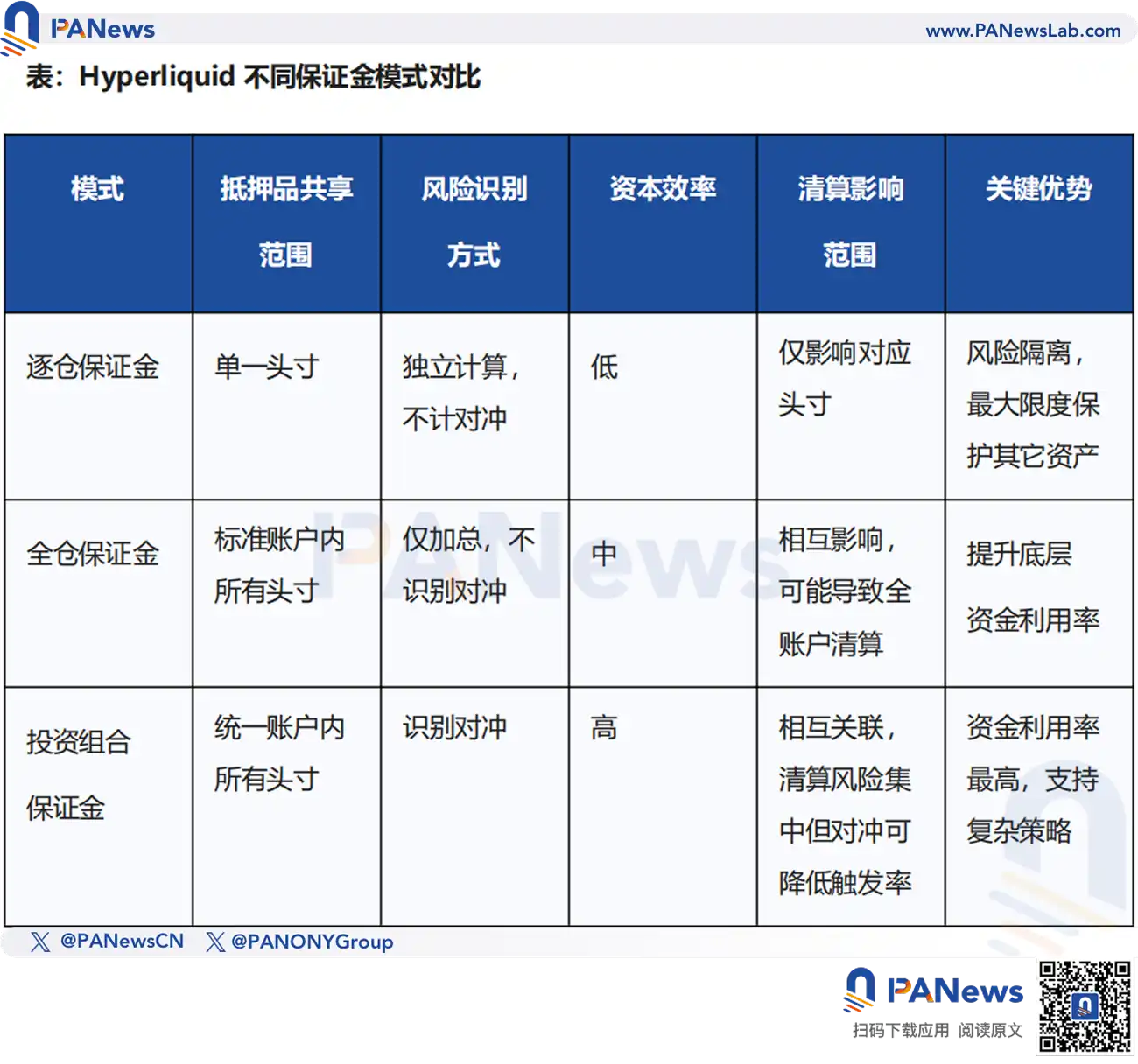
For Hyperliquid, launching this mechanism is a signal of its strategic shift: from competing for retail traffic to targeting the institutionally-focused market, which is extremely sensitive to capital efficiency. The portfolio margin system is also a crucial bargaining chip for Hyperliquid in the intense competition within the Perp DEX sector, aiming to attract market makers and high-frequency trading institutions by improving capital utilization.

However, Hyperliquid has shown a relatively cautious approach to developing the portfolio margin system. It will be launched in the Pre-Alpha phase on the testnet to ensure the robustness of the new feature. Currently, users can only borrow USDC, and the HYPE token is designated as the sole collateral.

This is, in fact, a risk-minimized launch path. The protocol validates the model with a single asset while strategically increasing the utility of the HYPE token, providing early liquidity bootstrapping and economic incentives for its native L1 ecosystem.

Hyperliquid officials stated that as the system matures, it will gradually expand the supported assets, including introducing USDH and BTC as collateral assets.

In the long run, Hyperliquid's portfolio margin system is highly scalable. It can not only extend to new asset classes through HyperCore but also support the creation of on-chain strategies. This suggests that the portfolio margin system may become the cornerstone for complex arbitrage and yield strategies within the HyperEVM ecosystem, injecting more vitality into the on-chain derivatives trading landscape.

Theoretical Leverage Capacity Increases 3.35x, Supporting Institutional-Grade Strategy Execution

The appeal of Hyperliquid's portfolio margin system will manifest in three dimensions, building an institutional-grade product closed-loop model:

  1. Seamless Trading Experience with Unified Account: Institutions will no longer need to manually allocate funds across multiple sub-accounts like spot and perpetual contracts. All assets are managed synchronously within a unified account, significantly simplifying operational processes, eliminating the friction and time loss of fund transfers, thereby reducing operational costs and improving the efficiency of high-frequency trading strategy execution.
  2. Automatic Yield Generation on Idle Assets: The portfolio margin system will also optimize the yield structure. Idle collateral will automatically generate interest within the system and can even be used as collateral to support short positions in perpetual contracts or execute arbitrage trades and other strategies, further optimizing the asset's income potential, achieving a "single asset, multiple utilities" capital stacking effect.
  3. Qualitative Leap in Leverage Capacity: Referring to similar systems in U.S. stock markets, the leverage multiple available to qualified investors can theoretically be increased by up to 3.35 times. This will also provide richer tool choices for institutions seeking larger nominal exposure and higher capital turnover rates.

In short, Hyperliquid can support not just a single strategy, but an institutional-grade strategy matrix. Strategies like long-short hedging, spot-futures arbitrage, and options combinations all require an optimized margin system as their foundation. However, executing similar strategies on-chain currently comes at a significant cost.

By attracting large institutions, Hyperliquid's on-chain order book is also expected to gain considerable trading depth, narrowing bid-ask spreads, further enhancing its competitiveness as an institutional-grade trading venue, creating a positive flywheel effect.

Behind Efficiency: Failed Hedges Can Morph into Liquidation Spirals

However, higher efficiency always resonates with greater risk. Especially in the DeFi market, which lacks a final backstop, portfolio margin could become an amplifier of systemic risk.

The primary risk lies in the potential for amplified losses and accelerated liquidations. While the portfolio margin system reduces requirements, it also means losses can be magnified equally. Although margin requirements decrease due to the offsetting effect of hedging positions, if the market moves adversely against the entire portfolio, user losses could rapidly exceed expectations.

The characteristic of the portfolio margin system is to concentrate all risk into a unified account for net settlement. But once the market experiences an irrational broad sell-off, causing less correlated assets to fall in unison, hedging strategies could fail instantly, leading to a rapid expansion of risk exposure. Compared to standard modes, the margin call mechanism for unified accounts typically requires traders to top up their margin in a much shorter time frame. In the highly volatile crypto market, a significantly compressed top-up window greatly increases the risk that users cannot deposit funds on-chain in time, leading to forced liquidation.

A deeper systemic risk is that the portfolio margin system could weave a web of cascading liquidations. The closing of positions in a unified account typically has a multi-market impact. When a highly leveraged unified account is liquidated, the system needs to simultaneously close all its involved spot and derivative positions. This type of large-scale, multi-asset automated selling can create immense pressure on multiple related markets within a short period, further depressing underlying prices, causing more accounts to fall below their maintenance margin requirements, thereby triggering a cascade of forced liquidations—a algorithm-driven liquidation spiral is thus formed.
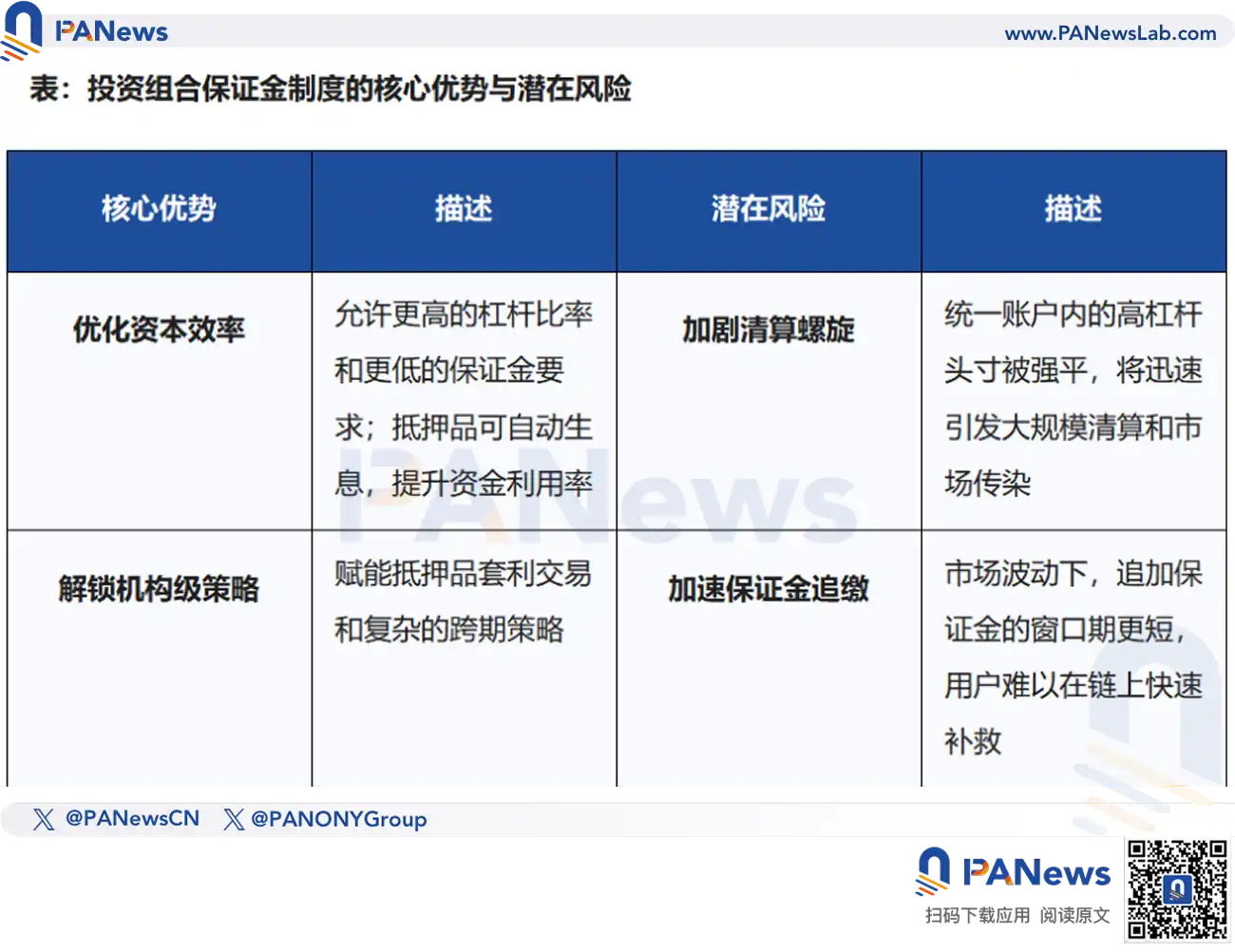
Equally important to note is that Hyperliquid's portfolio margin system will be deeply integrated with lending protocols within its HyperEVM ecosystem. The inherent interconnectedness of DeFi legos often has a strong risk传导 effect. This means that a sharp drop in the price of the underlying collateral could not only trigger liquidations at the trading layer on Hyperliquid but also spread through the collateral chain to the lending market, causing large-scale liquidity dry-ups or credit freezes.

Portfolio margin, this old path Wall Street has walked for decades, Hyperliquid is attempting to retrace it with blockchain code. It is Hyperliquid's bold gamble to advance into the institutional market, and it will also be an ultimate test of the DeFi system's resilience.


Tiền kỹ thuật số thịnh hành

Câu hỏi Liên quan

QWhat is the main feature Hyperliquid is introducing, and what is its primary purpose?

AHyperliquid is introducing a portfolio margin system. Its primary purpose is to increase capital efficiency for users, particularly targeting institutional traders, by allowing risk offset across positions in a unified account, thereby reducing the total margin requirement and freeing up capital.

QHow does Hyperliquid's portfolio margin system differ from traditional cross-margin models?

AUnlike traditional cross-margin models that simply sum the margin requirements of each independent position, Hyperliquid's portfolio margin system uses a net risk exposure-based settlement mechanism. It recognizes the hedging effect between positions (e.g., long and short positions on the same underlying asset), significantly lowering the overall margin requirement for the portfolio.

QWhat are the potential benefits for institutional traders using Hyperliquid's new system?

AThe benefits include: 1) A seamless trading experience with a unified account for spot and perpetual contracts, simplifying operations. 2) Automatic yield generation on idle collateral assets. 3) A theoretical increase in leverage capability by up to 3.35x, supporting complex strategies like hedging, arbitrage, and options strategies.

QWhat are the key risks associated with implementing a portfolio margin system in DeFi?

AThe key risks are: 1) Amplified losses and accelerated liquidation if the market moves against the entire portfolio, especially if correlated assets move together and hedging fails. 2) The potential for a systemic 'liquidation spiral,' where the forced liquidation of a large, leveraged unified account could trigger multi-market sell-offs, impacting prices and causing cascading liquidations across the platform and connected DeFi protocols.

QHow is Hyperliquid mitigating risks during the initial rollout of its portfolio margin feature?

AHyperliquid is taking a cautious approach by launching the feature in a Pre-Alpha phase on its testnet. Initially, it will only support borrowing USDC and using the HYPE token as the sole collateral asset. This minimizes risk by testing the model with a single asset and also helps bootstrap liquidity for its native L1 ecosystem. The plan is to gradually add more assets like USDH and BTC as the system matures.

Nội dung Liên quan

Sau Meme, "Lộ trình sinh tồn" của Quỹ Solana

Tác giả: ChandlerZ, Foresight News Quỹ Solana đang tuyển dụng cho năm vị trí cấp cao, tập trung vào stablecoin, AI, thể chế châu Á và DeFi, nhưng không liên quan đến Meme. Điều này phản ánh sự chuyển hướng chiến lược, khi Solana đối mặt với thách thức từ việc phụ thuộc quá nhiều vào Meme. Báo cáo quý II/2026 cho thấy giá trị kinh tế thực của Solana giảm 43%, doanh thu ứng dụng giảm 31% - mức thấp nhất kể từ đầu 2024. Meme (đặc biệt là Pump.fun) vẫn chiếm tới 39% doanh thu ứng dụng, nhưng tốc độ tăng trưởng đang chậm lại. Tuy nhiên, khối lượng giao dịch tài sản được token hóa (cổ phiếu) trên Solana đạt kỷ lục 5,8 tỷ USD, tăng 114%, chủ yếu nhờ sự kiện SpaceX lên sàn. Điều này cho thấy nhu cầu thanh toán và giải quyết giao dịch thực sự đang tăng, mặc dù chưa đóng góp đáng kể vào doanh thu vì mô hình phí thấp. Năm vị trí tuyển dụng nhắm vào việc khai thác các nhu cầu phi đầu cơ này: - **Stablecoin & DeFi**: Tạo hình thức có thể tính phí từ dòng tiền và hoạt động cho vay. - **Thể chế châu Á (Nhật Bản, Đại Trung Hoa)**: Mở rộng quan hệ với ngân hàng và cơ quan quản lý để thu hút lượng lớn. - **AI**: Phát triển các kênh thanh toán stablecoin theo lượng sử dụng cho tác nhân AI - lĩnh vực được kỳ vọng tạo doanh thu. Tóm lại, Solana đang ở ngã ba đường: doanh thu từ đầu cơ (Meme) đang giảm, trong khi nhu cầu từ thanh toán và giải quyết giao dịch thực tế đang tăng. Kế hoạch "tăng trưởng đột phá" của Quỹ nhằm biến tiềm năng thứ hai thành nguồn doanh thu bền vững. Thành công sẽ được đo lường bằng việc tỷ trọng doanh thu từ Pump.fun giảm và sự xuất hiện của các dự án thuộc lĩnh vực mới trong top doanh thu.

marsbit3 phút trước

Sau Meme, "Lộ trình sinh tồn" của Quỹ Solana

marsbit3 phút trước

Cơ quan thực thi pháp luật tuyên bố luật CLARITY giúp đỡ tội phạm. Đại diện ngành công nghiệp cho rằng họ sai

Các cơ quan thực thi pháp luật Hoa Kỳ, đứng đầu là Hiệp hội Cảnh sát trưởng Quốc gia (NSA), đã nhiều lần cảnh báo rằng Đạo luật CLARITY có nguy cơ giúp đỡ tội phạm. Họ cho rằng Điều khoản 604 của dự luật, hay "Đạo luật về Tính chắc chắn trong Quy định Blockchain", tạo ra lỗ hổng lớn. Điều khoản này bảo vệ các nhà phát triển phần mềm phi lưu ký (non-custodial) nhưng theo các cơ quan, cách diễn đạt quá rộng có thể cho phép các tổ chức thực sự nắm giữ tài sản hoặc hỗ trợ rửa tiền lách luật, làm suy yếu các tiêu chuẩn "Biết khách hàng của bạn" (KYC) và chống rửa tiền (AML) so với các tổ chức tài chính truyền thống. Ngược lại, Hiệp hội Blockchain bác bỏ mạnh mẽ quan điểm này. Giám đốc Chiến lược của hiệp hội, bà Lindsey Frazier, gọi đó là "sự hiểu nhầm cơ bản", khẳng định Điều 604 chỉ nhằm ngăn việc phân loại sai các nhà phát triển phần mềm phi lưu ký thành nhà cung cấp dịch vụ chuyển tiền, và nó "không cấp miễn trừ cho tội phạm", cũng không cản trở việc truy tố các tội như rửa tiền. Cuộc tranh cãi này trở thành một vấn đề then chốt khi Thượng viện sắp bỏ phiếu thông qua dự luật. Đáng chú ý, không phải tất cả cộng đồng thực thi pháp luật đều phản đối. Tổ chức Lãnh đạo Thực thi Pháp luật Người da đen Quốc gia (NOBLE) đã ủng hộ toàn bộ dự luật, trong khi Hiệp hội Cảnh sát trưởng Các Hạt Lớn của Mỹ (MCSA) đã chuyển từ phản đối sang lập trường trung lập về Điều 604 sau các cuộc đàm phán làm rõ. Sự bất đồng này làm nổi bật cuộc đối đầu giữa quan ngại về an toàn công cộng và nhu cầu thúc đẩy đổi mới công nghệ trong lĩnh vực tài chính phi tập trung (DeFi).

cryptonews.ru13 phút trước

Cơ quan thực thi pháp luật tuyên bố luật CLARITY giúp đỡ tội phạm. Đại diện ngành công nghiệp cho rằng họ sai

cryptonews.ru13 phút trước

Giá token GRAM lao dốc ngay lập tức sau khi Telegram bị gỡ khỏi App Store

Mã token GRAM (trước đây là Toncoin/TON) đã giảm mạnh vào đêm ngày 3 tháng 8, ngay sau khi Telegram bị xóa tạm thời khỏi App Store. Token gốc của hệ sinh thái TON, có mối liên hệ chặt chẽ với nền tảng nhắn tin của Pavel Durov, đã lao dốc gần 6% trong thời điểm đó. Telegram không có mặt trên App Store trong khoảng một giờ. Apple giải thích rằng họ đã phát hiện nội dung vi phạm lệnh cấm đối với tài liệu liên quan đến bóc lột tình dục trẻ em trên nền tảng. Sau khi nhà phát triển nhanh chóng xóa nội dung bị cấm và chặn người dùng đã đăng nó, ứng dụng nhắn tin đã được khôi phục hoàn toàn. Sau khi Telegram trở lại App Store, giá GRAM đã phần nào phục hồi. Trước sự kiện, token dao động quanh mức 1,41 USD và sau đó giảm xuống 1,32 USD. Đến 12:30 ngày 4/8 (giờ Moscow), token được giao dịch quanh mức 1,38 USD, giảm 1% trong ngày. Đội ngũ Telegram đã bình luận ngắn gọn về tình huống, phản hồi bằng cách diễn giải lại câu nói của Mark Twain: "Những tin đồn về cái chết của tôi đã bị thổi phồng quá mức". GRAM không phản ứng với tất cả tin tức liên quan đến Telegram hoặc Durov. Token đã tăng 20% trong đợt đổi tên vào tháng 6 nhưng nhanh chóng mất giá trở lại. Tin tức về việc Durov bị cáo buộc hỗ trợ khủng bố ở Nga và có thể bị truy nã quốc tế hầu như không ảnh hưởng đến giá. Tuy nhiên, thông báo gần đây của Durov về việc triển khai "ví tiền điện tử không giám sát lớn nhất trong lịch sử loài người" trên TON trong mùa hè này đã khiến GRAM tăng 7%. GRAM đạt mức cao nhất mọi thời đại là 8,24 USD vào mùa hè năm 2024 và kể từ đó đã giảm khoảng 83%. Mức giá hiện tại tương đồng với các mức quan sát được trong giai đoạn 2021-2023.

cryptonews.ru14 phút trước

Giá token GRAM lao dốc ngay lập tức sau khi Telegram bị gỡ khỏi App Store

cryptonews.ru14 phút trước

Tại Anchorage hé lộ kế hoạch bảo vệ khỏi các mối đe dọa lượng tử

Ngân hàng tiền mã hóa được quản lý Anchorage Digital đã công bố chiến lược chuẩn bị tài sản thể chế cho thời kỳ hậu lượng tử. Tổ chức này cũng tuyên bố triển khai bảo vệ lai (hybrid) cho các kết nối TLS nội bộ. Rủi ro chính đối với tiền mã hóa nằm ở chữ ký số: thuật toán Shor về lý thuyết có thể tính toán khóa riêng tư từ khóa công khai đã biết. Anchorage nhấn mạnh rằng máy tính lượng tử là một quá trình di cư, không phải một thời điểm. Anchorage cho biết Bitcoin của khách hàng được bảo vệ tốt hơn nhờ sử dụng địa chỉ dựa trên hàm băm của khóa công khai, chỉ tiết lộ khóa khi giao dịch được gửi đi. Công ty cũng áp dụng thực hành giảm thiểu tái sử dụng địa chỉ. Về kết nối TLS, thiết bị của nhân viên chạy ChromeOS đã sử dụng cơ chế trao đổi khóa hậu lượng tử. Một phần quan trọng khác là sử dụng các mô-đun bảo mật phần cứng (HSM) để lưu trữ và xử lý khóa mật mã, đồng thời đang triển khai và thử nghiệm các thuật toán hậu lượng tử. Anchorage đề xuất cơ chế "Post-Quantum Turnstile" để chuyển tài khoản cũ sang khóa hậu lượng tử, sử dụng bằng chứng không tiết lộ thông tin (STARK) để xác nhận quyền sở hữu mà không tiết lộ khóa bí mật cũ. Cách tiếp cận này được cho là có thể áp dụng cho khoảng hai phần ba số coin đang lưu hành. Ngoài ra, Anchorage đã mở mã nguồn thư viện sqisign-rs, một triển khai thuật toán chữ ký số SQIsign trên Rust, được cho là tạo ra chữ ký nhỏ hơn khoảng 7 lần so với Falcon. Báo cáo trước đây từ Glassnode ước tính khoảng 6 triệu BTC có thể gặp rủi ro từ các cuộc tấn công lượng tử do đã tiết lộ khóa công khai. Các nhà phát triển Quantus cũng từng chỉ ra thị trường tiền mã hóa chưa sẵn sàng cho việc chuyển đổi sang mật mã hậu lượng tử.

cryptonews.ru37 phút trước

Tại Anchorage hé lộ kế hoạch bảo vệ khỏi các mối đe dọa lượng tử

cryptonews.ru37 phút trước

Giao dịch

Giao ngay

Bài viết Nổi bật

Làm thế nào để Mua O

Chào mừng bạn đến với HTX.com! Chúng tôi đã làm cho mua O1 exchange (O) trở nên đơn giản và thuận tiện. Làm theo hướng dẫn từng bước của chúng tôi để bắt đầu hành trình tiền kỹ thuật số của bạn.Bước 1: Tạo Tài khoản HTX của BạnSử dụng email hoặc số điện thoại của bạn để đăng ký tài khoản miễn phí trên HTX. Trải nghiệm hành trình đăng ký không rắc rối và mở khóa tất cả tính năng. Nhận Tài khoản của tôiBước 2: Truy cập Mua Crypto và Chọn Phương thức Thanh toán của BạnThẻ Tín dụng/Ghi nợ: Sử dụng Visa hoặc Mastercard của bạn để mua O1 exchange (O) ngay lập tức.Số dư: Sử dụng tiền từ số dư tài khoản HTX của bạn để giao dịch liền mạch.Bên thứ ba: Chúng tôi đã thêm những phương thức thanh toán phổ biến như Google Pay và Apple Pay để nâng cao sự tiện lợi.P2P: Giao dịch trực tiếp với người dùng khác trên HTX.Thị trường mua bán phi tập trung (OTC): Chúng tôi cung cấp những dịch vụ được thiết kế riêng và tỷ giá hối đoái cạnh tranh cho nhà giao dịch.Bước 3: Lưu trữ O1 exchange (O) của BạnSau khi mua O1 exchange (O), lưu trữ trong tài khoản HTX của bạn. Ngoài ra, bạn có thể gửi đi nơi khác qua chuyển khoản blockchain hoặc sử dụng để giao dịch những tiền kỹ thuật số khác.Bước 4: Giao dịch O1 exchange (O)Giao dịch O1 exchange (O) dễ dàng trên thị trường giao ngay của HTX. Chỉ cần truy cập vào tài khoản của bạn, chọn cặp giao dịch, thực hiện giao dịch và theo dõi trong thời gian thực. Chúng tôi cung cấp trải nghiệm thân thiện với người dùng cho cả người mới bắt đầu và người giao dịch dày dạn kinh nghiệm.

Tổng lượt xem 673Xuất bản vào 2026.06.19Cập nhật vào 2026.06.29

Làm thế nào để Mua O

Làm thế nào để Mua PROS

Chào mừng bạn đến với HTX.com! Chúng tôi đã làm cho mua Pharos (PROS) trở nên đơn giản và thuận tiện. Làm theo hướng dẫn từng bước của chúng tôi để bắt đầu hành trình tiền kỹ thuật số của bạn.Bước 1: Tạo Tài khoản HTX của BạnSử dụng email hoặc số điện thoại của bạn để đăng ký tài khoản miễn phí trên HTX. Trải nghiệm hành trình đăng ký không rắc rối và mở khóa tất cả tính năng. Nhận Tài khoản của tôiBước 2: Truy cập Mua Crypto và Chọn Phương thức Thanh toán của BạnThẻ Tín dụng/Ghi nợ: Sử dụng Visa hoặc Mastercard của bạn để mua Pharos (PROS) ngay lập tức.Số dư: Sử dụng tiền từ số dư tài khoản HTX của bạn để giao dịch liền mạch.Bên thứ ba: Chúng tôi đã thêm những phương thức thanh toán phổ biến như Google Pay và Apple Pay để nâng cao sự tiện lợi.P2P: Giao dịch trực tiếp với người dùng khác trên HTX.Thị trường mua bán phi tập trung (OTC): Chúng tôi cung cấp những dịch vụ được thiết kế riêng và tỷ giá hối đoái cạnh tranh cho nhà giao dịch.Bước 3: Lưu trữ Pharos (PROS) của BạnSau khi mua Pharos (PROS), lưu trữ trong tài khoản HTX của bạn. Ngoài ra, bạn có thể gửi đi nơi khác qua chuyển khoản blockchain hoặc sử dụng để giao dịch những tiền kỹ thuật số khác.Bước 4: Giao dịch Pharos (PROS)Giao dịch Pharos (PROS) dễ dàng trên thị trường giao ngay của HTX. Chỉ cần truy cập vào tài khoản của bạn, chọn cặp giao dịch, thực hiện giao dịch và theo dõi trong thời gian thực. Chúng tôi cung cấp trải nghiệm thân thiện với người dùng cho cả người mới bắt đầu và người giao dịch dày dạn kinh nghiệm.

Tổng lượt xem 688Xuất bản vào 2026.06.22Cập nhật vào 2026.06.29

Làm thế nào để Mua PROS

VERONA là gì

I. Giới thiệu Dự án VERONA là một blockchain được xây dựng cho mọi người, ở mọi nơi thông qua việc trừu tượng hóa chuỗi. Sử dụng lớp Trừu tượng Hóa Tổng quát, VERONA tự phân biệt mình bằng cách tích hợp các chức năng blockchain phức tạp, chẳng hạn như tài khoản, chữ ký và khả năng tương tác, trực tiếp ở cấp độ giao thức. Cách tiếp cận này cho phép tham gia vào các ứng dụng blockchain mà không cần phải hiểu các công nghệ cơ bản.1) Thông tin cơ bản Tên: VERONA (VERONA)III. Liên kết liên quan Liên kết trang web chính thức: https://xion.burnt.com/ Tài liệu trắng: https://xion.burnt.com/whitepaper.pdf Các trình khám phá: https://explorer.burnt.com/ Mạng xã hội: https://x.com/burnt_xion Lưu ý: Giới thiệu dự án đến từ các tài liệu được công bố hoặc cung cấp bởi đội ngũ dự án chính thức, chỉ để tham khảo và không cấu thành lời khuyên đầu tư. HTX không chịu trách nhiệm cho bất kỳ tổn thất trực tiếp hoặc gián tiếp nào phát sinh.

Tổng lượt xem 675Xuất bản vào 2026.06.22Cập nhật vào 2026.06.22

VERONA là gì

Thảo luận

Chào mừng đến với Cộng đồng HTX. Tại đây, bạn có thể được thông báo về những phát triển nền tảng mới nhất và có quyền truy cập vào thông tin chuyên sâu về thị trường. Ý kiến ​​của người dùng về giá của A (A) được trình bày dưới đây.

活动图片